Using Private Capital to Preserve Control
Interview with SynerFuse CEO Justin Zenanko

Guest
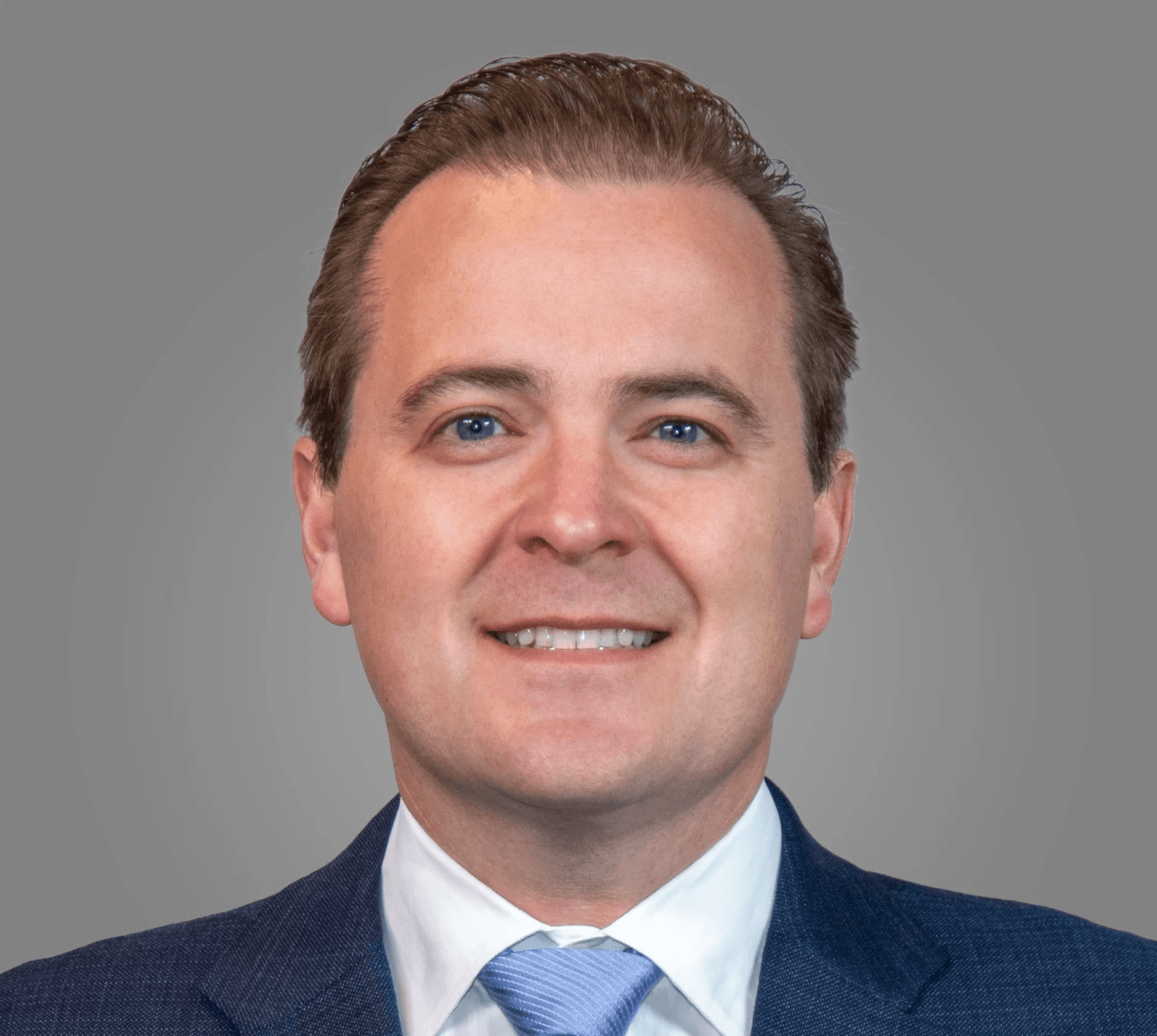
CEO of SynerFuse
Justin is the co-founder, President, and CEO of SynerFuse, a company developing a combined spinal fusion and neuromodulation system to address chronic back pain at the point of surgery. A certified public accountant and serial entrepreneur, Justin previously served as CFO and senior vice president of corporate development at Recombinetics, where he led fundraising efforts totaling $68 million.
Interview Summary
Justin Zenanko, a repeat Medsider guest, is the co-founder and CEO of SynerFuse, a company developing a combined spinal fusion and neuromodulation approach for patients with chronic low back pain. Trained as a CPA and shaped by experience across multiple industries, Justin leveraged his background to bring together spine surgeons and pain physicians targeting an overlooked gap in care. Each year, hundreds of thousands of spinal fusion procedures are performed, yet a substantial portion of patients fail to achieve meaningful pain relief. While the structural problem may be addressed, neuropathic pain often persists — leaving many patients reliant on opioids and cycling back into care years later.
Founded in 2018, SynerFuse set out to challenge a long-standing assumption in spine care: treat pain at the point of surgery, not after failure. Its e-TLIF procedure places neuromodulation leads directly at exposed nerves during spinal fusion surgery — an approach not previously used in the operating room. By delivering electrical stimulation at the point of intervention, the technique seeks to disrupt pain signals before they become entrenched. Traditionally, patients undergo three separate procedures over 5 to 10 years — fusion, trial stimulation, and a final implant. SynerFuse collapses that into one.
SynerFuse completed a 15-patient feasibility study, and its early clinical work helped shape the company’s leadership. Justin assembled a small group of surgeon-leaders who not only refined the procedure, but went on to influence peers as “KOLs’ KOLs.” Dr. Rohan Lall, who performed 11 of the 15 procedures, became Chief Medical Officer, while principal investigator Dr. Michael Park moved into the role of Chief Technology Officer.
So far, SynerFuse has raised over $24 million from non-venture capital sources and is finalizing its proprietary NeuroFuse system, ahead of the company’s pivotal trial.
Key Questions
How do you determine when an FDA request is a requirement versus an opportunity for negotiation?
How do you validate your idea before committing millions to custom device development?
What do contract manufacturers need to execute effectively for early-stage medtech companies?
How do investment banks structure private raises to preserve founder control?
Sponsor Message
Want to learn the winning formulas from proven medtech founders and CEOs? If you’re ready to level up your medtech game, you should check out Medsider Courses — 8-week masterclasses covering topics like: fundraising, M&A exit planning, design and development, clinical and regulatory strategy, and go-to-market commercialization.
These courses cover the hard-earned lessons shared by the elite medtech founders and CEOs that join our program.
Medsider Courses can be purchased individually or included free through the Medsider All-Access Pass.
Top Takeaways
Regulatory Negotiation Isn't Optional — It's Survival
Justin learned early that FDA review processes are shaped by precedents built for large corporations — companies with the time and capital to absorb long development cycles. For early-stage startups, accepting those playbooks without question can drain runway faster than it advances progress.
The shift came when Justin began treating FDA interactions as negotiations rather than mandates, and anchoring those conversations in clinical reality. In discussions around pivotal trial design, he noted that the agency often defaults to sham controls in Class III neuromodulation studies. Rather than accepting that expectation as fixed, Justin proposed alternative designs — such as extending the efficacy timelines — that preserved scientific rigor while avoiding unnecessary procedural burden. FDA rarely responds with outright approval. Instead, the signal comes in more measured: “it’s not unreasonable,” for example. That response becomes the signal to move forward in discussions.
Pushing back, in this context, wasn’t about defiance. It was about educating reviewers on what best served the trial, the product, and the clinicians who would ultimately use it. "If you don't ask, you can't get," Justin says. Two pre-submission meetings helped establish a regulatory roadmap. By August 2025, FDA fully accepted the company’s feasibility study.
➜ Regulatory pathways are negotiations, not mandates.
Small companies can't afford timelines designed for big corporations. Ask for what you need, propose compromises, and educate reviewers on clinical realities. At FDA, the answer is often something like "not unreasonable" rather than "yes." Without engaging, startups often default into regulatory standards they can’t fund.

Clinical Proof First, Device Perfection Second
Justin began with an off-the-shelf stimulator for Synerfuse’s 15-patient feasibility study. The goal was to prove the e-TLIF procedure worked before committing millions of dollars to a custom device.
The results answered the central question: 80% of patients showed efficacy, with many able to come off opioids. Even patients who would have been classified as "failures" by conventional standards declined to have their devices removed post-trial. Years later, those patients continue to report lower pain levels, reduced medication use, and ongoing engagement with their therapy — using a phone app to adjust stimulation based on daily needs.
That early clinical evidence became foundational. Real patient data — energy requirements, safety profiles, efficacy signals — now drives the design specifications for SynerFuse's proprietary NeuroFuse system. Rather than guessing, manufacturers are working from validated inputs. From an investment perspective, the feasibility study removed the fundamental questions of whether the device concept works.
With feasibility data in hand, the specs handed to the manufacturer aren't theoretical — they're precise. Still, Justin emphasizes the importance of maintaining in-house or contracted expertise to assess technical and engineering risk.
"We take all those learnings and put that into a new device [design]," Justin explains. "So that way, when you're going for the pivotal trial, you have your own device, your own stimulator, and you have your own destiny."
➜ Prove the clinical approach before perfecting the device.
Using off-the-shelf components can validate outcomes quickly, while real patient data can help derisk engineering decisions and define specs for contract manufacturers. Clinical proof changes fundraising conversations from projections to results — and removes the question of whether the device will work.
Structuring Private Capital to Preserve Control
Justin raised more than $24 million for a Class III device company — an amount many assume requires three or four times more capital to get to the same results. He did it by delaying institutional venture capital and instead building a base of angel investors through Reg D offerings structured with investment banks and broker-dealers.
Working with an investment bank taught him what the market actually valued. When the bank suggested adding an 8% dividend — payable in cash or common stock — to the Series A structure, Justin immediately recognized the benefit of rewarding investors for lack of liquidity. The structure aligned incentives across the cap table: everyone invested on the same terms, without preferential capital stacks or VC-driven complexity.
But the most consequential alignment came from something deeper. Justin is the largest investor in SynerFuse, which fundamentally changes decision-making. There’s no option to walk away when things get difficult. "A lot of the CEOs don't have skin in the game, so when things don't go according to plan, you bail," Justin notes. That misalignment creates problems for everyone else at the table.
The strategy was deliberate: use private capital to increase company value and reduce technical and regulatory risk, then approach venture firms only after the hardest uncertainty had been removed. Timing, Justin notes, determines leverage. "If you go too early, they're going to cram you down on valuation," he explains.
By structuring its raise through investment banks — and maintaining meaningful founder risk — SynerFuse preserved optionality. The company is focused on IPO readiness, not out of necessity, but because maintaining that path strengthens its position in acquisition discussions.
➜ Private capital preserves optionality.
Reg D offerings through investment banks create investor-aligned structures while keeping all participants on equal terms. When leadership has real skin in the game, alignment replaces incentive conflicts. Used deliberately, this approach allows companies to hit critical milestones before approaching VCs — where timing, not just valuation, determines leverage.
Sponsor Message
After raising over $50M from corporate venture and cardiovascular key opinion leaders, FastWave Medical has progressed rapidly in the development of its next-generation intravascular lithotripsy (IVL) systems for complex calcific disease.
The market size for IVL is over $10 billion and the only player in the space was acquired for over $13 billion in 2024. So naturally, there’s a lot of investor interest in FastWave.
Given the continued demand to invest in FastWave, their team has opened up an investor waitlist for anyone interested in potentially owning a piece of the company.
The last time FastWave opened up a private placement, it closed $11 million in two weeks. So if you’re interested in investing in one of the hottest cardiovascular startups, opt into their investor waitlist here.

Chat with Scott
Ask ScottBot questions about this interview, key takeaways, or other medtech topics.