Building Faster by Questioning Dogma
Interview with Future Cardia CEO Jaeson Bang

Guest

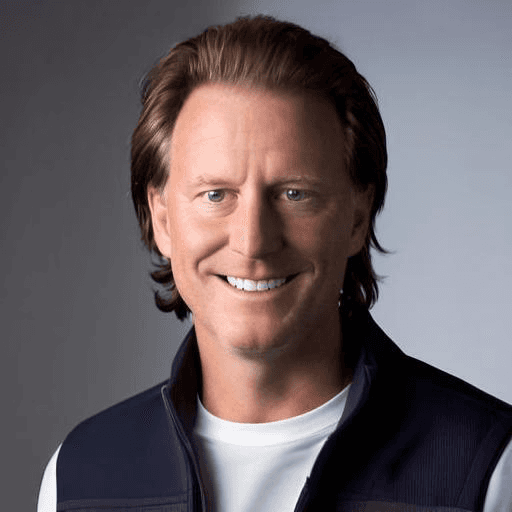
CEO of Future Cardia
Jaeson is Founder and CEO of Future Cardia, which is developing a subcutaneous cardiac monitor for heart failure patients. Before founding Future Cardia, Jaeson spent more than two decades in the implantable cardiac device space, holding clinical, technical, and commercial roles at Medtronic, CVRx, EBR Systems, and Abiomed.
Interview Summary
Jaeson Bang is the founder and CEO of Future Cardia, a company developing a subcutaneous monitoring platform for patients with heart failure. The device is designed to capture both the electrical and mechanical signals of the heart — combining ECG data with heart sounds — through a minimally invasive, office-based procedure rather than a cath-lab implant. By moving monitoring closer to the surface, Future Cardia aims to provide continuous, high-quality cardiac data while reducing procedural complexity for physicians and patients.
Jaeson brings more than two decades of experience in implantable cardiac devices, having held senior roles at Medtronic, CVRx, EBR Systems, and Abiomed. Over that time, he saw firsthand how heart failure monitoring evolved around deep, catheter-based implants that require specialized infrastructure and significant capital. When he began exploring the space, the category was well established — but built on assumptions he believed were worth re-examining.
He founded Future Cardia in 2020 after grappling with a more fundamental design and systems question: whether the next meaningful advance in heart failure monitoring had to follow the same assumptions around depth of implantation, procedural setting, and engineering tradeoffs that defined the category’s first generation. Drawing on clinical experience in both the U.S. and Europe, Jaeson questioned the industry’s default reliance on catheter-based implants placed deep inside the heart — approaches that demand specialized facilities, procedural coordination, and significant infrastructure — and asked whether comparable or better performance could be achieved through a less procedurally burdensome path.
Since its founding, Future Cardia has advanced from concept to first-in-human implants in under four years and enrolled dozens of patients in early clinical studies conducted at high-volume European centers selected for both speed and rigor. The company is now preparing for FDA submission, positioning itself among a small group of startups to reach this milestone in subcutaneous cardiac monitoring.
Key Questions
How do you identify whether an industry “constraint” is real — or just assumed?
When is it worth paying more upfront for talent in early-stage medtech?
How do you decide whether to follow existing regulatory paths or create new ones?
When does equity crowdfunding make sense for a capital-intensive medtech company?
Sponsor Message
Want to learn the winning formulas from proven medtech founders and CEOs? If you’re ready to level up your medtech game, you should check out Medsider Courses — 8-week masterclasses covering topics like fundraising, M&A exit planning, design and development, clinical and regulatory strategy, and go-to-market commercialization.
These courses cover hard-earned lessons shared by the elite medtech founders and CEOs that join our program.
Medsider Courses can be purchased individually or are included free through the Medsider All-Access Pass.
Top Takeaways
Turning a Constraint Into an Advantage
For years, cardiac device development followed a familiar assumption: smaller implants were inherently better. Jaeson had seen the downside of that thinking. Across multiple large device companies, he watched ultra-small implants and wearables promise simplicity but fail to deliver reliable performance in practice.
When founding Future Cardia, Jaeson approached the problem through deliberate customer discovery. Rather than validating feature checklists with key opinion leaders, he spent time with frontline physicians treating heart failure patients every day, probing what actually influenced clinical decisions and outcomes. He paired those insights with firsthand clinical experience in Europe, where he had implanted devices significantly larger than anything Future Cardia envisioned — including in pediatric patients who tolerated them without issue.
Those observations challenged a core industry belief. Size, Jaeson realized, was largely a perception problem; performance was the real constraint. That insight reshaped the engineering strategy. Instead of chasing extreme miniaturization, the team prioritized signal fidelity, battery longevity, and durability, using proven components rather than compromised designs.
➜ Constraints are only fixed if you don’t challenge the assumption behind them.
By questioning whether smaller truly meant better, Jaeson discovered the real bottleneck wasn’t device size, but performance. Designing around that insight allowed Future Cardia to move faster, simplify engineering decisions, and deliver durability others sacrificed chasing elegance

Buying Speed With Experience
As Future Cardia moved toward clinical execution, Jaeson focused on eliminating organizational friction that often slows implantable medtech companies. Rather than optimizing for cost, he built the company around deep, highly specific domain expertise. Jaeson was deliberately willing to pay more for experts who had already navigated implantable cardiac development and 510(k) execution, prioritizing teams capable of getting it right the first time over lower-cost generalists.
That same philosophy shaped the regulatory strategy. Future Cardia pursued a 510(k) pathway with clear predicates, using prior approvals as a roadmap to reduce uncertainty and move predictably through the FDA process rather than attempting to invent new regulatory approaches.
Clinical development decisions reinforced this mindset. Instead of relying on traditional Western European sites that had become increasingly slow and bureaucratic, the company selected high-volume centers in the Czech Republic and Croatia. These sites combined experienced investigators with fewer administrative bottlenecks, enabling faster feasibility work without sacrificing data quality.
Hiring beyond clinical and regulatory roles followed similar principles. Jaeson relied primarily on referrals and prioritized trust, reliability, and the ability to have difficult conversations over resumes or pedigree. Together, these decisions allowed Future Cardia to reach first-in-human implants in under four years, enroll 39 patients, and advance toward FDA submission on a compressed timeline.
➜ Pay more upfront for the right expertise — it will preserve capital.
In regulated, capital-intensive markets, delays and rework are costly mistakes. By hiring deeply experienced domain experts, following proven regulatory paths, and choosing clinical sites built for velocity rather than prestige, Jaeson compressed timelines that typically stretch for a decade.
Raising Capital Without Starting the Clock
When Future Cardia began fundraising, Jaeson wasn’t opposed to venture capital — he was focused on timing. Rather than treating angels and crowdfunding as bridges to institutional money, he used both as a way to extend runway, build value, and reduce risk before committing to venture capital time horizons. For Jaeson, that window ultimately stretched to roughly $16 million.
Early on, he turned down a venture offer. Rather than accelerating toward institutional capital, Jaeson committed to testing whether he could sustain progress on his own terms. Before launching equity crowdfunding, he studied what had actually worked for other founders and adopted a simple operating principle — treat every investor the same. Access, transparency, and communication didn’t change based on check size.
Execution mattered more than polish. Jaeson pitched relentlessly, often 60 to 100 conversations per month — refining his message through repetition. He raised across three platforms — Republic, StartEngine, and WeFunder — largely leveraging their existing networks, and built a base of engaged backers through consistent communication and follow-through. By delaying institutional capital, Future Cardia gained time to generate data, refine the technology, and progress toward FDA submission on its own terms.
➜ Capital always starts a clock — choose when it begins.
By leaning on angels and equity crowdfunding, Jaeson delayed institutional capital until Future Cardia had meaningfully increased its value and lowered technical and regulatory uncertainty. Treating every investor the same, maintaining constant transparency, and pitching at high volume created a base of aligned backers who reinforced momentum.
Sponsor Message
After raising over $50M from corporate venture and cardiovascular key opinion leaders, FastWave Medical has progressed rapidly in the development of its next-generation intravascular lithotripsy (IVL) systems for complex calcific disease.
The market size for IVL is over $10 billion and the only player in the space was acquired for over $13 billion in 2024. So naturally, there’s a lot of investor interest in FastWave.
Given the continued demand to invest in FastWave, their team has opened up an investor waitlist for anyone interested in potentially owning a piece of the company.
The last time FastWave opened up a private placement, it closed $11 million in two weeks. So if you’re interested in investing in one of the hottest cardiovascular startups, opt into their investor waitlist here.
Chat with Scott
Ask ScottBot questions about this interview, key takeaways, or other medtech topics.