Building Fast Without Cutting Corners
Interview with Excision Medical CEO Greg Walters
Guest
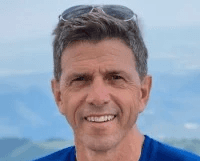
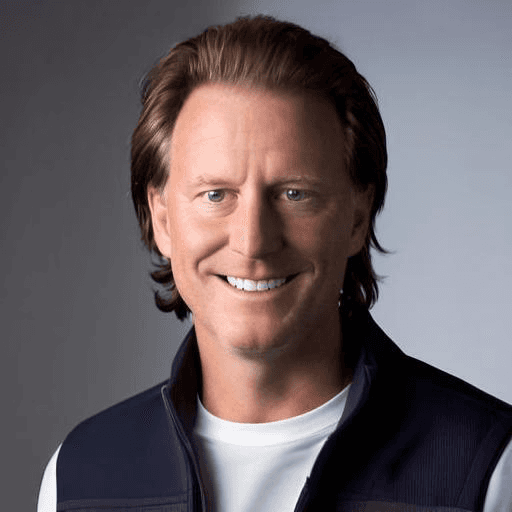
CEO of Excision Medical
Greg is the President, CEO, and founder of Excision Medical, a company developing RF-enabled leaflet modification technology for structural heart procedures. He has over 35 years of experience in cardiovascular devices, holding leadership roles at Kensey Nash Corporation where he led development of Angio-Seal and other endovascular programs. He later co-founded Essential Medical, which was acquired by Teleflex in 2018, and is an inventor on more than 75 U.S. and European patents.
Interview Summary
Greg Walters has spent nearly four decades in cardiovascular devices, building and leading companies across structural heart and vascular intervention. He began his career at Kensey Nash Corporation (acquired by Royal DSM), where he spent close to 20 years working on programs like Angio-Seal and later left to pursue what he believed was a more effective approach to vascular closure. Starting with limited capital and testing early prototypes himself, Greg founded Essential Medical and led the company through years of development before Teleflex acquired it in 2018 for its Manta and X-Seal closure systems.
After the acquisition, Greg stepped away from day-to-day operations and relocated to Vienna with his wife, taking time to reflect on what he wanted to do next. What drew him back was an emerging issue with the rapidly expanding transcatheter aortic valve replacement (TAVR) market. As TAVR became more established and safe, younger patients started receiving the therapy — shifting the clinical challenge from a single lifetime valve to the likelihood of multiple replacements over time. The valve-in-valve approach — implanting a new valve inside an existing one to avoid open surgery — works, but it introduces risks, including coronary artery occlusion, thrombosis, and the possibility of complications when placing secondary valves. Against that backdrop, Greg co-founded Excision Medical in 2020 alongside pioneers including Dr. Gary Roubin and Dr. David Wood. The company is developing the Leaflet Excision System, a radio frequency-enabled platform to excise failed valve leaflets before placing secondary TAVR valves, with the goal of reducing complications. The company is also exploring hypertrophic cardiomyopathy using the same core technology.
Excision is now five years into development, backed by a global strategic partner, and preparing for first-in-human studies. Greg is once again working in the structural heart space where Essential began — in the same office and at the same desk — but with the benefit of experience gained from building, exiting, and returning to a category now facing its next generation of clinical challenges.
Key Questions
How do you know when you've tested enough to move forward — without over-engineering or under-preparing?
How do you structure first-in-human studies to maximize learning while minimizing risk?
How do you know when you have “enough” IP?
What does "commercial readiness" actually mean for a company planning to exit pre-revenue?
Sponsor Message
Want to learn the winning formulas from proven medtech founders and CEOs? If you’re ready to level up your medtech game, you should check out Medsider Courses — 8-week masterclasses covering topics like: fundraising, M&A exit planning, design and development, clinical and regulatory strategy, and go-to-market commercialization.
These courses cover the hard-earned lessons shared by the elite medtech founders and CEOs that join our program.
Medsider Courses can be purchased individually or included free through the Medsider All-Access Pass.
Top Takeaways
Build Fast and Test Hard
Greg has a simple rule for early-stage development: build a working prototype in a demanding test environment as quickly as possible. Early devices are rarely elegant — catheter tubes taped together, off-the-shelf parts from hardware stores, assemblies that barely hold up — but polish isn’t the point. The goal is to prove the concept in a relevant physiological environment before time and capital are spent on refinements. In Greg’s view, early capital is best used to fund iteration, not slide decks or animations.
The process is deliberately repetitive: build a rough device, test it in a challenging model, fix what fails, improve the model, then repeat. Greg cycles through this loop hundreds of times in the earliest stages, where he can watch, adjust, and learn what works.
That approach shaped both Essential Medical and Excision Medical. When physicians came to evaluate devices in cath-lab-like setups, their feedback became actionable rather than speculative. Investors responded the same way. "If you read the room when you do these pitches," Greg notes, "you get the yawns, you get people looking on their phones, and then you show a prototype, and everybody's paying attention," he says.
➜ Build to learn, not to impress.
Functional prototypes tested in demanding environments reveal far more than polished renderings or perfect specs. Acting on roughly 70% of the information available keeps teams moving forward, while waiting for completeness consumes runway without producing insight. In early-stage companies, momentum compounds learning, and perfection quietly stalls progress.
Use the ‘Grandmother Test’ for FIH Readiness
Greg uses what he calls the "grandmother test" to decide when a device is ready for first-in-human studies. If the team is comfortable using it on their own grandmother, the device has reached an acceptable safety threshold — not perfection, but a point where the risk of harm has been meaningfully reduced.
Reaching that point requires methodical progression. Devices are tested extensively in physiological models before advancing to animal studies. Each stage is designed to surface and resolve failure modes while learning is fast and fixes are inexpensive. By the time a device reaches patients, most fundamental risks have already been addressed.
First-in-human studies are intentionally selective. Enrolling the wrong patients or under-trained physicians can jeopardize the technology entirely. Greg's threshold is clear: 99% confidence that the device won't harm someone before the first case.
Geography matters too. Greg weighs three factors when choosing where to begin: safety confidence, learning value, and regulatory path. For Excision, that calculus favors South America over the U.S., Canada, and Europe, with early studies designed to support a U.S. pivotal study.
➜ Safety has to be earned before the clinic.
By investing heavily in physiological models and animal studies, teams resolve failure modes early and build real confidence. First-in-human studies should be selective and deliberate, pairing the right patients with well-trained physicians so learning compounds without risking the technology.
Acquirers Want Plug-and-Play Products, Not Development Projects
When Greg co-founded his previous company, he assumed a strong animal study would spark acquisition interest. It didn’t. What he learned instead was that acquirers look for products that can plug directly into a commercial organization — not technologies that still require years of development. That realization changed how he built both Essential and Excision.
Both companies were designed to operate end-to-end, with control over manufacturing, supply chains, and the ability to scale independently. The goal was to remove excuses: prove the business could commercialize on its own, even hiring sales and marketing leadership if necessary.
Pre-revenue exits still happen, but valuation reflects how much commercial risk has already been removed. "The best way to be acquired is to not need to be acquired," Greg notes.
Acquisition readiness extends to IP strategy, too. Greg prioritizes freedom to operate over defensive patent volume, especially in Class III devices where clinical and regulatory barriers provide meaningful protection. His approach is to search the landscape internally, then pay for professional opinions only on key concerns, typically costing $50,000 to $100,000 total. Filing patents is expensive, so he's selective about protecting what the company is actually building rather than chasing broad claims.
➜ Position for acquisition by removing dependency.
Own the supply chain, demonstrate commercial readiness, and prove the business can stand on its own. Pair that with strategic IP management — prioritize freedom to operate over defensive portfolios, and invest selectively in patents that protect what you're actually building.
Sponsor Message
After raising over $50M from corporate venture and cardiovascular key opinion leaders, FastWave Medical has progressed rapidly in the development of its next-generation intravascular lithotripsy (IVL) systems for complex calcific disease.
The market size for IVL is over $10 billion and the only player in the space was acquired for over $13 billion in 2024. So naturally, there’s a lot of investor interest in FastWave.
Given the continued demand to invest in FastWave, their team has opened up an investor waitlist for anyone interested in potentially owning a piece of the company.
The last time FastWave opened up a private placement, it closed $11 million in two weeks. So if you’re interested in investing in one of the hottest cardiovascular startups, opt into their investor waitlist here.
Chat with Scott
Ask ScottBot questions about this interview, key takeaways, or other medtech topics.