
Building Around Technology and Market Tailwinds
Building Around Technology and Market Tailwinds
Interview with Adaptyx Biosciences CEO Vijit Sabnis
Interview with Adaptyx Biosciences CEO Vijit Sabnis

Guest
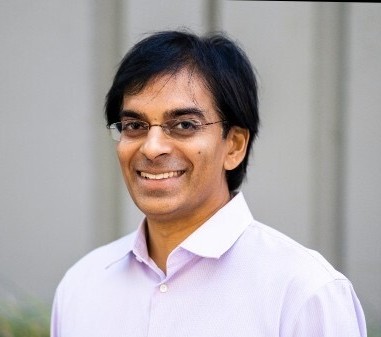
CEO of Adaptyx Biosciences
Vijit is the co-founder and CEO of Adaptyx Biosciences, a Stanford spinout developing wearable technology for continuous molecular monitoring. Over the past 20 years, he has worked at the intersection of deep technology as an inventor, founder, and investor. Previously, Vijit was a Partner at Khosla Ventures and co-founded Solar Junction to commercialize high-efficiency solar cell technology. He holds a Ph.D. in Electrical Engineering from Stanford.
Interview Summary
Vijit Sabnis is the co-founder and CEO of Adaptyx Biosciences, a Stanford spinout developing wearable technology for continuous molecular monitoring. After spending years investing in frontier healthcare technologies, Vijit became convinced that continuous molecular sensing had reached an inflection point, where advances in AI, consumer wearables, and digital health could unlock the value of continuous biochemical data beyond continuous glucose monitoring (CGM) devices.
Today, most molecular biomarkers are measured through occasional blood draws, saliva samples, or urine tests, providing only isolated snapshots of biological processes that often change throughout the day. Adaptyx aims to replace those snapshots with continuous biochemical data collected from dermal interstitial fluid using programmable, DNA-based molecular switches embedded in a wearable patch. The company's first clinical focus is cortisol, a hormone typically measured using only a handful of static tests despite its dynamic daily rhythm and broad role across multiple physiological systems.
Beyond cortisol, Adaptyx is building a programmable sensing platform designed to continuously measure hormones, drugs, electrolytes, and other biomarkers.
Founded in 2022, Adaptyx holds an exclusive license to nine Stanford patents covering its core technology and has filed 18 additional patents. The company has raised $23 million in seed financing and recently presented its first-in-human cortisol data. It is initially pursuing FDA clearance for clinical applications while also exploring broader consumer health applications.
Top Takeaways
Look for signals that an idea can become a company. Medtech ideas with startup potential don't just solve a single problem — they unlock multiple clinical applications, benefit from broader technology and market trends, and become more valuable as the surrounding ecosystem evolves. For platform plays, choose an initial indication with a significant clinical need where your technology offers an advantage over existing approaches.
When spinning technology out of academia, redesign the learning process first. Academic research is optimized for discovery, not startup-speed iteration. One of the most difficult challenges in any early-stage venture is learning and iterating rapidly. Standardizing development workflows, automating repeatable work, and building tools that accelerate experimentation can compress learning cycles and make promising academic research commercially viable.
Build the adoption strategy into the product. New technology succeeds only when it's easy to integrate into existing care pathways. Design user experiences around the needs of each audience, presenting new data in ways that reduce interpretation burden and make it easy to act on. As new healthcare platforms emerge, consider how different partnerships can help bring those products to market more effectively.
Sponsors
FastWave Medical: Named MD+DI's Company of the Year, FastWave is one of the hottest medtech startups in the cardiovascular space. See how you can invest here.
Medsider Fundraising Cohort: Planning to raise capital for your medtech startup? This live, 4-week workshop, led by Medsider is designed to help founders and CEOs tell a sharper story, get investor meetings that matter, and close real capital. Join the waitlist here.
Key Moments
03:17 Vijit's path from Stanford, solar energy, and venture capital to building Adaptyx
07:25 How Adaptyx is trying to do for hormones what continuous glucose monitors did for diabetes
13:50 The signals Vijit looked for before founding Adaptyx
25:35 How Adaptyx turned academic research into startup-speed learning cycles
32:15 Why cortisol became the company’s first clinical application
36:26 How Adaptyx is designing new molecular data to fit existing clinical workflows
42:12 Why new consumer health platforms opened new paths to commercialization
47:24 Fundraising in an era of shorter attention spans
Chat with Scott
Ask ScottBot questions about this interview, key takeaways, or other medtech topics.
Full Transcript
And we developed a conviction that all of that research that was done in academia, we could processize it, we could automate it, we could build a software layer on top with intelligence. We could build new screening tools that could all be automated. And I asked Alex, "Hey, could we squeeze that year down to, like, weeks? Could we do that?" And he's like, "I think we could go do that." And I'm like, well, if we can do that, now we have startup style learning cycles. Now you can go try to develop something new, see what you get, fix it, and just keep doing that, and scale that massively in parallel. So that was the singular unlocking conviction to go build Adaptyx.
Narrator:Welcome to Medsider, where you can learn from the brightest founders and CEOs in medical devices and health technology. Join tens of thousands of ambitious doers as we unpack the insights, tactics, and secrets behind the most successful life science startups in the world. Now here's your host, Scott Nelson.
Scott Nelson:Hey, everyone. In this episode of Medsider, we sat down with Vijit Sabnis, co founder and CEO of Adaptyx Biosciences. Adaptyx is a Stanford spinout developing wearable technology for continuous molecular monitoring. Over the past twenty years, Vijit has worked at the intersection of deep technology as an inventor, founder, and investor. Before Adaptyx, he was partner at Khosla Ventures and co-founded Solar Junction to commercialize high efficiency solar cell technology. He holds a PhD in electrical engineering from Stanford.
Scott Nelson:Here are a few topics we explored in this conversation. First, the signals to look for before building a company around one particular idea. Second, what prevents promising academic research from becoming a real startup? Third, how do you choose the first indication for a platform technology with several potential applications? And last, how do you build adoption into a product before it's ready for commercialization?
Scott Nelson:Before we dive into the full episode, if you're a Medtech founder or CEO preparing to raise capital, you should check out the Medsider fundraising cohort. This four week live workshop combines small group sessions with real time feedback to help you sharpen your investor story, build a targeted pipeline, and run a focused fundraising sprint instead of a never ending slog. Over the month, you'll walk away with an investor ready narrative and deck, outreach scripts that actually get responses, a refreshed LinkedIn profile, a simple content plan that keeps you on investors' radar, and a repeatable system for running your raise. You can join the wait list at medsider.com/fundraisingcohort. Again, that's medsider.com/fundraisingcohort. Alright. Let's get to the interview.
Scott Nelson:Alright, Vijit, welcome to Medsider Radio. Appreciate you coming on.
Vijit Sabnis:Thanks so much for having me. It's awesome. I've been listening to your podcast for quite a while, and I'm I'm really honored to be a guest today.
Scott Nelson:Well, I'm honored to have you and it's always fun to have someone on, right? That's been following kind of the interviews over the years. So I recorded a very short bio at the outset of this interview, but for those that aren't familiar, as familiar as I am now, right. Doing a little bit of research in front of this conversation, give us like the one to two minute overview of your story leading up to kind of mid, mid twenty twenty six here.
Vijit Sabnis:You know, my background is I did my PhD at Stanford a long, long time ago. I was there in the late 90s and early 2000s. It was a super fun time at Stanford. The internet was being built out and I did my PhD in optoelectronics and optical telecommunications. So I ended up starting off my career in that, joining another Stanford spinoff here in Palo Alto that was working in that space, completely different than what I'm doing today. And that was a fun three and a half year journey to really understand new technology development inside of a startup.
Vijit Sabnis:Then after that, I had the opportunity to spin out a technology from Stanford into a solar energy company called Solar Junction, way back in 2007, and we took essentially a PowerPoint idea with very little behind it, and back then it was a different era in terms of these kinds of companies getting funded. But solar was hot back then, and so we ended up building the company and over time raising about $65,000,000 in venture capital, taking that concept into the highest efficiency solar cells the world had ever seen at that time, which was quite a ride. Tackling all the commercial headwinds that the solar energy industry had back then and managing to get an exit to a group in Saudi Arabia in 2014. So quite a ride in building a team and managing through also a regulated industry and navigating that entire process there. And then I had the wonderful opportunity to become a venture capital investor starting in 2015.
Vijit Sabnis:It was a complete career pivot for me where I ended up spending about a third to half of my time looking at medical device and health technologies, really at the aim of taking my electrical engineering background, looking at sensors, looking at imaging, looking at new modalities of generating lots and lots of data. And back then, we had the conviction that big data was going to help us sort out all these signals that we were getting and that they were going to be really valuable. And obviously today with AI, we kind of take that for granted and I absolutely loved what I was doing there. But while I had that job, I was always jealous of the amazing entrepreneurs that I was meeting and that we had the chance to fund and follow. And I just had this burning itch to go build another company on my own.
Vijit Sabnis:And I was very, very passionate about continuous monitoring and had the opportunity to connect with Professor Tom Soh at Stanford, who's built this amazing technology over the last eighteen years. And over the period of a few years of incubating this, some ups and downs along the way, including COVID that started just when we got started on this, we were able to launch Adaptyx back in the fall of twenty twenty two and have made some really exciting progress since then.
Vijit Sabnis:It'll be fun to kind of dig into this in a little bit more detail, but anyone with an optics background always like my signals kind of go up or at least I see it as like really high signals that I'm dealing with someone whose furnace is burning hotter than mine. I'm a biology guy by background. And so like even with Joovv and then Fastwave, I like kind of somewhat fell into this world of like optics and with Fastwave it's a little bit more laser specific, but it's like, I'm always amazed at the level of brilliance with PhDs that are coming out of optics program. So anyway, kudos to you. But yeah, super fun story. I obviously will spend most of our time talking about Adaptyx, but I'm hoping hopefully you can share a little bit more learnings, right?
Scott Nelson:That you've gleaned kind of sitting on both sides of the table. But with that said, I'm looking at the website right now, adaptyx.bio. So we'll link to it in the full write up on Medsider. For someone that's never heard of this right before, if we're at a July 4 family gathering and I'm maybe a cousin that you haven't seen in ten years, right? How are you explaining this?
Vijit Sabnis:The easiest way to think about what we're doing is and I think all of us intuitively know this, our bodies are changing all the time. We are dynamic creatures. Neither of us feels exactly the same way today as we did yesterday. And one of the burning unmet needs is the ability to understand continuously, to be able to gather a curve about important markers in our body. And we have that today for a handful of metrics.
Vijit Sabnis:For example, the continuous glucose monitor over the last couple of decades has revolutionized the management of diabetes. But we don't have much more beyond glucose. We have oxygen sensing, which we can do with smart watches and in clinical grade versions of that. Today, can now also measure ketone bodies and lactate. But think about the hundreds or even thousands of other molecules that are dynamically changing and affecting our health, both clinical health, as well as our everyday consumer health.
Vijit Sabnis:That's our mission at Adaptyx is to bring a wearable patch at home, which over time, we're not going to do everything at once, but over time can increasingly measure more and more molecules continuously. And our aim is to really tie this into very specific clinical and then later consumer applications. They're gonna provide a lot of value. We're not in the business of generating data for fun, we're only going to generate data that's actionable and that's really valuable, but there's so much white space and landscape to build into, and the bottleneck has been technology. This is a very underappreciated space, almost because, and I've been on this journey now since 2020, people just didn't think it was possible, so we don't even really think about this.
Vijit Sabnis:The world is based on blood testing, which is obviously wonderful. We all benefit from that every year, but there is lots and lots of things that we ought to be measuring a lot more frequently. And there's some really big macro trends behind that that I think are making now a great time to build a company in this space.
Scott Nelson:Yeah, no doubt. There's a lot of strong tailwinds. I'll put it this way. Like ten years ago, I wouldn't have thought that you'd listen to a popular technology podcast where with a certain amount of frequency, right? They're talking about what Brian Johnson is posting on X. Right? You know what I mean? And so it's definitely taken on a new sort of fervor even over the past five years, I would say. So yeah, really significant tailwinds. For everyone listening, adaptyx.bio, you got go check out the website. It's a really cool site, but also the technology I think is super interesting. But in terms of the form factor, it's patch, at least the iterations you're working on now, it's a patch. It's not a wearable, it's not a ring, it's not a watch. A patch.
Vijit Sabnis:It's going to end up iterating down into the same form factor as a continuous glucose monitor. You're going to put it on and then you're going to forget about it. And you may wear this thing for a couple of days for certain conditions, or you may wear it for, for example, up to a couple of weeks, and then repeat that if you need to. So we're looking at different durations of wear depending on the different applications that we're going to unlock.
Scott Nelson:Got it. And I mentioned this earlier, we're recording this in mid twenty twenty six in case you happen to be listening to this three, six months down the road. Where's the company at, it's current state in terms of kind of life cycle?
Vijit Sabnis:We're about 3.5 years old, a little older than that. We've been building prototypes ever since we started the company. For about the last fifteen months, we have been doing human studies under IRB guidance, and really just working through, Does this work in humans? You get a lot of stuff working on the benchtop, and that is very, very difficult to do, But for a company like this to gain any traction, it's the human data that we need, and that's extraordinarily difficult. So we've been coming up that learning curve.
Vijit Sabnis:2025 was all about banging our head against the wall, the very, very difficult stuff. And I'm so proud of our team that over the last six months. Scott, I've built my solar company, I've had the opportunity to watch so many entrepreneurs build these really amazing companies when I was a venture capital investor. And the way I think about it is, you got to climb this ladder or climb up this mountain, and there's just like boulders coming out. And you don't get to have success, any kind of success, even that intermediate level of success, until you get past some of those. It's kind of like that SpaceX story, where they had failure after failure after failure, and you just got to knock those problems down one after another.
Vijit Sabnis:And we still have a lot more to knock down, but what is really exciting is over the last six months, we've been able to show that we've been able to measure some of our key markers continuously over multiple days, really to de risk the core science of what we're doing. And now we can start to really address some of those commercial risks and talk about what is the pathway through that FDA approval, ultimately collecting all that clinical data that we need. And it's a really exciting space for us because at the end of the day, clinical data speaks loudly. Anyone can look at what we're doing and say, Okay, this thing actually works, and this thing has the potential to ultimately be a big deal. Exciting times for us, but again, I feel like we've been dodging and smashing boulders that are coming down the hill from us all the time, and, they've gotten a little smaller Yeah. Those boulders. So that's a it's it's a good place to be. We got it. We got a ways to go.
Scott Nelson:They've gotten smaller, you've gotten faster at dodging. Exactly. It's it's funny that you say that because I I I was just recording an interview earlier today with Bob Paulson, who's kind of a serial kind of more pure play medtech entrepreneur, but number of different startups under his belt over the years. And we were talking about kind of just creating a category one CPT code, right? Which is what his company has been focused on over the past four to five years. I was like, so it sounds like you've you've been able to climb the reimbursement mountain. He was like, well, yeah, but we're we're just trying to stay stay here. You know what I mean? Not fall off the mountain. You know what I mean? That's a good that's a really good analogy. Right? Because it doesn't it certainly doesn't the boulders never really seem to kind of stop. Maybe they get a little bit smaller. You get better at pivoting around them.
Scott Nelson:That's a good kind of segue into kind of maybe the next call it thirty minutes or so of the discussion, which is, I think kind of intended to cover like more foundational aspects of kind of company building. And I guess the first one I wanted to get to was really kind of talking about your transition from kind of operator to venture investor now to operator again. And so I guess you've seen a ton of ideas right over the years. You're in the heart of Silicon Valley. What did you see early on in Adaptyx that said, I'm going to spend the next, what I call it, five to ten years or maybe even longer, right? Focused on this. And maybe frame that up in a way of other entrepreneurs that are thinking about taking a swing at an idea, what should they be thinking about? What should be the signs that maybe would cause them to lean in with more seriousness?
Vijit Sabnis:I think this is multifactorial. I think there's a lot of things that you'd like to see line up. For me, my path into electrical engineering, my path into optoelectronics, it was not the only thing I could do. I could have been a physician. And I sometimes joke with my friends that maybe later in my career now, I'm back to doing maybe what I should have been doing or what I could have been doing.
Vijit Sabnis:And so I think for me that when I had the opportunity to be an investor, and I was asked, hey, would you like to take a look at these technologies and help build the firm in that direction along with several other really talented partners. It was very easy for me to go do. It was something that I wanted to go do. Not everyone wants to do that mid career pivot, not everyone wants to go do that, but I'm here in Silicon Valley and these types of things happen. And so for me, it was it was personal.
Vijit Sabnis:I absolutely loved this. It was solar energy at that time was not in a great place here in The US, so it was something that I felt that I needed to go off and go do something new anyways. And I was just so grateful to have that opportunity. But I've been thinking about this stuff for decades. And the thing that sort of led me to where I am today is when I started working as an investor, the CGM was relatively new.
Vijit Sabnis:It had been out for a while, but more and more people were starting to use it. And we managed to get our hands on some of these CGMs. And it became very evident to us that having a curve and I'm an engineer, so to me this is like, duh, right? Of course you want a curve rather than a single data point. But having that continuous curve and being able to look at my behavior and my metabolic health and what that means, it s an absolute game changer.
Vijit Sabnis:Physicians don't oftentimes think of things that way, because today our world is based on blood testing. But it became very easy for me to, and the rest of the partners at the firm I was at, to develop a conviction around, hey, wearables are going to be really important. Continuous monitoring is going to be really, really valuable. And the holy grail that we were looking for at that time was, could we truly measure some of these molecular signatures non invasively? Could we do this with a watch through the skin, maybe on the ear, for example, where you can oftentimes get good blood perfusion?
Vijit Sabnis:And so at that time, we were looking at, for example, non invasive glucose sensing, which folks continue to work on today, non invasive blood pressure sensing, and there's been progress in these areas, particularly in the latter one with at least one company getting clinical FDA approval, and now consumer wearables making some inroads into that, but we were always looking for a platform. When you look at the number of blood tests out there today, there are thousands. There's probably 50 or 100 that are the main ones that we look at, but when you look at everything, for example, that LabCorp or Quest offer, it's thousands.
Vijit Sabnis:And when you start mapping that into different clinical conditions, it's obvious, like, hey, if we could measure these things and we could get granular data, that this is going to be very valuable. And there's really two categories of continuous data that the world needs to be aware of. There are some markers that move quickly. Glucose is one. Insulin is another one. Drug monitoring is another one. You take a drug, that drug level is gonna go up, and depending on lots of drugs, will metabolize over the course of a few hours. And you might wanna look at that very carefully.
Vijit Sabnis:Various hormones, which is one of our focus, do change throughout the day. So that's what we call at Adaptyx, dynamic physiology, and that is completely lost outside of glucose and soon to be lactate and ketones. Outside of those markers, we can't really measure anything continuously, so dynamic physiology and measurement of that is not having as big of an impact as it needs to. The other category that's missing in healthcare today is an easy way to collect molecular trends.
Vijit Sabnis:So there are many, many markers, for example, that are kind of supposed to be flat, so not that interesting to measure with a blood test. It's just kind of supposed to be flat, that number is supposed to be dialed in. But there are classes of patients that when they are sick, for example heart failure patients, that particularly after they've been hospitalized then get onto a lot of meds, and their situation can change over time. And in today's medicine, with relying on infrequent blood tests, you miss all of those changes and trends. And oftentimes we get to those patients too late. This could be for diuretics, this could be for potassium, this could be for detecting decompensation early, and so we look at those applications where changes in trends that could be captured with a wearable represent a really, really big unmet need.
Vijit Sabnis:So we saw this coming, we were looking for platform technologies, and when I reconnected with Professor Tom Soh, who by the way was my old classmate from Stanford a gazillion years ago, I hadn't kept in touch with him, but I reconnected with him. We were introduced by a common friend at Wilson Sonsini. I learned that he had been building a platform, And I was like, wow, this is what I've been looking for for almost five years. And let's go see if we can go turn this into a real technology and ultimately a real company.
Vijit Sabnis:So I think there was a deep personal conviction. I'm on a mission here at Adaptyx. I think this technology is needed. I think it's inevitable. But just as important, I think the market is moving behind this. We've seen AI explode obviously recently, but even a decade ago, we could see big data starting to turn lots of different data sources into something that's a lot more insightful, a lot more actionable. We've seen consumer wearables really take off. Obviously, we've seen in just recent weeks Oura filing for going public, WHOOP raising a big round. We've seen health influencers come on board on YouTube and other channels really talking about managing their own health.
Vijit Sabnis:And I think all of this just says the world has a need and an appetite for more data, and companies that can deliver unique data sources are now going to be able to deliver something that's much more valuable today and in the future, than we were able to ten years ago. And today, when I think, for example, about Adaptyx and delivering continuous data streams, AI is going to be ingesting our data first. It's not going be a physician looking at this first. It's all going to be processed by AI.
Vijit Sabnis:AI is going to have context of the patient, of the medical records, whatever is available in that particular data ecosystem. And the value that we're going to get out of these unique data streams, I think, is exponentially higher today than what it would have been ten years ago, and these are all the things that I'd been seeing and sort of contemplating when I met Professor Tom Soh and I said, Hey, this is not a one molecule technology, this could be a platform, if done appropriately and carefully over time, hey, this could be like the next big wave beyond, for example, like what we're doing in today's CGMs. And so I just knew that, hey, this was a mission I could latch onto and go build a good team around and go do for a very long time.
Scott Nelson:You have me leaning in as you're kind of describing some of the context around why you decided to kind of go all in on Adaptyx. In terms of the technology itself and being able to measure molecules in maybe a different way, has there been some breakthroughs or even recently that are allowing folks like Tom, right, to kind of see some early wins, if it's on benches? Has that landscape changed pretty dramatically over the past, call it, handful of years?
Vijit Sabnis:So Tom and also Professor Kevin Plaxko, they were at UC Santa Barbara together. Tom moved to Stanford a little over a decade ago. So the two of them really invented this entire field of aptamer-based molecular switches. At Adaptyx, we call them programmable molecular switches. And this has been a long journey.
Vijit Sabnis:This has been fundamental research that was building on each other each year, starting at UC Santa Barbara. That work has been continuing. There's other academic groups working on this. And Tom and Kevin had a breakthrough paper in 2013 where they showed the ability, and this was done in a rat model, of measuring a few different drugs continuously. And what the technology is, is a completely new way of measuring the concentration of molecules inside the body continuously, And these are tiny strands of DNA that are designed to latch onto a molecule of interest.
Vijit Sabnis:So take a target. It could be a drug. It could be a hormone. But here's the real genius, is not only does it latch onto the molecule, but it will let go a little while later, and it does that reversibly, so it does that cyclically. So here you have these molecular switches sitting, in our case, interstitial fluid, and along comes, for example, a hormone, and it will be captured by this molecular switch, we can read that out, but it lets go.
Vijit Sabnis:And it kind of is always grabbing and letting go. This is different from a blood test. In a blood test, we want to capture that analyte, make a measurement, and then we're done. We throw that assay away, but what we're doing is we're sitting inside that interstitial fluid, and it's just sitting there, there's no sample preparation going on, and it's just passively grabbing and letting go these molecules, and then we turn that into a measurable signal, and in our case, it turns it ultimately into an electrical signal, and that was the breakthrough of this passive switch that's turning on and off. And the really cool thing is we can design these switches for nearly any molecule that we want to sense that's present in dermal interstitial fluid.
Vijit Sabnis:And so they've been developing this. This is obviously like a big scientific breakthrough. There's a lot of tools that you have to build to understand how to synthesize these molecules, screen for these molecules. Tom has been a real pioneer in developing tool sets around designing and screening these molecules for a long time. There is a design methodology for building these switches, lots of trade secrets.
Vijit Sabnis:And when I came to this, I would say in academia, had done these for a handful of switches, and we always knew in principle we could scale this to lots of different switches. After my time as an investor, I ended up joining Stanford for a year as a researcher, and so Tom was my boss. My old grad school school mate ended up being my boss, and so I joined Stanford Med School as a researcher, and I was embedded in his research lab. I worked side by side with the grad students. I wanted to have that conviction that this technology was translatable outside of academia and make it ready for commercialization.
Vijit Sabnis:That is an extremely tricky thing to do. I do not generally recommend this, because it's really, really hard, but what made it workable for me was when I joined the lab, my first week was discouraging and then incredibly encouraging. When I got into the lab, I saw all the students hand pipetting chemistry around as they were developing these molecular switches. Long days, twelve, fourteen hour days to sort of do like a series of steps, lots of bespoke processes talking to each other, is this going to work, is that going to work? And I was like, hey, how long does it take to sort of get somewhere reasonable, like on one of these switches?
Vijit Sabnis:And they were like, maybe a year, maybe longer, and I was like, uh-oh, this does not sound like a startup, right? But much to my very good luck, I met a person who was gonna be my co founder, Doctor. Alex Yoshikawa, who had just finished his PhD at Stanford, and he was staying on as a postdoc and figuring out what to do next. And Alex has this very unique background. Before becoming a PhD student, he worked at a startup for three and a half years.
Vijit Sabnis:He knows how to build startups on his own because he had done this as an early employee at a company called Emerald Therapeutics and then later Emerald Cloud Lab. And the really key amazing insight was Emerald Cloud Lab is this amazing company that does biology in the cloud. They scale up lab automation to do experiments for companies. And so they've got liquid handling and PCR and all sorts of stuff all driven by software, and they do that automatically. And he was one of the early people who figured out how to do that in those early days, a long time ago.
Vijit Sabnis:And we developed a conviction that all of that research that was done in academia, we could processize it, we could automate it, we could build a software layer on top with intelligence, we could build new screening tools that could all be done automated, and I asked Alex, Hey, could we squeeze that year down to weeks? Could we do that? And he's like, I think we could go do that. And I'm like, Well, if we can do that, now we have startup style learning cycles. Now you can go try to develop something new, see what you get, fix it, and just keep doing that, and scale that massively in parallel.
Vijit Sabnis:So that was the singular unlocking conviction to go build Adaptyx, because if it was gonna be like super long learning cycles, like we do see in other industries, that's hard to build a startup on. And it's super hard in medtech as well. I mean, is the biggest challenge in medtech is to be able to figure out how to learn and iterate rapidly. Obviously, each of us has to do clinical studies where you can't really speed that up, but at least on the development side, if you can learn as much as you can and iterate very, very rapidly. And when I saw that and we really talked about it, and then we also did some of the core technology development in animal studies while I was doing that short stint at Stanford, we decided, hey, let's go take a swing at this.
Vijit Sabnis:And it's taken us a while, again, we had to dodge those boulders and we got hit quite a few times because no one has ever done this before, but we are now a legit platform, and we can iterate on these molecular sensors extraordinarily rapidly. It's a very exciting space to be in.
Scott Nelson:It makes me wonder how much really interesting technology is sort of stuck in academia largely because of those slower iteration cycles. And could there be entrepreneurs like yourself, right, that come in and and and with a fresh look say, look, I mean, this is the constraint, really? I mean, there's other ways to, like, solve this with startup style thinking.
Scott Nelson:Hey, everyone. Let's take a quick break to catch you up on Medsider courses. These eight week courses are designed to help you learn winning formulas from world class CEOs. Medsider courses cover topics like fundraising, device design and development, clinical and regulatory strategy, commercialization, and m and a. Each course covers the hard earned lessons shared by the Medtech Founders and CEOs who join our program. Medsider courses can be purchased individually or they're included at no additional cost with the Medsider All Access Pass. You can explore Medsider courses at medsider.com/courses. Again, that's medsider.com/courses. Okay. Let's get back to the conversation.
Vijit Sabnis:This is actually a gigantic gap in the market today where I think one of the things that always has surprised me, and this happened at Solar Junction and it has happened here at Adaptyx, is there are so many things that are not desirable to invest in when you're in academia. A lot of it is just turning the crank and repeating and repeating and repeating over and over again to learn your way into something that's workable.
Vijit Sabnis:That's not really the job in academia. And there's a gap in the market, whether it's people, it's also funding, being able to look at opportunities and trying to find where, hey, you know what? If there was an investment made in that technology set, and there was a small team focused on iterating in that way, you can dramatically accelerate where things are in academia to now making it commercially interesting.
Vijit Sabnis:That's not always going to work, that's a very tricky and risky thing. I don't have any general guidelines, but we had that conviction pre Adaptyx. It's the core reason why we started the company. But I do generally think that there's a lot of things in academia that are sitting there stranded. They kind of look like they're maybe way too early, but maybe they're not.
Scott Nelson:Yeah. No doubt. You mentioned the platform aspects of this technology, right? A couple of different times. But you've chosen to start out with cortisol, I believe first. So help us think through kind of your approach to that, right? Because I think that that's often a challenge for, especially for like really innovative companies is like, Hey, we could go several different directions here, but we've got to choose one. And so walk us through kind of your thought process in choosing cortisol to kind of start with.
Vijit Sabnis:So I'll give you a bunch of different reasons. One is it's really hard and if you can manage to do something hard, like hopefully, hopefully you're, you're, you're creating value there. But the core reason is, you know, cortisol is a hormone. It's a dynamic hormone that changes throughout the day. And as we looked into this, let me back up here a little bit.
Vijit Sabnis:Hormone is this daily rhythm. And today cortisol is measured with either a morning blood test, a late night saliva test. We can also collect urine twenty four hours and try to estimate total production. The problem is that's like taking three data points and trying to recreate an entire curve. And this is fundamentally preventing the appropriate understanding of cortisol rhythms and how it's impacting health. So we looked at that screaming out at us as a huge unmet need that maps into lots and lots of clinical applications.
Vijit Sabnis:Let me draw an analogy for you. So we're all familiar with the electrocardiogram, that little electrical pulse that's coming out of your heart. The electrocardiogram, you just take that single curve. It tells you so much about your body. It actually maps into six different health systems within your body.
Vijit Sabnis:We looked at the number of derivable features within that one continuous signal. There's something like over 100 that you can map into different diagnostic use cases. And when we looked at the same thing for cortisol, it's the same story. Cortisol maps into actually 10 different health systems in your body, and the number of derivable features that we can take out of that cortisol curve and map into different insights and diagnoses is very, very large. We've been counting these.
Vijit Sabnis:It's gonna be like that electrocardiogram. So that was sort of like one really big conviction. The other thing is we're really focused on hormone sensing, and hormones are very different, for example, from a marker like glucose, which is what we measure today in diabetes. Hormones are the operating system of the body. They don affect one disease or one organ.
Vijit Sabnis:They have receptors across every organ system in the body. In many cases, every cell in the body. Every cell in the body has a cortisol receptor. And so when we think about the value cortisol monitoring can bring to the market, we're gonna start in very, very focused conditions where cortisol dysregulation is clearly known to be a driver of these diseases or these conditions, but over time, the literature has shown over the last several decades that cortisol dysregulation affects a whole host of conditions, and that again is like what we like to call, it's one of the molecules that's in the operating system of the body, and this is generally true of all hormones, which is why they're so incredibly important, and this is just a gigantic opportunity with technology that really has not been possible today.
Vijit Sabnis:You will know, for example, with the marker estrogen. When a woman gets older and her estradiol levels decrease, there are a whole range of health systems in her body that begin to change. And this is a massive opportunity across all of hormones. So it's not a one shot on goal marker. It's many, many shots on goal, but we are focusing on very specific conditions which we think are more amenable for early adoption, and then we'll build into others over time.
Scott Nelson:Got it. Yeah. And I think anyone that's ever had a cortisol test, probably in most cases, probably either saliva or blood, understands that when you start to kind of peel back the layers of the onion, how's it that's accurate, right? Because my cortisol is going to be wildly different.
Vijit Sabnis:We looked at the patient journey for a lot of these diseases, and there is so much follow-up testing that is needed to just sort this stuff out. It can take months to even years of follow-up testing to conclusively understand what's going on. So that was, again, another opportunity for us, as we can run a one day or a few days of just getting that curve. And with pattern recognition being so easy today with algorithms and with AI, we can tell a physician exactly what's going on with someone's cortisol rhythm. A huge opportunity.
Scott Nelson:On that note, think my notes show, and I don't recall the exact date, but you recently presented First in Human data on this continuous cortisol diagnostic at the ADA. When you think about the reaction, right, from physicians, is there generally an acceptance of using kind of a new way to measure cortisol or are you seeing pushback or what are you doing to try to counter maybe some of the skepticism around this new way to measure cortisol?
Vijit Sabnis:I think for all of us working in medtech, we have to think very, very carefully about workflow integration and workflow optimization. So this is going to be a new type of data. How a physician prescribes it, how they look at the data, when are we going to be able to give very clear diagnoses versus maybe more screening type of information. There are naturally, I think, a lot of questions around that. But what I would say is, and this has been very nice to see, because it wasn't always like this when we were incubating Adaptyx and even early on, once you show the data and you start to say, Hey, look, this part of the curve tells you this.
Vijit Sabnis:This other part of the curve tells you this. This replaces all the testing that we could do, and with algorithms very quickly, we can start to bucket these patients. And so we're starting to see a lot of interest in like, hey, this could be revolutionary. I don't have to think about that blood test and think about, was it done at the right time? Did we catch the peak?
Vijit Sabnis:Do we need to follow-up with this? I can get that curve. I can get that curve multiple times, and I can start to like really understand that. And so, the response we've gotten in just the last three weeks has been really, really positive. And one of the nice things about cortisol is not only is there a lot of clinical indications for us to go into, but consumers have been interested in cortisol for a very, very long time, and each of us, for example, are affected by stress.
Vijit Sabnis:Ironically, I'm building a cortisol company and I'm affected by this stress of trying to build a startup company, and funnily, we have seen even internally that our cortisol can be dysregulated for a variety of different reasons. But yeah, I think that the reaction has been positive. I do think the experts and the key opinion leaders we're working with are cautiously optimistic about us bringing to market. The experts in the area, they understand that, hey, this data is great, but let's collect a lot more data, which we're in the process of doing. And let's figure out how we're really going to report that data back into the system. We can't put extra interpretation burden on the physicians, on the medical system, and this is obviously common across Medtech, and so that's I think, lot of the discussions around how do we shape the product offering, how do we make sure that the on the ground clinicians, the nurses, the physicians are able to use the device, prescribe the device very easily and get that immediate value that we ultimately wanna deliver. So, so crucial, right? To understand kind of the full ecosystem, right? The workflow, how your technology fits into that, who wins, who loses, who's impacted, etcetera. Yeah, it all matters so much, which is one of the fun things about Medtech.
Scott Nelson:It's also incredibly challenging too, as you well know.
Scott Nelson:I want to get to the topic of fundraising, right? Especially considering you've sat on both sides of the table, but before we get there, we've talked about like this huge opportunity with consumers, right? You're obviously starting out kind of with a bit more of like a medical focus. How are you balancing the two? I mean, you moving kind of both along in parallel? Is it kind of a medical first and we'll see kind of the consumer opportunity down the road? Like how are you thinking about sequencing those? Look, it's a great question. And look, it's an evolving story and strategy. Our device does have to go through the FDA. We are a minimally invasive device, so just like a CGM, we've got a small polymer probe that breaks the skin, and so we will be a Class II submission going through the FDA. And with that, anyone building in medtech, our number one currency is trust. And we want to build a company that hopefully is around for a very long time. And trust is fundamental currency. And so going into clinical applications where we've got the endocrinologists deeply engaged, understanding what we're doing, being able to apply this in some of the more severe conditions initially, and then moving in this towards the wider spectrum of cortisol dysregulation, I think is a very, very valuable and needed path. And as I said, cortisol affects every major organ system in the body, so there's lots and lots of use cases. We're gonna start in one set of use cases, but we're already seeing interest from physicians of like, Hey, I would use this over here in my clinic. I work in autoimmune.
Vijit Sabnis:Autoimmune is all about inflammatory conditions. Cortisol plays an important role in managing those patients, and that's not something we're starting in initially. At least that's not our current plan, but we're seeing lots and lots of opportunity there. So we think it's going to be actually a virtuous cycle, more on the consumer side.
Vijit Sabnis:There's going be a lot of people who are normal or a little bit less than normal, who are just undergoing normal everyday stress. We think chronic stress is a massive, massive opportunity. One thing that I am acutely aware of is that developing a consumer facing product takes a lot of care. It takes a lot of communication with the FDA on what we're going to do and what we're not going to do. No one has ever really built a stress product properly.
Vijit Sabnis:We kind of do it. Consumer wearables today approximate stress with things like HRV. Cortisol is the direct measurement of your stress response, along with adrenaline noradrenaline, but we're focusing on cortisol. And this gives us an opportunity to build and shape a product that has never ever been done before, and it's going take us a little bit of time to do that. This is an extraordinarily exciting opportunity because stress touches sleep, meditation, breathing, a gigantic list of supplements, exercise, sleep architecture, so many different things that we want to walk into this.
Vijit Sabnis:And one of the things that we're doing right now is we're partnering with consumer wearable companies that are saying, Hey, Adaptyx, if we take a look at your device under a clinical study, look at cortisol levels, and we pair that with consumer wearable data, and we start to build out a more deeper understanding of stress and what a product would be. And we think, for example, on a consumer side, a really killer application would be consumer wearable today, that data paired with Adaptyx's cortisol data is going to give us an even bigger picture that ultimately, I think together brings a really exciting product. And so we're walking into that. It's a really exciting space. We're now getting a lot of interest.
Vijit Sabnis:We're talking to a lot of the major wearable companies about partnering with them and thinking about really interesting ways to bring this to market. When I started the company three and a half years ago, investors and advisors were like, Look, Vijit, you got to pick one. You can't be everything to everyone, pick and focus and just do one or the other. The really interesting thing, Scott, is the world has changed. We have big, successful consumer health companies that we didn't have three years ago, four years ago.
Vijit Sabnis:For example, Hims and Hers, Ro, you can go there. They are now starting to manage more and more clinical type of care. We have blood testing companies like Function Health, Levels Health, Superpower, inside tracker, right? As consumers, we'll now be able to go to these companies, order a bunch of blood tests, track those longitudinally, now get an MRI from them if we want to, get specialty diagnostics labs like an advanced lipid panel, an aging panel, for example, AI sitting on top of that. That's only going to grow.
Vijit Sabnis:And for example, Andreessen Horowitz a number of years ago said, hey, one of the next big trillion dollar companies is going to be a consumer health platform. I don't know which one it's going to be, but I do think it's going to happen. I'm really excited about it. I am getting a lot of value around that. Adaptyx now has the opportunity to partner with one of these companies.
Vijit Sabnis:They're gonna have this gigantic audience, this gigantic distribution system. We can now offer a wearable sensor that can be used, again, with the blessing of the FDA, through a channel like that, without having to build all of that on our own. And that I think is a fundamental structural shift that has really opened my mind to saying, hey, we can have one sensor, we can build different product offerings around that, maybe different markers, certainly the software, the data, the data presentations, gonna be a little bit different for clinical versus consumer. By the way, Dexcom and Abbott have both done that on the CGM side. Again, that was another big tailwind for us to see, and to see success, and to see consumers really getting behind that, and we think there's going to be a big appetite for that.
Vijit Sabnis:Lots of tailwinds, lots of changes. The world is different today than it was previously, So we are, we're keeping our options open and we're trying to build this so we can serve ultimately both of those markets.
Scott Nelson:So important to keep optionality on the table if you can, right? As as a startup. And got to think whatever two, three, four years ago when some of those investors who are probably smart folks are telling you to focus on one area. Also didn't see Whoop appraising at whatever, it was like $11,000,000,000 valuation or something crazy. I can't remember exactly. It was a big number. Yeah. I don't think a lot of people saw that coming. So I love kind of your thinking on that.
Scott Nelson:I know I want to leave a little bit of time to get to the rapid fire portion of the interview, but I got to ask you a question about fundraising, right? Since you sat in unique seats right on both sides of the table. How has that helped, I guess, your journey, you know, raising capital for Adaptyx? Because I think what my notes or my notes, you know, in leading, in the lead up to this conversation, I think you've raised a little over 20,000,000 kind of in financing to date, something like I don't know the exact number, but because you spent so much time, right? You spent several years as an investor, how's that helpful? What can you tell other founders or CEOs that may be especially insightful considering that experience?
Vijit Sabnis:This is an evolving story. Look, it's very difficult. Even for me having been on the other side of the table for a long time. I think I have really come to appreciate both as an investor and now doing it on my own at Adaptyx, how important storytelling is. One other major tectonic shift that happened since I was an investor till pretty soon after I began incubating Adaptyx's is, attention spans have gotten shorter.
Vijit Sabnis:When I was an investor, we largely did one hour in person meetings. So I would look at my calendar, and I would have sometimes 8AM to 8PM back to back meetings, an hour. In an hour, you really get to sit down and go through. And when I was an investor, I was the deep tech catchall partner. So I was context shifting in a really big way, going from health care to three d printing to sensors to autonomous vehicles, all in the course of a day.
Vijit Sabnis:But you can do that in an hour meeting. But with COVID, everything shifted over to Zoom first, people being a little bit more distracted. And so this just really drove home the point, and I continue to work on this on my own on a daily basis, of really nailing down that story, doing your best to capture people's attention. And Scott, you're really good at this, but you got to work on it. You got to work on it all the time.
Vijit Sabnis:And as a founder, as CEO, where this is my responsibility, it's a constantly evolving process. And I think there's situations where you could be working in a market or a device or an area that's hot, and maybe it's an easier story, it's a clearer story to tell. But certainly with Adaptyx, where it's a long term story, bringing a sensor like this to market is quite a mountain to climb. We think the payoff can be there, just given a lot of the things we've talked about in the discussion today. But that's the single most important thing.
Vijit Sabnis:And I think the other thing is everyone cares about health. So you've got to think about reaching a wide range of investors. And at Adaptyx, we've got some nice tailwinds from a macro market standpoint. And so we look at trying to reach generalist technology investors. Obviously, there's the Medtech investors, but also family offices, for example, and angels.
Vijit Sabnis:And so you've got to go broad. It's never, never easy. It seems like it just gets harder and harder as the company progresses. And particularly in the case of big opportunities like this, capital needs are high. And so it's a hard thing to do, but you just got to keep working at it.
Scott Nelson:Yeah. Two things that stood out in that answer. One is I would have expected fundraising to maybe be slightly easier for someone with your background. I think it's healthy for all of us to hear. It's always challenging.
Scott Nelson:It's never easy, maybe with the exception of Elon, never easy to raise capital. And then two, just the importance of and always improving upon that. Right? Because at the end of the day, even if your technology is really, the market's massive like yours is, super novel technology, at the end of the you still need to capture attention. Right? You still need to cause someone to lean in.
Vijit Sabnis:It's so hard because the more you work on something, the more that's like sitting in your head, like a gazillion things. Like I talk too much. I talk too much on this podcast. Right. Right. And, and, and, you know, getting someone to help you boil that down, whether it's your co founder, whether it's your spouse or a friend, or there's folks out there that even do this for a living. That's been really valuable.
Scott Nelson:Yeah. I'm right there with you. Like you're, we're so in the weeds so often that the concept of kind of zooming out, right? And trying to sort of almost reframe your story, right? To someone who's never heard it before. That's way, way harder there to do than most people think. So that said, we only have a few minutes left. Want to get to the rapid fire portion of this interview because this has been fun. I can tell actually you do a good job of storytelling, right? Because there's been several moments where I'm like, I'm pretty captured by the story.
Scott Nelson:With that said, again, adaptyx.bio is the website. We'll link to it in the full write up on Medsider, but A D A P T X. Bio, adaptyx.bio. Highly encourage everyone to check out the website. It's really, really interesting technology. It'll be really fun, especially for someone like myself to kind of watch your journey over the next few years. But a couple of rapid fire questions before we wrap this up. Let's fast forward to mid-twenty seven. What are you most excited about at Adaptyx?
Vijit Sabnis:Our goal is to have a boatload more data and really bringing cortisol and our fundamental stress response to lots and lots of different conditions. And we're going to be collecting data on a focus group of patients that I think will just immediately benefit from that. So I'm looking forward to more and more data, which I think is fundamental to building the company. We're building a new chemistry technology, sensing chemistry to the world, and data speaks louder than really anything else. So really exciting about that.
Vijit Sabnis:And then we've got a lot of molecules that we're going to be adding around cortisol. These are other hormones that I think just really significantly broaden and add value to what we're doing. And we're going to be bringing those off the benchtop into early human studies. So really excited about both of those.
Scott Nelson:That's cool. All right. What's the billboard message for other medtech or health tech entrepreneurs? What's like the one lesson that you think they need to really understand?
Vijit Sabnis:Yeah, Scott, I'm going to tell you something a little bit that's unusual, and I really struggled with this. I do not come from a healthcare or medtech background, and my advice is seek expert opinions, but do not trust it. We got so much I tell you Scott, when I was looking at this and Tom and I were incubating this, we got so much discouragement from the quote unquote experts. Experts are experts in the past, and you always should solicit it, and write it down, and think about it, but you should not blanketly follow it, and I still struggle with this on a daily basis.
Vijit Sabnis:Because I do feel like a little bit of an imposter. I don't have a medical degree, I'm not an expert, this is my first medical device company, but I will tell you that taking a hard look at it, Elon says, think about this from first principles, think about the future you want to build, That is so, so true because I don't think Adaptyx ever would have gotten off the ground if, we simply listened to the experts.
Scott Nelson:Wow. I I wouldn't have expected that answer, but that's, that's really good. Very, very challenging though at the same time. Last question. Any advice that you'd whisper in the ears of the younger Vijit if you had that chance to go back in time?
Vijit Sabnis:One of the biggest things that I've learned is the value of huge, huge audacious goals. We did this at Solar Junction. We're doing this at Adaptyx. We're always described as crazy. You can't do that. But what the world doesn't recognize is when you try to reverse engineer from a crazy, crazy goal, the focus that it brings, the different pathways that you'll consider that you wouldn't otherwise consider, we are doing some really crazy things at Adaptyx that anyone from the outside would say, Why on earth are you doing it that way? That's 100x harder. It is 100x harder, but as we crack that, we are able to climb up a gigantically taller mountain than I think other approaches would have done. And this is counterintuitive. We walked into this in my solar company.
Vijit Sabnis:We were very young and dumb back then. But obviously, some of the great examples are things like SpaceX, which obviously has been in the news recently. But it is an incredibly focusing and valuable thing to do, not just in medtech, but in any endeavor. And I'm still learning about this. We're still navigating that, but I do believe in gigantic, the big, hairy, audacious goals and reverse engineering back to today, and what you need to do today to build towards that.
Vijit Sabnis:And my former boss, when I was an investor, said, be obstinate about your vision, like that big thing you want to go there, but be flexible about how you're going to climb up that mountain, but never walk away from saying, that's my Mount Everest. And too many people kind of start to where we are today, say, hey, I'm going to climb up that mountain, and then I'm gonna go find my way up the big path. But the problem is you don't know what mountain you're on. And oftentimes the mountain you think you're on, it's not actually the one that maybe you ultimately desire to be on. And so it's an evolving lesson. I continue to think about that almost on a daily basis. But I wish I understood that when I was younger. And I think lots of people should think about that.
Scott Nelson:Yeah, such good advice. And it reminds me of like how powerful it is to be close to places like Silicon Valley, right? That's what's so special about it is you have so many people that have been around other people, right? That truly understand kind of what a real audacious goal sort of looks like. If you're surrounded by like people that think like that, it really does change your perspective.
Scott Nelson:Yeah. So I know we're over on time, but now this has been a super fun conversation. I sort of expected it to be fun, but you took it a level up. So this has been great.
Vijit Sabnis:Thanks so much. It's so fun to speak with you, Scott.
Scott Nelson:Yeah. Likewise. Likewise. I'll have you hold the line. But for everyone listening, again, we'll link to Adaptyx website in the full write up on Medsider. Appreciate everyone's attention as always until the next episode of Medsider goes live. Everyone, take care.
Scott Nelson:Hey. It's Scott again. One quick thing before you go. You see, I love bringing you insightful conversations with the best founders and CEOs of medical device and health technology startups. But here's the thing. I'd be super grateful if you could help me reach even more ambitious doers who share our passion. So if you found value in this podcast, if found yourself nodding your head while listening, or if you simply enjoy what we're doing with Medsider, please take a moment to leave us a review. It's super easy. Just open your Apple Podcast app or the podcast app of your choice, search for our show, and scroll down to the ratings and review section. Leave your honest thoughts and hit that five star rating if you think we're worthy.
Scott Nelson:Your feedback is incredibly important and it's the best way to ensure we keep bringing you awesome discussions with leading founders and CEOs. So take a moment to be a good friend and leave that review today. As always, thanks for being a part of our journey and for helping Medsider grow and evolve. Your support is greatly appreciated. Alright, enough talk about reviews. Stay tuned for another informative episode coming at you soon.
Read More
And we developed a conviction that all of that research that was done in academia, we could processize it, we could automate it, we could build a software layer on top with intelligence. We could build new screening tools that could all be automated. And I asked Alex, "Hey, could we squeeze that year down to, like, weeks? Could we do that?" And he's like, "I think we could go do that." And I'm like, well, if we can do that, now we have startup style learning cycles. Now you can go try to develop something new, see what you get, fix it, and just keep doing that, and scale that massively in parallel. So that was the singular unlocking conviction to go build Adaptyx.
Narrator:Welcome to Medsider, where you can learn from the brightest founders and CEOs in medical devices and health technology. Join tens of thousands of ambitious doers as we unpack the insights, tactics, and secrets behind the most successful life science startups in the world. Now here's your host, Scott Nelson.
Scott Nelson:Hey, everyone. In this episode of Medsider, we sat down with Vijit Sabnis, co founder and CEO of Adaptyx Biosciences. Adaptyx is a Stanford spinout developing wearable technology for continuous molecular monitoring. Over the past twenty years, Vijit has worked at the intersection of deep technology as an inventor, founder, and investor. Before Adaptyx, he was partner at Khosla Ventures and co-founded Solar Junction to commercialize high efficiency solar cell technology. He holds a PhD in electrical engineering from Stanford.
Scott Nelson:Here are a few topics we explored in this conversation. First, the signals to look for before building a company around one particular idea. Second, what prevents promising academic research from becoming a real startup? Third, how do you choose the first indication for a platform technology with several potential applications? And last, how do you build adoption into a product before it's ready for commercialization?
Scott Nelson:Before we dive into the full episode, if you're a Medtech founder or CEO preparing to raise capital, you should check out the Medsider fundraising cohort. This four week live workshop combines small group sessions with real time feedback to help you sharpen your investor story, build a targeted pipeline, and run a focused fundraising sprint instead of a never ending slog. Over the month, you'll walk away with an investor ready narrative and deck, outreach scripts that actually get responses, a refreshed LinkedIn profile, a simple content plan that keeps you on investors' radar, and a repeatable system for running your raise. You can join the wait list at medsider.com/fundraisingcohort. Again, that's medsider.com/fundraisingcohort. Alright. Let's get to the interview.
Scott Nelson:Alright, Vijit, welcome to Medsider Radio. Appreciate you coming on.
Vijit Sabnis:Thanks so much for having me. It's awesome. I've been listening to your podcast for quite a while, and I'm I'm really honored to be a guest today.
Scott Nelson:Well, I'm honored to have you and it's always fun to have someone on, right? That's been following kind of the interviews over the years. So I recorded a very short bio at the outset of this interview, but for those that aren't familiar, as familiar as I am now, right. Doing a little bit of research in front of this conversation, give us like the one to two minute overview of your story leading up to kind of mid, mid twenty twenty six here.
Vijit Sabnis:You know, my background is I did my PhD at Stanford a long, long time ago. I was there in the late 90s and early 2000s. It was a super fun time at Stanford. The internet was being built out and I did my PhD in optoelectronics and optical telecommunications. So I ended up starting off my career in that, joining another Stanford spinoff here in Palo Alto that was working in that space, completely different than what I'm doing today. And that was a fun three and a half year journey to really understand new technology development inside of a startup.
Vijit Sabnis:Then after that, I had the opportunity to spin out a technology from Stanford into a solar energy company called Solar Junction, way back in 2007, and we took essentially a PowerPoint idea with very little behind it, and back then it was a different era in terms of these kinds of companies getting funded. But solar was hot back then, and so we ended up building the company and over time raising about $65,000,000 in venture capital, taking that concept into the highest efficiency solar cells the world had ever seen at that time, which was quite a ride. Tackling all the commercial headwinds that the solar energy industry had back then and managing to get an exit to a group in Saudi Arabia in 2014. So quite a ride in building a team and managing through also a regulated industry and navigating that entire process there. And then I had the wonderful opportunity to become a venture capital investor starting in 2015.
Vijit Sabnis:It was a complete career pivot for me where I ended up spending about a third to half of my time looking at medical device and health technologies, really at the aim of taking my electrical engineering background, looking at sensors, looking at imaging, looking at new modalities of generating lots and lots of data. And back then, we had the conviction that big data was going to help us sort out all these signals that we were getting and that they were going to be really valuable. And obviously today with AI, we kind of take that for granted and I absolutely loved what I was doing there. But while I had that job, I was always jealous of the amazing entrepreneurs that I was meeting and that we had the chance to fund and follow. And I just had this burning itch to go build another company on my own.
Vijit Sabnis:And I was very, very passionate about continuous monitoring and had the opportunity to connect with Professor Tom Soh at Stanford, who's built this amazing technology over the last eighteen years. And over the period of a few years of incubating this, some ups and downs along the way, including COVID that started just when we got started on this, we were able to launch Adaptyx back in the fall of twenty twenty two and have made some really exciting progress since then.
Vijit Sabnis:It'll be fun to kind of dig into this in a little bit more detail, but anyone with an optics background always like my signals kind of go up or at least I see it as like really high signals that I'm dealing with someone whose furnace is burning hotter than mine. I'm a biology guy by background. And so like even with Joovv and then Fastwave, I like kind of somewhat fell into this world of like optics and with Fastwave it's a little bit more laser specific, but it's like, I'm always amazed at the level of brilliance with PhDs that are coming out of optics program. So anyway, kudos to you. But yeah, super fun story. I obviously will spend most of our time talking about Adaptyx, but I'm hoping hopefully you can share a little bit more learnings, right?
Scott Nelson:That you've gleaned kind of sitting on both sides of the table. But with that said, I'm looking at the website right now, adaptyx.bio. So we'll link to it in the full write up on Medsider. For someone that's never heard of this right before, if we're at a July 4 family gathering and I'm maybe a cousin that you haven't seen in ten years, right? How are you explaining this?
Vijit Sabnis:The easiest way to think about what we're doing is and I think all of us intuitively know this, our bodies are changing all the time. We are dynamic creatures. Neither of us feels exactly the same way today as we did yesterday. And one of the burning unmet needs is the ability to understand continuously, to be able to gather a curve about important markers in our body. And we have that today for a handful of metrics.
Vijit Sabnis:For example, the continuous glucose monitor over the last couple of decades has revolutionized the management of diabetes. But we don't have much more beyond glucose. We have oxygen sensing, which we can do with smart watches and in clinical grade versions of that. Today, can now also measure ketone bodies and lactate. But think about the hundreds or even thousands of other molecules that are dynamically changing and affecting our health, both clinical health, as well as our everyday consumer health.
Vijit Sabnis:That's our mission at Adaptyx is to bring a wearable patch at home, which over time, we're not going to do everything at once, but over time can increasingly measure more and more molecules continuously. And our aim is to really tie this into very specific clinical and then later consumer applications. They're gonna provide a lot of value. We're not in the business of generating data for fun, we're only going to generate data that's actionable and that's really valuable, but there's so much white space and landscape to build into, and the bottleneck has been technology. This is a very underappreciated space, almost because, and I've been on this journey now since 2020, people just didn't think it was possible, so we don't even really think about this.
Vijit Sabnis:The world is based on blood testing, which is obviously wonderful. We all benefit from that every year, but there is lots and lots of things that we ought to be measuring a lot more frequently. And there's some really big macro trends behind that that I think are making now a great time to build a company in this space.
Scott Nelson:Yeah, no doubt. There's a lot of strong tailwinds. I'll put it this way. Like ten years ago, I wouldn't have thought that you'd listen to a popular technology podcast where with a certain amount of frequency, right? They're talking about what Brian Johnson is posting on X. Right? You know what I mean? And so it's definitely taken on a new sort of fervor even over the past five years, I would say. So yeah, really significant tailwinds. For everyone listening, adaptyx.bio, you got go check out the website. It's a really cool site, but also the technology I think is super interesting. But in terms of the form factor, it's patch, at least the iterations you're working on now, it's a patch. It's not a wearable, it's not a ring, it's not a watch. A patch.
Vijit Sabnis:It's going to end up iterating down into the same form factor as a continuous glucose monitor. You're going to put it on and then you're going to forget about it. And you may wear this thing for a couple of days for certain conditions, or you may wear it for, for example, up to a couple of weeks, and then repeat that if you need to. So we're looking at different durations of wear depending on the different applications that we're going to unlock.
Scott Nelson:Got it. And I mentioned this earlier, we're recording this in mid twenty twenty six in case you happen to be listening to this three, six months down the road. Where's the company at, it's current state in terms of kind of life cycle?
Vijit Sabnis:We're about 3.5 years old, a little older than that. We've been building prototypes ever since we started the company. For about the last fifteen months, we have been doing human studies under IRB guidance, and really just working through, Does this work in humans? You get a lot of stuff working on the benchtop, and that is very, very difficult to do, But for a company like this to gain any traction, it's the human data that we need, and that's extraordinarily difficult. So we've been coming up that learning curve.
Vijit Sabnis:2025 was all about banging our head against the wall, the very, very difficult stuff. And I'm so proud of our team that over the last six months. Scott, I've built my solar company, I've had the opportunity to watch so many entrepreneurs build these really amazing companies when I was a venture capital investor. And the way I think about it is, you got to climb this ladder or climb up this mountain, and there's just like boulders coming out. And you don't get to have success, any kind of success, even that intermediate level of success, until you get past some of those. It's kind of like that SpaceX story, where they had failure after failure after failure, and you just got to knock those problems down one after another.
Vijit Sabnis:And we still have a lot more to knock down, but what is really exciting is over the last six months, we've been able to show that we've been able to measure some of our key markers continuously over multiple days, really to de risk the core science of what we're doing. And now we can start to really address some of those commercial risks and talk about what is the pathway through that FDA approval, ultimately collecting all that clinical data that we need. And it's a really exciting space for us because at the end of the day, clinical data speaks loudly. Anyone can look at what we're doing and say, Okay, this thing actually works, and this thing has the potential to ultimately be a big deal. Exciting times for us, but again, I feel like we've been dodging and smashing boulders that are coming down the hill from us all the time, and, they've gotten a little smaller Yeah. Those boulders. So that's a it's it's a good place to be. We got it. We got a ways to go.
Scott Nelson:They've gotten smaller, you've gotten faster at dodging. Exactly. It's it's funny that you say that because I I I was just recording an interview earlier today with Bob Paulson, who's kind of a serial kind of more pure play medtech entrepreneur, but number of different startups under his belt over the years. And we were talking about kind of just creating a category one CPT code, right? Which is what his company has been focused on over the past four to five years. I was like, so it sounds like you've you've been able to climb the reimbursement mountain. He was like, well, yeah, but we're we're just trying to stay stay here. You know what I mean? Not fall off the mountain. You know what I mean? That's a good that's a really good analogy. Right? Because it doesn't it certainly doesn't the boulders never really seem to kind of stop. Maybe they get a little bit smaller. You get better at pivoting around them.
Scott Nelson:That's a good kind of segue into kind of maybe the next call it thirty minutes or so of the discussion, which is, I think kind of intended to cover like more foundational aspects of kind of company building. And I guess the first one I wanted to get to was really kind of talking about your transition from kind of operator to venture investor now to operator again. And so I guess you've seen a ton of ideas right over the years. You're in the heart of Silicon Valley. What did you see early on in Adaptyx that said, I'm going to spend the next, what I call it, five to ten years or maybe even longer, right? Focused on this. And maybe frame that up in a way of other entrepreneurs that are thinking about taking a swing at an idea, what should they be thinking about? What should be the signs that maybe would cause them to lean in with more seriousness?
Vijit Sabnis:I think this is multifactorial. I think there's a lot of things that you'd like to see line up. For me, my path into electrical engineering, my path into optoelectronics, it was not the only thing I could do. I could have been a physician. And I sometimes joke with my friends that maybe later in my career now, I'm back to doing maybe what I should have been doing or what I could have been doing.
Vijit Sabnis:And so I think for me that when I had the opportunity to be an investor, and I was asked, hey, would you like to take a look at these technologies and help build the firm in that direction along with several other really talented partners. It was very easy for me to go do. It was something that I wanted to go do. Not everyone wants to do that mid career pivot, not everyone wants to go do that, but I'm here in Silicon Valley and these types of things happen. And so for me, it was it was personal.
Vijit Sabnis:I absolutely loved this. It was solar energy at that time was not in a great place here in The US, so it was something that I felt that I needed to go off and go do something new anyways. And I was just so grateful to have that opportunity. But I've been thinking about this stuff for decades. And the thing that sort of led me to where I am today is when I started working as an investor, the CGM was relatively new.
Vijit Sabnis:It had been out for a while, but more and more people were starting to use it. And we managed to get our hands on some of these CGMs. And it became very evident to us that having a curve and I'm an engineer, so to me this is like, duh, right? Of course you want a curve rather than a single data point. But having that continuous curve and being able to look at my behavior and my metabolic health and what that means, it s an absolute game changer.
Vijit Sabnis:Physicians don't oftentimes think of things that way, because today our world is based on blood testing. But it became very easy for me to, and the rest of the partners at the firm I was at, to develop a conviction around, hey, wearables are going to be really important. Continuous monitoring is going to be really, really valuable. And the holy grail that we were looking for at that time was, could we truly measure some of these molecular signatures non invasively? Could we do this with a watch through the skin, maybe on the ear, for example, where you can oftentimes get good blood perfusion?
Vijit Sabnis:And so at that time, we were looking at, for example, non invasive glucose sensing, which folks continue to work on today, non invasive blood pressure sensing, and there's been progress in these areas, particularly in the latter one with at least one company getting clinical FDA approval, and now consumer wearables making some inroads into that, but we were always looking for a platform. When you look at the number of blood tests out there today, there are thousands. There's probably 50 or 100 that are the main ones that we look at, but when you look at everything, for example, that LabCorp or Quest offer, it's thousands.
Vijit Sabnis:And when you start mapping that into different clinical conditions, it's obvious, like, hey, if we could measure these things and we could get granular data, that this is going to be very valuable. And there's really two categories of continuous data that the world needs to be aware of. There are some markers that move quickly. Glucose is one. Insulin is another one. Drug monitoring is another one. You take a drug, that drug level is gonna go up, and depending on lots of drugs, will metabolize over the course of a few hours. And you might wanna look at that very carefully.
Vijit Sabnis:Various hormones, which is one of our focus, do change throughout the day. So that's what we call at Adaptyx, dynamic physiology, and that is completely lost outside of glucose and soon to be lactate and ketones. Outside of those markers, we can't really measure anything continuously, so dynamic physiology and measurement of that is not having as big of an impact as it needs to. The other category that's missing in healthcare today is an easy way to collect molecular trends.
Vijit Sabnis:So there are many, many markers, for example, that are kind of supposed to be flat, so not that interesting to measure with a blood test. It's just kind of supposed to be flat, that number is supposed to be dialed in. But there are classes of patients that when they are sick, for example heart failure patients, that particularly after they've been hospitalized then get onto a lot of meds, and their situation can change over time. And in today's medicine, with relying on infrequent blood tests, you miss all of those changes and trends. And oftentimes we get to those patients too late. This could be for diuretics, this could be for potassium, this could be for detecting decompensation early, and so we look at those applications where changes in trends that could be captured with a wearable represent a really, really big unmet need.
Vijit Sabnis:So we saw this coming, we were looking for platform technologies, and when I reconnected with Professor Tom Soh, who by the way was my old classmate from Stanford a gazillion years ago, I hadn't kept in touch with him, but I reconnected with him. We were introduced by a common friend at Wilson Sonsini. I learned that he had been building a platform, And I was like, wow, this is what I've been looking for for almost five years. And let's go see if we can go turn this into a real technology and ultimately a real company.
Vijit Sabnis:So I think there was a deep personal conviction. I'm on a mission here at Adaptyx. I think this technology is needed. I think it's inevitable. But just as important, I think the market is moving behind this. We've seen AI explode obviously recently, but even a decade ago, we could see big data starting to turn lots of different data sources into something that's a lot more insightful, a lot more actionable. We've seen consumer wearables really take off. Obviously, we've seen in just recent weeks Oura filing for going public, WHOOP raising a big round. We've seen health influencers come on board on YouTube and other channels really talking about managing their own health.
Vijit Sabnis:And I think all of this just says the world has a need and an appetite for more data, and companies that can deliver unique data sources are now going to be able to deliver something that's much more valuable today and in the future, than we were able to ten years ago. And today, when I think, for example, about Adaptyx and delivering continuous data streams, AI is going to be ingesting our data first. It's not going be a physician looking at this first. It's all going to be processed by AI.
Vijit Sabnis:AI is going to have context of the patient, of the medical records, whatever is available in that particular data ecosystem. And the value that we're going to get out of these unique data streams, I think, is exponentially higher today than what it would have been ten years ago, and these are all the things that I'd been seeing and sort of contemplating when I met Professor Tom Soh and I said, Hey, this is not a one molecule technology, this could be a platform, if done appropriately and carefully over time, hey, this could be like the next big wave beyond, for example, like what we're doing in today's CGMs. And so I just knew that, hey, this was a mission I could latch onto and go build a good team around and go do for a very long time.
Scott Nelson:You have me leaning in as you're kind of describing some of the context around why you decided to kind of go all in on Adaptyx. In terms of the technology itself and being able to measure molecules in maybe a different way, has there been some breakthroughs or even recently that are allowing folks like Tom, right, to kind of see some early wins, if it's on benches? Has that landscape changed pretty dramatically over the past, call it, handful of years?
Vijit Sabnis:So Tom and also Professor Kevin Plaxko, they were at UC Santa Barbara together. Tom moved to Stanford a little over a decade ago. So the two of them really invented this entire field of aptamer-based molecular switches. At Adaptyx, we call them programmable molecular switches. And this has been a long journey.
Vijit Sabnis:This has been fundamental research that was building on each other each year, starting at UC Santa Barbara. That work has been continuing. There's other academic groups working on this. And Tom and Kevin had a breakthrough paper in 2013 where they showed the ability, and this was done in a rat model, of measuring a few different drugs continuously. And what the technology is, is a completely new way of measuring the concentration of molecules inside the body continuously, And these are tiny strands of DNA that are designed to latch onto a molecule of interest.
Vijit Sabnis:So take a target. It could be a drug. It could be a hormone. But here's the real genius, is not only does it latch onto the molecule, but it will let go a little while later, and it does that reversibly, so it does that cyclically. So here you have these molecular switches sitting, in our case, interstitial fluid, and along comes, for example, a hormone, and it will be captured by this molecular switch, we can read that out, but it lets go.
Vijit Sabnis:And it kind of is always grabbing and letting go. This is different from a blood test. In a blood test, we want to capture that analyte, make a measurement, and then we're done. We throw that assay away, but what we're doing is we're sitting inside that interstitial fluid, and it's just sitting there, there's no sample preparation going on, and it's just passively grabbing and letting go these molecules, and then we turn that into a measurable signal, and in our case, it turns it ultimately into an electrical signal, and that was the breakthrough of this passive switch that's turning on and off. And the really cool thing is we can design these switches for nearly any molecule that we want to sense that's present in dermal interstitial fluid.
Vijit Sabnis:And so they've been developing this. This is obviously like a big scientific breakthrough. There's a lot of tools that you have to build to understand how to synthesize these molecules, screen for these molecules. Tom has been a real pioneer in developing tool sets around designing and screening these molecules for a long time. There is a design methodology for building these switches, lots of trade secrets.
Vijit Sabnis:And when I came to this, I would say in academia, had done these for a handful of switches, and we always knew in principle we could scale this to lots of different switches. After my time as an investor, I ended up joining Stanford for a year as a researcher, and so Tom was my boss. My old grad school school mate ended up being my boss, and so I joined Stanford Med School as a researcher, and I was embedded in his research lab. I worked side by side with the grad students. I wanted to have that conviction that this technology was translatable outside of academia and make it ready for commercialization.
Vijit Sabnis:That is an extremely tricky thing to do. I do not generally recommend this, because it's really, really hard, but what made it workable for me was when I joined the lab, my first week was discouraging and then incredibly encouraging. When I got into the lab, I saw all the students hand pipetting chemistry around as they were developing these molecular switches. Long days, twelve, fourteen hour days to sort of do like a series of steps, lots of bespoke processes talking to each other, is this going to work, is that going to work? And I was like, hey, how long does it take to sort of get somewhere reasonable, like on one of these switches?
Vijit Sabnis:And they were like, maybe a year, maybe longer, and I was like, uh-oh, this does not sound like a startup, right? But much to my very good luck, I met a person who was gonna be my co founder, Doctor. Alex Yoshikawa, who had just finished his PhD at Stanford, and he was staying on as a postdoc and figuring out what to do next. And Alex has this very unique background. Before becoming a PhD student, he worked at a startup for three and a half years.
Vijit Sabnis:He knows how to build startups on his own because he had done this as an early employee at a company called Emerald Therapeutics and then later Emerald Cloud Lab. And the really key amazing insight was Emerald Cloud Lab is this amazing company that does biology in the cloud. They scale up lab automation to do experiments for companies. And so they've got liquid handling and PCR and all sorts of stuff all driven by software, and they do that automatically. And he was one of the early people who figured out how to do that in those early days, a long time ago.
Vijit Sabnis:And we developed a conviction that all of that research that was done in academia, we could processize it, we could automate it, we could build a software layer on top with intelligence, we could build new screening tools that could all be done automated, and I asked Alex, Hey, could we squeeze that year down to weeks? Could we do that? And he's like, I think we could go do that. And I'm like, Well, if we can do that, now we have startup style learning cycles. Now you can go try to develop something new, see what you get, fix it, and just keep doing that, and scale that massively in parallel.
Vijit Sabnis:So that was the singular unlocking conviction to go build Adaptyx, because if it was gonna be like super long learning cycles, like we do see in other industries, that's hard to build a startup on. And it's super hard in medtech as well. I mean, is the biggest challenge in medtech is to be able to figure out how to learn and iterate rapidly. Obviously, each of us has to do clinical studies where you can't really speed that up, but at least on the development side, if you can learn as much as you can and iterate very, very rapidly. And when I saw that and we really talked about it, and then we also did some of the core technology development in animal studies while I was doing that short stint at Stanford, we decided, hey, let's go take a swing at this.
Vijit Sabnis:And it's taken us a while, again, we had to dodge those boulders and we got hit quite a few times because no one has ever done this before, but we are now a legit platform, and we can iterate on these molecular sensors extraordinarily rapidly. It's a very exciting space to be in.
Scott Nelson:It makes me wonder how much really interesting technology is sort of stuck in academia largely because of those slower iteration cycles. And could there be entrepreneurs like yourself, right, that come in and and and with a fresh look say, look, I mean, this is the constraint, really? I mean, there's other ways to, like, solve this with startup style thinking.
Scott Nelson:Hey, everyone. Let's take a quick break to catch you up on Medsider courses. These eight week courses are designed to help you learn winning formulas from world class CEOs. Medsider courses cover topics like fundraising, device design and development, clinical and regulatory strategy, commercialization, and m and a. Each course covers the hard earned lessons shared by the Medtech Founders and CEOs who join our program. Medsider courses can be purchased individually or they're included at no additional cost with the Medsider All Access Pass. You can explore Medsider courses at medsider.com/courses. Again, that's medsider.com/courses. Okay. Let's get back to the conversation.
Vijit Sabnis:This is actually a gigantic gap in the market today where I think one of the things that always has surprised me, and this happened at Solar Junction and it has happened here at Adaptyx, is there are so many things that are not desirable to invest in when you're in academia. A lot of it is just turning the crank and repeating and repeating and repeating over and over again to learn your way into something that's workable.
Vijit Sabnis:That's not really the job in academia. And there's a gap in the market, whether it's people, it's also funding, being able to look at opportunities and trying to find where, hey, you know what? If there was an investment made in that technology set, and there was a small team focused on iterating in that way, you can dramatically accelerate where things are in academia to now making it commercially interesting.
Vijit Sabnis:That's not always going to work, that's a very tricky and risky thing. I don't have any general guidelines, but we had that conviction pre Adaptyx. It's the core reason why we started the company. But I do generally think that there's a lot of things in academia that are sitting there stranded. They kind of look like they're maybe way too early, but maybe they're not.
Scott Nelson:Yeah. No doubt. You mentioned the platform aspects of this technology, right? A couple of different times. But you've chosen to start out with cortisol, I believe first. So help us think through kind of your approach to that, right? Because I think that that's often a challenge for, especially for like really innovative companies is like, Hey, we could go several different directions here, but we've got to choose one. And so walk us through kind of your thought process in choosing cortisol to kind of start with.
Vijit Sabnis:So I'll give you a bunch of different reasons. One is it's really hard and if you can manage to do something hard, like hopefully, hopefully you're, you're, you're creating value there. But the core reason is, you know, cortisol is a hormone. It's a dynamic hormone that changes throughout the day. And as we looked into this, let me back up here a little bit.
Vijit Sabnis:Hormone is this daily rhythm. And today cortisol is measured with either a morning blood test, a late night saliva test. We can also collect urine twenty four hours and try to estimate total production. The problem is that's like taking three data points and trying to recreate an entire curve. And this is fundamentally preventing the appropriate understanding of cortisol rhythms and how it's impacting health. So we looked at that screaming out at us as a huge unmet need that maps into lots and lots of clinical applications.
Vijit Sabnis:Let me draw an analogy for you. So we're all familiar with the electrocardiogram, that little electrical pulse that's coming out of your heart. The electrocardiogram, you just take that single curve. It tells you so much about your body. It actually maps into six different health systems within your body.
Vijit Sabnis:We looked at the number of derivable features within that one continuous signal. There's something like over 100 that you can map into different diagnostic use cases. And when we looked at the same thing for cortisol, it's the same story. Cortisol maps into actually 10 different health systems in your body, and the number of derivable features that we can take out of that cortisol curve and map into different insights and diagnoses is very, very large. We've been counting these.
Vijit Sabnis:It's gonna be like that electrocardiogram. So that was sort of like one really big conviction. The other thing is we're really focused on hormone sensing, and hormones are very different, for example, from a marker like glucose, which is what we measure today in diabetes. Hormones are the operating system of the body. They don affect one disease or one organ.
Vijit Sabnis:They have receptors across every organ system in the body. In many cases, every cell in the body. Every cell in the body has a cortisol receptor. And so when we think about the value cortisol monitoring can bring to the market, we're gonna start in very, very focused conditions where cortisol dysregulation is clearly known to be a driver of these diseases or these conditions, but over time, the literature has shown over the last several decades that cortisol dysregulation affects a whole host of conditions, and that again is like what we like to call, it's one of the molecules that's in the operating system of the body, and this is generally true of all hormones, which is why they're so incredibly important, and this is just a gigantic opportunity with technology that really has not been possible today.
Vijit Sabnis:You will know, for example, with the marker estrogen. When a woman gets older and her estradiol levels decrease, there are a whole range of health systems in her body that begin to change. And this is a massive opportunity across all of hormones. So it's not a one shot on goal marker. It's many, many shots on goal, but we are focusing on very specific conditions which we think are more amenable for early adoption, and then we'll build into others over time.
Scott Nelson:Got it. Yeah. And I think anyone that's ever had a cortisol test, probably in most cases, probably either saliva or blood, understands that when you start to kind of peel back the layers of the onion, how's it that's accurate, right? Because my cortisol is going to be wildly different.
Vijit Sabnis:We looked at the patient journey for a lot of these diseases, and there is so much follow-up testing that is needed to just sort this stuff out. It can take months to even years of follow-up testing to conclusively understand what's going on. So that was, again, another opportunity for us, as we can run a one day or a few days of just getting that curve. And with pattern recognition being so easy today with algorithms and with AI, we can tell a physician exactly what's going on with someone's cortisol rhythm. A huge opportunity.
Scott Nelson:On that note, think my notes show, and I don't recall the exact date, but you recently presented First in Human data on this continuous cortisol diagnostic at the ADA. When you think about the reaction, right, from physicians, is there generally an acceptance of using kind of a new way to measure cortisol or are you seeing pushback or what are you doing to try to counter maybe some of the skepticism around this new way to measure cortisol?
Vijit Sabnis:I think for all of us working in medtech, we have to think very, very carefully about workflow integration and workflow optimization. So this is going to be a new type of data. How a physician prescribes it, how they look at the data, when are we going to be able to give very clear diagnoses versus maybe more screening type of information. There are naturally, I think, a lot of questions around that. But what I would say is, and this has been very nice to see, because it wasn't always like this when we were incubating Adaptyx and even early on, once you show the data and you start to say, Hey, look, this part of the curve tells you this.
Vijit Sabnis:This other part of the curve tells you this. This replaces all the testing that we could do, and with algorithms very quickly, we can start to bucket these patients. And so we're starting to see a lot of interest in like, hey, this could be revolutionary. I don't have to think about that blood test and think about, was it done at the right time? Did we catch the peak?
Vijit Sabnis:Do we need to follow-up with this? I can get that curve. I can get that curve multiple times, and I can start to like really understand that. And so, the response we've gotten in just the last three weeks has been really, really positive. And one of the nice things about cortisol is not only is there a lot of clinical indications for us to go into, but consumers have been interested in cortisol for a very, very long time, and each of us, for example, are affected by stress.
Vijit Sabnis:Ironically, I'm building a cortisol company and I'm affected by this stress of trying to build a startup company, and funnily, we have seen even internally that our cortisol can be dysregulated for a variety of different reasons. But yeah, I think that the reaction has been positive. I do think the experts and the key opinion leaders we're working with are cautiously optimistic about us bringing to market. The experts in the area, they understand that, hey, this data is great, but let's collect a lot more data, which we're in the process of doing. And let's figure out how we're really going to report that data back into the system. We can't put extra interpretation burden on the physicians, on the medical system, and this is obviously common across Medtech, and so that's I think, lot of the discussions around how do we shape the product offering, how do we make sure that the on the ground clinicians, the nurses, the physicians are able to use the device, prescribe the device very easily and get that immediate value that we ultimately wanna deliver. So, so crucial, right? To understand kind of the full ecosystem, right? The workflow, how your technology fits into that, who wins, who loses, who's impacted, etcetera. Yeah, it all matters so much, which is one of the fun things about Medtech.
Scott Nelson:It's also incredibly challenging too, as you well know.
Scott Nelson:I want to get to the topic of fundraising, right? Especially considering you've sat on both sides of the table, but before we get there, we've talked about like this huge opportunity with consumers, right? You're obviously starting out kind of with a bit more of like a medical focus. How are you balancing the two? I mean, you moving kind of both along in parallel? Is it kind of a medical first and we'll see kind of the consumer opportunity down the road? Like how are you thinking about sequencing those? Look, it's a great question. And look, it's an evolving story and strategy. Our device does have to go through the FDA. We are a minimally invasive device, so just like a CGM, we've got a small polymer probe that breaks the skin, and so we will be a Class II submission going through the FDA. And with that, anyone building in medtech, our number one currency is trust. And we want to build a company that hopefully is around for a very long time. And trust is fundamental currency. And so going into clinical applications where we've got the endocrinologists deeply engaged, understanding what we're doing, being able to apply this in some of the more severe conditions initially, and then moving in this towards the wider spectrum of cortisol dysregulation, I think is a very, very valuable and needed path. And as I said, cortisol affects every major organ system in the body, so there's lots and lots of use cases. We're gonna start in one set of use cases, but we're already seeing interest from physicians of like, Hey, I would use this over here in my clinic. I work in autoimmune.
Vijit Sabnis:Autoimmune is all about inflammatory conditions. Cortisol plays an important role in managing those patients, and that's not something we're starting in initially. At least that's not our current plan, but we're seeing lots and lots of opportunity there. So we think it's going to be actually a virtuous cycle, more on the consumer side.
Vijit Sabnis:There's going be a lot of people who are normal or a little bit less than normal, who are just undergoing normal everyday stress. We think chronic stress is a massive, massive opportunity. One thing that I am acutely aware of is that developing a consumer facing product takes a lot of care. It takes a lot of communication with the FDA on what we're going to do and what we're not going to do. No one has ever really built a stress product properly.
Vijit Sabnis:We kind of do it. Consumer wearables today approximate stress with things like HRV. Cortisol is the direct measurement of your stress response, along with adrenaline noradrenaline, but we're focusing on cortisol. And this gives us an opportunity to build and shape a product that has never ever been done before, and it's going take us a little bit of time to do that. This is an extraordinarily exciting opportunity because stress touches sleep, meditation, breathing, a gigantic list of supplements, exercise, sleep architecture, so many different things that we want to walk into this.
Vijit Sabnis:And one of the things that we're doing right now is we're partnering with consumer wearable companies that are saying, Hey, Adaptyx, if we take a look at your device under a clinical study, look at cortisol levels, and we pair that with consumer wearable data, and we start to build out a more deeper understanding of stress and what a product would be. And we think, for example, on a consumer side, a really killer application would be consumer wearable today, that data paired with Adaptyx's cortisol data is going to give us an even bigger picture that ultimately, I think together brings a really exciting product. And so we're walking into that. It's a really exciting space. We're now getting a lot of interest.
Vijit Sabnis:We're talking to a lot of the major wearable companies about partnering with them and thinking about really interesting ways to bring this to market. When I started the company three and a half years ago, investors and advisors were like, Look, Vijit, you got to pick one. You can't be everything to everyone, pick and focus and just do one or the other. The really interesting thing, Scott, is the world has changed. We have big, successful consumer health companies that we didn't have three years ago, four years ago.
Vijit Sabnis:For example, Hims and Hers, Ro, you can go there. They are now starting to manage more and more clinical type of care. We have blood testing companies like Function Health, Levels Health, Superpower, inside tracker, right? As consumers, we'll now be able to go to these companies, order a bunch of blood tests, track those longitudinally, now get an MRI from them if we want to, get specialty diagnostics labs like an advanced lipid panel, an aging panel, for example, AI sitting on top of that. That's only going to grow.
Vijit Sabnis:And for example, Andreessen Horowitz a number of years ago said, hey, one of the next big trillion dollar companies is going to be a consumer health platform. I don't know which one it's going to be, but I do think it's going to happen. I'm really excited about it. I am getting a lot of value around that. Adaptyx now has the opportunity to partner with one of these companies.
Vijit Sabnis:They're gonna have this gigantic audience, this gigantic distribution system. We can now offer a wearable sensor that can be used, again, with the blessing of the FDA, through a channel like that, without having to build all of that on our own. And that I think is a fundamental structural shift that has really opened my mind to saying, hey, we can have one sensor, we can build different product offerings around that, maybe different markers, certainly the software, the data, the data presentations, gonna be a little bit different for clinical versus consumer. By the way, Dexcom and Abbott have both done that on the CGM side. Again, that was another big tailwind for us to see, and to see success, and to see consumers really getting behind that, and we think there's going to be a big appetite for that.
Vijit Sabnis:Lots of tailwinds, lots of changes. The world is different today than it was previously, So we are, we're keeping our options open and we're trying to build this so we can serve ultimately both of those markets.
Scott Nelson:So important to keep optionality on the table if you can, right? As as a startup. And got to think whatever two, three, four years ago when some of those investors who are probably smart folks are telling you to focus on one area. Also didn't see Whoop appraising at whatever, it was like $11,000,000,000 valuation or something crazy. I can't remember exactly. It was a big number. Yeah. I don't think a lot of people saw that coming. So I love kind of your thinking on that.
Scott Nelson:I know I want to leave a little bit of time to get to the rapid fire portion of the interview, but I got to ask you a question about fundraising, right? Since you sat in unique seats right on both sides of the table. How has that helped, I guess, your journey, you know, raising capital for Adaptyx? Because I think what my notes or my notes, you know, in leading, in the lead up to this conversation, I think you've raised a little over 20,000,000 kind of in financing to date, something like I don't know the exact number, but because you spent so much time, right? You spent several years as an investor, how's that helpful? What can you tell other founders or CEOs that may be especially insightful considering that experience?
Vijit Sabnis:This is an evolving story. Look, it's very difficult. Even for me having been on the other side of the table for a long time. I think I have really come to appreciate both as an investor and now doing it on my own at Adaptyx, how important storytelling is. One other major tectonic shift that happened since I was an investor till pretty soon after I began incubating Adaptyx's is, attention spans have gotten shorter.
Vijit Sabnis:When I was an investor, we largely did one hour in person meetings. So I would look at my calendar, and I would have sometimes 8AM to 8PM back to back meetings, an hour. In an hour, you really get to sit down and go through. And when I was an investor, I was the deep tech catchall partner. So I was context shifting in a really big way, going from health care to three d printing to sensors to autonomous vehicles, all in the course of a day.
Vijit Sabnis:But you can do that in an hour meeting. But with COVID, everything shifted over to Zoom first, people being a little bit more distracted. And so this just really drove home the point, and I continue to work on this on my own on a daily basis, of really nailing down that story, doing your best to capture people's attention. And Scott, you're really good at this, but you got to work on it. You got to work on it all the time.
Vijit Sabnis:And as a founder, as CEO, where this is my responsibility, it's a constantly evolving process. And I think there's situations where you could be working in a market or a device or an area that's hot, and maybe it's an easier story, it's a clearer story to tell. But certainly with Adaptyx, where it's a long term story, bringing a sensor like this to market is quite a mountain to climb. We think the payoff can be there, just given a lot of the things we've talked about in the discussion today. But that's the single most important thing.
Vijit Sabnis:And I think the other thing is everyone cares about health. So you've got to think about reaching a wide range of investors. And at Adaptyx, we've got some nice tailwinds from a macro market standpoint. And so we look at trying to reach generalist technology investors. Obviously, there's the Medtech investors, but also family offices, for example, and angels.
Vijit Sabnis:And so you've got to go broad. It's never, never easy. It seems like it just gets harder and harder as the company progresses. And particularly in the case of big opportunities like this, capital needs are high. And so it's a hard thing to do, but you just got to keep working at it.
Scott Nelson:Yeah. Two things that stood out in that answer. One is I would have expected fundraising to maybe be slightly easier for someone with your background. I think it's healthy for all of us to hear. It's always challenging.
Scott Nelson:It's never easy, maybe with the exception of Elon, never easy to raise capital. And then two, just the importance of and always improving upon that. Right? Because at the end of the day, even if your technology is really, the market's massive like yours is, super novel technology, at the end of the you still need to capture attention. Right? You still need to cause someone to lean in.
Vijit Sabnis:It's so hard because the more you work on something, the more that's like sitting in your head, like a gazillion things. Like I talk too much. I talk too much on this podcast. Right. Right. And, and, and, you know, getting someone to help you boil that down, whether it's your co founder, whether it's your spouse or a friend, or there's folks out there that even do this for a living. That's been really valuable.
Scott Nelson:Yeah. I'm right there with you. Like you're, we're so in the weeds so often that the concept of kind of zooming out, right? And trying to sort of almost reframe your story, right? To someone who's never heard it before. That's way, way harder there to do than most people think. So that said, we only have a few minutes left. Want to get to the rapid fire portion of this interview because this has been fun. I can tell actually you do a good job of storytelling, right? Because there's been several moments where I'm like, I'm pretty captured by the story.
Scott Nelson:With that said, again, adaptyx.bio is the website. We'll link to it in the full write up on Medsider, but A D A P T X. Bio, adaptyx.bio. Highly encourage everyone to check out the website. It's really, really interesting technology. It'll be really fun, especially for someone like myself to kind of watch your journey over the next few years. But a couple of rapid fire questions before we wrap this up. Let's fast forward to mid-twenty seven. What are you most excited about at Adaptyx?
Vijit Sabnis:Our goal is to have a boatload more data and really bringing cortisol and our fundamental stress response to lots and lots of different conditions. And we're going to be collecting data on a focus group of patients that I think will just immediately benefit from that. So I'm looking forward to more and more data, which I think is fundamental to building the company. We're building a new chemistry technology, sensing chemistry to the world, and data speaks louder than really anything else. So really exciting about that.
Vijit Sabnis:And then we've got a lot of molecules that we're going to be adding around cortisol. These are other hormones that I think just really significantly broaden and add value to what we're doing. And we're going to be bringing those off the benchtop into early human studies. So really excited about both of those.
Scott Nelson:That's cool. All right. What's the billboard message for other medtech or health tech entrepreneurs? What's like the one lesson that you think they need to really understand?
Vijit Sabnis:Yeah, Scott, I'm going to tell you something a little bit that's unusual, and I really struggled with this. I do not come from a healthcare or medtech background, and my advice is seek expert opinions, but do not trust it. We got so much I tell you Scott, when I was looking at this and Tom and I were incubating this, we got so much discouragement from the quote unquote experts. Experts are experts in the past, and you always should solicit it, and write it down, and think about it, but you should not blanketly follow it, and I still struggle with this on a daily basis.
Vijit Sabnis:Because I do feel like a little bit of an imposter. I don't have a medical degree, I'm not an expert, this is my first medical device company, but I will tell you that taking a hard look at it, Elon says, think about this from first principles, think about the future you want to build, That is so, so true because I don't think Adaptyx ever would have gotten off the ground if, we simply listened to the experts.
Scott Nelson:Wow. I I wouldn't have expected that answer, but that's, that's really good. Very, very challenging though at the same time. Last question. Any advice that you'd whisper in the ears of the younger Vijit if you had that chance to go back in time?
Vijit Sabnis:One of the biggest things that I've learned is the value of huge, huge audacious goals. We did this at Solar Junction. We're doing this at Adaptyx. We're always described as crazy. You can't do that. But what the world doesn't recognize is when you try to reverse engineer from a crazy, crazy goal, the focus that it brings, the different pathways that you'll consider that you wouldn't otherwise consider, we are doing some really crazy things at Adaptyx that anyone from the outside would say, Why on earth are you doing it that way? That's 100x harder. It is 100x harder, but as we crack that, we are able to climb up a gigantically taller mountain than I think other approaches would have done. And this is counterintuitive. We walked into this in my solar company.
Vijit Sabnis:We were very young and dumb back then. But obviously, some of the great examples are things like SpaceX, which obviously has been in the news recently. But it is an incredibly focusing and valuable thing to do, not just in medtech, but in any endeavor. And I'm still learning about this. We're still navigating that, but I do believe in gigantic, the big, hairy, audacious goals and reverse engineering back to today, and what you need to do today to build towards that.
Vijit Sabnis:And my former boss, when I was an investor, said, be obstinate about your vision, like that big thing you want to go there, but be flexible about how you're going to climb up that mountain, but never walk away from saying, that's my Mount Everest. And too many people kind of start to where we are today, say, hey, I'm going to climb up that mountain, and then I'm gonna go find my way up the big path. But the problem is you don't know what mountain you're on. And oftentimes the mountain you think you're on, it's not actually the one that maybe you ultimately desire to be on. And so it's an evolving lesson. I continue to think about that almost on a daily basis. But I wish I understood that when I was younger. And I think lots of people should think about that.
Scott Nelson:Yeah, such good advice. And it reminds me of like how powerful it is to be close to places like Silicon Valley, right? That's what's so special about it is you have so many people that have been around other people, right? That truly understand kind of what a real audacious goal sort of looks like. If you're surrounded by like people that think like that, it really does change your perspective.
Scott Nelson:Yeah. So I know we're over on time, but now this has been a super fun conversation. I sort of expected it to be fun, but you took it a level up. So this has been great.
Vijit Sabnis:Thanks so much. It's so fun to speak with you, Scott.
Scott Nelson:Yeah. Likewise. Likewise. I'll have you hold the line. But for everyone listening, again, we'll link to Adaptyx website in the full write up on Medsider. Appreciate everyone's attention as always until the next episode of Medsider goes live. Everyone, take care.
Scott Nelson:Hey. It's Scott again. One quick thing before you go. You see, I love bringing you insightful conversations with the best founders and CEOs of medical device and health technology startups. But here's the thing. I'd be super grateful if you could help me reach even more ambitious doers who share our passion. So if you found value in this podcast, if found yourself nodding your head while listening, or if you simply enjoy what we're doing with Medsider, please take a moment to leave us a review. It's super easy. Just open your Apple Podcast app or the podcast app of your choice, search for our show, and scroll down to the ratings and review section. Leave your honest thoughts and hit that five star rating if you think we're worthy.
Scott Nelson:Your feedback is incredibly important and it's the best way to ensure we keep bringing you awesome discussions with leading founders and CEOs. So take a moment to be a good friend and leave that review today. As always, thanks for being a part of our journey and for helping Medsider grow and evolve. Your support is greatly appreciated. Alright, enough talk about reviews. Stay tuned for another informative episode coming at you soon.
Read More
And we developed a conviction that all of that research that was done in academia, we could processize it, we could automate it, we could build a software layer on top with intelligence. We could build new screening tools that could all be automated. And I asked Alex, "Hey, could we squeeze that year down to, like, weeks? Could we do that?" And he's like, "I think we could go do that." And I'm like, well, if we can do that, now we have startup style learning cycles. Now you can go try to develop something new, see what you get, fix it, and just keep doing that, and scale that massively in parallel. So that was the singular unlocking conviction to go build Adaptyx.
Narrator:Welcome to Medsider, where you can learn from the brightest founders and CEOs in medical devices and health technology. Join tens of thousands of ambitious doers as we unpack the insights, tactics, and secrets behind the most successful life science startups in the world. Now here's your host, Scott Nelson.
Scott Nelson:Hey, everyone. In this episode of Medsider, we sat down with Vijit Sabnis, co founder and CEO of Adaptyx Biosciences. Adaptyx is a Stanford spinout developing wearable technology for continuous molecular monitoring. Over the past twenty years, Vijit has worked at the intersection of deep technology as an inventor, founder, and investor. Before Adaptyx, he was partner at Khosla Ventures and co-founded Solar Junction to commercialize high efficiency solar cell technology. He holds a PhD in electrical engineering from Stanford.
Scott Nelson:Here are a few topics we explored in this conversation. First, the signals to look for before building a company around one particular idea. Second, what prevents promising academic research from becoming a real startup? Third, how do you choose the first indication for a platform technology with several potential applications? And last, how do you build adoption into a product before it's ready for commercialization?
Scott Nelson:Before we dive into the full episode, if you're a Medtech founder or CEO preparing to raise capital, you should check out the Medsider fundraising cohort. This four week live workshop combines small group sessions with real time feedback to help you sharpen your investor story, build a targeted pipeline, and run a focused fundraising sprint instead of a never ending slog. Over the month, you'll walk away with an investor ready narrative and deck, outreach scripts that actually get responses, a refreshed LinkedIn profile, a simple content plan that keeps you on investors' radar, and a repeatable system for running your raise. You can join the wait list at medsider.com/fundraisingcohort. Again, that's medsider.com/fundraisingcohort. Alright. Let's get to the interview.
Scott Nelson:Alright, Vijit, welcome to Medsider Radio. Appreciate you coming on.
Vijit Sabnis:Thanks so much for having me. It's awesome. I've been listening to your podcast for quite a while, and I'm I'm really honored to be a guest today.
Scott Nelson:Well, I'm honored to have you and it's always fun to have someone on, right? That's been following kind of the interviews over the years. So I recorded a very short bio at the outset of this interview, but for those that aren't familiar, as familiar as I am now, right. Doing a little bit of research in front of this conversation, give us like the one to two minute overview of your story leading up to kind of mid, mid twenty twenty six here.
Vijit Sabnis:You know, my background is I did my PhD at Stanford a long, long time ago. I was there in the late 90s and early 2000s. It was a super fun time at Stanford. The internet was being built out and I did my PhD in optoelectronics and optical telecommunications. So I ended up starting off my career in that, joining another Stanford spinoff here in Palo Alto that was working in that space, completely different than what I'm doing today. And that was a fun three and a half year journey to really understand new technology development inside of a startup.
Vijit Sabnis:Then after that, I had the opportunity to spin out a technology from Stanford into a solar energy company called Solar Junction, way back in 2007, and we took essentially a PowerPoint idea with very little behind it, and back then it was a different era in terms of these kinds of companies getting funded. But solar was hot back then, and so we ended up building the company and over time raising about $65,000,000 in venture capital, taking that concept into the highest efficiency solar cells the world had ever seen at that time, which was quite a ride. Tackling all the commercial headwinds that the solar energy industry had back then and managing to get an exit to a group in Saudi Arabia in 2014. So quite a ride in building a team and managing through also a regulated industry and navigating that entire process there. And then I had the wonderful opportunity to become a venture capital investor starting in 2015.
Vijit Sabnis:It was a complete career pivot for me where I ended up spending about a third to half of my time looking at medical device and health technologies, really at the aim of taking my electrical engineering background, looking at sensors, looking at imaging, looking at new modalities of generating lots and lots of data. And back then, we had the conviction that big data was going to help us sort out all these signals that we were getting and that they were going to be really valuable. And obviously today with AI, we kind of take that for granted and I absolutely loved what I was doing there. But while I had that job, I was always jealous of the amazing entrepreneurs that I was meeting and that we had the chance to fund and follow. And I just had this burning itch to go build another company on my own.
Vijit Sabnis:And I was very, very passionate about continuous monitoring and had the opportunity to connect with Professor Tom Soh at Stanford, who's built this amazing technology over the last eighteen years. And over the period of a few years of incubating this, some ups and downs along the way, including COVID that started just when we got started on this, we were able to launch Adaptyx back in the fall of twenty twenty two and have made some really exciting progress since then.
Vijit Sabnis:It'll be fun to kind of dig into this in a little bit more detail, but anyone with an optics background always like my signals kind of go up or at least I see it as like really high signals that I'm dealing with someone whose furnace is burning hotter than mine. I'm a biology guy by background. And so like even with Joovv and then Fastwave, I like kind of somewhat fell into this world of like optics and with Fastwave it's a little bit more laser specific, but it's like, I'm always amazed at the level of brilliance with PhDs that are coming out of optics program. So anyway, kudos to you. But yeah, super fun story. I obviously will spend most of our time talking about Adaptyx, but I'm hoping hopefully you can share a little bit more learnings, right?
Scott Nelson:That you've gleaned kind of sitting on both sides of the table. But with that said, I'm looking at the website right now, adaptyx.bio. So we'll link to it in the full write up on Medsider. For someone that's never heard of this right before, if we're at a July 4 family gathering and I'm maybe a cousin that you haven't seen in ten years, right? How are you explaining this?
Vijit Sabnis:The easiest way to think about what we're doing is and I think all of us intuitively know this, our bodies are changing all the time. We are dynamic creatures. Neither of us feels exactly the same way today as we did yesterday. And one of the burning unmet needs is the ability to understand continuously, to be able to gather a curve about important markers in our body. And we have that today for a handful of metrics.
Vijit Sabnis:For example, the continuous glucose monitor over the last couple of decades has revolutionized the management of diabetes. But we don't have much more beyond glucose. We have oxygen sensing, which we can do with smart watches and in clinical grade versions of that. Today, can now also measure ketone bodies and lactate. But think about the hundreds or even thousands of other molecules that are dynamically changing and affecting our health, both clinical health, as well as our everyday consumer health.
Vijit Sabnis:That's our mission at Adaptyx is to bring a wearable patch at home, which over time, we're not going to do everything at once, but over time can increasingly measure more and more molecules continuously. And our aim is to really tie this into very specific clinical and then later consumer applications. They're gonna provide a lot of value. We're not in the business of generating data for fun, we're only going to generate data that's actionable and that's really valuable, but there's so much white space and landscape to build into, and the bottleneck has been technology. This is a very underappreciated space, almost because, and I've been on this journey now since 2020, people just didn't think it was possible, so we don't even really think about this.
Vijit Sabnis:The world is based on blood testing, which is obviously wonderful. We all benefit from that every year, but there is lots and lots of things that we ought to be measuring a lot more frequently. And there's some really big macro trends behind that that I think are making now a great time to build a company in this space.
Scott Nelson:Yeah, no doubt. There's a lot of strong tailwinds. I'll put it this way. Like ten years ago, I wouldn't have thought that you'd listen to a popular technology podcast where with a certain amount of frequency, right? They're talking about what Brian Johnson is posting on X. Right? You know what I mean? And so it's definitely taken on a new sort of fervor even over the past five years, I would say. So yeah, really significant tailwinds. For everyone listening, adaptyx.bio, you got go check out the website. It's a really cool site, but also the technology I think is super interesting. But in terms of the form factor, it's patch, at least the iterations you're working on now, it's a patch. It's not a wearable, it's not a ring, it's not a watch. A patch.
Vijit Sabnis:It's going to end up iterating down into the same form factor as a continuous glucose monitor. You're going to put it on and then you're going to forget about it. And you may wear this thing for a couple of days for certain conditions, or you may wear it for, for example, up to a couple of weeks, and then repeat that if you need to. So we're looking at different durations of wear depending on the different applications that we're going to unlock.
Scott Nelson:Got it. And I mentioned this earlier, we're recording this in mid twenty twenty six in case you happen to be listening to this three, six months down the road. Where's the company at, it's current state in terms of kind of life cycle?
Vijit Sabnis:We're about 3.5 years old, a little older than that. We've been building prototypes ever since we started the company. For about the last fifteen months, we have been doing human studies under IRB guidance, and really just working through, Does this work in humans? You get a lot of stuff working on the benchtop, and that is very, very difficult to do, But for a company like this to gain any traction, it's the human data that we need, and that's extraordinarily difficult. So we've been coming up that learning curve.
Vijit Sabnis:2025 was all about banging our head against the wall, the very, very difficult stuff. And I'm so proud of our team that over the last six months. Scott, I've built my solar company, I've had the opportunity to watch so many entrepreneurs build these really amazing companies when I was a venture capital investor. And the way I think about it is, you got to climb this ladder or climb up this mountain, and there's just like boulders coming out. And you don't get to have success, any kind of success, even that intermediate level of success, until you get past some of those. It's kind of like that SpaceX story, where they had failure after failure after failure, and you just got to knock those problems down one after another.
Vijit Sabnis:And we still have a lot more to knock down, but what is really exciting is over the last six months, we've been able to show that we've been able to measure some of our key markers continuously over multiple days, really to de risk the core science of what we're doing. And now we can start to really address some of those commercial risks and talk about what is the pathway through that FDA approval, ultimately collecting all that clinical data that we need. And it's a really exciting space for us because at the end of the day, clinical data speaks loudly. Anyone can look at what we're doing and say, Okay, this thing actually works, and this thing has the potential to ultimately be a big deal. Exciting times for us, but again, I feel like we've been dodging and smashing boulders that are coming down the hill from us all the time, and, they've gotten a little smaller Yeah. Those boulders. So that's a it's it's a good place to be. We got it. We got a ways to go.
Scott Nelson:They've gotten smaller, you've gotten faster at dodging. Exactly. It's it's funny that you say that because I I I was just recording an interview earlier today with Bob Paulson, who's kind of a serial kind of more pure play medtech entrepreneur, but number of different startups under his belt over the years. And we were talking about kind of just creating a category one CPT code, right? Which is what his company has been focused on over the past four to five years. I was like, so it sounds like you've you've been able to climb the reimbursement mountain. He was like, well, yeah, but we're we're just trying to stay stay here. You know what I mean? Not fall off the mountain. You know what I mean? That's a good that's a really good analogy. Right? Because it doesn't it certainly doesn't the boulders never really seem to kind of stop. Maybe they get a little bit smaller. You get better at pivoting around them.
Scott Nelson:That's a good kind of segue into kind of maybe the next call it thirty minutes or so of the discussion, which is, I think kind of intended to cover like more foundational aspects of kind of company building. And I guess the first one I wanted to get to was really kind of talking about your transition from kind of operator to venture investor now to operator again. And so I guess you've seen a ton of ideas right over the years. You're in the heart of Silicon Valley. What did you see early on in Adaptyx that said, I'm going to spend the next, what I call it, five to ten years or maybe even longer, right? Focused on this. And maybe frame that up in a way of other entrepreneurs that are thinking about taking a swing at an idea, what should they be thinking about? What should be the signs that maybe would cause them to lean in with more seriousness?
Vijit Sabnis:I think this is multifactorial. I think there's a lot of things that you'd like to see line up. For me, my path into electrical engineering, my path into optoelectronics, it was not the only thing I could do. I could have been a physician. And I sometimes joke with my friends that maybe later in my career now, I'm back to doing maybe what I should have been doing or what I could have been doing.
Vijit Sabnis:And so I think for me that when I had the opportunity to be an investor, and I was asked, hey, would you like to take a look at these technologies and help build the firm in that direction along with several other really talented partners. It was very easy for me to go do. It was something that I wanted to go do. Not everyone wants to do that mid career pivot, not everyone wants to go do that, but I'm here in Silicon Valley and these types of things happen. And so for me, it was it was personal.
Vijit Sabnis:I absolutely loved this. It was solar energy at that time was not in a great place here in The US, so it was something that I felt that I needed to go off and go do something new anyways. And I was just so grateful to have that opportunity. But I've been thinking about this stuff for decades. And the thing that sort of led me to where I am today is when I started working as an investor, the CGM was relatively new.
Vijit Sabnis:It had been out for a while, but more and more people were starting to use it. And we managed to get our hands on some of these CGMs. And it became very evident to us that having a curve and I'm an engineer, so to me this is like, duh, right? Of course you want a curve rather than a single data point. But having that continuous curve and being able to look at my behavior and my metabolic health and what that means, it s an absolute game changer.
Vijit Sabnis:Physicians don't oftentimes think of things that way, because today our world is based on blood testing. But it became very easy for me to, and the rest of the partners at the firm I was at, to develop a conviction around, hey, wearables are going to be really important. Continuous monitoring is going to be really, really valuable. And the holy grail that we were looking for at that time was, could we truly measure some of these molecular signatures non invasively? Could we do this with a watch through the skin, maybe on the ear, for example, where you can oftentimes get good blood perfusion?
Vijit Sabnis:And so at that time, we were looking at, for example, non invasive glucose sensing, which folks continue to work on today, non invasive blood pressure sensing, and there's been progress in these areas, particularly in the latter one with at least one company getting clinical FDA approval, and now consumer wearables making some inroads into that, but we were always looking for a platform. When you look at the number of blood tests out there today, there are thousands. There's probably 50 or 100 that are the main ones that we look at, but when you look at everything, for example, that LabCorp or Quest offer, it's thousands.
Vijit Sabnis:And when you start mapping that into different clinical conditions, it's obvious, like, hey, if we could measure these things and we could get granular data, that this is going to be very valuable. And there's really two categories of continuous data that the world needs to be aware of. There are some markers that move quickly. Glucose is one. Insulin is another one. Drug monitoring is another one. You take a drug, that drug level is gonna go up, and depending on lots of drugs, will metabolize over the course of a few hours. And you might wanna look at that very carefully.
Vijit Sabnis:Various hormones, which is one of our focus, do change throughout the day. So that's what we call at Adaptyx, dynamic physiology, and that is completely lost outside of glucose and soon to be lactate and ketones. Outside of those markers, we can't really measure anything continuously, so dynamic physiology and measurement of that is not having as big of an impact as it needs to. The other category that's missing in healthcare today is an easy way to collect molecular trends.
Vijit Sabnis:So there are many, many markers, for example, that are kind of supposed to be flat, so not that interesting to measure with a blood test. It's just kind of supposed to be flat, that number is supposed to be dialed in. But there are classes of patients that when they are sick, for example heart failure patients, that particularly after they've been hospitalized then get onto a lot of meds, and their situation can change over time. And in today's medicine, with relying on infrequent blood tests, you miss all of those changes and trends. And oftentimes we get to those patients too late. This could be for diuretics, this could be for potassium, this could be for detecting decompensation early, and so we look at those applications where changes in trends that could be captured with a wearable represent a really, really big unmet need.
Vijit Sabnis:So we saw this coming, we were looking for platform technologies, and when I reconnected with Professor Tom Soh, who by the way was my old classmate from Stanford a gazillion years ago, I hadn't kept in touch with him, but I reconnected with him. We were introduced by a common friend at Wilson Sonsini. I learned that he had been building a platform, And I was like, wow, this is what I've been looking for for almost five years. And let's go see if we can go turn this into a real technology and ultimately a real company.
Vijit Sabnis:So I think there was a deep personal conviction. I'm on a mission here at Adaptyx. I think this technology is needed. I think it's inevitable. But just as important, I think the market is moving behind this. We've seen AI explode obviously recently, but even a decade ago, we could see big data starting to turn lots of different data sources into something that's a lot more insightful, a lot more actionable. We've seen consumer wearables really take off. Obviously, we've seen in just recent weeks Oura filing for going public, WHOOP raising a big round. We've seen health influencers come on board on YouTube and other channels really talking about managing their own health.
Vijit Sabnis:And I think all of this just says the world has a need and an appetite for more data, and companies that can deliver unique data sources are now going to be able to deliver something that's much more valuable today and in the future, than we were able to ten years ago. And today, when I think, for example, about Adaptyx and delivering continuous data streams, AI is going to be ingesting our data first. It's not going be a physician looking at this first. It's all going to be processed by AI.
Vijit Sabnis:AI is going to have context of the patient, of the medical records, whatever is available in that particular data ecosystem. And the value that we're going to get out of these unique data streams, I think, is exponentially higher today than what it would have been ten years ago, and these are all the things that I'd been seeing and sort of contemplating when I met Professor Tom Soh and I said, Hey, this is not a one molecule technology, this could be a platform, if done appropriately and carefully over time, hey, this could be like the next big wave beyond, for example, like what we're doing in today's CGMs. And so I just knew that, hey, this was a mission I could latch onto and go build a good team around and go do for a very long time.
Scott Nelson:You have me leaning in as you're kind of describing some of the context around why you decided to kind of go all in on Adaptyx. In terms of the technology itself and being able to measure molecules in maybe a different way, has there been some breakthroughs or even recently that are allowing folks like Tom, right, to kind of see some early wins, if it's on benches? Has that landscape changed pretty dramatically over the past, call it, handful of years?
Vijit Sabnis:So Tom and also Professor Kevin Plaxko, they were at UC Santa Barbara together. Tom moved to Stanford a little over a decade ago. So the two of them really invented this entire field of aptamer-based molecular switches. At Adaptyx, we call them programmable molecular switches. And this has been a long journey.
Vijit Sabnis:This has been fundamental research that was building on each other each year, starting at UC Santa Barbara. That work has been continuing. There's other academic groups working on this. And Tom and Kevin had a breakthrough paper in 2013 where they showed the ability, and this was done in a rat model, of measuring a few different drugs continuously. And what the technology is, is a completely new way of measuring the concentration of molecules inside the body continuously, And these are tiny strands of DNA that are designed to latch onto a molecule of interest.
Vijit Sabnis:So take a target. It could be a drug. It could be a hormone. But here's the real genius, is not only does it latch onto the molecule, but it will let go a little while later, and it does that reversibly, so it does that cyclically. So here you have these molecular switches sitting, in our case, interstitial fluid, and along comes, for example, a hormone, and it will be captured by this molecular switch, we can read that out, but it lets go.
Vijit Sabnis:And it kind of is always grabbing and letting go. This is different from a blood test. In a blood test, we want to capture that analyte, make a measurement, and then we're done. We throw that assay away, but what we're doing is we're sitting inside that interstitial fluid, and it's just sitting there, there's no sample preparation going on, and it's just passively grabbing and letting go these molecules, and then we turn that into a measurable signal, and in our case, it turns it ultimately into an electrical signal, and that was the breakthrough of this passive switch that's turning on and off. And the really cool thing is we can design these switches for nearly any molecule that we want to sense that's present in dermal interstitial fluid.
Vijit Sabnis:And so they've been developing this. This is obviously like a big scientific breakthrough. There's a lot of tools that you have to build to understand how to synthesize these molecules, screen for these molecules. Tom has been a real pioneer in developing tool sets around designing and screening these molecules for a long time. There is a design methodology for building these switches, lots of trade secrets.
Vijit Sabnis:And when I came to this, I would say in academia, had done these for a handful of switches, and we always knew in principle we could scale this to lots of different switches. After my time as an investor, I ended up joining Stanford for a year as a researcher, and so Tom was my boss. My old grad school school mate ended up being my boss, and so I joined Stanford Med School as a researcher, and I was embedded in his research lab. I worked side by side with the grad students. I wanted to have that conviction that this technology was translatable outside of academia and make it ready for commercialization.
Vijit Sabnis:That is an extremely tricky thing to do. I do not generally recommend this, because it's really, really hard, but what made it workable for me was when I joined the lab, my first week was discouraging and then incredibly encouraging. When I got into the lab, I saw all the students hand pipetting chemistry around as they were developing these molecular switches. Long days, twelve, fourteen hour days to sort of do like a series of steps, lots of bespoke processes talking to each other, is this going to work, is that going to work? And I was like, hey, how long does it take to sort of get somewhere reasonable, like on one of these switches?
Vijit Sabnis:And they were like, maybe a year, maybe longer, and I was like, uh-oh, this does not sound like a startup, right? But much to my very good luck, I met a person who was gonna be my co founder, Doctor. Alex Yoshikawa, who had just finished his PhD at Stanford, and he was staying on as a postdoc and figuring out what to do next. And Alex has this very unique background. Before becoming a PhD student, he worked at a startup for three and a half years.
Vijit Sabnis:He knows how to build startups on his own because he had done this as an early employee at a company called Emerald Therapeutics and then later Emerald Cloud Lab. And the really key amazing insight was Emerald Cloud Lab is this amazing company that does biology in the cloud. They scale up lab automation to do experiments for companies. And so they've got liquid handling and PCR and all sorts of stuff all driven by software, and they do that automatically. And he was one of the early people who figured out how to do that in those early days, a long time ago.
Vijit Sabnis:And we developed a conviction that all of that research that was done in academia, we could processize it, we could automate it, we could build a software layer on top with intelligence, we could build new screening tools that could all be done automated, and I asked Alex, Hey, could we squeeze that year down to weeks? Could we do that? And he's like, I think we could go do that. And I'm like, Well, if we can do that, now we have startup style learning cycles. Now you can go try to develop something new, see what you get, fix it, and just keep doing that, and scale that massively in parallel.
Vijit Sabnis:So that was the singular unlocking conviction to go build Adaptyx, because if it was gonna be like super long learning cycles, like we do see in other industries, that's hard to build a startup on. And it's super hard in medtech as well. I mean, is the biggest challenge in medtech is to be able to figure out how to learn and iterate rapidly. Obviously, each of us has to do clinical studies where you can't really speed that up, but at least on the development side, if you can learn as much as you can and iterate very, very rapidly. And when I saw that and we really talked about it, and then we also did some of the core technology development in animal studies while I was doing that short stint at Stanford, we decided, hey, let's go take a swing at this.
Vijit Sabnis:And it's taken us a while, again, we had to dodge those boulders and we got hit quite a few times because no one has ever done this before, but we are now a legit platform, and we can iterate on these molecular sensors extraordinarily rapidly. It's a very exciting space to be in.
Scott Nelson:It makes me wonder how much really interesting technology is sort of stuck in academia largely because of those slower iteration cycles. And could there be entrepreneurs like yourself, right, that come in and and and with a fresh look say, look, I mean, this is the constraint, really? I mean, there's other ways to, like, solve this with startup style thinking.
Scott Nelson:Hey, everyone. Let's take a quick break to catch you up on Medsider courses. These eight week courses are designed to help you learn winning formulas from world class CEOs. Medsider courses cover topics like fundraising, device design and development, clinical and regulatory strategy, commercialization, and m and a. Each course covers the hard earned lessons shared by the Medtech Founders and CEOs who join our program. Medsider courses can be purchased individually or they're included at no additional cost with the Medsider All Access Pass. You can explore Medsider courses at medsider.com/courses. Again, that's medsider.com/courses. Okay. Let's get back to the conversation.
Vijit Sabnis:This is actually a gigantic gap in the market today where I think one of the things that always has surprised me, and this happened at Solar Junction and it has happened here at Adaptyx, is there are so many things that are not desirable to invest in when you're in academia. A lot of it is just turning the crank and repeating and repeating and repeating over and over again to learn your way into something that's workable.
Vijit Sabnis:That's not really the job in academia. And there's a gap in the market, whether it's people, it's also funding, being able to look at opportunities and trying to find where, hey, you know what? If there was an investment made in that technology set, and there was a small team focused on iterating in that way, you can dramatically accelerate where things are in academia to now making it commercially interesting.
Vijit Sabnis:That's not always going to work, that's a very tricky and risky thing. I don't have any general guidelines, but we had that conviction pre Adaptyx. It's the core reason why we started the company. But I do generally think that there's a lot of things in academia that are sitting there stranded. They kind of look like they're maybe way too early, but maybe they're not.
Scott Nelson:Yeah. No doubt. You mentioned the platform aspects of this technology, right? A couple of different times. But you've chosen to start out with cortisol, I believe first. So help us think through kind of your approach to that, right? Because I think that that's often a challenge for, especially for like really innovative companies is like, Hey, we could go several different directions here, but we've got to choose one. And so walk us through kind of your thought process in choosing cortisol to kind of start with.
Vijit Sabnis:So I'll give you a bunch of different reasons. One is it's really hard and if you can manage to do something hard, like hopefully, hopefully you're, you're, you're creating value there. But the core reason is, you know, cortisol is a hormone. It's a dynamic hormone that changes throughout the day. And as we looked into this, let me back up here a little bit.
Vijit Sabnis:Hormone is this daily rhythm. And today cortisol is measured with either a morning blood test, a late night saliva test. We can also collect urine twenty four hours and try to estimate total production. The problem is that's like taking three data points and trying to recreate an entire curve. And this is fundamentally preventing the appropriate understanding of cortisol rhythms and how it's impacting health. So we looked at that screaming out at us as a huge unmet need that maps into lots and lots of clinical applications.
Vijit Sabnis:Let me draw an analogy for you. So we're all familiar with the electrocardiogram, that little electrical pulse that's coming out of your heart. The electrocardiogram, you just take that single curve. It tells you so much about your body. It actually maps into six different health systems within your body.
Vijit Sabnis:We looked at the number of derivable features within that one continuous signal. There's something like over 100 that you can map into different diagnostic use cases. And when we looked at the same thing for cortisol, it's the same story. Cortisol maps into actually 10 different health systems in your body, and the number of derivable features that we can take out of that cortisol curve and map into different insights and diagnoses is very, very large. We've been counting these.
Vijit Sabnis:It's gonna be like that electrocardiogram. So that was sort of like one really big conviction. The other thing is we're really focused on hormone sensing, and hormones are very different, for example, from a marker like glucose, which is what we measure today in diabetes. Hormones are the operating system of the body. They don affect one disease or one organ.
Vijit Sabnis:They have receptors across every organ system in the body. In many cases, every cell in the body. Every cell in the body has a cortisol receptor. And so when we think about the value cortisol monitoring can bring to the market, we're gonna start in very, very focused conditions where cortisol dysregulation is clearly known to be a driver of these diseases or these conditions, but over time, the literature has shown over the last several decades that cortisol dysregulation affects a whole host of conditions, and that again is like what we like to call, it's one of the molecules that's in the operating system of the body, and this is generally true of all hormones, which is why they're so incredibly important, and this is just a gigantic opportunity with technology that really has not been possible today.
Vijit Sabnis:You will know, for example, with the marker estrogen. When a woman gets older and her estradiol levels decrease, there are a whole range of health systems in her body that begin to change. And this is a massive opportunity across all of hormones. So it's not a one shot on goal marker. It's many, many shots on goal, but we are focusing on very specific conditions which we think are more amenable for early adoption, and then we'll build into others over time.
Scott Nelson:Got it. Yeah. And I think anyone that's ever had a cortisol test, probably in most cases, probably either saliva or blood, understands that when you start to kind of peel back the layers of the onion, how's it that's accurate, right? Because my cortisol is going to be wildly different.
Vijit Sabnis:We looked at the patient journey for a lot of these diseases, and there is so much follow-up testing that is needed to just sort this stuff out. It can take months to even years of follow-up testing to conclusively understand what's going on. So that was, again, another opportunity for us, as we can run a one day or a few days of just getting that curve. And with pattern recognition being so easy today with algorithms and with AI, we can tell a physician exactly what's going on with someone's cortisol rhythm. A huge opportunity.
Scott Nelson:On that note, think my notes show, and I don't recall the exact date, but you recently presented First in Human data on this continuous cortisol diagnostic at the ADA. When you think about the reaction, right, from physicians, is there generally an acceptance of using kind of a new way to measure cortisol or are you seeing pushback or what are you doing to try to counter maybe some of the skepticism around this new way to measure cortisol?
Vijit Sabnis:I think for all of us working in medtech, we have to think very, very carefully about workflow integration and workflow optimization. So this is going to be a new type of data. How a physician prescribes it, how they look at the data, when are we going to be able to give very clear diagnoses versus maybe more screening type of information. There are naturally, I think, a lot of questions around that. But what I would say is, and this has been very nice to see, because it wasn't always like this when we were incubating Adaptyx and even early on, once you show the data and you start to say, Hey, look, this part of the curve tells you this.
Vijit Sabnis:This other part of the curve tells you this. This replaces all the testing that we could do, and with algorithms very quickly, we can start to bucket these patients. And so we're starting to see a lot of interest in like, hey, this could be revolutionary. I don't have to think about that blood test and think about, was it done at the right time? Did we catch the peak?
Vijit Sabnis:Do we need to follow-up with this? I can get that curve. I can get that curve multiple times, and I can start to like really understand that. And so, the response we've gotten in just the last three weeks has been really, really positive. And one of the nice things about cortisol is not only is there a lot of clinical indications for us to go into, but consumers have been interested in cortisol for a very, very long time, and each of us, for example, are affected by stress.
Vijit Sabnis:Ironically, I'm building a cortisol company and I'm affected by this stress of trying to build a startup company, and funnily, we have seen even internally that our cortisol can be dysregulated for a variety of different reasons. But yeah, I think that the reaction has been positive. I do think the experts and the key opinion leaders we're working with are cautiously optimistic about us bringing to market. The experts in the area, they understand that, hey, this data is great, but let's collect a lot more data, which we're in the process of doing. And let's figure out how we're really going to report that data back into the system. We can't put extra interpretation burden on the physicians, on the medical system, and this is obviously common across Medtech, and so that's I think, lot of the discussions around how do we shape the product offering, how do we make sure that the on the ground clinicians, the nurses, the physicians are able to use the device, prescribe the device very easily and get that immediate value that we ultimately wanna deliver. So, so crucial, right? To understand kind of the full ecosystem, right? The workflow, how your technology fits into that, who wins, who loses, who's impacted, etcetera. Yeah, it all matters so much, which is one of the fun things about Medtech.
Scott Nelson:It's also incredibly challenging too, as you well know.
Scott Nelson:I want to get to the topic of fundraising, right? Especially considering you've sat on both sides of the table, but before we get there, we've talked about like this huge opportunity with consumers, right? You're obviously starting out kind of with a bit more of like a medical focus. How are you balancing the two? I mean, you moving kind of both along in parallel? Is it kind of a medical first and we'll see kind of the consumer opportunity down the road? Like how are you thinking about sequencing those? Look, it's a great question. And look, it's an evolving story and strategy. Our device does have to go through the FDA. We are a minimally invasive device, so just like a CGM, we've got a small polymer probe that breaks the skin, and so we will be a Class II submission going through the FDA. And with that, anyone building in medtech, our number one currency is trust. And we want to build a company that hopefully is around for a very long time. And trust is fundamental currency. And so going into clinical applications where we've got the endocrinologists deeply engaged, understanding what we're doing, being able to apply this in some of the more severe conditions initially, and then moving in this towards the wider spectrum of cortisol dysregulation, I think is a very, very valuable and needed path. And as I said, cortisol affects every major organ system in the body, so there's lots and lots of use cases. We're gonna start in one set of use cases, but we're already seeing interest from physicians of like, Hey, I would use this over here in my clinic. I work in autoimmune.
Vijit Sabnis:Autoimmune is all about inflammatory conditions. Cortisol plays an important role in managing those patients, and that's not something we're starting in initially. At least that's not our current plan, but we're seeing lots and lots of opportunity there. So we think it's going to be actually a virtuous cycle, more on the consumer side.
Vijit Sabnis:There's going be a lot of people who are normal or a little bit less than normal, who are just undergoing normal everyday stress. We think chronic stress is a massive, massive opportunity. One thing that I am acutely aware of is that developing a consumer facing product takes a lot of care. It takes a lot of communication with the FDA on what we're going to do and what we're not going to do. No one has ever really built a stress product properly.
Vijit Sabnis:We kind of do it. Consumer wearables today approximate stress with things like HRV. Cortisol is the direct measurement of your stress response, along with adrenaline noradrenaline, but we're focusing on cortisol. And this gives us an opportunity to build and shape a product that has never ever been done before, and it's going take us a little bit of time to do that. This is an extraordinarily exciting opportunity because stress touches sleep, meditation, breathing, a gigantic list of supplements, exercise, sleep architecture, so many different things that we want to walk into this.
Vijit Sabnis:And one of the things that we're doing right now is we're partnering with consumer wearable companies that are saying, Hey, Adaptyx, if we take a look at your device under a clinical study, look at cortisol levels, and we pair that with consumer wearable data, and we start to build out a more deeper understanding of stress and what a product would be. And we think, for example, on a consumer side, a really killer application would be consumer wearable today, that data paired with Adaptyx's cortisol data is going to give us an even bigger picture that ultimately, I think together brings a really exciting product. And so we're walking into that. It's a really exciting space. We're now getting a lot of interest.
Vijit Sabnis:We're talking to a lot of the major wearable companies about partnering with them and thinking about really interesting ways to bring this to market. When I started the company three and a half years ago, investors and advisors were like, Look, Vijit, you got to pick one. You can't be everything to everyone, pick and focus and just do one or the other. The really interesting thing, Scott, is the world has changed. We have big, successful consumer health companies that we didn't have three years ago, four years ago.
Vijit Sabnis:For example, Hims and Hers, Ro, you can go there. They are now starting to manage more and more clinical type of care. We have blood testing companies like Function Health, Levels Health, Superpower, inside tracker, right? As consumers, we'll now be able to go to these companies, order a bunch of blood tests, track those longitudinally, now get an MRI from them if we want to, get specialty diagnostics labs like an advanced lipid panel, an aging panel, for example, AI sitting on top of that. That's only going to grow.
Vijit Sabnis:And for example, Andreessen Horowitz a number of years ago said, hey, one of the next big trillion dollar companies is going to be a consumer health platform. I don't know which one it's going to be, but I do think it's going to happen. I'm really excited about it. I am getting a lot of value around that. Adaptyx now has the opportunity to partner with one of these companies.
Vijit Sabnis:They're gonna have this gigantic audience, this gigantic distribution system. We can now offer a wearable sensor that can be used, again, with the blessing of the FDA, through a channel like that, without having to build all of that on our own. And that I think is a fundamental structural shift that has really opened my mind to saying, hey, we can have one sensor, we can build different product offerings around that, maybe different markers, certainly the software, the data, the data presentations, gonna be a little bit different for clinical versus consumer. By the way, Dexcom and Abbott have both done that on the CGM side. Again, that was another big tailwind for us to see, and to see success, and to see consumers really getting behind that, and we think there's going to be a big appetite for that.
Vijit Sabnis:Lots of tailwinds, lots of changes. The world is different today than it was previously, So we are, we're keeping our options open and we're trying to build this so we can serve ultimately both of those markets.
Scott Nelson:So important to keep optionality on the table if you can, right? As as a startup. And got to think whatever two, three, four years ago when some of those investors who are probably smart folks are telling you to focus on one area. Also didn't see Whoop appraising at whatever, it was like $11,000,000,000 valuation or something crazy. I can't remember exactly. It was a big number. Yeah. I don't think a lot of people saw that coming. So I love kind of your thinking on that.
Scott Nelson:I know I want to leave a little bit of time to get to the rapid fire portion of the interview, but I got to ask you a question about fundraising, right? Since you sat in unique seats right on both sides of the table. How has that helped, I guess, your journey, you know, raising capital for Adaptyx? Because I think what my notes or my notes, you know, in leading, in the lead up to this conversation, I think you've raised a little over 20,000,000 kind of in financing to date, something like I don't know the exact number, but because you spent so much time, right? You spent several years as an investor, how's that helpful? What can you tell other founders or CEOs that may be especially insightful considering that experience?
Vijit Sabnis:This is an evolving story. Look, it's very difficult. Even for me having been on the other side of the table for a long time. I think I have really come to appreciate both as an investor and now doing it on my own at Adaptyx, how important storytelling is. One other major tectonic shift that happened since I was an investor till pretty soon after I began incubating Adaptyx's is, attention spans have gotten shorter.
Vijit Sabnis:When I was an investor, we largely did one hour in person meetings. So I would look at my calendar, and I would have sometimes 8AM to 8PM back to back meetings, an hour. In an hour, you really get to sit down and go through. And when I was an investor, I was the deep tech catchall partner. So I was context shifting in a really big way, going from health care to three d printing to sensors to autonomous vehicles, all in the course of a day.
Vijit Sabnis:But you can do that in an hour meeting. But with COVID, everything shifted over to Zoom first, people being a little bit more distracted. And so this just really drove home the point, and I continue to work on this on my own on a daily basis, of really nailing down that story, doing your best to capture people's attention. And Scott, you're really good at this, but you got to work on it. You got to work on it all the time.
Vijit Sabnis:And as a founder, as CEO, where this is my responsibility, it's a constantly evolving process. And I think there's situations where you could be working in a market or a device or an area that's hot, and maybe it's an easier story, it's a clearer story to tell. But certainly with Adaptyx, where it's a long term story, bringing a sensor like this to market is quite a mountain to climb. We think the payoff can be there, just given a lot of the things we've talked about in the discussion today. But that's the single most important thing.
Vijit Sabnis:And I think the other thing is everyone cares about health. So you've got to think about reaching a wide range of investors. And at Adaptyx, we've got some nice tailwinds from a macro market standpoint. And so we look at trying to reach generalist technology investors. Obviously, there's the Medtech investors, but also family offices, for example, and angels.
Vijit Sabnis:And so you've got to go broad. It's never, never easy. It seems like it just gets harder and harder as the company progresses. And particularly in the case of big opportunities like this, capital needs are high. And so it's a hard thing to do, but you just got to keep working at it.
Scott Nelson:Yeah. Two things that stood out in that answer. One is I would have expected fundraising to maybe be slightly easier for someone with your background. I think it's healthy for all of us to hear. It's always challenging.
Scott Nelson:It's never easy, maybe with the exception of Elon, never easy to raise capital. And then two, just the importance of and always improving upon that. Right? Because at the end of the day, even if your technology is really, the market's massive like yours is, super novel technology, at the end of the you still need to capture attention. Right? You still need to cause someone to lean in.
Vijit Sabnis:It's so hard because the more you work on something, the more that's like sitting in your head, like a gazillion things. Like I talk too much. I talk too much on this podcast. Right. Right. And, and, and, you know, getting someone to help you boil that down, whether it's your co founder, whether it's your spouse or a friend, or there's folks out there that even do this for a living. That's been really valuable.
Scott Nelson:Yeah. I'm right there with you. Like you're, we're so in the weeds so often that the concept of kind of zooming out, right? And trying to sort of almost reframe your story, right? To someone who's never heard it before. That's way, way harder there to do than most people think. So that said, we only have a few minutes left. Want to get to the rapid fire portion of this interview because this has been fun. I can tell actually you do a good job of storytelling, right? Because there's been several moments where I'm like, I'm pretty captured by the story.
Scott Nelson:With that said, again, adaptyx.bio is the website. We'll link to it in the full write up on Medsider, but A D A P T X. Bio, adaptyx.bio. Highly encourage everyone to check out the website. It's really, really interesting technology. It'll be really fun, especially for someone like myself to kind of watch your journey over the next few years. But a couple of rapid fire questions before we wrap this up. Let's fast forward to mid-twenty seven. What are you most excited about at Adaptyx?
Vijit Sabnis:Our goal is to have a boatload more data and really bringing cortisol and our fundamental stress response to lots and lots of different conditions. And we're going to be collecting data on a focus group of patients that I think will just immediately benefit from that. So I'm looking forward to more and more data, which I think is fundamental to building the company. We're building a new chemistry technology, sensing chemistry to the world, and data speaks louder than really anything else. So really exciting about that.
Vijit Sabnis:And then we've got a lot of molecules that we're going to be adding around cortisol. These are other hormones that I think just really significantly broaden and add value to what we're doing. And we're going to be bringing those off the benchtop into early human studies. So really excited about both of those.
Scott Nelson:That's cool. All right. What's the billboard message for other medtech or health tech entrepreneurs? What's like the one lesson that you think they need to really understand?
Vijit Sabnis:Yeah, Scott, I'm going to tell you something a little bit that's unusual, and I really struggled with this. I do not come from a healthcare or medtech background, and my advice is seek expert opinions, but do not trust it. We got so much I tell you Scott, when I was looking at this and Tom and I were incubating this, we got so much discouragement from the quote unquote experts. Experts are experts in the past, and you always should solicit it, and write it down, and think about it, but you should not blanketly follow it, and I still struggle with this on a daily basis.
Vijit Sabnis:Because I do feel like a little bit of an imposter. I don't have a medical degree, I'm not an expert, this is my first medical device company, but I will tell you that taking a hard look at it, Elon says, think about this from first principles, think about the future you want to build, That is so, so true because I don't think Adaptyx ever would have gotten off the ground if, we simply listened to the experts.
Scott Nelson:Wow. I I wouldn't have expected that answer, but that's, that's really good. Very, very challenging though at the same time. Last question. Any advice that you'd whisper in the ears of the younger Vijit if you had that chance to go back in time?
Vijit Sabnis:One of the biggest things that I've learned is the value of huge, huge audacious goals. We did this at Solar Junction. We're doing this at Adaptyx. We're always described as crazy. You can't do that. But what the world doesn't recognize is when you try to reverse engineer from a crazy, crazy goal, the focus that it brings, the different pathways that you'll consider that you wouldn't otherwise consider, we are doing some really crazy things at Adaptyx that anyone from the outside would say, Why on earth are you doing it that way? That's 100x harder. It is 100x harder, but as we crack that, we are able to climb up a gigantically taller mountain than I think other approaches would have done. And this is counterintuitive. We walked into this in my solar company.
Vijit Sabnis:We were very young and dumb back then. But obviously, some of the great examples are things like SpaceX, which obviously has been in the news recently. But it is an incredibly focusing and valuable thing to do, not just in medtech, but in any endeavor. And I'm still learning about this. We're still navigating that, but I do believe in gigantic, the big, hairy, audacious goals and reverse engineering back to today, and what you need to do today to build towards that.
Vijit Sabnis:And my former boss, when I was an investor, said, be obstinate about your vision, like that big thing you want to go there, but be flexible about how you're going to climb up that mountain, but never walk away from saying, that's my Mount Everest. And too many people kind of start to where we are today, say, hey, I'm going to climb up that mountain, and then I'm gonna go find my way up the big path. But the problem is you don't know what mountain you're on. And oftentimes the mountain you think you're on, it's not actually the one that maybe you ultimately desire to be on. And so it's an evolving lesson. I continue to think about that almost on a daily basis. But I wish I understood that when I was younger. And I think lots of people should think about that.
Scott Nelson:Yeah, such good advice. And it reminds me of like how powerful it is to be close to places like Silicon Valley, right? That's what's so special about it is you have so many people that have been around other people, right? That truly understand kind of what a real audacious goal sort of looks like. If you're surrounded by like people that think like that, it really does change your perspective.
Scott Nelson:Yeah. So I know we're over on time, but now this has been a super fun conversation. I sort of expected it to be fun, but you took it a level up. So this has been great.
Vijit Sabnis:Thanks so much. It's so fun to speak with you, Scott.
Scott Nelson:Yeah. Likewise. Likewise. I'll have you hold the line. But for everyone listening, again, we'll link to Adaptyx website in the full write up on Medsider. Appreciate everyone's attention as always until the next episode of Medsider goes live. Everyone, take care.
Scott Nelson:Hey. It's Scott again. One quick thing before you go. You see, I love bringing you insightful conversations with the best founders and CEOs of medical device and health technology startups. But here's the thing. I'd be super grateful if you could help me reach even more ambitious doers who share our passion. So if you found value in this podcast, if found yourself nodding your head while listening, or if you simply enjoy what we're doing with Medsider, please take a moment to leave us a review. It's super easy. Just open your Apple Podcast app or the podcast app of your choice, search for our show, and scroll down to the ratings and review section. Leave your honest thoughts and hit that five star rating if you think we're worthy.
Scott Nelson:Your feedback is incredibly important and it's the best way to ensure we keep bringing you awesome discussions with leading founders and CEOs. So take a moment to be a good friend and leave that review today. As always, thanks for being a part of our journey and for helping Medsider grow and evolve. Your support is greatly appreciated. Alright, enough talk about reviews. Stay tuned for another informative episode coming at you soon.
Read More
Level-Up Your Medtech Game
The lowest risk, fastest path to growing your startup — or your career. Powered by our premium content library and expert courses.
Free Subscriber
$0/yr
Limited Access
What's Included:
Entire archive of CEO interviews
Weekly email updates
All-Access Pass
$999/yr
12-Month Access
What's Included:
Everything in the free plan
All volumes of Medsider Mentors
Full database of 700+ investors
Access to all email courses
Medsider Courses
Starts at $99/course
Variable Access

Level-Up Your Medtech Game
The lowest risk, fastest path to growing your startup — or your career. Powered by our premium content library and expert courses.
Free Subscriber
$0/yr
Limited Access
What's Included:
Entire archive of CEO interviews
Weekly email updates
All-Access Pass
$999/yr
12-Month Access
What's Included:
Everything in the free plan
All volumes of Medsider Mentors
Full database of 700+ investors
Access to all email courses
Medsider Courses
Starts at $99/course
Variable Access
Level-Up Your Medtech Game
The lowest risk, fastest path to growing your startup — or your career. Powered by our premium content library and expert courses.
Free Subscriber
$0/yr
Limited Access
What's Included:
Entire archive of CEO interviews
Weekly email updates
All-Access Pass
$999/yr
12-Month Access
What's Included:
Everything in the free plan
All volumes of Medsider Mentors
Full database of 700+ investors
Access to all email courses
Medsider Courses
Starts at $99/course
Variable Access