What It Takes to Win Physician Confidence
Interview with Secure Closure CEO Stephen Belcher

Guest

CEO of Secure Closure
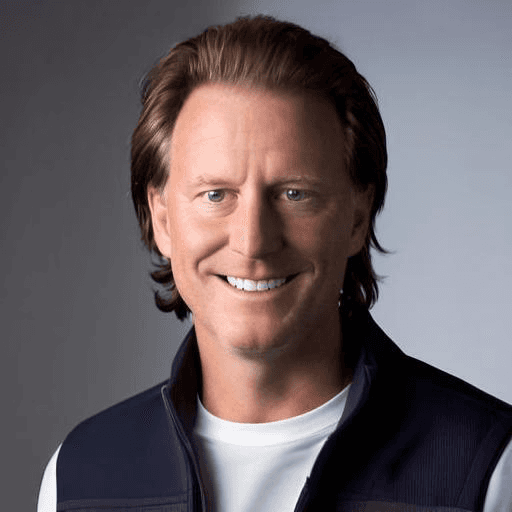
Stephen is the co-founder and CEO of Secure Closure, a company developing a large-bore vascular closure system. Trained as a veterinarian, he’s spent more than 25 years in the medical device industry, with deep experience in vascular access and closure technologies. He previously held commercial and marketing roles at Abbott Vascular, Edwards Lifesciences, and Teleflex, where he was involved in launching ProGlide, StarClose, SAPIEN 3, and MANTA.
Interview Summary
Stephen Belcher is the co-founder and CEO of Secure Closure, a company developing a next-generation large-bore vascular closure system. Trained as a veterinarian in New Zealand, Stephen built a practical, anatomy-first approach to problem-solving early — one he carried through more than 25 years in the medical device industry. That path took him through Abbott Vascular, where he helped launch ProGlide and StarClose, to Edwards Lifesciences for the SAPIEN 3 rollout, and later to Teleflex, where he worked on large-bore closure with MANTA.
Those roles gave him a front-row seat in cath labs around the world. Over time, one gap became increasingly clear: while minimally invasive and structural heart procedures had advanced rapidly, closure — the final and critical step — had changed very little. Physicians were often forced to manage large-bore access sites with tools that hadn’t kept pace with the scale and complexity of modern procedures.
That observation turned into a side project. Nearly a decade before launching Secure Closure, Stephen began self-funding development alongside his day job, slowly iterating through early prototypes and development cycles. By the time the company was formally incorporated in 2024 with co-founder Eric Goslau, the device had reached its third generation.
Secure Closure’s Quattro-Close is designed for large-bore femoral access sites used in procedures like TAVR. The device builds on the familiarity of suture-based closure while introducing a different mechanism intended to improve reliability and preserve the long-term integrity of the femoral artery — an increasingly important consideration as structural heart therapies move into younger patient populations.
The company is finalizing its design ahead of an OUS first-in-human study, the key milestone tied to its current seed round. From there, Secure Closure plans to pursue a Class III PMA pathway in the U.S., culminating in a pivotal clinical trial.
Key Questions
How does the transition from a large strategic to a startup change execution?
What actually drives physician adoption in high-risk procedural categories?
How should established clinical workflows influence device design decisions?
What does building momentum look like in early-stage fundraising?
Sponsor Message
Planning to raise capital for your medtech startup? This live, 4-week workshop, led by Medsider is designed to help founders and CEOs tell a sharper story, get investor meetings that matter, and close real capital. Join the waitlist here.
Top Takeaways
Consistency — Not Novelty — Drives Physician Adoption
Stephen has launched enough closure devices to know that physicians don't switch because something is new. For high-stakes procedural devices, adoption depends on four things: safety, reliability, repeatability, and patient comfort.
Safety, in this field, isn't just a clinical standard — it's a commercial one, too. As more hospitals move toward TAVR as a same-day procedure, a failed closure that leads to bleeding or an extended hospital stay doesn't just harm the patient. It disrupts the care model the site has built around efficiency and early discharge. That's the unmet need Stephen keeps returning to: reducing complication rates to a level enough that physicians and hospitals can trust the device at scale.
Reliability and repeatability are where many devices fall short over time. Stephen has seen devices launch with strong early enthusiasm, only to lose market share when long-term consistency didn't hold. " In practice, meaningful conversion often takes about a year after launch — the time physicians need to build confidence through repeated cases.
Patient comfort proved to be the fourth piece of the adoption equation. Earlier in his career, Stephen launched a device that worked clinically but left patients feeling the closure in their leg. That feedback traveled directly back to physicians, and adoption stalled despite otherwise solid clinical performance.
➜ Physician adoption isn’t driven by novelty — it’s earned through consistent outcomes.
Safety, reliability, repeatability, and patient comfort all influence whether physicians adopt a new device, especially in high-risk procedures. Expect adoption to build slowly as confidence grows — and remember that complications don’t just affect patients, they can disrupt the entire care model around the procedure.

Designing for the Procedure — and the Patient’s Future
Stephen's approach to building Quattro-Close reflects three design priorities: addressing the challenges physicians face in practice, minimizing friction during adoption, and thinking ahead to what the same patient will need 10 or 20 years from now.
The first two priorities are closely connected. Real-world challenges — unreliable closures in calcified vessels, awkward steps like tying surgical knots, and closure patterns that distort the vessel wall — revealed where existing devices fell short. Addressing those issues without reinventing the workflow meant physicians could adopt Quattro-Close without relearning their procedure. "We don't dramatically change the procedure," Stephen explains. "But we change the way the device works to increase the reliability and simplicity of it."
The third priority shaped the longer-term design philosophy. TAVR was originally developed for patients in their 80s, but the therapy is increasingly used in younger, more active patients. That means the same femoral artery may need to support multiple procedures over 15-20 years. Preserving lumen integrity isn't a secondary consideration — it's central to the clinical value of the device. Most closure systems rely on an X-cross pattern that can cause puckering in the vessel wall. Quattro-Close instead uses a purse-string approach designed to close circumferentially, helping maintain vessel geometry and keeping the lumen as open as possible for future access.
➜ Strong device design reflects the realities of clinical practice.
Address the problems physicians face in practice, preserve the workflows they already know, and account for the patient's long-term clinical trajectory. Solving for all three — not just the immediate procedure — often determines whether a device gains traction clinically.
Fundraising Is a Snowball — Start Rolling Early
Stephen didn't start fundraising with a list of VC targets. He started with people who already knew him — converting his and his co-founder’s networks into the first layer of capital. That base, he found, creates the social proof that attracts the next wave of investors. Some prefer to see who else has committed before making a decision. "Once you have some people on board, other people will come on board," Stephen notes.
That snowball effect also comes with its own pace — and requires far more conversations than most first-time founders expect. Stephen describes himself as a conservative person, which made the volume of outreach a deliberate step outside his comfort zone. Turning early interest into firm commitments takes time, and securing a lead investor to bridge the gap from seed to Series A is its own separate challenge.
The broader funding landscape has also shifted. Traditional medtech VCs now tend to invest later than they did a decade ago, often focusing on pivotal-stage assets. As a result, early-stage founders are increasingly turning to family offices and private investors to fill the gap. Stephen structured Secure Closure’s seed round as a milestone-driven convertible note tied to the company’s OUS first-in-human study. Earlier grant funding served a dual purpose — providing capital while also offering independent validation of both the technology and the market.
➜ Early fundraising behaves more like a snowball than a sprint.
Start with trusted relationships, build momentum through early believers, and expect the process to take longer — and require more conversations — than anticipated. As traditional medtech VCs move later in the development cycle, family offices and high-net-worth angels increasingly fill the early-stage gap.
Sponsor Message
After raising over $50M from corporate venture and cardiovascular key opinion leaders, FastWave Medical has progressed rapidly in the development of its next-generation intravascular lithotripsy (IVL) systems for complex calcific disease.
The market size for IVL is over $10 billion and the only player in the space was acquired for over $13 billion in 2024. So naturally, there’s a lot of investor interest in FastWave.
Given the continued demand to invest in FastWave, their team has opened up an investor waitlist for anyone interested in potentially owning a piece of the company.
The last time FastWave opened up a private placement, it closed $11 million in two weeks. So if you’re interested in investing in one of the hottest cardiovascular startups, opt into their investor waitlist here.
Chat with Scott
Ask ScottBot questions about this interview, key takeaways, or other medtech topics.