
Knowing When to Pivot Without Starting Over
Knowing When to Pivot Without Starting Over
Interview with ABK Biomedical CEO Michael Mangano
Interview with ABK Biomedical CEO Michael Mangano

Guest

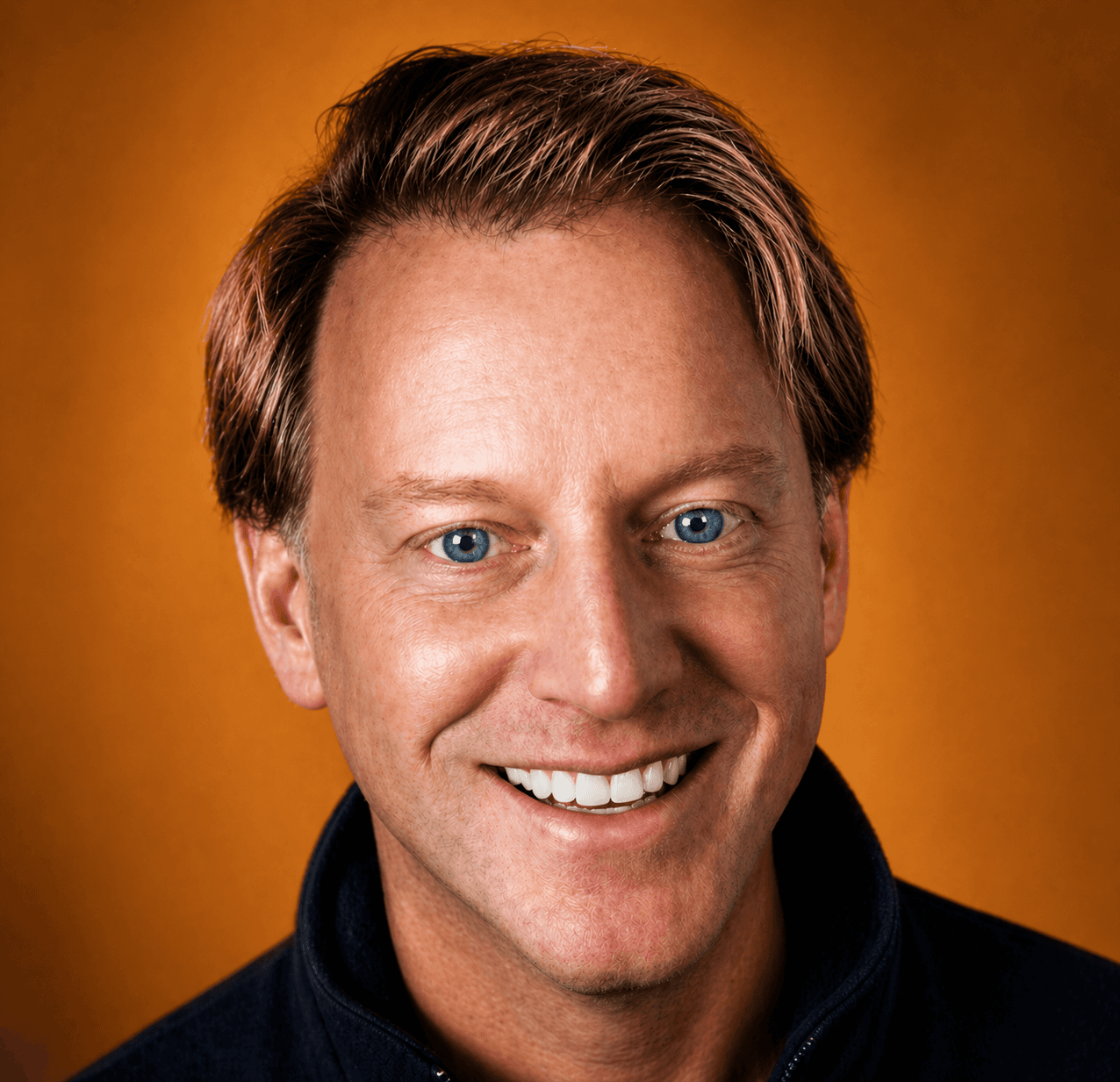
CEO of ABK Biomedical
Michael is the President and CEO of ABK Biomedical, a company developing novel technology for Y90 radioembolization. He brings over 30 years of medical device experience, including 15 years at Boston Scientific in commercial and international leadership roles. He previously served as CEO of ReShape Medical and as President of the Americas for Sirtex Medical, scaling regional revenues from $34 million to over $130 million.
Interview Summary
Michael Mangano is the President and CEO of ABK Biomedical, a clinical-stage medtech company developing novel technology for Y90 radioembolization. With more than three decades of experience in medical devices, including helping build Sirtex Medical into one of the pioneers in radioembolization — Michael joined ABK in 2018 to lead the company's next phase of growth.
Founded in 2012, ABK initially focused on developing radiopaque embolization microspheres that could be visualized under X-ray. By the time Michael joined the board, however, the company's original target market had become less attractive. Rather than abandon the underlying technology, ABK pivoted into Y-90 radioembolization, leveraging its existing microsphere platform to develop Eye90 microspheres, its flagship Yttrium-90 (Y90) radioembolization device for treating primary liver cancer. ABK also continues to advance Easi-Vue, its FDA 510(k)-cleared imageable embolization microsphere for bland embolization.
Eye90 combines radiopaque glass microspheres, patient-specific dosing, and proprietary imaging software to give physicians immediate visibility into where treatment has been delivered and whether a therapeutic dose has reached the tumor. To retain control over product development and innovation, ABK also invested in a vertically integrated manufacturing strategy, including a long-term partnership with the University of Missouri Research Reactor and a dedicated commercial manufacturing facility in Missouri for its medical radioisotope platform.
Eye90 received FDA Breakthrough Device designation in 2023, and ABK recently completed enrollment in the 120-patient, Phase III ROUTE90 pivotal IDE study evaluating the investigational device in patients with unresectable hepatocellular carcinoma. With patient follow-up underway, the company is preparing for PMA submission while building its commercial infrastructure following a $35 million Series D financing completed in 2025.
Top Takeaways
Continually evaluate whether your product is aimed at the right market. A technology's first application is not always its best commercial opportunity. As markets evolve, reassess where your solution can create the greatest value, then align your product roadmap, capital, engineering resources, and commercialization plans behind that opportunity. Staying focused on the highest-potential market may mean changing direction or delaying launches that don't support the long-term strategy.
Retain clinical trial ownership, even during shared operational execution. Clinical research organizations (CROs) can provide essential operational support, but your company should remain the face of the trial. Keep internal cross-functional teams directly involved with investigators, procedures, physician training, and reviewing outcomes so the knowledge is retained inside the company. Operational responsibilities can be shared, but ownership of the trial should not.
When entering an established market, build advantages that compound over time. Markets often reward fast-followers who think beyond first-generation differentiation. Instead of relying on a single breakthrough, build the capabilities that let you iterate faster and keep improving, even after your initial commercial launch. Whether that's manufacturing, critical infrastructure, core technology, or internal operational expertise, those capabilities compound into advantages that competitors can't quickly replicate.
Build a team of player-coaches. The strongest startup cultures don't separate leadership from execution. Hire people who can execute without constant oversight, give them a stake in the company's success through equity, and reinforce that ownership by setting clear, measurable goals. Create a player-coach culture where everyone, including the CEO, does the heavy lifting. That's how startups move at a pace strategics often can't match.
Sponsors
FastWave Medical: Named MD+DI's Company of the Year, FastWave is one of the hottest medtech startups in the cardiovascular space. See how you can invest here.
Medsider Fundraising Cohort: Planning to raise capital for your medtech startup? This live, 4-week workshop, led by Medsider is designed to help founders and CEOs tell a sharper story, get investor meetings that matter, and close real capital. Join the waitlist here.
Key Moments
03:09 Michael's journey from Boston Scientific and Sirtex to leading ABK Biomedical
04:54 Why Michael pivoted ABK from embolization to radioembolization as soon as he joined as CEO
09:24 How ABK reimagined Y-90 around physician control and patient-specific dosing
21:08 What a functioning player-coach culture looks like inside a startup
27:26 Lessons learned from a complex 120-person pivotal trial and how ABK remained the face of the study while partnering with a CRO
37:13 How ABK is building advantages competitors can't easily replicate
42:50 Michael's framework for choosing the right investors
Chat with Scott
Ask ScottBot questions about this interview, key takeaways, or other medtech topics.
Full Transcript
So that pivot started immediately: product design, building of the team in the first six months. I started putting the senior team together, some engineers together, and we set off on a new adventure to take the existing technology. And look, the first technology they were developing wasn't bad, it was a 510(k)five, it was not approved and it needed some revisions. So we ended up changing that technology and still developing our Easi-Vue product in parallel Path. But a lot of that was done to help out more with the Eye90 development.
Narrator:Welcome to Medsider, where you can learn from the brightest founders and CEOs in medical devices and health technology. Join tens of thousands of ambitious doers as we unpack the insights, tactics, and secrets behind the most successful life science startups in the world. Now here's your host, Scott Nelson.
Scott Nelson:Hey everyone, in this episode of Medsider we sat down with Michael Mangano, CEO of ABK Biomedical. ABK's Eye90 is an investigational Y90 radioembolization device for treating unresectable liver cancer. Michael brings over thirty years of medical device experience, including fifteen years at Boston Scientific in commercial and international leadership roles. He previously served as CEO of ReShape Medical and as president of the Americas for Sirtex Medical, scaling regional revenues from $34,000,000 to over $130,000,000. Here are a few topics we explored in this conversation.
Scott Nelson:First, how do you pivot to a new market without abandoning your core technology? Second, how do you differentiate in a category with entrenched competitors? Third, which parts of a clinical trial should your company own versus a clinical research organization? And last, what does a player-coach culture look like at a medtech startup?
Scott Nelson:Before we dive into the full episode, if you're a Medtech founder or CEO preparing to raise capital, you should check out the Medsider fundraising cohort. This four week live workshop combines small group sessions with real time feedback to help you sharpen your investor story, build a targeted investor pipeline, and run a focused fundraising sprint instead of a never ending slog. Over the month, you'll walk away with an investor ready narrative and deck, outreach scripts that actually get responses, a refreshed LinkedIn profile, a simple content plan that keeps you on investors' radar, and a repeatable system for running your raise. You can join the wait list at medsider.com/fundraisingcohort. Again, that's medsider.com/fundraisingcohort. Alright. Let's get to the interview.
Scott Nelson:Alright. Mike, welcome to Medsider Radio. Appreciate you coming on.
Michael Mangano:Thanks, Scott. Thanks for having me.
Scott Nelson:Yeah, very much looking forward to the discussion. I know you've been in this space for quite some time. So not only interested in learning about the category, but really your time over the past, gosh, almost closer to a decade now, right? Building ABK?
Michael Mangano:Yeah, with this company specifically, yeah, but entering, I think in September, it'll be year 32 for me in Medtech.
Scott Nelson:Wow, wow.
Michael Mangano:I am certainly starting to feel old, I can tell you that.
Scott Nelson:You and me both, you and me both. So with that said, I recorded a very short bio at the outset of this episode, but let's start there. Give us like the one to two minute kind of elevator pitch on your background before taking on the CEO role at ABK.
Michael Mangano:Yeah, sure. No, appreciate it. Cut my teeth in the industry with a big strategics that started out with Boston Scientific, I hate to say it back in 1995 and spent my first fifteen years of my career there in various jobs, multiple jobs, mostly on the commercial side of the business, but spent a bunch of years overseas in different markets. Had the opportunity to come back and work in corporate, do M&A So really learned the basics of Medtech there.
Michael Mangano:And product development was a big part of it back then in the late nineties. We really did a lot of core team development and really learned learned a lot about the business, but left Boston in late two thousand and nine and took over a small startup, publicly traded startup in Australia called Sirtex Medical and ran that business in North America and then eventually expanded to South America for about six and a half years. Had a fantastic experience there and then was able to get my first CEO role at ReShape Medical, spent a couple of years there and joined a couple of boards at that time. And one of them happened to be this small company called ABK Biomedical. We were able to exit ReShape, talk to the founder and the chairman of the board, and they convinced me to join ABK as a full time CEO.
Scott Nelson:Very good. And that was back in, I believe 2018, correct?
Michael Mangano:2018, that is correct.
Scott Nelson:Yes, 2018. So we're reporting this in mid twenty six. So close to 8 years.
Michael Mangano:It'll be eight years August 1. Yeah. Hard to believe.
Scott Nelson:Yeah, very good. I mean time, I'm sure.
Michael Mangano:Overnight success.
Scott Nelson:Exactly, exactly. With that said, I'm looking at the website right now. We'll link to it in the full write up, but it's ABK Biomedical, just as it sounds, abkbiomedical. For those who are new to the company, new to the kind of your, I guess two key products, give us a sense for kind of the space that you're operating in and maybe frame this up as if I'm a senior in high school and I don't know a ton about the device space, simplify it for me.
Michael Mangano:The company is a great story. It's your very typical, you get a physician and some PhDs together and they wanna solve the problem. So in 2012, they actually entered a contest. They won the contest. They won a small grant and formed this company.
Michael Mangano:And really over the next four to five years, they did a lot of what I'll call great R and D work. And the idea at the time was interventional radiologists do procedures under X-ray so they see what they're doing, but they do one procedure called embolization that was not visible. So the idea back then was to build an embolization product that was visible under X-ray. Again, great concept, great R and D, and when I joined the board, the markets had shifted, I'd say, in that first five year period. And so the markets they were going after really weren't, I'll say as attractive as they were probably five to ten years prior to that.
Michael Mangano:That being said, I thought the technology was really interesting and really good. And having come from Sirtex and worked in the Yttrium 90 space and radio embolization, you know, in discussions with the board, you know, we decided to kind of pivot the company at that point. The board asked me to take over and we decided to go much bigger and much larger and go after what we call this radio embolization market of which there were only two people, two players in the marketplace. Having worked for one of them for six and a half years, we had a lot of ideas of how we thought we could innovate the technology and that we could incorporate the r and d that was done at ABK and incorporate that into a new product design and go after what we thought was a much larger opportunity.
Scott Nelson:I wanna drill into Eye90 specifically because I think that's sort of the flagship product now. Was that pivot almost immediately? So when you joined back in 2018, was that within kind of a year time frame you begin to like really pour more?
Michael Mangano:Yeah. No. It was absolutely immediate. The first meeting flying to Halifax, Nova Scotia where we were based and spun out of Dalhousie University. We sat down with the team and said, this is exactly what we wanna do. I actually raised our first funds with the help of the chairman of the board at that time. We raised $7,000,000 immediately in the first two weeks of the company based on the analysis that we wrote in the pivot of the company.
Michael Mangano:And then that ended up folding into what was a series B at the time at 30,000,000. So that pivot started immediately, product design, building of the team in the first six months, I started putting the senior team together, some engineers together, and we set off on a new adventure to take the existing technology. And look, the first technology they were developing wasn't bad, but it certainly, it was a 510(k) it was not approved and it needed some revisions.
Michael Mangano:So we ended up changing that technology and still developing our Easi-Vue product and parallel path, but a lot of that was done to help out more with the I 90 development because I 90 is a radioactive product and testing that can be much more challenging. So we use the bland product, we'll call it, to actually test a lot of things out that were gonna go into the I 90 development. But, yeah, that that was immediate. And within my first, I think, seven months, we had raised our our our $30,000,000 series b with the leads being F prime and Variant at the time prior to being bought by Siemens. Okay. Then we were off to the races.
Scott Nelson:Got it. Got it. Makes sense. And then Y90 specifically, I'm sure a lot of folks that listening to this or reading the summary of this conversation are maybe loosely familiar with kind of Y90 in interventional oncology, but for those that aren't, give us like a high level overview of this technology.
Michael Mangano:Yttrium-90, so Y90 is actually the radioactive isotope that is either with one product, it's coated on the microsphere or with our product, it's embedded into a glass matrix in the microsphere. But the concept is for patients with liver cancer, and that can be typically hepatocellular carcinoma, but also metastatic disease. It's very hard to irradiate the liver from the outside, and radiation is a treatment in most liver cancers. So what this technology does is it delivers millions of microspheres, so a high dose of radiation by threading a catheter into the liver itself and injecting these millions of microspheres. They flow to the tumor bed and they get embedded into the tumor itself, of which they deliver a high dose of radiation over about a two week period, with the concept being we can irradiate or kill these tumors.
Michael Mangano:It's a minimally invasive procedure. It's an outpatient procedure. It's not chemotherapy, it's not immunotherapy, although in some cases it can be used in combination. So it really is a way to deliver a high dose of radiation to tumors without damaging any normal tissue around them.
Scott Nelson:Okay. And Eye90 specifically, how is it different versus the other kind of entrenched incumbents in the space?
Michael Mangano:So the concept we had, I'll go back through a little bit of the concept we had around designing this. What's unique about these products is they are technically a radiopharmaceutical, so they are a brachytherapy. They're typically, but it's a procedure done in the hospital, so they fall under Medtech, but yet some of the clinical programs are more like a pharmaceutical clinical program. So, and it is an oncology, which is a little different from Medtech. So it makes it a unique technology.
Michael Mangano:And what happened with the other two technologies, the one I worked at and the one TheraSphere and both Sirtex, a lot of clinical work was done early on and these clinical trials showed mixed results. Some were really positive and some of the results themselves weren't as great. So the oncology community, even though the products gained adoption, there really wasn't a great specific fit for all of them. It was usually used in late stage disease patients that were more towards the end of their life. And so the concept we had, and the thing I always had when I was with Sirtex is to ask physicians, why doesn't it work?
Michael Mangano:When does it work and when does it not work? You know? And I really never got a good answer. But the only concept we could come up with at ABK was that if you deliver enough radiation to the right place, tumors will die. And that was the simple theory we had, which was we need to find a way to get doctors to be able to deliver this product better and to deliver a more lethal dose and then confirm that they had done a good job.
Michael Mangano:And really what it turns out is those trials were designed in a way more around pharmaceutical endpoints. And what we learned, Scott, was that the patients that didn't do well on this treatment either one, didn't get enough radiation to the tumor to kill the tumor or two, which is really interesting, we missed. So we actually tried to deliver and thought we were delivering to the tumor, but we only got part of it or we didn't. really hit it at all. With that concept, we set off to design a product where we wanted to give the physicians, we took a Medtech perspective rather than a pharmaceutical perspective. And we said, Is there a way that we can give the doctor more control? So the ability to deliver the product better, and then can we build a system around it where we customize these doses per patient, rather than just saying one patient- the activity is measured in something called gigabecquerel.
Michael Mangano:Rather than giving every patient two gigabecquerel, we said we want to have the doctors do advanced calculations based on tumor sizes, tumor vascularity, that we can then do patient specific doses for those patients. And that's not only in the activity that we deliver to the tumor, but also in how many of these particles we use to deliver it. So a theory is if a tumor is two centimeters or a tumor is eight centimeters, those are gonna need two completely different call it prescriptions. So we build around our calculations, and then we build what we call as a very advanced delivery system. Rather than delivering most pharmaceuticals are delivered either intravenously, these products are delivered under pressure.
Michael Mangano:We said if we can give the doctor control, the ability to deliver this, to start, to stop, and do more of a linear or consistent delivery, which we proved on the bench, he or she has the opportunity then to deliver a greater amount of particles to the tumor and potentially to get a better result. So really about hemodynamics and vascular flow. So can we do that, incorporate that into the product? Then can we make it patient specific? And then on top of that, we said, now looking at the patient perspective, most patients that receive these technologies, they're injected and then they tell the patient, okay, procedure's done, go home, come back in three months, we'll do a scan and we'll tell you how we did.
Michael Mangano:We'll tell you if the tumor had a complete response, a partial response, or what is going on with your liver. And we kind of felt from a patient perspective, that's tough. If you have cancer and somebody tells you, well, I just gave you a treatment, but I'm not sure if it works for two to three months, that's really hard on patients. So we said, is there any way a doctor can tell at the time of the procedure or closely after if he or she did a good job or not? So with that, we added, based on the original technology that was developed at ABK, we added radio opacity to this microsphere.
Michael Mangano:So now we're able to deliver the particles and the doctor doesn't have to send a patient down to nuclear medicine PET or or SPECT scan. They can put a patient right on a CT scanner, and they can look at that tumor, and they can really have the ideas to eventually be able to correspond that image to what we call a complete or partial response. But the doctor can then tell almost immediately if they did a good job. Did the particles go to where we wanted them to go? And then they can use that image.
Michael Mangano:We've built software along with our partners at MIM/GE. We built software to allow the doctor then to take that that radiopaque picture of the tumor itself and use that to calculate how much activity that we delivered to that tumor and did we deliver a lethal dose. So now you know where it went, you know exactly how much you delivered, and you have the ability then to look at that patient really and say, we did a good job and you're gonna come back in two and three months, we're gonna consider that tumor's probably gonna be dead. Okay.
Michael Mangano:And what we learned here in our first in man, which we did down with Doctor. Andrew Holden in New Zealand, and this is what we submitted to the FDA to gain our breakthrough designation as in one of the patients, we did exactly that. It was a very difficult case. We delivered the product, we put the patient on the CT, and guess what, Scott? We actually missed the tumor. We got a very little bit of it, but we missed it.
Michael Mangano:So we were able to tell right away and bring that patient back a couple of weeks later to re-treat that patient, right? Rather than bringing them back - and what happened historically is we brought that patient back in three months and the doctors would look and say, see, it didn't work, sorry, we're gonna put you on chemotherapy or immunotherapy or something else or do another local regional therapy. So those were the kind of the concepts behind the design of the Eye90 product.
Scott Nelson:Okay. Yeah. So just in summary, you're customizing the treatment, you're allowing physicians to deliver it in a more visual kind of user friendly fashion, it sounds like. And then being able to kind of almost real time, right? Be able to kind of offer up imaging that allows the physician to tell you whether or not the effective dose was, or an effective dose was delivered to tumor.
Michael Mangano:That's a much better summary than my long explanation.
Scott Nelson:No, no, no, I'm loosely familiar with the space. Just trying to to understand at a high level, right? Like how Eye90 is differentiated versus the entrenched players. So as of mid-twenty six, for those listening to this, three or six months down the road, maybe a year down the road potentially, where's the company at right now? It sounds like you've done this first man feasibility study, got breakthrough designation you mentioned.
Michael Mangano:We got breakthrough designation. We then submitted an IDE to the US FDA, which was approved a few years back, and we actually just completed that trial. So our pivotal trial is done. It has a one year follow-up period and we're about halfway through that one year follow-up period. So we're six months away from last patient, last visit.
Michael Mangano:And then we will put together, we've done a modular submission with the agency. We've already submitted half of the PMA. We're submitting another part this year. And then the final module that will go in will be the clinical data.
Scott Nelson:Okay, okay. Wow. So that's some heavy clinical lifting over the past several years.
Michael Mangano:It was a big trial. It was 120 patients in The US and cancer trials with a lot of imaging and a lot of follow-up are, yes, very expensive. So I appreciate if my investors do listen to this. Thank you very much for the funding to be able to complete this.
Scott Nelson:Yeah, for the continued support. We'll get into fundraising because I know you've got a lot of experience kind of attracting capital to a startup like this, but also choosing the right investors. And you've got an impressive, like a really, really impressive list of investors that have infused capital into ABK. And then I guess just to circle back around to Easi-Vue, are you actively commercializing Easi-Vue now or kind of where does sit?
Michael Mangano:We've done some patients clinically in The US to again, to continue to learn because our microspheres are a different composition than the normal bland embolics are out there. So we've learned a lot about the delivery. We do have side projects going on, changes of things to our delivery devices. And we actually have we we've pivoted that to a whole suite of embolic products that we are developing. So we've got an r and d pipeline.
Michael Mangano:We really are an embolic platform company, even though the flagship is Eye90. So there's a trend today towards resorbable. So we make a resorbable microsphere. We make a porous microsphere that can be loaded with different things, including contrast.
Michael Mangano:We have the bland microspheres, and we have multiple delivery devices. So right now we didn't wanna be a commercial company. We really wanted to spend that money and those resources more towards Eye90 and the flagship product, but we do have those. So when we do go commercial with Eye90, we then can have follow on products also launch with it and fill out the bag.
Scott Nelson:Makes sense. And if time permitting, we may be circle back around to that strategy. So with that said, again, abkbiomedical.com is the website just as it sounds. We'll link to it in full write up on Medsider. But Mike, maybe for the next twenty, thirty minutes, we'll get into some cross functional topics.
Scott Nelson:We'll probably won't get into the entire list of questions that we sent over in advance, but first kind of topic I wanted to discuss with you is really kind of your experience going from senior operator to CEO, especially kind of focusing in on the past eight years or so at ABK. Take us back to 2018. You kind of touched on this a little bit, but what sort of led you to kind of go all in on ABK? I mean, you see some of these differentiated features that you just kind of went, you just explained, did you see those back then? And what did you see, I guess, at the company that caused you to say, you know what, this is where I wanna spend maybe the next ten, fifteen years of my career?
Michael Mangano:Yeah, mean, some of it has evolved obviously in that way, but yeah, we saw the opportunity, again, having worked in the space very closely, you know, the frustrations that I knew, and and I think a lot of us have done this in our career. Right? We work for big strategics. We see opportunities, and those can't be funded or they're not funded or they're secondary products, and we have experiences. So that's where a lot of these technologies are are born from.
Michael Mangano:And this was a similar story in that Sirtex really did not see it as a med tech. They did not innovate. Same with the other product, which has since been bought and sold three times by different companies and now sits with Boston Scientific, but there was very little innovation. There was some interesting clinical work done, but not innovation. And I always thought if we could innovate in this space.
Michael Mangano:So really that's what it came from. It came from wanting to innovate in this space and wanting to improve things. Again, I saw a product that I saw cure patients of cancer, but it didn't do it as often as it should, and it wasn't accepted as well by the oncology community. So it was more of an afterthought a lot of times. And I always felt that if we could establish the right product and figure out the mechanism of action, how it works more effectively, that it could become more of a standard of care.
Michael Mangano:And since then, the market has moved in that direction, fortunately. And the two competitors have done a lot of great work since then. And the clinical data that is now coming out, it is really incredible clinical data from both companies and and hopefully soon us.
Scott Nelson:Yeah. It's trying to leverage it sounds like you're trying to leverage some of the tailwinds in the space.
Michael Mangano:Yeah. For sure.
Scott Nelson:When you think about the past eight years now, especially against the backdrop of like a lot of leadership experience at strategics at kind of, let's call Sirtex kind of a mid cap, you scale that significantly. And now with a couple of startups, what are a couple of really key things that you're really trying to instill or that you maybe have instilled at ABK over the past seven, eight years now to lead, to ladder up to some of the successes that you're now experiencing?
Michael Mangano:Yeah, and I think it's the part that I love about it that I learned early in my career. Look, it's all about the people, Scott. I mean, is, I've built a network of people over the last thirty two years. I was just telling someone the other day, I think I rarely use a recruiter because our network is so big. It's either somebody I know or somebody who somebody I know knows.
Michael Mangano:And we looked, I built out my leadership team was the first thing I'd done. And I'd say almost all those people I had either worked with in the past or knew someone who had worked with them. And so to me, if you hire great people, and that's what you can do in a startup, you get control of all that part of it, right? We can talk about managing a board later in the conversation, but if you hire the best people and let them do their job, to me and set a culture that is a, as I came into ABK, it certainly was not a California based Medtech startup, right? So you had to instill that culture into everybody.
Michael Mangano:Everybody's an owner in the company now. You get your options, you get your shares, and everybody pointed in the right direction. So for me, hire great people, let them do their job and create that culture. The background I love is something that's similar to probably both of ours. It's you've spent time at a strategic, you learned the ropes, you've gone off and you've gone to a smaller company or a startup and you've had success, right?
Michael Mangano:Those two attributes to me blend perfectly for the startup world. Because as you know, being a CEO yourself, sometimes it's a blank piece of paper you put in front of people and you say, go go build it. Mhmm. Right? So people have to be comfortable with that.
Michael Mangano:And I tell everybody when I hire them, look, we're all player coaches. There are no coaches here. Everybody is a player coach. We're all doing all the heavy lifting ourselves. If you set that culture, it is amazing when you bring really good people into a company and say, wait a minute, you're not gonna bog me down with bureaucracy, Right?
Michael Mangano:We're gonna set our goals. We're gonna set our goals every year. Everybody knows where we're where we're headed. Communicate as often as you can. It it is amazing what what you can get a start up to do. Yeah. Really. You know, Half the time of what strategic can do to finish off some of these products.
Scott Nelson:The pace of that strategics never ceases to amaze me, right? When you can pull something off at a smaller, more nimble company. That player coach framework or analogy, I think makes so much sense for a startup because it's so true. Even if you bring in someone to lead a certain function, right, it's a clinical function or reg function, they may not be maybe managing a lot of internal folks early on, especially as they bring that out their team. It may be a lot of consultants, right?
Scott Nelson:Or a mix of consultants. And so they still need to have that sort of coach mentality even if they're not necessarily overseeing a large group of people. So I think that makes a ton of sense to do it all.
Michael Mangano:We create our own slides. We book our own travel, we do our All those things, right? And it starts with me. Yeah. And so I have to be the example all the way down then my leadership team. And when that blends together, then the rest of the company sees that we're all in and we're doing it and everybody joins in. You know, as you know, I just I I love coming. I'll I'll pop into a meeting and just I'm I'm shocked at the things that they've done. I'm, like, so impressed whether it's a quality meeting or an r and d meeting or a clinical meeting. Just such an impressive team and what they can accomplish.
Scott Nelson:Yeah. Sounds like you you've built out the right group of people if you can pop in and sort of sort of, like, you know, assume that they've kind of taken the reins. But with that said, yeah, it sounds like you're able to pull in or at least tap on the shoulder, right, a lot a fair number of people, you know, based on your your thirty plus years in the space. How important, I guess, circling back around to like the profile that you look for, right? Someone that has maybe spent a fair amount of time at strategics and sort of gotten a lot of experience under the belt there, but has also spent, you know, some time at startups too.
Scott Nelson:So they understand kind of how a startup functions. Do you think the latter is almost equally as important, right? So they're not totally shocked going from large corporate environment to a small startup?
Michael Mangano:Thinking about that, I probably lean still towards having that experience at a strategic. We have taken some people straight out of a strategic, and those are the people who are usually frustrated with the bureaucracy and want to leave because they want to do more. And I know we've both been there. So we have done that, but ideally, if you've already been to startup that I don't have to worry about, you know, because you don't have time to micromanage people, right, at a startup. You just can't.
Michael Mangano:Everybody is so busy doing their things. You gotta trust that people are gonna go in the right direction and and do their things, right? So and accomplish the goals that we've set for them. Ideally both, but we have pulled people straight out of strategics who have great backgrounds and they've thrived in this environment.
Scott Nelson:Yeah. I couldn't agree with you more. Sometimes like and I know there's a balance there, right? I mean, ideal scenarios that they someone's got experience at both, in both sort of environments. But to your point earlier, typically, at a strategic and probably a little bit more of a comfortable role and they're actively looking to join a startup, that those are usually some signals there, right, that maybe should tell this person is maybe ready to make the leap and understands a little bit more.
Michael Mangano:As you know, there's nowhere to hide in a startup.
Scott Nelson:No doubt. A 100% true. I wanna talk to you a little bit about this IDE pivotal, right, that you completed enrollment on. It sounds like you're halfway through kind of that one year follow-up at the route. Route 90 is what you call it, right? Route 90? Yes. Yeah. So significant pivotal. Were there any like surprising lessons learned or maybe things that you went into this and you're like, look, based on previous experience, we're gonna do X, Y, and Z. And that ended up being correct, like the correct calls. Like what are some of the key things that you can maybe offer up to other CEOs, right? That are embarking on a big pivotal.
Scott Nelson:Hey, everyone. Let's take a quick break to catch you up on Medsider courses. These eight week courses are designed to help you learn winning formulas from world class CEOs. Medsider courses cover topics like fundraising, device design and development, clinical and regulatory strategy, commercialization, and m and a. Each course covers the hard earned lessons shared by the Medtech founders and CEOs who join our program. Medsider courses can be purchased individually or they're included at no additional cost with the Medsider All Access Pass. You can explore Medsider courses at medsider.com/courses. Again, that's medsider.com/courses. Okay. Let's get back to the conversation.
Michael Mangano:Right. And I'll give you the example there. I've hired a fantastic team. I have never run a phase three IDE pivotal trial in my career. Right? I've never been responsible for it, but hired an incredible group of clinical people who then brought in the people that they knew who had worked with in the past. And and from a regulatory standpoint, obviously, too, regulatory quality, clinical altogether, all extremely important in this process. But we had some learnings along the way. I'm sure you're probably the same. I haven't heard one CEO that said that trial went faster than I thought.
Michael Mangano:That was always a challenge. I was just talking with my head of clinical today about how we feel now that the enrollment is done. It's almost like a deep breath, but you know, it it was a stressful time. But, yeah, look, what we learned there, you know, it takes longer. There's more bureaucracy, and and every single site that you go to is going to be different. Right? You think you've got a secret sauce and we can just go in. We know how to negotiate the contract. We know how to get the trial.
Michael Mangano:And this happened to be a really complex trial in that you have nuclear medicine, radiation safety. You have the nuclear regulatory commission. You have licensing in every account. So the complexity of it was to another scale for us, And that just took longer than we thought. And look, one of the challenges is, you know, this is probably the best and the worst thing. One of our sites actually got up and running very quickly and started to enroll very quickly, which was fantastic, except it set the expectations that everybody should be doing that.
Michael Mangano:And when other sites lagged behind, it became a little bit of a a a tense experience with with the board of directors because all of a sudden now enrollment's behind and why can they do it? What's the secret sauce? What are you guys doing wrong? And the other thing I'll say is, we did have help from a CRO, of course, running these massive trials. I don't know if it's possible to do it without a CRO, but the one thing, once we did get up and going and we had those eight to 10 sites up and running and enrollment started consistently going, the face of this trial was us and It our was not the CRO.
Michael Mangano:We just didn't hand it to a CRO and said, do it. I say the CRO was more in the background. They were doing extremely important work, but our clinical team was the face of this trial and our senior management team. I think we had somebody at all 120 cases that ABK represented, except maybe a few at the end when sites were doing fifteen and twenty patients. So that really to me was the key is, you know, I'm a little bit of a control freak, kind of, to that point, and having ABK be the face of the trial was extremely important.
Michael Mangano:Like I said, all of our team, whether it are R and D engineers, our clinical representation, you know, people, our chief business officer, manufacturing people went to trials, they went to sites. I mean, we were all there for all the cases, and we wanted to make sure people knew that this was noted as an ABK trial. So that, I think, you know, being a little patient, knowing that it's gonna take longer than you think, and knowing that the site initiation process was probably just so much longer than we thought it would be and the bureaucracy because most of our sites were huge institutions that were transplant sites. So that obviously the bureaucracy in those those institutions tend to be a little bit more take a little longer.
Scott Nelson:Yeah. And it sounds like you and I think similarly in terms of, you know, embarking on any sort of clinical trial. Right? Maybe it's an EFS or a feasibility study or a large pivotal like Route 90. The ideal scenario is you're building out the team, the structure in a way where your company is front and center, right?
Scott Nelson:With those touch points, right? Because obviously it's important from a brand perspective. You have more control, typically more control in that capacity. But it also, I mean, I'm not sure if you'd agree with this, but it kind of, it feels very much like almost like an early commercialization phase a little bit, right? Because you're actually, obviously that you're executing against something very different, but you're shipping product, right? You're attending cases, you're coaching physicians. and You're training on the delivery device. You're training on the procedure itself.
Michael Mangano:Yeah. I mean, chief my medical officer was involved in looking at images, early images from every single patient I think we went through, even though we had central reviews for things, we're still involved in that. And we were very fortunate that it was an unblinded trial.
Michael Mangano:So that also really helped us, you know, in communicating with the customers and understanding what early results were. Sharing, you know, we of course, you have advisory, you have you have meetings, you have clinical meetings, and and kickoff meetings we had. We ran the full program, but it was a lot of heavy lifting for the team. It was, I say, a very stressful 2.5 years or so for the organization, especially that first year when it took a while to get things going.
Scott Nelson:Oh yeah, no doubt. But I mean, that is the ideal scenario, right? If your team is managing all of those sort of end user touch points, it pays off. I mean, even though that's maybe a little bit more expensive, ideally it's not something that you hand off completely.
Michael Mangano:I mean the amount of travel crisscrossing this country for all of us was commendable. But again, when you have a team full of great people who are really invested, we devised a product from ground up in a vertically integrated company that we are trying to cure patients from cancer. I mean, everybody rallies around that. And like I said, we have we had great clinical sites who really work closely with us. So, you know, those things were but, there was a there was a heck of a lot of effort by the team for sure.
Scott Nelson:Yeah. Yeah. No doubt. The breakthrough designation, how important was that to ABK?
Michael Mangano:Yeah, I think it's been very helpful. We'll see it at the end when PMA finally goes in and when it goes through, but we certainly have been able to communicate directly with the agency. So an example, we had a first generation delivery device we used for our first in man. We started the trial with that device for the first 10 patients or so, and then we were able to submit a next generation delivery device that was much more advanced and integrate that into the trial. So I'd say communications with the agency, although if my regulatory person's listens to this, hopefully she agrees with me.
Michael Mangano:But communications, you're able to go back and forth much quicker. I think the communication level, obviously they prioritize communication to breakthrough technology. So I think that has helped us significantly when we had questions about things with the agency and then, you know, wanted to submit changes and everything. They were they were certainly, you know, recognized that and and helped us in those areas.
Scott Nelson:Did you see any advantages in other aspects of the business? Right? So, like, when it comes to site selection or getting maybe a site up to speed faster, did you see any benefits in having sort of that breakthrough designation for those?
Michael Mangano:I really don't think so because I'm not even sure the sites truly understand what that actually means. To understand what it means, I think it's more been in the communication with the agency. And and we'll see what, you know, what have and then the groups end up doing on the back end of those when they're approved for reimbursement and different things like that. I know there's been a lot of talk and a lot of work on that. I think it's more communication and communication with more senior people at the agency too when when there might be a controversy or an issue. We've been able to go directly to them and they've helped us to resolve that.
Scott Nelson:Got it. So it sounds like that's where the majority of sort of the the benefits, right, to the Yeah. Breakthrough designation that you've seen anyway. Let's segue into the broader market opportunity and how you're thinking about kind of differentiation versus the other two incumbents in the space. Obviously we went through kind of like, well, call it two to three, like key areas that truly are different, right? from a device perspective,
Scott Nelson:But give us a sense for kind of how you're thinking about eventual commercialization. Because even though I think we all know that even with a better technology, right? That sounds like fairly reasonably straightforward to explain to someone why they maybe should consider this versus something else. That still is it's difficult, right? When you're going up against kind of some big competitors. And so walk us through kind of how you're thinking about that.
Michael Mangano:Yeah, it's good and it's bad, right? We have two entrenched competitors who've been doing this for twenty five years, right? So that's the challenge, but then the good is they haven't had anything new in twenty five years, right? So we are the third product to market, but it's been, the other two have been around since 2000 roughly. So I think that alone, for us, is an opportunity.
Michael Mangano:Having done this and build out Sirtex, and that truthfully was early on at least was so much heavy lifting because it's market development, Right? The market doesn't exist and you're trying to create a market. Fortunately, between us and now what's Boston Scientific's Therasphere, there is an existing market and it's a pretty good market and it's pretty good size and it's growing. And the clinical data that they're producing now and what we will hopefully produce continues to drive adoption in this area and continues to open up the opportunity to treat more and more patients. So with that, we hope to build our commercial team.
Michael Mangano:We have another round of fundraising coming up of which we're gonna look to to build out a commercial organization for this. So I I am super excited about that because I've done it in the past. I happen to know the space very well. I think I know, you know, particularly a lot of the physicians and and main treating physicians in this area, and so do a lot of people that I've worked with in the past. So they know we're coming, but it certainly will be a challenge, I'm sure, but we hope they at least give us the opportunity to try it and tell me if you like it or don't like it.
Michael Mangano:Assuming that the clinical data is, where we think it'll be and where the competitors are, let's look at all the other options, right? The visualization of it, the ease of use, the customization of it, all those different things, we're really looking at trying to make it easier for the physicians, right? That to me is a key to continue the adoption to this technology. It's great if you're at a big cancer center and you've got everything all buttoned up, but you're treating patients out in the community, is it more difficult to do with other technologies? So we've we've tried we're trying very hard, whether it's building an ordering system, how we deliver the product, you know, how we train, all those different things. We're certainly gonna try and and simplify things for the physicians to make it easier for the product to be used.
Scott Nelson:You've mentioned the vertical sort of integration, right, at ABK. How important is that to the company moving moving forward?
Michael Mangano:Yeah. I'm I'm hoping that the bet that we made is the right bet. So far, it seems to be. What the challenge is with these technologies is they're radiopharmaceuticals. Doing development work from a Medtech perspective, you and I both know, you launch a product in Medtech, it's never perfect, There's always gonna be tweaks you wanna make to it.
Michael Mangano:There's always new sizes you wanna do, right? There's always iterations to that. When it's a radiopharmaceutical, that's hard to innovate, and it's hard to do that. It's hard to do all the testing, by the way, that is required by the FDA now if we wanna tweak our products, right? That's a huge challenge.
Michael Mangano:And we've tried to approach it in a way that we have control over everything. So other than irradiating our microspheres, which we have a long term partnership to do that with Missouri University Research Reactor, we build our own delivery devices, we build our own microspheres, we do all our dispensing, shipping, packaging of the product ourselves. Whereas our competition does a mix of some of that and they don't do some. So what that leads to is we intimately understand the product. We understand the microsphere development.
Michael Mangano:We understand the delivery devices. And and as I told you earlier, we've already introduced a second generation delivery device. We have a third generation delivery device that wants PMA approval. We'll submit that also. So we're already continuing to innovate.
Michael Mangano:We're looking at different microsphere configurations. We've got so much in the pipeline. So there's there's such an opportunity to me when you're vertically integrated and you control things in this type of environment, you can control r and d a lot better and manufacturing. And so the way we've and the way we've built the product. You know, our competitors have to worry about the product decaying. We do not.
Michael Mangano:We make custom doses per patient that we deliver out per patient because we build our manufacturing right next to the nuclear reactor. Right? So there are a lot of little things that we try to build into the company itself that we thought could give us advantages, not only when we launch, but in the future. So we have that core competency internally.
Scott Nelson:Yeah. It sounds like that was a pretty significant bet early on. Is that something that you saw even during your days at at Sirtex that you thought if we, you know, if if we were a little bit more vertically integrated, we could, you know, move faster, make changes quicker, etcetera?
Michael Mangano:Yeah, for sure. And I think it's a culture too, right? It's a culture of wanting to do that. Sirtex, they did have control over a lot of things, but there wasn't a Medtech culture to innovate. And for us, that's sort of been the theme of what we tried to build so many advantages into our product, but then the ability to change if we need to and pivot, we have that competency and we could do that.
Michael Mangano:So we've already shown some of our physician base, our next generation delivery device, and it's created a tremendous amount of excitement. So there's things we can do with our product we feel because of the way we designed it that our competition might not be able to do or it might take them a lot longer.
Scott Nelson:I wanna leave a little bit of time to talk about fundraising because you've raised significant capital for ABK, but you've got a lot of experience raising capital in general. Before we get there, circling back around to kind of this concept of, I don't want to say ABK is a fast follower, but to a certain extent, right? There's this developed market, right? Whereas compare that to your time at Sirtex scaling a new market and the market development activities and initiatives that you had to pour into that company just to sort of create this category so to speak. When you're advising other startups, right that come with it, do you generally like kind of the spot that you're in now, right?
Scott Nelson:Where like, Hey, there's a developed market here and we can be better. Can just develop better technology to serve that market versus the former, which is like, Hey, there's something interesting here, but we've got to build the whole thing for almost from scratch.
Michael Mangano:Yeah. I mean, there's advantages to both, right? And that's a whole different set of fundraising issues, as you know, also, you're gonna create something. Market development is a lot of heavy lifting, right? And it's very difficult to do. You're in a similar situation, I think, right now, and that a market was created by another company and then you're gonna come in and try and share take.
Michael Mangano:So look, everybody always wants to talk about the TAM and how big is the addressable market. And it's great now that we've got one and we've got one globally that's approaching a billion. It wasn't there when we started eight years ago, I can So tell you that, it's grown significantly and especially overseas, it's grown tremendously. So yeah, having an existing market is great.
Michael Mangano:I'd love to be a fast follower into there. And especially at a space like this, where there's huge barriers to entry, whether, and you you deal with it, right? Whether it's IP barriers, technology barriers for us, it's building a radio pharmaceutical, right? There's only so many reactors in the world, there's only so many ways to do this. So that's a huge barrier.
Michael Mangano:And frankly, the agency now is much different than it was fifteen, twenty years ago. So that is another tremendous barrier to entry. Rightfully so, they put us through the ringer on this, They made us do all the basic testing that wasn't required twenty years ago for some of these technologies. And, again, in a radiopharmaceutical that does not fit perfectly into all FDA regulations, you know, there was a lot of negotiation there on what testing we needed and what we had to do and not do. So but back to your original question, I think I think investors really love a huge total addressable market and a technology that's gonna go in and take share.
Michael Mangano:That being said, if if you have something that's gonna create a whole new space, just be prepared that it's gonna take a while. I just talked to another company that raised funds that's doing that in a similar adjacent space, and they're grinding it out. It just takes a while. Even if the data's great, the technology's great, you still gotta go gain adoption.
Scott Nelson:Yeah. It almost feels like a bit of like a two sided marketplace, right? Where you're having to build the technology, but also how to build the market as well. So with that said, let's get the fundraising, right? Because like I said earlier, you've got a really, really impressive list of investors on the cap table, F Prime, Sante, even the most recently, I think your series D was led by JP Morgan. So it's a really impressive list of investors. So talk to us a little bit about maybe how your approach to fundraising either has changed or evolved or maybe talk and feel free to frame this up as if I'm I'm a a new CEO, right? About to raise my first institutional round of capital. What are the top things that I should kind of consider heading into this?
Michael Mangano:Yeah. Look, I got a little lucky because I had some connections in this space, I think early on, but understand the profile of your investor first. So F Prime led our series B with a strategic at the time with Variant, and I got term sheets from both of them, and we were able to put the two together and raise this round and fill it out, which was fantastic. And F Prime has been an incredible partner in that they are in it for the long term, right? They said, Mike, we're ready to go.
Michael Mangano:We've got a big fund, plenty of money, right? We love the concept, love what you're doing. That really started us out. And what I'll say is, your investor base, they know everybody and they network. Right?
Michael Mangano:So if you're a good investment and they're happy with the way the company is going, right, they will introduce you to all their friends and other other VCs and forms of capital to continue the company. So that that really was big for us, is bringing in F Prime to start. And then, you know, raising the Series C, we have an undisclosed strategic on there also that people can probably figure out. So we brought in a second strategic as well as Sante, right? And Sante is a well known name with a great reputation, tend to be slightly smaller funds than some of the other investors that we have, but the networking has just been incredible through them also.
Michael Mangano:So really, to me, that's what's really helped me is, and you know as a fellow CEO, Scott, you never stop fundraising, right? I mean, you're just on calls every week with different, at least I am with different venture firms, updates, what's going on, what are you thinking, what's the next round. Look, we've been knock on wood, very fortunate. We've had, you know, multiple a lot of interest, a lot of turned down term sheets, and been able to choose really choose our investors and choose wisely. And and the thing I think we were talking about a little bit before the call started.
Michael Mangano:Right? Your board of directors and your investors are one of the most important things for a CEO. Mhmm. They can easily help you or they can easily derail a company. And especially if they're all at different phases and someone's at the end of the fund and has no crossover and someone's got a bigger fund.
Michael Mangano:So having your investor base aligned and supportive of what you're doing and then being very particular about who you add to that investor base, I think is extremely important for any CEO out there.
Scott Nelson:Oh, yeah. I I mean, I couldn't agree with you more. Obviously, it's it's a topic that's like I'm highly sensitive to highly sensitive to at this point with with Fast Wave. But but, yeah, I mean, I it's just like it's it's something that where I I think my thinking has has evolved pretty dramatically. Right? We're in the earliest stages of a startup. You're pretty desperate typically. Right? Most cases.
Scott Nelson:For capital. And I would I would make the argument now, which is where I probably where the where the I I've kind of, you know, changed my thinking over the years is that if you did capital from the wrong party early on, right, that may feel okay. Right? Hey. Just get to the next phase, you know, work with that capital and just get to the next inflection point. That's that's sort of I think that's that's fair.
Scott Nelson:That that's fair to take that position. However Yeah. If you take capital from the wrong party, you could eventually end up wasting three, four, or five years of your career only for those parties to effectively derail what you've worked on. So just people are listening to this, I'm nodding my head in agreement hearing your advice because it's so, so true. I just, for anyone that's in this boat, think twice, right?
Michael Mangano:And the right terms too. The other thing is understanding the terms, right? There's valuations, there's option pools, there's preferences and understanding all of that. And I know as a first time CEO, I I didn't understand it as well as I probably should have and Mhmm. Maybe would have rethought some of the things I did, but I spent the time learning it and understanding it. And then, you know, negotiating that part of it is really important. So yeah, I agree with you, be very careful because it can set you back.
Scott Nelson:Yeah, a 100%.
Michael Mangano:A significant amount of time.
Scott Nelson:And to your point earlier about the right investors attracting sort of the right capital, right, for future fundraise, that's so important because sometimes the terms may not on paper, you may have gotten maybe even a better term sheet on paper, right? From a different investor, but the one that may be offered slightly less favorable economic terms, but has reputation, a clear track record could attract the right syndicate. They may pay off in spades, right? In those future rounds of capital. So we talk about this a lot in the program, right? That dilution does not mean, you don't die by dilution. It's really true.
Michael Mangano:It is. I agree. And as a CEO, if you end up in the wrong situation, as you know, you can spend all your time, like for me, I like to spend my time running the company. And then fundraising is the necessary evil that comes along with it, right? Your job, you gotta do it.
Michael Mangano:They remind me all the time, it's part of job, Mike. I'm like, I understand that, but I'd rather be an operator and run the company. But the wrong board can really distract you away from that. And if you're spending all your time managing individual board members expectations and they're managing their partners and their LPs, right? And that just can weigh on you and you're gonna be distracted from actually running the company, which is what you're hired to do.
Scott Nelson:Yep, a 100%. I know we've got only got a few minutes left. I wanna time for the rapid fire portion of this interview. But again, abkbiomedical.com is the website. We'll link to it the full write up on Medsider. We'll also link to Mike's LinkedIn profile as well as you can check out his background in a little bit more detail. But with that said rapid fire portion of the interview, three hot questions. You can expound a little bit if you want, but take us out to mid twenty twenty seven. What's the most exciting milestone ahead for ABK?
Michael Mangano:Yeah, I think filing that last module over PMA, right? Last patient, last visit is gonna be a big milestone, but filing that last module, that's a big one because you're on your way to commercial assuming there's no issues.
Scott Nelson:Yeah, you gotta feel good at this stage, right? It's such a monster lift getting through a pivotal trial like this. All right, what's one lesson every Medtech entrepreneur should understand? What's kind of the billboard message that you wanna share with other CEOs, other founders?
Michael Mangano:I think I read an article that said the same exact thing the other day. It's all about the team. It is all about the team. You put the right team in place, you're gonna be in great shape, you know, and and the experience that we talked a lot about on the beginning of the call. To me, that's that's the most important. As a CEO, you put the team in place, create the culture, and and let the team go do their jobs, what you hire them for.
Scott Nelson:Alright. Last question. You know, take us back to maybe your your mid to late twenties. Your career started to take off. Any professional advice you'd whisper in the the ears of the younger version of yourself?
Michael Mangano:Yeah. That that's probably a tough one. We took a lot of risks, moved around, did a lot of different jobs. I'd say maybe be a little bit more patient in my life. I tend to not be the most patient person. My wife tells me that all the time, but I've mellowed a little bit as I've gotten older. Managing up was never a strength for me. Always wanted to get onto the next thing, hence I ended up in the startup world, right? So, but yeah, now it's just been an incredible run. I've been extremely lucky of what I've done so far and created some great friends and networks networks out there and and love the industry we work in.
Scott Nelson:Yeah. A a healthy bit of impatience mixed with maybe a healthy bit of patience. Right?
Michael Mangano:Yeah. When you're younger, it's a little different, but now that I'm a little or hopefully I'm a little bit better.
Scott Nelson:Oh, yeah. Yeah. It's definitely one of the one of the the pieces of advice that I'd I'd give my my my younger self as well or as I tell my younger self too. So, Mike, thanks thanks a ton for carving out some time to tell us a little bit more about about your your your background, but also, you know, kind of the journey building ABK. It would be fun to watch kind of the next, the next year a couple years ahead for for you and your team.
Michael Mangano:Greatly appreciate it. Thanks again for the conversation, and and best of luck to you with your adventures also.
Scott Nelson:Yeah. I appreciate it. And I'll have you hold on the line. But for everyone listening, you made it this far. Appreciate your attention. As always, until the next episode of Medsider goes live. Everyone, take care.
Scott Nelson:Hey. It's Scott again. One quick thing before you go. You see, I love bringing you insightful conversations with the best founders and CEOs of medical device and health technology startups. But here's the thing. I'd be super grateful if she could help me reach even more ambitious doers who share our passion. So if you found value in this podcast, you found yourself nodding your head while listening, or if you simply enjoy what we're doing with Medsider, please take a moment to leave us a review. It's super easy. Just open your Apple Podcast app or the podcast app of your choice, search for our show, and scroll down to the ratings and review section. Leave your honest thoughts and hit that five star rating if you think we're worthy. Your feedback is incredibly important and it's the best way to ensure we keep bringing you awesome discussions with leading founders and CEOs. So take a moment to be a good friend and leave that review today. As always, thanks for being a part of our journey and for helping Medsider continue to grow and evolve. Your support is greatly appreciated. Alright. Enough talk about reviews. Stay tuned for another informative episode coming at you soon.
Read More
So that pivot started immediately: product design, building of the team in the first six months. I started putting the senior team together, some engineers together, and we set off on a new adventure to take the existing technology. And look, the first technology they were developing wasn't bad, it was a 510(k)five, it was not approved and it needed some revisions. So we ended up changing that technology and still developing our Easi-Vue product in parallel Path. But a lot of that was done to help out more with the Eye90 development.
Narrator:Welcome to Medsider, where you can learn from the brightest founders and CEOs in medical devices and health technology. Join tens of thousands of ambitious doers as we unpack the insights, tactics, and secrets behind the most successful life science startups in the world. Now here's your host, Scott Nelson.
Scott Nelson:Hey everyone, in this episode of Medsider we sat down with Michael Mangano, CEO of ABK Biomedical. ABK's Eye90 is an investigational Y90 radioembolization device for treating unresectable liver cancer. Michael brings over thirty years of medical device experience, including fifteen years at Boston Scientific in commercial and international leadership roles. He previously served as CEO of ReShape Medical and as president of the Americas for Sirtex Medical, scaling regional revenues from $34,000,000 to over $130,000,000. Here are a few topics we explored in this conversation.
Scott Nelson:First, how do you pivot to a new market without abandoning your core technology? Second, how do you differentiate in a category with entrenched competitors? Third, which parts of a clinical trial should your company own versus a clinical research organization? And last, what does a player-coach culture look like at a medtech startup?
Scott Nelson:Before we dive into the full episode, if you're a Medtech founder or CEO preparing to raise capital, you should check out the Medsider fundraising cohort. This four week live workshop combines small group sessions with real time feedback to help you sharpen your investor story, build a targeted investor pipeline, and run a focused fundraising sprint instead of a never ending slog. Over the month, you'll walk away with an investor ready narrative and deck, outreach scripts that actually get responses, a refreshed LinkedIn profile, a simple content plan that keeps you on investors' radar, and a repeatable system for running your raise. You can join the wait list at medsider.com/fundraisingcohort. Again, that's medsider.com/fundraisingcohort. Alright. Let's get to the interview.
Scott Nelson:Alright. Mike, welcome to Medsider Radio. Appreciate you coming on.
Michael Mangano:Thanks, Scott. Thanks for having me.
Scott Nelson:Yeah, very much looking forward to the discussion. I know you've been in this space for quite some time. So not only interested in learning about the category, but really your time over the past, gosh, almost closer to a decade now, right? Building ABK?
Michael Mangano:Yeah, with this company specifically, yeah, but entering, I think in September, it'll be year 32 for me in Medtech.
Scott Nelson:Wow, wow.
Michael Mangano:I am certainly starting to feel old, I can tell you that.
Scott Nelson:You and me both, you and me both. So with that said, I recorded a very short bio at the outset of this episode, but let's start there. Give us like the one to two minute kind of elevator pitch on your background before taking on the CEO role at ABK.
Michael Mangano:Yeah, sure. No, appreciate it. Cut my teeth in the industry with a big strategics that started out with Boston Scientific, I hate to say it back in 1995 and spent my first fifteen years of my career there in various jobs, multiple jobs, mostly on the commercial side of the business, but spent a bunch of years overseas in different markets. Had the opportunity to come back and work in corporate, do M&A So really learned the basics of Medtech there.
Michael Mangano:And product development was a big part of it back then in the late nineties. We really did a lot of core team development and really learned learned a lot about the business, but left Boston in late two thousand and nine and took over a small startup, publicly traded startup in Australia called Sirtex Medical and ran that business in North America and then eventually expanded to South America for about six and a half years. Had a fantastic experience there and then was able to get my first CEO role at ReShape Medical, spent a couple of years there and joined a couple of boards at that time. And one of them happened to be this small company called ABK Biomedical. We were able to exit ReShape, talk to the founder and the chairman of the board, and they convinced me to join ABK as a full time CEO.
Scott Nelson:Very good. And that was back in, I believe 2018, correct?
Michael Mangano:2018, that is correct.
Scott Nelson:Yes, 2018. So we're reporting this in mid twenty six. So close to 8 years.
Michael Mangano:It'll be eight years August 1. Yeah. Hard to believe.
Scott Nelson:Yeah, very good. I mean time, I'm sure.
Michael Mangano:Overnight success.
Scott Nelson:Exactly, exactly. With that said, I'm looking at the website right now. We'll link to it in the full write up, but it's ABK Biomedical, just as it sounds, abkbiomedical. For those who are new to the company, new to the kind of your, I guess two key products, give us a sense for kind of the space that you're operating in and maybe frame this up as if I'm a senior in high school and I don't know a ton about the device space, simplify it for me.
Michael Mangano:The company is a great story. It's your very typical, you get a physician and some PhDs together and they wanna solve the problem. So in 2012, they actually entered a contest. They won the contest. They won a small grant and formed this company.
Michael Mangano:And really over the next four to five years, they did a lot of what I'll call great R and D work. And the idea at the time was interventional radiologists do procedures under X-ray so they see what they're doing, but they do one procedure called embolization that was not visible. So the idea back then was to build an embolization product that was visible under X-ray. Again, great concept, great R and D, and when I joined the board, the markets had shifted, I'd say, in that first five year period. And so the markets they were going after really weren't, I'll say as attractive as they were probably five to ten years prior to that.
Michael Mangano:That being said, I thought the technology was really interesting and really good. And having come from Sirtex and worked in the Yttrium 90 space and radio embolization, you know, in discussions with the board, you know, we decided to kind of pivot the company at that point. The board asked me to take over and we decided to go much bigger and much larger and go after what we call this radio embolization market of which there were only two people, two players in the marketplace. Having worked for one of them for six and a half years, we had a lot of ideas of how we thought we could innovate the technology and that we could incorporate the r and d that was done at ABK and incorporate that into a new product design and go after what we thought was a much larger opportunity.
Scott Nelson:I wanna drill into Eye90 specifically because I think that's sort of the flagship product now. Was that pivot almost immediately? So when you joined back in 2018, was that within kind of a year time frame you begin to like really pour more?
Michael Mangano:Yeah. No. It was absolutely immediate. The first meeting flying to Halifax, Nova Scotia where we were based and spun out of Dalhousie University. We sat down with the team and said, this is exactly what we wanna do. I actually raised our first funds with the help of the chairman of the board at that time. We raised $7,000,000 immediately in the first two weeks of the company based on the analysis that we wrote in the pivot of the company.
Michael Mangano:And then that ended up folding into what was a series B at the time at 30,000,000. So that pivot started immediately, product design, building of the team in the first six months, I started putting the senior team together, some engineers together, and we set off on a new adventure to take the existing technology. And look, the first technology they were developing wasn't bad, but it certainly, it was a 510(k) it was not approved and it needed some revisions.
Michael Mangano:So we ended up changing that technology and still developing our Easi-Vue product and parallel path, but a lot of that was done to help out more with the I 90 development because I 90 is a radioactive product and testing that can be much more challenging. So we use the bland product, we'll call it, to actually test a lot of things out that were gonna go into the I 90 development. But, yeah, that that was immediate. And within my first, I think, seven months, we had raised our our our $30,000,000 series b with the leads being F prime and Variant at the time prior to being bought by Siemens. Okay. Then we were off to the races.
Scott Nelson:Got it. Got it. Makes sense. And then Y90 specifically, I'm sure a lot of folks that listening to this or reading the summary of this conversation are maybe loosely familiar with kind of Y90 in interventional oncology, but for those that aren't, give us like a high level overview of this technology.
Michael Mangano:Yttrium-90, so Y90 is actually the radioactive isotope that is either with one product, it's coated on the microsphere or with our product, it's embedded into a glass matrix in the microsphere. But the concept is for patients with liver cancer, and that can be typically hepatocellular carcinoma, but also metastatic disease. It's very hard to irradiate the liver from the outside, and radiation is a treatment in most liver cancers. So what this technology does is it delivers millions of microspheres, so a high dose of radiation by threading a catheter into the liver itself and injecting these millions of microspheres. They flow to the tumor bed and they get embedded into the tumor itself, of which they deliver a high dose of radiation over about a two week period, with the concept being we can irradiate or kill these tumors.
Michael Mangano:It's a minimally invasive procedure. It's an outpatient procedure. It's not chemotherapy, it's not immunotherapy, although in some cases it can be used in combination. So it really is a way to deliver a high dose of radiation to tumors without damaging any normal tissue around them.
Scott Nelson:Okay. And Eye90 specifically, how is it different versus the other kind of entrenched incumbents in the space?
Michael Mangano:So the concept we had, I'll go back through a little bit of the concept we had around designing this. What's unique about these products is they are technically a radiopharmaceutical, so they are a brachytherapy. They're typically, but it's a procedure done in the hospital, so they fall under Medtech, but yet some of the clinical programs are more like a pharmaceutical clinical program. So, and it is an oncology, which is a little different from Medtech. So it makes it a unique technology.
Michael Mangano:And what happened with the other two technologies, the one I worked at and the one TheraSphere and both Sirtex, a lot of clinical work was done early on and these clinical trials showed mixed results. Some were really positive and some of the results themselves weren't as great. So the oncology community, even though the products gained adoption, there really wasn't a great specific fit for all of them. It was usually used in late stage disease patients that were more towards the end of their life. And so the concept we had, and the thing I always had when I was with Sirtex is to ask physicians, why doesn't it work?
Michael Mangano:When does it work and when does it not work? You know? And I really never got a good answer. But the only concept we could come up with at ABK was that if you deliver enough radiation to the right place, tumors will die. And that was the simple theory we had, which was we need to find a way to get doctors to be able to deliver this product better and to deliver a more lethal dose and then confirm that they had done a good job.
Michael Mangano:And really what it turns out is those trials were designed in a way more around pharmaceutical endpoints. And what we learned, Scott, was that the patients that didn't do well on this treatment either one, didn't get enough radiation to the tumor to kill the tumor or two, which is really interesting, we missed. So we actually tried to deliver and thought we were delivering to the tumor, but we only got part of it or we didn't. really hit it at all. With that concept, we set off to design a product where we wanted to give the physicians, we took a Medtech perspective rather than a pharmaceutical perspective. And we said, Is there a way that we can give the doctor more control? So the ability to deliver the product better, and then can we build a system around it where we customize these doses per patient, rather than just saying one patient- the activity is measured in something called gigabecquerel.
Michael Mangano:Rather than giving every patient two gigabecquerel, we said we want to have the doctors do advanced calculations based on tumor sizes, tumor vascularity, that we can then do patient specific doses for those patients. And that's not only in the activity that we deliver to the tumor, but also in how many of these particles we use to deliver it. So a theory is if a tumor is two centimeters or a tumor is eight centimeters, those are gonna need two completely different call it prescriptions. So we build around our calculations, and then we build what we call as a very advanced delivery system. Rather than delivering most pharmaceuticals are delivered either intravenously, these products are delivered under pressure.
Michael Mangano:We said if we can give the doctor control, the ability to deliver this, to start, to stop, and do more of a linear or consistent delivery, which we proved on the bench, he or she has the opportunity then to deliver a greater amount of particles to the tumor and potentially to get a better result. So really about hemodynamics and vascular flow. So can we do that, incorporate that into the product? Then can we make it patient specific? And then on top of that, we said, now looking at the patient perspective, most patients that receive these technologies, they're injected and then they tell the patient, okay, procedure's done, go home, come back in three months, we'll do a scan and we'll tell you how we did.
Michael Mangano:We'll tell you if the tumor had a complete response, a partial response, or what is going on with your liver. And we kind of felt from a patient perspective, that's tough. If you have cancer and somebody tells you, well, I just gave you a treatment, but I'm not sure if it works for two to three months, that's really hard on patients. So we said, is there any way a doctor can tell at the time of the procedure or closely after if he or she did a good job or not? So with that, we added, based on the original technology that was developed at ABK, we added radio opacity to this microsphere.
Michael Mangano:So now we're able to deliver the particles and the doctor doesn't have to send a patient down to nuclear medicine PET or or SPECT scan. They can put a patient right on a CT scanner, and they can look at that tumor, and they can really have the ideas to eventually be able to correspond that image to what we call a complete or partial response. But the doctor can then tell almost immediately if they did a good job. Did the particles go to where we wanted them to go? And then they can use that image.
Michael Mangano:We've built software along with our partners at MIM/GE. We built software to allow the doctor then to take that that radiopaque picture of the tumor itself and use that to calculate how much activity that we delivered to that tumor and did we deliver a lethal dose. So now you know where it went, you know exactly how much you delivered, and you have the ability then to look at that patient really and say, we did a good job and you're gonna come back in two and three months, we're gonna consider that tumor's probably gonna be dead. Okay.
Michael Mangano:And what we learned here in our first in man, which we did down with Doctor. Andrew Holden in New Zealand, and this is what we submitted to the FDA to gain our breakthrough designation as in one of the patients, we did exactly that. It was a very difficult case. We delivered the product, we put the patient on the CT, and guess what, Scott? We actually missed the tumor. We got a very little bit of it, but we missed it.
Michael Mangano:So we were able to tell right away and bring that patient back a couple of weeks later to re-treat that patient, right? Rather than bringing them back - and what happened historically is we brought that patient back in three months and the doctors would look and say, see, it didn't work, sorry, we're gonna put you on chemotherapy or immunotherapy or something else or do another local regional therapy. So those were the kind of the concepts behind the design of the Eye90 product.
Scott Nelson:Okay. Yeah. So just in summary, you're customizing the treatment, you're allowing physicians to deliver it in a more visual kind of user friendly fashion, it sounds like. And then being able to kind of almost real time, right? Be able to kind of offer up imaging that allows the physician to tell you whether or not the effective dose was, or an effective dose was delivered to tumor.
Michael Mangano:That's a much better summary than my long explanation.
Scott Nelson:No, no, no, I'm loosely familiar with the space. Just trying to to understand at a high level, right? Like how Eye90 is differentiated versus the entrenched players. So as of mid-twenty six, for those listening to this, three or six months down the road, maybe a year down the road potentially, where's the company at right now? It sounds like you've done this first man feasibility study, got breakthrough designation you mentioned.
Michael Mangano:We got breakthrough designation. We then submitted an IDE to the US FDA, which was approved a few years back, and we actually just completed that trial. So our pivotal trial is done. It has a one year follow-up period and we're about halfway through that one year follow-up period. So we're six months away from last patient, last visit.
Michael Mangano:And then we will put together, we've done a modular submission with the agency. We've already submitted half of the PMA. We're submitting another part this year. And then the final module that will go in will be the clinical data.
Scott Nelson:Okay, okay. Wow. So that's some heavy clinical lifting over the past several years.
Michael Mangano:It was a big trial. It was 120 patients in The US and cancer trials with a lot of imaging and a lot of follow-up are, yes, very expensive. So I appreciate if my investors do listen to this. Thank you very much for the funding to be able to complete this.
Scott Nelson:Yeah, for the continued support. We'll get into fundraising because I know you've got a lot of experience kind of attracting capital to a startup like this, but also choosing the right investors. And you've got an impressive, like a really, really impressive list of investors that have infused capital into ABK. And then I guess just to circle back around to Easi-Vue, are you actively commercializing Easi-Vue now or kind of where does sit?
Michael Mangano:We've done some patients clinically in The US to again, to continue to learn because our microspheres are a different composition than the normal bland embolics are out there. So we've learned a lot about the delivery. We do have side projects going on, changes of things to our delivery devices. And we actually have we we've pivoted that to a whole suite of embolic products that we are developing. So we've got an r and d pipeline.
Michael Mangano:We really are an embolic platform company, even though the flagship is Eye90. So there's a trend today towards resorbable. So we make a resorbable microsphere. We make a porous microsphere that can be loaded with different things, including contrast.
Michael Mangano:We have the bland microspheres, and we have multiple delivery devices. So right now we didn't wanna be a commercial company. We really wanted to spend that money and those resources more towards Eye90 and the flagship product, but we do have those. So when we do go commercial with Eye90, we then can have follow on products also launch with it and fill out the bag.
Scott Nelson:Makes sense. And if time permitting, we may be circle back around to that strategy. So with that said, again, abkbiomedical.com is the website just as it sounds. We'll link to it in full write up on Medsider. But Mike, maybe for the next twenty, thirty minutes, we'll get into some cross functional topics.
Scott Nelson:We'll probably won't get into the entire list of questions that we sent over in advance, but first kind of topic I wanted to discuss with you is really kind of your experience going from senior operator to CEO, especially kind of focusing in on the past eight years or so at ABK. Take us back to 2018. You kind of touched on this a little bit, but what sort of led you to kind of go all in on ABK? I mean, you see some of these differentiated features that you just kind of went, you just explained, did you see those back then? And what did you see, I guess, at the company that caused you to say, you know what, this is where I wanna spend maybe the next ten, fifteen years of my career?
Michael Mangano:Yeah, mean, some of it has evolved obviously in that way, but yeah, we saw the opportunity, again, having worked in the space very closely, you know, the frustrations that I knew, and and I think a lot of us have done this in our career. Right? We work for big strategics. We see opportunities, and those can't be funded or they're not funded or they're secondary products, and we have experiences. So that's where a lot of these technologies are are born from.
Michael Mangano:And this was a similar story in that Sirtex really did not see it as a med tech. They did not innovate. Same with the other product, which has since been bought and sold three times by different companies and now sits with Boston Scientific, but there was very little innovation. There was some interesting clinical work done, but not innovation. And I always thought if we could innovate in this space.
Michael Mangano:So really that's what it came from. It came from wanting to innovate in this space and wanting to improve things. Again, I saw a product that I saw cure patients of cancer, but it didn't do it as often as it should, and it wasn't accepted as well by the oncology community. So it was more of an afterthought a lot of times. And I always felt that if we could establish the right product and figure out the mechanism of action, how it works more effectively, that it could become more of a standard of care.
Michael Mangano:And since then, the market has moved in that direction, fortunately. And the two competitors have done a lot of great work since then. And the clinical data that is now coming out, it is really incredible clinical data from both companies and and hopefully soon us.
Scott Nelson:Yeah. It's trying to leverage it sounds like you're trying to leverage some of the tailwinds in the space.
Michael Mangano:Yeah. For sure.
Scott Nelson:When you think about the past eight years now, especially against the backdrop of like a lot of leadership experience at strategics at kind of, let's call Sirtex kind of a mid cap, you scale that significantly. And now with a couple of startups, what are a couple of really key things that you're really trying to instill or that you maybe have instilled at ABK over the past seven, eight years now to lead, to ladder up to some of the successes that you're now experiencing?
Michael Mangano:Yeah, and I think it's the part that I love about it that I learned early in my career. Look, it's all about the people, Scott. I mean, is, I've built a network of people over the last thirty two years. I was just telling someone the other day, I think I rarely use a recruiter because our network is so big. It's either somebody I know or somebody who somebody I know knows.
Michael Mangano:And we looked, I built out my leadership team was the first thing I'd done. And I'd say almost all those people I had either worked with in the past or knew someone who had worked with them. And so to me, if you hire great people, and that's what you can do in a startup, you get control of all that part of it, right? We can talk about managing a board later in the conversation, but if you hire the best people and let them do their job, to me and set a culture that is a, as I came into ABK, it certainly was not a California based Medtech startup, right? So you had to instill that culture into everybody.
Michael Mangano:Everybody's an owner in the company now. You get your options, you get your shares, and everybody pointed in the right direction. So for me, hire great people, let them do their job and create that culture. The background I love is something that's similar to probably both of ours. It's you've spent time at a strategic, you learned the ropes, you've gone off and you've gone to a smaller company or a startup and you've had success, right?
Michael Mangano:Those two attributes to me blend perfectly for the startup world. Because as you know, being a CEO yourself, sometimes it's a blank piece of paper you put in front of people and you say, go go build it. Mhmm. Right? So people have to be comfortable with that.
Michael Mangano:And I tell everybody when I hire them, look, we're all player coaches. There are no coaches here. Everybody is a player coach. We're all doing all the heavy lifting ourselves. If you set that culture, it is amazing when you bring really good people into a company and say, wait a minute, you're not gonna bog me down with bureaucracy, Right?
Michael Mangano:We're gonna set our goals. We're gonna set our goals every year. Everybody knows where we're where we're headed. Communicate as often as you can. It it is amazing what what you can get a start up to do. Yeah. Really. You know, Half the time of what strategic can do to finish off some of these products.
Scott Nelson:The pace of that strategics never ceases to amaze me, right? When you can pull something off at a smaller, more nimble company. That player coach framework or analogy, I think makes so much sense for a startup because it's so true. Even if you bring in someone to lead a certain function, right, it's a clinical function or reg function, they may not be maybe managing a lot of internal folks early on, especially as they bring that out their team. It may be a lot of consultants, right?
Scott Nelson:Or a mix of consultants. And so they still need to have that sort of coach mentality even if they're not necessarily overseeing a large group of people. So I think that makes a ton of sense to do it all.
Michael Mangano:We create our own slides. We book our own travel, we do our All those things, right? And it starts with me. Yeah. And so I have to be the example all the way down then my leadership team. And when that blends together, then the rest of the company sees that we're all in and we're doing it and everybody joins in. You know, as you know, I just I I love coming. I'll I'll pop into a meeting and just I'm I'm shocked at the things that they've done. I'm, like, so impressed whether it's a quality meeting or an r and d meeting or a clinical meeting. Just such an impressive team and what they can accomplish.
Scott Nelson:Yeah. Sounds like you you've built out the right group of people if you can pop in and sort of sort of, like, you know, assume that they've kind of taken the reins. But with that said, yeah, it sounds like you're able to pull in or at least tap on the shoulder, right, a lot a fair number of people, you know, based on your your thirty plus years in the space. How important, I guess, circling back around to like the profile that you look for, right? Someone that has maybe spent a fair amount of time at strategics and sort of gotten a lot of experience under the belt there, but has also spent, you know, some time at startups too.
Scott Nelson:So they understand kind of how a startup functions. Do you think the latter is almost equally as important, right? So they're not totally shocked going from large corporate environment to a small startup?
Michael Mangano:Thinking about that, I probably lean still towards having that experience at a strategic. We have taken some people straight out of a strategic, and those are the people who are usually frustrated with the bureaucracy and want to leave because they want to do more. And I know we've both been there. So we have done that, but ideally, if you've already been to startup that I don't have to worry about, you know, because you don't have time to micromanage people, right, at a startup. You just can't.
Michael Mangano:Everybody is so busy doing their things. You gotta trust that people are gonna go in the right direction and and do their things, right? So and accomplish the goals that we've set for them. Ideally both, but we have pulled people straight out of strategics who have great backgrounds and they've thrived in this environment.
Scott Nelson:Yeah. I couldn't agree with you more. Sometimes like and I know there's a balance there, right? I mean, ideal scenarios that they someone's got experience at both, in both sort of environments. But to your point earlier, typically, at a strategic and probably a little bit more of a comfortable role and they're actively looking to join a startup, that those are usually some signals there, right, that maybe should tell this person is maybe ready to make the leap and understands a little bit more.
Michael Mangano:As you know, there's nowhere to hide in a startup.
Scott Nelson:No doubt. A 100% true. I wanna talk to you a little bit about this IDE pivotal, right, that you completed enrollment on. It sounds like you're halfway through kind of that one year follow-up at the route. Route 90 is what you call it, right? Route 90? Yes. Yeah. So significant pivotal. Were there any like surprising lessons learned or maybe things that you went into this and you're like, look, based on previous experience, we're gonna do X, Y, and Z. And that ended up being correct, like the correct calls. Like what are some of the key things that you can maybe offer up to other CEOs, right? That are embarking on a big pivotal.
Scott Nelson:Hey, everyone. Let's take a quick break to catch you up on Medsider courses. These eight week courses are designed to help you learn winning formulas from world class CEOs. Medsider courses cover topics like fundraising, device design and development, clinical and regulatory strategy, commercialization, and m and a. Each course covers the hard earned lessons shared by the Medtech founders and CEOs who join our program. Medsider courses can be purchased individually or they're included at no additional cost with the Medsider All Access Pass. You can explore Medsider courses at medsider.com/courses. Again, that's medsider.com/courses. Okay. Let's get back to the conversation.
Michael Mangano:Right. And I'll give you the example there. I've hired a fantastic team. I have never run a phase three IDE pivotal trial in my career. Right? I've never been responsible for it, but hired an incredible group of clinical people who then brought in the people that they knew who had worked with in the past. And and from a regulatory standpoint, obviously, too, regulatory quality, clinical altogether, all extremely important in this process. But we had some learnings along the way. I'm sure you're probably the same. I haven't heard one CEO that said that trial went faster than I thought.
Michael Mangano:That was always a challenge. I was just talking with my head of clinical today about how we feel now that the enrollment is done. It's almost like a deep breath, but you know, it it was a stressful time. But, yeah, look, what we learned there, you know, it takes longer. There's more bureaucracy, and and every single site that you go to is going to be different. Right? You think you've got a secret sauce and we can just go in. We know how to negotiate the contract. We know how to get the trial.
Michael Mangano:And this happened to be a really complex trial in that you have nuclear medicine, radiation safety. You have the nuclear regulatory commission. You have licensing in every account. So the complexity of it was to another scale for us, And that just took longer than we thought. And look, one of the challenges is, you know, this is probably the best and the worst thing. One of our sites actually got up and running very quickly and started to enroll very quickly, which was fantastic, except it set the expectations that everybody should be doing that.
Michael Mangano:And when other sites lagged behind, it became a little bit of a a a tense experience with with the board of directors because all of a sudden now enrollment's behind and why can they do it? What's the secret sauce? What are you guys doing wrong? And the other thing I'll say is, we did have help from a CRO, of course, running these massive trials. I don't know if it's possible to do it without a CRO, but the one thing, once we did get up and going and we had those eight to 10 sites up and running and enrollment started consistently going, the face of this trial was us and It our was not the CRO.
Michael Mangano:We just didn't hand it to a CRO and said, do it. I say the CRO was more in the background. They were doing extremely important work, but our clinical team was the face of this trial and our senior management team. I think we had somebody at all 120 cases that ABK represented, except maybe a few at the end when sites were doing fifteen and twenty patients. So that really to me was the key is, you know, I'm a little bit of a control freak, kind of, to that point, and having ABK be the face of the trial was extremely important.
Michael Mangano:Like I said, all of our team, whether it are R and D engineers, our clinical representation, you know, people, our chief business officer, manufacturing people went to trials, they went to sites. I mean, we were all there for all the cases, and we wanted to make sure people knew that this was noted as an ABK trial. So that, I think, you know, being a little patient, knowing that it's gonna take longer than you think, and knowing that the site initiation process was probably just so much longer than we thought it would be and the bureaucracy because most of our sites were huge institutions that were transplant sites. So that obviously the bureaucracy in those those institutions tend to be a little bit more take a little longer.
Scott Nelson:Yeah. And it sounds like you and I think similarly in terms of, you know, embarking on any sort of clinical trial. Right? Maybe it's an EFS or a feasibility study or a large pivotal like Route 90. The ideal scenario is you're building out the team, the structure in a way where your company is front and center, right?
Scott Nelson:With those touch points, right? Because obviously it's important from a brand perspective. You have more control, typically more control in that capacity. But it also, I mean, I'm not sure if you'd agree with this, but it kind of, it feels very much like almost like an early commercialization phase a little bit, right? Because you're actually, obviously that you're executing against something very different, but you're shipping product, right? You're attending cases, you're coaching physicians. and You're training on the delivery device. You're training on the procedure itself.
Michael Mangano:Yeah. I mean, chief my medical officer was involved in looking at images, early images from every single patient I think we went through, even though we had central reviews for things, we're still involved in that. And we were very fortunate that it was an unblinded trial.
Michael Mangano:So that also really helped us, you know, in communicating with the customers and understanding what early results were. Sharing, you know, we of course, you have advisory, you have you have meetings, you have clinical meetings, and and kickoff meetings we had. We ran the full program, but it was a lot of heavy lifting for the team. It was, I say, a very stressful 2.5 years or so for the organization, especially that first year when it took a while to get things going.
Scott Nelson:Oh yeah, no doubt. But I mean, that is the ideal scenario, right? If your team is managing all of those sort of end user touch points, it pays off. I mean, even though that's maybe a little bit more expensive, ideally it's not something that you hand off completely.
Michael Mangano:I mean the amount of travel crisscrossing this country for all of us was commendable. But again, when you have a team full of great people who are really invested, we devised a product from ground up in a vertically integrated company that we are trying to cure patients from cancer. I mean, everybody rallies around that. And like I said, we have we had great clinical sites who really work closely with us. So, you know, those things were but, there was a there was a heck of a lot of effort by the team for sure.
Scott Nelson:Yeah. Yeah. No doubt. The breakthrough designation, how important was that to ABK?
Michael Mangano:Yeah, I think it's been very helpful. We'll see it at the end when PMA finally goes in and when it goes through, but we certainly have been able to communicate directly with the agency. So an example, we had a first generation delivery device we used for our first in man. We started the trial with that device for the first 10 patients or so, and then we were able to submit a next generation delivery device that was much more advanced and integrate that into the trial. So I'd say communications with the agency, although if my regulatory person's listens to this, hopefully she agrees with me.
Michael Mangano:But communications, you're able to go back and forth much quicker. I think the communication level, obviously they prioritize communication to breakthrough technology. So I think that has helped us significantly when we had questions about things with the agency and then, you know, wanted to submit changes and everything. They were they were certainly, you know, recognized that and and helped us in those areas.
Scott Nelson:Did you see any advantages in other aspects of the business? Right? So, like, when it comes to site selection or getting maybe a site up to speed faster, did you see any benefits in having sort of that breakthrough designation for those?
Michael Mangano:I really don't think so because I'm not even sure the sites truly understand what that actually means. To understand what it means, I think it's more been in the communication with the agency. And and we'll see what, you know, what have and then the groups end up doing on the back end of those when they're approved for reimbursement and different things like that. I know there's been a lot of talk and a lot of work on that. I think it's more communication and communication with more senior people at the agency too when when there might be a controversy or an issue. We've been able to go directly to them and they've helped us to resolve that.
Scott Nelson:Got it. So it sounds like that's where the majority of sort of the the benefits, right, to the Yeah. Breakthrough designation that you've seen anyway. Let's segue into the broader market opportunity and how you're thinking about kind of differentiation versus the other two incumbents in the space. Obviously we went through kind of like, well, call it two to three, like key areas that truly are different, right? from a device perspective,
Scott Nelson:But give us a sense for kind of how you're thinking about eventual commercialization. Because even though I think we all know that even with a better technology, right? That sounds like fairly reasonably straightforward to explain to someone why they maybe should consider this versus something else. That still is it's difficult, right? When you're going up against kind of some big competitors. And so walk us through kind of how you're thinking about that.
Michael Mangano:Yeah, it's good and it's bad, right? We have two entrenched competitors who've been doing this for twenty five years, right? So that's the challenge, but then the good is they haven't had anything new in twenty five years, right? So we are the third product to market, but it's been, the other two have been around since 2000 roughly. So I think that alone, for us, is an opportunity.
Michael Mangano:Having done this and build out Sirtex, and that truthfully was early on at least was so much heavy lifting because it's market development, Right? The market doesn't exist and you're trying to create a market. Fortunately, between us and now what's Boston Scientific's Therasphere, there is an existing market and it's a pretty good market and it's pretty good size and it's growing. And the clinical data that they're producing now and what we will hopefully produce continues to drive adoption in this area and continues to open up the opportunity to treat more and more patients. So with that, we hope to build our commercial team.
Michael Mangano:We have another round of fundraising coming up of which we're gonna look to to build out a commercial organization for this. So I I am super excited about that because I've done it in the past. I happen to know the space very well. I think I know, you know, particularly a lot of the physicians and and main treating physicians in this area, and so do a lot of people that I've worked with in the past. So they know we're coming, but it certainly will be a challenge, I'm sure, but we hope they at least give us the opportunity to try it and tell me if you like it or don't like it.
Michael Mangano:Assuming that the clinical data is, where we think it'll be and where the competitors are, let's look at all the other options, right? The visualization of it, the ease of use, the customization of it, all those different things, we're really looking at trying to make it easier for the physicians, right? That to me is a key to continue the adoption to this technology. It's great if you're at a big cancer center and you've got everything all buttoned up, but you're treating patients out in the community, is it more difficult to do with other technologies? So we've we've tried we're trying very hard, whether it's building an ordering system, how we deliver the product, you know, how we train, all those different things. We're certainly gonna try and and simplify things for the physicians to make it easier for the product to be used.
Scott Nelson:You've mentioned the vertical sort of integration, right, at ABK. How important is that to the company moving moving forward?
Michael Mangano:Yeah. I'm I'm hoping that the bet that we made is the right bet. So far, it seems to be. What the challenge is with these technologies is they're radiopharmaceuticals. Doing development work from a Medtech perspective, you and I both know, you launch a product in Medtech, it's never perfect, There's always gonna be tweaks you wanna make to it.
Michael Mangano:There's always new sizes you wanna do, right? There's always iterations to that. When it's a radiopharmaceutical, that's hard to innovate, and it's hard to do that. It's hard to do all the testing, by the way, that is required by the FDA now if we wanna tweak our products, right? That's a huge challenge.
Michael Mangano:And we've tried to approach it in a way that we have control over everything. So other than irradiating our microspheres, which we have a long term partnership to do that with Missouri University Research Reactor, we build our own delivery devices, we build our own microspheres, we do all our dispensing, shipping, packaging of the product ourselves. Whereas our competition does a mix of some of that and they don't do some. So what that leads to is we intimately understand the product. We understand the microsphere development.
Michael Mangano:We understand the delivery devices. And and as I told you earlier, we've already introduced a second generation delivery device. We have a third generation delivery device that wants PMA approval. We'll submit that also. So we're already continuing to innovate.
Michael Mangano:We're looking at different microsphere configurations. We've got so much in the pipeline. So there's there's such an opportunity to me when you're vertically integrated and you control things in this type of environment, you can control r and d a lot better and manufacturing. And so the way we've and the way we've built the product. You know, our competitors have to worry about the product decaying. We do not.
Michael Mangano:We make custom doses per patient that we deliver out per patient because we build our manufacturing right next to the nuclear reactor. Right? So there are a lot of little things that we try to build into the company itself that we thought could give us advantages, not only when we launch, but in the future. So we have that core competency internally.
Scott Nelson:Yeah. It sounds like that was a pretty significant bet early on. Is that something that you saw even during your days at at Sirtex that you thought if we, you know, if if we were a little bit more vertically integrated, we could, you know, move faster, make changes quicker, etcetera?
Michael Mangano:Yeah, for sure. And I think it's a culture too, right? It's a culture of wanting to do that. Sirtex, they did have control over a lot of things, but there wasn't a Medtech culture to innovate. And for us, that's sort of been the theme of what we tried to build so many advantages into our product, but then the ability to change if we need to and pivot, we have that competency and we could do that.
Michael Mangano:So we've already shown some of our physician base, our next generation delivery device, and it's created a tremendous amount of excitement. So there's things we can do with our product we feel because of the way we designed it that our competition might not be able to do or it might take them a lot longer.
Scott Nelson:I wanna leave a little bit of time to talk about fundraising because you've raised significant capital for ABK, but you've got a lot of experience raising capital in general. Before we get there, circling back around to kind of this concept of, I don't want to say ABK is a fast follower, but to a certain extent, right? There's this developed market, right? Whereas compare that to your time at Sirtex scaling a new market and the market development activities and initiatives that you had to pour into that company just to sort of create this category so to speak. When you're advising other startups, right that come with it, do you generally like kind of the spot that you're in now, right?
Scott Nelson:Where like, Hey, there's a developed market here and we can be better. Can just develop better technology to serve that market versus the former, which is like, Hey, there's something interesting here, but we've got to build the whole thing for almost from scratch.
Michael Mangano:Yeah. I mean, there's advantages to both, right? And that's a whole different set of fundraising issues, as you know, also, you're gonna create something. Market development is a lot of heavy lifting, right? And it's very difficult to do. You're in a similar situation, I think, right now, and that a market was created by another company and then you're gonna come in and try and share take.
Michael Mangano:So look, everybody always wants to talk about the TAM and how big is the addressable market. And it's great now that we've got one and we've got one globally that's approaching a billion. It wasn't there when we started eight years ago, I can So tell you that, it's grown significantly and especially overseas, it's grown tremendously. So yeah, having an existing market is great.
Michael Mangano:I'd love to be a fast follower into there. And especially at a space like this, where there's huge barriers to entry, whether, and you you deal with it, right? Whether it's IP barriers, technology barriers for us, it's building a radio pharmaceutical, right? There's only so many reactors in the world, there's only so many ways to do this. So that's a huge barrier.
Michael Mangano:And frankly, the agency now is much different than it was fifteen, twenty years ago. So that is another tremendous barrier to entry. Rightfully so, they put us through the ringer on this, They made us do all the basic testing that wasn't required twenty years ago for some of these technologies. And, again, in a radiopharmaceutical that does not fit perfectly into all FDA regulations, you know, there was a lot of negotiation there on what testing we needed and what we had to do and not do. So but back to your original question, I think I think investors really love a huge total addressable market and a technology that's gonna go in and take share.
Michael Mangano:That being said, if if you have something that's gonna create a whole new space, just be prepared that it's gonna take a while. I just talked to another company that raised funds that's doing that in a similar adjacent space, and they're grinding it out. It just takes a while. Even if the data's great, the technology's great, you still gotta go gain adoption.
Scott Nelson:Yeah. It almost feels like a bit of like a two sided marketplace, right? Where you're having to build the technology, but also how to build the market as well. So with that said, let's get the fundraising, right? Because like I said earlier, you've got a really, really impressive list of investors on the cap table, F Prime, Sante, even the most recently, I think your series D was led by JP Morgan. So it's a really impressive list of investors. So talk to us a little bit about maybe how your approach to fundraising either has changed or evolved or maybe talk and feel free to frame this up as if I'm I'm a a new CEO, right? About to raise my first institutional round of capital. What are the top things that I should kind of consider heading into this?
Michael Mangano:Yeah. Look, I got a little lucky because I had some connections in this space, I think early on, but understand the profile of your investor first. So F Prime led our series B with a strategic at the time with Variant, and I got term sheets from both of them, and we were able to put the two together and raise this round and fill it out, which was fantastic. And F Prime has been an incredible partner in that they are in it for the long term, right? They said, Mike, we're ready to go.
Michael Mangano:We've got a big fund, plenty of money, right? We love the concept, love what you're doing. That really started us out. And what I'll say is, your investor base, they know everybody and they network. Right?
Michael Mangano:So if you're a good investment and they're happy with the way the company is going, right, they will introduce you to all their friends and other other VCs and forms of capital to continue the company. So that that really was big for us, is bringing in F Prime to start. And then, you know, raising the Series C, we have an undisclosed strategic on there also that people can probably figure out. So we brought in a second strategic as well as Sante, right? And Sante is a well known name with a great reputation, tend to be slightly smaller funds than some of the other investors that we have, but the networking has just been incredible through them also.
Michael Mangano:So really, to me, that's what's really helped me is, and you know as a fellow CEO, Scott, you never stop fundraising, right? I mean, you're just on calls every week with different, at least I am with different venture firms, updates, what's going on, what are you thinking, what's the next round. Look, we've been knock on wood, very fortunate. We've had, you know, multiple a lot of interest, a lot of turned down term sheets, and been able to choose really choose our investors and choose wisely. And and the thing I think we were talking about a little bit before the call started.
Michael Mangano:Right? Your board of directors and your investors are one of the most important things for a CEO. Mhmm. They can easily help you or they can easily derail a company. And especially if they're all at different phases and someone's at the end of the fund and has no crossover and someone's got a bigger fund.
Michael Mangano:So having your investor base aligned and supportive of what you're doing and then being very particular about who you add to that investor base, I think is extremely important for any CEO out there.
Scott Nelson:Oh, yeah. I I mean, I couldn't agree with you more. Obviously, it's it's a topic that's like I'm highly sensitive to highly sensitive to at this point with with Fast Wave. But but, yeah, I mean, I it's just like it's it's something that where I I think my thinking has has evolved pretty dramatically. Right? We're in the earliest stages of a startup. You're pretty desperate typically. Right? Most cases.
Scott Nelson:For capital. And I would I would make the argument now, which is where I probably where the where the I I've kind of, you know, changed my thinking over the years is that if you did capital from the wrong party early on, right, that may feel okay. Right? Hey. Just get to the next phase, you know, work with that capital and just get to the next inflection point. That's that's sort of I think that's that's fair.
Scott Nelson:That that's fair to take that position. However Yeah. If you take capital from the wrong party, you could eventually end up wasting three, four, or five years of your career only for those parties to effectively derail what you've worked on. So just people are listening to this, I'm nodding my head in agreement hearing your advice because it's so, so true. I just, for anyone that's in this boat, think twice, right?
Michael Mangano:And the right terms too. The other thing is understanding the terms, right? There's valuations, there's option pools, there's preferences and understanding all of that. And I know as a first time CEO, I I didn't understand it as well as I probably should have and Mhmm. Maybe would have rethought some of the things I did, but I spent the time learning it and understanding it. And then, you know, negotiating that part of it is really important. So yeah, I agree with you, be very careful because it can set you back.
Scott Nelson:Yeah, a 100%.
Michael Mangano:A significant amount of time.
Scott Nelson:And to your point earlier about the right investors attracting sort of the right capital, right, for future fundraise, that's so important because sometimes the terms may not on paper, you may have gotten maybe even a better term sheet on paper, right? From a different investor, but the one that may be offered slightly less favorable economic terms, but has reputation, a clear track record could attract the right syndicate. They may pay off in spades, right? In those future rounds of capital. So we talk about this a lot in the program, right? That dilution does not mean, you don't die by dilution. It's really true.
Michael Mangano:It is. I agree. And as a CEO, if you end up in the wrong situation, as you know, you can spend all your time, like for me, I like to spend my time running the company. And then fundraising is the necessary evil that comes along with it, right? Your job, you gotta do it.
Michael Mangano:They remind me all the time, it's part of job, Mike. I'm like, I understand that, but I'd rather be an operator and run the company. But the wrong board can really distract you away from that. And if you're spending all your time managing individual board members expectations and they're managing their partners and their LPs, right? And that just can weigh on you and you're gonna be distracted from actually running the company, which is what you're hired to do.
Scott Nelson:Yep, a 100%. I know we've got only got a few minutes left. I wanna time for the rapid fire portion of this interview. But again, abkbiomedical.com is the website. We'll link to it the full write up on Medsider. We'll also link to Mike's LinkedIn profile as well as you can check out his background in a little bit more detail. But with that said rapid fire portion of the interview, three hot questions. You can expound a little bit if you want, but take us out to mid twenty twenty seven. What's the most exciting milestone ahead for ABK?
Michael Mangano:Yeah, I think filing that last module over PMA, right? Last patient, last visit is gonna be a big milestone, but filing that last module, that's a big one because you're on your way to commercial assuming there's no issues.
Scott Nelson:Yeah, you gotta feel good at this stage, right? It's such a monster lift getting through a pivotal trial like this. All right, what's one lesson every Medtech entrepreneur should understand? What's kind of the billboard message that you wanna share with other CEOs, other founders?
Michael Mangano:I think I read an article that said the same exact thing the other day. It's all about the team. It is all about the team. You put the right team in place, you're gonna be in great shape, you know, and and the experience that we talked a lot about on the beginning of the call. To me, that's that's the most important. As a CEO, you put the team in place, create the culture, and and let the team go do their jobs, what you hire them for.
Scott Nelson:Alright. Last question. You know, take us back to maybe your your mid to late twenties. Your career started to take off. Any professional advice you'd whisper in the the ears of the younger version of yourself?
Michael Mangano:Yeah. That that's probably a tough one. We took a lot of risks, moved around, did a lot of different jobs. I'd say maybe be a little bit more patient in my life. I tend to not be the most patient person. My wife tells me that all the time, but I've mellowed a little bit as I've gotten older. Managing up was never a strength for me. Always wanted to get onto the next thing, hence I ended up in the startup world, right? So, but yeah, now it's just been an incredible run. I've been extremely lucky of what I've done so far and created some great friends and networks networks out there and and love the industry we work in.
Scott Nelson:Yeah. A a healthy bit of impatience mixed with maybe a healthy bit of patience. Right?
Michael Mangano:Yeah. When you're younger, it's a little different, but now that I'm a little or hopefully I'm a little bit better.
Scott Nelson:Oh, yeah. Yeah. It's definitely one of the one of the the pieces of advice that I'd I'd give my my my younger self as well or as I tell my younger self too. So, Mike, thanks thanks a ton for carving out some time to tell us a little bit more about about your your your background, but also, you know, kind of the journey building ABK. It would be fun to watch kind of the next, the next year a couple years ahead for for you and your team.
Michael Mangano:Greatly appreciate it. Thanks again for the conversation, and and best of luck to you with your adventures also.
Scott Nelson:Yeah. I appreciate it. And I'll have you hold on the line. But for everyone listening, you made it this far. Appreciate your attention. As always, until the next episode of Medsider goes live. Everyone, take care.
Scott Nelson:Hey. It's Scott again. One quick thing before you go. You see, I love bringing you insightful conversations with the best founders and CEOs of medical device and health technology startups. But here's the thing. I'd be super grateful if she could help me reach even more ambitious doers who share our passion. So if you found value in this podcast, you found yourself nodding your head while listening, or if you simply enjoy what we're doing with Medsider, please take a moment to leave us a review. It's super easy. Just open your Apple Podcast app or the podcast app of your choice, search for our show, and scroll down to the ratings and review section. Leave your honest thoughts and hit that five star rating if you think we're worthy. Your feedback is incredibly important and it's the best way to ensure we keep bringing you awesome discussions with leading founders and CEOs. So take a moment to be a good friend and leave that review today. As always, thanks for being a part of our journey and for helping Medsider continue to grow and evolve. Your support is greatly appreciated. Alright. Enough talk about reviews. Stay tuned for another informative episode coming at you soon.
Read More
So that pivot started immediately: product design, building of the team in the first six months. I started putting the senior team together, some engineers together, and we set off on a new adventure to take the existing technology. And look, the first technology they were developing wasn't bad, it was a 510(k)five, it was not approved and it needed some revisions. So we ended up changing that technology and still developing our Easi-Vue product in parallel Path. But a lot of that was done to help out more with the Eye90 development.
Narrator:Welcome to Medsider, where you can learn from the brightest founders and CEOs in medical devices and health technology. Join tens of thousands of ambitious doers as we unpack the insights, tactics, and secrets behind the most successful life science startups in the world. Now here's your host, Scott Nelson.
Scott Nelson:Hey everyone, in this episode of Medsider we sat down with Michael Mangano, CEO of ABK Biomedical. ABK's Eye90 is an investigational Y90 radioembolization device for treating unresectable liver cancer. Michael brings over thirty years of medical device experience, including fifteen years at Boston Scientific in commercial and international leadership roles. He previously served as CEO of ReShape Medical and as president of the Americas for Sirtex Medical, scaling regional revenues from $34,000,000 to over $130,000,000. Here are a few topics we explored in this conversation.
Scott Nelson:First, how do you pivot to a new market without abandoning your core technology? Second, how do you differentiate in a category with entrenched competitors? Third, which parts of a clinical trial should your company own versus a clinical research organization? And last, what does a player-coach culture look like at a medtech startup?
Scott Nelson:Before we dive into the full episode, if you're a Medtech founder or CEO preparing to raise capital, you should check out the Medsider fundraising cohort. This four week live workshop combines small group sessions with real time feedback to help you sharpen your investor story, build a targeted investor pipeline, and run a focused fundraising sprint instead of a never ending slog. Over the month, you'll walk away with an investor ready narrative and deck, outreach scripts that actually get responses, a refreshed LinkedIn profile, a simple content plan that keeps you on investors' radar, and a repeatable system for running your raise. You can join the wait list at medsider.com/fundraisingcohort. Again, that's medsider.com/fundraisingcohort. Alright. Let's get to the interview.
Scott Nelson:Alright. Mike, welcome to Medsider Radio. Appreciate you coming on.
Michael Mangano:Thanks, Scott. Thanks for having me.
Scott Nelson:Yeah, very much looking forward to the discussion. I know you've been in this space for quite some time. So not only interested in learning about the category, but really your time over the past, gosh, almost closer to a decade now, right? Building ABK?
Michael Mangano:Yeah, with this company specifically, yeah, but entering, I think in September, it'll be year 32 for me in Medtech.
Scott Nelson:Wow, wow.
Michael Mangano:I am certainly starting to feel old, I can tell you that.
Scott Nelson:You and me both, you and me both. So with that said, I recorded a very short bio at the outset of this episode, but let's start there. Give us like the one to two minute kind of elevator pitch on your background before taking on the CEO role at ABK.
Michael Mangano:Yeah, sure. No, appreciate it. Cut my teeth in the industry with a big strategics that started out with Boston Scientific, I hate to say it back in 1995 and spent my first fifteen years of my career there in various jobs, multiple jobs, mostly on the commercial side of the business, but spent a bunch of years overseas in different markets. Had the opportunity to come back and work in corporate, do M&A So really learned the basics of Medtech there.
Michael Mangano:And product development was a big part of it back then in the late nineties. We really did a lot of core team development and really learned learned a lot about the business, but left Boston in late two thousand and nine and took over a small startup, publicly traded startup in Australia called Sirtex Medical and ran that business in North America and then eventually expanded to South America for about six and a half years. Had a fantastic experience there and then was able to get my first CEO role at ReShape Medical, spent a couple of years there and joined a couple of boards at that time. And one of them happened to be this small company called ABK Biomedical. We were able to exit ReShape, talk to the founder and the chairman of the board, and they convinced me to join ABK as a full time CEO.
Scott Nelson:Very good. And that was back in, I believe 2018, correct?
Michael Mangano:2018, that is correct.
Scott Nelson:Yes, 2018. So we're reporting this in mid twenty six. So close to 8 years.
Michael Mangano:It'll be eight years August 1. Yeah. Hard to believe.
Scott Nelson:Yeah, very good. I mean time, I'm sure.
Michael Mangano:Overnight success.
Scott Nelson:Exactly, exactly. With that said, I'm looking at the website right now. We'll link to it in the full write up, but it's ABK Biomedical, just as it sounds, abkbiomedical. For those who are new to the company, new to the kind of your, I guess two key products, give us a sense for kind of the space that you're operating in and maybe frame this up as if I'm a senior in high school and I don't know a ton about the device space, simplify it for me.
Michael Mangano:The company is a great story. It's your very typical, you get a physician and some PhDs together and they wanna solve the problem. So in 2012, they actually entered a contest. They won the contest. They won a small grant and formed this company.
Michael Mangano:And really over the next four to five years, they did a lot of what I'll call great R and D work. And the idea at the time was interventional radiologists do procedures under X-ray so they see what they're doing, but they do one procedure called embolization that was not visible. So the idea back then was to build an embolization product that was visible under X-ray. Again, great concept, great R and D, and when I joined the board, the markets had shifted, I'd say, in that first five year period. And so the markets they were going after really weren't, I'll say as attractive as they were probably five to ten years prior to that.
Michael Mangano:That being said, I thought the technology was really interesting and really good. And having come from Sirtex and worked in the Yttrium 90 space and radio embolization, you know, in discussions with the board, you know, we decided to kind of pivot the company at that point. The board asked me to take over and we decided to go much bigger and much larger and go after what we call this radio embolization market of which there were only two people, two players in the marketplace. Having worked for one of them for six and a half years, we had a lot of ideas of how we thought we could innovate the technology and that we could incorporate the r and d that was done at ABK and incorporate that into a new product design and go after what we thought was a much larger opportunity.
Scott Nelson:I wanna drill into Eye90 specifically because I think that's sort of the flagship product now. Was that pivot almost immediately? So when you joined back in 2018, was that within kind of a year time frame you begin to like really pour more?
Michael Mangano:Yeah. No. It was absolutely immediate. The first meeting flying to Halifax, Nova Scotia where we were based and spun out of Dalhousie University. We sat down with the team and said, this is exactly what we wanna do. I actually raised our first funds with the help of the chairman of the board at that time. We raised $7,000,000 immediately in the first two weeks of the company based on the analysis that we wrote in the pivot of the company.
Michael Mangano:And then that ended up folding into what was a series B at the time at 30,000,000. So that pivot started immediately, product design, building of the team in the first six months, I started putting the senior team together, some engineers together, and we set off on a new adventure to take the existing technology. And look, the first technology they were developing wasn't bad, but it certainly, it was a 510(k) it was not approved and it needed some revisions.
Michael Mangano:So we ended up changing that technology and still developing our Easi-Vue product and parallel path, but a lot of that was done to help out more with the I 90 development because I 90 is a radioactive product and testing that can be much more challenging. So we use the bland product, we'll call it, to actually test a lot of things out that were gonna go into the I 90 development. But, yeah, that that was immediate. And within my first, I think, seven months, we had raised our our our $30,000,000 series b with the leads being F prime and Variant at the time prior to being bought by Siemens. Okay. Then we were off to the races.
Scott Nelson:Got it. Got it. Makes sense. And then Y90 specifically, I'm sure a lot of folks that listening to this or reading the summary of this conversation are maybe loosely familiar with kind of Y90 in interventional oncology, but for those that aren't, give us like a high level overview of this technology.
Michael Mangano:Yttrium-90, so Y90 is actually the radioactive isotope that is either with one product, it's coated on the microsphere or with our product, it's embedded into a glass matrix in the microsphere. But the concept is for patients with liver cancer, and that can be typically hepatocellular carcinoma, but also metastatic disease. It's very hard to irradiate the liver from the outside, and radiation is a treatment in most liver cancers. So what this technology does is it delivers millions of microspheres, so a high dose of radiation by threading a catheter into the liver itself and injecting these millions of microspheres. They flow to the tumor bed and they get embedded into the tumor itself, of which they deliver a high dose of radiation over about a two week period, with the concept being we can irradiate or kill these tumors.
Michael Mangano:It's a minimally invasive procedure. It's an outpatient procedure. It's not chemotherapy, it's not immunotherapy, although in some cases it can be used in combination. So it really is a way to deliver a high dose of radiation to tumors without damaging any normal tissue around them.
Scott Nelson:Okay. And Eye90 specifically, how is it different versus the other kind of entrenched incumbents in the space?
Michael Mangano:So the concept we had, I'll go back through a little bit of the concept we had around designing this. What's unique about these products is they are technically a radiopharmaceutical, so they are a brachytherapy. They're typically, but it's a procedure done in the hospital, so they fall under Medtech, but yet some of the clinical programs are more like a pharmaceutical clinical program. So, and it is an oncology, which is a little different from Medtech. So it makes it a unique technology.
Michael Mangano:And what happened with the other two technologies, the one I worked at and the one TheraSphere and both Sirtex, a lot of clinical work was done early on and these clinical trials showed mixed results. Some were really positive and some of the results themselves weren't as great. So the oncology community, even though the products gained adoption, there really wasn't a great specific fit for all of them. It was usually used in late stage disease patients that were more towards the end of their life. And so the concept we had, and the thing I always had when I was with Sirtex is to ask physicians, why doesn't it work?
Michael Mangano:When does it work and when does it not work? You know? And I really never got a good answer. But the only concept we could come up with at ABK was that if you deliver enough radiation to the right place, tumors will die. And that was the simple theory we had, which was we need to find a way to get doctors to be able to deliver this product better and to deliver a more lethal dose and then confirm that they had done a good job.
Michael Mangano:And really what it turns out is those trials were designed in a way more around pharmaceutical endpoints. And what we learned, Scott, was that the patients that didn't do well on this treatment either one, didn't get enough radiation to the tumor to kill the tumor or two, which is really interesting, we missed. So we actually tried to deliver and thought we were delivering to the tumor, but we only got part of it or we didn't. really hit it at all. With that concept, we set off to design a product where we wanted to give the physicians, we took a Medtech perspective rather than a pharmaceutical perspective. And we said, Is there a way that we can give the doctor more control? So the ability to deliver the product better, and then can we build a system around it where we customize these doses per patient, rather than just saying one patient- the activity is measured in something called gigabecquerel.
Michael Mangano:Rather than giving every patient two gigabecquerel, we said we want to have the doctors do advanced calculations based on tumor sizes, tumor vascularity, that we can then do patient specific doses for those patients. And that's not only in the activity that we deliver to the tumor, but also in how many of these particles we use to deliver it. So a theory is if a tumor is two centimeters or a tumor is eight centimeters, those are gonna need two completely different call it prescriptions. So we build around our calculations, and then we build what we call as a very advanced delivery system. Rather than delivering most pharmaceuticals are delivered either intravenously, these products are delivered under pressure.
Michael Mangano:We said if we can give the doctor control, the ability to deliver this, to start, to stop, and do more of a linear or consistent delivery, which we proved on the bench, he or she has the opportunity then to deliver a greater amount of particles to the tumor and potentially to get a better result. So really about hemodynamics and vascular flow. So can we do that, incorporate that into the product? Then can we make it patient specific? And then on top of that, we said, now looking at the patient perspective, most patients that receive these technologies, they're injected and then they tell the patient, okay, procedure's done, go home, come back in three months, we'll do a scan and we'll tell you how we did.
Michael Mangano:We'll tell you if the tumor had a complete response, a partial response, or what is going on with your liver. And we kind of felt from a patient perspective, that's tough. If you have cancer and somebody tells you, well, I just gave you a treatment, but I'm not sure if it works for two to three months, that's really hard on patients. So we said, is there any way a doctor can tell at the time of the procedure or closely after if he or she did a good job or not? So with that, we added, based on the original technology that was developed at ABK, we added radio opacity to this microsphere.
Michael Mangano:So now we're able to deliver the particles and the doctor doesn't have to send a patient down to nuclear medicine PET or or SPECT scan. They can put a patient right on a CT scanner, and they can look at that tumor, and they can really have the ideas to eventually be able to correspond that image to what we call a complete or partial response. But the doctor can then tell almost immediately if they did a good job. Did the particles go to where we wanted them to go? And then they can use that image.
Michael Mangano:We've built software along with our partners at MIM/GE. We built software to allow the doctor then to take that that radiopaque picture of the tumor itself and use that to calculate how much activity that we delivered to that tumor and did we deliver a lethal dose. So now you know where it went, you know exactly how much you delivered, and you have the ability then to look at that patient really and say, we did a good job and you're gonna come back in two and three months, we're gonna consider that tumor's probably gonna be dead. Okay.
Michael Mangano:And what we learned here in our first in man, which we did down with Doctor. Andrew Holden in New Zealand, and this is what we submitted to the FDA to gain our breakthrough designation as in one of the patients, we did exactly that. It was a very difficult case. We delivered the product, we put the patient on the CT, and guess what, Scott? We actually missed the tumor. We got a very little bit of it, but we missed it.
Michael Mangano:So we were able to tell right away and bring that patient back a couple of weeks later to re-treat that patient, right? Rather than bringing them back - and what happened historically is we brought that patient back in three months and the doctors would look and say, see, it didn't work, sorry, we're gonna put you on chemotherapy or immunotherapy or something else or do another local regional therapy. So those were the kind of the concepts behind the design of the Eye90 product.
Scott Nelson:Okay. Yeah. So just in summary, you're customizing the treatment, you're allowing physicians to deliver it in a more visual kind of user friendly fashion, it sounds like. And then being able to kind of almost real time, right? Be able to kind of offer up imaging that allows the physician to tell you whether or not the effective dose was, or an effective dose was delivered to tumor.
Michael Mangano:That's a much better summary than my long explanation.
Scott Nelson:No, no, no, I'm loosely familiar with the space. Just trying to to understand at a high level, right? Like how Eye90 is differentiated versus the entrenched players. So as of mid-twenty six, for those listening to this, three or six months down the road, maybe a year down the road potentially, where's the company at right now? It sounds like you've done this first man feasibility study, got breakthrough designation you mentioned.
Michael Mangano:We got breakthrough designation. We then submitted an IDE to the US FDA, which was approved a few years back, and we actually just completed that trial. So our pivotal trial is done. It has a one year follow-up period and we're about halfway through that one year follow-up period. So we're six months away from last patient, last visit.
Michael Mangano:And then we will put together, we've done a modular submission with the agency. We've already submitted half of the PMA. We're submitting another part this year. And then the final module that will go in will be the clinical data.
Scott Nelson:Okay, okay. Wow. So that's some heavy clinical lifting over the past several years.
Michael Mangano:It was a big trial. It was 120 patients in The US and cancer trials with a lot of imaging and a lot of follow-up are, yes, very expensive. So I appreciate if my investors do listen to this. Thank you very much for the funding to be able to complete this.
Scott Nelson:Yeah, for the continued support. We'll get into fundraising because I know you've got a lot of experience kind of attracting capital to a startup like this, but also choosing the right investors. And you've got an impressive, like a really, really impressive list of investors that have infused capital into ABK. And then I guess just to circle back around to Easi-Vue, are you actively commercializing Easi-Vue now or kind of where does sit?
Michael Mangano:We've done some patients clinically in The US to again, to continue to learn because our microspheres are a different composition than the normal bland embolics are out there. So we've learned a lot about the delivery. We do have side projects going on, changes of things to our delivery devices. And we actually have we we've pivoted that to a whole suite of embolic products that we are developing. So we've got an r and d pipeline.
Michael Mangano:We really are an embolic platform company, even though the flagship is Eye90. So there's a trend today towards resorbable. So we make a resorbable microsphere. We make a porous microsphere that can be loaded with different things, including contrast.
Michael Mangano:We have the bland microspheres, and we have multiple delivery devices. So right now we didn't wanna be a commercial company. We really wanted to spend that money and those resources more towards Eye90 and the flagship product, but we do have those. So when we do go commercial with Eye90, we then can have follow on products also launch with it and fill out the bag.
Scott Nelson:Makes sense. And if time permitting, we may be circle back around to that strategy. So with that said, again, abkbiomedical.com is the website just as it sounds. We'll link to it in full write up on Medsider. But Mike, maybe for the next twenty, thirty minutes, we'll get into some cross functional topics.
Scott Nelson:We'll probably won't get into the entire list of questions that we sent over in advance, but first kind of topic I wanted to discuss with you is really kind of your experience going from senior operator to CEO, especially kind of focusing in on the past eight years or so at ABK. Take us back to 2018. You kind of touched on this a little bit, but what sort of led you to kind of go all in on ABK? I mean, you see some of these differentiated features that you just kind of went, you just explained, did you see those back then? And what did you see, I guess, at the company that caused you to say, you know what, this is where I wanna spend maybe the next ten, fifteen years of my career?
Michael Mangano:Yeah, mean, some of it has evolved obviously in that way, but yeah, we saw the opportunity, again, having worked in the space very closely, you know, the frustrations that I knew, and and I think a lot of us have done this in our career. Right? We work for big strategics. We see opportunities, and those can't be funded or they're not funded or they're secondary products, and we have experiences. So that's where a lot of these technologies are are born from.
Michael Mangano:And this was a similar story in that Sirtex really did not see it as a med tech. They did not innovate. Same with the other product, which has since been bought and sold three times by different companies and now sits with Boston Scientific, but there was very little innovation. There was some interesting clinical work done, but not innovation. And I always thought if we could innovate in this space.
Michael Mangano:So really that's what it came from. It came from wanting to innovate in this space and wanting to improve things. Again, I saw a product that I saw cure patients of cancer, but it didn't do it as often as it should, and it wasn't accepted as well by the oncology community. So it was more of an afterthought a lot of times. And I always felt that if we could establish the right product and figure out the mechanism of action, how it works more effectively, that it could become more of a standard of care.
Michael Mangano:And since then, the market has moved in that direction, fortunately. And the two competitors have done a lot of great work since then. And the clinical data that is now coming out, it is really incredible clinical data from both companies and and hopefully soon us.
Scott Nelson:Yeah. It's trying to leverage it sounds like you're trying to leverage some of the tailwinds in the space.
Michael Mangano:Yeah. For sure.
Scott Nelson:When you think about the past eight years now, especially against the backdrop of like a lot of leadership experience at strategics at kind of, let's call Sirtex kind of a mid cap, you scale that significantly. And now with a couple of startups, what are a couple of really key things that you're really trying to instill or that you maybe have instilled at ABK over the past seven, eight years now to lead, to ladder up to some of the successes that you're now experiencing?
Michael Mangano:Yeah, and I think it's the part that I love about it that I learned early in my career. Look, it's all about the people, Scott. I mean, is, I've built a network of people over the last thirty two years. I was just telling someone the other day, I think I rarely use a recruiter because our network is so big. It's either somebody I know or somebody who somebody I know knows.
Michael Mangano:And we looked, I built out my leadership team was the first thing I'd done. And I'd say almost all those people I had either worked with in the past or knew someone who had worked with them. And so to me, if you hire great people, and that's what you can do in a startup, you get control of all that part of it, right? We can talk about managing a board later in the conversation, but if you hire the best people and let them do their job, to me and set a culture that is a, as I came into ABK, it certainly was not a California based Medtech startup, right? So you had to instill that culture into everybody.
Michael Mangano:Everybody's an owner in the company now. You get your options, you get your shares, and everybody pointed in the right direction. So for me, hire great people, let them do their job and create that culture. The background I love is something that's similar to probably both of ours. It's you've spent time at a strategic, you learned the ropes, you've gone off and you've gone to a smaller company or a startup and you've had success, right?
Michael Mangano:Those two attributes to me blend perfectly for the startup world. Because as you know, being a CEO yourself, sometimes it's a blank piece of paper you put in front of people and you say, go go build it. Mhmm. Right? So people have to be comfortable with that.
Michael Mangano:And I tell everybody when I hire them, look, we're all player coaches. There are no coaches here. Everybody is a player coach. We're all doing all the heavy lifting ourselves. If you set that culture, it is amazing when you bring really good people into a company and say, wait a minute, you're not gonna bog me down with bureaucracy, Right?
Michael Mangano:We're gonna set our goals. We're gonna set our goals every year. Everybody knows where we're where we're headed. Communicate as often as you can. It it is amazing what what you can get a start up to do. Yeah. Really. You know, Half the time of what strategic can do to finish off some of these products.
Scott Nelson:The pace of that strategics never ceases to amaze me, right? When you can pull something off at a smaller, more nimble company. That player coach framework or analogy, I think makes so much sense for a startup because it's so true. Even if you bring in someone to lead a certain function, right, it's a clinical function or reg function, they may not be maybe managing a lot of internal folks early on, especially as they bring that out their team. It may be a lot of consultants, right?
Scott Nelson:Or a mix of consultants. And so they still need to have that sort of coach mentality even if they're not necessarily overseeing a large group of people. So I think that makes a ton of sense to do it all.
Michael Mangano:We create our own slides. We book our own travel, we do our All those things, right? And it starts with me. Yeah. And so I have to be the example all the way down then my leadership team. And when that blends together, then the rest of the company sees that we're all in and we're doing it and everybody joins in. You know, as you know, I just I I love coming. I'll I'll pop into a meeting and just I'm I'm shocked at the things that they've done. I'm, like, so impressed whether it's a quality meeting or an r and d meeting or a clinical meeting. Just such an impressive team and what they can accomplish.
Scott Nelson:Yeah. Sounds like you you've built out the right group of people if you can pop in and sort of sort of, like, you know, assume that they've kind of taken the reins. But with that said, yeah, it sounds like you're able to pull in or at least tap on the shoulder, right, a lot a fair number of people, you know, based on your your thirty plus years in the space. How important, I guess, circling back around to like the profile that you look for, right? Someone that has maybe spent a fair amount of time at strategics and sort of gotten a lot of experience under the belt there, but has also spent, you know, some time at startups too.
Scott Nelson:So they understand kind of how a startup functions. Do you think the latter is almost equally as important, right? So they're not totally shocked going from large corporate environment to a small startup?
Michael Mangano:Thinking about that, I probably lean still towards having that experience at a strategic. We have taken some people straight out of a strategic, and those are the people who are usually frustrated with the bureaucracy and want to leave because they want to do more. And I know we've both been there. So we have done that, but ideally, if you've already been to startup that I don't have to worry about, you know, because you don't have time to micromanage people, right, at a startup. You just can't.
Michael Mangano:Everybody is so busy doing their things. You gotta trust that people are gonna go in the right direction and and do their things, right? So and accomplish the goals that we've set for them. Ideally both, but we have pulled people straight out of strategics who have great backgrounds and they've thrived in this environment.
Scott Nelson:Yeah. I couldn't agree with you more. Sometimes like and I know there's a balance there, right? I mean, ideal scenarios that they someone's got experience at both, in both sort of environments. But to your point earlier, typically, at a strategic and probably a little bit more of a comfortable role and they're actively looking to join a startup, that those are usually some signals there, right, that maybe should tell this person is maybe ready to make the leap and understands a little bit more.
Michael Mangano:As you know, there's nowhere to hide in a startup.
Scott Nelson:No doubt. A 100% true. I wanna talk to you a little bit about this IDE pivotal, right, that you completed enrollment on. It sounds like you're halfway through kind of that one year follow-up at the route. Route 90 is what you call it, right? Route 90? Yes. Yeah. So significant pivotal. Were there any like surprising lessons learned or maybe things that you went into this and you're like, look, based on previous experience, we're gonna do X, Y, and Z. And that ended up being correct, like the correct calls. Like what are some of the key things that you can maybe offer up to other CEOs, right? That are embarking on a big pivotal.
Scott Nelson:Hey, everyone. Let's take a quick break to catch you up on Medsider courses. These eight week courses are designed to help you learn winning formulas from world class CEOs. Medsider courses cover topics like fundraising, device design and development, clinical and regulatory strategy, commercialization, and m and a. Each course covers the hard earned lessons shared by the Medtech founders and CEOs who join our program. Medsider courses can be purchased individually or they're included at no additional cost with the Medsider All Access Pass. You can explore Medsider courses at medsider.com/courses. Again, that's medsider.com/courses. Okay. Let's get back to the conversation.
Michael Mangano:Right. And I'll give you the example there. I've hired a fantastic team. I have never run a phase three IDE pivotal trial in my career. Right? I've never been responsible for it, but hired an incredible group of clinical people who then brought in the people that they knew who had worked with in the past. And and from a regulatory standpoint, obviously, too, regulatory quality, clinical altogether, all extremely important in this process. But we had some learnings along the way. I'm sure you're probably the same. I haven't heard one CEO that said that trial went faster than I thought.
Michael Mangano:That was always a challenge. I was just talking with my head of clinical today about how we feel now that the enrollment is done. It's almost like a deep breath, but you know, it it was a stressful time. But, yeah, look, what we learned there, you know, it takes longer. There's more bureaucracy, and and every single site that you go to is going to be different. Right? You think you've got a secret sauce and we can just go in. We know how to negotiate the contract. We know how to get the trial.
Michael Mangano:And this happened to be a really complex trial in that you have nuclear medicine, radiation safety. You have the nuclear regulatory commission. You have licensing in every account. So the complexity of it was to another scale for us, And that just took longer than we thought. And look, one of the challenges is, you know, this is probably the best and the worst thing. One of our sites actually got up and running very quickly and started to enroll very quickly, which was fantastic, except it set the expectations that everybody should be doing that.
Michael Mangano:And when other sites lagged behind, it became a little bit of a a a tense experience with with the board of directors because all of a sudden now enrollment's behind and why can they do it? What's the secret sauce? What are you guys doing wrong? And the other thing I'll say is, we did have help from a CRO, of course, running these massive trials. I don't know if it's possible to do it without a CRO, but the one thing, once we did get up and going and we had those eight to 10 sites up and running and enrollment started consistently going, the face of this trial was us and It our was not the CRO.
Michael Mangano:We just didn't hand it to a CRO and said, do it. I say the CRO was more in the background. They were doing extremely important work, but our clinical team was the face of this trial and our senior management team. I think we had somebody at all 120 cases that ABK represented, except maybe a few at the end when sites were doing fifteen and twenty patients. So that really to me was the key is, you know, I'm a little bit of a control freak, kind of, to that point, and having ABK be the face of the trial was extremely important.
Michael Mangano:Like I said, all of our team, whether it are R and D engineers, our clinical representation, you know, people, our chief business officer, manufacturing people went to trials, they went to sites. I mean, we were all there for all the cases, and we wanted to make sure people knew that this was noted as an ABK trial. So that, I think, you know, being a little patient, knowing that it's gonna take longer than you think, and knowing that the site initiation process was probably just so much longer than we thought it would be and the bureaucracy because most of our sites were huge institutions that were transplant sites. So that obviously the bureaucracy in those those institutions tend to be a little bit more take a little longer.
Scott Nelson:Yeah. And it sounds like you and I think similarly in terms of, you know, embarking on any sort of clinical trial. Right? Maybe it's an EFS or a feasibility study or a large pivotal like Route 90. The ideal scenario is you're building out the team, the structure in a way where your company is front and center, right?
Scott Nelson:With those touch points, right? Because obviously it's important from a brand perspective. You have more control, typically more control in that capacity. But it also, I mean, I'm not sure if you'd agree with this, but it kind of, it feels very much like almost like an early commercialization phase a little bit, right? Because you're actually, obviously that you're executing against something very different, but you're shipping product, right? You're attending cases, you're coaching physicians. and You're training on the delivery device. You're training on the procedure itself.
Michael Mangano:Yeah. I mean, chief my medical officer was involved in looking at images, early images from every single patient I think we went through, even though we had central reviews for things, we're still involved in that. And we were very fortunate that it was an unblinded trial.
Michael Mangano:So that also really helped us, you know, in communicating with the customers and understanding what early results were. Sharing, you know, we of course, you have advisory, you have you have meetings, you have clinical meetings, and and kickoff meetings we had. We ran the full program, but it was a lot of heavy lifting for the team. It was, I say, a very stressful 2.5 years or so for the organization, especially that first year when it took a while to get things going.
Scott Nelson:Oh yeah, no doubt. But I mean, that is the ideal scenario, right? If your team is managing all of those sort of end user touch points, it pays off. I mean, even though that's maybe a little bit more expensive, ideally it's not something that you hand off completely.
Michael Mangano:I mean the amount of travel crisscrossing this country for all of us was commendable. But again, when you have a team full of great people who are really invested, we devised a product from ground up in a vertically integrated company that we are trying to cure patients from cancer. I mean, everybody rallies around that. And like I said, we have we had great clinical sites who really work closely with us. So, you know, those things were but, there was a there was a heck of a lot of effort by the team for sure.
Scott Nelson:Yeah. Yeah. No doubt. The breakthrough designation, how important was that to ABK?
Michael Mangano:Yeah, I think it's been very helpful. We'll see it at the end when PMA finally goes in and when it goes through, but we certainly have been able to communicate directly with the agency. So an example, we had a first generation delivery device we used for our first in man. We started the trial with that device for the first 10 patients or so, and then we were able to submit a next generation delivery device that was much more advanced and integrate that into the trial. So I'd say communications with the agency, although if my regulatory person's listens to this, hopefully she agrees with me.
Michael Mangano:But communications, you're able to go back and forth much quicker. I think the communication level, obviously they prioritize communication to breakthrough technology. So I think that has helped us significantly when we had questions about things with the agency and then, you know, wanted to submit changes and everything. They were they were certainly, you know, recognized that and and helped us in those areas.
Scott Nelson:Did you see any advantages in other aspects of the business? Right? So, like, when it comes to site selection or getting maybe a site up to speed faster, did you see any benefits in having sort of that breakthrough designation for those?
Michael Mangano:I really don't think so because I'm not even sure the sites truly understand what that actually means. To understand what it means, I think it's more been in the communication with the agency. And and we'll see what, you know, what have and then the groups end up doing on the back end of those when they're approved for reimbursement and different things like that. I know there's been a lot of talk and a lot of work on that. I think it's more communication and communication with more senior people at the agency too when when there might be a controversy or an issue. We've been able to go directly to them and they've helped us to resolve that.
Scott Nelson:Got it. So it sounds like that's where the majority of sort of the the benefits, right, to the Yeah. Breakthrough designation that you've seen anyway. Let's segue into the broader market opportunity and how you're thinking about kind of differentiation versus the other two incumbents in the space. Obviously we went through kind of like, well, call it two to three, like key areas that truly are different, right? from a device perspective,
Scott Nelson:But give us a sense for kind of how you're thinking about eventual commercialization. Because even though I think we all know that even with a better technology, right? That sounds like fairly reasonably straightforward to explain to someone why they maybe should consider this versus something else. That still is it's difficult, right? When you're going up against kind of some big competitors. And so walk us through kind of how you're thinking about that.
Michael Mangano:Yeah, it's good and it's bad, right? We have two entrenched competitors who've been doing this for twenty five years, right? So that's the challenge, but then the good is they haven't had anything new in twenty five years, right? So we are the third product to market, but it's been, the other two have been around since 2000 roughly. So I think that alone, for us, is an opportunity.
Michael Mangano:Having done this and build out Sirtex, and that truthfully was early on at least was so much heavy lifting because it's market development, Right? The market doesn't exist and you're trying to create a market. Fortunately, between us and now what's Boston Scientific's Therasphere, there is an existing market and it's a pretty good market and it's pretty good size and it's growing. And the clinical data that they're producing now and what we will hopefully produce continues to drive adoption in this area and continues to open up the opportunity to treat more and more patients. So with that, we hope to build our commercial team.
Michael Mangano:We have another round of fundraising coming up of which we're gonna look to to build out a commercial organization for this. So I I am super excited about that because I've done it in the past. I happen to know the space very well. I think I know, you know, particularly a lot of the physicians and and main treating physicians in this area, and so do a lot of people that I've worked with in the past. So they know we're coming, but it certainly will be a challenge, I'm sure, but we hope they at least give us the opportunity to try it and tell me if you like it or don't like it.
Michael Mangano:Assuming that the clinical data is, where we think it'll be and where the competitors are, let's look at all the other options, right? The visualization of it, the ease of use, the customization of it, all those different things, we're really looking at trying to make it easier for the physicians, right? That to me is a key to continue the adoption to this technology. It's great if you're at a big cancer center and you've got everything all buttoned up, but you're treating patients out in the community, is it more difficult to do with other technologies? So we've we've tried we're trying very hard, whether it's building an ordering system, how we deliver the product, you know, how we train, all those different things. We're certainly gonna try and and simplify things for the physicians to make it easier for the product to be used.
Scott Nelson:You've mentioned the vertical sort of integration, right, at ABK. How important is that to the company moving moving forward?
Michael Mangano:Yeah. I'm I'm hoping that the bet that we made is the right bet. So far, it seems to be. What the challenge is with these technologies is they're radiopharmaceuticals. Doing development work from a Medtech perspective, you and I both know, you launch a product in Medtech, it's never perfect, There's always gonna be tweaks you wanna make to it.
Michael Mangano:There's always new sizes you wanna do, right? There's always iterations to that. When it's a radiopharmaceutical, that's hard to innovate, and it's hard to do that. It's hard to do all the testing, by the way, that is required by the FDA now if we wanna tweak our products, right? That's a huge challenge.
Michael Mangano:And we've tried to approach it in a way that we have control over everything. So other than irradiating our microspheres, which we have a long term partnership to do that with Missouri University Research Reactor, we build our own delivery devices, we build our own microspheres, we do all our dispensing, shipping, packaging of the product ourselves. Whereas our competition does a mix of some of that and they don't do some. So what that leads to is we intimately understand the product. We understand the microsphere development.
Michael Mangano:We understand the delivery devices. And and as I told you earlier, we've already introduced a second generation delivery device. We have a third generation delivery device that wants PMA approval. We'll submit that also. So we're already continuing to innovate.
Michael Mangano:We're looking at different microsphere configurations. We've got so much in the pipeline. So there's there's such an opportunity to me when you're vertically integrated and you control things in this type of environment, you can control r and d a lot better and manufacturing. And so the way we've and the way we've built the product. You know, our competitors have to worry about the product decaying. We do not.
Michael Mangano:We make custom doses per patient that we deliver out per patient because we build our manufacturing right next to the nuclear reactor. Right? So there are a lot of little things that we try to build into the company itself that we thought could give us advantages, not only when we launch, but in the future. So we have that core competency internally.
Scott Nelson:Yeah. It sounds like that was a pretty significant bet early on. Is that something that you saw even during your days at at Sirtex that you thought if we, you know, if if we were a little bit more vertically integrated, we could, you know, move faster, make changes quicker, etcetera?
Michael Mangano:Yeah, for sure. And I think it's a culture too, right? It's a culture of wanting to do that. Sirtex, they did have control over a lot of things, but there wasn't a Medtech culture to innovate. And for us, that's sort of been the theme of what we tried to build so many advantages into our product, but then the ability to change if we need to and pivot, we have that competency and we could do that.
Michael Mangano:So we've already shown some of our physician base, our next generation delivery device, and it's created a tremendous amount of excitement. So there's things we can do with our product we feel because of the way we designed it that our competition might not be able to do or it might take them a lot longer.
Scott Nelson:I wanna leave a little bit of time to talk about fundraising because you've raised significant capital for ABK, but you've got a lot of experience raising capital in general. Before we get there, circling back around to kind of this concept of, I don't want to say ABK is a fast follower, but to a certain extent, right? There's this developed market, right? Whereas compare that to your time at Sirtex scaling a new market and the market development activities and initiatives that you had to pour into that company just to sort of create this category so to speak. When you're advising other startups, right that come with it, do you generally like kind of the spot that you're in now, right?
Scott Nelson:Where like, Hey, there's a developed market here and we can be better. Can just develop better technology to serve that market versus the former, which is like, Hey, there's something interesting here, but we've got to build the whole thing for almost from scratch.
Michael Mangano:Yeah. I mean, there's advantages to both, right? And that's a whole different set of fundraising issues, as you know, also, you're gonna create something. Market development is a lot of heavy lifting, right? And it's very difficult to do. You're in a similar situation, I think, right now, and that a market was created by another company and then you're gonna come in and try and share take.
Michael Mangano:So look, everybody always wants to talk about the TAM and how big is the addressable market. And it's great now that we've got one and we've got one globally that's approaching a billion. It wasn't there when we started eight years ago, I can So tell you that, it's grown significantly and especially overseas, it's grown tremendously. So yeah, having an existing market is great.
Michael Mangano:I'd love to be a fast follower into there. And especially at a space like this, where there's huge barriers to entry, whether, and you you deal with it, right? Whether it's IP barriers, technology barriers for us, it's building a radio pharmaceutical, right? There's only so many reactors in the world, there's only so many ways to do this. So that's a huge barrier.
Michael Mangano:And frankly, the agency now is much different than it was fifteen, twenty years ago. So that is another tremendous barrier to entry. Rightfully so, they put us through the ringer on this, They made us do all the basic testing that wasn't required twenty years ago for some of these technologies. And, again, in a radiopharmaceutical that does not fit perfectly into all FDA regulations, you know, there was a lot of negotiation there on what testing we needed and what we had to do and not do. So but back to your original question, I think I think investors really love a huge total addressable market and a technology that's gonna go in and take share.
Michael Mangano:That being said, if if you have something that's gonna create a whole new space, just be prepared that it's gonna take a while. I just talked to another company that raised funds that's doing that in a similar adjacent space, and they're grinding it out. It just takes a while. Even if the data's great, the technology's great, you still gotta go gain adoption.
Scott Nelson:Yeah. It almost feels like a bit of like a two sided marketplace, right? Where you're having to build the technology, but also how to build the market as well. So with that said, let's get the fundraising, right? Because like I said earlier, you've got a really, really impressive list of investors on the cap table, F Prime, Sante, even the most recently, I think your series D was led by JP Morgan. So it's a really impressive list of investors. So talk to us a little bit about maybe how your approach to fundraising either has changed or evolved or maybe talk and feel free to frame this up as if I'm I'm a a new CEO, right? About to raise my first institutional round of capital. What are the top things that I should kind of consider heading into this?
Michael Mangano:Yeah. Look, I got a little lucky because I had some connections in this space, I think early on, but understand the profile of your investor first. So F Prime led our series B with a strategic at the time with Variant, and I got term sheets from both of them, and we were able to put the two together and raise this round and fill it out, which was fantastic. And F Prime has been an incredible partner in that they are in it for the long term, right? They said, Mike, we're ready to go.
Michael Mangano:We've got a big fund, plenty of money, right? We love the concept, love what you're doing. That really started us out. And what I'll say is, your investor base, they know everybody and they network. Right?
Michael Mangano:So if you're a good investment and they're happy with the way the company is going, right, they will introduce you to all their friends and other other VCs and forms of capital to continue the company. So that that really was big for us, is bringing in F Prime to start. And then, you know, raising the Series C, we have an undisclosed strategic on there also that people can probably figure out. So we brought in a second strategic as well as Sante, right? And Sante is a well known name with a great reputation, tend to be slightly smaller funds than some of the other investors that we have, but the networking has just been incredible through them also.
Michael Mangano:So really, to me, that's what's really helped me is, and you know as a fellow CEO, Scott, you never stop fundraising, right? I mean, you're just on calls every week with different, at least I am with different venture firms, updates, what's going on, what are you thinking, what's the next round. Look, we've been knock on wood, very fortunate. We've had, you know, multiple a lot of interest, a lot of turned down term sheets, and been able to choose really choose our investors and choose wisely. And and the thing I think we were talking about a little bit before the call started.
Michael Mangano:Right? Your board of directors and your investors are one of the most important things for a CEO. Mhmm. They can easily help you or they can easily derail a company. And especially if they're all at different phases and someone's at the end of the fund and has no crossover and someone's got a bigger fund.
Michael Mangano:So having your investor base aligned and supportive of what you're doing and then being very particular about who you add to that investor base, I think is extremely important for any CEO out there.
Scott Nelson:Oh, yeah. I I mean, I couldn't agree with you more. Obviously, it's it's a topic that's like I'm highly sensitive to highly sensitive to at this point with with Fast Wave. But but, yeah, I mean, I it's just like it's it's something that where I I think my thinking has has evolved pretty dramatically. Right? We're in the earliest stages of a startup. You're pretty desperate typically. Right? Most cases.
Scott Nelson:For capital. And I would I would make the argument now, which is where I probably where the where the I I've kind of, you know, changed my thinking over the years is that if you did capital from the wrong party early on, right, that may feel okay. Right? Hey. Just get to the next phase, you know, work with that capital and just get to the next inflection point. That's that's sort of I think that's that's fair.
Scott Nelson:That that's fair to take that position. However Yeah. If you take capital from the wrong party, you could eventually end up wasting three, four, or five years of your career only for those parties to effectively derail what you've worked on. So just people are listening to this, I'm nodding my head in agreement hearing your advice because it's so, so true. I just, for anyone that's in this boat, think twice, right?
Michael Mangano:And the right terms too. The other thing is understanding the terms, right? There's valuations, there's option pools, there's preferences and understanding all of that. And I know as a first time CEO, I I didn't understand it as well as I probably should have and Mhmm. Maybe would have rethought some of the things I did, but I spent the time learning it and understanding it. And then, you know, negotiating that part of it is really important. So yeah, I agree with you, be very careful because it can set you back.
Scott Nelson:Yeah, a 100%.
Michael Mangano:A significant amount of time.
Scott Nelson:And to your point earlier about the right investors attracting sort of the right capital, right, for future fundraise, that's so important because sometimes the terms may not on paper, you may have gotten maybe even a better term sheet on paper, right? From a different investor, but the one that may be offered slightly less favorable economic terms, but has reputation, a clear track record could attract the right syndicate. They may pay off in spades, right? In those future rounds of capital. So we talk about this a lot in the program, right? That dilution does not mean, you don't die by dilution. It's really true.
Michael Mangano:It is. I agree. And as a CEO, if you end up in the wrong situation, as you know, you can spend all your time, like for me, I like to spend my time running the company. And then fundraising is the necessary evil that comes along with it, right? Your job, you gotta do it.
Michael Mangano:They remind me all the time, it's part of job, Mike. I'm like, I understand that, but I'd rather be an operator and run the company. But the wrong board can really distract you away from that. And if you're spending all your time managing individual board members expectations and they're managing their partners and their LPs, right? And that just can weigh on you and you're gonna be distracted from actually running the company, which is what you're hired to do.
Scott Nelson:Yep, a 100%. I know we've got only got a few minutes left. I wanna time for the rapid fire portion of this interview. But again, abkbiomedical.com is the website. We'll link to it the full write up on Medsider. We'll also link to Mike's LinkedIn profile as well as you can check out his background in a little bit more detail. But with that said rapid fire portion of the interview, three hot questions. You can expound a little bit if you want, but take us out to mid twenty twenty seven. What's the most exciting milestone ahead for ABK?
Michael Mangano:Yeah, I think filing that last module over PMA, right? Last patient, last visit is gonna be a big milestone, but filing that last module, that's a big one because you're on your way to commercial assuming there's no issues.
Scott Nelson:Yeah, you gotta feel good at this stage, right? It's such a monster lift getting through a pivotal trial like this. All right, what's one lesson every Medtech entrepreneur should understand? What's kind of the billboard message that you wanna share with other CEOs, other founders?
Michael Mangano:I think I read an article that said the same exact thing the other day. It's all about the team. It is all about the team. You put the right team in place, you're gonna be in great shape, you know, and and the experience that we talked a lot about on the beginning of the call. To me, that's that's the most important. As a CEO, you put the team in place, create the culture, and and let the team go do their jobs, what you hire them for.
Scott Nelson:Alright. Last question. You know, take us back to maybe your your mid to late twenties. Your career started to take off. Any professional advice you'd whisper in the the ears of the younger version of yourself?
Michael Mangano:Yeah. That that's probably a tough one. We took a lot of risks, moved around, did a lot of different jobs. I'd say maybe be a little bit more patient in my life. I tend to not be the most patient person. My wife tells me that all the time, but I've mellowed a little bit as I've gotten older. Managing up was never a strength for me. Always wanted to get onto the next thing, hence I ended up in the startup world, right? So, but yeah, now it's just been an incredible run. I've been extremely lucky of what I've done so far and created some great friends and networks networks out there and and love the industry we work in.
Scott Nelson:Yeah. A a healthy bit of impatience mixed with maybe a healthy bit of patience. Right?
Michael Mangano:Yeah. When you're younger, it's a little different, but now that I'm a little or hopefully I'm a little bit better.
Scott Nelson:Oh, yeah. Yeah. It's definitely one of the one of the the pieces of advice that I'd I'd give my my my younger self as well or as I tell my younger self too. So, Mike, thanks thanks a ton for carving out some time to tell us a little bit more about about your your your background, but also, you know, kind of the journey building ABK. It would be fun to watch kind of the next, the next year a couple years ahead for for you and your team.
Michael Mangano:Greatly appreciate it. Thanks again for the conversation, and and best of luck to you with your adventures also.
Scott Nelson:Yeah. I appreciate it. And I'll have you hold on the line. But for everyone listening, you made it this far. Appreciate your attention. As always, until the next episode of Medsider goes live. Everyone, take care.
Scott Nelson:Hey. It's Scott again. One quick thing before you go. You see, I love bringing you insightful conversations with the best founders and CEOs of medical device and health technology startups. But here's the thing. I'd be super grateful if she could help me reach even more ambitious doers who share our passion. So if you found value in this podcast, you found yourself nodding your head while listening, or if you simply enjoy what we're doing with Medsider, please take a moment to leave us a review. It's super easy. Just open your Apple Podcast app or the podcast app of your choice, search for our show, and scroll down to the ratings and review section. Leave your honest thoughts and hit that five star rating if you think we're worthy. Your feedback is incredibly important and it's the best way to ensure we keep bringing you awesome discussions with leading founders and CEOs. So take a moment to be a good friend and leave that review today. As always, thanks for being a part of our journey and for helping Medsider continue to grow and evolve. Your support is greatly appreciated. Alright. Enough talk about reviews. Stay tuned for another informative episode coming at you soon.
Read More
Level-Up Your Medtech Game
The lowest risk, fastest path to growing your startup — or your career. Powered by our premium content library and expert courses.
Free Subscriber
$0/yr
Limited Access
What's Included:
Entire archive of CEO interviews
Weekly email updates
All-Access Pass
$999/yr
12-Month Access
What's Included:
Everything in the free plan
All volumes of Medsider Mentors
Full database of 700+ investors
Access to all email courses
Medsider Courses
Starts at $99/course
Variable Access

Level-Up Your Medtech Game
The lowest risk, fastest path to growing your startup — or your career. Powered by our premium content library and expert courses.
Free Subscriber
$0/yr
Limited Access
What's Included:
Entire archive of CEO interviews
Weekly email updates
All-Access Pass
$999/yr
12-Month Access
What's Included:
Everything in the free plan
All volumes of Medsider Mentors
Full database of 700+ investors
Access to all email courses
Medsider Courses
Starts at $99/course
Variable Access
Level-Up Your Medtech Game
The lowest risk, fastest path to growing your startup — or your career. Powered by our premium content library and expert courses.
Free Subscriber
$0/yr
Limited Access
What's Included:
Entire archive of CEO interviews
Weekly email updates
All-Access Pass
$999/yr
12-Month Access
What's Included:
Everything in the free plan
All volumes of Medsider Mentors
Full database of 700+ investors
Access to all email courses
Medsider Courses
Starts at $99/course
Variable Access