Testing Demand Before Perfecting Technology
Interview with Eyebot CEO Matthias Hofmann

Guest
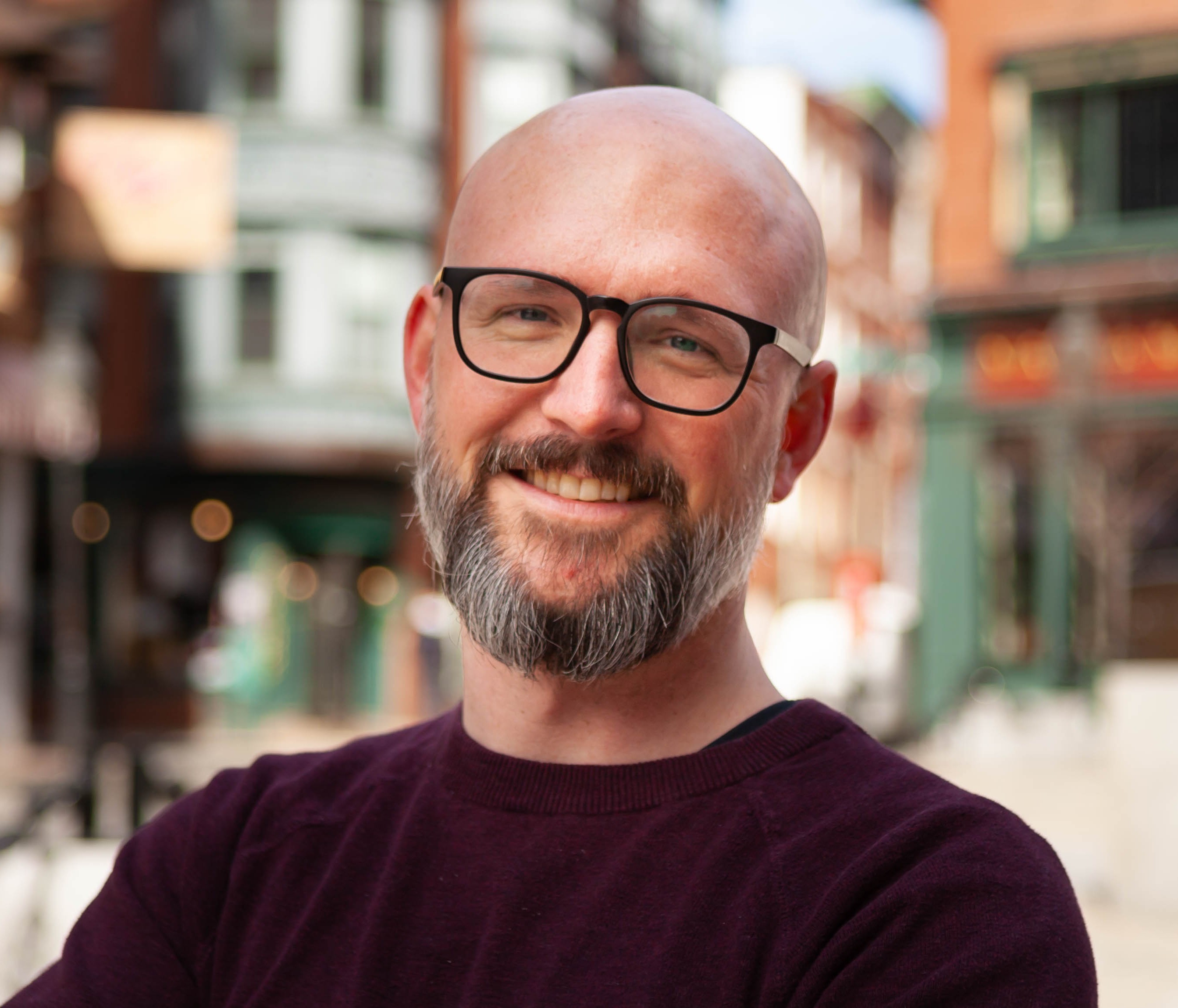
CEO of Eyebot
Matthias is the co-founder and CEO of Eyebot, a company automating vision testing through kiosks that deliver doctor-reviewed eyeglass prescriptions. Before Eyebot, he led product development at Formlabs and served as an R&D lead at EyeNetra, where he helped bring the first smartphone-based vision test to market. Matthias holds a Ph.D. in Electrical Engineering with graduate work in vision science and optics.
Interview Summary
Matthias Hofmann is the co-founder and CEO of Eyebot, a company automating vision testing through kiosks that deliver doctor-reviewed eyeglass prescriptions. An electrical engineer with a doctorate in vision science, Matthias spent two years at EyeNetra building the first smartphone-based vision test. While the technology worked, adoption eventually stalled. That lesson stuck with him: the problem wasn’t the science — it was the interface. Most people don’t want to self-direct their own vision testing.
Meanwhile, the underlying issue has only grown. The U.S. is facing a worsening shortage of optometrists, with more clinicians retiring than entering the field, Matthias notes. At the same time, demand for vision correction keeps rising, and at least one in 10 Americans who should wear glasses don’t, according to Matthias.
Eyebot emerged from that reflection. Matthias began tinkering with prototypes, but instead of asking patients to navigate a smartphone app, he focused on a format people intuitively understand: a kiosk. He partnered with mechanical engineer Jack Moldave, and when early testing revealed Jack’s undiagnosed astigmatism — it further validated their mission.
Today, Eyebot’s kiosks collect four core inputs in about 90 seconds that are then reviewed asynchronously by a licensed eye doctor. Eyebot's vision is to make vision care accessible to everyone through automation.
Eyebot is now commercializing in major channels, including Walmart and Sam's Club. The technology is FDA-registered, and the company raised a $20 million Series A in 2025, bringing total funding to approximately $30 million. Eyebot has completed multiple IRB-approved clinical studies and delivered over 50,000 vision tests since its seed round.
Key Questions
When commercial adoption isn’t meeting expectations, how do you determine what’s really holding it back?
Can you validate demand before clinical credibility — or do they need to move in parallel?
What makes a fundraising pitch truly memorable for investors?
Sponsor Message
Planning to raise capital for your medtech startup? This live, 4-week workshop, led by Medsider is designed to help founders and CEOs tell a sharper story, get investor meetings that matter, and close real capital. Join the waitlist here.
Top Takeaways
Lessons From Solving the Right Problem the Wrong Way
Matthias's experience at EyeNetra offered a critical lesson. Despite functional technology and regulatory clearance for the first smartphone-based vision test, less than 10% of the population would use it. The problem was twofold: users had to actively operate the technology themselves, and the approach didn't deliver the accuracy or confidence people expect when getting a prescription.
Those lessons shaped Eyebot from the start. The interface became a kiosk — a format most Americans already understood. The technology became an actual measurement rather than a "glorified survey." Matthias identified four essentials for accurate prescriptions: refraction technology to measure eye correction, lensometry to read current glasses, visual acuity testing, and detailed intake about history and visual needs. Each session is reviewed by a doctor with 10+ years of clinical training who crafts a prescription the same way they would if the patient were in their own clinic. "From the smartphone days, I realized it has to be something that just works without people understanding how it works. It just happens," he says.
➜ Adoption isn’t about making technology functional — it’s about making it effortless.
Most people don't want the burden of running their own vision test or feeling responsible for data collection. The winning approach pairs a familiar interface with automated measurement and preserves clinician oversight, so patients get convenient care without compromising accuracy.

Prove Demand With Prototypes and Credibility With Evidence
Before raising institutional capital, Matthias and Jack built a rough prototype using friends and family money — first at home, then in a WeWork filled with software startups. They later secured permission to place it in a Boston shopping mall with a sign: "Free vision test." Lines formed almost immediately — 60 to 100 people per day across every demographic. That early traction became the foundation for raising a $2 million pre-seed round along with NSF grants.
But demand alone wasn’t enough. Eyebot partnered with optometry clinics early to run IRB-approved studies in sequential batches — ultimately testing more than 700 patients in four years. Each study allowed the team to iterate, refining both the technology and the user experience, tracking performance against the standard of care. Only after building "an overwhelming amount of evidence" did retailers move forward. "The very first thing was not [to] even worry about the technology, just prove that people cared," Matthias notes.
➜ Prove demand in the real world before perfecting specs.
Launch the simplest functional version to validate user interest, then build clinical credibility through small, sequential studies to refine technology and gather data. Early traction unlocks capital; iterative clinical evidence unlocks commercial partnerships.
Commercialization Reveals What Assumptions Miss
Eyebot's initial market model explored a bold concept: allowing users to test their eyes, receive a prescription, and purchase glasses online, fully self-guided. Matthias suspected that introducing too many new behaviors at once would be risky — but he wanted to test the limits. The market response made it clear they'd gone a step too far.
When Eyebot added a person to explain the process, conversion to purchasing glasses jumped double digits. Making physical frames available increased it further.
The data reinforced the lesson: roughly 85% of eyewear sales still happen in brick-and-mortar stores — a figure that barely moved even during COVID. That insight reshaped deployment. The business model stayed the same — partner with retailers to make vision care accessible through automation — but the context changed. Instead of unstaffed kiosks in random locations, Eyebot now focuses on optical stores, many of which struggle to make a doctor available even once a week. "We had to just be open to truthfully looking at the facts and then make good decisions based off that," Matthias notes.
➜ Test your market assumptions early and be ready to pivot.
Commercialization reveals where customers actually spend money and how much friction they'll tolerate. When real-world data contradicts your model, adjust to existing behavior instead of enforcing new habits. Traction usually comes from meeting customers where they already are.
Wield the Conversation, Not the Pitch Deck
Matthias offers unconventional fundraising advice: run your raise over Zoom and don’t open your pitch deck during the conversation. Early-stage fundraising isn’t about slides; it’s about attention.
Zoom is your real estate. Remote pitching removes noise and gives founders control over framing, energy, and focus. Investors see dozens of pitches daily; standing out means creating a real conversation rather than relying on slides alone.
Keep your deck closed. Matthias prefers to talk through the problem and opportunity first, building momentum verbally. Slides are tools, not the centerpiece. If attention dips, show something visual — then return to the discussion. The deck supports diligence later; it shouldn’t carry the pitch.
Answer three questions. Is the problem massive? Can this become a venture-scale company? And why is this the team to build it?
The broader lesson: be memorable. Investors can see upwards of 10 pitches a day. The one that stands out isn't always the most polished — it's the one where the founder commands the room.
➜ Early-stage fundraising is about presence, not slides.
Control attention and lead the conversation around three questions: Is the problem massive? Is the opportunity venture-scale? Why are you the best person to solve it? Investors are betting on founders who can navigate obstacles.
Sponsor Message
After raising over $50M from corporate venture and cardiovascular key opinion leaders, FastWave Medical has progressed rapidly in the development of its next-generation intravascular lithotripsy (IVL) systems for complex calcific disease.
The market size for IVL is over $10 billion and the only player in the space was acquired for over $13 billion in 2024. So naturally, there’s a lot of investor interest in FastWave.
Given the continued demand to invest in FastWave, their team has opened up an investor waitlist for anyone interested in potentially owning a piece of the company.
The last time FastWave opened up a private placement, it closed $11 million in two weeks. So if you’re interested in investing in one of the hottest cardiovascular startups, opt into their investor waitlist here.
Chat with Scott
Ask ScottBot questions about this interview, key takeaways, or other medtech topics.