
Regulatory Rigor as a Competitive Moat
Regulatory Rigor as a Competitive Moat
Interview with Osteoboost CEO Laura Yecies
Interview with Osteoboost CEO Laura Yecies

Guest
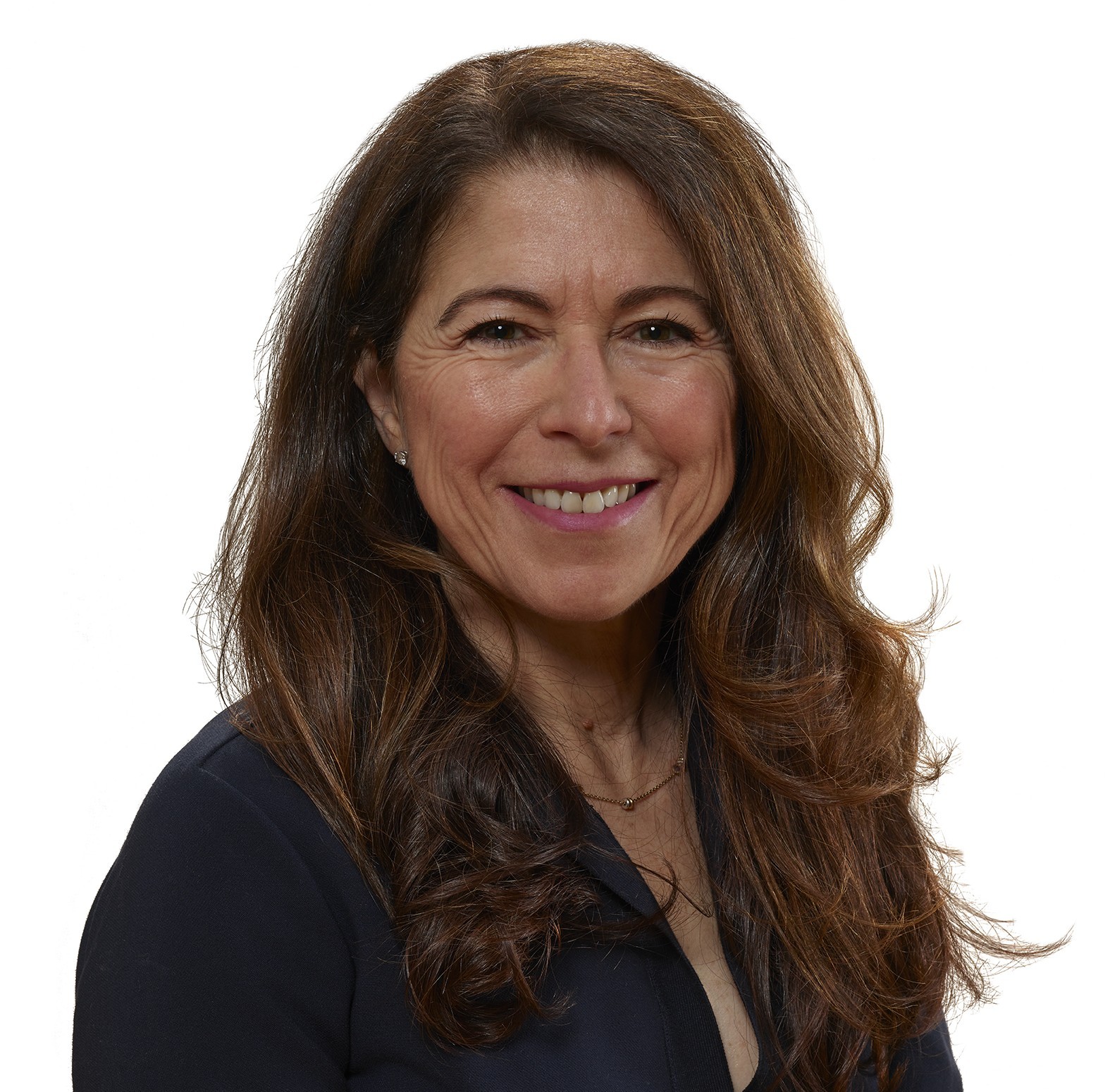
CEO of Osteoboost
Laura is the CEO of Osteoboost, a company developing wearable technology to address bone density loss in postmenopausal women. She brings over 30 years of experience across technology, digital health, and medical innovation, with a focus on overlooked gaps in women's health. She previously served as CEO of SugarSync (acquired by J2 Global), Catch (sold to Apple), and Neurosync, a neurotechnology company.
Interview Summary
Laura Yecies is the CEO of Osteoboost, a company developing wearable technology to address bone density loss in women. After three decades in consumer and enterprise technology, including several successful startup exits, she turned her attention to healthcare — bringing a consumer lens to a problem that traditional medtech had largely failed to solve.
The problem is substantial. Nearly sixty million Americans live with osteopenia or osteoporosis, yet the death rate from hip fracture has barely changed in 60 years. Bisphosphonate drugs — the standard of care — are effective but persistently underused. Laura read that low adoption rate not as patient indifference, but as evidence that patients were looking for different options.
Osteoboost's answer draws from NASA-funded research on vibration and bone loss in astronauts. Where whole-body platforms lose force before reaching the spine and hip, Osteoboost’s wearable belt delivers precision vibration directly to the hips and lumbar spine — the anatomy where fractures are most common and consequential.
The company received an FDA breakthrough designation in December 2020, followed by a De Novo clearance in January 2024 — only the 14th ever granted by the Orthopedic Panel in the FDA’s Center for Devices and Radiological Health (CDRH). It is also backed by a 126-patient randomized controlled trial (RCT) demonstrating over 85% reduction in vertebral bone density loss.
When 510(k) clearance was announced for this non-drug alternative, Osteoboost’s pre-order waitlist overwhelmed its website. Laura channeled that demand into a unique ‘Founders Program’, validating commercial interest through pre-orders before shipping began.
Osteoboost launched nationally in May 2025, reaching patients through telehealth, direct online ordering, or a physician prescription — all eligible for FSA and HSA payment. More than 2,500 physicians have since prescribed the device, which retails at $995, challenging the assumption that medical devices require reimbursement (rather than self-pay) to scale.
Top Takeaways
A consumer-facing medical device succeeds when using it feels effortless. Design placement and form factor around clinical need first — then make daily use easy and unobstructive, so that compliance follows automatically. Apply the same thinking to commercial access: even a prescription product can move like a consumer one when ordering and fulfillment are built around patient convenience.
Treat regulatory as a business strategy. Pursuing a more rigorous path than a device technically requires earns the ability to make medical claims and builds trust with the medical community. Back it with trial design built around real-world use — and the result is special controls that force competitors to replicate years of work, compounded by robust IP.
Give patients community ownership, and they become your most effective sales force. Pre-orders and early access programs convert demand into advocacy before a single device ships at volume. When patients arrive for their medical appointments asking for a clinically proven, FDA-cleared product by name, physicians take notice.
Sponsors
FastWave Medical: Named MD+DI's Company of the Year, FastWave is one of the hottest medtech startups in the cardiovascular space. See how you can invest here.
Medsider Fundraising Cohort: Planning to raise capital for your medtech startup? This live, 4-week workshop, led by Medsider is designed to help founders and CEOs tell a sharper story, get investor meetings that matter, and close real capital. Join the waitlist here.
Key Moments
02:49 An overview of Laura’s background and her transition from consumer tech to medtech
04:53 The problem Osteoboost is solving — and why bone health remains a massive unmet need
08:31 How Osteoboost designed its device with the consumer experience in mind
15:44 Why Osteoboost chose a Class II regulatory pathway over an easier path
19:50 How to design clinical trials that reflect real-world use and drive patient compliance
25:01 How early demand and a waitlist validated strong consumer pull before full commercialization
28:48 Why Laura believed the problem wasn’t demand — it was lack of options
33:57 How patients can become a powerful “sales force” in healthcare
38:20 Why shifting consumer behavior is making self-pay more viable — with reimbursement coming later

Chat with Scott
Ask ScottBot questions about this interview, key takeaways, or other medtech topics.
Full Transcript
We had excellent compliance in our pivotal trial. It's thirty minutes a day. Most patients find that it actually feels good. It feels kind of like a massage and you can wear it while you're walking the dog or chopping vegetables in the kitchen. I use it, I have a standing desk. I tend to use it at my standing desk. So no medical treatment works if you don't use it. We found that our patients were very successful in using the device.
Narrator:Welcome to Medsider, where you can learn from the bright founders and CEOs in medical devices and health technology. Join tens of thousands of ambitious doers as we unpack the insights, tactics and secrets behind the most successful life science startups in the world. Now here's your host, Scott Nelson.
Scott Nelson:Hey everyone, in this episode of Medsider, I sat down with Laura Yecies, CEO of Osteoboost. Osteoboost is the first FDA cleared drug free prescription treatment for osteopenia in postmenopausal women. Laura brings over thirty years of experience across technology, digital health and medical innovation with a focus on overlooked gaps in women's health. She previously served as CEO of SugarSync, which was acquired by J2 Global, Catch, which sold to Apple, and Neurosync, a neurotechnology company. Here are a few topics we explored in this conversation.
Scott Nelson:First, how do you decide when a more rigorous regulatory path is worth pursuing? Second, how do you make a prescription device as easy to access as a consumer product? Third, what should drive form factor decisions when daily unsupervised use is the goal? And last, how do you turn early patient demand into a physician adoption strategy?
Scott Nelson:Before we dive into the full episode, if you're a Medtech founder or CEO preparing to raise capital, you should check out the Medsider fundraising cohort. This four week live workshop combines small group sessions with real time feedback to help you sharpen your investor story, build a targeted investor pipeline, and run a focused fundraising sprint instead of a never ending slog. Over the month, you'll walk away with an investor ready narrative and deck, outreach scripts that actually get responses, a refreshed LinkedIn profile, a simple content plan that keeps you on investors' radar, and a repeatable system for running your raise. You can join the waitlist at medsider.com/fundraisingcohort. Again, that's medsider.com/fundraisingcohort. All right, let's get to the interview.
Scott Nelson:All right, Laura, welcome back to Medsider Radio.
Laura Yecies:Thanks Scott. Glad to be here.
Scott Nelson:I always like repeat guests. So good to have a round two. We can get caught up on the latest with Osteoboost. So with that said, for those that didn't listen to the first interview we did, gosh, it was probably four or five years ago now. Give us a one minute, two minute kind of elevator pitch on your career leading up to kind of where you're at with Osteoboost.
Laura Yecies:So I had a career in tech enterprise and consumer software starting in 1988, worked in the database business. And then I led the Netscape browser division. I led Yahoo Mail and then was CEO of two tech startups, both of which exited. SugarSync was acquired by J2 Global. And Catch, I sold to Apple.
Laura Yecies:At that time, the Catch team became essentially the leadership of the Apple Watch team. And, you know, we had this vision around, frankly, consumer health and wearables. And so that's what I decided to focus on. And I've been doing that for, I guess, the last eight years, focusing on health care. And I joined Osteoboost five and a half years ago.
Laura Yecies:The company was in the beginning of its clinical trial, the pivotal trial for the device. I was the first employee of the company that the corporate structure existed. We spun out of an incubator. And so I wrapped up the trial. We analyzed the data, which was very compelling. We also got a breakthrough designation along the way there. We submitted to FDA in 'twenty three and got a de novo clearance in 2024. We launched the product after we built the commercial version in 'twenty five. And here we are, we're kind of off to the races. Thousands of patients have Osteoboost.
Scott Nelson:That's awesome. Always love to see the success of a burgeoning kind of Medtech startup, especially when there's like a, I would say more of a consumer sort of bent. These stories are especially interesting, I think, considering sort of the groundswell movement amongst wellness amongst most folks these days, at least here in The U. S. So with that said, Osteoboost, I'm looking at the website now, osteoboost.com, just as it sounds, Osteo and then Boost.
Scott Nelson:Give us a sense for kind of what the product is for those that have never seen it, haven't hit your website yet. What is it? What are you solving for?
Laura Yecies:Yeah, so we are working on a huge problem. In fact, one of the biggest public health issues that we face as a country and that is low bone density. So sixty million Americans suffer from either osteopenia or osteoporosis. So those numbers are similar to high blood pressure, high cholesterol, diabetes. And it's similar also in that it's a chronic condition, something that worsens with age.
Laura Yecies:And as you lose bone density, you become at greater risk of fracture. And that's really what we're concerned about because these fractures can be life ending or life altering. So about thirty percent of people who have an osteoporotic hip fracture will not survive a year, half lose their independence. Vertebral compression fractures are the most common osteoporotic fracture. When we see older people hunched over, significant loss of height, which of course is very common, that's those vertebral compression fractures and there's no great treatments for them.
Laura Yecies:And so we see this problem and it's a problem where we've made minimal progress. So in the last sixty years, we've had these dramatic improvements in reduction in cardiovascular disease, pretty significant improvements in death from breast cancer. From hip fracture, minimal change. The death rate from hip fracture hasn't changed much and the fracture rate has not changed much. So our goal, as you can imagine, is to change this.
Laura Yecies:And the approach that we're taking is really very novel. So the standard of care prior to Osteoboost was, we know that women are losing bone density, but we don't really check how much unless something dramatic happens. And so at 65, we do a DEXA scan. We find out maybe that you already have osteoporosis or that you're close. And then typically, you know, a few years later, we'll recommend a bisphosphonate drug.
Laura Yecies:Fosamax is the brand name of the most commonly used one. And use those for sort of three to five years. And the result is we haven't had much change. And yet it's a chronic condition. So our belief is that we should be checking early, intervening early, and then providing a comprehensive solution.
Laura Yecies:And so the core of our offering is the Osteoboost device. And it is the first and only non drug treatment for bone density that has been approved by the FDA. We got a de novo approval, and I'm super proud of that. We were the fourteenth ever de novo in the orthopedic division. It's very, very rare for startup companies to get de novos because the process is just so difficult and rigorous.
Laura Yecies:The approval rate is much lower than 510(k)s. But we were able to accomplish that. What we showed, we did a gold standard randomized controlled trial. And what we demonstrated is that we reduce bone loss by over eighty five percent. Great statistical significance, this was over one year measured by CT scan.
Laura Yecies:So a highly accurate endpoint. And that's for women who used it three times a week or more. If you used it five times a week, your results were even better. And so we did see about thirty percent of women gain bone. Those are the kind of the highlights. That's the device.
Scott Nelson:And this is a wearable, right? So I definitely encourage people to check out the website osteoboost.com. But I mean, this is like, it looks like something that goes around the waist. I mean, almost like I wouldn't even know it was a device if kind of saw someone out walking with it as an example.
Laura Yecies:Correct. So it is a wearable and the mechanism of action is vibration and it's actually a precision vibration. So NASA, you know, the inspiration for this technology was NASA funded research on using vibration to maintain bone density for astronauts who are in space for a long time, they lose a lot of bone. They used whole body vibration platforms. And the data there was very promising, but none of those devices on earth with regular people were able to achieve good enough results to get a class two device clearance, but the science was promising.
Laura Yecies:And so our founder, who's a physical medicine and pain doctor, Dr. Shane Mangrum out of Atlanta, he saw all these women with vertebral compression fractures, terrible pain. And he had the idea of taking this vibration mechanism and putting it in a wearable. And the belt form factor gives you two really important benefits. One is that the vibration is applied to the vulnerable anatomy, the hips and lumbar spine.
Laura Yecies:So we know that, you know, we're getting the vibration where it's needed. If you think about a whole body vibration platform, you're standing on it, you get most of the vibration in your feet and it dissipates as it goes up the skeleton. In fact, your knees are designed as shock absorbers to absorb things like vibration. So we're applying it to the hips and spine. We have a lot of technology built into the belt, pressure sensors, accelerometers to make sure that the vibration is actually transmitted through the skeleton.
Laura Yecies:So for instance, we have a patented system where there's an accelerometer in the back, one over the hip bone, the iliac crest. We measure the transmitted vibration, and then there's like a closed loop dosing system to optimize the vibration. And then additionally, and this is easy to understand, as a wearable, you can do the treatment very regularly.
Laura Yecies:So we had excellent compliance in our pivotal trial. It's thirty minutes a day. Most patients find that it actually feels good. It feels kind of like a massage. And you can wear it while you're walking the dog or chopping vegetables in the kitchen. I use it, I have a standing desk. I tend to use it at my standing desk. So no medical treatment works if you don't use it. And we found that our patients were very successful in using the device.
Scott Nelson:I presume that the distance from the vibration does impact efficacy, right? So like as an example, say I wanted to specifically target an elbow. I'm just throwing out like a random Don't treat the elbow. There'll be Osteoboost arm or Osteoboost ankle. The mechanism, we've demonstrated it works. We could do future devices. Wrist fractures are very common.
Laura Yecies:We could, I think, do a device for the wrist. But we're starting with this part of the body that has the most serious fractures and the most common fractures. So hip fractures, like I said, you know, can be a sentinel then to changing or ending someone's life. And the vertebral compression fractures, you know, there's just not great treatments. You can do kyphoplasty and open up the vertebrae to relieve pain, but then you're risking the adjacent vertebrae because that vertebrae becomes stiff. So those are not that commonly done. And so people just fracture. And, you know, I hear about women who've had 12 compression fractures. And so you fracture the front of the vertebrae, right? That's the most common.
Laura Yecies:And then think about the physics that you have that wedge fracture and then you're leaning forward and then you're putting more pressure on the front of the skeleton and you get more fractures. Then, you know, we've all seen people with very serious kyphosis. So that's what we really want to avoid. We really want to avoid vertebral compression fractures. The wrist fractures, they're terribly inconvenient and painful, but actually people tend to recover well. That's why we prioritized.
Scott Nelson:Makes sense where you started. Yeah, you started sort of at the core, if you will. And if I'm a patient learning about this for the first time, I've obviously mentioned your website, but is that the best place to sort of like get access? I mean, is it cash pay? Is it covered by insurance? Tell us a little bit about sort of the pathway.
Laura Yecies:It's a prescription device. But we have a very consumer friendly way to get it. So you come to our website. You can order it. It is today still self pay. We're working on insurance, but we don't have reimbursement yet. But you can use your FSA and HSA account.
Laura Yecies:You go through the process, and then at the end, it will say, okay, you need to submit a prescription. And there's kind of two ways you can do that. You can go to your personal physician and they can order it through their EMR or they can fax or call in. We have a single online pharmacy health warehouse that will ship then directly to the patient. So once you get your prescription in, you've ordered, we ship the device to you.
Laura Yecies:We also have a telehealth option, which is super easy. Online, you answer some questions and you can get your prescription that way. And we also have the traditional mechanism. Patient might go to their doctor, the doctor says, Oh, you have osteopenia. I want you to start with proactive intervention here. I recommend Osteoboost. And then they just go ahead and order.
Scott Nelson:Got it, that makes sense. And before we kind of go back in time and learn a little bit more about some of insights, right, that you've gleaned over the past handful of years, you mentioned the launch, the full launch, the full commercial launch in 2025. So are you currently focused on The US? Is this a global launch? Give us a sense of kind of where the company's at as of 2026 here.
Laura Yecies:We have only sold in The US so far. We have tremendous demand overseas and that's one of our objectives is to put the infrastructure in place for that. Particularly Asia has high rates of osteoporosis. Japan has the highest rate in the world. And Asians tend to have lower bone density and more side effects from the bisphosphonates. But of course, Europe, Australia, Canada. So that is ahead of us and something that we're excited to do in the future.
Scott Nelson:Sounds good. Again, everyone listening, osteoboost.com is the website. Really cool technology. With that said, Laura, let's cover some, like let's spend the next maybe twenty, thirty minutes covering some kind of some key functional areas, based on kind of the consumer bend, right? The patient first kind of bend here with your technology.
Scott Nelson:I think we'll hit on some interesting areas for sure, but let's start out with regulatory and clinical. Our notes mentioned that the breakthrough designation was 2020. Feel free to correct me if I'm wrong here. I think you were starting to collect clinical data even just a couple of years later after that 2022 timeframe and then clearance was early 2024. Does that sound about right?
Laura Yecies:Exactly.
Scott Nelson:Yeah. And then the de novo of course, right? What you mentioned is there's not too many de novos in the orthopedic world, sounds like. So with that said, like when you think about kind of the RegClin journey over the past handful of years here, are there a couple of things that really stand out that you think would be helpful for other medtech, you know, founders and CEOs to learn from your experiences?
Laura Yecies:The first thing to consider is Class two or Class one, right? And we made a decision to go down a Class two prescription path. And I often get questions, why did we do that? Because the device is very, very safe. You can find vibration belts that are not medical devices.
Laura Yecies:And that was a very deliberate decision. And the reason why we made this decision is we wanted to be able to really partner with doctors, be able to make medical claims. Even though the treatment is low risk, the disease is serious, right? The impact of fracture we talked about before. And so we wanted to be able to tell patients this important condition, here's how we treat it. We want you to get assessed before, right?
Laura Yecies:So get the DEXA scan so you can be monitoring this. So it really reflects the seriousness with which we view this condition. And we think that being able to know exactly how effective it is, how it's working is important for patients and for us. So that was a big decision that we made. And I don't regret that at all because it's not only the money, of course, before they invest that money, but they're investing the time.
Laura Yecies:So you want to spend the time on something that you know has scientific data behind it. And then there was a lot of sort of interesting decisions around how to conduct the study, right? How do you have a true sham controlled or placebo controlled study? And so we told patients that it was gentle energy and even the people who are administering the trial and giving the devices to patients didn't know if they got active or sham. And the sham device emitted sort of an electric sound, like a static sound.
Laura Yecies:So we knew that we were very well blinded. We also put a lot of thought into compliance. So of course the design of the device so it's comfortable and easy to use, but then also some reminders and things like that. We really wanted to replicate the real world use. And interestingly, this was during COVID. And so patients were doing this at home. They were not going very often into the clinic, of course, for their DEXAs and CT scans and blood work. But they were able to use the device independently and successfully.
Scott Nelson:And what was the size of the trial again?
Laura Yecies:126.
Scott Nelson:Okay, one hundred and twenty six patients. Yeah. And you said it was randomized.
Laura Yecies:It was randomized postmenopausal women with osteopenia and half active, half sham. Like I said, we had very good compliance in the trial. It was conducted at University of Nebraska Medical Center and the principal investigator, Dr. Laura Bilek was dean of the PT school there. So she has a PhD in physical therapy and is an expert in the use of exercise to treat osteoporosis. And if you think about it, the mechanism of action here were essentially mimicking exercise. And so she really had a great expertise for this.
Scott Nelson:And for CEOs that are developing a device that's used outside of the clinic, right outside of the hospital, whether it's a wearable or something else, but they're interested in running a robust clinical trial like you did. Any other things that kind of came up through your experience? Because this is unique in the sense that you ran a full RCT with a really solid number of participants. So I'm sure there's probably some interesting things learned, but anything else that you can think of?
Laura Yecies:So Nebraska was an excellent site. As I mentioned, the investigator was terrific, but it did take us a while to enroll. So it would have been great maybe to be able to enroll faster. Maybe two sites would have helped. That being said, we're a really small company and we wanted to be pretty strict on budget learnings.
Laura Yecies:Yeah. Did you leverage a CRO? Did you largely run it in house?
Laura Yecies:We ran it in house. We used some consultants who had expertise, but not a CRO firm. So our director of clinical operations is a career clinical trial person. So she had tremendous expertise, but she was an independent consultant. And then we did a lot in house.
Scott Nelson:Do you think that was advantageous to kind of keep that function, that clinical function in house versus, you know, because I think that that's a question that that most of us face running a startup is do you keep the internal team relatively small and leverage a CRO or do you, you know, do do you kind of run with the opposite approach, right, where you try to build out that expertise internally? So would you do it again?
Laura Yecies:We did option three, small internal team and not choose the CRM.
Scott Nelson:Yeah. I I guess there's a hybrid, a little bit of a hybrid.
Laura Yecies:And the one thing I wonder I mean, it worked out well. Right? The study in the end had a great result. We did it efficiently from a cost point of view. Could we have moved faster if we had put more resources to bear and then perhaps actually spent less money because time is money.
Laura Yecies:I don't know the answer to that. I do wonder. We don't have a RCT on that. But that's, in hindsight, a trade off I think about. For instance, with the data read out in October 2022, we submitted to FDA in February 2023. If we did like spent more money during that time, right, with more resources, could we have submitted faster? I don't know, maybe that's actually a reasonable amount of time. So these are things I wonder, but you know in the end I think the study was well run. Our PI you know had done studies, different kinds of studies, but studies that were relevant, and we brought in individuals with that expertise.
Scott Nelson:Yeah, yeah, well you end up with some, what sounds like some pretty some really solid data and ultimately what matters, right, which is a de novo de novo clearance, right? So congrats to you and your team. And I would presume that that path, right, to pursue Class two with this de novo probably presents sort of a moat, right, for for the company, for the the device specifically, right, and that helps too, I would imagine.
Laura Yecies:Yeah. I mean, hard things give you some moat. Right? I mean, I assume at some point we'll talk about investments and, you know, when you are doing hardware that reduces the pool of potential investors, right, because hardware is hard and there are costs to that, but then it's more patentable and you can build a stronger moat. And part of our moat is the regulatory strategy.
Laura Yecies:So if you look at the special controls from our approval, anyone who wants to use us as a predicate, they actually have to run a one year RCT. Now that's significant, and the reason for that is I think kind of straightforward, which is most vibration devices have not had good enough data. And ours was done in a thoughtful way with using the science, what was proven in the science and the application in a way that we know that works. And we have patented features such as the calibration that I spoke about before, which is why it works, right?
Laura Yecies:So we are ensuring in the way we design the product and the way patients use it, that critical mechanism of the 30 hertz 0.3 gs of force is getting to the bones that we want to treat. You know, if it's on wrong and it's going elsewhere or too loose and not transmitting, what's the point? And so between, you know, the regulatory requirements and our patents, I think we've built something very valuable from a business point of view.
Scott Nelson:Yeah, and you mentioned the special controls with your de novo. So, so crucial if you're listening to this and not familiar and considering the de novo path, if you can get that right, right, and it does, it does definitely ladder up and it helps kind of build a deeper, wider, wider moat, right. Those special controls.
Scott Nelson:So with that said, let's, jump to commercialization, right. So you mentioned you launched in, I think it maybe I mentioned this, you launched in late twenty twenty four with pre orders, I believe, and then the full commercial launch was mid-twenty five, correct?
Laura Yecies:Exactly, yeah. So what we did was when we announced the FDA approval in '24, at that moment the company was two people, literally, two employees. And we had some consultants, like I said, on the clinical. And we put out a press release and our website, which had a little form on it, kind of blew up. And people were just so excited about having a non drug clinically proven therapy.
Laura Yecies:And maybe just a brief aside, the osteoporosis medications, are effective and generally safe, do have some serious side effects. And for whatever reason, because I'm not against the medications, they have a pretty low adoption rate. And we knew this when we built the company that there was really strong interest in our non drug treatment. So we announced this first and only FDA cleared non drug treatment. And the interest was just very strong, thousands and thousands of patients signing up.
Laura Yecies:And so we're going about building the commercial version of the product. So of course all the mechanism of actions are the same, but we improved the aesthetics and made it more manufacturable and patients just wanted it. And so we, to people who are on our mailing list, we offered what we called the Founders Program. Because in my view, this early community, they're really part of the founding and establishment of the company and the brand and the data. So we gave them the opportunity to preorder and be of first in line.
Laura Yecies:And then we shipped a small number of devices out to the first of the founders, and then we started shipping in more volume shortly after that, and that's when we made the public announcement.
Scott Nelson:I'm such a big believer in sort of tapping into that community element that you mentioned. It sounded like you had a groundswell of interest from whether you want to classify these folks as innovators or early adopters kind of on the adoption bell curve. But nonetheless, they're your early supporters of your brand, right? And so sounds like you found a creative way to kind of let them get first access. When you think about your full commercial launch, call it mid twenty twenty five, anything else that maybe came up that was surprising or that you prepared for and it went as expected or maybe didn't go as expected. Any other interesting kind of insights or learnings that you can share kind of leading up to the full commercial launch?
Scott Nelson:Hey everyone, let's take a quick break to talk about Fastwave Medical, the company I co founded and lead as CEO. We're developing next generation intravascular lithotripsy, or IVL, systems to tackle complex calcific disease. Over the last few years, we've closed a series of oversubscribed funding rounds, bringing the total investment into Fastwave to over $50,000,000 Corporate interest in the IVL space is growing too. The $900,000,000 acquisition of Bolt Medical by Boston Scientific in 2025 and Johnson and Johnson's $13,000,000,000 acquisition of Shockwave Medical signal a lot of attention on emerging IVL startups like Wave, and we're making serious progress. In addition to recently receiving our ninth patent, we've successfully completed peripheral and coronary feasibility studies and are gearing up for pivotal trials. If you're interested in investing in the fast growing IVL market, head over to fastwavemedical.com/invest. Again, that's fastwavemedical.com/invest. Now let's get back to the conversation.
Laura Yecies:Overall, I actually think it went as expected. When I was recruited to the company, my first thought was, okay, if this product works and we didn't know then that it worked, I just had this gut feel that there would be tremendous interest because we need an early intervention, right? The unmet need was there. And the fact that women were not using, that the utilization rate on the drugs was low, you could look at that a couple of ways. One way is that you can decide, oh, you know, women don't care. They don't care about their bones.
Laura Yecies:Or you can say they care. They just don't have the options available that they're looking for. And in my heart of hearts, I was convinced it was the second; that they cared, that they cared. They didn't want to wind up like their aunts and grandmothers and that to be their future.
Laura Yecies:They wanted to stay strong and active. And so in terms of the patients and the consumers, I always believed strongly that the interest would be there. And the timing of focus on women's health, postmenopausal women specifically, non drug treatments, wearables, home use, you know, I was really, you know, bullish on the opportunity to really get our message across and we were so glad that a number of, you know, widely read periodicals picked up on this story. I'd say if there's a surprise or an unknown was I wasn't as sure how the doctors would react. So the consumers, had a strong point of view.
Laura Yecies:But for the physicians, I was like, well, on the one hand, we have excellent clinical data. We have FDA approval. We have a publication. So they should be positive. On the other hand, doctors are not always quick to adopt novel treatments.
Laura Yecies:They tend to focus more on pharmaceuticals. So I wasn't sure how that would go. And what we've seen is, and we still have work to do here to get the word out, but overall we've seen a very positive response from physicians. And as I've spoken to them, the reason is very clear. They see their patients fracturing.
Laura Yecies:They know what happens. This is not a surprise that you have this loss of bone. And so they're, I think, pretty open to almost anything that is safe. So it's one thing to adopt a novel device or a novel treatment that has a lot of risk. Osteoboost doesn't have a lot of risk. We had zero serious adverse effects in the trial. And so I think a lot of the doctors are like, we need more options, we need early options. I saw a presentation by one of the leading osteoporosis experts out of Oregon, and he was talking about how we need to have kind of a lifelong management of osteoporosis. And he shared data that if you use the most powerful drugs, so we're talking like the biologic anabolics and you know follow that up over ten years, you'll improve bone density on average about ten percent.
Laura Yecies:Now you'll reduce fracture risk by more than ten percent because you have kind of a leverage there. But ten percent, if you think about it, that's not that great, right? That's a half a T score. So that's like going minus 3.5 to 3, and then you still have osteoporosis because osteoporosis is 2.5 or below. So we need more.
Laura Yecies:We need earlier intervention to narrow or lessen the bone loss. You know, we need ways to increase efficacy. So in the future, you know, we plan to do trials of combinations, Osteoboost and medications. And so I think, you know, and these physicians, especially the experts, know, the endocrinologists and rheumatologists, they look around and big pharma has mostly exited. So it's not like there's five new drugs coming down the pike. There's two branded drugs, everything else is generic. The companies with the generic drugs are really not investing.
Laura Yecies:And so here you have this startup, Osteoboost, like, okay, we want to change this up. And also add focus. So we've had a webinar series where we are bringing in experts who are talking about medication. They're not Osteoboost commercials, they're educational, and it's reinforcing my first hypothesis: women care. People care about their bones, they want more information. And thousands of them are listening to experts from UCSF and Tufts, and they wanna optimize their musculoskeletal health. They wanna be active in their seventies and eighties.
Scott Nelson:I wanna ask you a little bit about a couple of things you've learned related to consumer behavior, knowing that this is a cash pay device, but still prescription based. But are most of the physicians that are in sort of the Osteoboost ecosystem at this point, do they hear about Osteoboost through their patients then? Was it kind of more of a bottoms up sort of approach or are they hearing about Osteoboost elsewhere?
Laura Yecies:It depends, it's some of both. So we have over 2,500 doctors prescribing, and I'm guessing about 80% of those prescribers are because the patient, I talked about that journey. So the patient heard about it, they order Osteoboost, they go to their doctor and they say, Would you write this prescription? And then we're seeing a pretty significant percentage of those doctors essentially learning about it from the patient and going on to prescribe it. Those are most often primary care, internal medicine, family practice, OBGYN. But then you have the specialists, the endocrinologists, sometimes rheumatologists, geriatricians, but especially the endocrinologists who are reading the journals where we've had publications and we've been covered in some of their other periodicals.
Laura Yecies:We also have exhibited at the Endocrine Society show and at the American Society of Bone and Mineral Research show. And so many of those doctors are learning about us through, let's call it traditional communication channels. Know, I mean, we have a few of those doctors, or actually more than a few, have prescribed thirty, forty, 50 times. And some of them are basically saying everyone should have this in addition earlier on. Now, that's not our marketing label. Our label is premenopausal osteopenia, but we're seeing a lot of doctors be very proactive about trying to integrate Osteoboost into their care pathway.
Scott Nelson:Got it. So it sounds like your patients have become almost a de facto sales force, if you will, right? Which is a great thing to have.
Laura Yecies:So I had an moment on this because yes, the patients are the sales force, and I get a lot of questions, or people will bring this up as kind of an unusual or almost a surprising thing because we traditionally think of the doctors have all the information and then they make recommendations to patients. That of course is very important. I don't know about you, but I'm not a big television person. So I watch like Netflix or Prime, but not sort of TV shows. I don't see a lot of commercials except for the Olympics.
Laura Yecies:I love the Olympics, especially the ice skating. And so I was watching that and for the first time in a while, I was seeing all the commercials. And I don't know what the percentage is, but well over half, I'm convinced, of the commercials during the Olympics are for medications. It could be plaque, psoriasis. It could be a rare cardiac genetic condition.
Laura Yecies:We're not talking high blood pressure. We're talking these rare things. I'm like, oh my god, they think the same thing we do, that they need to get the patients to advocate. So I think this has been a really critical mechanism for Osteoboost, but this is sort of part of the communication patterns and education patterns of many products and conditions.
Scott Nelson:Yeah, I think it's only going to, I mean, personally, I think it's only going to accelerate in the era of AI and LLMs, right? I mean, it's more and more consumers-patients are that's where they're starting, right? And if you can get a really, really, I would say, pretty good answer, right, from GPT or Gemini or name your LLM, that's where a lot of people are starting. And they're going to their physicians, right? Or they're going to their physicians with some suggestions at least, right? Or a lot more knowledge kind of in their hands. So I think it's only gonna accelerate.
Scott Nelson:On that note, the device, I'm looking at your website again a bit, and the device looks like it's $995, right? About thousand dollars. People, at least that I, in my network would say, woah, woah, a patient's never gonna pay a thousand dollars, right?
Scott Nelson:Consumer's never gonna pay a thousand dollars. And the company I founded before Fastwave, we developed a Class two device, but commercialized entirely online, direct to patient. It wasn't a prescription device, but our AOV, this was kind of 2016 through, I bought the company through like 2020 ish timeframe, 2015 to 2020. So a little bit ago anyway, but our average order value online was $1,300 $1,400 right? And so my counter to anyone that says that is like, no, no, I mean, consumers are willing to pay up if they believe in the device. So has that been your experience as well with Osteoboost?
Laura Yecies:Absolutely. And I mean, can tell you so many stories. We had a patient on the phone with support, sort of like asking questions and deciding. They basically said, you know, my husband's getting golf clubs for Christmas, but this is what I want. And I'm pretty sure golf clubs are more than $1,000. You look at the supplement world and people spend a lot of money on products that frankly oftentimes don't have much data.
Laura Yecies:I take calcium citrate. In our randomized controlled trial, both the active and the sham got calcium, vitamin D calcium to get to twelve hundred milligrams. But I get my calcium at Costco, so I'm probably spending a dollar or 2 a month. But people are buying calcium online for $80.90 dollars a month. So Osteoboost is less expensive than that and we have outstanding clinical data.
Laura Yecies:So yes, I think patients are willing to do it. Now that being said, not everyone can, you know, we know that and our goal is not just to improve bone health for people who can afford the device, it's to do it for everyone. And so we're working very hard to try to, you know, have coverage in place. We don't have it yet. And we're also looking into other payment mechanisms to make it more accessible. So accessibility is important to us. It's a priority. But yeah, I think it's important to people. I mean, people pay for the gym, the trainers. I mean, it's just what are your priorities?
Laura Yecies:By the way, we've done demographic data and the average income of our patients, it's above average, but it's not as high as you might think. People are prioritizing their bone health.
Scott Nelson:That's really interesting because the folks that are cynical would say, well, Laura, your base of patients, your base of consumers are affluent. That's where they're willing to pay $1,000. But you're telling me that's not necessarily I mean, they're maybe above average, but generally speaking, kind of middle of the road.
Laura Yecies:Yeah.
Scott Nelson:Yeah. Yeah. That's really interesting. I wanna ask you about your experiences raising capital, but just real quickly, on the note of coverage and reimbursements, that sounds like that's something you're actively pursuing now. That's a slog. It's arguably like one of the probably more challenging and more expensive than certainly regulatory approval in most cases, even if you're having to run an RCT. And so anything that you've gleaned so far your efforts trying to get coverage and reimbursement for Osteoboost?
Laura Yecies:I would say that it's similar to the discussion around regulatory. We have run this company in a pretty lean manner. And I think if we had hired more or spent more with reimbursement or market access consultants, maybe we could be further along, but we had capital constraints. So it's hard to know. It's hard to know. But it is a complicated area and you need expertise, Same thing as regulatory.
Scott Nelson:I look at your story though, I mean, I think a lot of traditional medtech folks would say, would have said, hey, let's rewind the clock and we're back in 2020, right? When you're considering, you know, making the move to Osteoboost, they would have said, oh, without a doubt, if you're, there's no way that you can sell a device for a thousand dollars a consumer, we have to get coverage and reimbursement, right? I think that's probably where a lot of traditional folks would have framed up the discussion, but you've kind of proven else wise, right? You've been able to run the company pretty lean, get a de novo, launch the device, cash pay, and it sounds like you're, I mean, 2,500 physicians prescribing, that's a lot, that's a big number.
Laura Yecies:Yeah, so I'd say I completely agree with your supposition. So I think there is a lot of traditional medtech investors and medtech leaders who have raised huge amounts of capital. They deploy it full court press on regulatory, full court press on reimbursement, and that's the go to market. And frankly, I think, you know, if you look at how much capital goes in versus the exits, the exits are good, but it's all in the ratio. Right?
Laura Yecies:And so I believe we're building something that's more valuable on the exit side, but we're also going about it without as much capital. And I think it's because I come about this, I don't come out of traditional medtech. Right? I come out of consumer tech. And now, of course, hardware does need a little bit more capital than, you know, SaaS or or whatever.
Laura Yecies:But, yeah, I thought that it could be done this way. I agree with your question. And frankly, when I've talked to investors, I still hear from investors that they won't invest unless we have reimbursement. A common refrain is I don't believe in self pay except for weight loss and cosmetics. I've been told that by multiple really strong people who I really respect, Medtech VCs. Now, if you sell a device for $5,000 that may be true.
Laura Yecies:If you have a device that's a surgical device, it's certainly true because the universe of people who will pay for the OR, the surgeon, the anesthesia, and the device self pay is almost zero. So there are cases where that's true, but it's not all cases. And I didn't think it was our case.
Scott Nelson:Yeah, yeah. It sounds like you're proving some folks wrong. Let's talk about investors, right? Because we don't have a lot of time left. It looks like you raised your last round of financing in the 2024. It looks like it was roughly about $5,000,000 or so. When you think about your capital fundraising journey, right, over the past five or six years now with Osteoboost, what do you know now, right, that maybe you wished you knew a decade ago with less experience under your belt raising financing?
Laura Yecies:So I sort of have talked about staying lean. And overall, I think that's been a good strategy. But I think a little bit more capital before we got the FDA approval, which would have been expensive capital, would have allowed us to, you know, move a little bit faster on getting to market once we got that FDA approval. That being said, it was a time in the market where, you know, that capital wasn't really available. So, And back to this question of, can you build a business without reimbursement? The best way to convince people of that is to do it. And so that's what we focused on doing.
Scott Nelson:Yeah. You bring up an interesting point, though. Like the cost of capital pre regulatory approval for you was very high, right? Because like most investors are gonna just deem that as too risky, right? So they're gonna expect a lower valuation and they want more for their money.
Scott Nelson:Makes sense. But I just think it's really, really worth highlighting, right, to other folks that are listening that if you're at that stage where you can sort of get to the next major milestone as lean as possible, right, that really truly value inflection milestone that capital is gonna come typically with a lot. It's gonna open more investors for sure, but it's gonna be sort of less expensive capital, if you will.
Laura Yecies:Yeah, I mean, you think about the different risks that are on the table at the beginning and you start to take them off the table. So the first is the science risk. Does it actually work? And when we raised money in 2021, we had some preliminary data, but it was not certain. And then in 2022, we had the data, but we didn't have FDA approval, and we raised capital late twenty three, early twenty four.
Laura Yecies:So we still have the regulatory risk cause we got our de novo on January 24. And then you have kind of the commercial risk, like will people want it? I mean, just because I was sure that they would, it doesn't mean investors are sure. And then I'd say there's sort of scaling operational risk, and then there's potentially reimbursement risk. So if you and and certainly reimbursement will accelerate our business.
Laura Yecies:So, I think those are the different risks and you can hopefully get more access to capital when you change. On the other hand, you lose certain potential investors. As you do larger rounds, you're not gonna get certain angel groups. It's different stages of investors.
Scott Nelson:Yep. With that said, I'm looking at the clock. Know we only have a few minutes left here. I wanna leave time for the rapid fire portion of the interview here. So for everyone listening again, osteoboost.com is the website just as it sounds, osteoboost.com. We'll link to it in the full write up on Medsider. If you're new to these interviews, the actual write ups on Medsider are kind of more longer form summaries of the actual discussion where we really try to kind of pull out and highlight some of the insights like our guests share, like Laura has over the past hour or so. So with that said, Laura, a couple of rapid fire questions to wrap up the discussion here.
Scott Nelson:When you think about the next twelve months for the company, what gets you most excited? Is there a certain milestone or inflection point that you're looking forward to?
Laura Yecies:Yeah, so we're gonna be bringing on, we're working to increase our capacity. We've been back ordered and so we're catching up there and I'm very excited about that because we wanna bring this to more people, a lot more work with physicians that we're doing. I think it's just really about scaling the business. We wanna bring this to more people. There's millions of people. We're still in the thousands. That's exciting from where we've started, but that's gonna be a big focus for us this year.
Scott Nelson:Good problem to have, right? That back orders are the biggest challenge, right? I much rather have back order problems than demand problems. So, all right, next question. Is there one lesson, right, that you think is most important for other medtech founders and CEOs to understand, right, that are running their own startup?
Laura Yecies:I think it's what you focus on. Is the problem, is that unmet need as impactful as it needs to be? Because if that's true, right, if you are really solving a problem that isn't solved and it's important to people and they prioritize it, that will sort of compensate for other things, right? That will bring you demand, that can bring you investors, that can help you recruit employees because they're focused on that mission. I've definitely heard from founders where it's like, well, we think this will help in this way and it's slightly better and it's very clever and that's great.
Laura Yecies:And if you were a big company and you had like a product line extension, you could maybe be successful with that. But as a startup, it's not enough to get you, we talked about do you go over it or do you go through it? Oftentimes with startups, you got to go through it, right? Like in the bear hunt story. And what gets you through it is that the strength and the importance of that unmet need and the pull from those patients, the pull from those doctors, the enthusiasm by the employees.
Scott Nelson:Yeah, getting to a point where you truly do have that market pull, right? Versus having to push something on the market makes so much difference. Maybe all the difference in the world in terms of whether or not you're Early venture
Laura Yecies:In my tech career, so I worked at a company that was in the database world, right? And so you might have a big company, take Hyatt Hotels. They replaced their online reservation system database with our database. We were a much smaller company.
Laura Yecies:And it is risky, it's hard. And so it's how you get a company to do that. And this was a lesson I learned early when I was at Informix. You have to be solving a very important problem for that company. There has to be something that they can't do, you know, something important in their business that we're really solving for them that's going to give them that motivation.
Laura Yecies:Well, same thing is true for patients and doctors, right? You need to be able to motivate them because as a startup you don't have the money to grease the skids.
Scott Nelson:Really good advice. With one more question here, if you had the chance to go back in time, right, and whisper something in the ears of younger Laura, anything that you'd say to her?
Laura Yecies:Well, I don't regret any of the stages of my career. I've learned from everything, but I really am enjoying startup life. And I didn't do that until my forties and I'm really enjoying working in healthcare, which I didn't start doing till my fifties. So maybe I would have done both of those things sooner, but I don't spend a lot of my time thinking that way. There's too much in front of us to focus on.
Scott Nelson:Yeah, it sounds like maybe you would have said, if I could paraphrase, maybe take a swing right in healthcare or a startup right earlier on. So with that said, appreciate your time, Laura, for coming on the show again. It's been fun to get caught up right on Osteoboost. And congratulations on all the success so far. It's fun to see.
Laura Yecies:Thank you, Scott.
Scott Nelson:All right. And for everyone listening, appreciate your attention. As always, until the next episode of Medsider Goes Live. Everyone, take care.
Scott Nelson:Hey. It's Scott again. One quick thing before you go. You see, I love bringing you insightful conversations with the best founders and CEOs of medical device and health technology startups. But here's the thing, I'd be super grateful if you could help me reach even more ambitious doers who share our passion. So if you found value in this podcast, if you found yourself nodding your head while listening, or if you simply enjoy what we're doing with Medsider, please take a moment to leave us a review. It's super easy. Just open your Apple Podcast app or the podcast app of your choice, search for our show, and scroll down to the ratings and review section. Leave your honest thoughts and hit that five star rating if you think we're worthy. Your feedback is incredibly important, it's the best way to ensure we keep bringing you awesome discussions with leading founders and CEOs.
Scott Nelson:So take a moment to be a good friend and leave that review today. As always, thanks for being a part of our journey and for helping Medsider continue to grow and evolve. Your support is greatly appreciated. Alright. Enough talk about reviews. Stay tuned for another informative episode coming at you soon.
Read More
We had excellent compliance in our pivotal trial. It's thirty minutes a day. Most patients find that it actually feels good. It feels kind of like a massage and you can wear it while you're walking the dog or chopping vegetables in the kitchen. I use it, I have a standing desk. I tend to use it at my standing desk. So no medical treatment works if you don't use it. We found that our patients were very successful in using the device.
Narrator:Welcome to Medsider, where you can learn from the bright founders and CEOs in medical devices and health technology. Join tens of thousands of ambitious doers as we unpack the insights, tactics and secrets behind the most successful life science startups in the world. Now here's your host, Scott Nelson.
Scott Nelson:Hey everyone, in this episode of Medsider, I sat down with Laura Yecies, CEO of Osteoboost. Osteoboost is the first FDA cleared drug free prescription treatment for osteopenia in postmenopausal women. Laura brings over thirty years of experience across technology, digital health and medical innovation with a focus on overlooked gaps in women's health. She previously served as CEO of SugarSync, which was acquired by J2 Global, Catch, which sold to Apple, and Neurosync, a neurotechnology company. Here are a few topics we explored in this conversation.
Scott Nelson:First, how do you decide when a more rigorous regulatory path is worth pursuing? Second, how do you make a prescription device as easy to access as a consumer product? Third, what should drive form factor decisions when daily unsupervised use is the goal? And last, how do you turn early patient demand into a physician adoption strategy?
Scott Nelson:Before we dive into the full episode, if you're a Medtech founder or CEO preparing to raise capital, you should check out the Medsider fundraising cohort. This four week live workshop combines small group sessions with real time feedback to help you sharpen your investor story, build a targeted investor pipeline, and run a focused fundraising sprint instead of a never ending slog. Over the month, you'll walk away with an investor ready narrative and deck, outreach scripts that actually get responses, a refreshed LinkedIn profile, a simple content plan that keeps you on investors' radar, and a repeatable system for running your raise. You can join the waitlist at medsider.com/fundraisingcohort. Again, that's medsider.com/fundraisingcohort. All right, let's get to the interview.
Scott Nelson:All right, Laura, welcome back to Medsider Radio.
Laura Yecies:Thanks Scott. Glad to be here.
Scott Nelson:I always like repeat guests. So good to have a round two. We can get caught up on the latest with Osteoboost. So with that said, for those that didn't listen to the first interview we did, gosh, it was probably four or five years ago now. Give us a one minute, two minute kind of elevator pitch on your career leading up to kind of where you're at with Osteoboost.
Laura Yecies:So I had a career in tech enterprise and consumer software starting in 1988, worked in the database business. And then I led the Netscape browser division. I led Yahoo Mail and then was CEO of two tech startups, both of which exited. SugarSync was acquired by J2 Global. And Catch, I sold to Apple.
Laura Yecies:At that time, the Catch team became essentially the leadership of the Apple Watch team. And, you know, we had this vision around, frankly, consumer health and wearables. And so that's what I decided to focus on. And I've been doing that for, I guess, the last eight years, focusing on health care. And I joined Osteoboost five and a half years ago.
Laura Yecies:The company was in the beginning of its clinical trial, the pivotal trial for the device. I was the first employee of the company that the corporate structure existed. We spun out of an incubator. And so I wrapped up the trial. We analyzed the data, which was very compelling. We also got a breakthrough designation along the way there. We submitted to FDA in 'twenty three and got a de novo clearance in 2024. We launched the product after we built the commercial version in 'twenty five. And here we are, we're kind of off to the races. Thousands of patients have Osteoboost.
Scott Nelson:That's awesome. Always love to see the success of a burgeoning kind of Medtech startup, especially when there's like a, I would say more of a consumer sort of bent. These stories are especially interesting, I think, considering sort of the groundswell movement amongst wellness amongst most folks these days, at least here in The U. S. So with that said, Osteoboost, I'm looking at the website now, osteoboost.com, just as it sounds, Osteo and then Boost.
Scott Nelson:Give us a sense for kind of what the product is for those that have never seen it, haven't hit your website yet. What is it? What are you solving for?
Laura Yecies:Yeah, so we are working on a huge problem. In fact, one of the biggest public health issues that we face as a country and that is low bone density. So sixty million Americans suffer from either osteopenia or osteoporosis. So those numbers are similar to high blood pressure, high cholesterol, diabetes. And it's similar also in that it's a chronic condition, something that worsens with age.
Laura Yecies:And as you lose bone density, you become at greater risk of fracture. And that's really what we're concerned about because these fractures can be life ending or life altering. So about thirty percent of people who have an osteoporotic hip fracture will not survive a year, half lose their independence. Vertebral compression fractures are the most common osteoporotic fracture. When we see older people hunched over, significant loss of height, which of course is very common, that's those vertebral compression fractures and there's no great treatments for them.
Laura Yecies:And so we see this problem and it's a problem where we've made minimal progress. So in the last sixty years, we've had these dramatic improvements in reduction in cardiovascular disease, pretty significant improvements in death from breast cancer. From hip fracture, minimal change. The death rate from hip fracture hasn't changed much and the fracture rate has not changed much. So our goal, as you can imagine, is to change this.
Laura Yecies:And the approach that we're taking is really very novel. So the standard of care prior to Osteoboost was, we know that women are losing bone density, but we don't really check how much unless something dramatic happens. And so at 65, we do a DEXA scan. We find out maybe that you already have osteoporosis or that you're close. And then typically, you know, a few years later, we'll recommend a bisphosphonate drug.
Laura Yecies:Fosamax is the brand name of the most commonly used one. And use those for sort of three to five years. And the result is we haven't had much change. And yet it's a chronic condition. So our belief is that we should be checking early, intervening early, and then providing a comprehensive solution.
Laura Yecies:And so the core of our offering is the Osteoboost device. And it is the first and only non drug treatment for bone density that has been approved by the FDA. We got a de novo approval, and I'm super proud of that. We were the fourteenth ever de novo in the orthopedic division. It's very, very rare for startup companies to get de novos because the process is just so difficult and rigorous.
Laura Yecies:The approval rate is much lower than 510(k)s. But we were able to accomplish that. What we showed, we did a gold standard randomized controlled trial. And what we demonstrated is that we reduce bone loss by over eighty five percent. Great statistical significance, this was over one year measured by CT scan.
Laura Yecies:So a highly accurate endpoint. And that's for women who used it three times a week or more. If you used it five times a week, your results were even better. And so we did see about thirty percent of women gain bone. Those are the kind of the highlights. That's the device.
Scott Nelson:And this is a wearable, right? So I definitely encourage people to check out the website osteoboost.com. But I mean, this is like, it looks like something that goes around the waist. I mean, almost like I wouldn't even know it was a device if kind of saw someone out walking with it as an example.
Laura Yecies:Correct. So it is a wearable and the mechanism of action is vibration and it's actually a precision vibration. So NASA, you know, the inspiration for this technology was NASA funded research on using vibration to maintain bone density for astronauts who are in space for a long time, they lose a lot of bone. They used whole body vibration platforms. And the data there was very promising, but none of those devices on earth with regular people were able to achieve good enough results to get a class two device clearance, but the science was promising.
Laura Yecies:And so our founder, who's a physical medicine and pain doctor, Dr. Shane Mangrum out of Atlanta, he saw all these women with vertebral compression fractures, terrible pain. And he had the idea of taking this vibration mechanism and putting it in a wearable. And the belt form factor gives you two really important benefits. One is that the vibration is applied to the vulnerable anatomy, the hips and lumbar spine.
Laura Yecies:So we know that, you know, we're getting the vibration where it's needed. If you think about a whole body vibration platform, you're standing on it, you get most of the vibration in your feet and it dissipates as it goes up the skeleton. In fact, your knees are designed as shock absorbers to absorb things like vibration. So we're applying it to the hips and spine. We have a lot of technology built into the belt, pressure sensors, accelerometers to make sure that the vibration is actually transmitted through the skeleton.
Laura Yecies:So for instance, we have a patented system where there's an accelerometer in the back, one over the hip bone, the iliac crest. We measure the transmitted vibration, and then there's like a closed loop dosing system to optimize the vibration. And then additionally, and this is easy to understand, as a wearable, you can do the treatment very regularly.
Laura Yecies:So we had excellent compliance in our pivotal trial. It's thirty minutes a day. Most patients find that it actually feels good. It feels kind of like a massage. And you can wear it while you're walking the dog or chopping vegetables in the kitchen. I use it, I have a standing desk. I tend to use it at my standing desk. So no medical treatment works if you don't use it. And we found that our patients were very successful in using the device.
Scott Nelson:I presume that the distance from the vibration does impact efficacy, right? So like as an example, say I wanted to specifically target an elbow. I'm just throwing out like a random Don't treat the elbow. There'll be Osteoboost arm or Osteoboost ankle. The mechanism, we've demonstrated it works. We could do future devices. Wrist fractures are very common.
Laura Yecies:We could, I think, do a device for the wrist. But we're starting with this part of the body that has the most serious fractures and the most common fractures. So hip fractures, like I said, you know, can be a sentinel then to changing or ending someone's life. And the vertebral compression fractures, you know, there's just not great treatments. You can do kyphoplasty and open up the vertebrae to relieve pain, but then you're risking the adjacent vertebrae because that vertebrae becomes stiff. So those are not that commonly done. And so people just fracture. And, you know, I hear about women who've had 12 compression fractures. And so you fracture the front of the vertebrae, right? That's the most common.
Laura Yecies:And then think about the physics that you have that wedge fracture and then you're leaning forward and then you're putting more pressure on the front of the skeleton and you get more fractures. Then, you know, we've all seen people with very serious kyphosis. So that's what we really want to avoid. We really want to avoid vertebral compression fractures. The wrist fractures, they're terribly inconvenient and painful, but actually people tend to recover well. That's why we prioritized.
Scott Nelson:Makes sense where you started. Yeah, you started sort of at the core, if you will. And if I'm a patient learning about this for the first time, I've obviously mentioned your website, but is that the best place to sort of like get access? I mean, is it cash pay? Is it covered by insurance? Tell us a little bit about sort of the pathway.
Laura Yecies:It's a prescription device. But we have a very consumer friendly way to get it. So you come to our website. You can order it. It is today still self pay. We're working on insurance, but we don't have reimbursement yet. But you can use your FSA and HSA account.
Laura Yecies:You go through the process, and then at the end, it will say, okay, you need to submit a prescription. And there's kind of two ways you can do that. You can go to your personal physician and they can order it through their EMR or they can fax or call in. We have a single online pharmacy health warehouse that will ship then directly to the patient. So once you get your prescription in, you've ordered, we ship the device to you.
Laura Yecies:We also have a telehealth option, which is super easy. Online, you answer some questions and you can get your prescription that way. And we also have the traditional mechanism. Patient might go to their doctor, the doctor says, Oh, you have osteopenia. I want you to start with proactive intervention here. I recommend Osteoboost. And then they just go ahead and order.
Scott Nelson:Got it, that makes sense. And before we kind of go back in time and learn a little bit more about some of insights, right, that you've gleaned over the past handful of years, you mentioned the launch, the full launch, the full commercial launch in 2025. So are you currently focused on The US? Is this a global launch? Give us a sense of kind of where the company's at as of 2026 here.
Laura Yecies:We have only sold in The US so far. We have tremendous demand overseas and that's one of our objectives is to put the infrastructure in place for that. Particularly Asia has high rates of osteoporosis. Japan has the highest rate in the world. And Asians tend to have lower bone density and more side effects from the bisphosphonates. But of course, Europe, Australia, Canada. So that is ahead of us and something that we're excited to do in the future.
Scott Nelson:Sounds good. Again, everyone listening, osteoboost.com is the website. Really cool technology. With that said, Laura, let's cover some, like let's spend the next maybe twenty, thirty minutes covering some kind of some key functional areas, based on kind of the consumer bend, right? The patient first kind of bend here with your technology.
Scott Nelson:I think we'll hit on some interesting areas for sure, but let's start out with regulatory and clinical. Our notes mentioned that the breakthrough designation was 2020. Feel free to correct me if I'm wrong here. I think you were starting to collect clinical data even just a couple of years later after that 2022 timeframe and then clearance was early 2024. Does that sound about right?
Laura Yecies:Exactly.
Scott Nelson:Yeah. And then the de novo of course, right? What you mentioned is there's not too many de novos in the orthopedic world, sounds like. So with that said, like when you think about kind of the RegClin journey over the past handful of years here, are there a couple of things that really stand out that you think would be helpful for other medtech, you know, founders and CEOs to learn from your experiences?
Laura Yecies:The first thing to consider is Class two or Class one, right? And we made a decision to go down a Class two prescription path. And I often get questions, why did we do that? Because the device is very, very safe. You can find vibration belts that are not medical devices.
Laura Yecies:And that was a very deliberate decision. And the reason why we made this decision is we wanted to be able to really partner with doctors, be able to make medical claims. Even though the treatment is low risk, the disease is serious, right? The impact of fracture we talked about before. And so we wanted to be able to tell patients this important condition, here's how we treat it. We want you to get assessed before, right?
Laura Yecies:So get the DEXA scan so you can be monitoring this. So it really reflects the seriousness with which we view this condition. And we think that being able to know exactly how effective it is, how it's working is important for patients and for us. So that was a big decision that we made. And I don't regret that at all because it's not only the money, of course, before they invest that money, but they're investing the time.
Laura Yecies:So you want to spend the time on something that you know has scientific data behind it. And then there was a lot of sort of interesting decisions around how to conduct the study, right? How do you have a true sham controlled or placebo controlled study? And so we told patients that it was gentle energy and even the people who are administering the trial and giving the devices to patients didn't know if they got active or sham. And the sham device emitted sort of an electric sound, like a static sound.
Laura Yecies:So we knew that we were very well blinded. We also put a lot of thought into compliance. So of course the design of the device so it's comfortable and easy to use, but then also some reminders and things like that. We really wanted to replicate the real world use. And interestingly, this was during COVID. And so patients were doing this at home. They were not going very often into the clinic, of course, for their DEXAs and CT scans and blood work. But they were able to use the device independently and successfully.
Scott Nelson:And what was the size of the trial again?
Laura Yecies:126.
Scott Nelson:Okay, one hundred and twenty six patients. Yeah. And you said it was randomized.
Laura Yecies:It was randomized postmenopausal women with osteopenia and half active, half sham. Like I said, we had very good compliance in the trial. It was conducted at University of Nebraska Medical Center and the principal investigator, Dr. Laura Bilek was dean of the PT school there. So she has a PhD in physical therapy and is an expert in the use of exercise to treat osteoporosis. And if you think about it, the mechanism of action here were essentially mimicking exercise. And so she really had a great expertise for this.
Scott Nelson:And for CEOs that are developing a device that's used outside of the clinic, right outside of the hospital, whether it's a wearable or something else, but they're interested in running a robust clinical trial like you did. Any other things that kind of came up through your experience? Because this is unique in the sense that you ran a full RCT with a really solid number of participants. So I'm sure there's probably some interesting things learned, but anything else that you can think of?
Laura Yecies:So Nebraska was an excellent site. As I mentioned, the investigator was terrific, but it did take us a while to enroll. So it would have been great maybe to be able to enroll faster. Maybe two sites would have helped. That being said, we're a really small company and we wanted to be pretty strict on budget learnings.
Laura Yecies:Yeah. Did you leverage a CRO? Did you largely run it in house?
Laura Yecies:We ran it in house. We used some consultants who had expertise, but not a CRO firm. So our director of clinical operations is a career clinical trial person. So she had tremendous expertise, but she was an independent consultant. And then we did a lot in house.
Scott Nelson:Do you think that was advantageous to kind of keep that function, that clinical function in house versus, you know, because I think that that's a question that that most of us face running a startup is do you keep the internal team relatively small and leverage a CRO or do you, you know, do do you kind of run with the opposite approach, right, where you try to build out that expertise internally? So would you do it again?
Laura Yecies:We did option three, small internal team and not choose the CRM.
Scott Nelson:Yeah. I I guess there's a hybrid, a little bit of a hybrid.
Laura Yecies:And the one thing I wonder I mean, it worked out well. Right? The study in the end had a great result. We did it efficiently from a cost point of view. Could we have moved faster if we had put more resources to bear and then perhaps actually spent less money because time is money.
Laura Yecies:I don't know the answer to that. I do wonder. We don't have a RCT on that. But that's, in hindsight, a trade off I think about. For instance, with the data read out in October 2022, we submitted to FDA in February 2023. If we did like spent more money during that time, right, with more resources, could we have submitted faster? I don't know, maybe that's actually a reasonable amount of time. So these are things I wonder, but you know in the end I think the study was well run. Our PI you know had done studies, different kinds of studies, but studies that were relevant, and we brought in individuals with that expertise.
Scott Nelson:Yeah, yeah, well you end up with some, what sounds like some pretty some really solid data and ultimately what matters, right, which is a de novo de novo clearance, right? So congrats to you and your team. And I would presume that that path, right, to pursue Class two with this de novo probably presents sort of a moat, right, for for the company, for the the device specifically, right, and that helps too, I would imagine.
Laura Yecies:Yeah. I mean, hard things give you some moat. Right? I mean, I assume at some point we'll talk about investments and, you know, when you are doing hardware that reduces the pool of potential investors, right, because hardware is hard and there are costs to that, but then it's more patentable and you can build a stronger moat. And part of our moat is the regulatory strategy.
Laura Yecies:So if you look at the special controls from our approval, anyone who wants to use us as a predicate, they actually have to run a one year RCT. Now that's significant, and the reason for that is I think kind of straightforward, which is most vibration devices have not had good enough data. And ours was done in a thoughtful way with using the science, what was proven in the science and the application in a way that we know that works. And we have patented features such as the calibration that I spoke about before, which is why it works, right?
Laura Yecies:So we are ensuring in the way we design the product and the way patients use it, that critical mechanism of the 30 hertz 0.3 gs of force is getting to the bones that we want to treat. You know, if it's on wrong and it's going elsewhere or too loose and not transmitting, what's the point? And so between, you know, the regulatory requirements and our patents, I think we've built something very valuable from a business point of view.
Scott Nelson:Yeah, and you mentioned the special controls with your de novo. So, so crucial if you're listening to this and not familiar and considering the de novo path, if you can get that right, right, and it does, it does definitely ladder up and it helps kind of build a deeper, wider, wider moat, right. Those special controls.
Scott Nelson:So with that said, let's, jump to commercialization, right. So you mentioned you launched in, I think it maybe I mentioned this, you launched in late twenty twenty four with pre orders, I believe, and then the full commercial launch was mid-twenty five, correct?
Laura Yecies:Exactly, yeah. So what we did was when we announced the FDA approval in '24, at that moment the company was two people, literally, two employees. And we had some consultants, like I said, on the clinical. And we put out a press release and our website, which had a little form on it, kind of blew up. And people were just so excited about having a non drug clinically proven therapy.
Laura Yecies:And maybe just a brief aside, the osteoporosis medications, are effective and generally safe, do have some serious side effects. And for whatever reason, because I'm not against the medications, they have a pretty low adoption rate. And we knew this when we built the company that there was really strong interest in our non drug treatment. So we announced this first and only FDA cleared non drug treatment. And the interest was just very strong, thousands and thousands of patients signing up.
Laura Yecies:And so we're going about building the commercial version of the product. So of course all the mechanism of actions are the same, but we improved the aesthetics and made it more manufacturable and patients just wanted it. And so we, to people who are on our mailing list, we offered what we called the Founders Program. Because in my view, this early community, they're really part of the founding and establishment of the company and the brand and the data. So we gave them the opportunity to preorder and be of first in line.
Laura Yecies:And then we shipped a small number of devices out to the first of the founders, and then we started shipping in more volume shortly after that, and that's when we made the public announcement.
Scott Nelson:I'm such a big believer in sort of tapping into that community element that you mentioned. It sounded like you had a groundswell of interest from whether you want to classify these folks as innovators or early adopters kind of on the adoption bell curve. But nonetheless, they're your early supporters of your brand, right? And so sounds like you found a creative way to kind of let them get first access. When you think about your full commercial launch, call it mid twenty twenty five, anything else that maybe came up that was surprising or that you prepared for and it went as expected or maybe didn't go as expected. Any other interesting kind of insights or learnings that you can share kind of leading up to the full commercial launch?
Scott Nelson:Hey everyone, let's take a quick break to talk about Fastwave Medical, the company I co founded and lead as CEO. We're developing next generation intravascular lithotripsy, or IVL, systems to tackle complex calcific disease. Over the last few years, we've closed a series of oversubscribed funding rounds, bringing the total investment into Fastwave to over $50,000,000 Corporate interest in the IVL space is growing too. The $900,000,000 acquisition of Bolt Medical by Boston Scientific in 2025 and Johnson and Johnson's $13,000,000,000 acquisition of Shockwave Medical signal a lot of attention on emerging IVL startups like Wave, and we're making serious progress. In addition to recently receiving our ninth patent, we've successfully completed peripheral and coronary feasibility studies and are gearing up for pivotal trials. If you're interested in investing in the fast growing IVL market, head over to fastwavemedical.com/invest. Again, that's fastwavemedical.com/invest. Now let's get back to the conversation.
Laura Yecies:Overall, I actually think it went as expected. When I was recruited to the company, my first thought was, okay, if this product works and we didn't know then that it worked, I just had this gut feel that there would be tremendous interest because we need an early intervention, right? The unmet need was there. And the fact that women were not using, that the utilization rate on the drugs was low, you could look at that a couple of ways. One way is that you can decide, oh, you know, women don't care. They don't care about their bones.
Laura Yecies:Or you can say they care. They just don't have the options available that they're looking for. And in my heart of hearts, I was convinced it was the second; that they cared, that they cared. They didn't want to wind up like their aunts and grandmothers and that to be their future.
Laura Yecies:They wanted to stay strong and active. And so in terms of the patients and the consumers, I always believed strongly that the interest would be there. And the timing of focus on women's health, postmenopausal women specifically, non drug treatments, wearables, home use, you know, I was really, you know, bullish on the opportunity to really get our message across and we were so glad that a number of, you know, widely read periodicals picked up on this story. I'd say if there's a surprise or an unknown was I wasn't as sure how the doctors would react. So the consumers, had a strong point of view.
Laura Yecies:But for the physicians, I was like, well, on the one hand, we have excellent clinical data. We have FDA approval. We have a publication. So they should be positive. On the other hand, doctors are not always quick to adopt novel treatments.
Laura Yecies:They tend to focus more on pharmaceuticals. So I wasn't sure how that would go. And what we've seen is, and we still have work to do here to get the word out, but overall we've seen a very positive response from physicians. And as I've spoken to them, the reason is very clear. They see their patients fracturing.
Laura Yecies:They know what happens. This is not a surprise that you have this loss of bone. And so they're, I think, pretty open to almost anything that is safe. So it's one thing to adopt a novel device or a novel treatment that has a lot of risk. Osteoboost doesn't have a lot of risk. We had zero serious adverse effects in the trial. And so I think a lot of the doctors are like, we need more options, we need early options. I saw a presentation by one of the leading osteoporosis experts out of Oregon, and he was talking about how we need to have kind of a lifelong management of osteoporosis. And he shared data that if you use the most powerful drugs, so we're talking like the biologic anabolics and you know follow that up over ten years, you'll improve bone density on average about ten percent.
Laura Yecies:Now you'll reduce fracture risk by more than ten percent because you have kind of a leverage there. But ten percent, if you think about it, that's not that great, right? That's a half a T score. So that's like going minus 3.5 to 3, and then you still have osteoporosis because osteoporosis is 2.5 or below. So we need more.
Laura Yecies:We need earlier intervention to narrow or lessen the bone loss. You know, we need ways to increase efficacy. So in the future, you know, we plan to do trials of combinations, Osteoboost and medications. And so I think, you know, and these physicians, especially the experts, know, the endocrinologists and rheumatologists, they look around and big pharma has mostly exited. So it's not like there's five new drugs coming down the pike. There's two branded drugs, everything else is generic. The companies with the generic drugs are really not investing.
Laura Yecies:And so here you have this startup, Osteoboost, like, okay, we want to change this up. And also add focus. So we've had a webinar series where we are bringing in experts who are talking about medication. They're not Osteoboost commercials, they're educational, and it's reinforcing my first hypothesis: women care. People care about their bones, they want more information. And thousands of them are listening to experts from UCSF and Tufts, and they wanna optimize their musculoskeletal health. They wanna be active in their seventies and eighties.
Scott Nelson:I wanna ask you a little bit about a couple of things you've learned related to consumer behavior, knowing that this is a cash pay device, but still prescription based. But are most of the physicians that are in sort of the Osteoboost ecosystem at this point, do they hear about Osteoboost through their patients then? Was it kind of more of a bottoms up sort of approach or are they hearing about Osteoboost elsewhere?
Laura Yecies:It depends, it's some of both. So we have over 2,500 doctors prescribing, and I'm guessing about 80% of those prescribers are because the patient, I talked about that journey. So the patient heard about it, they order Osteoboost, they go to their doctor and they say, Would you write this prescription? And then we're seeing a pretty significant percentage of those doctors essentially learning about it from the patient and going on to prescribe it. Those are most often primary care, internal medicine, family practice, OBGYN. But then you have the specialists, the endocrinologists, sometimes rheumatologists, geriatricians, but especially the endocrinologists who are reading the journals where we've had publications and we've been covered in some of their other periodicals.
Laura Yecies:We also have exhibited at the Endocrine Society show and at the American Society of Bone and Mineral Research show. And so many of those doctors are learning about us through, let's call it traditional communication channels. Know, I mean, we have a few of those doctors, or actually more than a few, have prescribed thirty, forty, 50 times. And some of them are basically saying everyone should have this in addition earlier on. Now, that's not our marketing label. Our label is premenopausal osteopenia, but we're seeing a lot of doctors be very proactive about trying to integrate Osteoboost into their care pathway.
Scott Nelson:Got it. So it sounds like your patients have become almost a de facto sales force, if you will, right? Which is a great thing to have.
Laura Yecies:So I had an moment on this because yes, the patients are the sales force, and I get a lot of questions, or people will bring this up as kind of an unusual or almost a surprising thing because we traditionally think of the doctors have all the information and then they make recommendations to patients. That of course is very important. I don't know about you, but I'm not a big television person. So I watch like Netflix or Prime, but not sort of TV shows. I don't see a lot of commercials except for the Olympics.
Laura Yecies:I love the Olympics, especially the ice skating. And so I was watching that and for the first time in a while, I was seeing all the commercials. And I don't know what the percentage is, but well over half, I'm convinced, of the commercials during the Olympics are for medications. It could be plaque, psoriasis. It could be a rare cardiac genetic condition.
Laura Yecies:We're not talking high blood pressure. We're talking these rare things. I'm like, oh my god, they think the same thing we do, that they need to get the patients to advocate. So I think this has been a really critical mechanism for Osteoboost, but this is sort of part of the communication patterns and education patterns of many products and conditions.
Scott Nelson:Yeah, I think it's only going to, I mean, personally, I think it's only going to accelerate in the era of AI and LLMs, right? I mean, it's more and more consumers-patients are that's where they're starting, right? And if you can get a really, really, I would say, pretty good answer, right, from GPT or Gemini or name your LLM, that's where a lot of people are starting. And they're going to their physicians, right? Or they're going to their physicians with some suggestions at least, right? Or a lot more knowledge kind of in their hands. So I think it's only gonna accelerate.
Scott Nelson:On that note, the device, I'm looking at your website again a bit, and the device looks like it's $995, right? About thousand dollars. People, at least that I, in my network would say, woah, woah, a patient's never gonna pay a thousand dollars, right?
Scott Nelson:Consumer's never gonna pay a thousand dollars. And the company I founded before Fastwave, we developed a Class two device, but commercialized entirely online, direct to patient. It wasn't a prescription device, but our AOV, this was kind of 2016 through, I bought the company through like 2020 ish timeframe, 2015 to 2020. So a little bit ago anyway, but our average order value online was $1,300 $1,400 right? And so my counter to anyone that says that is like, no, no, I mean, consumers are willing to pay up if they believe in the device. So has that been your experience as well with Osteoboost?
Laura Yecies:Absolutely. And I mean, can tell you so many stories. We had a patient on the phone with support, sort of like asking questions and deciding. They basically said, you know, my husband's getting golf clubs for Christmas, but this is what I want. And I'm pretty sure golf clubs are more than $1,000. You look at the supplement world and people spend a lot of money on products that frankly oftentimes don't have much data.
Laura Yecies:I take calcium citrate. In our randomized controlled trial, both the active and the sham got calcium, vitamin D calcium to get to twelve hundred milligrams. But I get my calcium at Costco, so I'm probably spending a dollar or 2 a month. But people are buying calcium online for $80.90 dollars a month. So Osteoboost is less expensive than that and we have outstanding clinical data.
Laura Yecies:So yes, I think patients are willing to do it. Now that being said, not everyone can, you know, we know that and our goal is not just to improve bone health for people who can afford the device, it's to do it for everyone. And so we're working very hard to try to, you know, have coverage in place. We don't have it yet. And we're also looking into other payment mechanisms to make it more accessible. So accessibility is important to us. It's a priority. But yeah, I think it's important to people. I mean, people pay for the gym, the trainers. I mean, it's just what are your priorities?
Laura Yecies:By the way, we've done demographic data and the average income of our patients, it's above average, but it's not as high as you might think. People are prioritizing their bone health.
Scott Nelson:That's really interesting because the folks that are cynical would say, well, Laura, your base of patients, your base of consumers are affluent. That's where they're willing to pay $1,000. But you're telling me that's not necessarily I mean, they're maybe above average, but generally speaking, kind of middle of the road.
Laura Yecies:Yeah.
Scott Nelson:Yeah. Yeah. That's really interesting. I wanna ask you about your experiences raising capital, but just real quickly, on the note of coverage and reimbursements, that sounds like that's something you're actively pursuing now. That's a slog. It's arguably like one of the probably more challenging and more expensive than certainly regulatory approval in most cases, even if you're having to run an RCT. And so anything that you've gleaned so far your efforts trying to get coverage and reimbursement for Osteoboost?
Laura Yecies:I would say that it's similar to the discussion around regulatory. We have run this company in a pretty lean manner. And I think if we had hired more or spent more with reimbursement or market access consultants, maybe we could be further along, but we had capital constraints. So it's hard to know. It's hard to know. But it is a complicated area and you need expertise, Same thing as regulatory.
Scott Nelson:I look at your story though, I mean, I think a lot of traditional medtech folks would say, would have said, hey, let's rewind the clock and we're back in 2020, right? When you're considering, you know, making the move to Osteoboost, they would have said, oh, without a doubt, if you're, there's no way that you can sell a device for a thousand dollars a consumer, we have to get coverage and reimbursement, right? I think that's probably where a lot of traditional folks would have framed up the discussion, but you've kind of proven else wise, right? You've been able to run the company pretty lean, get a de novo, launch the device, cash pay, and it sounds like you're, I mean, 2,500 physicians prescribing, that's a lot, that's a big number.
Laura Yecies:Yeah, so I'd say I completely agree with your supposition. So I think there is a lot of traditional medtech investors and medtech leaders who have raised huge amounts of capital. They deploy it full court press on regulatory, full court press on reimbursement, and that's the go to market. And frankly, I think, you know, if you look at how much capital goes in versus the exits, the exits are good, but it's all in the ratio. Right?
Laura Yecies:And so I believe we're building something that's more valuable on the exit side, but we're also going about it without as much capital. And I think it's because I come about this, I don't come out of traditional medtech. Right? I come out of consumer tech. And now, of course, hardware does need a little bit more capital than, you know, SaaS or or whatever.
Laura Yecies:But, yeah, I thought that it could be done this way. I agree with your question. And frankly, when I've talked to investors, I still hear from investors that they won't invest unless we have reimbursement. A common refrain is I don't believe in self pay except for weight loss and cosmetics. I've been told that by multiple really strong people who I really respect, Medtech VCs. Now, if you sell a device for $5,000 that may be true.
Laura Yecies:If you have a device that's a surgical device, it's certainly true because the universe of people who will pay for the OR, the surgeon, the anesthesia, and the device self pay is almost zero. So there are cases where that's true, but it's not all cases. And I didn't think it was our case.
Scott Nelson:Yeah, yeah. It sounds like you're proving some folks wrong. Let's talk about investors, right? Because we don't have a lot of time left. It looks like you raised your last round of financing in the 2024. It looks like it was roughly about $5,000,000 or so. When you think about your capital fundraising journey, right, over the past five or six years now with Osteoboost, what do you know now, right, that maybe you wished you knew a decade ago with less experience under your belt raising financing?
Laura Yecies:So I sort of have talked about staying lean. And overall, I think that's been a good strategy. But I think a little bit more capital before we got the FDA approval, which would have been expensive capital, would have allowed us to, you know, move a little bit faster on getting to market once we got that FDA approval. That being said, it was a time in the market where, you know, that capital wasn't really available. So, And back to this question of, can you build a business without reimbursement? The best way to convince people of that is to do it. And so that's what we focused on doing.
Scott Nelson:Yeah. You bring up an interesting point, though. Like the cost of capital pre regulatory approval for you was very high, right? Because like most investors are gonna just deem that as too risky, right? So they're gonna expect a lower valuation and they want more for their money.
Scott Nelson:Makes sense. But I just think it's really, really worth highlighting, right, to other folks that are listening that if you're at that stage where you can sort of get to the next major milestone as lean as possible, right, that really truly value inflection milestone that capital is gonna come typically with a lot. It's gonna open more investors for sure, but it's gonna be sort of less expensive capital, if you will.
Laura Yecies:Yeah, I mean, you think about the different risks that are on the table at the beginning and you start to take them off the table. So the first is the science risk. Does it actually work? And when we raised money in 2021, we had some preliminary data, but it was not certain. And then in 2022, we had the data, but we didn't have FDA approval, and we raised capital late twenty three, early twenty four.
Laura Yecies:So we still have the regulatory risk cause we got our de novo on January 24. And then you have kind of the commercial risk, like will people want it? I mean, just because I was sure that they would, it doesn't mean investors are sure. And then I'd say there's sort of scaling operational risk, and then there's potentially reimbursement risk. So if you and and certainly reimbursement will accelerate our business.
Laura Yecies:So, I think those are the different risks and you can hopefully get more access to capital when you change. On the other hand, you lose certain potential investors. As you do larger rounds, you're not gonna get certain angel groups. It's different stages of investors.
Scott Nelson:Yep. With that said, I'm looking at the clock. Know we only have a few minutes left here. I wanna leave time for the rapid fire portion of the interview here. So for everyone listening again, osteoboost.com is the website just as it sounds, osteoboost.com. We'll link to it in the full write up on Medsider. If you're new to these interviews, the actual write ups on Medsider are kind of more longer form summaries of the actual discussion where we really try to kind of pull out and highlight some of the insights like our guests share, like Laura has over the past hour or so. So with that said, Laura, a couple of rapid fire questions to wrap up the discussion here.
Scott Nelson:When you think about the next twelve months for the company, what gets you most excited? Is there a certain milestone or inflection point that you're looking forward to?
Laura Yecies:Yeah, so we're gonna be bringing on, we're working to increase our capacity. We've been back ordered and so we're catching up there and I'm very excited about that because we wanna bring this to more people, a lot more work with physicians that we're doing. I think it's just really about scaling the business. We wanna bring this to more people. There's millions of people. We're still in the thousands. That's exciting from where we've started, but that's gonna be a big focus for us this year.
Scott Nelson:Good problem to have, right? That back orders are the biggest challenge, right? I much rather have back order problems than demand problems. So, all right, next question. Is there one lesson, right, that you think is most important for other medtech founders and CEOs to understand, right, that are running their own startup?
Laura Yecies:I think it's what you focus on. Is the problem, is that unmet need as impactful as it needs to be? Because if that's true, right, if you are really solving a problem that isn't solved and it's important to people and they prioritize it, that will sort of compensate for other things, right? That will bring you demand, that can bring you investors, that can help you recruit employees because they're focused on that mission. I've definitely heard from founders where it's like, well, we think this will help in this way and it's slightly better and it's very clever and that's great.
Laura Yecies:And if you were a big company and you had like a product line extension, you could maybe be successful with that. But as a startup, it's not enough to get you, we talked about do you go over it or do you go through it? Oftentimes with startups, you got to go through it, right? Like in the bear hunt story. And what gets you through it is that the strength and the importance of that unmet need and the pull from those patients, the pull from those doctors, the enthusiasm by the employees.
Scott Nelson:Yeah, getting to a point where you truly do have that market pull, right? Versus having to push something on the market makes so much difference. Maybe all the difference in the world in terms of whether or not you're Early venture
Laura Yecies:In my tech career, so I worked at a company that was in the database world, right? And so you might have a big company, take Hyatt Hotels. They replaced their online reservation system database with our database. We were a much smaller company.
Laura Yecies:And it is risky, it's hard. And so it's how you get a company to do that. And this was a lesson I learned early when I was at Informix. You have to be solving a very important problem for that company. There has to be something that they can't do, you know, something important in their business that we're really solving for them that's going to give them that motivation.
Laura Yecies:Well, same thing is true for patients and doctors, right? You need to be able to motivate them because as a startup you don't have the money to grease the skids.
Scott Nelson:Really good advice. With one more question here, if you had the chance to go back in time, right, and whisper something in the ears of younger Laura, anything that you'd say to her?
Laura Yecies:Well, I don't regret any of the stages of my career. I've learned from everything, but I really am enjoying startup life. And I didn't do that until my forties and I'm really enjoying working in healthcare, which I didn't start doing till my fifties. So maybe I would have done both of those things sooner, but I don't spend a lot of my time thinking that way. There's too much in front of us to focus on.
Scott Nelson:Yeah, it sounds like maybe you would have said, if I could paraphrase, maybe take a swing right in healthcare or a startup right earlier on. So with that said, appreciate your time, Laura, for coming on the show again. It's been fun to get caught up right on Osteoboost. And congratulations on all the success so far. It's fun to see.
Laura Yecies:Thank you, Scott.
Scott Nelson:All right. And for everyone listening, appreciate your attention. As always, until the next episode of Medsider Goes Live. Everyone, take care.
Scott Nelson:Hey. It's Scott again. One quick thing before you go. You see, I love bringing you insightful conversations with the best founders and CEOs of medical device and health technology startups. But here's the thing, I'd be super grateful if you could help me reach even more ambitious doers who share our passion. So if you found value in this podcast, if you found yourself nodding your head while listening, or if you simply enjoy what we're doing with Medsider, please take a moment to leave us a review. It's super easy. Just open your Apple Podcast app or the podcast app of your choice, search for our show, and scroll down to the ratings and review section. Leave your honest thoughts and hit that five star rating if you think we're worthy. Your feedback is incredibly important, it's the best way to ensure we keep bringing you awesome discussions with leading founders and CEOs.
Scott Nelson:So take a moment to be a good friend and leave that review today. As always, thanks for being a part of our journey and for helping Medsider continue to grow and evolve. Your support is greatly appreciated. Alright. Enough talk about reviews. Stay tuned for another informative episode coming at you soon.
Read More
We had excellent compliance in our pivotal trial. It's thirty minutes a day. Most patients find that it actually feels good. It feels kind of like a massage and you can wear it while you're walking the dog or chopping vegetables in the kitchen. I use it, I have a standing desk. I tend to use it at my standing desk. So no medical treatment works if you don't use it. We found that our patients were very successful in using the device.
Narrator:Welcome to Medsider, where you can learn from the bright founders and CEOs in medical devices and health technology. Join tens of thousands of ambitious doers as we unpack the insights, tactics and secrets behind the most successful life science startups in the world. Now here's your host, Scott Nelson.
Scott Nelson:Hey everyone, in this episode of Medsider, I sat down with Laura Yecies, CEO of Osteoboost. Osteoboost is the first FDA cleared drug free prescription treatment for osteopenia in postmenopausal women. Laura brings over thirty years of experience across technology, digital health and medical innovation with a focus on overlooked gaps in women's health. She previously served as CEO of SugarSync, which was acquired by J2 Global, Catch, which sold to Apple, and Neurosync, a neurotechnology company. Here are a few topics we explored in this conversation.
Scott Nelson:First, how do you decide when a more rigorous regulatory path is worth pursuing? Second, how do you make a prescription device as easy to access as a consumer product? Third, what should drive form factor decisions when daily unsupervised use is the goal? And last, how do you turn early patient demand into a physician adoption strategy?
Scott Nelson:Before we dive into the full episode, if you're a Medtech founder or CEO preparing to raise capital, you should check out the Medsider fundraising cohort. This four week live workshop combines small group sessions with real time feedback to help you sharpen your investor story, build a targeted investor pipeline, and run a focused fundraising sprint instead of a never ending slog. Over the month, you'll walk away with an investor ready narrative and deck, outreach scripts that actually get responses, a refreshed LinkedIn profile, a simple content plan that keeps you on investors' radar, and a repeatable system for running your raise. You can join the waitlist at medsider.com/fundraisingcohort. Again, that's medsider.com/fundraisingcohort. All right, let's get to the interview.
Scott Nelson:All right, Laura, welcome back to Medsider Radio.
Laura Yecies:Thanks Scott. Glad to be here.
Scott Nelson:I always like repeat guests. So good to have a round two. We can get caught up on the latest with Osteoboost. So with that said, for those that didn't listen to the first interview we did, gosh, it was probably four or five years ago now. Give us a one minute, two minute kind of elevator pitch on your career leading up to kind of where you're at with Osteoboost.
Laura Yecies:So I had a career in tech enterprise and consumer software starting in 1988, worked in the database business. And then I led the Netscape browser division. I led Yahoo Mail and then was CEO of two tech startups, both of which exited. SugarSync was acquired by J2 Global. And Catch, I sold to Apple.
Laura Yecies:At that time, the Catch team became essentially the leadership of the Apple Watch team. And, you know, we had this vision around, frankly, consumer health and wearables. And so that's what I decided to focus on. And I've been doing that for, I guess, the last eight years, focusing on health care. And I joined Osteoboost five and a half years ago.
Laura Yecies:The company was in the beginning of its clinical trial, the pivotal trial for the device. I was the first employee of the company that the corporate structure existed. We spun out of an incubator. And so I wrapped up the trial. We analyzed the data, which was very compelling. We also got a breakthrough designation along the way there. We submitted to FDA in 'twenty three and got a de novo clearance in 2024. We launched the product after we built the commercial version in 'twenty five. And here we are, we're kind of off to the races. Thousands of patients have Osteoboost.
Scott Nelson:That's awesome. Always love to see the success of a burgeoning kind of Medtech startup, especially when there's like a, I would say more of a consumer sort of bent. These stories are especially interesting, I think, considering sort of the groundswell movement amongst wellness amongst most folks these days, at least here in The U. S. So with that said, Osteoboost, I'm looking at the website now, osteoboost.com, just as it sounds, Osteo and then Boost.
Scott Nelson:Give us a sense for kind of what the product is for those that have never seen it, haven't hit your website yet. What is it? What are you solving for?
Laura Yecies:Yeah, so we are working on a huge problem. In fact, one of the biggest public health issues that we face as a country and that is low bone density. So sixty million Americans suffer from either osteopenia or osteoporosis. So those numbers are similar to high blood pressure, high cholesterol, diabetes. And it's similar also in that it's a chronic condition, something that worsens with age.
Laura Yecies:And as you lose bone density, you become at greater risk of fracture. And that's really what we're concerned about because these fractures can be life ending or life altering. So about thirty percent of people who have an osteoporotic hip fracture will not survive a year, half lose their independence. Vertebral compression fractures are the most common osteoporotic fracture. When we see older people hunched over, significant loss of height, which of course is very common, that's those vertebral compression fractures and there's no great treatments for them.
Laura Yecies:And so we see this problem and it's a problem where we've made minimal progress. So in the last sixty years, we've had these dramatic improvements in reduction in cardiovascular disease, pretty significant improvements in death from breast cancer. From hip fracture, minimal change. The death rate from hip fracture hasn't changed much and the fracture rate has not changed much. So our goal, as you can imagine, is to change this.
Laura Yecies:And the approach that we're taking is really very novel. So the standard of care prior to Osteoboost was, we know that women are losing bone density, but we don't really check how much unless something dramatic happens. And so at 65, we do a DEXA scan. We find out maybe that you already have osteoporosis or that you're close. And then typically, you know, a few years later, we'll recommend a bisphosphonate drug.
Laura Yecies:Fosamax is the brand name of the most commonly used one. And use those for sort of three to five years. And the result is we haven't had much change. And yet it's a chronic condition. So our belief is that we should be checking early, intervening early, and then providing a comprehensive solution.
Laura Yecies:And so the core of our offering is the Osteoboost device. And it is the first and only non drug treatment for bone density that has been approved by the FDA. We got a de novo approval, and I'm super proud of that. We were the fourteenth ever de novo in the orthopedic division. It's very, very rare for startup companies to get de novos because the process is just so difficult and rigorous.
Laura Yecies:The approval rate is much lower than 510(k)s. But we were able to accomplish that. What we showed, we did a gold standard randomized controlled trial. And what we demonstrated is that we reduce bone loss by over eighty five percent. Great statistical significance, this was over one year measured by CT scan.
Laura Yecies:So a highly accurate endpoint. And that's for women who used it three times a week or more. If you used it five times a week, your results were even better. And so we did see about thirty percent of women gain bone. Those are the kind of the highlights. That's the device.
Scott Nelson:And this is a wearable, right? So I definitely encourage people to check out the website osteoboost.com. But I mean, this is like, it looks like something that goes around the waist. I mean, almost like I wouldn't even know it was a device if kind of saw someone out walking with it as an example.
Laura Yecies:Correct. So it is a wearable and the mechanism of action is vibration and it's actually a precision vibration. So NASA, you know, the inspiration for this technology was NASA funded research on using vibration to maintain bone density for astronauts who are in space for a long time, they lose a lot of bone. They used whole body vibration platforms. And the data there was very promising, but none of those devices on earth with regular people were able to achieve good enough results to get a class two device clearance, but the science was promising.
Laura Yecies:And so our founder, who's a physical medicine and pain doctor, Dr. Shane Mangrum out of Atlanta, he saw all these women with vertebral compression fractures, terrible pain. And he had the idea of taking this vibration mechanism and putting it in a wearable. And the belt form factor gives you two really important benefits. One is that the vibration is applied to the vulnerable anatomy, the hips and lumbar spine.
Laura Yecies:So we know that, you know, we're getting the vibration where it's needed. If you think about a whole body vibration platform, you're standing on it, you get most of the vibration in your feet and it dissipates as it goes up the skeleton. In fact, your knees are designed as shock absorbers to absorb things like vibration. So we're applying it to the hips and spine. We have a lot of technology built into the belt, pressure sensors, accelerometers to make sure that the vibration is actually transmitted through the skeleton.
Laura Yecies:So for instance, we have a patented system where there's an accelerometer in the back, one over the hip bone, the iliac crest. We measure the transmitted vibration, and then there's like a closed loop dosing system to optimize the vibration. And then additionally, and this is easy to understand, as a wearable, you can do the treatment very regularly.
Laura Yecies:So we had excellent compliance in our pivotal trial. It's thirty minutes a day. Most patients find that it actually feels good. It feels kind of like a massage. And you can wear it while you're walking the dog or chopping vegetables in the kitchen. I use it, I have a standing desk. I tend to use it at my standing desk. So no medical treatment works if you don't use it. And we found that our patients were very successful in using the device.
Scott Nelson:I presume that the distance from the vibration does impact efficacy, right? So like as an example, say I wanted to specifically target an elbow. I'm just throwing out like a random Don't treat the elbow. There'll be Osteoboost arm or Osteoboost ankle. The mechanism, we've demonstrated it works. We could do future devices. Wrist fractures are very common.
Laura Yecies:We could, I think, do a device for the wrist. But we're starting with this part of the body that has the most serious fractures and the most common fractures. So hip fractures, like I said, you know, can be a sentinel then to changing or ending someone's life. And the vertebral compression fractures, you know, there's just not great treatments. You can do kyphoplasty and open up the vertebrae to relieve pain, but then you're risking the adjacent vertebrae because that vertebrae becomes stiff. So those are not that commonly done. And so people just fracture. And, you know, I hear about women who've had 12 compression fractures. And so you fracture the front of the vertebrae, right? That's the most common.
Laura Yecies:And then think about the physics that you have that wedge fracture and then you're leaning forward and then you're putting more pressure on the front of the skeleton and you get more fractures. Then, you know, we've all seen people with very serious kyphosis. So that's what we really want to avoid. We really want to avoid vertebral compression fractures. The wrist fractures, they're terribly inconvenient and painful, but actually people tend to recover well. That's why we prioritized.
Scott Nelson:Makes sense where you started. Yeah, you started sort of at the core, if you will. And if I'm a patient learning about this for the first time, I've obviously mentioned your website, but is that the best place to sort of like get access? I mean, is it cash pay? Is it covered by insurance? Tell us a little bit about sort of the pathway.
Laura Yecies:It's a prescription device. But we have a very consumer friendly way to get it. So you come to our website. You can order it. It is today still self pay. We're working on insurance, but we don't have reimbursement yet. But you can use your FSA and HSA account.
Laura Yecies:You go through the process, and then at the end, it will say, okay, you need to submit a prescription. And there's kind of two ways you can do that. You can go to your personal physician and they can order it through their EMR or they can fax or call in. We have a single online pharmacy health warehouse that will ship then directly to the patient. So once you get your prescription in, you've ordered, we ship the device to you.
Laura Yecies:We also have a telehealth option, which is super easy. Online, you answer some questions and you can get your prescription that way. And we also have the traditional mechanism. Patient might go to their doctor, the doctor says, Oh, you have osteopenia. I want you to start with proactive intervention here. I recommend Osteoboost. And then they just go ahead and order.
Scott Nelson:Got it, that makes sense. And before we kind of go back in time and learn a little bit more about some of insights, right, that you've gleaned over the past handful of years, you mentioned the launch, the full launch, the full commercial launch in 2025. So are you currently focused on The US? Is this a global launch? Give us a sense of kind of where the company's at as of 2026 here.
Laura Yecies:We have only sold in The US so far. We have tremendous demand overseas and that's one of our objectives is to put the infrastructure in place for that. Particularly Asia has high rates of osteoporosis. Japan has the highest rate in the world. And Asians tend to have lower bone density and more side effects from the bisphosphonates. But of course, Europe, Australia, Canada. So that is ahead of us and something that we're excited to do in the future.
Scott Nelson:Sounds good. Again, everyone listening, osteoboost.com is the website. Really cool technology. With that said, Laura, let's cover some, like let's spend the next maybe twenty, thirty minutes covering some kind of some key functional areas, based on kind of the consumer bend, right? The patient first kind of bend here with your technology.
Scott Nelson:I think we'll hit on some interesting areas for sure, but let's start out with regulatory and clinical. Our notes mentioned that the breakthrough designation was 2020. Feel free to correct me if I'm wrong here. I think you were starting to collect clinical data even just a couple of years later after that 2022 timeframe and then clearance was early 2024. Does that sound about right?
Laura Yecies:Exactly.
Scott Nelson:Yeah. And then the de novo of course, right? What you mentioned is there's not too many de novos in the orthopedic world, sounds like. So with that said, like when you think about kind of the RegClin journey over the past handful of years here, are there a couple of things that really stand out that you think would be helpful for other medtech, you know, founders and CEOs to learn from your experiences?
Laura Yecies:The first thing to consider is Class two or Class one, right? And we made a decision to go down a Class two prescription path. And I often get questions, why did we do that? Because the device is very, very safe. You can find vibration belts that are not medical devices.
Laura Yecies:And that was a very deliberate decision. And the reason why we made this decision is we wanted to be able to really partner with doctors, be able to make medical claims. Even though the treatment is low risk, the disease is serious, right? The impact of fracture we talked about before. And so we wanted to be able to tell patients this important condition, here's how we treat it. We want you to get assessed before, right?
Laura Yecies:So get the DEXA scan so you can be monitoring this. So it really reflects the seriousness with which we view this condition. And we think that being able to know exactly how effective it is, how it's working is important for patients and for us. So that was a big decision that we made. And I don't regret that at all because it's not only the money, of course, before they invest that money, but they're investing the time.
Laura Yecies:So you want to spend the time on something that you know has scientific data behind it. And then there was a lot of sort of interesting decisions around how to conduct the study, right? How do you have a true sham controlled or placebo controlled study? And so we told patients that it was gentle energy and even the people who are administering the trial and giving the devices to patients didn't know if they got active or sham. And the sham device emitted sort of an electric sound, like a static sound.
Laura Yecies:So we knew that we were very well blinded. We also put a lot of thought into compliance. So of course the design of the device so it's comfortable and easy to use, but then also some reminders and things like that. We really wanted to replicate the real world use. And interestingly, this was during COVID. And so patients were doing this at home. They were not going very often into the clinic, of course, for their DEXAs and CT scans and blood work. But they were able to use the device independently and successfully.
Scott Nelson:And what was the size of the trial again?
Laura Yecies:126.
Scott Nelson:Okay, one hundred and twenty six patients. Yeah. And you said it was randomized.
Laura Yecies:It was randomized postmenopausal women with osteopenia and half active, half sham. Like I said, we had very good compliance in the trial. It was conducted at University of Nebraska Medical Center and the principal investigator, Dr. Laura Bilek was dean of the PT school there. So she has a PhD in physical therapy and is an expert in the use of exercise to treat osteoporosis. And if you think about it, the mechanism of action here were essentially mimicking exercise. And so she really had a great expertise for this.
Scott Nelson:And for CEOs that are developing a device that's used outside of the clinic, right outside of the hospital, whether it's a wearable or something else, but they're interested in running a robust clinical trial like you did. Any other things that kind of came up through your experience? Because this is unique in the sense that you ran a full RCT with a really solid number of participants. So I'm sure there's probably some interesting things learned, but anything else that you can think of?
Laura Yecies:So Nebraska was an excellent site. As I mentioned, the investigator was terrific, but it did take us a while to enroll. So it would have been great maybe to be able to enroll faster. Maybe two sites would have helped. That being said, we're a really small company and we wanted to be pretty strict on budget learnings.
Laura Yecies:Yeah. Did you leverage a CRO? Did you largely run it in house?
Laura Yecies:We ran it in house. We used some consultants who had expertise, but not a CRO firm. So our director of clinical operations is a career clinical trial person. So she had tremendous expertise, but she was an independent consultant. And then we did a lot in house.
Scott Nelson:Do you think that was advantageous to kind of keep that function, that clinical function in house versus, you know, because I think that that's a question that that most of us face running a startup is do you keep the internal team relatively small and leverage a CRO or do you, you know, do do you kind of run with the opposite approach, right, where you try to build out that expertise internally? So would you do it again?
Laura Yecies:We did option three, small internal team and not choose the CRM.
Scott Nelson:Yeah. I I guess there's a hybrid, a little bit of a hybrid.
Laura Yecies:And the one thing I wonder I mean, it worked out well. Right? The study in the end had a great result. We did it efficiently from a cost point of view. Could we have moved faster if we had put more resources to bear and then perhaps actually spent less money because time is money.
Laura Yecies:I don't know the answer to that. I do wonder. We don't have a RCT on that. But that's, in hindsight, a trade off I think about. For instance, with the data read out in October 2022, we submitted to FDA in February 2023. If we did like spent more money during that time, right, with more resources, could we have submitted faster? I don't know, maybe that's actually a reasonable amount of time. So these are things I wonder, but you know in the end I think the study was well run. Our PI you know had done studies, different kinds of studies, but studies that were relevant, and we brought in individuals with that expertise.
Scott Nelson:Yeah, yeah, well you end up with some, what sounds like some pretty some really solid data and ultimately what matters, right, which is a de novo de novo clearance, right? So congrats to you and your team. And I would presume that that path, right, to pursue Class two with this de novo probably presents sort of a moat, right, for for the company, for the the device specifically, right, and that helps too, I would imagine.
Laura Yecies:Yeah. I mean, hard things give you some moat. Right? I mean, I assume at some point we'll talk about investments and, you know, when you are doing hardware that reduces the pool of potential investors, right, because hardware is hard and there are costs to that, but then it's more patentable and you can build a stronger moat. And part of our moat is the regulatory strategy.
Laura Yecies:So if you look at the special controls from our approval, anyone who wants to use us as a predicate, they actually have to run a one year RCT. Now that's significant, and the reason for that is I think kind of straightforward, which is most vibration devices have not had good enough data. And ours was done in a thoughtful way with using the science, what was proven in the science and the application in a way that we know that works. And we have patented features such as the calibration that I spoke about before, which is why it works, right?
Laura Yecies:So we are ensuring in the way we design the product and the way patients use it, that critical mechanism of the 30 hertz 0.3 gs of force is getting to the bones that we want to treat. You know, if it's on wrong and it's going elsewhere or too loose and not transmitting, what's the point? And so between, you know, the regulatory requirements and our patents, I think we've built something very valuable from a business point of view.
Scott Nelson:Yeah, and you mentioned the special controls with your de novo. So, so crucial if you're listening to this and not familiar and considering the de novo path, if you can get that right, right, and it does, it does definitely ladder up and it helps kind of build a deeper, wider, wider moat, right. Those special controls.
Scott Nelson:So with that said, let's, jump to commercialization, right. So you mentioned you launched in, I think it maybe I mentioned this, you launched in late twenty twenty four with pre orders, I believe, and then the full commercial launch was mid-twenty five, correct?
Laura Yecies:Exactly, yeah. So what we did was when we announced the FDA approval in '24, at that moment the company was two people, literally, two employees. And we had some consultants, like I said, on the clinical. And we put out a press release and our website, which had a little form on it, kind of blew up. And people were just so excited about having a non drug clinically proven therapy.
Laura Yecies:And maybe just a brief aside, the osteoporosis medications, are effective and generally safe, do have some serious side effects. And for whatever reason, because I'm not against the medications, they have a pretty low adoption rate. And we knew this when we built the company that there was really strong interest in our non drug treatment. So we announced this first and only FDA cleared non drug treatment. And the interest was just very strong, thousands and thousands of patients signing up.
Laura Yecies:And so we're going about building the commercial version of the product. So of course all the mechanism of actions are the same, but we improved the aesthetics and made it more manufacturable and patients just wanted it. And so we, to people who are on our mailing list, we offered what we called the Founders Program. Because in my view, this early community, they're really part of the founding and establishment of the company and the brand and the data. So we gave them the opportunity to preorder and be of first in line.
Laura Yecies:And then we shipped a small number of devices out to the first of the founders, and then we started shipping in more volume shortly after that, and that's when we made the public announcement.
Scott Nelson:I'm such a big believer in sort of tapping into that community element that you mentioned. It sounded like you had a groundswell of interest from whether you want to classify these folks as innovators or early adopters kind of on the adoption bell curve. But nonetheless, they're your early supporters of your brand, right? And so sounds like you found a creative way to kind of let them get first access. When you think about your full commercial launch, call it mid twenty twenty five, anything else that maybe came up that was surprising or that you prepared for and it went as expected or maybe didn't go as expected. Any other interesting kind of insights or learnings that you can share kind of leading up to the full commercial launch?
Scott Nelson:Hey everyone, let's take a quick break to talk about Fastwave Medical, the company I co founded and lead as CEO. We're developing next generation intravascular lithotripsy, or IVL, systems to tackle complex calcific disease. Over the last few years, we've closed a series of oversubscribed funding rounds, bringing the total investment into Fastwave to over $50,000,000 Corporate interest in the IVL space is growing too. The $900,000,000 acquisition of Bolt Medical by Boston Scientific in 2025 and Johnson and Johnson's $13,000,000,000 acquisition of Shockwave Medical signal a lot of attention on emerging IVL startups like Wave, and we're making serious progress. In addition to recently receiving our ninth patent, we've successfully completed peripheral and coronary feasibility studies and are gearing up for pivotal trials. If you're interested in investing in the fast growing IVL market, head over to fastwavemedical.com/invest. Again, that's fastwavemedical.com/invest. Now let's get back to the conversation.
Laura Yecies:Overall, I actually think it went as expected. When I was recruited to the company, my first thought was, okay, if this product works and we didn't know then that it worked, I just had this gut feel that there would be tremendous interest because we need an early intervention, right? The unmet need was there. And the fact that women were not using, that the utilization rate on the drugs was low, you could look at that a couple of ways. One way is that you can decide, oh, you know, women don't care. They don't care about their bones.
Laura Yecies:Or you can say they care. They just don't have the options available that they're looking for. And in my heart of hearts, I was convinced it was the second; that they cared, that they cared. They didn't want to wind up like their aunts and grandmothers and that to be their future.
Laura Yecies:They wanted to stay strong and active. And so in terms of the patients and the consumers, I always believed strongly that the interest would be there. And the timing of focus on women's health, postmenopausal women specifically, non drug treatments, wearables, home use, you know, I was really, you know, bullish on the opportunity to really get our message across and we were so glad that a number of, you know, widely read periodicals picked up on this story. I'd say if there's a surprise or an unknown was I wasn't as sure how the doctors would react. So the consumers, had a strong point of view.
Laura Yecies:But for the physicians, I was like, well, on the one hand, we have excellent clinical data. We have FDA approval. We have a publication. So they should be positive. On the other hand, doctors are not always quick to adopt novel treatments.
Laura Yecies:They tend to focus more on pharmaceuticals. So I wasn't sure how that would go. And what we've seen is, and we still have work to do here to get the word out, but overall we've seen a very positive response from physicians. And as I've spoken to them, the reason is very clear. They see their patients fracturing.
Laura Yecies:They know what happens. This is not a surprise that you have this loss of bone. And so they're, I think, pretty open to almost anything that is safe. So it's one thing to adopt a novel device or a novel treatment that has a lot of risk. Osteoboost doesn't have a lot of risk. We had zero serious adverse effects in the trial. And so I think a lot of the doctors are like, we need more options, we need early options. I saw a presentation by one of the leading osteoporosis experts out of Oregon, and he was talking about how we need to have kind of a lifelong management of osteoporosis. And he shared data that if you use the most powerful drugs, so we're talking like the biologic anabolics and you know follow that up over ten years, you'll improve bone density on average about ten percent.
Laura Yecies:Now you'll reduce fracture risk by more than ten percent because you have kind of a leverage there. But ten percent, if you think about it, that's not that great, right? That's a half a T score. So that's like going minus 3.5 to 3, and then you still have osteoporosis because osteoporosis is 2.5 or below. So we need more.
Laura Yecies:We need earlier intervention to narrow or lessen the bone loss. You know, we need ways to increase efficacy. So in the future, you know, we plan to do trials of combinations, Osteoboost and medications. And so I think, you know, and these physicians, especially the experts, know, the endocrinologists and rheumatologists, they look around and big pharma has mostly exited. So it's not like there's five new drugs coming down the pike. There's two branded drugs, everything else is generic. The companies with the generic drugs are really not investing.
Laura Yecies:And so here you have this startup, Osteoboost, like, okay, we want to change this up. And also add focus. So we've had a webinar series where we are bringing in experts who are talking about medication. They're not Osteoboost commercials, they're educational, and it's reinforcing my first hypothesis: women care. People care about their bones, they want more information. And thousands of them are listening to experts from UCSF and Tufts, and they wanna optimize their musculoskeletal health. They wanna be active in their seventies and eighties.
Scott Nelson:I wanna ask you a little bit about a couple of things you've learned related to consumer behavior, knowing that this is a cash pay device, but still prescription based. But are most of the physicians that are in sort of the Osteoboost ecosystem at this point, do they hear about Osteoboost through their patients then? Was it kind of more of a bottoms up sort of approach or are they hearing about Osteoboost elsewhere?
Laura Yecies:It depends, it's some of both. So we have over 2,500 doctors prescribing, and I'm guessing about 80% of those prescribers are because the patient, I talked about that journey. So the patient heard about it, they order Osteoboost, they go to their doctor and they say, Would you write this prescription? And then we're seeing a pretty significant percentage of those doctors essentially learning about it from the patient and going on to prescribe it. Those are most often primary care, internal medicine, family practice, OBGYN. But then you have the specialists, the endocrinologists, sometimes rheumatologists, geriatricians, but especially the endocrinologists who are reading the journals where we've had publications and we've been covered in some of their other periodicals.
Laura Yecies:We also have exhibited at the Endocrine Society show and at the American Society of Bone and Mineral Research show. And so many of those doctors are learning about us through, let's call it traditional communication channels. Know, I mean, we have a few of those doctors, or actually more than a few, have prescribed thirty, forty, 50 times. And some of them are basically saying everyone should have this in addition earlier on. Now, that's not our marketing label. Our label is premenopausal osteopenia, but we're seeing a lot of doctors be very proactive about trying to integrate Osteoboost into their care pathway.
Scott Nelson:Got it. So it sounds like your patients have become almost a de facto sales force, if you will, right? Which is a great thing to have.
Laura Yecies:So I had an moment on this because yes, the patients are the sales force, and I get a lot of questions, or people will bring this up as kind of an unusual or almost a surprising thing because we traditionally think of the doctors have all the information and then they make recommendations to patients. That of course is very important. I don't know about you, but I'm not a big television person. So I watch like Netflix or Prime, but not sort of TV shows. I don't see a lot of commercials except for the Olympics.
Laura Yecies:I love the Olympics, especially the ice skating. And so I was watching that and for the first time in a while, I was seeing all the commercials. And I don't know what the percentage is, but well over half, I'm convinced, of the commercials during the Olympics are for medications. It could be plaque, psoriasis. It could be a rare cardiac genetic condition.
Laura Yecies:We're not talking high blood pressure. We're talking these rare things. I'm like, oh my god, they think the same thing we do, that they need to get the patients to advocate. So I think this has been a really critical mechanism for Osteoboost, but this is sort of part of the communication patterns and education patterns of many products and conditions.
Scott Nelson:Yeah, I think it's only going to, I mean, personally, I think it's only going to accelerate in the era of AI and LLMs, right? I mean, it's more and more consumers-patients are that's where they're starting, right? And if you can get a really, really, I would say, pretty good answer, right, from GPT or Gemini or name your LLM, that's where a lot of people are starting. And they're going to their physicians, right? Or they're going to their physicians with some suggestions at least, right? Or a lot more knowledge kind of in their hands. So I think it's only gonna accelerate.
Scott Nelson:On that note, the device, I'm looking at your website again a bit, and the device looks like it's $995, right? About thousand dollars. People, at least that I, in my network would say, woah, woah, a patient's never gonna pay a thousand dollars, right?
Scott Nelson:Consumer's never gonna pay a thousand dollars. And the company I founded before Fastwave, we developed a Class two device, but commercialized entirely online, direct to patient. It wasn't a prescription device, but our AOV, this was kind of 2016 through, I bought the company through like 2020 ish timeframe, 2015 to 2020. So a little bit ago anyway, but our average order value online was $1,300 $1,400 right? And so my counter to anyone that says that is like, no, no, I mean, consumers are willing to pay up if they believe in the device. So has that been your experience as well with Osteoboost?
Laura Yecies:Absolutely. And I mean, can tell you so many stories. We had a patient on the phone with support, sort of like asking questions and deciding. They basically said, you know, my husband's getting golf clubs for Christmas, but this is what I want. And I'm pretty sure golf clubs are more than $1,000. You look at the supplement world and people spend a lot of money on products that frankly oftentimes don't have much data.
Laura Yecies:I take calcium citrate. In our randomized controlled trial, both the active and the sham got calcium, vitamin D calcium to get to twelve hundred milligrams. But I get my calcium at Costco, so I'm probably spending a dollar or 2 a month. But people are buying calcium online for $80.90 dollars a month. So Osteoboost is less expensive than that and we have outstanding clinical data.
Laura Yecies:So yes, I think patients are willing to do it. Now that being said, not everyone can, you know, we know that and our goal is not just to improve bone health for people who can afford the device, it's to do it for everyone. And so we're working very hard to try to, you know, have coverage in place. We don't have it yet. And we're also looking into other payment mechanisms to make it more accessible. So accessibility is important to us. It's a priority. But yeah, I think it's important to people. I mean, people pay for the gym, the trainers. I mean, it's just what are your priorities?
Laura Yecies:By the way, we've done demographic data and the average income of our patients, it's above average, but it's not as high as you might think. People are prioritizing their bone health.
Scott Nelson:That's really interesting because the folks that are cynical would say, well, Laura, your base of patients, your base of consumers are affluent. That's where they're willing to pay $1,000. But you're telling me that's not necessarily I mean, they're maybe above average, but generally speaking, kind of middle of the road.
Laura Yecies:Yeah.
Scott Nelson:Yeah. Yeah. That's really interesting. I wanna ask you about your experiences raising capital, but just real quickly, on the note of coverage and reimbursements, that sounds like that's something you're actively pursuing now. That's a slog. It's arguably like one of the probably more challenging and more expensive than certainly regulatory approval in most cases, even if you're having to run an RCT. And so anything that you've gleaned so far your efforts trying to get coverage and reimbursement for Osteoboost?
Laura Yecies:I would say that it's similar to the discussion around regulatory. We have run this company in a pretty lean manner. And I think if we had hired more or spent more with reimbursement or market access consultants, maybe we could be further along, but we had capital constraints. So it's hard to know. It's hard to know. But it is a complicated area and you need expertise, Same thing as regulatory.
Scott Nelson:I look at your story though, I mean, I think a lot of traditional medtech folks would say, would have said, hey, let's rewind the clock and we're back in 2020, right? When you're considering, you know, making the move to Osteoboost, they would have said, oh, without a doubt, if you're, there's no way that you can sell a device for a thousand dollars a consumer, we have to get coverage and reimbursement, right? I think that's probably where a lot of traditional folks would have framed up the discussion, but you've kind of proven else wise, right? You've been able to run the company pretty lean, get a de novo, launch the device, cash pay, and it sounds like you're, I mean, 2,500 physicians prescribing, that's a lot, that's a big number.
Laura Yecies:Yeah, so I'd say I completely agree with your supposition. So I think there is a lot of traditional medtech investors and medtech leaders who have raised huge amounts of capital. They deploy it full court press on regulatory, full court press on reimbursement, and that's the go to market. And frankly, I think, you know, if you look at how much capital goes in versus the exits, the exits are good, but it's all in the ratio. Right?
Laura Yecies:And so I believe we're building something that's more valuable on the exit side, but we're also going about it without as much capital. And I think it's because I come about this, I don't come out of traditional medtech. Right? I come out of consumer tech. And now, of course, hardware does need a little bit more capital than, you know, SaaS or or whatever.
Laura Yecies:But, yeah, I thought that it could be done this way. I agree with your question. And frankly, when I've talked to investors, I still hear from investors that they won't invest unless we have reimbursement. A common refrain is I don't believe in self pay except for weight loss and cosmetics. I've been told that by multiple really strong people who I really respect, Medtech VCs. Now, if you sell a device for $5,000 that may be true.
Laura Yecies:If you have a device that's a surgical device, it's certainly true because the universe of people who will pay for the OR, the surgeon, the anesthesia, and the device self pay is almost zero. So there are cases where that's true, but it's not all cases. And I didn't think it was our case.
Scott Nelson:Yeah, yeah. It sounds like you're proving some folks wrong. Let's talk about investors, right? Because we don't have a lot of time left. It looks like you raised your last round of financing in the 2024. It looks like it was roughly about $5,000,000 or so. When you think about your capital fundraising journey, right, over the past five or six years now with Osteoboost, what do you know now, right, that maybe you wished you knew a decade ago with less experience under your belt raising financing?
Laura Yecies:So I sort of have talked about staying lean. And overall, I think that's been a good strategy. But I think a little bit more capital before we got the FDA approval, which would have been expensive capital, would have allowed us to, you know, move a little bit faster on getting to market once we got that FDA approval. That being said, it was a time in the market where, you know, that capital wasn't really available. So, And back to this question of, can you build a business without reimbursement? The best way to convince people of that is to do it. And so that's what we focused on doing.
Scott Nelson:Yeah. You bring up an interesting point, though. Like the cost of capital pre regulatory approval for you was very high, right? Because like most investors are gonna just deem that as too risky, right? So they're gonna expect a lower valuation and they want more for their money.
Scott Nelson:Makes sense. But I just think it's really, really worth highlighting, right, to other folks that are listening that if you're at that stage where you can sort of get to the next major milestone as lean as possible, right, that really truly value inflection milestone that capital is gonna come typically with a lot. It's gonna open more investors for sure, but it's gonna be sort of less expensive capital, if you will.
Laura Yecies:Yeah, I mean, you think about the different risks that are on the table at the beginning and you start to take them off the table. So the first is the science risk. Does it actually work? And when we raised money in 2021, we had some preliminary data, but it was not certain. And then in 2022, we had the data, but we didn't have FDA approval, and we raised capital late twenty three, early twenty four.
Laura Yecies:So we still have the regulatory risk cause we got our de novo on January 24. And then you have kind of the commercial risk, like will people want it? I mean, just because I was sure that they would, it doesn't mean investors are sure. And then I'd say there's sort of scaling operational risk, and then there's potentially reimbursement risk. So if you and and certainly reimbursement will accelerate our business.
Laura Yecies:So, I think those are the different risks and you can hopefully get more access to capital when you change. On the other hand, you lose certain potential investors. As you do larger rounds, you're not gonna get certain angel groups. It's different stages of investors.
Scott Nelson:Yep. With that said, I'm looking at the clock. Know we only have a few minutes left here. I wanna leave time for the rapid fire portion of the interview here. So for everyone listening again, osteoboost.com is the website just as it sounds, osteoboost.com. We'll link to it in the full write up on Medsider. If you're new to these interviews, the actual write ups on Medsider are kind of more longer form summaries of the actual discussion where we really try to kind of pull out and highlight some of the insights like our guests share, like Laura has over the past hour or so. So with that said, Laura, a couple of rapid fire questions to wrap up the discussion here.
Scott Nelson:When you think about the next twelve months for the company, what gets you most excited? Is there a certain milestone or inflection point that you're looking forward to?
Laura Yecies:Yeah, so we're gonna be bringing on, we're working to increase our capacity. We've been back ordered and so we're catching up there and I'm very excited about that because we wanna bring this to more people, a lot more work with physicians that we're doing. I think it's just really about scaling the business. We wanna bring this to more people. There's millions of people. We're still in the thousands. That's exciting from where we've started, but that's gonna be a big focus for us this year.
Scott Nelson:Good problem to have, right? That back orders are the biggest challenge, right? I much rather have back order problems than demand problems. So, all right, next question. Is there one lesson, right, that you think is most important for other medtech founders and CEOs to understand, right, that are running their own startup?
Laura Yecies:I think it's what you focus on. Is the problem, is that unmet need as impactful as it needs to be? Because if that's true, right, if you are really solving a problem that isn't solved and it's important to people and they prioritize it, that will sort of compensate for other things, right? That will bring you demand, that can bring you investors, that can help you recruit employees because they're focused on that mission. I've definitely heard from founders where it's like, well, we think this will help in this way and it's slightly better and it's very clever and that's great.
Laura Yecies:And if you were a big company and you had like a product line extension, you could maybe be successful with that. But as a startup, it's not enough to get you, we talked about do you go over it or do you go through it? Oftentimes with startups, you got to go through it, right? Like in the bear hunt story. And what gets you through it is that the strength and the importance of that unmet need and the pull from those patients, the pull from those doctors, the enthusiasm by the employees.
Scott Nelson:Yeah, getting to a point where you truly do have that market pull, right? Versus having to push something on the market makes so much difference. Maybe all the difference in the world in terms of whether or not you're Early venture
Laura Yecies:In my tech career, so I worked at a company that was in the database world, right? And so you might have a big company, take Hyatt Hotels. They replaced their online reservation system database with our database. We were a much smaller company.
Laura Yecies:And it is risky, it's hard. And so it's how you get a company to do that. And this was a lesson I learned early when I was at Informix. You have to be solving a very important problem for that company. There has to be something that they can't do, you know, something important in their business that we're really solving for them that's going to give them that motivation.
Laura Yecies:Well, same thing is true for patients and doctors, right? You need to be able to motivate them because as a startup you don't have the money to grease the skids.
Scott Nelson:Really good advice. With one more question here, if you had the chance to go back in time, right, and whisper something in the ears of younger Laura, anything that you'd say to her?
Laura Yecies:Well, I don't regret any of the stages of my career. I've learned from everything, but I really am enjoying startup life. And I didn't do that until my forties and I'm really enjoying working in healthcare, which I didn't start doing till my fifties. So maybe I would have done both of those things sooner, but I don't spend a lot of my time thinking that way. There's too much in front of us to focus on.
Scott Nelson:Yeah, it sounds like maybe you would have said, if I could paraphrase, maybe take a swing right in healthcare or a startup right earlier on. So with that said, appreciate your time, Laura, for coming on the show again. It's been fun to get caught up right on Osteoboost. And congratulations on all the success so far. It's fun to see.
Laura Yecies:Thank you, Scott.
Scott Nelson:All right. And for everyone listening, appreciate your attention. As always, until the next episode of Medsider Goes Live. Everyone, take care.
Scott Nelson:Hey. It's Scott again. One quick thing before you go. You see, I love bringing you insightful conversations with the best founders and CEOs of medical device and health technology startups. But here's the thing, I'd be super grateful if you could help me reach even more ambitious doers who share our passion. So if you found value in this podcast, if you found yourself nodding your head while listening, or if you simply enjoy what we're doing with Medsider, please take a moment to leave us a review. It's super easy. Just open your Apple Podcast app or the podcast app of your choice, search for our show, and scroll down to the ratings and review section. Leave your honest thoughts and hit that five star rating if you think we're worthy. Your feedback is incredibly important, it's the best way to ensure we keep bringing you awesome discussions with leading founders and CEOs.
Scott Nelson:So take a moment to be a good friend and leave that review today. As always, thanks for being a part of our journey and for helping Medsider continue to grow and evolve. Your support is greatly appreciated. Alright. Enough talk about reviews. Stay tuned for another informative episode coming at you soon.
Read More
Level-Up Your Medtech Game
The lowest risk, fastest path to growing your startup — or your career. Powered by our premium content library and expert courses.
Free Subscriber
$0/yr
Limited Access
What's Included:
Entire archive of CEO interviews
Weekly email updates
All-Access Pass
$999/yr
12-Month Access
What's Included:
Everything in the free plan
All volumes of Medsider Mentors
Full database of 700+ investors
Access to all email courses
Medsider Courses
Starts at $99/course
Variable Access

Level-Up Your Medtech Game
The lowest risk, fastest path to growing your startup — or your career. Powered by our premium content library and expert courses.
Free Subscriber
$0/yr
Limited Access
What's Included:
Entire archive of CEO interviews
Weekly email updates
All-Access Pass
$999/yr
12-Month Access
What's Included:
Everything in the free plan
All volumes of Medsider Mentors
Full database of 700+ investors
Access to all email courses
Medsider Courses
Starts at $99/course
Variable Access
Level-Up Your Medtech Game
The lowest risk, fastest path to growing your startup — or your career. Powered by our premium content library and expert courses.
Free Subscriber
$0/yr
Limited Access
What's Included:
Entire archive of CEO interviews
Weekly email updates
All-Access Pass
$999/yr
12-Month Access
What's Included:
Everything in the free plan
All volumes of Medsider Mentors
Full database of 700+ investors
Access to all email courses
Medsider Courses
Starts at $99/course
Variable Access