
Why Early Revenue is the Most Credible Proof in Medtech
Why Early Revenue is the Most Credible Proof in Medtech
Interview with restor3d CEO Kurt Jacobus
Interview with restor3d CEO Kurt Jacobus

Guest
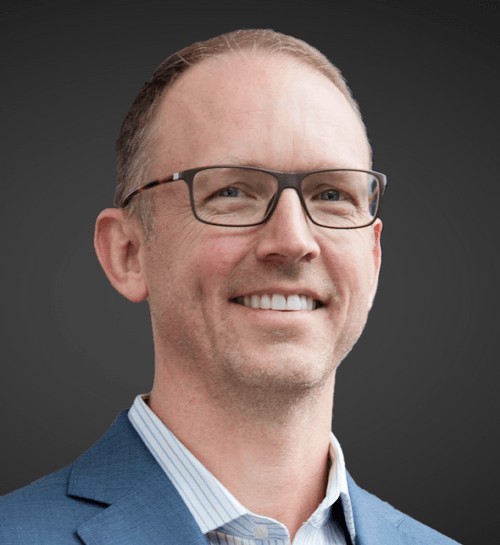
CEO of restor3d
Kurt is the co-founder and CEO of restor3d, the developer of 3D-printed, patient-specific orthopedic implants. He has over two decades of experience in medtech entrepreneurship, including successful exits to Enovis and NuVasive. Before his career in medical devices, Kurt was a consultant at McKinsey & Company. He holds a PhD in Mechanical Engineering and is an Adjunct Professor at Georgia Tech.
Interview Summary
Kurt Jacobus is the co-founder and CEO of restor3d, where he's challenging one of orthopedics' most accepted assumptions: that eight sizes can serve eight billion people. After two decades of building and exiting orthopedic companies, Kurt didn’t arrive at personalized implants as a technology enthusiast. He arrived as an operator who had worked inside a system delivering roughly 80% patient satisfaction — and decided that wasn’t good enough.
Traditional orthopedic implants are designed around standardized sizes, leaving surgeons to adapt technique and patients to accept the outcome. restor3d's answer is to design and manufacture implants and instruments specific to each patient’s anatomy, using advanced 3D printing to serve patients from cranium to toe.
Rather than waiting for full regulatory clearance, restor3d used the FDA’s 520(b) custom device exemption to begin treating patients and generating revenue early. This approach generated both commercial traction and clinical data that informed later 510(k) submissions.
The company's most developed portfolios are now in shoulder and ankle, with a patient-specific shoulder clearance expected in Q2 2026. restor3d controls the full manufacturing process from powder to sterile product across two production facilities in North Carolina and Massachusetts. The company has treated more than 150,000 patients and recently raised $104 million to support continued scale.
Top Takeaways
Ring the cash register early. It's the most credible proof. Early sales show you can clear regulatory hurdles, manufacture reliably, build a sales team, and convince the market your product is differentiated. That signal compounds and attracts talent, expands your investor base, and shifts the terms of capital. Strong enough growth and you raise when you want to, not because you have to.
Self-regulate beyond what FDA requires, then treat every submission like a PhD thesis. Early pathways like 520(b) can generate revenue and regulatory proof before a 510(k). Set internal standards that exceed FDA expectations, and when submissions don’t fully clear, aim for what's commercially relevant now and return later for the rest. This standard builds trust with regulators and raises the bar for competitors.
Fundraising is a long game of preparation, not persuasion. Both private and institutional investors run in small networks. Give them a compelling story or demonstrate strong momentum, and word will quickly spread. And remember, decision-making sits with a small group, not the entire firm. Build relationships before you need capital, keep your prospective investors informed, and treat a “no” as a placeholder.
Your board is an asset or a liability — build it deliberately. The best board members share the vision, open their networks, and stay engaged between meetings. Problems arise at both extremes: members who overstep into managerial execution, and those who disengage until something breaks. When building the board, prioritize operators who understand how companies are built.
Sponsors
FastWave Medical: Named MD+DI's Company of the Year, FastWave is one of the hottest medtech startups in the cardiovascular space. See how you can invest here.
Medsider Fundraising Cohort: Planning to raise capital for your medtech startup? This live, 4-week workshop, led by Medsider is designed to help founders and CEOs tell a sharper story, get investor meetings that matter, and close real capital. Join the waitlist here.
Key Moments
03:21 How Kurt went from wanting to build race cars to 20 years of orthopedic entrepreneurship
06:03 How restor3d’s patient-specific implants challenge the “8 sizes fit 8 billion people” model
15:36 Why early-stage companies should “ring the cash register” as soon as possible
17:16 How a 520(b) pathway helped restor3d generate revenue before full FDA clearance
31:48 How restor3d treats every FDA submission like a PhD thesis and holds itself to standards beyond what regulators ask for
35:24 What Kurt learned from restor3d’s limited market release
40:03 How Kurt raised is last$100M+ round, and why fundraising is really a networking game
45:13 What makes a great board, and how the wrong one can quietly derail a company

Chat with Scott
Ask ScottBot questions about this interview, key takeaways, or other medtech topics.
Full Transcript
Revenue, early stage revenue just matters more than anything. And otherwise, you're selling, you know, vision or some vapor or things of this nature. And, you know, there's the old adage, there's nothing in business that sales can't fix. It's generally true, I think. So what we endeavor to do in this business and prior businesses is really kind of ring the cash register early because that shows that you can cross regulatory hurdles, cross manufacturing transfer hurdles, put stuff in the warehouse, construct the sales team, convince the market that what you have is differentiated seed trial and hopefully seed retention.
Narrator:Welcome to Medsider, where you can learn from the brightest founders and CEOs in medical devices and health technology. Join tens of thousands of ambitious doers as we unpack the insights, tactics, and secrets behind the most successful life science startups in the world. Now here's your host, Nelson.
Scott Nelson:Hey everyone, in this episode of Medsider, I sat down with Kurt Jacobus, co founder and CEO of restor3d. Restor3d provides patient specific orthopedic implants using 3D printing and advanced software. Kurt brings two decades of medtech entrepreneurship, including multiple successful exits to Enovis and NuVasive. Prior to his career in medical devices, Kurt was a consultant at McKinsey and Company. He holds a PhD in mechanical engineering and is an adjunct professor at Georgia Tech.
Scott Nelson:Here are a few topics we explored in this conversation. First, how revenue changes not just company valuation, but the type of capital available. Second, ways you can generate initial revenue before full regulatory clearance. Third, who actually makes the investment decision and how should that change your fundraising approach. And last, when is a no from an investor actually just a question of timing? Before we dive into the full episode, if you're a Medtech founder or CEO preparing to raise capital, you should check out the Medsider fundraising cohort. This four week live workshop combines small group sessions with real time feedback to help you sharpen your investor story, build a targeted investor pipeline, and run a focused fundraising sprint instead of a never ending slog. Over the month, you'll walk away with an investor ready narrative and deck, outreach scripts that actually get responses, a refreshed LinkedIn profile, a simple content plan that keeps you on investors' radar, and a repeatable system for running your raise. You can join the wait list at medsider.com/fundraisingcohort. Again, that's medsider.com/fundraisingcohort. Alright. Let's get to the interview.
Scott Nelson:Alright, Kurt. Welcome to Medsider Radio. Appreciate you coming on.
Kurt Jacobus:Great to be here, Scott. Thank you for the opportunity, and and thanks for putting together a great podcast. I've enjoyed it when I've listened to it.
Scott Nelson:Thank you very much. Try to do our best. Sometimes they they turn out really well. Sometimes they're okay. You know? And but such is the case with with these types of shows. But nonetheless, I'm pumped to talk about the company that you're running, restor3d, but let's start there. I recorded a very abbreviated buyout at the outset of this interview, but I always like to kind of hear it from the horse's mouth, so to speak, right? Give us like a one to two minute overview of your career before taking on the CEO role at restor3d.
Kurt Jacobus:Of course. And it's very much initially a meandering career. My career is marked by doing things that I discovered I didn't enjoy. And then moving into orthopedic entrepreneurship, which I've enjoyed a lot. I've been doing that for the last twenty years.
Kurt Jacobus:But long story short, when I left high school, I wanted to build race cars. I went to get a degree in engineering. When it became clear to me, I was going to have to work for a truck and bus company in the middle Of Indiana. I decided that the automotive industry wasn't for me and race cars are too far afoot. So I decided to go to grad school and spent time there completing a PhD at the intersection of manufacturing material science.
Kurt Jacobus:But I realized there that I didn't want to be an academic. And so then I decided to be a consultant. I joined McKinsey and Company for four years, did some cool stuff, some chem pharma biotech stuff, which is relevant to what I do now, but also some mining and airline work, retail banking, variety of things. I realized there I didn't want to write PowerPoint documents for a living, no offense to the very smart people at McKinsey, but not the right thing for me. And then after that, reconnected with one of my lab mates from PhD and we've been doing entrepreneurship and startups in ortho for the last twenty years.
Kurt Jacobus:I've been a CEO twenty years and I've had a good fortune of being involved with a bunch of companies that have improved a lot of lives and have done well for their shareholders as well. And that's what has me here today at Restor3d.
Scott Nelson:Yeah, awesome. You're being humble. What a pretty impressive background. But the one question, right, that's bugging me is at your time at McKinsey, did you get to work on any race car projects?
Kurt Jacobus:No, I did not. I got close. This is interesting. At our, we had a foot and ankle business called Medshape. We got reached out to by the Formula One team for Mercedes Benz and they were having difficulty with head gaskets and ask us to do something with a unique material called Polyetheretherketone, which is used a lot in spine, other places in ortho. And we did some work for them. We never got specced under the car though, Scott. That was the closest I ever got.
Scott Nelson:Do you happen to know, and I don't wanna get too sidetracked here, but you'd happen to know Michael Hoey, am I pronouncing his last name? He's the he's he's he's founded several Medtech companies, one of which is Francis, which I believe my understanding is sort of the the concept came from, like, him experimenting on race cars. You know? Do you know him at all? Have you crossed paths?
Kurt Jacobus:I do not. I may I may ask you for an intro that might be fun to chat with him about. Do not know him.
Scott Nelson:Two race car enthusiasts turned medtech entrepreneurs. That's awesome. But let's touch on restor3d at a high level and then we'll of course rewind the clock and go back in time and learn a little bit more about kind of the past, call it close to decade now building the company. And then hopefully you can kind of weave in a lot of your other learnings across your pre story career. But let's start with restor3d. I'm on the website right now, which is restor3d.com, restor3d.com. We'll link to it in the full write up on Medsider. But give us like the high level overview of kind of what you're building and maybe frame it up as for those that have never heard of the company or don't know really what you're doing at all.
Kurt Jacobus:Of course. So we are orthopedic device manufacturer and what that means is we make implants and instruments to support procedures that happen in orthopedics. And we are the world's leading provider of customized orthopedic devices. And we do them literally head to toe from a cranium, tip of your big toe and everything in between. And what makes us different than other manufacturers is that we will take your unique anatomy and make patient specific implants and instruments to restore that anatomy.
Kurt Jacobus:And we do a lot of the manufacturing with 3D printing and that should give you a sense of how we came up with the name restor3d. And so that's very different than traditional ortho, which is where I had occupied over half my twenty years in the industry in that traditional model, which is in very simple terms, kind of an eight sizes fit 8,000,000,000 people at 80% patient satisfaction business, which has improved tens of millions of lives over the years, but we thought that you're going back even fifteen years ago that things could be done better with emerging software technologies and three d printing technologies and have built this business to demonstrate that and are well on our way to doing that.
Scott Nelson:It's interesting. Literally just yesterday I had Alfred Griffith, who's the founder CEO of LightForce, and they're doing 3D printed braces or orthodontic braces. Really, really cool company. I'd never really even heard about it until I started doing some some research before the interview, but, like, two CEOs with vast 3D printing experience here back to back. This is pretty interesting.
Scott Nelson:As of right now, current state, we're recording this in Q2 of 2026. Are you focused on certain anatomical areas then?
Kurt Jacobus:At restor3D We do everything head to toe, but the areas that are best developed now for us are ankle and shoulder. Those are where our product portfolios are most complete. Hip is in very good condition and our knee, while being a big part of our revenue, is in a refresh cycle to drop in 2028. So, you know, while, you know, we will do cranial maxillofacial work and hip and knee and shoulder and ankle and everything in between, the bigger growth segments for us right now are extremities, which are shoulder and ankle.
Kurt Jacobus:As for the reason we got started in those earlier, we started the business; We initially started in ankle, lower extremity, and that why that's why that part of the portfolio is best developed there. And then later in shoulder, which is almost fully developed as we sit here today.
Scott Nelson:Got it. As a as a cardiovascular medtech, obviously less familiar with ortho, know enough to be dangerous. As a patient, why wouldn't I opt for a 3D printed implant that's built specifically for me? Am I missing something like, yeah.
Kurt Jacobus:I'll turn the question back to you. Why wouldn't you? And I can completely agree. We often get the question. It's interesting.
Kurt Jacobus:We got a big shoulder conference that starts tomorrow. On that shoulder conference, you know, we get a lot of attention there because we tend to do very, very difficult cases, you know, and that's a point of entry for many of our surgeon relationships. And surgeons don't wanna talk about on a podium about everyday case, a boring, you know, run on the mill shoulder, and they want to talk about very difficult cases, but the question or the concern that's sometimes thrown at us in those environments is, yeah, but not everyone can afford the patient specific stuff that restor3d is offering. Well, what they don't realize is that, for the vast majority of our cases, we price at parity with off the shelf shoulders, hips, knees, and ankles.
Kurt Jacobus:For very divergent things of course, we have a very high engineering burden, we will charge a premium as the case may be. But there really is no good reason. When you'd get out and talk to a lay person and Scott, you're not quite a lay person, but you're not an ortho expert and you say to them, wait, hold on. When they realize, wait, there's eight sizes for 8,000,000,000 people, but you can restore my anatomy to something specific to me and I'm cost indifferent. They have the same question in their mind that you just posed to me is why wouldn't I do something personalized?
Scott Nelson:Yeah. Yeah. Makes a ton of sense. And I I would consider myself very much a lay person when it comes to ortho. Maybe know a little a little bit more than the, average Joe on the street just because, I've been in the Medtech space for, gosh, close to twenty five years now, but no time really spent in ortho.
Scott Nelson:But it seems like kind of a no brainer, you know, of why, in fact, my dad just had a knee implant. Gosh, it's been about nine months ago. It's like, I should have known better. Right? I should have, we should have had this conversation a year ago and I should have said, dad, you should be checking out restor3d.
Scott Nelson:So with that said, I mentioned this, that we're recording this in Q2 2026. For someone that's listening to this maybe three, six months down the road, what's the company's current focus over the next, let's call it year, kind of where you guys, what's next kind of over the next, what's the biggest play over the next three months or twelve months here?
Kurt Jacobus:So the most tactical play that we have before us is we have a FDA clearance in front of the regulator for shoulder that we expect to have drop here in Q2 that will give us the capacity to do the most difficult shoulders to everyday shoulders and everything in between and will allow us to more promote our shoulder, which is a big, big part of our business and a very fast growing part of our business. But we'll finally actually be able to fully promote it into the market. And so that along with ankle, which achieved kind of that status in 2025, mid year twenty twenty five. Those will be the biggest thrust most immediately commercially but you know, every day, we're out of course advancing our hip business and knee business. The only difference particularly in the knee business is that product line is in a refresh cycle as I've mentioned. It will drop in 2028.
Kurt Jacobus:So that's what we're doing. But business is really a play of execution now. We own our own production assets. We go from powder to finished products, sterile product inside the four walls of two production facilities, here in Durham, North Carolina, where I am today, and we're headquartered in the Boston suburb, Wilmington, Massachusetts.
Kurt Jacobus:And so those production assets have been operating for many years and are operating very well. But what we have to do is continue to convert new surgeon accounts, penetrate existing surgeon accounts with our existing product portfolio and the new shoulder that I mentioned. And then just continue to be in increasingly better delivers a product on time, on cost and on quality. And that's really what's before us for the remainder of this year. Frankly, many years ahead of us.
Kurt Jacobus:I often get the question, we raised some money last year and are contemplating a fundraising round in the 2027. What are the use of proceeds? And my answer has been three things: release new products, release new products, and release new products. And if you're listening carefully, those are the same three things, Scott. So that's really what matters in an orthopedic device. Maybe that matters in your neck of the woods.
Kurt Jacobus:But I think there's nothing that excites surgeons more than new products. Nothing excites salesforce, surgeon more than new products and nothing that's more given to improve patient outcomes and new products. That's what we're fully dedicated to.
Scott Nelson:Yeah, keeping it simple for us, us non ortho folks, right? Like what are you focused on? New products, new products and new products. It's interesting, I was listening to this podcast, gosh, it's been probably a couple months ago, but it was actually in a different vertical, was in the e commerce world. But I always like to listen to these like other like really smart people that are doing interesting things in other areas and try to swipe as much as I can to pull it into what I'm doing.
Scott Nelson:But he runs a, gosh, an e com first business in consumer space and it's, I guess they're probably doing $600 to $700 million in top line a year. Like, so it's a pretty impressive business with a relatively small team. He's like, whenever I default to like, whenever there's like multiple hard, what I think are hard decisions on the table, he's like, I always default to just launch new products. Just launch new products and that'll solve for a lot of my problems. And so it's like, yeah, sounds easy enough to say, much harder to execute, but nonetheless, it makes a lot of sense. So I think it's a really helpful overview.
Scott Nelson:And again, restor3d.com is the website. We'll link to it the full write up. We'll also link to Kurt's LinkedIn profile. So you can check out his background a little bit more detail.
Scott Nelson:With that said, let's rewind the clock and spend maybe the next twenty to thirty minutes learning not just about kind of what you've gone through building restor3D, but also like your previous experience as well. And I wanna start with kind of early stage development and it looks like based on your LinkedIn profile, Kurt, did you come into the restor3d initially as an investor and then eventually kind of took on the chairman CEO role or tell me a little bit about that. I wanna talk a little bit about kind of the early stage development seven, eight years ago.
Kurt Jacobus:Yeah. So a company was founded in 2017. I am a co founder and immediately began sharing the board. One of my co founders PhD students, my co founders up in the faculty at Duke came on and was initially the CEO and did a fine job. He remains our COO here today.
Kurt Jacobus:He built the business for the first roughly four years, a little bit longer than that. And then I came over, joined as a CEO in 2021. I've been the CEO since then I've chaired the board since its inception and continued to do so. And so co founder, but was initially kind of a chairman only, a young business requires some operating work. I wound up doing some very tactical things, which I think happens in a young company, but have been doing, of course, a day to day since October 2021.
Scott Nelson:Okay. Got it. Take us back to, like, maybe those those early those early years. Call call it if you wanna maybe even go back to 2018/2019, but really kind of since since taking over the helm and and maybe layer in some of your previous experience at other startups. But those are some of the hardest days when capital is hard to come by, right? But you're trying to make like these meaningful iterations on your development. Like what like a couple of key things that you think maybe not first time CEOs or like younger CEOs that don't have the breadth of experience that you do? Do they really need to get right in those early stages?
Kurt Jacobus:Yeah. And I think this one, as many of these things are, they often seem very obvious but are sometimes difficult to pull off. I think in most businesses and certainly ones in device and ortho device, revenue, early stage revenue just matters more than anything. Otherwise you're selling a vision or some vapor or things of this nature. And there's the old adage, there's nothing in business that sales can't fix.
Kurt Jacobus:It's generally true, I think. So what we endeavor to do in this business and in prior businesses is really ringing the cash register early because that shows that you can cross regulatory hurdles, cross manufacturing transfer hurdles, put stuff in the warehouse, construct a sales team, convince the market that what you have is differentiated, seed trial and hopefully seed retention. Even small scales revenue, early stage revenue matters. The challenge that you face though, once you start ringing the cash register is everyone wants you to ring it a little more frequently than before. But that has made a big difference in the businesses we've built.
Kurt Jacobus:The faster you're able to grow at the earlier stage, the easier it is to recruit talent and recruit capital. I don't think that can be overstated. In this business, we initially were serving the market through 520(b) custom device exemption pathway, which meant that we did not have to go through all entire PMA or 510(k) or 510(k) de novo pathway, which even if you're very good, it's going to take you a year plus couple of years. We started serving the market that way, which allowed us to learn many things about indications, particularly divergent anatomy and divergent pathology early while also ringing the cash register, right? Which allowed us to kind of get some money in the door. So, I would, for anyone that's starting a business, the sooner you can get to revenue, the better. It just, I, I think that's, goes, goes without saying, Scott.
Scott Nelson:Yeah, and do you think, do you think that's definitely the case in ortho? Do you think it differs based on the specialty or generally that's your advice to anyone regardless? Try to show some semblance of product market fit, commercial traction, that you can actually ring the cash register as you put it?
Kurt Jacobus:Yeah, I think, I have not worked meaningfully in the other spaces. So I'm sure there's some nuances I wouldn't understand. But I think to the extent you can demonstrate product market fit, right, and customer conversion and retention, that seems to answer most of the questions that come from investors. But also, I mean, that is the purpose of one's business, right? Like you're going to endeavor, our number one value is improve human health.
Kurt Jacobus:You're not gonna do that, filling around with an FDA submission or working on manufacturing transfer activities or developing vendors or even manufacturing products. You're gonna have to be in an operating room and you're gonna have to serve a surgeon that's serving a patient and they'll do it. So I think that there's that benefit as well. It gives a very clear mission to a business and once you have customers, you know, this case surgeons asking for product, that can be a very strong North Star as well, right? And have you solve problems that you might not have solved otherwise if you're waiting to get to market.
Scott Nelson:Yeah, yeah. You're right in that in that showing some semblance of commercial traction just solves so many questions, right? That whether the questions are coming from investors or maybe other strategics that are looking at possibly acquiring the company. It's no longer do you have to rely on a COGS model that's kind of like, does this really work? No, that's actually working. Like these are literally the, this is where we're building the product that's going into a patient. That's just one example of many, but so many things are solved by actually demonstrating some sort commercial.
Kurt Jacobus:In the limit, right? If I mean the sales growth is strong enough, I mean, one could be selling pretty uninteresting product and folks will believe just based on the quality of the financials and investors are after all financial actors. They're very, very interested in the financial statements. And so I think that provides a wide berth sort of operating room, right? When business is performing well, particularly from revenue point of view, you get the revenue right.
Kurt Jacobus:Then as we talked about, you're going to have to get the revenue even later. The treadmill never slows generally, but then people begin looking at cogs of course and OpEx leverage. If you're fortunate you'll get to those problems solved later, which are how do I make it more cost effectively and how do I deliver to the market, sort of the market with a reasonable amount of OpEx that can really matter. So I do think to the extent one can ring the cash register early, great, very hard to do with a molecular therapeutic or a PMA. So that may not be meaningful there, but in the world of 510(k)s and 520(b)s is certainly worth doing.
Scott Nelson:Yeah. And I think you touched on something that is part of the conversation of like this balance of having to chase commercial revenue. And that is a legitimate concern I think that a lot of CEOs have is like, don't wanna get stuck in cycle of having to just chase the next quarter revenue, quarterly revenue target. But that said, if you are demonstrating commercial revenue, like it does open up the options to so many different, I guess, for lack of a description investors, right? Whether it's the public markets, whether it's, you know, wide range of private investors, etcetera.
Kurt Jacobus:Yeah. And the limit, you know, successful enough doing that, you don't need investors, which is very so you know, talk about it, you know, an extraordinary place to be, right? Then you raise money when you need to, not because you have to. In that attempt to change those conversations fairly dramatically. Changed the pricing of the instrument you bring on as well.
Kurt Jacobus:Right? And so I just think that can't be overlooked. Then I think in respect of it, like what I have seen in some young companies are, well, if we begin selling now, we'll be expected to sell more later. The answer is yes, you're CEO of a business. This is market situation. The other part is, this one takes a while to develop, is the capacity to manage investor expectations, broadly expectations for the business. I think the better folks that I've worked with within this business and other businesses, both as a peer, a team member or as a board member are very, very good at managing expectation. And so the notion that you had a really hot sales year, there may be real conditions why that won't be repeatable in the next year or the next period. Managing investor expectations is very, very and team expectations are very, very important. And the ones that do it well do a very good job of doing that.
Scott Nelson:Yeah, I can't remember where I saw this recently. I thought maybe it came from Darmesh Shah, but it could have been someone else. He one of the his thesis was for the rationale of why the CEO role is the loneliest job in the world of startups was that you're always playing this game of if the company's running hot, you wanna temper the expectations and kind of like, hey, look, there's a lot of challenges ahead, etcetera. You wanna like keep, temper that to a certain extent. But if the company's not doing so hot, you've gotta like lift the boat, almost by yourself. And there's this, it's hard to go against the grain all the time. Was like, yeah, that's pretty accurate description.
Kurt Jacobus:I think that's a very wise way of putting it. I've had folks also ask me, is the sweet spot where you feel like you can relax as a startup CEO? And I said, I I don't know that I've necessarily found that. So maybe I'm not the right person to ask. But, you know, I mentioned earlier, if you get to free cash flow, positive, right? That is certainly a time you might crack a non alcoholic or alcoholic beer depending on your point of view, right? That might be a good point. But I think the only time that I felt like I could relax outside of that even for a moment; It's not in moments of terrifyingly hot growth. That's all consuming.
Kurt Jacobus:Like you have a situation where the sales is outstripping the infrastructure, production asset, quality system, inspection, vendor network, All that kind of stuff. That one's near impossible to blink on, right? Because if you've done this long enough, realize that conditions like that don't last forever and better make the most of them. The other one that's probably slightly more terrifying is the sound of silence is deafening from the cash register, if you will. You're not hearing a lot of things over there and you're receiving many questions as to why you're not doing that.
Kurt Jacobus:That one is also terrifying in a different way. And that requires that middle, which is a good steady growth where you're delivering the same products and whatnot. But I think that's a myth in the sense that if you choose to take that moment off and just relax for a long period of time, you're going to realize that your product will decline in terms of its competitive capabilities, right? New entrant will come out and release something new. And so I think that's a minute to get there.
Kurt Jacobus:The middle one, what I tend to encourage folks to do if they get mad and feel like they're comfortable is make yourself discomforted, particularly with new product introductions. We're talking about that's the way to ensure that they're not periods of great discomfort later, particularly of the second ride of the three I mentioned, which is, where is the growth gone variety? I totally understand where you're coming from. It's like a little bit of a misnomer. Like if you ever find yourself kind of reaching that point of comfortability, it's probably probably need to, you know, look in the mirror, you know, and and ask yourselves, ask yourself what you maybe could be doing differently because that's very, very typical for a startup. I think there are a lot of comfortable jobs out there. Right. And I'm not here to place a value on that. I, from time to time, long for a comfortable job like that. Probably many do. But I think challenge for folks who are well suited to entrepreneurship is they have restless minds and restless hands and they want to continue to do things. And if you put me in a job that paid me extremely well and I had to do the same thing every day for a year, I don't think I would last a year, Scott and that's part of it. And so I am probably more attuned to feeling comfort than I am to feeling stress. That comfort I find to be more stressful than the normal stress. Growing quickly or not growing as quickly as we'd like. That one feels to me very stressful because it means I feel like I'm not looking hard enough for the stuff I need to be working on. Yeah. A 100%. I like I like your the way you put it, restless restless mind, restless hands. But you're right there. Like, startups, sometimes they're they're they're glorified for the wrong reasons, and they're not for everyone. I mean, like, it's like that, and that's not a knock on someone that maybe doesn't wanna do this, live this sort of life in the world of startups. Mean, there's definitely a lot of upside and a lot of positives, but it's not, it isn't for everyone. And I think that's why I encourage a lot of other people that are like take, wanna take a swing at, you know, into this into this world. It's like, if you do and don't realize it's it's for you, that's totally fine. Like it is hard. It is hard and that's fun. Yeah. I realized consulting wasn't for me. I gladly moved on to do something else. Startups aren't for everyone, but I think there's only way one way to find out is actually to do that work and and people often ask me what's the right time to get into a startup and it's a bit like the question being asked when's the right time to have a kid? You know that right now is probably the right answer or there is no good time depending on how you answer it. It just it is that type of commitment and you it is in many respects like having a child or several children all at once. You know there's not a great time for it. You just have to get into it and you have to decide if it's for you or not. You know one nice thing about it in respect of having a kid is you have a kid it's not that easy to walk away from. And a startup, you can go and do something else if you want to.
Scott Nelson:Yeah, very true.
Scott Nelson:Hey everyone, let's take a quick break to talk about Fastwave Medical, the company I co founded and lead as CEO. We're developing next generation intravascular lithotripsy, or IVL systems to tackle complex calcific disease. Over the last few years, we've closed a series of oversubscribed funding rounds, bringing the total investment into Fastwave to over 50,000,000. Corporate interest in the IVL space is growing too. The $900,000,000 acquisition of Bolt Medical by Boston Scientific in 2025 and Johnson and Johnson's $13,000,000,000 acquisition of Shockwave Medical signal a lot of attention on emerging IVL startups like Fastwave.
Scott Nelson:And we're making serious progress. In addition to recently receiving our ninth patent, we've successfully completed peripheral and coronary feasibility studies and are gearing up for pivotal trials. If you're interested in investing in the fast growing IVL market, head over to fastwavemedical.com/invest. Again, that's fastwavemedical.com/invest. Now let's get back to the conversation.
Scott Nelson:Let's jump to the the topic of Regulatory and clinical. You're obviously you're in a lot of patients at this point in time, right? You're almost ten years in the business, but still pretty novel concept, right? Of 3D printing implants. Any unexpected things that surfaced bringing this to the market with FDA and maybe layer in some of your clinical experiences in terms of like that, the interface of demonstrating enough clinical evidence for various regulatory bodies as well?
Kurt Jacobus:I would say this, I think it's fashionable for folks in our line of work to say behind closed doors of the FDA, difficult to deal with, right? The regulator's side, fill in the regulator's name and sigh about it. The FDA has been very front footed on personalization and in respect of our business. And I think generally, and they have been open to the prospects of course, and created this 520(b) custom device exemption pathway, which has been a good way of exploring that for divergent anatomy and divergent pathology. We tend to write 510Ks around most of our patient specific stuff.
Kurt Jacobus:And that is a very different 510(k)s than six sizes of suture anchor. Like that is a much more — suture anchor, not to, you know, overburden the conversation here, you've got a guidance document there. It's pretty straightforward. You follow the guidance document and check the boxes.
Kurt Jacobus:Easy to find predicates, easy to know the performance of predicates, easy to get that done. The hard part with a patient specific five ten is the FDA has not seen many of them and they don't quite know how to react to them. And that's not a knock on FDA. Like I said, they've been very good, but it has meant long and difficult clearance timelines. And we just have had to plan for that.
Kurt Jacobus:So, and they have permitted us to use some of the data from HDE and 520(b) pathways to file 510Ks, which has been quite powerful. And they seem to be more open to that. The hard part is that FDA has not come to understand this is not six sizes fits all, eight sizes fits all. It's a bracketed range across a bunch of dimensions of the product and FDA is not well suited to do that because they haven't done a lot of it. Just like I'm not well suited to swing a cricket back.
Kurt Jacobus:I have not played a lot of cricket in my days. It's no different. They certainly are very open to it and we've learned a lot along the way. The clearance we have on shoulder is specific clearance and it's a challenging clearance to get through. We have been very appreciative of what FDA has done, but we also recognize that in a real sense there's a barrier to competitive entry in the sense that the regulatory hurdle is hard to get over Scott. If you may get over it, it may provide advantaged position in the marketplace for a period of time.
Scott Nelson:Yeah. Regulatory is the moat. When you think about your your dialogue with FDA over those like lengthy 510(k) case, right? Because of the the personalization aspect that the fact that this is this is new to to to FDA. For another CEO that's maybe working on something that's similarly novel, there isn't a lot of experience on the regulatory side. Any words of wisdom on how to best approach the agency, anything that stands out?
Kurt Jacobus:Our approach has always been the following. We tend to think about ourselves as self regulating, right? And what I mean by that is, we have internal standards that would exceed what the FDA might ask for this at every turn. That's not always the case, right? Otherwise, every clearance that we submit, every submission we submit would lead readily to a clearance.
Kurt Jacobus:FDA asked for things that sometimes we don't anticipate and it's not always stuff that we would agree that would have to be answered, but we tend to just, instead of disagreeing with FDA, say, you know, we'll look into that. And we tend to be very data heavy, very test heavy, very prototype heavy, very submission heavy, right? And think about each of them in a sense of a PhD thesis in terms of quality of discovery. And that I think has made for very good reactions to submissions and very good path to clearances. And we have good offline relationships with the FDA for that reason, because I think they look at us as a practitioner, a manufacturer that actually sort of stretches the quality of what's put before the regulator.
Kurt Jacobus:And that's what I encourage people to do. It's fashionable, or might be simple to say, we'll submit the bare minimum and hope we skate by and we'll save money and time that way. That can work, right? And I've seen it work, right? Someone's gonna win mega millions, Scott, this week, think, I don't know when the drawing is, but we're not in the business of buying lottery tickets. Right? We're in the business of having date certain regulatory clearance that serves our patients' needs. That to me means a full submission is a much better way to go. And that's worked very well for us.
Scott Nelson:Yeah. I think there's this debate that I've had with others, right, of, I hate to all, you know, keep coming back to this word of balance, right? Trying to move quickly through submission, but also balance that against maybe future submissions and setting the wrong kind of, I guess, relationship baseline with FDA for lack of a better description. And I think you hit the nail on the head, right? If you're if you're submission heavy and this is just maybe the first or second of several submissions that are only maybe gonna get a little bit more interesting down the road, probably makes sense to kind of not slow it down per se, but like, be more methodical at the way you describe it.
Kurt Jacobus:One thing I can share with you that we have done from time to time. So imagine a very broad based submission, the regulator is unhappy with one sixth of the submission. We've often find ways into those circumstances to push the five sixth, the remaining part through to clearance, and then come back with a additional 510(k) clearance for the one sixth that didn't clear, or under some circumstances letter to file. I don't think we've done a letter to file here in this business, but that has proven to be a good strategy as well, right? Which is you sort of get as much cleared as you can get cleared at that first kind of bite at things.
Kurt Jacobus:Hopefully it'll be commercially relevant. Sometimes it isn't, Like that one sixth may be vital to being able to sell the product, but that's worked well for us as well. Just to kind of mark wins when you can in terms of clearance and then expand things along the way.
Scott Nelson:Let's transition to commercialization. I wanna touch on this briefly before we maybe get your take on scale fundraising and how to scale up a business at this stage. But on the topic of commercialization and ringing the cash register, I love that. I'm gonna steal that and use that a little bit more in these interviews. I'll make sure to try to credit you.
Scott Nelson:But looking at your most recent launches, The ankle system, our notes show that the LMR was mid twenty twenty five. And then your first clinical cases with the knee and the implant late twenty twenty five. When you think about kind of the market research, the buildup to each of those launches, anything unexpected, you know, or maybe interesting that you maybe wished you'd built into that plan or maybe were glad you did build into that plan because you saw it come to fruition in those commercial releases?
Kurt Jacobus:The good news is with these, you know, it'll make for boring discussion here today, but no real surprises on ankle or knee. And part of it is we have a few things that benefit us on both those products. They're already in market, right? And so these were in essence kind of line extensions, but pretty significant ones. And so you know the procedure well, know better alternatives well, right?
Kurt Jacobus:You understand and we do a lot of cadaveric work as one would in our line of work, so as not to get surprised. And then we tend to do the limited market release for patient safety reasons, for training reasons, also for reputational reasons. So new cases go poorly, they get talked about, that's not favorable to the business, But there's a whole another backdrop to it as well, which is the production asset because we're not like the big players in our space. I don't go to market with a bunch of large contract manufacturers. We do have some support there and instrumentation, a handful of components, but most of the stuff we produce in house.
Kurt Jacobus:And what we don't wanna do is excite the market about a new product and then be unable to serve it. And in making things the first time, second time, third time is hard. And so that's the main reasons we do it. On both the knee and on the ankle, we did have some learnings. The knee learnings were a little different than ankle learnings.
Kurt Jacobus:The knee learnings have been around scalable manufacturing with cementless knee. Right? And we are three d printing those knees here with three d print cobalt chrome for the femoral side and titanium for the tibial side. And we're very good at doing both of those things, but every time you print a new geometry, learn new things just how it is. So we've learned some things about scalability of that, which is important.
Kurt Jacobus:Really nothing on instrumentation implant design there. Those have been good. On the ankle, the implant side is good. Ankle is very complicated procedure from an implantation point of view, surgical procedure point of view. And so we'd learned as we might've expected that some of the instruments could use refinements.
Kurt Jacobus:And that has been probably in all the product releases I've been involved in, I've probably been involved in nearly 50, not quite there, maybe 45 in the last twenty years. The instrumentation always needs a tune up. And you always have this situation where doctors A, B and C really love that fill in the blank instrument and doctors C through F think it stinks. Then you've got to, what are gonna do? You're make two instruments or you're gonna not listen to A, B and C or D, E and F. You have those challenges that come up time to time. We didn't have those in the ankle, just overall refinement of procedure. Okay, going back to your facilities, you said that you're in your North Carolina facility. You've got one in Wilmington, Mass as well.
Kurt Jacobus:That's right.
Scott Nelson:Yeah. Yeah. I didn't realize that the Boston area was such a hub for 3D printing like that's a is that is that correct?
Kurt Jacobus:It is. Yeah. So you've had many manufacturers that make machines, particularly polymeric printers are up there and we use some of their equipment up there. There's been a lot of shakeout in that spot as well. Scott, many companies, a few SPAC'd, at least one SPAC'd, two SPAC'd, I think.
Kurt Jacobus:And then there were some weird combinations that happened and didn't happen and then some losses and whatnot. But I think ultimately as happens in many spaces that are novel like that, there's been a shakeout. But we use two of the Boston based manufacturers to make instruments. Mostly here though in Durham as a casebait, not in the Boston facility. And in the Boston facility we use equipment from a European manufacturer and one based in, well, between South Carolina and Colorado. Those are the couple that we use.
Scott Nelson:Got it. Very cool. Let's talk about fundraising because you've raised your fair share of capital over the years. We don't have a ton of time to go into this topic in great detail, so I'll maybe, you know, just ask you one question that's a little bit more philosophical in nature. But when you think about your experience raising, I think last year, what was that $104,000,000 round last year, I believe. And it sounds like maybe you're thinking about raising again next year. What are like one or like one or two things that you you know now that you you wish to do, know, ten ten years ago when you were, you know, when you were fundraising back then.
Kurt Jacobus:You know, I think that one that I'd already spoken to which is, you know, a sales and sales growth can answer a lot of questions. I think that alternative to that is if you're truly pre revenue and you have a very interesting technology, I think that could be sold, but tepid sales growth and obviously contracting sales are near impossible to sell equity around. Are, it's a good sales growth. But the second one is it took me a while to realize this. And part of it is the approach that we took.
Kurt Jacobus:A lot of the money we've raised is private direct financing and that kind of goes all the way back to our earliest days in 2006, we raised our first round. That was the nature of the round we raised and those folks, some of them were from McKinsey, those folks that private direct raised a bit different. It's bit of a herding cats thing, but it's definitely a networking program. And sort of came to realize that early on that if you offer an investor a good story to tell, or you offer them a good return, they'll tend to talk about you at dinners and however they spend their time. And that tends to prove to be a very good approach on the private direct.
Kurt Jacobus:It took me a little while to realize that the institutional investors are that way as well. Took me long to figure that out and they all talk to one another. It's a smaller community than the private directs. They also all talk to the investment bankers that are in around these deals. So that one took me a little while to figure out and probably longer than it should.
Kurt Jacobus:So the thing that I would suggest that people do is meet with investors importantly when you're not raising money. And it's fairly obvious statement, but tell them the story, tell them you're going to need money in early twenty seven, you know, or mid twenty seven and begin preparing them for the story of what are you going to raise, why are you going to raise it, and what the plan for this year will look like in next year, right? And that has proven to be incredibly helpful. And we also do that on the private directs as well. That part of not going and meeting someone the first time when you're about to raise money, having met them before has proven to be quite helpful.
Kurt Jacobus:But interestingly, the group that we closed last year, we met only last year. So that's sort of a contrary to the statements I'm making, Scott. But ultimately, think that part of it is you can never spend enough time meeting investors provided your business is not struggling operationally. You can never spend more than that.
Scott Nelson:Yeah. Two things that stuck out kinda hearing you hearing you riff on that that answer a little bit was one, people are people, right? Whether it's people inside an institutional investment firm or or private directs, right? They'll talk and they're relatively, run-in small circles. So good to keep in mind.
Scott Nelson:Then too, this notion, i run into a lot of maybe I should say first time fundraisers don't almost, if they get disappointed if they pitched an investor once and they got a no, like, they were just like not very clear next steps, it's like, this takes time. Mean, this is like a, if you're asking someone to write a pretty sizable check, they're not really gonna get to an answer in a week. You know? I mean, this a long, little bit of a longer game, you know? And so I think that's really just important point to keep in mind.
Kurt Jacobus:No question about that, right? And ultimately, you know, business is not a static thing, particularly, you know, a young company, it better look awfully different six months from now or a year from now than it did otherwise. You may not be having it on the right trajectory, right? And so the notion that someone told you no two years ago, they're going to think very differently about you now. I'll give you a great example.
Kurt Jacobus:If you decide you're to raise credit or debt, right? If two years ago you're wildly unprofitable and this year you're profitable, a bank or private credit lender is going to think very differently about you than they did two years ago and it's no different with equity, right? And to the point you made earlier, I think it's often the case that, I'm thinking in my early days when I thought about institutional equity, these huge organizations filled with thousands of analysts and portfolio managers and the like, and how do you get to them? It's actually a very small group of people that make decisions in them. And so it's not these enormous behemoths you have to get to now. Many of them have many different funds with them, of course, but there's a handful of decision makers that make it and you just have to get to them and tell a good story.
Scott Nelson:Yeah, and getting to them is like that's part of the job, right? I mean, it's sometimes in a lot of cases take a fair amount of work, but that's part of the role.
Scott Nelson:We don't have enough time to get to all the rest of my questions. Wish we did, but I do wanna get your take board, on healthy board function, right? Because you've been around enough startups, sitting on boards, running them as CEO. This is like an issue that seemingly is happens quite frequently. And I don't think maybe gets enough attention is like, how you solve for like challenging board scenarios? How do you begin to build a good, foster a good function at the board level? Because it's, I mean, could, I don't wanna say make or break a company, but it could cause a lot of unnecessary challenges for a startup that doesn't necessarily need them.
Kurt Jacobus:Zero question about it. Right. The board has to be an asset. The board's I mean, it's hard to build a business without a board at all. Right. And the board has to be aiding you in that development and they have to bring knowledge, skills, relationships, sometimes encouragement and sometimes challenges to the management team. And I've seen boards at their worst; you have someone that lacks vision or lacks risk tolerance or wants to act like a manager when they're in fact a board member or is overly negative or thinks it's their job to beat on management when misses are made. And of course they have to hold management to account, but there are a variety of ways of doing that. Those type of board members, I just tend to not wanna bring into anything I'm involved with and I don't think they're helpful. Now the flip side of that is the person that's checked out, not engaging, doesn't have the relationships, doesn't have the skills or experience, and it's just a suit on a hanger in there.
Kurt Jacobus:Yes, you can have a board like that, but when you most need your board, you're going to be lacking there. And there's a pretty big universe of folks in between that do it. In my experience, some of the better board members have been operators, but I say that as an operator, Scott, so I'm going to be biased towards them, but there's some very good financial investors who have seen great operators operate and can help bring that to the table as well. And so a board that's filled with positively minded people that share the vision that are prepared to open their Rolodex or make phone calls or it make other investor introductions or customer introductions, spend time offline with the management team to make them better, to understand that what they're trying to do is hard and you're not going to achieve 100% of the stuff you set forth to do and be understanding when mistakes are made. Those are, in my experience, great board members.
Kurt Jacobus:And they're hard to come by. They are very, very hard to come by. You're gonna get some by virtue of that investment that you knocked down. And the best answer there is to try to steer them in the direction of folks that are like that. And our investor oriented board members or investor, I guess, originated board members are ones that have been operators or look and feel like operators, which has been quite helpful. And so long answer short question, not particularly helpful. You know it when you see it, Scott. That's the hard part and you're not gonna know it until you spend some time with it. It's not unlike any other job interview.
Scott Nelson:Yep. Yep. Or or building a building a team, right, and dealing with the the personal dynamics. You're right. I'm biased too towards towards operators as well, largely because I'm an operator. But not to say, like, good good investors that have a long track record have been around enough operators that they tend to have or bring some really good advice and counsel to table. So with that said, I know we only got five minutes left. Wanna be sensitive to your schedule, Kurt, but let's get to the rapid fire portion of the interview. Before we get there, restor3d.com is the website.
Scott Nelson:We'll link to it in the full write up on Medsider as well as Kurt's LinkedIn profile as well. So first question, feel free to answer rapid fire fashion. If you wanna expand a little bit, that's totally fine as well. But next twelve months, already kind of mentioned this next twelve months. What's like the most exciting thing that you're looking forward to at restore?
Kurt Jacobus:It would be the shoulder clearance that's been two plus years in the making. As I may have mentioned, it should happen here in the second quarter and that will really allow us to unleash marketing efforts and full sales efforts in the shoulder. That'll be very important to it. This is a demonstration of what we've already done in ankle, More clearly in shoulder and where we're heading in knee. And so that without question is what I'm most excited about.
Scott Nelson:Let's take a hypothetical scenario wherein maybe you're in your neck of the woods in North Carolina, small intimate group of Medtech entrepreneurs, and you want to leave them with one thing after dinner, right? That they really need to like take home in order to see some semblance of success at their startup. What would that be?
Kurt Jacobus:Yeah, I'll skip on that, sell early, ring the cash register early. Although I do feel like that's the most important one. I think the thing that's vital is you've got to have a team you trust, right? And also a fairly obvious statement, but where I have been most concerned about the trajectory of something I've been involved with is when there's weakness in a key functional area, right? And the minute you know that you're going to be better off making a change than trying to rehabilitate someone that may be unable to be rehabilitated or just sort of looking past it and hoping for the best.
Kurt Jacobus:That part is very important, right? Because I sit here, went on vacation a couple of weeks ago and I was not worried about the business. And the reason I wasn't worried about the business, great people in the senior roles. And so that's hard to know also. It's not like the board member question, like how do you know you have a great chief commercial officer if you've never seen one? Well, you know, you're gonna have to talk to your board members about that. Right? And help you understand whether what you're getting there is very good as an example.
Scott Nelson:Yeah. Such a good point because it's it's easy to want to try to hang on as long as possible or to try to, like, mold that weak spot into something that you think it could be. But oftentimes, you're right. It's, like, it's best just to make a decisive decision. But going back to your vacation, sounds like you're kinda comfortable on vacation, Kurt. I mean, is that are you getting comfortable?
Kurt Jacobus:Briefly, I I did not check my email for two days, which was a long time for me.
Scott Nelson:It probably felt like a long time. Yeah. Like ages. Yeah.
Kurt Jacobus:But I could, you know, I I suppose I could blame the Internet was weak in spots. I blame the Internet, but yeah.
Scott Nelson:Maybe that's the strategy. Go to spots where Starlink is not is not present. You know? Yeah. Alright.
Scott Nelson:Last question I got for you. To either take us back maybe to your graduate days in Champaign Urbana or maybe early career at McKinsey building really nice looking PowerPoint decks. Anything you whisper in the years of the younger version of yourself?
Kurt Jacobus:Yeah, no question I would. I think about the amount of time I spent worrying about things that didn't matter or there's a sort of correlation to that, which is wanting everything to happen faster than it can reasonably expect it to. And then just being concerned about overall trajectory and performance. And I think it takes a while to develop patience. It does, right?
Kurt Jacobus:And I maybe interested, if we pulled my team here, I don't think they describe me as impatient, but I don't know they describe me as patient either. Scott, think it's a good place to be, but that part, I wish I'd known that earlier that one can be patient. One can think about the timelines over which things can and should happen. Not everything has to be done, you know, excellently at half the time that others do it.
Kurt Jacobus:And the things that aren't being done at that rate, you don't have to spend a huge amount of your time worrying about them, right? Pick the right couple of things to worry about, put the right team around them, solve those issues, and then pick the next right couple of things to worry about. A startup, particularly in its early days, you have nothing. You've got nothing. Maybe you have a PowerPoint little else, and you have nothing to rely upon and everything has to be built.
Kurt Jacobus:So the notion that everything would be perfect from day one, it's just not the way it is. You're gonna fix some things. Those are gonna be better than other things you have to go fix them. Your job is constantly fixing and improving what you've built from that PowerPoint deck.
Scott Nelson:Even if it started off with a nice, very good PowerPoint deck, right? Because of your experience in McKinsey. But joking aside, this has been a lot of fun. I don't wanna embarrass you, but like I could tell like you're like a great leader. You're like, You're genuinely humble, but also confident at the same time. And it's like a really, it feels, I don't know, we're just meeting for the first time, it feels a really healthy blend that's probably built on a lot of experience, a lot of scars.
Kurt Jacobus:Very kind you to say. And think anyone that's done this type of work for a decade or like maybe two decades, you're gonna learn it's very hard and it's gonna require a lot of genuineness. Even if I think you came into it as a poor leader, it's going to make you a better leader. I really appreciate you saying that. I appreciate you having me on. It's been great. I've enjoyed your podcast. I mentioned I wish you tons of continued success. You wanna check back in a couple years, I may have some cool stuff to share.
Scott Nelson:I always like the the round twos for sure. But, Kurt, can't thank you enough for carving out sometime. I know you're you got a busy schedule, so so really appreciate you coming on the program. Thanks, Kurt. Take care.
Scott Nelson:Hey. It's Scott again. One quick thing before you go. You see, I love bringing you insightful conversations with the best founders and CEOs of medical device and health technology startups. But here's the thing.
Scott Nelson:I'd be super grateful if you could help me reach even more ambitious doers who share our passion. So if you found value in this podcast, if you found yourself nodding your head while listening, or if you simply enjoy what we're doing with Medsider, please take a moment to leave us a review. It's super easy. Just open your Apple Podcast app or the podcast app of your choice, search for our show, and scroll down to the ratings and review section. Leave your honest thoughts and hit that five star rating if you think we're worthy.
Scott Nelson:Your feedback is incredibly important and it's the best way to ensure we keep bringing you awesome discussions with leading founders and CEOs. So take a moment to be a good friend and leave that review today. As always, thanks for being a part of our journey and for helping Medsider continue to grow and evolve. Your support is greatly appreciated. Alright. Enough talk about reviews. Stay tuned for another informative episode coming at you soon.
Read More
Revenue, early stage revenue just matters more than anything. And otherwise, you're selling, you know, vision or some vapor or things of this nature. And, you know, there's the old adage, there's nothing in business that sales can't fix. It's generally true, I think. So what we endeavor to do in this business and prior businesses is really kind of ring the cash register early because that shows that you can cross regulatory hurdles, cross manufacturing transfer hurdles, put stuff in the warehouse, construct the sales team, convince the market that what you have is differentiated seed trial and hopefully seed retention.
Narrator:Welcome to Medsider, where you can learn from the brightest founders and CEOs in medical devices and health technology. Join tens of thousands of ambitious doers as we unpack the insights, tactics, and secrets behind the most successful life science startups in the world. Now here's your host, Nelson.
Scott Nelson:Hey everyone, in this episode of Medsider, I sat down with Kurt Jacobus, co founder and CEO of restor3d. Restor3d provides patient specific orthopedic implants using 3D printing and advanced software. Kurt brings two decades of medtech entrepreneurship, including multiple successful exits to Enovis and NuVasive. Prior to his career in medical devices, Kurt was a consultant at McKinsey and Company. He holds a PhD in mechanical engineering and is an adjunct professor at Georgia Tech.
Scott Nelson:Here are a few topics we explored in this conversation. First, how revenue changes not just company valuation, but the type of capital available. Second, ways you can generate initial revenue before full regulatory clearance. Third, who actually makes the investment decision and how should that change your fundraising approach. And last, when is a no from an investor actually just a question of timing? Before we dive into the full episode, if you're a Medtech founder or CEO preparing to raise capital, you should check out the Medsider fundraising cohort. This four week live workshop combines small group sessions with real time feedback to help you sharpen your investor story, build a targeted investor pipeline, and run a focused fundraising sprint instead of a never ending slog. Over the month, you'll walk away with an investor ready narrative and deck, outreach scripts that actually get responses, a refreshed LinkedIn profile, a simple content plan that keeps you on investors' radar, and a repeatable system for running your raise. You can join the wait list at medsider.com/fundraisingcohort. Again, that's medsider.com/fundraisingcohort. Alright. Let's get to the interview.
Scott Nelson:Alright, Kurt. Welcome to Medsider Radio. Appreciate you coming on.
Kurt Jacobus:Great to be here, Scott. Thank you for the opportunity, and and thanks for putting together a great podcast. I've enjoyed it when I've listened to it.
Scott Nelson:Thank you very much. Try to do our best. Sometimes they they turn out really well. Sometimes they're okay. You know? And but such is the case with with these types of shows. But nonetheless, I'm pumped to talk about the company that you're running, restor3d, but let's start there. I recorded a very abbreviated buyout at the outset of this interview, but I always like to kind of hear it from the horse's mouth, so to speak, right? Give us like a one to two minute overview of your career before taking on the CEO role at restor3d.
Kurt Jacobus:Of course. And it's very much initially a meandering career. My career is marked by doing things that I discovered I didn't enjoy. And then moving into orthopedic entrepreneurship, which I've enjoyed a lot. I've been doing that for the last twenty years.
Kurt Jacobus:But long story short, when I left high school, I wanted to build race cars. I went to get a degree in engineering. When it became clear to me, I was going to have to work for a truck and bus company in the middle Of Indiana. I decided that the automotive industry wasn't for me and race cars are too far afoot. So I decided to go to grad school and spent time there completing a PhD at the intersection of manufacturing material science.
Kurt Jacobus:But I realized there that I didn't want to be an academic. And so then I decided to be a consultant. I joined McKinsey and Company for four years, did some cool stuff, some chem pharma biotech stuff, which is relevant to what I do now, but also some mining and airline work, retail banking, variety of things. I realized there I didn't want to write PowerPoint documents for a living, no offense to the very smart people at McKinsey, but not the right thing for me. And then after that, reconnected with one of my lab mates from PhD and we've been doing entrepreneurship and startups in ortho for the last twenty years.
Kurt Jacobus:I've been a CEO twenty years and I've had a good fortune of being involved with a bunch of companies that have improved a lot of lives and have done well for their shareholders as well. And that's what has me here today at Restor3d.
Scott Nelson:Yeah, awesome. You're being humble. What a pretty impressive background. But the one question, right, that's bugging me is at your time at McKinsey, did you get to work on any race car projects?
Kurt Jacobus:No, I did not. I got close. This is interesting. At our, we had a foot and ankle business called Medshape. We got reached out to by the Formula One team for Mercedes Benz and they were having difficulty with head gaskets and ask us to do something with a unique material called Polyetheretherketone, which is used a lot in spine, other places in ortho. And we did some work for them. We never got specced under the car though, Scott. That was the closest I ever got.
Scott Nelson:Do you happen to know, and I don't wanna get too sidetracked here, but you'd happen to know Michael Hoey, am I pronouncing his last name? He's the he's he's he's founded several Medtech companies, one of which is Francis, which I believe my understanding is sort of the the concept came from, like, him experimenting on race cars. You know? Do you know him at all? Have you crossed paths?
Kurt Jacobus:I do not. I may I may ask you for an intro that might be fun to chat with him about. Do not know him.
Scott Nelson:Two race car enthusiasts turned medtech entrepreneurs. That's awesome. But let's touch on restor3d at a high level and then we'll of course rewind the clock and go back in time and learn a little bit more about kind of the past, call it close to decade now building the company. And then hopefully you can kind of weave in a lot of your other learnings across your pre story career. But let's start with restor3d. I'm on the website right now, which is restor3d.com, restor3d.com. We'll link to it in the full write up on Medsider. But give us like the high level overview of kind of what you're building and maybe frame it up as for those that have never heard of the company or don't know really what you're doing at all.
Kurt Jacobus:Of course. So we are orthopedic device manufacturer and what that means is we make implants and instruments to support procedures that happen in orthopedics. And we are the world's leading provider of customized orthopedic devices. And we do them literally head to toe from a cranium, tip of your big toe and everything in between. And what makes us different than other manufacturers is that we will take your unique anatomy and make patient specific implants and instruments to restore that anatomy.
Kurt Jacobus:And we do a lot of the manufacturing with 3D printing and that should give you a sense of how we came up with the name restor3d. And so that's very different than traditional ortho, which is where I had occupied over half my twenty years in the industry in that traditional model, which is in very simple terms, kind of an eight sizes fit 8,000,000,000 people at 80% patient satisfaction business, which has improved tens of millions of lives over the years, but we thought that you're going back even fifteen years ago that things could be done better with emerging software technologies and three d printing technologies and have built this business to demonstrate that and are well on our way to doing that.
Scott Nelson:It's interesting. Literally just yesterday I had Alfred Griffith, who's the founder CEO of LightForce, and they're doing 3D printed braces or orthodontic braces. Really, really cool company. I'd never really even heard about it until I started doing some some research before the interview, but, like, two CEOs with vast 3D printing experience here back to back. This is pretty interesting.
Scott Nelson:As of right now, current state, we're recording this in Q2 of 2026. Are you focused on certain anatomical areas then?
Kurt Jacobus:At restor3D We do everything head to toe, but the areas that are best developed now for us are ankle and shoulder. Those are where our product portfolios are most complete. Hip is in very good condition and our knee, while being a big part of our revenue, is in a refresh cycle to drop in 2028. So, you know, while, you know, we will do cranial maxillofacial work and hip and knee and shoulder and ankle and everything in between, the bigger growth segments for us right now are extremities, which are shoulder and ankle.
Kurt Jacobus:As for the reason we got started in those earlier, we started the business; We initially started in ankle, lower extremity, and that why that's why that part of the portfolio is best developed there. And then later in shoulder, which is almost fully developed as we sit here today.
Scott Nelson:Got it. As a as a cardiovascular medtech, obviously less familiar with ortho, know enough to be dangerous. As a patient, why wouldn't I opt for a 3D printed implant that's built specifically for me? Am I missing something like, yeah.
Kurt Jacobus:I'll turn the question back to you. Why wouldn't you? And I can completely agree. We often get the question. It's interesting.
Kurt Jacobus:We got a big shoulder conference that starts tomorrow. On that shoulder conference, you know, we get a lot of attention there because we tend to do very, very difficult cases, you know, and that's a point of entry for many of our surgeon relationships. And surgeons don't wanna talk about on a podium about everyday case, a boring, you know, run on the mill shoulder, and they want to talk about very difficult cases, but the question or the concern that's sometimes thrown at us in those environments is, yeah, but not everyone can afford the patient specific stuff that restor3d is offering. Well, what they don't realize is that, for the vast majority of our cases, we price at parity with off the shelf shoulders, hips, knees, and ankles.
Kurt Jacobus:For very divergent things of course, we have a very high engineering burden, we will charge a premium as the case may be. But there really is no good reason. When you'd get out and talk to a lay person and Scott, you're not quite a lay person, but you're not an ortho expert and you say to them, wait, hold on. When they realize, wait, there's eight sizes for 8,000,000,000 people, but you can restore my anatomy to something specific to me and I'm cost indifferent. They have the same question in their mind that you just posed to me is why wouldn't I do something personalized?
Scott Nelson:Yeah. Yeah. Makes a ton of sense. And I I would consider myself very much a lay person when it comes to ortho. Maybe know a little a little bit more than the, average Joe on the street just because, I've been in the Medtech space for, gosh, close to twenty five years now, but no time really spent in ortho.
Scott Nelson:But it seems like kind of a no brainer, you know, of why, in fact, my dad just had a knee implant. Gosh, it's been about nine months ago. It's like, I should have known better. Right? I should have, we should have had this conversation a year ago and I should have said, dad, you should be checking out restor3d.
Scott Nelson:So with that said, I mentioned this, that we're recording this in Q2 2026. For someone that's listening to this maybe three, six months down the road, what's the company's current focus over the next, let's call it year, kind of where you guys, what's next kind of over the next, what's the biggest play over the next three months or twelve months here?
Kurt Jacobus:So the most tactical play that we have before us is we have a FDA clearance in front of the regulator for shoulder that we expect to have drop here in Q2 that will give us the capacity to do the most difficult shoulders to everyday shoulders and everything in between and will allow us to more promote our shoulder, which is a big, big part of our business and a very fast growing part of our business. But we'll finally actually be able to fully promote it into the market. And so that along with ankle, which achieved kind of that status in 2025, mid year twenty twenty five. Those will be the biggest thrust most immediately commercially but you know, every day, we're out of course advancing our hip business and knee business. The only difference particularly in the knee business is that product line is in a refresh cycle as I've mentioned. It will drop in 2028.
Kurt Jacobus:So that's what we're doing. But business is really a play of execution now. We own our own production assets. We go from powder to finished products, sterile product inside the four walls of two production facilities, here in Durham, North Carolina, where I am today, and we're headquartered in the Boston suburb, Wilmington, Massachusetts.
Kurt Jacobus:And so those production assets have been operating for many years and are operating very well. But what we have to do is continue to convert new surgeon accounts, penetrate existing surgeon accounts with our existing product portfolio and the new shoulder that I mentioned. And then just continue to be in increasingly better delivers a product on time, on cost and on quality. And that's really what's before us for the remainder of this year. Frankly, many years ahead of us.
Kurt Jacobus:I often get the question, we raised some money last year and are contemplating a fundraising round in the 2027. What are the use of proceeds? And my answer has been three things: release new products, release new products, and release new products. And if you're listening carefully, those are the same three things, Scott. So that's really what matters in an orthopedic device. Maybe that matters in your neck of the woods.
Kurt Jacobus:But I think there's nothing that excites surgeons more than new products. Nothing excites salesforce, surgeon more than new products and nothing that's more given to improve patient outcomes and new products. That's what we're fully dedicated to.
Scott Nelson:Yeah, keeping it simple for us, us non ortho folks, right? Like what are you focused on? New products, new products and new products. It's interesting, I was listening to this podcast, gosh, it's been probably a couple months ago, but it was actually in a different vertical, was in the e commerce world. But I always like to listen to these like other like really smart people that are doing interesting things in other areas and try to swipe as much as I can to pull it into what I'm doing.
Scott Nelson:But he runs a, gosh, an e com first business in consumer space and it's, I guess they're probably doing $600 to $700 million in top line a year. Like, so it's a pretty impressive business with a relatively small team. He's like, whenever I default to like, whenever there's like multiple hard, what I think are hard decisions on the table, he's like, I always default to just launch new products. Just launch new products and that'll solve for a lot of my problems. And so it's like, yeah, sounds easy enough to say, much harder to execute, but nonetheless, it makes a lot of sense. So I think it's a really helpful overview.
Scott Nelson:And again, restor3d.com is the website. We'll link to it the full write up. We'll also link to Kurt's LinkedIn profile. So you can check out his background a little bit more detail.
Scott Nelson:With that said, let's rewind the clock and spend maybe the next twenty to thirty minutes learning not just about kind of what you've gone through building restor3D, but also like your previous experience as well. And I wanna start with kind of early stage development and it looks like based on your LinkedIn profile, Kurt, did you come into the restor3d initially as an investor and then eventually kind of took on the chairman CEO role or tell me a little bit about that. I wanna talk a little bit about kind of the early stage development seven, eight years ago.
Kurt Jacobus:Yeah. So a company was founded in 2017. I am a co founder and immediately began sharing the board. One of my co founders PhD students, my co founders up in the faculty at Duke came on and was initially the CEO and did a fine job. He remains our COO here today.
Kurt Jacobus:He built the business for the first roughly four years, a little bit longer than that. And then I came over, joined as a CEO in 2021. I've been the CEO since then I've chaired the board since its inception and continued to do so. And so co founder, but was initially kind of a chairman only, a young business requires some operating work. I wound up doing some very tactical things, which I think happens in a young company, but have been doing, of course, a day to day since October 2021.
Scott Nelson:Okay. Got it. Take us back to, like, maybe those those early those early years. Call call it if you wanna maybe even go back to 2018/2019, but really kind of since since taking over the helm and and maybe layer in some of your previous experience at other startups. But those are some of the hardest days when capital is hard to come by, right? But you're trying to make like these meaningful iterations on your development. Like what like a couple of key things that you think maybe not first time CEOs or like younger CEOs that don't have the breadth of experience that you do? Do they really need to get right in those early stages?
Kurt Jacobus:Yeah. And I think this one, as many of these things are, they often seem very obvious but are sometimes difficult to pull off. I think in most businesses and certainly ones in device and ortho device, revenue, early stage revenue just matters more than anything. Otherwise you're selling a vision or some vapor or things of this nature. And there's the old adage, there's nothing in business that sales can't fix.
Kurt Jacobus:It's generally true, I think. So what we endeavor to do in this business and in prior businesses is really ringing the cash register early because that shows that you can cross regulatory hurdles, cross manufacturing transfer hurdles, put stuff in the warehouse, construct a sales team, convince the market that what you have is differentiated, seed trial and hopefully seed retention. Even small scales revenue, early stage revenue matters. The challenge that you face though, once you start ringing the cash register is everyone wants you to ring it a little more frequently than before. But that has made a big difference in the businesses we've built.
Kurt Jacobus:The faster you're able to grow at the earlier stage, the easier it is to recruit talent and recruit capital. I don't think that can be overstated. In this business, we initially were serving the market through 520(b) custom device exemption pathway, which meant that we did not have to go through all entire PMA or 510(k) or 510(k) de novo pathway, which even if you're very good, it's going to take you a year plus couple of years. We started serving the market that way, which allowed us to learn many things about indications, particularly divergent anatomy and divergent pathology early while also ringing the cash register, right? Which allowed us to kind of get some money in the door. So, I would, for anyone that's starting a business, the sooner you can get to revenue, the better. It just, I, I think that's, goes, goes without saying, Scott.
Scott Nelson:Yeah, and do you think, do you think that's definitely the case in ortho? Do you think it differs based on the specialty or generally that's your advice to anyone regardless? Try to show some semblance of product market fit, commercial traction, that you can actually ring the cash register as you put it?
Kurt Jacobus:Yeah, I think, I have not worked meaningfully in the other spaces. So I'm sure there's some nuances I wouldn't understand. But I think to the extent you can demonstrate product market fit, right, and customer conversion and retention, that seems to answer most of the questions that come from investors. But also, I mean, that is the purpose of one's business, right? Like you're going to endeavor, our number one value is improve human health.
Kurt Jacobus:You're not gonna do that, filling around with an FDA submission or working on manufacturing transfer activities or developing vendors or even manufacturing products. You're gonna have to be in an operating room and you're gonna have to serve a surgeon that's serving a patient and they'll do it. So I think that there's that benefit as well. It gives a very clear mission to a business and once you have customers, you know, this case surgeons asking for product, that can be a very strong North Star as well, right? And have you solve problems that you might not have solved otherwise if you're waiting to get to market.
Scott Nelson:Yeah, yeah. You're right in that in that showing some semblance of commercial traction just solves so many questions, right? That whether the questions are coming from investors or maybe other strategics that are looking at possibly acquiring the company. It's no longer do you have to rely on a COGS model that's kind of like, does this really work? No, that's actually working. Like these are literally the, this is where we're building the product that's going into a patient. That's just one example of many, but so many things are solved by actually demonstrating some sort commercial.
Kurt Jacobus:In the limit, right? If I mean the sales growth is strong enough, I mean, one could be selling pretty uninteresting product and folks will believe just based on the quality of the financials and investors are after all financial actors. They're very, very interested in the financial statements. And so I think that provides a wide berth sort of operating room, right? When business is performing well, particularly from revenue point of view, you get the revenue right.
Kurt Jacobus:Then as we talked about, you're going to have to get the revenue even later. The treadmill never slows generally, but then people begin looking at cogs of course and OpEx leverage. If you're fortunate you'll get to those problems solved later, which are how do I make it more cost effectively and how do I deliver to the market, sort of the market with a reasonable amount of OpEx that can really matter. So I do think to the extent one can ring the cash register early, great, very hard to do with a molecular therapeutic or a PMA. So that may not be meaningful there, but in the world of 510(k)s and 520(b)s is certainly worth doing.
Scott Nelson:Yeah. And I think you touched on something that is part of the conversation of like this balance of having to chase commercial revenue. And that is a legitimate concern I think that a lot of CEOs have is like, don't wanna get stuck in cycle of having to just chase the next quarter revenue, quarterly revenue target. But that said, if you are demonstrating commercial revenue, like it does open up the options to so many different, I guess, for lack of a description investors, right? Whether it's the public markets, whether it's, you know, wide range of private investors, etcetera.
Kurt Jacobus:Yeah. And the limit, you know, successful enough doing that, you don't need investors, which is very so you know, talk about it, you know, an extraordinary place to be, right? Then you raise money when you need to, not because you have to. In that attempt to change those conversations fairly dramatically. Changed the pricing of the instrument you bring on as well.
Kurt Jacobus:Right? And so I just think that can't be overlooked. Then I think in respect of it, like what I have seen in some young companies are, well, if we begin selling now, we'll be expected to sell more later. The answer is yes, you're CEO of a business. This is market situation. The other part is, this one takes a while to develop, is the capacity to manage investor expectations, broadly expectations for the business. I think the better folks that I've worked with within this business and other businesses, both as a peer, a team member or as a board member are very, very good at managing expectation. And so the notion that you had a really hot sales year, there may be real conditions why that won't be repeatable in the next year or the next period. Managing investor expectations is very, very and team expectations are very, very important. And the ones that do it well do a very good job of doing that.
Scott Nelson:Yeah, I can't remember where I saw this recently. I thought maybe it came from Darmesh Shah, but it could have been someone else. He one of the his thesis was for the rationale of why the CEO role is the loneliest job in the world of startups was that you're always playing this game of if the company's running hot, you wanna temper the expectations and kind of like, hey, look, there's a lot of challenges ahead, etcetera. You wanna like keep, temper that to a certain extent. But if the company's not doing so hot, you've gotta like lift the boat, almost by yourself. And there's this, it's hard to go against the grain all the time. Was like, yeah, that's pretty accurate description.
Kurt Jacobus:I think that's a very wise way of putting it. I've had folks also ask me, is the sweet spot where you feel like you can relax as a startup CEO? And I said, I I don't know that I've necessarily found that. So maybe I'm not the right person to ask. But, you know, I mentioned earlier, if you get to free cash flow, positive, right? That is certainly a time you might crack a non alcoholic or alcoholic beer depending on your point of view, right? That might be a good point. But I think the only time that I felt like I could relax outside of that even for a moment; It's not in moments of terrifyingly hot growth. That's all consuming.
Kurt Jacobus:Like you have a situation where the sales is outstripping the infrastructure, production asset, quality system, inspection, vendor network, All that kind of stuff. That one's near impossible to blink on, right? Because if you've done this long enough, realize that conditions like that don't last forever and better make the most of them. The other one that's probably slightly more terrifying is the sound of silence is deafening from the cash register, if you will. You're not hearing a lot of things over there and you're receiving many questions as to why you're not doing that.
Kurt Jacobus:That one is also terrifying in a different way. And that requires that middle, which is a good steady growth where you're delivering the same products and whatnot. But I think that's a myth in the sense that if you choose to take that moment off and just relax for a long period of time, you're going to realize that your product will decline in terms of its competitive capabilities, right? New entrant will come out and release something new. And so I think that's a minute to get there.
Kurt Jacobus:The middle one, what I tend to encourage folks to do if they get mad and feel like they're comfortable is make yourself discomforted, particularly with new product introductions. We're talking about that's the way to ensure that they're not periods of great discomfort later, particularly of the second ride of the three I mentioned, which is, where is the growth gone variety? I totally understand where you're coming from. It's like a little bit of a misnomer. Like if you ever find yourself kind of reaching that point of comfortability, it's probably probably need to, you know, look in the mirror, you know, and and ask yourselves, ask yourself what you maybe could be doing differently because that's very, very typical for a startup. I think there are a lot of comfortable jobs out there. Right. And I'm not here to place a value on that. I, from time to time, long for a comfortable job like that. Probably many do. But I think challenge for folks who are well suited to entrepreneurship is they have restless minds and restless hands and they want to continue to do things. And if you put me in a job that paid me extremely well and I had to do the same thing every day for a year, I don't think I would last a year, Scott and that's part of it. And so I am probably more attuned to feeling comfort than I am to feeling stress. That comfort I find to be more stressful than the normal stress. Growing quickly or not growing as quickly as we'd like. That one feels to me very stressful because it means I feel like I'm not looking hard enough for the stuff I need to be working on. Yeah. A 100%. I like I like your the way you put it, restless restless mind, restless hands. But you're right there. Like, startups, sometimes they're they're they're glorified for the wrong reasons, and they're not for everyone. I mean, like, it's like that, and that's not a knock on someone that maybe doesn't wanna do this, live this sort of life in the world of startups. Mean, there's definitely a lot of upside and a lot of positives, but it's not, it isn't for everyone. And I think that's why I encourage a lot of other people that are like take, wanna take a swing at, you know, into this into this world. It's like, if you do and don't realize it's it's for you, that's totally fine. Like it is hard. It is hard and that's fun. Yeah. I realized consulting wasn't for me. I gladly moved on to do something else. Startups aren't for everyone, but I think there's only way one way to find out is actually to do that work and and people often ask me what's the right time to get into a startup and it's a bit like the question being asked when's the right time to have a kid? You know that right now is probably the right answer or there is no good time depending on how you answer it. It just it is that type of commitment and you it is in many respects like having a child or several children all at once. You know there's not a great time for it. You just have to get into it and you have to decide if it's for you or not. You know one nice thing about it in respect of having a kid is you have a kid it's not that easy to walk away from. And a startup, you can go and do something else if you want to.
Scott Nelson:Yeah, very true.
Scott Nelson:Hey everyone, let's take a quick break to talk about Fastwave Medical, the company I co founded and lead as CEO. We're developing next generation intravascular lithotripsy, or IVL systems to tackle complex calcific disease. Over the last few years, we've closed a series of oversubscribed funding rounds, bringing the total investment into Fastwave to over 50,000,000. Corporate interest in the IVL space is growing too. The $900,000,000 acquisition of Bolt Medical by Boston Scientific in 2025 and Johnson and Johnson's $13,000,000,000 acquisition of Shockwave Medical signal a lot of attention on emerging IVL startups like Fastwave.
Scott Nelson:And we're making serious progress. In addition to recently receiving our ninth patent, we've successfully completed peripheral and coronary feasibility studies and are gearing up for pivotal trials. If you're interested in investing in the fast growing IVL market, head over to fastwavemedical.com/invest. Again, that's fastwavemedical.com/invest. Now let's get back to the conversation.
Scott Nelson:Let's jump to the the topic of Regulatory and clinical. You're obviously you're in a lot of patients at this point in time, right? You're almost ten years in the business, but still pretty novel concept, right? Of 3D printing implants. Any unexpected things that surfaced bringing this to the market with FDA and maybe layer in some of your clinical experiences in terms of like that, the interface of demonstrating enough clinical evidence for various regulatory bodies as well?
Kurt Jacobus:I would say this, I think it's fashionable for folks in our line of work to say behind closed doors of the FDA, difficult to deal with, right? The regulator's side, fill in the regulator's name and sigh about it. The FDA has been very front footed on personalization and in respect of our business. And I think generally, and they have been open to the prospects of course, and created this 520(b) custom device exemption pathway, which has been a good way of exploring that for divergent anatomy and divergent pathology. We tend to write 510Ks around most of our patient specific stuff.
Kurt Jacobus:And that is a very different 510(k)s than six sizes of suture anchor. Like that is a much more — suture anchor, not to, you know, overburden the conversation here, you've got a guidance document there. It's pretty straightforward. You follow the guidance document and check the boxes.
Kurt Jacobus:Easy to find predicates, easy to know the performance of predicates, easy to get that done. The hard part with a patient specific five ten is the FDA has not seen many of them and they don't quite know how to react to them. And that's not a knock on FDA. Like I said, they've been very good, but it has meant long and difficult clearance timelines. And we just have had to plan for that.
Kurt Jacobus:So, and they have permitted us to use some of the data from HDE and 520(b) pathways to file 510Ks, which has been quite powerful. And they seem to be more open to that. The hard part is that FDA has not come to understand this is not six sizes fits all, eight sizes fits all. It's a bracketed range across a bunch of dimensions of the product and FDA is not well suited to do that because they haven't done a lot of it. Just like I'm not well suited to swing a cricket back.
Kurt Jacobus:I have not played a lot of cricket in my days. It's no different. They certainly are very open to it and we've learned a lot along the way. The clearance we have on shoulder is specific clearance and it's a challenging clearance to get through. We have been very appreciative of what FDA has done, but we also recognize that in a real sense there's a barrier to competitive entry in the sense that the regulatory hurdle is hard to get over Scott. If you may get over it, it may provide advantaged position in the marketplace for a period of time.
Scott Nelson:Yeah. Regulatory is the moat. When you think about your your dialogue with FDA over those like lengthy 510(k) case, right? Because of the the personalization aspect that the fact that this is this is new to to to FDA. For another CEO that's maybe working on something that's similarly novel, there isn't a lot of experience on the regulatory side. Any words of wisdom on how to best approach the agency, anything that stands out?
Kurt Jacobus:Our approach has always been the following. We tend to think about ourselves as self regulating, right? And what I mean by that is, we have internal standards that would exceed what the FDA might ask for this at every turn. That's not always the case, right? Otherwise, every clearance that we submit, every submission we submit would lead readily to a clearance.
Kurt Jacobus:FDA asked for things that sometimes we don't anticipate and it's not always stuff that we would agree that would have to be answered, but we tend to just, instead of disagreeing with FDA, say, you know, we'll look into that. And we tend to be very data heavy, very test heavy, very prototype heavy, very submission heavy, right? And think about each of them in a sense of a PhD thesis in terms of quality of discovery. And that I think has made for very good reactions to submissions and very good path to clearances. And we have good offline relationships with the FDA for that reason, because I think they look at us as a practitioner, a manufacturer that actually sort of stretches the quality of what's put before the regulator.
Kurt Jacobus:And that's what I encourage people to do. It's fashionable, or might be simple to say, we'll submit the bare minimum and hope we skate by and we'll save money and time that way. That can work, right? And I've seen it work, right? Someone's gonna win mega millions, Scott, this week, think, I don't know when the drawing is, but we're not in the business of buying lottery tickets. Right? We're in the business of having date certain regulatory clearance that serves our patients' needs. That to me means a full submission is a much better way to go. And that's worked very well for us.
Scott Nelson:Yeah. I think there's this debate that I've had with others, right, of, I hate to all, you know, keep coming back to this word of balance, right? Trying to move quickly through submission, but also balance that against maybe future submissions and setting the wrong kind of, I guess, relationship baseline with FDA for lack of a better description. And I think you hit the nail on the head, right? If you're if you're submission heavy and this is just maybe the first or second of several submissions that are only maybe gonna get a little bit more interesting down the road, probably makes sense to kind of not slow it down per se, but like, be more methodical at the way you describe it.
Kurt Jacobus:One thing I can share with you that we have done from time to time. So imagine a very broad based submission, the regulator is unhappy with one sixth of the submission. We've often find ways into those circumstances to push the five sixth, the remaining part through to clearance, and then come back with a additional 510(k) clearance for the one sixth that didn't clear, or under some circumstances letter to file. I don't think we've done a letter to file here in this business, but that has proven to be a good strategy as well, right? Which is you sort of get as much cleared as you can get cleared at that first kind of bite at things.
Kurt Jacobus:Hopefully it'll be commercially relevant. Sometimes it isn't, Like that one sixth may be vital to being able to sell the product, but that's worked well for us as well. Just to kind of mark wins when you can in terms of clearance and then expand things along the way.
Scott Nelson:Let's transition to commercialization. I wanna touch on this briefly before we maybe get your take on scale fundraising and how to scale up a business at this stage. But on the topic of commercialization and ringing the cash register, I love that. I'm gonna steal that and use that a little bit more in these interviews. I'll make sure to try to credit you.
Scott Nelson:But looking at your most recent launches, The ankle system, our notes show that the LMR was mid twenty twenty five. And then your first clinical cases with the knee and the implant late twenty twenty five. When you think about kind of the market research, the buildup to each of those launches, anything unexpected, you know, or maybe interesting that you maybe wished you'd built into that plan or maybe were glad you did build into that plan because you saw it come to fruition in those commercial releases?
Kurt Jacobus:The good news is with these, you know, it'll make for boring discussion here today, but no real surprises on ankle or knee. And part of it is we have a few things that benefit us on both those products. They're already in market, right? And so these were in essence kind of line extensions, but pretty significant ones. And so you know the procedure well, know better alternatives well, right?
Kurt Jacobus:You understand and we do a lot of cadaveric work as one would in our line of work, so as not to get surprised. And then we tend to do the limited market release for patient safety reasons, for training reasons, also for reputational reasons. So new cases go poorly, they get talked about, that's not favorable to the business, But there's a whole another backdrop to it as well, which is the production asset because we're not like the big players in our space. I don't go to market with a bunch of large contract manufacturers. We do have some support there and instrumentation, a handful of components, but most of the stuff we produce in house.
Kurt Jacobus:And what we don't wanna do is excite the market about a new product and then be unable to serve it. And in making things the first time, second time, third time is hard. And so that's the main reasons we do it. On both the knee and on the ankle, we did have some learnings. The knee learnings were a little different than ankle learnings.
Kurt Jacobus:The knee learnings have been around scalable manufacturing with cementless knee. Right? And we are three d printing those knees here with three d print cobalt chrome for the femoral side and titanium for the tibial side. And we're very good at doing both of those things, but every time you print a new geometry, learn new things just how it is. So we've learned some things about scalability of that, which is important.
Kurt Jacobus:Really nothing on instrumentation implant design there. Those have been good. On the ankle, the implant side is good. Ankle is very complicated procedure from an implantation point of view, surgical procedure point of view. And so we'd learned as we might've expected that some of the instruments could use refinements.
Kurt Jacobus:And that has been probably in all the product releases I've been involved in, I've probably been involved in nearly 50, not quite there, maybe 45 in the last twenty years. The instrumentation always needs a tune up. And you always have this situation where doctors A, B and C really love that fill in the blank instrument and doctors C through F think it stinks. Then you've got to, what are gonna do? You're make two instruments or you're gonna not listen to A, B and C or D, E and F. You have those challenges that come up time to time. We didn't have those in the ankle, just overall refinement of procedure. Okay, going back to your facilities, you said that you're in your North Carolina facility. You've got one in Wilmington, Mass as well.
Kurt Jacobus:That's right.
Scott Nelson:Yeah. Yeah. I didn't realize that the Boston area was such a hub for 3D printing like that's a is that is that correct?
Kurt Jacobus:It is. Yeah. So you've had many manufacturers that make machines, particularly polymeric printers are up there and we use some of their equipment up there. There's been a lot of shakeout in that spot as well. Scott, many companies, a few SPAC'd, at least one SPAC'd, two SPAC'd, I think.
Kurt Jacobus:And then there were some weird combinations that happened and didn't happen and then some losses and whatnot. But I think ultimately as happens in many spaces that are novel like that, there's been a shakeout. But we use two of the Boston based manufacturers to make instruments. Mostly here though in Durham as a casebait, not in the Boston facility. And in the Boston facility we use equipment from a European manufacturer and one based in, well, between South Carolina and Colorado. Those are the couple that we use.
Scott Nelson:Got it. Very cool. Let's talk about fundraising because you've raised your fair share of capital over the years. We don't have a ton of time to go into this topic in great detail, so I'll maybe, you know, just ask you one question that's a little bit more philosophical in nature. But when you think about your experience raising, I think last year, what was that $104,000,000 round last year, I believe. And it sounds like maybe you're thinking about raising again next year. What are like one or like one or two things that you you know now that you you wish to do, know, ten ten years ago when you were, you know, when you were fundraising back then.
Kurt Jacobus:You know, I think that one that I'd already spoken to which is, you know, a sales and sales growth can answer a lot of questions. I think that alternative to that is if you're truly pre revenue and you have a very interesting technology, I think that could be sold, but tepid sales growth and obviously contracting sales are near impossible to sell equity around. Are, it's a good sales growth. But the second one is it took me a while to realize this. And part of it is the approach that we took.
Kurt Jacobus:A lot of the money we've raised is private direct financing and that kind of goes all the way back to our earliest days in 2006, we raised our first round. That was the nature of the round we raised and those folks, some of them were from McKinsey, those folks that private direct raised a bit different. It's bit of a herding cats thing, but it's definitely a networking program. And sort of came to realize that early on that if you offer an investor a good story to tell, or you offer them a good return, they'll tend to talk about you at dinners and however they spend their time. And that tends to prove to be a very good approach on the private direct.
Kurt Jacobus:It took me a little while to realize that the institutional investors are that way as well. Took me long to figure that out and they all talk to one another. It's a smaller community than the private directs. They also all talk to the investment bankers that are in around these deals. So that one took me a little while to figure out and probably longer than it should.
Kurt Jacobus:So the thing that I would suggest that people do is meet with investors importantly when you're not raising money. And it's fairly obvious statement, but tell them the story, tell them you're going to need money in early twenty seven, you know, or mid twenty seven and begin preparing them for the story of what are you going to raise, why are you going to raise it, and what the plan for this year will look like in next year, right? And that has proven to be incredibly helpful. And we also do that on the private directs as well. That part of not going and meeting someone the first time when you're about to raise money, having met them before has proven to be quite helpful.
Kurt Jacobus:But interestingly, the group that we closed last year, we met only last year. So that's sort of a contrary to the statements I'm making, Scott. But ultimately, think that part of it is you can never spend enough time meeting investors provided your business is not struggling operationally. You can never spend more than that.
Scott Nelson:Yeah. Two things that stuck out kinda hearing you hearing you riff on that that answer a little bit was one, people are people, right? Whether it's people inside an institutional investment firm or or private directs, right? They'll talk and they're relatively, run-in small circles. So good to keep in mind.
Scott Nelson:Then too, this notion, i run into a lot of maybe I should say first time fundraisers don't almost, if they get disappointed if they pitched an investor once and they got a no, like, they were just like not very clear next steps, it's like, this takes time. Mean, this is like a, if you're asking someone to write a pretty sizable check, they're not really gonna get to an answer in a week. You know? I mean, this a long, little bit of a longer game, you know? And so I think that's really just important point to keep in mind.
Kurt Jacobus:No question about that, right? And ultimately, you know, business is not a static thing, particularly, you know, a young company, it better look awfully different six months from now or a year from now than it did otherwise. You may not be having it on the right trajectory, right? And so the notion that someone told you no two years ago, they're going to think very differently about you now. I'll give you a great example.
Kurt Jacobus:If you decide you're to raise credit or debt, right? If two years ago you're wildly unprofitable and this year you're profitable, a bank or private credit lender is going to think very differently about you than they did two years ago and it's no different with equity, right? And to the point you made earlier, I think it's often the case that, I'm thinking in my early days when I thought about institutional equity, these huge organizations filled with thousands of analysts and portfolio managers and the like, and how do you get to them? It's actually a very small group of people that make decisions in them. And so it's not these enormous behemoths you have to get to now. Many of them have many different funds with them, of course, but there's a handful of decision makers that make it and you just have to get to them and tell a good story.
Scott Nelson:Yeah, and getting to them is like that's part of the job, right? I mean, it's sometimes in a lot of cases take a fair amount of work, but that's part of the role.
Scott Nelson:We don't have enough time to get to all the rest of my questions. Wish we did, but I do wanna get your take board, on healthy board function, right? Because you've been around enough startups, sitting on boards, running them as CEO. This is like an issue that seemingly is happens quite frequently. And I don't think maybe gets enough attention is like, how you solve for like challenging board scenarios? How do you begin to build a good, foster a good function at the board level? Because it's, I mean, could, I don't wanna say make or break a company, but it could cause a lot of unnecessary challenges for a startup that doesn't necessarily need them.
Kurt Jacobus:Zero question about it. Right. The board has to be an asset. The board's I mean, it's hard to build a business without a board at all. Right. And the board has to be aiding you in that development and they have to bring knowledge, skills, relationships, sometimes encouragement and sometimes challenges to the management team. And I've seen boards at their worst; you have someone that lacks vision or lacks risk tolerance or wants to act like a manager when they're in fact a board member or is overly negative or thinks it's their job to beat on management when misses are made. And of course they have to hold management to account, but there are a variety of ways of doing that. Those type of board members, I just tend to not wanna bring into anything I'm involved with and I don't think they're helpful. Now the flip side of that is the person that's checked out, not engaging, doesn't have the relationships, doesn't have the skills or experience, and it's just a suit on a hanger in there.
Kurt Jacobus:Yes, you can have a board like that, but when you most need your board, you're going to be lacking there. And there's a pretty big universe of folks in between that do it. In my experience, some of the better board members have been operators, but I say that as an operator, Scott, so I'm going to be biased towards them, but there's some very good financial investors who have seen great operators operate and can help bring that to the table as well. And so a board that's filled with positively minded people that share the vision that are prepared to open their Rolodex or make phone calls or it make other investor introductions or customer introductions, spend time offline with the management team to make them better, to understand that what they're trying to do is hard and you're not going to achieve 100% of the stuff you set forth to do and be understanding when mistakes are made. Those are, in my experience, great board members.
Kurt Jacobus:And they're hard to come by. They are very, very hard to come by. You're gonna get some by virtue of that investment that you knocked down. And the best answer there is to try to steer them in the direction of folks that are like that. And our investor oriented board members or investor, I guess, originated board members are ones that have been operators or look and feel like operators, which has been quite helpful. And so long answer short question, not particularly helpful. You know it when you see it, Scott. That's the hard part and you're not gonna know it until you spend some time with it. It's not unlike any other job interview.
Scott Nelson:Yep. Yep. Or or building a building a team, right, and dealing with the the personal dynamics. You're right. I'm biased too towards towards operators as well, largely because I'm an operator. But not to say, like, good good investors that have a long track record have been around enough operators that they tend to have or bring some really good advice and counsel to table. So with that said, I know we only got five minutes left. Wanna be sensitive to your schedule, Kurt, but let's get to the rapid fire portion of the interview. Before we get there, restor3d.com is the website.
Scott Nelson:We'll link to it in the full write up on Medsider as well as Kurt's LinkedIn profile as well. So first question, feel free to answer rapid fire fashion. If you wanna expand a little bit, that's totally fine as well. But next twelve months, already kind of mentioned this next twelve months. What's like the most exciting thing that you're looking forward to at restore?
Kurt Jacobus:It would be the shoulder clearance that's been two plus years in the making. As I may have mentioned, it should happen here in the second quarter and that will really allow us to unleash marketing efforts and full sales efforts in the shoulder. That'll be very important to it. This is a demonstration of what we've already done in ankle, More clearly in shoulder and where we're heading in knee. And so that without question is what I'm most excited about.
Scott Nelson:Let's take a hypothetical scenario wherein maybe you're in your neck of the woods in North Carolina, small intimate group of Medtech entrepreneurs, and you want to leave them with one thing after dinner, right? That they really need to like take home in order to see some semblance of success at their startup. What would that be?
Kurt Jacobus:Yeah, I'll skip on that, sell early, ring the cash register early. Although I do feel like that's the most important one. I think the thing that's vital is you've got to have a team you trust, right? And also a fairly obvious statement, but where I have been most concerned about the trajectory of something I've been involved with is when there's weakness in a key functional area, right? And the minute you know that you're going to be better off making a change than trying to rehabilitate someone that may be unable to be rehabilitated or just sort of looking past it and hoping for the best.
Kurt Jacobus:That part is very important, right? Because I sit here, went on vacation a couple of weeks ago and I was not worried about the business. And the reason I wasn't worried about the business, great people in the senior roles. And so that's hard to know also. It's not like the board member question, like how do you know you have a great chief commercial officer if you've never seen one? Well, you know, you're gonna have to talk to your board members about that. Right? And help you understand whether what you're getting there is very good as an example.
Scott Nelson:Yeah. Such a good point because it's it's easy to want to try to hang on as long as possible or to try to, like, mold that weak spot into something that you think it could be. But oftentimes, you're right. It's, like, it's best just to make a decisive decision. But going back to your vacation, sounds like you're kinda comfortable on vacation, Kurt. I mean, is that are you getting comfortable?
Kurt Jacobus:Briefly, I I did not check my email for two days, which was a long time for me.
Scott Nelson:It probably felt like a long time. Yeah. Like ages. Yeah.
Kurt Jacobus:But I could, you know, I I suppose I could blame the Internet was weak in spots. I blame the Internet, but yeah.
Scott Nelson:Maybe that's the strategy. Go to spots where Starlink is not is not present. You know? Yeah. Alright.
Scott Nelson:Last question I got for you. To either take us back maybe to your graduate days in Champaign Urbana or maybe early career at McKinsey building really nice looking PowerPoint decks. Anything you whisper in the years of the younger version of yourself?
Kurt Jacobus:Yeah, no question I would. I think about the amount of time I spent worrying about things that didn't matter or there's a sort of correlation to that, which is wanting everything to happen faster than it can reasonably expect it to. And then just being concerned about overall trajectory and performance. And I think it takes a while to develop patience. It does, right?
Kurt Jacobus:And I maybe interested, if we pulled my team here, I don't think they describe me as impatient, but I don't know they describe me as patient either. Scott, think it's a good place to be, but that part, I wish I'd known that earlier that one can be patient. One can think about the timelines over which things can and should happen. Not everything has to be done, you know, excellently at half the time that others do it.
Kurt Jacobus:And the things that aren't being done at that rate, you don't have to spend a huge amount of your time worrying about them, right? Pick the right couple of things to worry about, put the right team around them, solve those issues, and then pick the next right couple of things to worry about. A startup, particularly in its early days, you have nothing. You've got nothing. Maybe you have a PowerPoint little else, and you have nothing to rely upon and everything has to be built.
Kurt Jacobus:So the notion that everything would be perfect from day one, it's just not the way it is. You're gonna fix some things. Those are gonna be better than other things you have to go fix them. Your job is constantly fixing and improving what you've built from that PowerPoint deck.
Scott Nelson:Even if it started off with a nice, very good PowerPoint deck, right? Because of your experience in McKinsey. But joking aside, this has been a lot of fun. I don't wanna embarrass you, but like I could tell like you're like a great leader. You're like, You're genuinely humble, but also confident at the same time. And it's like a really, it feels, I don't know, we're just meeting for the first time, it feels a really healthy blend that's probably built on a lot of experience, a lot of scars.
Kurt Jacobus:Very kind you to say. And think anyone that's done this type of work for a decade or like maybe two decades, you're gonna learn it's very hard and it's gonna require a lot of genuineness. Even if I think you came into it as a poor leader, it's going to make you a better leader. I really appreciate you saying that. I appreciate you having me on. It's been great. I've enjoyed your podcast. I mentioned I wish you tons of continued success. You wanna check back in a couple years, I may have some cool stuff to share.
Scott Nelson:I always like the the round twos for sure. But, Kurt, can't thank you enough for carving out sometime. I know you're you got a busy schedule, so so really appreciate you coming on the program. Thanks, Kurt. Take care.
Scott Nelson:Hey. It's Scott again. One quick thing before you go. You see, I love bringing you insightful conversations with the best founders and CEOs of medical device and health technology startups. But here's the thing.
Scott Nelson:I'd be super grateful if you could help me reach even more ambitious doers who share our passion. So if you found value in this podcast, if you found yourself nodding your head while listening, or if you simply enjoy what we're doing with Medsider, please take a moment to leave us a review. It's super easy. Just open your Apple Podcast app or the podcast app of your choice, search for our show, and scroll down to the ratings and review section. Leave your honest thoughts and hit that five star rating if you think we're worthy.
Scott Nelson:Your feedback is incredibly important and it's the best way to ensure we keep bringing you awesome discussions with leading founders and CEOs. So take a moment to be a good friend and leave that review today. As always, thanks for being a part of our journey and for helping Medsider continue to grow and evolve. Your support is greatly appreciated. Alright. Enough talk about reviews. Stay tuned for another informative episode coming at you soon.
Read More
Revenue, early stage revenue just matters more than anything. And otherwise, you're selling, you know, vision or some vapor or things of this nature. And, you know, there's the old adage, there's nothing in business that sales can't fix. It's generally true, I think. So what we endeavor to do in this business and prior businesses is really kind of ring the cash register early because that shows that you can cross regulatory hurdles, cross manufacturing transfer hurdles, put stuff in the warehouse, construct the sales team, convince the market that what you have is differentiated seed trial and hopefully seed retention.
Narrator:Welcome to Medsider, where you can learn from the brightest founders and CEOs in medical devices and health technology. Join tens of thousands of ambitious doers as we unpack the insights, tactics, and secrets behind the most successful life science startups in the world. Now here's your host, Nelson.
Scott Nelson:Hey everyone, in this episode of Medsider, I sat down with Kurt Jacobus, co founder and CEO of restor3d. Restor3d provides patient specific orthopedic implants using 3D printing and advanced software. Kurt brings two decades of medtech entrepreneurship, including multiple successful exits to Enovis and NuVasive. Prior to his career in medical devices, Kurt was a consultant at McKinsey and Company. He holds a PhD in mechanical engineering and is an adjunct professor at Georgia Tech.
Scott Nelson:Here are a few topics we explored in this conversation. First, how revenue changes not just company valuation, but the type of capital available. Second, ways you can generate initial revenue before full regulatory clearance. Third, who actually makes the investment decision and how should that change your fundraising approach. And last, when is a no from an investor actually just a question of timing? Before we dive into the full episode, if you're a Medtech founder or CEO preparing to raise capital, you should check out the Medsider fundraising cohort. This four week live workshop combines small group sessions with real time feedback to help you sharpen your investor story, build a targeted investor pipeline, and run a focused fundraising sprint instead of a never ending slog. Over the month, you'll walk away with an investor ready narrative and deck, outreach scripts that actually get responses, a refreshed LinkedIn profile, a simple content plan that keeps you on investors' radar, and a repeatable system for running your raise. You can join the wait list at medsider.com/fundraisingcohort. Again, that's medsider.com/fundraisingcohort. Alright. Let's get to the interview.
Scott Nelson:Alright, Kurt. Welcome to Medsider Radio. Appreciate you coming on.
Kurt Jacobus:Great to be here, Scott. Thank you for the opportunity, and and thanks for putting together a great podcast. I've enjoyed it when I've listened to it.
Scott Nelson:Thank you very much. Try to do our best. Sometimes they they turn out really well. Sometimes they're okay. You know? And but such is the case with with these types of shows. But nonetheless, I'm pumped to talk about the company that you're running, restor3d, but let's start there. I recorded a very abbreviated buyout at the outset of this interview, but I always like to kind of hear it from the horse's mouth, so to speak, right? Give us like a one to two minute overview of your career before taking on the CEO role at restor3d.
Kurt Jacobus:Of course. And it's very much initially a meandering career. My career is marked by doing things that I discovered I didn't enjoy. And then moving into orthopedic entrepreneurship, which I've enjoyed a lot. I've been doing that for the last twenty years.
Kurt Jacobus:But long story short, when I left high school, I wanted to build race cars. I went to get a degree in engineering. When it became clear to me, I was going to have to work for a truck and bus company in the middle Of Indiana. I decided that the automotive industry wasn't for me and race cars are too far afoot. So I decided to go to grad school and spent time there completing a PhD at the intersection of manufacturing material science.
Kurt Jacobus:But I realized there that I didn't want to be an academic. And so then I decided to be a consultant. I joined McKinsey and Company for four years, did some cool stuff, some chem pharma biotech stuff, which is relevant to what I do now, but also some mining and airline work, retail banking, variety of things. I realized there I didn't want to write PowerPoint documents for a living, no offense to the very smart people at McKinsey, but not the right thing for me. And then after that, reconnected with one of my lab mates from PhD and we've been doing entrepreneurship and startups in ortho for the last twenty years.
Kurt Jacobus:I've been a CEO twenty years and I've had a good fortune of being involved with a bunch of companies that have improved a lot of lives and have done well for their shareholders as well. And that's what has me here today at Restor3d.
Scott Nelson:Yeah, awesome. You're being humble. What a pretty impressive background. But the one question, right, that's bugging me is at your time at McKinsey, did you get to work on any race car projects?
Kurt Jacobus:No, I did not. I got close. This is interesting. At our, we had a foot and ankle business called Medshape. We got reached out to by the Formula One team for Mercedes Benz and they were having difficulty with head gaskets and ask us to do something with a unique material called Polyetheretherketone, which is used a lot in spine, other places in ortho. And we did some work for them. We never got specced under the car though, Scott. That was the closest I ever got.
Scott Nelson:Do you happen to know, and I don't wanna get too sidetracked here, but you'd happen to know Michael Hoey, am I pronouncing his last name? He's the he's he's he's founded several Medtech companies, one of which is Francis, which I believe my understanding is sort of the the concept came from, like, him experimenting on race cars. You know? Do you know him at all? Have you crossed paths?
Kurt Jacobus:I do not. I may I may ask you for an intro that might be fun to chat with him about. Do not know him.
Scott Nelson:Two race car enthusiasts turned medtech entrepreneurs. That's awesome. But let's touch on restor3d at a high level and then we'll of course rewind the clock and go back in time and learn a little bit more about kind of the past, call it close to decade now building the company. And then hopefully you can kind of weave in a lot of your other learnings across your pre story career. But let's start with restor3d. I'm on the website right now, which is restor3d.com, restor3d.com. We'll link to it in the full write up on Medsider. But give us like the high level overview of kind of what you're building and maybe frame it up as for those that have never heard of the company or don't know really what you're doing at all.
Kurt Jacobus:Of course. So we are orthopedic device manufacturer and what that means is we make implants and instruments to support procedures that happen in orthopedics. And we are the world's leading provider of customized orthopedic devices. And we do them literally head to toe from a cranium, tip of your big toe and everything in between. And what makes us different than other manufacturers is that we will take your unique anatomy and make patient specific implants and instruments to restore that anatomy.
Kurt Jacobus:And we do a lot of the manufacturing with 3D printing and that should give you a sense of how we came up with the name restor3d. And so that's very different than traditional ortho, which is where I had occupied over half my twenty years in the industry in that traditional model, which is in very simple terms, kind of an eight sizes fit 8,000,000,000 people at 80% patient satisfaction business, which has improved tens of millions of lives over the years, but we thought that you're going back even fifteen years ago that things could be done better with emerging software technologies and three d printing technologies and have built this business to demonstrate that and are well on our way to doing that.
Scott Nelson:It's interesting. Literally just yesterday I had Alfred Griffith, who's the founder CEO of LightForce, and they're doing 3D printed braces or orthodontic braces. Really, really cool company. I'd never really even heard about it until I started doing some some research before the interview, but, like, two CEOs with vast 3D printing experience here back to back. This is pretty interesting.
Scott Nelson:As of right now, current state, we're recording this in Q2 of 2026. Are you focused on certain anatomical areas then?
Kurt Jacobus:At restor3D We do everything head to toe, but the areas that are best developed now for us are ankle and shoulder. Those are where our product portfolios are most complete. Hip is in very good condition and our knee, while being a big part of our revenue, is in a refresh cycle to drop in 2028. So, you know, while, you know, we will do cranial maxillofacial work and hip and knee and shoulder and ankle and everything in between, the bigger growth segments for us right now are extremities, which are shoulder and ankle.
Kurt Jacobus:As for the reason we got started in those earlier, we started the business; We initially started in ankle, lower extremity, and that why that's why that part of the portfolio is best developed there. And then later in shoulder, which is almost fully developed as we sit here today.
Scott Nelson:Got it. As a as a cardiovascular medtech, obviously less familiar with ortho, know enough to be dangerous. As a patient, why wouldn't I opt for a 3D printed implant that's built specifically for me? Am I missing something like, yeah.
Kurt Jacobus:I'll turn the question back to you. Why wouldn't you? And I can completely agree. We often get the question. It's interesting.
Kurt Jacobus:We got a big shoulder conference that starts tomorrow. On that shoulder conference, you know, we get a lot of attention there because we tend to do very, very difficult cases, you know, and that's a point of entry for many of our surgeon relationships. And surgeons don't wanna talk about on a podium about everyday case, a boring, you know, run on the mill shoulder, and they want to talk about very difficult cases, but the question or the concern that's sometimes thrown at us in those environments is, yeah, but not everyone can afford the patient specific stuff that restor3d is offering. Well, what they don't realize is that, for the vast majority of our cases, we price at parity with off the shelf shoulders, hips, knees, and ankles.
Kurt Jacobus:For very divergent things of course, we have a very high engineering burden, we will charge a premium as the case may be. But there really is no good reason. When you'd get out and talk to a lay person and Scott, you're not quite a lay person, but you're not an ortho expert and you say to them, wait, hold on. When they realize, wait, there's eight sizes for 8,000,000,000 people, but you can restore my anatomy to something specific to me and I'm cost indifferent. They have the same question in their mind that you just posed to me is why wouldn't I do something personalized?
Scott Nelson:Yeah. Yeah. Makes a ton of sense. And I I would consider myself very much a lay person when it comes to ortho. Maybe know a little a little bit more than the, average Joe on the street just because, I've been in the Medtech space for, gosh, close to twenty five years now, but no time really spent in ortho.
Scott Nelson:But it seems like kind of a no brainer, you know, of why, in fact, my dad just had a knee implant. Gosh, it's been about nine months ago. It's like, I should have known better. Right? I should have, we should have had this conversation a year ago and I should have said, dad, you should be checking out restor3d.
Scott Nelson:So with that said, I mentioned this, that we're recording this in Q2 2026. For someone that's listening to this maybe three, six months down the road, what's the company's current focus over the next, let's call it year, kind of where you guys, what's next kind of over the next, what's the biggest play over the next three months or twelve months here?
Kurt Jacobus:So the most tactical play that we have before us is we have a FDA clearance in front of the regulator for shoulder that we expect to have drop here in Q2 that will give us the capacity to do the most difficult shoulders to everyday shoulders and everything in between and will allow us to more promote our shoulder, which is a big, big part of our business and a very fast growing part of our business. But we'll finally actually be able to fully promote it into the market. And so that along with ankle, which achieved kind of that status in 2025, mid year twenty twenty five. Those will be the biggest thrust most immediately commercially but you know, every day, we're out of course advancing our hip business and knee business. The only difference particularly in the knee business is that product line is in a refresh cycle as I've mentioned. It will drop in 2028.
Kurt Jacobus:So that's what we're doing. But business is really a play of execution now. We own our own production assets. We go from powder to finished products, sterile product inside the four walls of two production facilities, here in Durham, North Carolina, where I am today, and we're headquartered in the Boston suburb, Wilmington, Massachusetts.
Kurt Jacobus:And so those production assets have been operating for many years and are operating very well. But what we have to do is continue to convert new surgeon accounts, penetrate existing surgeon accounts with our existing product portfolio and the new shoulder that I mentioned. And then just continue to be in increasingly better delivers a product on time, on cost and on quality. And that's really what's before us for the remainder of this year. Frankly, many years ahead of us.
Kurt Jacobus:I often get the question, we raised some money last year and are contemplating a fundraising round in the 2027. What are the use of proceeds? And my answer has been three things: release new products, release new products, and release new products. And if you're listening carefully, those are the same three things, Scott. So that's really what matters in an orthopedic device. Maybe that matters in your neck of the woods.
Kurt Jacobus:But I think there's nothing that excites surgeons more than new products. Nothing excites salesforce, surgeon more than new products and nothing that's more given to improve patient outcomes and new products. That's what we're fully dedicated to.
Scott Nelson:Yeah, keeping it simple for us, us non ortho folks, right? Like what are you focused on? New products, new products and new products. It's interesting, I was listening to this podcast, gosh, it's been probably a couple months ago, but it was actually in a different vertical, was in the e commerce world. But I always like to listen to these like other like really smart people that are doing interesting things in other areas and try to swipe as much as I can to pull it into what I'm doing.
Scott Nelson:But he runs a, gosh, an e com first business in consumer space and it's, I guess they're probably doing $600 to $700 million in top line a year. Like, so it's a pretty impressive business with a relatively small team. He's like, whenever I default to like, whenever there's like multiple hard, what I think are hard decisions on the table, he's like, I always default to just launch new products. Just launch new products and that'll solve for a lot of my problems. And so it's like, yeah, sounds easy enough to say, much harder to execute, but nonetheless, it makes a lot of sense. So I think it's a really helpful overview.
Scott Nelson:And again, restor3d.com is the website. We'll link to it the full write up. We'll also link to Kurt's LinkedIn profile. So you can check out his background a little bit more detail.
Scott Nelson:With that said, let's rewind the clock and spend maybe the next twenty to thirty minutes learning not just about kind of what you've gone through building restor3D, but also like your previous experience as well. And I wanna start with kind of early stage development and it looks like based on your LinkedIn profile, Kurt, did you come into the restor3d initially as an investor and then eventually kind of took on the chairman CEO role or tell me a little bit about that. I wanna talk a little bit about kind of the early stage development seven, eight years ago.
Kurt Jacobus:Yeah. So a company was founded in 2017. I am a co founder and immediately began sharing the board. One of my co founders PhD students, my co founders up in the faculty at Duke came on and was initially the CEO and did a fine job. He remains our COO here today.
Kurt Jacobus:He built the business for the first roughly four years, a little bit longer than that. And then I came over, joined as a CEO in 2021. I've been the CEO since then I've chaired the board since its inception and continued to do so. And so co founder, but was initially kind of a chairman only, a young business requires some operating work. I wound up doing some very tactical things, which I think happens in a young company, but have been doing, of course, a day to day since October 2021.
Scott Nelson:Okay. Got it. Take us back to, like, maybe those those early those early years. Call call it if you wanna maybe even go back to 2018/2019, but really kind of since since taking over the helm and and maybe layer in some of your previous experience at other startups. But those are some of the hardest days when capital is hard to come by, right? But you're trying to make like these meaningful iterations on your development. Like what like a couple of key things that you think maybe not first time CEOs or like younger CEOs that don't have the breadth of experience that you do? Do they really need to get right in those early stages?
Kurt Jacobus:Yeah. And I think this one, as many of these things are, they often seem very obvious but are sometimes difficult to pull off. I think in most businesses and certainly ones in device and ortho device, revenue, early stage revenue just matters more than anything. Otherwise you're selling a vision or some vapor or things of this nature. And there's the old adage, there's nothing in business that sales can't fix.
Kurt Jacobus:It's generally true, I think. So what we endeavor to do in this business and in prior businesses is really ringing the cash register early because that shows that you can cross regulatory hurdles, cross manufacturing transfer hurdles, put stuff in the warehouse, construct a sales team, convince the market that what you have is differentiated, seed trial and hopefully seed retention. Even small scales revenue, early stage revenue matters. The challenge that you face though, once you start ringing the cash register is everyone wants you to ring it a little more frequently than before. But that has made a big difference in the businesses we've built.
Kurt Jacobus:The faster you're able to grow at the earlier stage, the easier it is to recruit talent and recruit capital. I don't think that can be overstated. In this business, we initially were serving the market through 520(b) custom device exemption pathway, which meant that we did not have to go through all entire PMA or 510(k) or 510(k) de novo pathway, which even if you're very good, it's going to take you a year plus couple of years. We started serving the market that way, which allowed us to learn many things about indications, particularly divergent anatomy and divergent pathology early while also ringing the cash register, right? Which allowed us to kind of get some money in the door. So, I would, for anyone that's starting a business, the sooner you can get to revenue, the better. It just, I, I think that's, goes, goes without saying, Scott.
Scott Nelson:Yeah, and do you think, do you think that's definitely the case in ortho? Do you think it differs based on the specialty or generally that's your advice to anyone regardless? Try to show some semblance of product market fit, commercial traction, that you can actually ring the cash register as you put it?
Kurt Jacobus:Yeah, I think, I have not worked meaningfully in the other spaces. So I'm sure there's some nuances I wouldn't understand. But I think to the extent you can demonstrate product market fit, right, and customer conversion and retention, that seems to answer most of the questions that come from investors. But also, I mean, that is the purpose of one's business, right? Like you're going to endeavor, our number one value is improve human health.
Kurt Jacobus:You're not gonna do that, filling around with an FDA submission or working on manufacturing transfer activities or developing vendors or even manufacturing products. You're gonna have to be in an operating room and you're gonna have to serve a surgeon that's serving a patient and they'll do it. So I think that there's that benefit as well. It gives a very clear mission to a business and once you have customers, you know, this case surgeons asking for product, that can be a very strong North Star as well, right? And have you solve problems that you might not have solved otherwise if you're waiting to get to market.
Scott Nelson:Yeah, yeah. You're right in that in that showing some semblance of commercial traction just solves so many questions, right? That whether the questions are coming from investors or maybe other strategics that are looking at possibly acquiring the company. It's no longer do you have to rely on a COGS model that's kind of like, does this really work? No, that's actually working. Like these are literally the, this is where we're building the product that's going into a patient. That's just one example of many, but so many things are solved by actually demonstrating some sort commercial.
Kurt Jacobus:In the limit, right? If I mean the sales growth is strong enough, I mean, one could be selling pretty uninteresting product and folks will believe just based on the quality of the financials and investors are after all financial actors. They're very, very interested in the financial statements. And so I think that provides a wide berth sort of operating room, right? When business is performing well, particularly from revenue point of view, you get the revenue right.
Kurt Jacobus:Then as we talked about, you're going to have to get the revenue even later. The treadmill never slows generally, but then people begin looking at cogs of course and OpEx leverage. If you're fortunate you'll get to those problems solved later, which are how do I make it more cost effectively and how do I deliver to the market, sort of the market with a reasonable amount of OpEx that can really matter. So I do think to the extent one can ring the cash register early, great, very hard to do with a molecular therapeutic or a PMA. So that may not be meaningful there, but in the world of 510(k)s and 520(b)s is certainly worth doing.
Scott Nelson:Yeah. And I think you touched on something that is part of the conversation of like this balance of having to chase commercial revenue. And that is a legitimate concern I think that a lot of CEOs have is like, don't wanna get stuck in cycle of having to just chase the next quarter revenue, quarterly revenue target. But that said, if you are demonstrating commercial revenue, like it does open up the options to so many different, I guess, for lack of a description investors, right? Whether it's the public markets, whether it's, you know, wide range of private investors, etcetera.
Kurt Jacobus:Yeah. And the limit, you know, successful enough doing that, you don't need investors, which is very so you know, talk about it, you know, an extraordinary place to be, right? Then you raise money when you need to, not because you have to. In that attempt to change those conversations fairly dramatically. Changed the pricing of the instrument you bring on as well.
Kurt Jacobus:Right? And so I just think that can't be overlooked. Then I think in respect of it, like what I have seen in some young companies are, well, if we begin selling now, we'll be expected to sell more later. The answer is yes, you're CEO of a business. This is market situation. The other part is, this one takes a while to develop, is the capacity to manage investor expectations, broadly expectations for the business. I think the better folks that I've worked with within this business and other businesses, both as a peer, a team member or as a board member are very, very good at managing expectation. And so the notion that you had a really hot sales year, there may be real conditions why that won't be repeatable in the next year or the next period. Managing investor expectations is very, very and team expectations are very, very important. And the ones that do it well do a very good job of doing that.
Scott Nelson:Yeah, I can't remember where I saw this recently. I thought maybe it came from Darmesh Shah, but it could have been someone else. He one of the his thesis was for the rationale of why the CEO role is the loneliest job in the world of startups was that you're always playing this game of if the company's running hot, you wanna temper the expectations and kind of like, hey, look, there's a lot of challenges ahead, etcetera. You wanna like keep, temper that to a certain extent. But if the company's not doing so hot, you've gotta like lift the boat, almost by yourself. And there's this, it's hard to go against the grain all the time. Was like, yeah, that's pretty accurate description.
Kurt Jacobus:I think that's a very wise way of putting it. I've had folks also ask me, is the sweet spot where you feel like you can relax as a startup CEO? And I said, I I don't know that I've necessarily found that. So maybe I'm not the right person to ask. But, you know, I mentioned earlier, if you get to free cash flow, positive, right? That is certainly a time you might crack a non alcoholic or alcoholic beer depending on your point of view, right? That might be a good point. But I think the only time that I felt like I could relax outside of that even for a moment; It's not in moments of terrifyingly hot growth. That's all consuming.
Kurt Jacobus:Like you have a situation where the sales is outstripping the infrastructure, production asset, quality system, inspection, vendor network, All that kind of stuff. That one's near impossible to blink on, right? Because if you've done this long enough, realize that conditions like that don't last forever and better make the most of them. The other one that's probably slightly more terrifying is the sound of silence is deafening from the cash register, if you will. You're not hearing a lot of things over there and you're receiving many questions as to why you're not doing that.
Kurt Jacobus:That one is also terrifying in a different way. And that requires that middle, which is a good steady growth where you're delivering the same products and whatnot. But I think that's a myth in the sense that if you choose to take that moment off and just relax for a long period of time, you're going to realize that your product will decline in terms of its competitive capabilities, right? New entrant will come out and release something new. And so I think that's a minute to get there.
Kurt Jacobus:The middle one, what I tend to encourage folks to do if they get mad and feel like they're comfortable is make yourself discomforted, particularly with new product introductions. We're talking about that's the way to ensure that they're not periods of great discomfort later, particularly of the second ride of the three I mentioned, which is, where is the growth gone variety? I totally understand where you're coming from. It's like a little bit of a misnomer. Like if you ever find yourself kind of reaching that point of comfortability, it's probably probably need to, you know, look in the mirror, you know, and and ask yourselves, ask yourself what you maybe could be doing differently because that's very, very typical for a startup. I think there are a lot of comfortable jobs out there. Right. And I'm not here to place a value on that. I, from time to time, long for a comfortable job like that. Probably many do. But I think challenge for folks who are well suited to entrepreneurship is they have restless minds and restless hands and they want to continue to do things. And if you put me in a job that paid me extremely well and I had to do the same thing every day for a year, I don't think I would last a year, Scott and that's part of it. And so I am probably more attuned to feeling comfort than I am to feeling stress. That comfort I find to be more stressful than the normal stress. Growing quickly or not growing as quickly as we'd like. That one feels to me very stressful because it means I feel like I'm not looking hard enough for the stuff I need to be working on. Yeah. A 100%. I like I like your the way you put it, restless restless mind, restless hands. But you're right there. Like, startups, sometimes they're they're they're glorified for the wrong reasons, and they're not for everyone. I mean, like, it's like that, and that's not a knock on someone that maybe doesn't wanna do this, live this sort of life in the world of startups. Mean, there's definitely a lot of upside and a lot of positives, but it's not, it isn't for everyone. And I think that's why I encourage a lot of other people that are like take, wanna take a swing at, you know, into this into this world. It's like, if you do and don't realize it's it's for you, that's totally fine. Like it is hard. It is hard and that's fun. Yeah. I realized consulting wasn't for me. I gladly moved on to do something else. Startups aren't for everyone, but I think there's only way one way to find out is actually to do that work and and people often ask me what's the right time to get into a startup and it's a bit like the question being asked when's the right time to have a kid? You know that right now is probably the right answer or there is no good time depending on how you answer it. It just it is that type of commitment and you it is in many respects like having a child or several children all at once. You know there's not a great time for it. You just have to get into it and you have to decide if it's for you or not. You know one nice thing about it in respect of having a kid is you have a kid it's not that easy to walk away from. And a startup, you can go and do something else if you want to.
Scott Nelson:Yeah, very true.
Scott Nelson:Hey everyone, let's take a quick break to talk about Fastwave Medical, the company I co founded and lead as CEO. We're developing next generation intravascular lithotripsy, or IVL systems to tackle complex calcific disease. Over the last few years, we've closed a series of oversubscribed funding rounds, bringing the total investment into Fastwave to over 50,000,000. Corporate interest in the IVL space is growing too. The $900,000,000 acquisition of Bolt Medical by Boston Scientific in 2025 and Johnson and Johnson's $13,000,000,000 acquisition of Shockwave Medical signal a lot of attention on emerging IVL startups like Fastwave.
Scott Nelson:And we're making serious progress. In addition to recently receiving our ninth patent, we've successfully completed peripheral and coronary feasibility studies and are gearing up for pivotal trials. If you're interested in investing in the fast growing IVL market, head over to fastwavemedical.com/invest. Again, that's fastwavemedical.com/invest. Now let's get back to the conversation.
Scott Nelson:Let's jump to the the topic of Regulatory and clinical. You're obviously you're in a lot of patients at this point in time, right? You're almost ten years in the business, but still pretty novel concept, right? Of 3D printing implants. Any unexpected things that surfaced bringing this to the market with FDA and maybe layer in some of your clinical experiences in terms of like that, the interface of demonstrating enough clinical evidence for various regulatory bodies as well?
Kurt Jacobus:I would say this, I think it's fashionable for folks in our line of work to say behind closed doors of the FDA, difficult to deal with, right? The regulator's side, fill in the regulator's name and sigh about it. The FDA has been very front footed on personalization and in respect of our business. And I think generally, and they have been open to the prospects of course, and created this 520(b) custom device exemption pathway, which has been a good way of exploring that for divergent anatomy and divergent pathology. We tend to write 510Ks around most of our patient specific stuff.
Kurt Jacobus:And that is a very different 510(k)s than six sizes of suture anchor. Like that is a much more — suture anchor, not to, you know, overburden the conversation here, you've got a guidance document there. It's pretty straightforward. You follow the guidance document and check the boxes.
Kurt Jacobus:Easy to find predicates, easy to know the performance of predicates, easy to get that done. The hard part with a patient specific five ten is the FDA has not seen many of them and they don't quite know how to react to them. And that's not a knock on FDA. Like I said, they've been very good, but it has meant long and difficult clearance timelines. And we just have had to plan for that.
Kurt Jacobus:So, and they have permitted us to use some of the data from HDE and 520(b) pathways to file 510Ks, which has been quite powerful. And they seem to be more open to that. The hard part is that FDA has not come to understand this is not six sizes fits all, eight sizes fits all. It's a bracketed range across a bunch of dimensions of the product and FDA is not well suited to do that because they haven't done a lot of it. Just like I'm not well suited to swing a cricket back.
Kurt Jacobus:I have not played a lot of cricket in my days. It's no different. They certainly are very open to it and we've learned a lot along the way. The clearance we have on shoulder is specific clearance and it's a challenging clearance to get through. We have been very appreciative of what FDA has done, but we also recognize that in a real sense there's a barrier to competitive entry in the sense that the regulatory hurdle is hard to get over Scott. If you may get over it, it may provide advantaged position in the marketplace for a period of time.
Scott Nelson:Yeah. Regulatory is the moat. When you think about your your dialogue with FDA over those like lengthy 510(k) case, right? Because of the the personalization aspect that the fact that this is this is new to to to FDA. For another CEO that's maybe working on something that's similarly novel, there isn't a lot of experience on the regulatory side. Any words of wisdom on how to best approach the agency, anything that stands out?
Kurt Jacobus:Our approach has always been the following. We tend to think about ourselves as self regulating, right? And what I mean by that is, we have internal standards that would exceed what the FDA might ask for this at every turn. That's not always the case, right? Otherwise, every clearance that we submit, every submission we submit would lead readily to a clearance.
Kurt Jacobus:FDA asked for things that sometimes we don't anticipate and it's not always stuff that we would agree that would have to be answered, but we tend to just, instead of disagreeing with FDA, say, you know, we'll look into that. And we tend to be very data heavy, very test heavy, very prototype heavy, very submission heavy, right? And think about each of them in a sense of a PhD thesis in terms of quality of discovery. And that I think has made for very good reactions to submissions and very good path to clearances. And we have good offline relationships with the FDA for that reason, because I think they look at us as a practitioner, a manufacturer that actually sort of stretches the quality of what's put before the regulator.
Kurt Jacobus:And that's what I encourage people to do. It's fashionable, or might be simple to say, we'll submit the bare minimum and hope we skate by and we'll save money and time that way. That can work, right? And I've seen it work, right? Someone's gonna win mega millions, Scott, this week, think, I don't know when the drawing is, but we're not in the business of buying lottery tickets. Right? We're in the business of having date certain regulatory clearance that serves our patients' needs. That to me means a full submission is a much better way to go. And that's worked very well for us.
Scott Nelson:Yeah. I think there's this debate that I've had with others, right, of, I hate to all, you know, keep coming back to this word of balance, right? Trying to move quickly through submission, but also balance that against maybe future submissions and setting the wrong kind of, I guess, relationship baseline with FDA for lack of a better description. And I think you hit the nail on the head, right? If you're if you're submission heavy and this is just maybe the first or second of several submissions that are only maybe gonna get a little bit more interesting down the road, probably makes sense to kind of not slow it down per se, but like, be more methodical at the way you describe it.
Kurt Jacobus:One thing I can share with you that we have done from time to time. So imagine a very broad based submission, the regulator is unhappy with one sixth of the submission. We've often find ways into those circumstances to push the five sixth, the remaining part through to clearance, and then come back with a additional 510(k) clearance for the one sixth that didn't clear, or under some circumstances letter to file. I don't think we've done a letter to file here in this business, but that has proven to be a good strategy as well, right? Which is you sort of get as much cleared as you can get cleared at that first kind of bite at things.
Kurt Jacobus:Hopefully it'll be commercially relevant. Sometimes it isn't, Like that one sixth may be vital to being able to sell the product, but that's worked well for us as well. Just to kind of mark wins when you can in terms of clearance and then expand things along the way.
Scott Nelson:Let's transition to commercialization. I wanna touch on this briefly before we maybe get your take on scale fundraising and how to scale up a business at this stage. But on the topic of commercialization and ringing the cash register, I love that. I'm gonna steal that and use that a little bit more in these interviews. I'll make sure to try to credit you.
Scott Nelson:But looking at your most recent launches, The ankle system, our notes show that the LMR was mid twenty twenty five. And then your first clinical cases with the knee and the implant late twenty twenty five. When you think about kind of the market research, the buildup to each of those launches, anything unexpected, you know, or maybe interesting that you maybe wished you'd built into that plan or maybe were glad you did build into that plan because you saw it come to fruition in those commercial releases?
Kurt Jacobus:The good news is with these, you know, it'll make for boring discussion here today, but no real surprises on ankle or knee. And part of it is we have a few things that benefit us on both those products. They're already in market, right? And so these were in essence kind of line extensions, but pretty significant ones. And so you know the procedure well, know better alternatives well, right?
Kurt Jacobus:You understand and we do a lot of cadaveric work as one would in our line of work, so as not to get surprised. And then we tend to do the limited market release for patient safety reasons, for training reasons, also for reputational reasons. So new cases go poorly, they get talked about, that's not favorable to the business, But there's a whole another backdrop to it as well, which is the production asset because we're not like the big players in our space. I don't go to market with a bunch of large contract manufacturers. We do have some support there and instrumentation, a handful of components, but most of the stuff we produce in house.
Kurt Jacobus:And what we don't wanna do is excite the market about a new product and then be unable to serve it. And in making things the first time, second time, third time is hard. And so that's the main reasons we do it. On both the knee and on the ankle, we did have some learnings. The knee learnings were a little different than ankle learnings.
Kurt Jacobus:The knee learnings have been around scalable manufacturing with cementless knee. Right? And we are three d printing those knees here with three d print cobalt chrome for the femoral side and titanium for the tibial side. And we're very good at doing both of those things, but every time you print a new geometry, learn new things just how it is. So we've learned some things about scalability of that, which is important.
Kurt Jacobus:Really nothing on instrumentation implant design there. Those have been good. On the ankle, the implant side is good. Ankle is very complicated procedure from an implantation point of view, surgical procedure point of view. And so we'd learned as we might've expected that some of the instruments could use refinements.
Kurt Jacobus:And that has been probably in all the product releases I've been involved in, I've probably been involved in nearly 50, not quite there, maybe 45 in the last twenty years. The instrumentation always needs a tune up. And you always have this situation where doctors A, B and C really love that fill in the blank instrument and doctors C through F think it stinks. Then you've got to, what are gonna do? You're make two instruments or you're gonna not listen to A, B and C or D, E and F. You have those challenges that come up time to time. We didn't have those in the ankle, just overall refinement of procedure. Okay, going back to your facilities, you said that you're in your North Carolina facility. You've got one in Wilmington, Mass as well.
Kurt Jacobus:That's right.
Scott Nelson:Yeah. Yeah. I didn't realize that the Boston area was such a hub for 3D printing like that's a is that is that correct?
Kurt Jacobus:It is. Yeah. So you've had many manufacturers that make machines, particularly polymeric printers are up there and we use some of their equipment up there. There's been a lot of shakeout in that spot as well. Scott, many companies, a few SPAC'd, at least one SPAC'd, two SPAC'd, I think.
Kurt Jacobus:And then there were some weird combinations that happened and didn't happen and then some losses and whatnot. But I think ultimately as happens in many spaces that are novel like that, there's been a shakeout. But we use two of the Boston based manufacturers to make instruments. Mostly here though in Durham as a casebait, not in the Boston facility. And in the Boston facility we use equipment from a European manufacturer and one based in, well, between South Carolina and Colorado. Those are the couple that we use.
Scott Nelson:Got it. Very cool. Let's talk about fundraising because you've raised your fair share of capital over the years. We don't have a ton of time to go into this topic in great detail, so I'll maybe, you know, just ask you one question that's a little bit more philosophical in nature. But when you think about your experience raising, I think last year, what was that $104,000,000 round last year, I believe. And it sounds like maybe you're thinking about raising again next year. What are like one or like one or two things that you you know now that you you wish to do, know, ten ten years ago when you were, you know, when you were fundraising back then.
Kurt Jacobus:You know, I think that one that I'd already spoken to which is, you know, a sales and sales growth can answer a lot of questions. I think that alternative to that is if you're truly pre revenue and you have a very interesting technology, I think that could be sold, but tepid sales growth and obviously contracting sales are near impossible to sell equity around. Are, it's a good sales growth. But the second one is it took me a while to realize this. And part of it is the approach that we took.
Kurt Jacobus:A lot of the money we've raised is private direct financing and that kind of goes all the way back to our earliest days in 2006, we raised our first round. That was the nature of the round we raised and those folks, some of them were from McKinsey, those folks that private direct raised a bit different. It's bit of a herding cats thing, but it's definitely a networking program. And sort of came to realize that early on that if you offer an investor a good story to tell, or you offer them a good return, they'll tend to talk about you at dinners and however they spend their time. And that tends to prove to be a very good approach on the private direct.
Kurt Jacobus:It took me a little while to realize that the institutional investors are that way as well. Took me long to figure that out and they all talk to one another. It's a smaller community than the private directs. They also all talk to the investment bankers that are in around these deals. So that one took me a little while to figure out and probably longer than it should.
Kurt Jacobus:So the thing that I would suggest that people do is meet with investors importantly when you're not raising money. And it's fairly obvious statement, but tell them the story, tell them you're going to need money in early twenty seven, you know, or mid twenty seven and begin preparing them for the story of what are you going to raise, why are you going to raise it, and what the plan for this year will look like in next year, right? And that has proven to be incredibly helpful. And we also do that on the private directs as well. That part of not going and meeting someone the first time when you're about to raise money, having met them before has proven to be quite helpful.
Kurt Jacobus:But interestingly, the group that we closed last year, we met only last year. So that's sort of a contrary to the statements I'm making, Scott. But ultimately, think that part of it is you can never spend enough time meeting investors provided your business is not struggling operationally. You can never spend more than that.
Scott Nelson:Yeah. Two things that stuck out kinda hearing you hearing you riff on that that answer a little bit was one, people are people, right? Whether it's people inside an institutional investment firm or or private directs, right? They'll talk and they're relatively, run-in small circles. So good to keep in mind.
Scott Nelson:Then too, this notion, i run into a lot of maybe I should say first time fundraisers don't almost, if they get disappointed if they pitched an investor once and they got a no, like, they were just like not very clear next steps, it's like, this takes time. Mean, this is like a, if you're asking someone to write a pretty sizable check, they're not really gonna get to an answer in a week. You know? I mean, this a long, little bit of a longer game, you know? And so I think that's really just important point to keep in mind.
Kurt Jacobus:No question about that, right? And ultimately, you know, business is not a static thing, particularly, you know, a young company, it better look awfully different six months from now or a year from now than it did otherwise. You may not be having it on the right trajectory, right? And so the notion that someone told you no two years ago, they're going to think very differently about you now. I'll give you a great example.
Kurt Jacobus:If you decide you're to raise credit or debt, right? If two years ago you're wildly unprofitable and this year you're profitable, a bank or private credit lender is going to think very differently about you than they did two years ago and it's no different with equity, right? And to the point you made earlier, I think it's often the case that, I'm thinking in my early days when I thought about institutional equity, these huge organizations filled with thousands of analysts and portfolio managers and the like, and how do you get to them? It's actually a very small group of people that make decisions in them. And so it's not these enormous behemoths you have to get to now. Many of them have many different funds with them, of course, but there's a handful of decision makers that make it and you just have to get to them and tell a good story.
Scott Nelson:Yeah, and getting to them is like that's part of the job, right? I mean, it's sometimes in a lot of cases take a fair amount of work, but that's part of the role.
Scott Nelson:We don't have enough time to get to all the rest of my questions. Wish we did, but I do wanna get your take board, on healthy board function, right? Because you've been around enough startups, sitting on boards, running them as CEO. This is like an issue that seemingly is happens quite frequently. And I don't think maybe gets enough attention is like, how you solve for like challenging board scenarios? How do you begin to build a good, foster a good function at the board level? Because it's, I mean, could, I don't wanna say make or break a company, but it could cause a lot of unnecessary challenges for a startup that doesn't necessarily need them.
Kurt Jacobus:Zero question about it. Right. The board has to be an asset. The board's I mean, it's hard to build a business without a board at all. Right. And the board has to be aiding you in that development and they have to bring knowledge, skills, relationships, sometimes encouragement and sometimes challenges to the management team. And I've seen boards at their worst; you have someone that lacks vision or lacks risk tolerance or wants to act like a manager when they're in fact a board member or is overly negative or thinks it's their job to beat on management when misses are made. And of course they have to hold management to account, but there are a variety of ways of doing that. Those type of board members, I just tend to not wanna bring into anything I'm involved with and I don't think they're helpful. Now the flip side of that is the person that's checked out, not engaging, doesn't have the relationships, doesn't have the skills or experience, and it's just a suit on a hanger in there.
Kurt Jacobus:Yes, you can have a board like that, but when you most need your board, you're going to be lacking there. And there's a pretty big universe of folks in between that do it. In my experience, some of the better board members have been operators, but I say that as an operator, Scott, so I'm going to be biased towards them, but there's some very good financial investors who have seen great operators operate and can help bring that to the table as well. And so a board that's filled with positively minded people that share the vision that are prepared to open their Rolodex or make phone calls or it make other investor introductions or customer introductions, spend time offline with the management team to make them better, to understand that what they're trying to do is hard and you're not going to achieve 100% of the stuff you set forth to do and be understanding when mistakes are made. Those are, in my experience, great board members.
Kurt Jacobus:And they're hard to come by. They are very, very hard to come by. You're gonna get some by virtue of that investment that you knocked down. And the best answer there is to try to steer them in the direction of folks that are like that. And our investor oriented board members or investor, I guess, originated board members are ones that have been operators or look and feel like operators, which has been quite helpful. And so long answer short question, not particularly helpful. You know it when you see it, Scott. That's the hard part and you're not gonna know it until you spend some time with it. It's not unlike any other job interview.
Scott Nelson:Yep. Yep. Or or building a building a team, right, and dealing with the the personal dynamics. You're right. I'm biased too towards towards operators as well, largely because I'm an operator. But not to say, like, good good investors that have a long track record have been around enough operators that they tend to have or bring some really good advice and counsel to table. So with that said, I know we only got five minutes left. Wanna be sensitive to your schedule, Kurt, but let's get to the rapid fire portion of the interview. Before we get there, restor3d.com is the website.
Scott Nelson:We'll link to it in the full write up on Medsider as well as Kurt's LinkedIn profile as well. So first question, feel free to answer rapid fire fashion. If you wanna expand a little bit, that's totally fine as well. But next twelve months, already kind of mentioned this next twelve months. What's like the most exciting thing that you're looking forward to at restore?
Kurt Jacobus:It would be the shoulder clearance that's been two plus years in the making. As I may have mentioned, it should happen here in the second quarter and that will really allow us to unleash marketing efforts and full sales efforts in the shoulder. That'll be very important to it. This is a demonstration of what we've already done in ankle, More clearly in shoulder and where we're heading in knee. And so that without question is what I'm most excited about.
Scott Nelson:Let's take a hypothetical scenario wherein maybe you're in your neck of the woods in North Carolina, small intimate group of Medtech entrepreneurs, and you want to leave them with one thing after dinner, right? That they really need to like take home in order to see some semblance of success at their startup. What would that be?
Kurt Jacobus:Yeah, I'll skip on that, sell early, ring the cash register early. Although I do feel like that's the most important one. I think the thing that's vital is you've got to have a team you trust, right? And also a fairly obvious statement, but where I have been most concerned about the trajectory of something I've been involved with is when there's weakness in a key functional area, right? And the minute you know that you're going to be better off making a change than trying to rehabilitate someone that may be unable to be rehabilitated or just sort of looking past it and hoping for the best.
Kurt Jacobus:That part is very important, right? Because I sit here, went on vacation a couple of weeks ago and I was not worried about the business. And the reason I wasn't worried about the business, great people in the senior roles. And so that's hard to know also. It's not like the board member question, like how do you know you have a great chief commercial officer if you've never seen one? Well, you know, you're gonna have to talk to your board members about that. Right? And help you understand whether what you're getting there is very good as an example.
Scott Nelson:Yeah. Such a good point because it's it's easy to want to try to hang on as long as possible or to try to, like, mold that weak spot into something that you think it could be. But oftentimes, you're right. It's, like, it's best just to make a decisive decision. But going back to your vacation, sounds like you're kinda comfortable on vacation, Kurt. I mean, is that are you getting comfortable?
Kurt Jacobus:Briefly, I I did not check my email for two days, which was a long time for me.
Scott Nelson:It probably felt like a long time. Yeah. Like ages. Yeah.
Kurt Jacobus:But I could, you know, I I suppose I could blame the Internet was weak in spots. I blame the Internet, but yeah.
Scott Nelson:Maybe that's the strategy. Go to spots where Starlink is not is not present. You know? Yeah. Alright.
Scott Nelson:Last question I got for you. To either take us back maybe to your graduate days in Champaign Urbana or maybe early career at McKinsey building really nice looking PowerPoint decks. Anything you whisper in the years of the younger version of yourself?
Kurt Jacobus:Yeah, no question I would. I think about the amount of time I spent worrying about things that didn't matter or there's a sort of correlation to that, which is wanting everything to happen faster than it can reasonably expect it to. And then just being concerned about overall trajectory and performance. And I think it takes a while to develop patience. It does, right?
Kurt Jacobus:And I maybe interested, if we pulled my team here, I don't think they describe me as impatient, but I don't know they describe me as patient either. Scott, think it's a good place to be, but that part, I wish I'd known that earlier that one can be patient. One can think about the timelines over which things can and should happen. Not everything has to be done, you know, excellently at half the time that others do it.
Kurt Jacobus:And the things that aren't being done at that rate, you don't have to spend a huge amount of your time worrying about them, right? Pick the right couple of things to worry about, put the right team around them, solve those issues, and then pick the next right couple of things to worry about. A startup, particularly in its early days, you have nothing. You've got nothing. Maybe you have a PowerPoint little else, and you have nothing to rely upon and everything has to be built.
Kurt Jacobus:So the notion that everything would be perfect from day one, it's just not the way it is. You're gonna fix some things. Those are gonna be better than other things you have to go fix them. Your job is constantly fixing and improving what you've built from that PowerPoint deck.
Scott Nelson:Even if it started off with a nice, very good PowerPoint deck, right? Because of your experience in McKinsey. But joking aside, this has been a lot of fun. I don't wanna embarrass you, but like I could tell like you're like a great leader. You're like, You're genuinely humble, but also confident at the same time. And it's like a really, it feels, I don't know, we're just meeting for the first time, it feels a really healthy blend that's probably built on a lot of experience, a lot of scars.
Kurt Jacobus:Very kind you to say. And think anyone that's done this type of work for a decade or like maybe two decades, you're gonna learn it's very hard and it's gonna require a lot of genuineness. Even if I think you came into it as a poor leader, it's going to make you a better leader. I really appreciate you saying that. I appreciate you having me on. It's been great. I've enjoyed your podcast. I mentioned I wish you tons of continued success. You wanna check back in a couple years, I may have some cool stuff to share.
Scott Nelson:I always like the the round twos for sure. But, Kurt, can't thank you enough for carving out sometime. I know you're you got a busy schedule, so so really appreciate you coming on the program. Thanks, Kurt. Take care.
Scott Nelson:Hey. It's Scott again. One quick thing before you go. You see, I love bringing you insightful conversations with the best founders and CEOs of medical device and health technology startups. But here's the thing.
Scott Nelson:I'd be super grateful if you could help me reach even more ambitious doers who share our passion. So if you found value in this podcast, if you found yourself nodding your head while listening, or if you simply enjoy what we're doing with Medsider, please take a moment to leave us a review. It's super easy. Just open your Apple Podcast app or the podcast app of your choice, search for our show, and scroll down to the ratings and review section. Leave your honest thoughts and hit that five star rating if you think we're worthy.
Scott Nelson:Your feedback is incredibly important and it's the best way to ensure we keep bringing you awesome discussions with leading founders and CEOs. So take a moment to be a good friend and leave that review today. As always, thanks for being a part of our journey and for helping Medsider continue to grow and evolve. Your support is greatly appreciated. Alright. Enough talk about reviews. Stay tuned for another informative episode coming at you soon.
Read More
Level-Up Your Medtech Game
The lowest risk, fastest path to growing your startup — or your career. Powered by our premium content library and expert courses.
Free Subscriber
$0/yr
Limited Access
What's Included:
Entire archive of CEO interviews
Weekly email updates
All-Access Pass
$999/yr
12-Month Access
What's Included:
Everything in the free plan
All volumes of Medsider Mentors
Full database of 700+ investors
Access to all email courses
Medsider Courses
Starts at $99/course
Variable Access

Level-Up Your Medtech Game
The lowest risk, fastest path to growing your startup — or your career. Powered by our premium content library and expert courses.
Free Subscriber
$0/yr
Limited Access
What's Included:
Entire archive of CEO interviews
Weekly email updates
All-Access Pass
$999/yr
12-Month Access
What's Included:
Everything in the free plan
All volumes of Medsider Mentors
Full database of 700+ investors
Access to all email courses
Medsider Courses
Starts at $99/course
Variable Access
Level-Up Your Medtech Game
The lowest risk, fastest path to growing your startup — or your career. Powered by our premium content library and expert courses.
Free Subscriber
$0/yr
Limited Access
What's Included:
Entire archive of CEO interviews
Weekly email updates
All-Access Pass
$999/yr
12-Month Access
What's Included:
Everything in the free plan
All volumes of Medsider Mentors
Full database of 700+ investors
Access to all email courses
Medsider Courses
Starts at $99/course
Variable Access