
Solving for Healthcare’s Broken Doorway
Solving for Healthcare’s Broken Doorway
Interview with OnMed CEO Karthik Ganesh
Interview with OnMed CEO Karthik Ganesh

Guest
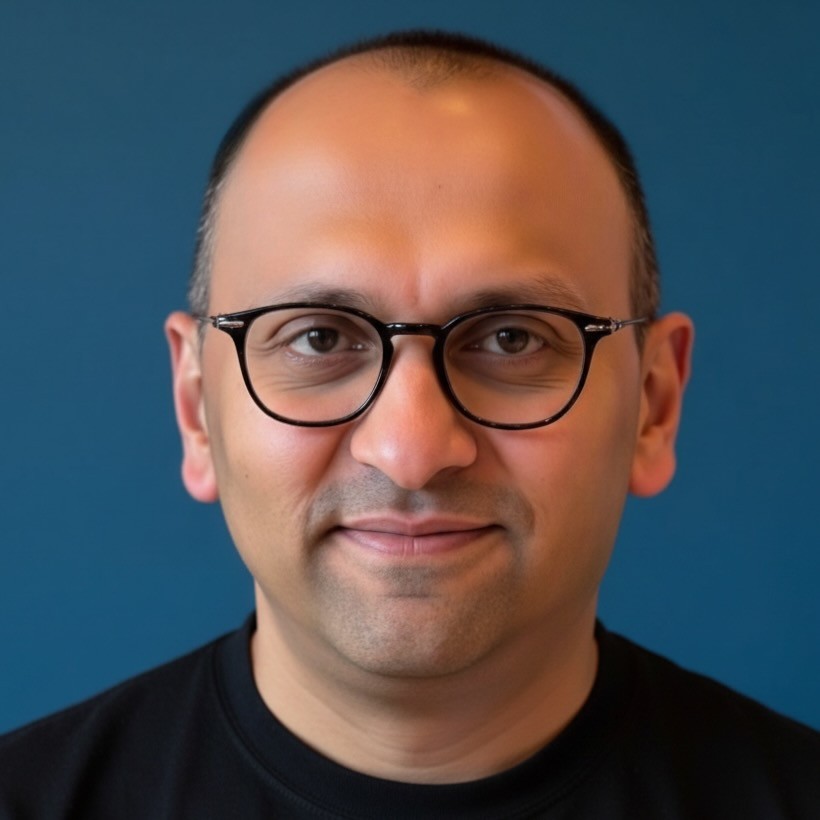
CEO of OnMed
Karthik is the CEO of OnMed, the company behind the OnMed CareStation, a “Clinic-in-a-Box” designed to expand healthcare access. Previously, he served as CEO of EmpiRx Health, where he helped scale the company from roughly $48 million to nearly $500 million in revenue before its private equity transaction in 2021. He’s also held leadership roles at QualCare, CareAllies, and Aetna, and advised healthcare organizations through Deloitte and EY.
Interview Summary
Karthik Ganesh is the CEO of OnMed, a healthcare technology company behind the OnMed CareStation designed to expand access to primary and urgent care. Before joining OnMed, Karthik held leadership roles across health plans, value-based care organizations, pharma, and care delivery, developing what he describes as an “unhealthy obsession” with healthcare access.
In Karthik’s view, the healthcare system continues ignoring the “broken doorway”: 167 million Americans delay care, and for 120 million of them, that delay is due to a lack of viable access.
OnMed’s response is an 8x10-foot “Clinic-in-a-Box” that combines elements of traditional, brick-and-mortar care delivery and telemedicine. Patients enter a private CareStation where remote clinicians can conduct exams, capture vitals, deploy diagnostic tools, and guide visits in real time.
The company operates as a B2B subscription business, partnering with payers, providers, employers, universities, and government organizations that sponsor access for their populations. OnMed has deployments across airports, prisons, homeless shelters, employer settings, and rural healthcare systems.
This model has produced strong early utilization metrics. According to Karthik, 86% of patients are able to be treated within the CareStation without needing to be redirected to a specialist, urgent care, or emergency department; 80% described the CareStation as their medical home, and 37% returned within 12 months after their first visit. OnMed is now active across seven states, anticipates deployments in more than 35 states by the end of 2026, and is targeting profitability while continuing to expand its physical healthcare access network.
Top Takeaways
Technology can bring patients in but the human touch brings them back. Patients approach care with their guard up. Convenience and automation can drive initial engagement, but retention depends on comfort and trust. Patients return when the technology doesn't overwhelm, the experience feels human, and they feel taken care of. In automated care models, removing the last human touchpoint to improve efficiency can impede adoption.
Brand and culture shape execution long before strategy does. Brand is the emotion you want your targeted market to feel. It’s critical to define it first, then let it shape your business strategy, product, and go-to-market plan. Culture delivers it from the inside: define winning, set clear expectations, and build roles around individual strengths and blind spots. Performance declines to the standard around it.
B2B healthcare traction comes from solving pressures your customers already feel. Payers, providers, employers, universities, and governments may all buy the same product, but for completely different reasons. One cares about ER diversion and another cares about access gaps. Sticky commercial adoption comes from understanding how each segment defines success, measuring ROI in their language, and deploying care into places people already trust.
Constraints force companies to become sharper and more inventive. Raising too much money can lead to a lack of discipline and poor prioritization. Limited resources push teams to find more innovative, lower-cost solutions — often resulting in an acute focus on profitability. Businesses without that line of sight are really just experiments.
Sponsors
FastWave Medical: Named MD+DI's Company of the Year, FastWave is one of the hottest medtech startups in the cardiovascular space. See how you can invest here.
Medsider Fundraising Cohort: Planning to raise capital for your medtech startup? This live, 4-week workshop, led by Medsider is designed to help founders and CEOs tell a sharper story, get investor meetings that matter, and close real capital. Join the waitlist here.
Key Moments
03:04 Karthik’s obsession with healthcare access, and the “broken doorway” problem behind OnMed
05:51 How OnMed combines telemedicine and brick-and-mortar care into a “Clinic in a Box”
09:04 The OnMed metrics that surprised Karthik most, including a 37% patient return rate, and the reasons behind the company’s success
09:22 What OnMed designed differently after realizing that patients approach healthcare with their guard up
15:27 The pitfalls of B2C healthcare and how OnMed was built as a B2B company by intention
22:01 How Karthik reshaped OnMed around clarity, structure, and high performers
30:23 What “brand” actually means to Karthik
39:37 How OnMed tailored its value proposition for payers, providers, employers, and universities
45:45 Karthik’s fundraising philosophy: constraints keep companies inventive
Chat with Scott
Ask ScottBot questions about this interview, key takeaways, or other medtech topics.
Full Transcript
I have consistently believed, and it shows up in my execution, that brand and culture are more important than strategy. You have to be crystal clear about your north star. You have to be crystal clear about vocalizing that North Star with your team as well as the market at large. You have to know what you're gunning for. Your brand needs to stay two steps ahead of your strategy. So one, you've got to be very clear about your brand. Then you've got to build a company and have people in it that, one, understand the North Star, two, embrace it completely, and three, are trained to play to their strengths.
Narrator:Welcome to Medsider, where you can learn from the brightest founders and CEOs in medical devices and health technology. Join tens of thousands of ambitious doers as we unpack the insights, tactics, and secrets behind the most successful life science startups in the world. Now here's your host, Scott Nelson.
Scott Nelson:Hey, everyone. In this episode of Medsider, we sat down with Karthik Ganesh, CEO of OnMed. OnMed is a health care technology company behind the OnMed CareStation, a clinic in a box designed to expand access to primary and urgent care. Before OnMed, Karthik served as CEO of EmpiRx Health and led the company through rapid growth and a successful private equity transaction in 2021. Throughout his career, he's held leadership roles at QualCare, CareAllies, and Aetna and advised health care organizations through Deloitte and EY.
Scott Nelson:Here are a few topics we explored in this conversation. First, what keeps patients coming back to a highly automated care experience? Second, how do you convert company culture from philosophy to execution? Third, how do you tailor ROI and success metrics for different health care stakeholders? And last, what does high performance culture actually look like in start ups?
Scott Nelson:Before we dive into the full episode, if you're a Medtech founder or CEO preparing to raise capital, you should check out the Medsider fundraising cohort. This four week live workshop combines small group sessions with real time feedback to help you sharpen your investor story, build a targeted investor pipeline, and run a focused fundraising sprint instead of a never ending slog. Over the month, you'll walk away with an investor ready narrative and deck, outreach scripts that actually get responses, a refreshed LinkedIn profile, a simple content plan that keeps you on investors' radar, and a repeatable system for running your raise. You can join the waitlist at medsider.com/fundraisingcohort. Again, that's medsider.com/fundraisingcohort. Alright. Let's get to the interview.
Scott Nelson:Alright, Karthik. Welcome to Medsider Radio. Appreciate you coming on.
Karthik Ganesh:Scott, thank you for having me on.
Scott Nelson:And thanks for being patient as we as we had to reschedule this a few a few times. But just certainly looking forward to learning a little bit more, not only about yourself and your journey, but also what you're building at OnMed. So with that said, I recorded a very abbreviated bio at the outset of this episode, but let's start there. I want to hear it kind of from your mouth. What's the one to maybe two minute overview of your career kind of before taking on the CEO role?
Karthik Ganesh:I would say two things that stand out career wise for me. One, I'd like to think I've touched healthcare from all the angles it could have been touched from. Without being a physician myself, I've had the privilege of running a TPA, a health plan, a PBM, help stand up and operate a value based care company and now essentially building pretty much ground up a care delivery organization. So the journey has been fascinating, a lot of lessons learned and best practices along the way. So as I think back, I look back at my career, I feel the superpower this journey has given me, if you will, is the ability to cross pollinate. So that's one.
Karthik Ganesh:And second, the journey that brought me to OnMed, I found the last maybe ten, maybe fifteen years, I've had this, I'm going call it an unhealthy obsession with access. We are paranoid as a country about all the things that happen after the person falls sick and well, X percentage of the people control Y percentage of the spend. Listen, you can't get healthcare to people if people can't access it to begin with. We're so worried about and so focused on all the rooms in the house and upgrading the kitchen and upgrading the master bedroom, we just forget, listen, the doorway is broken.
Karthik Ganesh:There's one hundred and twenty million Americans who have no viable access to care, one hundred and sixty seven million who continue to delay care And those are just the numbers we know, those aren't even the worst case scenario. And that's the journey I'm on. That's what excites me about what I'm doing and what OnMed's doing right now. Yeah, I definitely want to get into both topics in more detail because you do have, I would say a very robust sort of background in terms of touching a lot of different areas of healthcare, which I think stood out when we were kind of going through our putting together our research notes. The access thing is really interesting too. Just had Connie Lehman on the program. She's the CEO of Clairity. Doctor. Connie, she's an interventional radiologist by background, but she's running Clairity. She's founded the company. And we were talking about the same issue because their technology is an AI kind of layer that sits on top of like mammograms. We were talking about access and how this is opening up access to a lot of different patients. And she's still a practicing physician at Beth Israel in Boston. I think that's right. I'm pretty sure. But she had to reschedule a primary care visit and it took like six months. So to your point, it's definitely a big issue. So I'm looking at your website right now, which is onmed.com exactly as it sounds, onmed, onmed.com. If you're listening to the program, we'll link to it in the full writeup. If you don't get there, very simple URL onmed.com. Really interesting, I should say product and experience for those that have never heard of it and are new to OnMed. Talk to me like I'm a freshman in high school. What is it? What are you solving for?
Karthik Ganesh:You're on the screen with me. If you were in the room with me, I would tell you to close your eyes and take the journey with me, but here's what we're solving for. We've got the two modalities of care that exist today as we know of them and as we think of them, OnMed exists, but the two modalities are the most prevalent. One, the traditional brick and mortar, very expensive to stand up, but more importantly, according to the AMA, the American Medical Association, we needed 200,000 more docs as of five years ago. We're producing about 17,000 a year and about forty to fifty percent of everyone who's practicing today is either a pre retiree or has claimed they're burnt out coming out of COVID.
Karthik Ganesh:So as we think about the brick and mortar world, the clinic world, and I'm talking about this broadly, OnMed is really primary care urgent and a lot of post acute, but broadly we're running out of clinicians as a country, that's the brick and mortar. You look at the telemedicine aspect of it, Scott, I mean, you're familiar with this obviously, seventy five million Americans with less than viable broadband, 45,000,000 with no broadband, and you look at no vitals, no scans, no biometrics, no real way to engage the patient clinically has absolutely created a ceiling for telemedicine as a pure play, right? And we see this even with the federal government not essentially telemedicine as a modality in law as we would have hoped it would have been coming out of COVID. So you've got these two modalities: you can't throw the baby out with the bathwater. Each one brings a set of strengths and each one brings a very inherent set of weaknesses: the brick and mortar, psychological comfort that comes from going into a clinic, the comprehensiveness of a clinic visit, telemedicine, the rapid scalability.
Karthik Ganesh:We have taken the both of these, blended them and created a clinic in a box. The experience is extremely simple, extremely intuitive and if you're a freshman in college, this is in a lot of colleges across the country today. So you walk into it or roll into it if you're in a wheelchair, it's wheelchair accessible, it's an eight feet by 10 feet container, the bulk of the floor is a weighing scale, so even if you're in a wheelchair, it knows exactly how to deduct the weight and handle your weight as a part of that. There's a 65 inches screen in front of you that has a gigantic thing in the middle that says start. You press start, the clinician shows up on the screen, she confirms you're ready for the visit, the door shuts, the glass fogs, you're now in a private secure soundproof environment.
Karthik Ganesh:She takes your vitals, you've got thermal scans going on that are automatically looking for any level of congestion, there's infrared cameras to make sure that your temperature is being checked, height, weight being checked as a part of this blood pressure cuff, pulse ox, she takes your information, you tell her what's going on with you, she can deploy your digital stat, she can deploy an otoscope, she can deploy a high def camera, all these devices, the hardware, she can remote control the entire CareStation. She can dim the lights, brighten the lights, reduce the sound, control the devices, draw them down, draw them up, she can do everything with the CareStation remotely. And you go through your visit, you're asked a bunch of questions along the way, you're being taken care of.
Karthik Ganesh:The key stats for us, eighty six percent of the people who come into the CareStation do not need a specialist referral coming out of it, we're able to take care of them completely, they need to go no place else. Fifty four percent tell us that if they had not come to the CareStation they would have gone to the ED. Seventy eight percent tell us that we are their medical home.
Karthik Ganesh:Thirty seven percent return rate to the CareStation after the first visit within the first twelve months, which is a higher patient provider stickiness factor than any other aspect of healthcare in America today. The only things that are stickier than that are the kid with the pediatrician, which is more, I'm going say more school mandated vaccinations, etc. Or if you've got a very specific disease, if I've got cancer, I have a relationship with my oncologist, the stickiness there is the disease, not the doctor. The thirty seven percent is an incredibly solid return number and most importantly, we're rolling this out in underserved communities across the country, rural suburban urban.
Karthik Ganesh:Underserved communities where there isn't an insurance mandate to come back, there isn't a you need to come back because here's your stick if you don't come back, none of that. They're coming back because they're comfortable, the tech isn't overwhelming them, the last mile is human delivered and they're coming back because they've got the psychological safety and the comfort that they're getting taken care of. And that's the entire experience. I mean, once the visit's done, the door shuts, UVC is deployed, every surface in the CareStation, including the devices is completely sanitized. And then the door opens for the next person to come in.
Scott Nelson:That's pretty impressive. Even just taking a step back, because you roll out, you rattled off some really impressive statistics around the adoption and the stickiness of this experience. But one of my interventional cardiology buddies of mine, we were talking about a very similar problem, right? Generally speaking, kind of access and where we're headed like as a country, at least here in U. S.
Scott Nelson:And one of his comments that stuck with me, this is like from a couple of years ago. He was like, this is what I'm telling like my friends and close family. He's like, five, ten years from now, hopefully you're really good friends with a physician because it's gonna be hard because there's like the shortage is very, very real, you know, and obviously he's he's in he's in a big health system. And so I it just it just stood out to me and I think it's so easy to gloss over right now, but like fast forward ten years from now...
Karthik Ganesh:It's very spot on, absolutely. And for all of the folks, Scott, right, who AI is a big part of what we do. AI is support, we're doing AI from a workflow standpoint, a agentic standpoint or data moat, population health analytics is all AI driven, right? But our last mile is human delivered and for all of the folks, you know, who tell me, well, Karthik, we're moving to a world of AI and bots etc. I'm like, listen, the 167,000,000 people we're talking about here do not live in the world of AI and bots and wearables.
Karthik Ganesh:They just don't. These are folks who are working two, three jobs sometimes just to stay afloat. If I'm one of those people and I fall, I have a tickle in my throat tonight or I feel like I'm running a fever, I could be missing out on three shifts worth of work tomorrow if I try showing up someplace, if I even get an appointment. Does that mean I don't pay my rent this month? Does that mean I don't buy my groceries this week?
Karthik Ganesh:Do I not refill my prescriptions? Do I not pay my utility bill? This is so fundamental. The immediacy of comprehensive care is so fundamental to a person's quality of life and their sense of well-being. And I feel for the richest and most powerful country on the planet, this should be a given.
Scott Nelson:Yep, The last mile being human touch. I wanna ask you a little bit more about that experience, but I think it's critical. I think it's really important because even if you're an early adopter of like a lot of these wearable technologies, I'm one of those, right? Like I've had an Oura ring for a long time. I think 2017 or '18 or something back when it was a lot more janky than is now.
Scott Nelson:I had the CEO of Eyebot on the program. This was a couple months ago, but they're doing like a retinal scan technology. And he was talking about like the, he sort of did this company, whatever, like seven, eight years ago. And it didn't, didn't, it like, they didn't have product market fit. He said, one of the issues was when it comes to healthcare, like technology enthusiasts lose sight of the fact that most people, yeah, they like the efficiency of a quick scan or something, a quick visit. Like, there's a lack of confidence, right, in having some some device, right, that doesn't talk to you like a human.
Scott Nelson:And and that was a real issue. And so, like, they built that into what he's doing now. And I think I think your your point about there's a human element here, the last mile, really, really important because it's easy to gloss over.
Karthik Ganesh:It is. I wanna say it was 2007 or 2008, Scott, CVS, the Caremark side of CVS, the PBM side of it, they were investing very heavily in robotics and pill dispensing. And I think at that point, CVS Caremark had about 80,000,000, 90,000,000 members, something like And they moved everyone to mandatory mail. And they said, listen, we want you to get your prescriptions via mail and we're gonna default you to mail. And they saw a very, very significant drop in one engagement, two refills.
Karthik Ganesh:They had, in my mind, arguably one of the smartest CMOs in the industry at that point, Helena Falk, who basically said, what gives here? They did the digging in and they realized a couple of truths that continue to be true. People who were physically able wanted to be able to get out of their homes, get into their cars or walk if you're in the city, go to your local pharmacy, look the pharmacist in the eye and pick up the prescription. Without that, they did not trust they were going to not be something that would have an adverse effect for them. I have believed this consistently.
Karthik Ganesh:When we talk about all my journey, all the places I've hit along the way, Scott, I think I've had more lessons learned than best practices coming out of it. Two of my biggest lessons learned are one, I believe this is Americans, but I really think this is more of a global phenomenon, but definitely in America, as consumers, we feel liberated, as patients, we feel claustrophobic. We feel we're cornered, someone's out to get us, Someone is going to screw us over and we don't know where it's gonna come from, so let's get our guard up. There's a reason why every focus group says people don't trust our system. That's one.
Karthik Ganesh:The second lesson learned that we have done very differently with OnMed. B2C has not worked. B2C cannot unless you're a wearable company. And listen, I love Whoop. I've I've had I've been wearing this now for four years. I think four years.
Karthik Ganesh:I love the fact they're going IPO 10, you know, 1,000,000,000 in ARR, 10,000,000,000 IPO value. I love all of that. But tomorrow if the Apple Watch comes out and does something very different, there's a lot of people who are gonna run away from that 10, that billion dollar ARR. B2C has not created profitable companies in our American healthcare system. And this has been a factor, digital health is not going to be your game changer in terms of creating incredibly profitable, sustainable companies. You might do enough to excite somebody that comes in and writes a really big check and then bankrolls you like the One Medicals and the Amazons and the Oak Streets of the CVSs.
Karthik Ganesh:I applaud the Amazons and the CVSs of the world for bringing in those constructs and keeping them in the market because we need access to care, but these are not profitable entities. OnMed is B2B. Our clients are enterprise clients. We are absolutely obsessed with the patient experience. We want the patient experience to be brilliant, but we are clear eyed about the fact that the flow of money in our system today flows enterprise down, it doesn't flow patient up.
Karthik Ganesh:80% of commercial premiums are picked up by employers and 80% of all other premiums are picked up by the government. You have to acknowledge that because that's where the flow of money is, that's where the waste of the utilization is. So if you can solve it for them, you're going to bring care effectively into the market. We are fully expect that we will finish 26 profitable and profitable in a very comfortable way coming out of this. So we are B2B play and for us, the human delivery being the last mile is absolutely sacrosanct.
Scott Nelson:Wow, that's actually impressive. I would not have thought what I think is probably a pretty capital intensive business, right? To be profitable this early on. Talk to us a little bit about where you're at now and then we'll maybe go back in time and kind of lean into kind of how OnMed came to be. But we're recording this in Q2 of twenty six for those that are listening maybe three, six months later. You're actively installing these systems, I take it.
Karthik Ganesh:We're installing these, we're now in seven States, we will have 10 installs in Puerto Rico in partnership with Triple S, Triple S's traded vision as an example is that they want to plaster the island with CareStations to solve access. The Rural Health Transformation Program, which is the 50,000,000,000 that's being pumped into rural America by this administration, we expect to be an oversized player in that. When the applications were rolled out, we were the only named commercial entity in that. The CMS basically said, you know, if you're looking for ideas in terms of how to solve rural health problems differently, we recommend you look at what OnMed is doing with Auburn University in West Alabama. We expect to be in about 35 plus states coming out of this year.
Karthik Ganesh:Our clients today are outside of local state federal government, which is where a lot of the rural play comes in. Our clients today are payers, providers, employers, universities, philanthropic organizations. We have been deployed by these folks inside of, from everywhere, are inside of children's centers, community centers, senior centers, Hartford HealthCare has put us inside of an airport. We're inside of prisons, we're in a prison in Central Texas, we're now going to be entering prisons in Nevada, we're in homeless shelters. We anticipate in the next three months we will be inside of an ER because we are EMTALA compliant.
Karthik Ganesh:The deployments have been fascinating, they continue to prove out our perspective that you need to meet people where they are showing up already, you can't have them come someplace. The results have been staggering. Mean, on an average, we're seeing a four to six X return on an investment for anyone who solves, who's going into solve access. And the B2B play for us is it's a subscription model. So in most of these cases, the person walking into the CareStation is paying nothing.
Karthik Ganesh:It's being taken care of by the sponsor who's our client and they're still making a four to six x return on it. Wow. It is flowing in through the folks who are, mean, I we know this right, dollars 5,100,000,000,000 system, healthcare economists have told us repeatedly that 30% of all utilization is waste, one. Two, ERs are overflowing across the country, We know ER wait times in some cases are five, six, seven hours. New York Presbyterian in the city here in New York City has the longest wait times.
Karthik Ganesh:It's published information, I think I'm sharing out of school. Our problem is not that we've got too few ERs, the problem is that seventy percent of the people who show up at the ER are for non emergent reasons. They have no business being in the ER, but they are showing up at the ER because they have no place else to go. And we are, so the way we see ourselves is really being able to provide that first level of care or triage as appropriate to either take care of the patient or then, or if needed, redirect them to the appropriate side of care.
Scott Nelson:Okay, got it.
Karthik Ganesh:That's really how we've been growing.
Scott Nelson:Yeah, well that return is pretty impressive considering the model seems pretty uniform across the board, whether it's a university that's installing this, an employer, etcetera, that would you say a four to six X? Yeah, yeah, that's perfect.
Karthik Ganesh:For an employer, it actually goes up to 12 and a half
Scott Nelson:Yeah. Yeah. I can imagine being incredibly advantageous, right? For an employer, especially not to underappreciate kind of the other kind of the segments of the market that you're approaching. That's really cool.
Scott Nelson:So I want to spend the next, you know, twenty, thirty minutes kind of going back in time and learning a little bit more about that. I mean, I know you've been in the helm only two and a half years, but really kind of more the journey for how OnMed came to be and kind of where it's headed next. And so with that said, want to, we touched on this at the very outset of our discussion is your broad experience in health care. So when you made the decision to come on board two and a half years ago and take on the reins as the CEO, were there a few things that you felt really important to either instill in the culture, whether it's change, whether it's reemphasize that the company is doing well, etcetera. Maybe frame that up for other CEOs that are listening to this and are about to embark on that same thing.
Scott Nelson:Right? They're gonna get, they're gonna go join a company, whether it's a turnaround or whether it's a startup that's reached a different inflection point. Give us a sense for kinda how you how you approached, you know, that transition at OnMed.
Karthik Ganesh:It's a great question, Scott. So I have consistently believed, and it shows up in my execution, that brand and culture are more important than strategy. You have to be crystal clear about your north star. You have to be crystal clear about vocalizing that north star with your team as well as the market at large. You have to know what you're gunning for.
Karthik Ganesh:Your brand needs to stay two steps ahead of your strategy. Okay? So one, you've gotta be very clear about your brand. Then you've got to build a company and have people in it that one, understand the North Star, two, embrace it completely, and three, are trained to play to their strengths so that every single person, whatever the size of the company might be, is as if they were rowing in one shell as one. One of my favorite books is Boys in the Boat.
Karthik Ganesh:That's exactly how a company should be. So for me, walking into an OnMed, the investor who brought me, the investor who really wanted me to come over here was one of my former investors who had seen how important culture is to me because culture to me isn't the fun aspects of things, right? Culture is, it's an equal mix of passion and dispassion. The passion is an unhealthy obsession with where the company is going and what it wants to accomplish. And we don't say, we're very clear at OnMed, we don't have a mission.
Karthik Ganesh:I see a mission as being stakeholder focused. We have a purpose because what we're doing as societal is much bigger than an individual stakeholder. Ours is a public health play at the end of the day, right? So came in my ask of the board and the investors at that point was very clear, which was I needed to have the ability to switch out any aspect of the company, including the board, including things in terms of the cap table, cleaning up the cap table. We moved a Florida LLC to a Delaware LLC.
Karthik Ganesh:We completely cleaned up the cap table in the first three months. We completely redid the governance structure. I wanna say at this point in time, it's probably less than 10% of the company, less than 5% of the company existed were people who were here before I joined. Needed to bring in people, so starting with leaders, leaders who've in some cases have worked with me in the past, understand my intensity. I would not wanna work for me.
Karthik Ganesh:And the things that are important for me in the culture are a culture of no what ifs, You need to be obsessive about the process. You need to be obsessive about the journey. You can't control the outcome. You can control the journey, so you better do an incredible job with the journey. That's one.
Karthik Ganesh:Second, a fervent belief that any shackles we put on ourselves are self imposed. If we had absolutely no shackles and we could just fly in unencumbered, how high could we soar individually? Because this really, at the end of the day, this is an individual play. You know, when people say, you know, there's no I in team, sure, there's no I in team. But if everything is about the team, then you've basically built an incredibly mediocre organization.
Karthik Ganesh:Everything needs to be about powering the individual to perform at the top of their game while making them understand that the top of their game only works when they're playing as a part of a team. You can't tell I come back. You can't tell Michael Phelps, listen, you've got really long limbs. We think you'd make a great safety or a great wide receiver, but it's just not in the cards for us to build a pool for you, that's bullshit. Makes no sense, right?
Karthik Ganesh:Tailor the role to the person's strengths, challenge them to play at the top of their game, help them amplify their strengths, help them neutralize their weaknesses but then don't take any excuses from them as a cop out. If they cannot, with all of that ammunition, if they cannot perform at an absolutely a rocket ship like mode, then they are better suited in another organization. So as obsessive as I've been about culture over the years, Scott, retention rates, employee retention rates is not something I look at at all. I don't look at it and I might come across as being a little blunt, but I don't care because I know the highest performers don't care and they're not going anywhere. This is exactly where they wanna be and they respect the fact that we surrounded them with other high performers because listen, unfortunately talent rolls downhill.
Karthik Ganesh:You put a bunch of high performing people and a bunch of mediocre people, the high performers turn mediocre. There was a fascinating experiment conducted by a German scientist, I wanna say in the forties or the fifties, maybe even the sixties, he put his toddler in a room for nine months with a chimp and the toddler spent inordinate amounts of time during the day with the chimp. The idea was to see how the chimp became more human like. Nine months in, the toddler was scratching his armpits and sticking his tongue out. Talent rolls downhill, it doesn't go up. You've got to build uniformity in terms of high performers. So that was important.
Scott Nelson:Hey everyone, let's take a quick break to talk about Fastwave Medical, the company I co founded and lead as CEO. We're developing next generation intravascular lithotripsy or IVL systems to tackle complex calcific disease. Over the last few years, we've closed a series of oversubscribed funding rounds, bringing the total investment into Fastwave to over $50,000,000 Corporate interest in the IVL space is growing too. The $900,000,000 acquisition of Bolt Medical by Boston Scientific in 2025 and Johnson and Johnson's $13,000,000,000 acquisition of Shockwave Medical signal a lot of attention on emerging IVL startups like Fastwave, and we're making serious progress. In addition to recently receiving our ninth patent, we've successfully completed peripheral and coronary feasibility studies and are gearing up for pivotal trials. If you're interested in investing in the fast growing IVL market, head over to fastwavemedical.com/invest. Again, that's fastwavemedical.com/invest. Now let's get back to the conversation.
Karthik Ganesh:So these were the things that were very clear to me. I've been very blessed with an investor group that basically gave me the freedom that I needed to have. I've been fortunate to have had a decent track record prior to coming to OnMed, which lent a lot of confidence in their minds, I would hope and they've given me the breathing room and we've taken a company that had been around for about eight years prior to my coming in, had, I would say, I'm going to call it more, maybe the product's time hadn't come, the product was beautiful but the company fumbled a little bit as it was trying to find itself. The last two years have been a complete redo on every front, been two and a half years, it's been a hard reset, the product looks different, the commercialization has been different, the brand is absolutely on fire, we were the top pick at CES in '25, we bookended the year with Time's Inventions, the best invention of the year, we started off 2026 with, we won the Edison Award, which is the global award for infrastructure deployed for good. We are an impact one winner for products making the highest impact globally, Fast Company winner.
Karthik Ganesh:The brand has been absolutely on fire. The footprint continues to grow tremendously. We are deploying by October of this year, 60% of our business operations will be run by agents. So we're a very, very heavy Claude shop. AI is inbuilt into a lot of the way we're building out our product and envisioning where it goes.
Karthik Ganesh:What makes the reason I threw out the WHOOP construct out there is because outside of the B2C versus the B2B that we are, a lot of the other components are not dissimilar. We are also hardware software plus devices plus AI plus healthcare. The difference in us with us is a B2B recurring revenue model versus a whoop being a B2C recurring revenue model. Outside of that, it kind of flows the same way. You can probably hear it in my voice. I am just so excited for where we're going.
Scott Nelson:Yeah. I definitely sense it for sure. I wanna ask you a couple of follow-up questions because clearly you're a culture builder, right? And you mentioned a couple of things that stood out kind of hearing you riff on this topic is one is that phrase that you used brand needs to stay two steps ahead of strategy. That's really interesting.
Scott Nelson:When you think about, how do you think about brand, right? Because it can be one of these ambiguous terms and most people associate brand with like, oh, a marketing campaign and it's so much different. How do you describe brand?
Karthik Ganesh:For me, is quite simply I'm looking at Disney as an example, Scott. Disney could say, listen, we are the world's largest amalgamation of amusement parks and then you you do the entertainment companies, boring crap. Mhmm. Disney is the happiest place on earth. You walk into any Disney park anywhere in the world, what strikes you is the number of kids with Make A Wish Foundation t shirts showing up there.
Karthik Ganesh:For a kid whose passing is imminent, for them to feel Disney is where they wanna show up, Disney has created an emotion in people's minds that far surpasses its ownership of an ESPN or anything else it owns in its portfolio. The brand is about the emotion you wanna evoke in people. And that emotion, your strategy, your execution needs to dock into that the creation your product needs to dock into the creation of that emotion. You can't build a strategy, build the product, and say, alright.
Karthik Ganesh:Now I'm gonna figure out how to get this thing to emote. It doesn't work. You have to build a vision for what that emotion looks like that you're looking to evoke. You have to be able to vocalize that emotion in the market for your company's brand. You have to be able to vocalize that emotion and create that emotion in your employees or your employer brand. And then you need to put the moving pieces in place that dock into it to make that emotion come to life. In my mind, that is the brand staying ahead of the strategy and the execution.
Scott Nelson:I mean, sometimes it can be this, it's a very general thing and I think that helps people kind of like at least contextualize kind of what, and I'm right there with you. Like a lot of that, I would share a lot of that same sentiment. Like eventually brand is what your customer, whoever that is, whether it's a consumer, whether it's a business, it's the emotion, right? That they should feel. And there's so many things that impact that emotion and your strategy should be how do we execute to get to that point.
Scott Nelson:Hearing you kind of also riff on, and I want to get into a lot of these partnerships that you begin to build because it's pretty impressive lineup and the commercial traction is very real at the stage. And what I would consider a relatively short amount of time, two and a half years is not a long time to kind of turn things around and begin to really scale up commercial revenue, but the culture aspect, right? You mentioned kind of this idea of loosening the shackles on people. Right. And you said emphasizing, emphasizing strengths and neutralizing weaknesses, right? Not, not solving for weaknesses, but neutralizing those and emphasizing strengths. Give me a sense for kind of like what that looks like.
Karthik Ganesh:Yeah. Yeah. Every single person in the company. So my last company, Scott, I would tell people all the time that the goal was to create the best version of themselves. And we were we had gone through COVID together. At this point in time, I mean, I had employees through COVID as an example who would call me and tell me, Karthik, I'm walking into a grocery store and I'm nervous. So it was that level of comfort. So people were very comfortable just having a conversation.
Karthik Ganesh:They said, listen. We wanna be the best version of ourselves. But what if we don't know what that looks like? What if we haven't introspected enough to know what our strengths are? And you realize this repeatedly, In the workplace more so than any place else, there are no weaknesses because what might be weak in one setting might be a strength in another setting.
Karthik Ganesh:I come back to the Michael Phelps example. His perceived weakness potentially on a football field could be his strength in a swimming pool. Right? So every single person at OnMed and any company I run goes through something called a Clifton Strengths exercise. It's a Strength Finder exercise, which is not a personality assessment. It literally is a very hardcore AI driven way of understanding what are your strengths and equally importantly, what are your blind spots?
Karthik Ganesh:And whether in life or work, our goal should be for the best version of ourselves, how do we amplify our strengths and how do we neutralize our blind spots? You can't obsess over your blind spots. You can't convert those blind spots into strengths because I think that is an absolute irrelevant construct. But all of that comes from fundamentally understanding and recognizing your strengths and then playing to those strengths, right? So we have that's been a really important factor for us in terms of so every person at OnMed goes through a StrengthsFinder exercise, they go through, they spend time with an individual coach who coaches them not on OnMed, coaches them individually on what it means for them to play to their strengths and what it means for them to recognize their blind spots so that they're not feeding those blind spots.
Karthik Ganesh:Right? And then leaders are asked to lead. We don't have performance reviews. I've not believed in performance reviews for a really long time. I think it creates a recency bias that is just absolutely absolute nonsense. I think I believe the word being a leader is a sacred responsibility. You have fundamentally have the ability to influence how this person operates not just in the workplace, but outside of it. A terrible leader creating a frustrated employee, that frustrated employee now takes that frustration over into the home front and life picks up from there. Right? So leadership has to be sacrosanct.
Karthik Ganesh:It has to be considered a sacred responsibility. And the way you make it sacred is by doing a bunch of different things. One, I mean, people who work with me and for me know very clearly, they can ask me whatever they want to ask, every conversation is on the table, they might not like the answers, but they will definitely be treated as an adult, they will definitely have a real conversation about it, they will definitely get my perspective on it, from that point in time they know exactly where they stand or where the company stands on that topic. I believe leaders, I see my job as an example is, you know, sometimes people say, well and I hear a bunch of people who are thought of as leadership gurus talking about, well, your job is not to your job is to figure out how to support your people. And I think to myself, listen, dude, if you say that, yes, fundamentally, that's motherhood and apple pie.
Karthik Ganesh:But if you take that to the nth degree, you really haven't built anything and all you're doing is spouting philosophy that doesn't make any sense in the real world. Mhmm. For me, a leader is you, especially for CEOs, to your point of people who are listening to your podcast, you have to be very clear about the things I called out. You have to be clear about the North Star. You have to be clear about what success looks like for us to attain that North Star.
Karthik Ganesh:You have to be clear about your journey and you have to be clear about what how you measure the journey every step along the way. If you're an athlete, if you're running a 100 meter dash, then I see my job as making sure that Scott if you're my team, I draw the white lines for you. You don't stray those white lines. You know the whole well you hire the best people and you get out of the way, come on it's it doesn't work. You can't build companies by getting out of the way, you draw the white lines, you teach them, you make it very clear what the expectation is, you make sure they have the tools to feed their conditioning and their training but it is their responsibility to condition themselves, it's their responsibility to train as hard as they can, they have to run as fast as they can and while they're running, you might be running alongside them and cheering them every step along the way, but damn it, you're on the field, you're cheering them and if they step outside those white lines, there's consequences.
Karthik Ganesh:And here's what you find about the greatest teams. I look at a Phil Jackson as an example with whether it's the bulls or the lakers, had a bunch of superstars who understood, listen, the triangle offense wasn't wasn't optional, that's how they played. Keep your creativity for your personal court at home. Bring the triangle offense to the floor when you're playing another team with on my watch. The greatest athletes thrive in very clear structure and very clear guidelines in terms of what a win looks like.
Karthik Ganesh:When you give that to them, you tell them this is what a win looks like and this is how structured we're gonna be and these are your guardrails, the greatest athletes will figure out a way to make it happen because they are obsessive about their training and their conditioning to get there. If you're loosey goosey with them, they lose respect for you.
Scott Nelson:Yeah. Clarity is king. I can get a sense for that. And my hunch is that because of that culture that you're instilling at OnMed and this idea of very open, transparent communication, like the answer or not, someone's gonna get a real answer from you that probably plays out in leadership meetings, right? There's probably not a lot of wavy hands going on, right? It's like, Hey, let's talk about real stuff.
Scott Nelson:And getting to the accuracy of data around a decision, etcetera. And I a 100% agree like high performers want that, right? They want the clarity. They want to understand the parameters and lines to play within. I'm right there with you.
Scott Nelson:So I know we don't have a ton of time. I want to get to partnerships and a few other topics. You mentioned a few out of the gate, right? A few of the universities, but what stands out to me is like not only the sheer number of partnerships, but it's a wide variety. You're touching on it. You're commercializing in a wide variety of segments. So when you think about some of the success that you've built in a relatively short amount of time, what do you think it takes to kind of, what did it take to kind of prove that OnMed was worthy of the install, Was worthy of them kind of evaluation? Maybe touch on that. And also it's probably maybe one of the same. Do think are some of the key things for these types of B2B relationships to really work out?
Karthik Ganesh:Really great questions. So part one to that question, Scott, is different entities have different motivations for what a win looks like. So for a payer, a win is a combination of ER diversion. It's a combination of every CareStation in the ground now is another node from a provider network standpoint, as a result, they're closing provider gaps.
Karthik Ganesh:They're closing gaps in care because they're bringing, every CareStation can service 10,000 patients, they're closing gaps in care, so as a result, improved HEDIS scores, improved CAPS scores as a result of that, the CareStation, our NPS is 4.96 out of five. We have incredibly high satisfaction scores from our patients, which helps payers with their CAP scores, their HEDIS, their STARS, etcetera, right? That's the payer.
Karthik Ganesh:For a provider, it's a combination of, again, ER diversion, also as they take their brand and they put this out into the community, they don't have the horsepower in terms of personnel to be able to stand up clinics in the community and go and put people in there, but the OnMed CareStation branded as them allows them to now have a front door to them and then steerage back to the mothership. So they've got their metrics in terms of what success looks like.
Karthik Ganesh:For universities, the success measures have been how is the CareStation effectively handling the overflow from the university medical, university clinic, what these universities are finding now more and more is the era of I'm gonna make an appointment with my university clinic and show up, Gen Z demands immediacy, Gen Z demands a level of tech enabled yet human delivered empathy. So some of these universities are actually having conversations with us in terms of taking on an oversized role in terms of student care and about what they're there. But really the way we see our role is primarily handle the overflow because all these university clinics are overflowing. And you know, it's a fact, right? You talked about, I love the freshman example.
Karthik Ganesh:You said, Hey, I'm a freshman, talk to me about this. That's a fact right, you know especially these kids today with chronic conditions. The first time their parents are, they're leaving their parents home and having someone and being asked to take care of their chronic conditions themselves is in a college setting. So now care becomes an incredibly important lever in the recruiting process for these students because parents care about how their kids are being cared for. So universities are seeing this as another tool from a recruiting standpoint as well in terms of bringing that out.
Karthik Ganesh:So every one of these segments has had a different motivator and so as a result, the KPIs that frame out what success looks like for them to the second part of your question are also fairly tailored for every one of these. We've been very careful, as many segments as we've entered, we've been careful to not boil the ocean because less is more. We don't want to be of all things to all people and we don't want be everywhere at the same time. But the fact that we've gone into a bunch of these segments and we're gaining traction continues to prove out our TAM, which in our minds really has no seedling. And then as we look at the evolution of what we're looking to do over the course of this year, this is a physical health utility right now.
Karthik Ganesh:Our plan is before the end of this year to bring mental health into the CareStation, which now allows for one of its kind freestanding outpatient whole person care utility in the market. And once that the biggest barrier to mental health has been the stigma associated with it, It continues to be a barrier. Once the glass fogs in the CareStation on the windows, on the door, you could be in there for a bee sting or for a mental health consult. No one knows any differently. Completely destigmatizes the care.
Karthik Ganesh:Right? So mental health and with the continued build out of the underpinning that is very heavily AI that will power both of these. That really is what the next X amount of time looks like. I fully anticipate at some point we will go aggressively into retail healthcare and build out a franchise model for the CareStation. The only way to solve our access problems as a country are to completely democratize access.
Karthik Ganesh:The only way to democratize anything as a country is to basically lean heavily on the entrepreneurial spirit of your average American who wants to be able to build their own business and generate wealth for their families themselves. That's been the success of the franchise model across the country and being able to bring healthcare solidly into that arena and deploying the CareStation in a franchise model would be, I believe, a game changer for us as a country. That truly then becomes, as we think public health, the next pandemic is not an if, it's a when. We need CareStations everywhere. And then the last thing I would say is, I would say in the next maybe no more than twenty four months, we will will take this global. Problems we're solving are not American problems alone.
Scott Nelson:The franchise aspect is super, super intriguing. Maybe we'll have you on for round two once you roll that out. I'm very curious because maybe it's just my entrepreneurial instincts that sounds very interesting. I wanna leave a few minutes for the rapid fire portion of this interview, but let's get to kind of investor dynamics, right? You touched on a couple of the things that were important for you taking on the CEO role at the board level, but any business like yours, it's going to require a fair amount of capital, right?
Scott Nelson:Even though it sounds like you're running it pretty profitably. What do you know now kinda about those investor dynamics that you you wished you knew maybe maybe ten years ten, fifteen years ago?
Karthik Ganesh:I have an inherent trait, Scott. You know, some people might call it a flaw. I can't quite tell if it's a flaw or a strength yet. I am personally a minimalist. So I have a total of 87 personal things. That's it. Okay? And I have zero debt. I've never been big on raising a lot of money. For me, it has been about how do you raise think raising a lot of money, and this is where I can't tell if it's a flaw or strength because raising a lot of money gives you a lot of mental breathing room to just execute unencumbered.
Karthik Ganesh:But for me, what it does is I believe it creates bad behaviors. It is very easy to spend money that is somebody else's money. I'd much rather create a culture where every person is looking to find the most innovative solutions that are more wedge solutions that are not expensive, but are also hyper impactful. And when I have pissed off people telling me, why aren't we going and raising more money? I tell them, listen, guys, You need a stone to sharpen a knife. If I give you a sponge, we're not gonna be a sharp knife.
Karthik Ganesh:So been very deliberate about how we raise. My perspective on no what ifs has also been very clear. We decided q four of last year to go down the SPAC path. Q one of this year, we pulled back on it. One, our AI our AI ambitions are too large, and the SPAC was just not going to the public markets would not give us credit for those ambitions earlier in the game. So wanted to take our time and stay private. But also that was another place where the SPAC would have given us significant capitalization. I said, listen, I'm gonna go back to private, raise some, get to profitability and then just keep building from there. And again, can't tell strength or weakness, but I'm just going call it a strength for now.
Karthik Ganesh:I think businesses that don't have clear line of sight to profitability are experiments. Last I checked, your goal of being a business is to become profitable. So that's singularly where we're focused and you can't do that by just raising a lot of money and hammering yourself. The cap table is being hygienic is very important to me. So we have 100% common stock on our cap table today for that reason.
Karthik Ganesh:Don't have a lot of prefs in it. Don't have any prefs in it on the upside, which allows us to be a very investable company, very investor friendly company, both for our existing investors and anyone else coming in because they know that no one else coming in after them is now going to supersede them. So we've been very deliberate about these things. Not a very popular way to think about raising money, but it just it just sits better with me.
Scott Nelson:Yeah. I would tend to say it's a strength, right? And we all, I've heard these stories where the company that is constrained to a certain degree, regardless of what that constraint is, oftentimes will move faster or innovate differently because of that constraint. Right? So I'm right there with you. Mean, there's definitely, there's definitely scenarios. Yeah, there's definitely scenarios where you can use capital as a, as a, as sort of a, as a weapon, if you were another tool, that that certainly. Right? But that doesn't oftentimes it may not be the only answer. I'll put it that way.
Scott Nelson:But I wanna get to the rapid fire portion of this interview. But again, for everyone listening, onmed.com is the website. We'll link to it in the full write up. OnMed just as it sounds, onmed.com. Very, very interesting technology.
Scott Nelson:It's really, really fun to kind of, you know, learn a little bit more about the product and the company kind of in advance of this conversation. But a couple of quick rapid fire questions, Karthik. You mentioned a couple of things that you're excited about. Is there one particular thing, one particular milestone over the next year that really gets you pumped?
Karthik Ganesh:Profitability.
Scott Nelson:Okay. I like it. Second question, one lesson every medtech or healthcare entrepreneur should really understand. The one thing they really need to get right.
Karthik Ganesh:Obsess about the journey. Don't get hung up on an exit. Build the best damn company. Investors will come. I like it. All right. Is there one piece of advice that, you know, if you could go back, you know, ten, fifteen, maybe even twenty years earlier on in your career, would you whisper anything to the younger version of Karthik?
Karthik Ganesh:I would say don't sweat the small stuff.
Scott Nelson:Don't sweat the small stuff. Good good way to wrap this up. Karthik, can't thank you enough for for spending, you know, an hour, you know, riffing on a lot of a lot of fun topics. It was it was it was really it was enjoyable, you know, to get your take on on some of these areas that are crucial, right, for any startup regardless of size to to get right. So appreciate you coming on the program.
Karthik Ganesh:Thank you.
Scott Nelson:I'll have you hold on the line. But for everyone listening, made it this far. Appreciate your attention. As always, until the next episode of Medsider Goes Live. Everyone, take care. Hey. It's Scott again. One quick thing before you go. You see, I love bringing you insightful conversations with the best founders and CEOs of medical device and health technology startups. But here's the thing. I'd be super grateful if you could help me reach even more ambitious doers who share our passion. So if you found value in this podcast, if you found yourself nodding your head while listening, or if you simply enjoy what we're doing with Medsider, please take a moment to leave us a review. It's super easy. Just open your Apple Podcast app or the podcast app of your choice, search for our show, and scroll down to the ratings and review section. Leave your honest thoughts and hit that star rating if you think we're worthy.
Scott Nelson:Your feedback is incredibly important and it's the best way to ensure we keep bringing you awesome discussions with leading founders and CEOs. So take a moment to be a good friend and leave that review today. As always, thanks for being a part of our journey and helping Medsider continue to grow and evolve. Your support is greatly appreciated. Alright, enough talk about reviews. Stay tuned for another informative episode coming at you soon.
Read More
I have consistently believed, and it shows up in my execution, that brand and culture are more important than strategy. You have to be crystal clear about your north star. You have to be crystal clear about vocalizing that North Star with your team as well as the market at large. You have to know what you're gunning for. Your brand needs to stay two steps ahead of your strategy. So one, you've got to be very clear about your brand. Then you've got to build a company and have people in it that, one, understand the North Star, two, embrace it completely, and three, are trained to play to their strengths.
Narrator:Welcome to Medsider, where you can learn from the brightest founders and CEOs in medical devices and health technology. Join tens of thousands of ambitious doers as we unpack the insights, tactics, and secrets behind the most successful life science startups in the world. Now here's your host, Scott Nelson.
Scott Nelson:Hey, everyone. In this episode of Medsider, we sat down with Karthik Ganesh, CEO of OnMed. OnMed is a health care technology company behind the OnMed CareStation, a clinic in a box designed to expand access to primary and urgent care. Before OnMed, Karthik served as CEO of EmpiRx Health and led the company through rapid growth and a successful private equity transaction in 2021. Throughout his career, he's held leadership roles at QualCare, CareAllies, and Aetna and advised health care organizations through Deloitte and EY.
Scott Nelson:Here are a few topics we explored in this conversation. First, what keeps patients coming back to a highly automated care experience? Second, how do you convert company culture from philosophy to execution? Third, how do you tailor ROI and success metrics for different health care stakeholders? And last, what does high performance culture actually look like in start ups?
Scott Nelson:Before we dive into the full episode, if you're a Medtech founder or CEO preparing to raise capital, you should check out the Medsider fundraising cohort. This four week live workshop combines small group sessions with real time feedback to help you sharpen your investor story, build a targeted investor pipeline, and run a focused fundraising sprint instead of a never ending slog. Over the month, you'll walk away with an investor ready narrative and deck, outreach scripts that actually get responses, a refreshed LinkedIn profile, a simple content plan that keeps you on investors' radar, and a repeatable system for running your raise. You can join the waitlist at medsider.com/fundraisingcohort. Again, that's medsider.com/fundraisingcohort. Alright. Let's get to the interview.
Scott Nelson:Alright, Karthik. Welcome to Medsider Radio. Appreciate you coming on.
Karthik Ganesh:Scott, thank you for having me on.
Scott Nelson:And thanks for being patient as we as we had to reschedule this a few a few times. But just certainly looking forward to learning a little bit more, not only about yourself and your journey, but also what you're building at OnMed. So with that said, I recorded a very abbreviated bio at the outset of this episode, but let's start there. I want to hear it kind of from your mouth. What's the one to maybe two minute overview of your career kind of before taking on the CEO role?
Karthik Ganesh:I would say two things that stand out career wise for me. One, I'd like to think I've touched healthcare from all the angles it could have been touched from. Without being a physician myself, I've had the privilege of running a TPA, a health plan, a PBM, help stand up and operate a value based care company and now essentially building pretty much ground up a care delivery organization. So the journey has been fascinating, a lot of lessons learned and best practices along the way. So as I think back, I look back at my career, I feel the superpower this journey has given me, if you will, is the ability to cross pollinate. So that's one.
Karthik Ganesh:And second, the journey that brought me to OnMed, I found the last maybe ten, maybe fifteen years, I've had this, I'm going call it an unhealthy obsession with access. We are paranoid as a country about all the things that happen after the person falls sick and well, X percentage of the people control Y percentage of the spend. Listen, you can't get healthcare to people if people can't access it to begin with. We're so worried about and so focused on all the rooms in the house and upgrading the kitchen and upgrading the master bedroom, we just forget, listen, the doorway is broken.
Karthik Ganesh:There's one hundred and twenty million Americans who have no viable access to care, one hundred and sixty seven million who continue to delay care And those are just the numbers we know, those aren't even the worst case scenario. And that's the journey I'm on. That's what excites me about what I'm doing and what OnMed's doing right now. Yeah, I definitely want to get into both topics in more detail because you do have, I would say a very robust sort of background in terms of touching a lot of different areas of healthcare, which I think stood out when we were kind of going through our putting together our research notes. The access thing is really interesting too. Just had Connie Lehman on the program. She's the CEO of Clairity. Doctor. Connie, she's an interventional radiologist by background, but she's running Clairity. She's founded the company. And we were talking about the same issue because their technology is an AI kind of layer that sits on top of like mammograms. We were talking about access and how this is opening up access to a lot of different patients. And she's still a practicing physician at Beth Israel in Boston. I think that's right. I'm pretty sure. But she had to reschedule a primary care visit and it took like six months. So to your point, it's definitely a big issue. So I'm looking at your website right now, which is onmed.com exactly as it sounds, onmed, onmed.com. If you're listening to the program, we'll link to it in the full writeup. If you don't get there, very simple URL onmed.com. Really interesting, I should say product and experience for those that have never heard of it and are new to OnMed. Talk to me like I'm a freshman in high school. What is it? What are you solving for?
Karthik Ganesh:You're on the screen with me. If you were in the room with me, I would tell you to close your eyes and take the journey with me, but here's what we're solving for. We've got the two modalities of care that exist today as we know of them and as we think of them, OnMed exists, but the two modalities are the most prevalent. One, the traditional brick and mortar, very expensive to stand up, but more importantly, according to the AMA, the American Medical Association, we needed 200,000 more docs as of five years ago. We're producing about 17,000 a year and about forty to fifty percent of everyone who's practicing today is either a pre retiree or has claimed they're burnt out coming out of COVID.
Karthik Ganesh:So as we think about the brick and mortar world, the clinic world, and I'm talking about this broadly, OnMed is really primary care urgent and a lot of post acute, but broadly we're running out of clinicians as a country, that's the brick and mortar. You look at the telemedicine aspect of it, Scott, I mean, you're familiar with this obviously, seventy five million Americans with less than viable broadband, 45,000,000 with no broadband, and you look at no vitals, no scans, no biometrics, no real way to engage the patient clinically has absolutely created a ceiling for telemedicine as a pure play, right? And we see this even with the federal government not essentially telemedicine as a modality in law as we would have hoped it would have been coming out of COVID. So you've got these two modalities: you can't throw the baby out with the bathwater. Each one brings a set of strengths and each one brings a very inherent set of weaknesses: the brick and mortar, psychological comfort that comes from going into a clinic, the comprehensiveness of a clinic visit, telemedicine, the rapid scalability.
Karthik Ganesh:We have taken the both of these, blended them and created a clinic in a box. The experience is extremely simple, extremely intuitive and if you're a freshman in college, this is in a lot of colleges across the country today. So you walk into it or roll into it if you're in a wheelchair, it's wheelchair accessible, it's an eight feet by 10 feet container, the bulk of the floor is a weighing scale, so even if you're in a wheelchair, it knows exactly how to deduct the weight and handle your weight as a part of that. There's a 65 inches screen in front of you that has a gigantic thing in the middle that says start. You press start, the clinician shows up on the screen, she confirms you're ready for the visit, the door shuts, the glass fogs, you're now in a private secure soundproof environment.
Karthik Ganesh:She takes your vitals, you've got thermal scans going on that are automatically looking for any level of congestion, there's infrared cameras to make sure that your temperature is being checked, height, weight being checked as a part of this blood pressure cuff, pulse ox, she takes your information, you tell her what's going on with you, she can deploy your digital stat, she can deploy an otoscope, she can deploy a high def camera, all these devices, the hardware, she can remote control the entire CareStation. She can dim the lights, brighten the lights, reduce the sound, control the devices, draw them down, draw them up, she can do everything with the CareStation remotely. And you go through your visit, you're asked a bunch of questions along the way, you're being taken care of.
Karthik Ganesh:The key stats for us, eighty six percent of the people who come into the CareStation do not need a specialist referral coming out of it, we're able to take care of them completely, they need to go no place else. Fifty four percent tell us that if they had not come to the CareStation they would have gone to the ED. Seventy eight percent tell us that we are their medical home.
Karthik Ganesh:Thirty seven percent return rate to the CareStation after the first visit within the first twelve months, which is a higher patient provider stickiness factor than any other aspect of healthcare in America today. The only things that are stickier than that are the kid with the pediatrician, which is more, I'm going say more school mandated vaccinations, etc. Or if you've got a very specific disease, if I've got cancer, I have a relationship with my oncologist, the stickiness there is the disease, not the doctor. The thirty seven percent is an incredibly solid return number and most importantly, we're rolling this out in underserved communities across the country, rural suburban urban.
Karthik Ganesh:Underserved communities where there isn't an insurance mandate to come back, there isn't a you need to come back because here's your stick if you don't come back, none of that. They're coming back because they're comfortable, the tech isn't overwhelming them, the last mile is human delivered and they're coming back because they've got the psychological safety and the comfort that they're getting taken care of. And that's the entire experience. I mean, once the visit's done, the door shuts, UVC is deployed, every surface in the CareStation, including the devices is completely sanitized. And then the door opens for the next person to come in.
Scott Nelson:That's pretty impressive. Even just taking a step back, because you roll out, you rattled off some really impressive statistics around the adoption and the stickiness of this experience. But one of my interventional cardiology buddies of mine, we were talking about a very similar problem, right? Generally speaking, kind of access and where we're headed like as a country, at least here in U. S.
Scott Nelson:And one of his comments that stuck with me, this is like from a couple of years ago. He was like, this is what I'm telling like my friends and close family. He's like, five, ten years from now, hopefully you're really good friends with a physician because it's gonna be hard because there's like the shortage is very, very real, you know, and obviously he's he's in he's in a big health system. And so I it just it just stood out to me and I think it's so easy to gloss over right now, but like fast forward ten years from now...
Karthik Ganesh:It's very spot on, absolutely. And for all of the folks, Scott, right, who AI is a big part of what we do. AI is support, we're doing AI from a workflow standpoint, a agentic standpoint or data moat, population health analytics is all AI driven, right? But our last mile is human delivered and for all of the folks, you know, who tell me, well, Karthik, we're moving to a world of AI and bots etc. I'm like, listen, the 167,000,000 people we're talking about here do not live in the world of AI and bots and wearables.
Karthik Ganesh:They just don't. These are folks who are working two, three jobs sometimes just to stay afloat. If I'm one of those people and I fall, I have a tickle in my throat tonight or I feel like I'm running a fever, I could be missing out on three shifts worth of work tomorrow if I try showing up someplace, if I even get an appointment. Does that mean I don't pay my rent this month? Does that mean I don't buy my groceries this week?
Karthik Ganesh:Do I not refill my prescriptions? Do I not pay my utility bill? This is so fundamental. The immediacy of comprehensive care is so fundamental to a person's quality of life and their sense of well-being. And I feel for the richest and most powerful country on the planet, this should be a given.
Scott Nelson:Yep, The last mile being human touch. I wanna ask you a little bit more about that experience, but I think it's critical. I think it's really important because even if you're an early adopter of like a lot of these wearable technologies, I'm one of those, right? Like I've had an Oura ring for a long time. I think 2017 or '18 or something back when it was a lot more janky than is now.
Scott Nelson:I had the CEO of Eyebot on the program. This was a couple months ago, but they're doing like a retinal scan technology. And he was talking about like the, he sort of did this company, whatever, like seven, eight years ago. And it didn't, didn't, it like, they didn't have product market fit. He said, one of the issues was when it comes to healthcare, like technology enthusiasts lose sight of the fact that most people, yeah, they like the efficiency of a quick scan or something, a quick visit. Like, there's a lack of confidence, right, in having some some device, right, that doesn't talk to you like a human.
Scott Nelson:And and that was a real issue. And so, like, they built that into what he's doing now. And I think I think your your point about there's a human element here, the last mile, really, really important because it's easy to gloss over.
Karthik Ganesh:It is. I wanna say it was 2007 or 2008, Scott, CVS, the Caremark side of CVS, the PBM side of it, they were investing very heavily in robotics and pill dispensing. And I think at that point, CVS Caremark had about 80,000,000, 90,000,000 members, something like And they moved everyone to mandatory mail. And they said, listen, we want you to get your prescriptions via mail and we're gonna default you to mail. And they saw a very, very significant drop in one engagement, two refills.
Karthik Ganesh:They had, in my mind, arguably one of the smartest CMOs in the industry at that point, Helena Falk, who basically said, what gives here? They did the digging in and they realized a couple of truths that continue to be true. People who were physically able wanted to be able to get out of their homes, get into their cars or walk if you're in the city, go to your local pharmacy, look the pharmacist in the eye and pick up the prescription. Without that, they did not trust they were going to not be something that would have an adverse effect for them. I have believed this consistently.
Karthik Ganesh:When we talk about all my journey, all the places I've hit along the way, Scott, I think I've had more lessons learned than best practices coming out of it. Two of my biggest lessons learned are one, I believe this is Americans, but I really think this is more of a global phenomenon, but definitely in America, as consumers, we feel liberated, as patients, we feel claustrophobic. We feel we're cornered, someone's out to get us, Someone is going to screw us over and we don't know where it's gonna come from, so let's get our guard up. There's a reason why every focus group says people don't trust our system. That's one.
Karthik Ganesh:The second lesson learned that we have done very differently with OnMed. B2C has not worked. B2C cannot unless you're a wearable company. And listen, I love Whoop. I've I've had I've been wearing this now for four years. I think four years.
Karthik Ganesh:I love the fact they're going IPO 10, you know, 1,000,000,000 in ARR, 10,000,000,000 IPO value. I love all of that. But tomorrow if the Apple Watch comes out and does something very different, there's a lot of people who are gonna run away from that 10, that billion dollar ARR. B2C has not created profitable companies in our American healthcare system. And this has been a factor, digital health is not going to be your game changer in terms of creating incredibly profitable, sustainable companies. You might do enough to excite somebody that comes in and writes a really big check and then bankrolls you like the One Medicals and the Amazons and the Oak Streets of the CVSs.
Karthik Ganesh:I applaud the Amazons and the CVSs of the world for bringing in those constructs and keeping them in the market because we need access to care, but these are not profitable entities. OnMed is B2B. Our clients are enterprise clients. We are absolutely obsessed with the patient experience. We want the patient experience to be brilliant, but we are clear eyed about the fact that the flow of money in our system today flows enterprise down, it doesn't flow patient up.
Karthik Ganesh:80% of commercial premiums are picked up by employers and 80% of all other premiums are picked up by the government. You have to acknowledge that because that's where the flow of money is, that's where the waste of the utilization is. So if you can solve it for them, you're going to bring care effectively into the market. We are fully expect that we will finish 26 profitable and profitable in a very comfortable way coming out of this. So we are B2B play and for us, the human delivery being the last mile is absolutely sacrosanct.
Scott Nelson:Wow, that's actually impressive. I would not have thought what I think is probably a pretty capital intensive business, right? To be profitable this early on. Talk to us a little bit about where you're at now and then we'll maybe go back in time and kind of lean into kind of how OnMed came to be. But we're recording this in Q2 of twenty six for those that are listening maybe three, six months later. You're actively installing these systems, I take it.
Karthik Ganesh:We're installing these, we're now in seven States, we will have 10 installs in Puerto Rico in partnership with Triple S, Triple S's traded vision as an example is that they want to plaster the island with CareStations to solve access. The Rural Health Transformation Program, which is the 50,000,000,000 that's being pumped into rural America by this administration, we expect to be an oversized player in that. When the applications were rolled out, we were the only named commercial entity in that. The CMS basically said, you know, if you're looking for ideas in terms of how to solve rural health problems differently, we recommend you look at what OnMed is doing with Auburn University in West Alabama. We expect to be in about 35 plus states coming out of this year.
Karthik Ganesh:Our clients today are outside of local state federal government, which is where a lot of the rural play comes in. Our clients today are payers, providers, employers, universities, philanthropic organizations. We have been deployed by these folks inside of, from everywhere, are inside of children's centers, community centers, senior centers, Hartford HealthCare has put us inside of an airport. We're inside of prisons, we're in a prison in Central Texas, we're now going to be entering prisons in Nevada, we're in homeless shelters. We anticipate in the next three months we will be inside of an ER because we are EMTALA compliant.
Karthik Ganesh:The deployments have been fascinating, they continue to prove out our perspective that you need to meet people where they are showing up already, you can't have them come someplace. The results have been staggering. Mean, on an average, we're seeing a four to six X return on an investment for anyone who solves, who's going into solve access. And the B2B play for us is it's a subscription model. So in most of these cases, the person walking into the CareStation is paying nothing.
Karthik Ganesh:It's being taken care of by the sponsor who's our client and they're still making a four to six x return on it. Wow. It is flowing in through the folks who are, mean, I we know this right, dollars 5,100,000,000,000 system, healthcare economists have told us repeatedly that 30% of all utilization is waste, one. Two, ERs are overflowing across the country, We know ER wait times in some cases are five, six, seven hours. New York Presbyterian in the city here in New York City has the longest wait times.
Karthik Ganesh:It's published information, I think I'm sharing out of school. Our problem is not that we've got too few ERs, the problem is that seventy percent of the people who show up at the ER are for non emergent reasons. They have no business being in the ER, but they are showing up at the ER because they have no place else to go. And we are, so the way we see ourselves is really being able to provide that first level of care or triage as appropriate to either take care of the patient or then, or if needed, redirect them to the appropriate side of care.
Scott Nelson:Okay, got it.
Karthik Ganesh:That's really how we've been growing.
Scott Nelson:Yeah, well that return is pretty impressive considering the model seems pretty uniform across the board, whether it's a university that's installing this, an employer, etcetera, that would you say a four to six X? Yeah, yeah, that's perfect.
Karthik Ganesh:For an employer, it actually goes up to 12 and a half
Scott Nelson:Yeah. Yeah. I can imagine being incredibly advantageous, right? For an employer, especially not to underappreciate kind of the other kind of the segments of the market that you're approaching. That's really cool.
Scott Nelson:So I want to spend the next, you know, twenty, thirty minutes kind of going back in time and learning a little bit more about that. I mean, I know you've been in the helm only two and a half years, but really kind of more the journey for how OnMed came to be and kind of where it's headed next. And so with that said, want to, we touched on this at the very outset of our discussion is your broad experience in health care. So when you made the decision to come on board two and a half years ago and take on the reins as the CEO, were there a few things that you felt really important to either instill in the culture, whether it's change, whether it's reemphasize that the company is doing well, etcetera. Maybe frame that up for other CEOs that are listening to this and are about to embark on that same thing.
Scott Nelson:Right? They're gonna get, they're gonna go join a company, whether it's a turnaround or whether it's a startup that's reached a different inflection point. Give us a sense for kinda how you how you approached, you know, that transition at OnMed.
Karthik Ganesh:It's a great question, Scott. So I have consistently believed, and it shows up in my execution, that brand and culture are more important than strategy. You have to be crystal clear about your north star. You have to be crystal clear about vocalizing that north star with your team as well as the market at large. You have to know what you're gunning for.
Karthik Ganesh:Your brand needs to stay two steps ahead of your strategy. Okay? So one, you've gotta be very clear about your brand. Then you've got to build a company and have people in it that one, understand the North Star, two, embrace it completely, and three, are trained to play to their strengths so that every single person, whatever the size of the company might be, is as if they were rowing in one shell as one. One of my favorite books is Boys in the Boat.
Karthik Ganesh:That's exactly how a company should be. So for me, walking into an OnMed, the investor who brought me, the investor who really wanted me to come over here was one of my former investors who had seen how important culture is to me because culture to me isn't the fun aspects of things, right? Culture is, it's an equal mix of passion and dispassion. The passion is an unhealthy obsession with where the company is going and what it wants to accomplish. And we don't say, we're very clear at OnMed, we don't have a mission.
Karthik Ganesh:I see a mission as being stakeholder focused. We have a purpose because what we're doing as societal is much bigger than an individual stakeholder. Ours is a public health play at the end of the day, right? So came in my ask of the board and the investors at that point was very clear, which was I needed to have the ability to switch out any aspect of the company, including the board, including things in terms of the cap table, cleaning up the cap table. We moved a Florida LLC to a Delaware LLC.
Karthik Ganesh:We completely cleaned up the cap table in the first three months. We completely redid the governance structure. I wanna say at this point in time, it's probably less than 10% of the company, less than 5% of the company existed were people who were here before I joined. Needed to bring in people, so starting with leaders, leaders who've in some cases have worked with me in the past, understand my intensity. I would not wanna work for me.
Karthik Ganesh:And the things that are important for me in the culture are a culture of no what ifs, You need to be obsessive about the process. You need to be obsessive about the journey. You can't control the outcome. You can control the journey, so you better do an incredible job with the journey. That's one.
Karthik Ganesh:Second, a fervent belief that any shackles we put on ourselves are self imposed. If we had absolutely no shackles and we could just fly in unencumbered, how high could we soar individually? Because this really, at the end of the day, this is an individual play. You know, when people say, you know, there's no I in team, sure, there's no I in team. But if everything is about the team, then you've basically built an incredibly mediocre organization.
Karthik Ganesh:Everything needs to be about powering the individual to perform at the top of their game while making them understand that the top of their game only works when they're playing as a part of a team. You can't tell I come back. You can't tell Michael Phelps, listen, you've got really long limbs. We think you'd make a great safety or a great wide receiver, but it's just not in the cards for us to build a pool for you, that's bullshit. Makes no sense, right?
Karthik Ganesh:Tailor the role to the person's strengths, challenge them to play at the top of their game, help them amplify their strengths, help them neutralize their weaknesses but then don't take any excuses from them as a cop out. If they cannot, with all of that ammunition, if they cannot perform at an absolutely a rocket ship like mode, then they are better suited in another organization. So as obsessive as I've been about culture over the years, Scott, retention rates, employee retention rates is not something I look at at all. I don't look at it and I might come across as being a little blunt, but I don't care because I know the highest performers don't care and they're not going anywhere. This is exactly where they wanna be and they respect the fact that we surrounded them with other high performers because listen, unfortunately talent rolls downhill.
Karthik Ganesh:You put a bunch of high performing people and a bunch of mediocre people, the high performers turn mediocre. There was a fascinating experiment conducted by a German scientist, I wanna say in the forties or the fifties, maybe even the sixties, he put his toddler in a room for nine months with a chimp and the toddler spent inordinate amounts of time during the day with the chimp. The idea was to see how the chimp became more human like. Nine months in, the toddler was scratching his armpits and sticking his tongue out. Talent rolls downhill, it doesn't go up. You've got to build uniformity in terms of high performers. So that was important.
Scott Nelson:Hey everyone, let's take a quick break to talk about Fastwave Medical, the company I co founded and lead as CEO. We're developing next generation intravascular lithotripsy or IVL systems to tackle complex calcific disease. Over the last few years, we've closed a series of oversubscribed funding rounds, bringing the total investment into Fastwave to over $50,000,000 Corporate interest in the IVL space is growing too. The $900,000,000 acquisition of Bolt Medical by Boston Scientific in 2025 and Johnson and Johnson's $13,000,000,000 acquisition of Shockwave Medical signal a lot of attention on emerging IVL startups like Fastwave, and we're making serious progress. In addition to recently receiving our ninth patent, we've successfully completed peripheral and coronary feasibility studies and are gearing up for pivotal trials. If you're interested in investing in the fast growing IVL market, head over to fastwavemedical.com/invest. Again, that's fastwavemedical.com/invest. Now let's get back to the conversation.
Karthik Ganesh:So these were the things that were very clear to me. I've been very blessed with an investor group that basically gave me the freedom that I needed to have. I've been fortunate to have had a decent track record prior to coming to OnMed, which lent a lot of confidence in their minds, I would hope and they've given me the breathing room and we've taken a company that had been around for about eight years prior to my coming in, had, I would say, I'm going to call it more, maybe the product's time hadn't come, the product was beautiful but the company fumbled a little bit as it was trying to find itself. The last two years have been a complete redo on every front, been two and a half years, it's been a hard reset, the product looks different, the commercialization has been different, the brand is absolutely on fire, we were the top pick at CES in '25, we bookended the year with Time's Inventions, the best invention of the year, we started off 2026 with, we won the Edison Award, which is the global award for infrastructure deployed for good. We are an impact one winner for products making the highest impact globally, Fast Company winner.
Karthik Ganesh:The brand has been absolutely on fire. The footprint continues to grow tremendously. We are deploying by October of this year, 60% of our business operations will be run by agents. So we're a very, very heavy Claude shop. AI is inbuilt into a lot of the way we're building out our product and envisioning where it goes.
Karthik Ganesh:What makes the reason I threw out the WHOOP construct out there is because outside of the B2C versus the B2B that we are, a lot of the other components are not dissimilar. We are also hardware software plus devices plus AI plus healthcare. The difference in us with us is a B2B recurring revenue model versus a whoop being a B2C recurring revenue model. Outside of that, it kind of flows the same way. You can probably hear it in my voice. I am just so excited for where we're going.
Scott Nelson:Yeah. I definitely sense it for sure. I wanna ask you a couple of follow-up questions because clearly you're a culture builder, right? And you mentioned a couple of things that stood out kind of hearing you riff on this topic is one is that phrase that you used brand needs to stay two steps ahead of strategy. That's really interesting.
Scott Nelson:When you think about, how do you think about brand, right? Because it can be one of these ambiguous terms and most people associate brand with like, oh, a marketing campaign and it's so much different. How do you describe brand?
Karthik Ganesh:For me, is quite simply I'm looking at Disney as an example, Scott. Disney could say, listen, we are the world's largest amalgamation of amusement parks and then you you do the entertainment companies, boring crap. Mhmm. Disney is the happiest place on earth. You walk into any Disney park anywhere in the world, what strikes you is the number of kids with Make A Wish Foundation t shirts showing up there.
Karthik Ganesh:For a kid whose passing is imminent, for them to feel Disney is where they wanna show up, Disney has created an emotion in people's minds that far surpasses its ownership of an ESPN or anything else it owns in its portfolio. The brand is about the emotion you wanna evoke in people. And that emotion, your strategy, your execution needs to dock into that the creation your product needs to dock into the creation of that emotion. You can't build a strategy, build the product, and say, alright.
Karthik Ganesh:Now I'm gonna figure out how to get this thing to emote. It doesn't work. You have to build a vision for what that emotion looks like that you're looking to evoke. You have to be able to vocalize that emotion in the market for your company's brand. You have to be able to vocalize that emotion and create that emotion in your employees or your employer brand. And then you need to put the moving pieces in place that dock into it to make that emotion come to life. In my mind, that is the brand staying ahead of the strategy and the execution.
Scott Nelson:I mean, sometimes it can be this, it's a very general thing and I think that helps people kind of like at least contextualize kind of what, and I'm right there with you. Like a lot of that, I would share a lot of that same sentiment. Like eventually brand is what your customer, whoever that is, whether it's a consumer, whether it's a business, it's the emotion, right? That they should feel. And there's so many things that impact that emotion and your strategy should be how do we execute to get to that point.
Scott Nelson:Hearing you kind of also riff on, and I want to get into a lot of these partnerships that you begin to build because it's pretty impressive lineup and the commercial traction is very real at the stage. And what I would consider a relatively short amount of time, two and a half years is not a long time to kind of turn things around and begin to really scale up commercial revenue, but the culture aspect, right? You mentioned kind of this idea of loosening the shackles on people. Right. And you said emphasizing, emphasizing strengths and neutralizing weaknesses, right? Not, not solving for weaknesses, but neutralizing those and emphasizing strengths. Give me a sense for kind of like what that looks like.
Karthik Ganesh:Yeah. Yeah. Every single person in the company. So my last company, Scott, I would tell people all the time that the goal was to create the best version of themselves. And we were we had gone through COVID together. At this point in time, I mean, I had employees through COVID as an example who would call me and tell me, Karthik, I'm walking into a grocery store and I'm nervous. So it was that level of comfort. So people were very comfortable just having a conversation.
Karthik Ganesh:They said, listen. We wanna be the best version of ourselves. But what if we don't know what that looks like? What if we haven't introspected enough to know what our strengths are? And you realize this repeatedly, In the workplace more so than any place else, there are no weaknesses because what might be weak in one setting might be a strength in another setting.
Karthik Ganesh:I come back to the Michael Phelps example. His perceived weakness potentially on a football field could be his strength in a swimming pool. Right? So every single person at OnMed and any company I run goes through something called a Clifton Strengths exercise. It's a Strength Finder exercise, which is not a personality assessment. It literally is a very hardcore AI driven way of understanding what are your strengths and equally importantly, what are your blind spots?
Karthik Ganesh:And whether in life or work, our goal should be for the best version of ourselves, how do we amplify our strengths and how do we neutralize our blind spots? You can't obsess over your blind spots. You can't convert those blind spots into strengths because I think that is an absolute irrelevant construct. But all of that comes from fundamentally understanding and recognizing your strengths and then playing to those strengths, right? So we have that's been a really important factor for us in terms of so every person at OnMed goes through a StrengthsFinder exercise, they go through, they spend time with an individual coach who coaches them not on OnMed, coaches them individually on what it means for them to play to their strengths and what it means for them to recognize their blind spots so that they're not feeding those blind spots.
Karthik Ganesh:Right? And then leaders are asked to lead. We don't have performance reviews. I've not believed in performance reviews for a really long time. I think it creates a recency bias that is just absolutely absolute nonsense. I think I believe the word being a leader is a sacred responsibility. You have fundamentally have the ability to influence how this person operates not just in the workplace, but outside of it. A terrible leader creating a frustrated employee, that frustrated employee now takes that frustration over into the home front and life picks up from there. Right? So leadership has to be sacrosanct.
Karthik Ganesh:It has to be considered a sacred responsibility. And the way you make it sacred is by doing a bunch of different things. One, I mean, people who work with me and for me know very clearly, they can ask me whatever they want to ask, every conversation is on the table, they might not like the answers, but they will definitely be treated as an adult, they will definitely have a real conversation about it, they will definitely get my perspective on it, from that point in time they know exactly where they stand or where the company stands on that topic. I believe leaders, I see my job as an example is, you know, sometimes people say, well and I hear a bunch of people who are thought of as leadership gurus talking about, well, your job is not to your job is to figure out how to support your people. And I think to myself, listen, dude, if you say that, yes, fundamentally, that's motherhood and apple pie.
Karthik Ganesh:But if you take that to the nth degree, you really haven't built anything and all you're doing is spouting philosophy that doesn't make any sense in the real world. Mhmm. For me, a leader is you, especially for CEOs, to your point of people who are listening to your podcast, you have to be very clear about the things I called out. You have to be clear about the North Star. You have to be clear about what success looks like for us to attain that North Star.
Karthik Ganesh:You have to be clear about your journey and you have to be clear about what how you measure the journey every step along the way. If you're an athlete, if you're running a 100 meter dash, then I see my job as making sure that Scott if you're my team, I draw the white lines for you. You don't stray those white lines. You know the whole well you hire the best people and you get out of the way, come on it's it doesn't work. You can't build companies by getting out of the way, you draw the white lines, you teach them, you make it very clear what the expectation is, you make sure they have the tools to feed their conditioning and their training but it is their responsibility to condition themselves, it's their responsibility to train as hard as they can, they have to run as fast as they can and while they're running, you might be running alongside them and cheering them every step along the way, but damn it, you're on the field, you're cheering them and if they step outside those white lines, there's consequences.
Karthik Ganesh:And here's what you find about the greatest teams. I look at a Phil Jackson as an example with whether it's the bulls or the lakers, had a bunch of superstars who understood, listen, the triangle offense wasn't wasn't optional, that's how they played. Keep your creativity for your personal court at home. Bring the triangle offense to the floor when you're playing another team with on my watch. The greatest athletes thrive in very clear structure and very clear guidelines in terms of what a win looks like.
Karthik Ganesh:When you give that to them, you tell them this is what a win looks like and this is how structured we're gonna be and these are your guardrails, the greatest athletes will figure out a way to make it happen because they are obsessive about their training and their conditioning to get there. If you're loosey goosey with them, they lose respect for you.
Scott Nelson:Yeah. Clarity is king. I can get a sense for that. And my hunch is that because of that culture that you're instilling at OnMed and this idea of very open, transparent communication, like the answer or not, someone's gonna get a real answer from you that probably plays out in leadership meetings, right? There's probably not a lot of wavy hands going on, right? It's like, Hey, let's talk about real stuff.
Scott Nelson:And getting to the accuracy of data around a decision, etcetera. And I a 100% agree like high performers want that, right? They want the clarity. They want to understand the parameters and lines to play within. I'm right there with you.
Scott Nelson:So I know we don't have a ton of time. I want to get to partnerships and a few other topics. You mentioned a few out of the gate, right? A few of the universities, but what stands out to me is like not only the sheer number of partnerships, but it's a wide variety. You're touching on it. You're commercializing in a wide variety of segments. So when you think about some of the success that you've built in a relatively short amount of time, what do you think it takes to kind of, what did it take to kind of prove that OnMed was worthy of the install, Was worthy of them kind of evaluation? Maybe touch on that. And also it's probably maybe one of the same. Do think are some of the key things for these types of B2B relationships to really work out?
Karthik Ganesh:Really great questions. So part one to that question, Scott, is different entities have different motivations for what a win looks like. So for a payer, a win is a combination of ER diversion. It's a combination of every CareStation in the ground now is another node from a provider network standpoint, as a result, they're closing provider gaps.
Karthik Ganesh:They're closing gaps in care because they're bringing, every CareStation can service 10,000 patients, they're closing gaps in care, so as a result, improved HEDIS scores, improved CAPS scores as a result of that, the CareStation, our NPS is 4.96 out of five. We have incredibly high satisfaction scores from our patients, which helps payers with their CAP scores, their HEDIS, their STARS, etcetera, right? That's the payer.
Karthik Ganesh:For a provider, it's a combination of, again, ER diversion, also as they take their brand and they put this out into the community, they don't have the horsepower in terms of personnel to be able to stand up clinics in the community and go and put people in there, but the OnMed CareStation branded as them allows them to now have a front door to them and then steerage back to the mothership. So they've got their metrics in terms of what success looks like.
Karthik Ganesh:For universities, the success measures have been how is the CareStation effectively handling the overflow from the university medical, university clinic, what these universities are finding now more and more is the era of I'm gonna make an appointment with my university clinic and show up, Gen Z demands immediacy, Gen Z demands a level of tech enabled yet human delivered empathy. So some of these universities are actually having conversations with us in terms of taking on an oversized role in terms of student care and about what they're there. But really the way we see our role is primarily handle the overflow because all these university clinics are overflowing. And you know, it's a fact, right? You talked about, I love the freshman example.
Karthik Ganesh:You said, Hey, I'm a freshman, talk to me about this. That's a fact right, you know especially these kids today with chronic conditions. The first time their parents are, they're leaving their parents home and having someone and being asked to take care of their chronic conditions themselves is in a college setting. So now care becomes an incredibly important lever in the recruiting process for these students because parents care about how their kids are being cared for. So universities are seeing this as another tool from a recruiting standpoint as well in terms of bringing that out.
Karthik Ganesh:So every one of these segments has had a different motivator and so as a result, the KPIs that frame out what success looks like for them to the second part of your question are also fairly tailored for every one of these. We've been very careful, as many segments as we've entered, we've been careful to not boil the ocean because less is more. We don't want to be of all things to all people and we don't want be everywhere at the same time. But the fact that we've gone into a bunch of these segments and we're gaining traction continues to prove out our TAM, which in our minds really has no seedling. And then as we look at the evolution of what we're looking to do over the course of this year, this is a physical health utility right now.
Karthik Ganesh:Our plan is before the end of this year to bring mental health into the CareStation, which now allows for one of its kind freestanding outpatient whole person care utility in the market. And once that the biggest barrier to mental health has been the stigma associated with it, It continues to be a barrier. Once the glass fogs in the CareStation on the windows, on the door, you could be in there for a bee sting or for a mental health consult. No one knows any differently. Completely destigmatizes the care.
Karthik Ganesh:Right? So mental health and with the continued build out of the underpinning that is very heavily AI that will power both of these. That really is what the next X amount of time looks like. I fully anticipate at some point we will go aggressively into retail healthcare and build out a franchise model for the CareStation. The only way to solve our access problems as a country are to completely democratize access.
Karthik Ganesh:The only way to democratize anything as a country is to basically lean heavily on the entrepreneurial spirit of your average American who wants to be able to build their own business and generate wealth for their families themselves. That's been the success of the franchise model across the country and being able to bring healthcare solidly into that arena and deploying the CareStation in a franchise model would be, I believe, a game changer for us as a country. That truly then becomes, as we think public health, the next pandemic is not an if, it's a when. We need CareStations everywhere. And then the last thing I would say is, I would say in the next maybe no more than twenty four months, we will will take this global. Problems we're solving are not American problems alone.
Scott Nelson:The franchise aspect is super, super intriguing. Maybe we'll have you on for round two once you roll that out. I'm very curious because maybe it's just my entrepreneurial instincts that sounds very interesting. I wanna leave a few minutes for the rapid fire portion of this interview, but let's get to kind of investor dynamics, right? You touched on a couple of the things that were important for you taking on the CEO role at the board level, but any business like yours, it's going to require a fair amount of capital, right?
Scott Nelson:Even though it sounds like you're running it pretty profitably. What do you know now kinda about those investor dynamics that you you wished you knew maybe maybe ten years ten, fifteen years ago?
Karthik Ganesh:I have an inherent trait, Scott. You know, some people might call it a flaw. I can't quite tell if it's a flaw or a strength yet. I am personally a minimalist. So I have a total of 87 personal things. That's it. Okay? And I have zero debt. I've never been big on raising a lot of money. For me, it has been about how do you raise think raising a lot of money, and this is where I can't tell if it's a flaw or strength because raising a lot of money gives you a lot of mental breathing room to just execute unencumbered.
Karthik Ganesh:But for me, what it does is I believe it creates bad behaviors. It is very easy to spend money that is somebody else's money. I'd much rather create a culture where every person is looking to find the most innovative solutions that are more wedge solutions that are not expensive, but are also hyper impactful. And when I have pissed off people telling me, why aren't we going and raising more money? I tell them, listen, guys, You need a stone to sharpen a knife. If I give you a sponge, we're not gonna be a sharp knife.
Karthik Ganesh:So been very deliberate about how we raise. My perspective on no what ifs has also been very clear. We decided q four of last year to go down the SPAC path. Q one of this year, we pulled back on it. One, our AI our AI ambitions are too large, and the SPAC was just not going to the public markets would not give us credit for those ambitions earlier in the game. So wanted to take our time and stay private. But also that was another place where the SPAC would have given us significant capitalization. I said, listen, I'm gonna go back to private, raise some, get to profitability and then just keep building from there. And again, can't tell strength or weakness, but I'm just going call it a strength for now.
Karthik Ganesh:I think businesses that don't have clear line of sight to profitability are experiments. Last I checked, your goal of being a business is to become profitable. So that's singularly where we're focused and you can't do that by just raising a lot of money and hammering yourself. The cap table is being hygienic is very important to me. So we have 100% common stock on our cap table today for that reason.
Karthik Ganesh:Don't have a lot of prefs in it. Don't have any prefs in it on the upside, which allows us to be a very investable company, very investor friendly company, both for our existing investors and anyone else coming in because they know that no one else coming in after them is now going to supersede them. So we've been very deliberate about these things. Not a very popular way to think about raising money, but it just it just sits better with me.
Scott Nelson:Yeah. I would tend to say it's a strength, right? And we all, I've heard these stories where the company that is constrained to a certain degree, regardless of what that constraint is, oftentimes will move faster or innovate differently because of that constraint. Right? So I'm right there with you. Mean, there's definitely, there's definitely scenarios. Yeah, there's definitely scenarios where you can use capital as a, as a, as sort of a, as a weapon, if you were another tool, that that certainly. Right? But that doesn't oftentimes it may not be the only answer. I'll put it that way.
Scott Nelson:But I wanna get to the rapid fire portion of this interview. But again, for everyone listening, onmed.com is the website. We'll link to it in the full write up. OnMed just as it sounds, onmed.com. Very, very interesting technology.
Scott Nelson:It's really, really fun to kind of, you know, learn a little bit more about the product and the company kind of in advance of this conversation. But a couple of quick rapid fire questions, Karthik. You mentioned a couple of things that you're excited about. Is there one particular thing, one particular milestone over the next year that really gets you pumped?
Karthik Ganesh:Profitability.
Scott Nelson:Okay. I like it. Second question, one lesson every medtech or healthcare entrepreneur should really understand. The one thing they really need to get right.
Karthik Ganesh:Obsess about the journey. Don't get hung up on an exit. Build the best damn company. Investors will come. I like it. All right. Is there one piece of advice that, you know, if you could go back, you know, ten, fifteen, maybe even twenty years earlier on in your career, would you whisper anything to the younger version of Karthik?
Karthik Ganesh:I would say don't sweat the small stuff.
Scott Nelson:Don't sweat the small stuff. Good good way to wrap this up. Karthik, can't thank you enough for for spending, you know, an hour, you know, riffing on a lot of a lot of fun topics. It was it was it was really it was enjoyable, you know, to get your take on on some of these areas that are crucial, right, for any startup regardless of size to to get right. So appreciate you coming on the program.
Karthik Ganesh:Thank you.
Scott Nelson:I'll have you hold on the line. But for everyone listening, made it this far. Appreciate your attention. As always, until the next episode of Medsider Goes Live. Everyone, take care. Hey. It's Scott again. One quick thing before you go. You see, I love bringing you insightful conversations with the best founders and CEOs of medical device and health technology startups. But here's the thing. I'd be super grateful if you could help me reach even more ambitious doers who share our passion. So if you found value in this podcast, if you found yourself nodding your head while listening, or if you simply enjoy what we're doing with Medsider, please take a moment to leave us a review. It's super easy. Just open your Apple Podcast app or the podcast app of your choice, search for our show, and scroll down to the ratings and review section. Leave your honest thoughts and hit that star rating if you think we're worthy.
Scott Nelson:Your feedback is incredibly important and it's the best way to ensure we keep bringing you awesome discussions with leading founders and CEOs. So take a moment to be a good friend and leave that review today. As always, thanks for being a part of our journey and helping Medsider continue to grow and evolve. Your support is greatly appreciated. Alright, enough talk about reviews. Stay tuned for another informative episode coming at you soon.
Read More
I have consistently believed, and it shows up in my execution, that brand and culture are more important than strategy. You have to be crystal clear about your north star. You have to be crystal clear about vocalizing that North Star with your team as well as the market at large. You have to know what you're gunning for. Your brand needs to stay two steps ahead of your strategy. So one, you've got to be very clear about your brand. Then you've got to build a company and have people in it that, one, understand the North Star, two, embrace it completely, and three, are trained to play to their strengths.
Narrator:Welcome to Medsider, where you can learn from the brightest founders and CEOs in medical devices and health technology. Join tens of thousands of ambitious doers as we unpack the insights, tactics, and secrets behind the most successful life science startups in the world. Now here's your host, Scott Nelson.
Scott Nelson:Hey, everyone. In this episode of Medsider, we sat down with Karthik Ganesh, CEO of OnMed. OnMed is a health care technology company behind the OnMed CareStation, a clinic in a box designed to expand access to primary and urgent care. Before OnMed, Karthik served as CEO of EmpiRx Health and led the company through rapid growth and a successful private equity transaction in 2021. Throughout his career, he's held leadership roles at QualCare, CareAllies, and Aetna and advised health care organizations through Deloitte and EY.
Scott Nelson:Here are a few topics we explored in this conversation. First, what keeps patients coming back to a highly automated care experience? Second, how do you convert company culture from philosophy to execution? Third, how do you tailor ROI and success metrics for different health care stakeholders? And last, what does high performance culture actually look like in start ups?
Scott Nelson:Before we dive into the full episode, if you're a Medtech founder or CEO preparing to raise capital, you should check out the Medsider fundraising cohort. This four week live workshop combines small group sessions with real time feedback to help you sharpen your investor story, build a targeted investor pipeline, and run a focused fundraising sprint instead of a never ending slog. Over the month, you'll walk away with an investor ready narrative and deck, outreach scripts that actually get responses, a refreshed LinkedIn profile, a simple content plan that keeps you on investors' radar, and a repeatable system for running your raise. You can join the waitlist at medsider.com/fundraisingcohort. Again, that's medsider.com/fundraisingcohort. Alright. Let's get to the interview.
Scott Nelson:Alright, Karthik. Welcome to Medsider Radio. Appreciate you coming on.
Karthik Ganesh:Scott, thank you for having me on.
Scott Nelson:And thanks for being patient as we as we had to reschedule this a few a few times. But just certainly looking forward to learning a little bit more, not only about yourself and your journey, but also what you're building at OnMed. So with that said, I recorded a very abbreviated bio at the outset of this episode, but let's start there. I want to hear it kind of from your mouth. What's the one to maybe two minute overview of your career kind of before taking on the CEO role?
Karthik Ganesh:I would say two things that stand out career wise for me. One, I'd like to think I've touched healthcare from all the angles it could have been touched from. Without being a physician myself, I've had the privilege of running a TPA, a health plan, a PBM, help stand up and operate a value based care company and now essentially building pretty much ground up a care delivery organization. So the journey has been fascinating, a lot of lessons learned and best practices along the way. So as I think back, I look back at my career, I feel the superpower this journey has given me, if you will, is the ability to cross pollinate. So that's one.
Karthik Ganesh:And second, the journey that brought me to OnMed, I found the last maybe ten, maybe fifteen years, I've had this, I'm going call it an unhealthy obsession with access. We are paranoid as a country about all the things that happen after the person falls sick and well, X percentage of the people control Y percentage of the spend. Listen, you can't get healthcare to people if people can't access it to begin with. We're so worried about and so focused on all the rooms in the house and upgrading the kitchen and upgrading the master bedroom, we just forget, listen, the doorway is broken.
Karthik Ganesh:There's one hundred and twenty million Americans who have no viable access to care, one hundred and sixty seven million who continue to delay care And those are just the numbers we know, those aren't even the worst case scenario. And that's the journey I'm on. That's what excites me about what I'm doing and what OnMed's doing right now. Yeah, I definitely want to get into both topics in more detail because you do have, I would say a very robust sort of background in terms of touching a lot of different areas of healthcare, which I think stood out when we were kind of going through our putting together our research notes. The access thing is really interesting too. Just had Connie Lehman on the program. She's the CEO of Clairity. Doctor. Connie, she's an interventional radiologist by background, but she's running Clairity. She's founded the company. And we were talking about the same issue because their technology is an AI kind of layer that sits on top of like mammograms. We were talking about access and how this is opening up access to a lot of different patients. And she's still a practicing physician at Beth Israel in Boston. I think that's right. I'm pretty sure. But she had to reschedule a primary care visit and it took like six months. So to your point, it's definitely a big issue. So I'm looking at your website right now, which is onmed.com exactly as it sounds, onmed, onmed.com. If you're listening to the program, we'll link to it in the full writeup. If you don't get there, very simple URL onmed.com. Really interesting, I should say product and experience for those that have never heard of it and are new to OnMed. Talk to me like I'm a freshman in high school. What is it? What are you solving for?
Karthik Ganesh:You're on the screen with me. If you were in the room with me, I would tell you to close your eyes and take the journey with me, but here's what we're solving for. We've got the two modalities of care that exist today as we know of them and as we think of them, OnMed exists, but the two modalities are the most prevalent. One, the traditional brick and mortar, very expensive to stand up, but more importantly, according to the AMA, the American Medical Association, we needed 200,000 more docs as of five years ago. We're producing about 17,000 a year and about forty to fifty percent of everyone who's practicing today is either a pre retiree or has claimed they're burnt out coming out of COVID.
Karthik Ganesh:So as we think about the brick and mortar world, the clinic world, and I'm talking about this broadly, OnMed is really primary care urgent and a lot of post acute, but broadly we're running out of clinicians as a country, that's the brick and mortar. You look at the telemedicine aspect of it, Scott, I mean, you're familiar with this obviously, seventy five million Americans with less than viable broadband, 45,000,000 with no broadband, and you look at no vitals, no scans, no biometrics, no real way to engage the patient clinically has absolutely created a ceiling for telemedicine as a pure play, right? And we see this even with the federal government not essentially telemedicine as a modality in law as we would have hoped it would have been coming out of COVID. So you've got these two modalities: you can't throw the baby out with the bathwater. Each one brings a set of strengths and each one brings a very inherent set of weaknesses: the brick and mortar, psychological comfort that comes from going into a clinic, the comprehensiveness of a clinic visit, telemedicine, the rapid scalability.
Karthik Ganesh:We have taken the both of these, blended them and created a clinic in a box. The experience is extremely simple, extremely intuitive and if you're a freshman in college, this is in a lot of colleges across the country today. So you walk into it or roll into it if you're in a wheelchair, it's wheelchair accessible, it's an eight feet by 10 feet container, the bulk of the floor is a weighing scale, so even if you're in a wheelchair, it knows exactly how to deduct the weight and handle your weight as a part of that. There's a 65 inches screen in front of you that has a gigantic thing in the middle that says start. You press start, the clinician shows up on the screen, she confirms you're ready for the visit, the door shuts, the glass fogs, you're now in a private secure soundproof environment.
Karthik Ganesh:She takes your vitals, you've got thermal scans going on that are automatically looking for any level of congestion, there's infrared cameras to make sure that your temperature is being checked, height, weight being checked as a part of this blood pressure cuff, pulse ox, she takes your information, you tell her what's going on with you, she can deploy your digital stat, she can deploy an otoscope, she can deploy a high def camera, all these devices, the hardware, she can remote control the entire CareStation. She can dim the lights, brighten the lights, reduce the sound, control the devices, draw them down, draw them up, she can do everything with the CareStation remotely. And you go through your visit, you're asked a bunch of questions along the way, you're being taken care of.
Karthik Ganesh:The key stats for us, eighty six percent of the people who come into the CareStation do not need a specialist referral coming out of it, we're able to take care of them completely, they need to go no place else. Fifty four percent tell us that if they had not come to the CareStation they would have gone to the ED. Seventy eight percent tell us that we are their medical home.
Karthik Ganesh:Thirty seven percent return rate to the CareStation after the first visit within the first twelve months, which is a higher patient provider stickiness factor than any other aspect of healthcare in America today. The only things that are stickier than that are the kid with the pediatrician, which is more, I'm going say more school mandated vaccinations, etc. Or if you've got a very specific disease, if I've got cancer, I have a relationship with my oncologist, the stickiness there is the disease, not the doctor. The thirty seven percent is an incredibly solid return number and most importantly, we're rolling this out in underserved communities across the country, rural suburban urban.
Karthik Ganesh:Underserved communities where there isn't an insurance mandate to come back, there isn't a you need to come back because here's your stick if you don't come back, none of that. They're coming back because they're comfortable, the tech isn't overwhelming them, the last mile is human delivered and they're coming back because they've got the psychological safety and the comfort that they're getting taken care of. And that's the entire experience. I mean, once the visit's done, the door shuts, UVC is deployed, every surface in the CareStation, including the devices is completely sanitized. And then the door opens for the next person to come in.
Scott Nelson:That's pretty impressive. Even just taking a step back, because you roll out, you rattled off some really impressive statistics around the adoption and the stickiness of this experience. But one of my interventional cardiology buddies of mine, we were talking about a very similar problem, right? Generally speaking, kind of access and where we're headed like as a country, at least here in U. S.
Scott Nelson:And one of his comments that stuck with me, this is like from a couple of years ago. He was like, this is what I'm telling like my friends and close family. He's like, five, ten years from now, hopefully you're really good friends with a physician because it's gonna be hard because there's like the shortage is very, very real, you know, and obviously he's he's in he's in a big health system. And so I it just it just stood out to me and I think it's so easy to gloss over right now, but like fast forward ten years from now...
Karthik Ganesh:It's very spot on, absolutely. And for all of the folks, Scott, right, who AI is a big part of what we do. AI is support, we're doing AI from a workflow standpoint, a agentic standpoint or data moat, population health analytics is all AI driven, right? But our last mile is human delivered and for all of the folks, you know, who tell me, well, Karthik, we're moving to a world of AI and bots etc. I'm like, listen, the 167,000,000 people we're talking about here do not live in the world of AI and bots and wearables.
Karthik Ganesh:They just don't. These are folks who are working two, three jobs sometimes just to stay afloat. If I'm one of those people and I fall, I have a tickle in my throat tonight or I feel like I'm running a fever, I could be missing out on three shifts worth of work tomorrow if I try showing up someplace, if I even get an appointment. Does that mean I don't pay my rent this month? Does that mean I don't buy my groceries this week?
Karthik Ganesh:Do I not refill my prescriptions? Do I not pay my utility bill? This is so fundamental. The immediacy of comprehensive care is so fundamental to a person's quality of life and their sense of well-being. And I feel for the richest and most powerful country on the planet, this should be a given.
Scott Nelson:Yep, The last mile being human touch. I wanna ask you a little bit more about that experience, but I think it's critical. I think it's really important because even if you're an early adopter of like a lot of these wearable technologies, I'm one of those, right? Like I've had an Oura ring for a long time. I think 2017 or '18 or something back when it was a lot more janky than is now.
Scott Nelson:I had the CEO of Eyebot on the program. This was a couple months ago, but they're doing like a retinal scan technology. And he was talking about like the, he sort of did this company, whatever, like seven, eight years ago. And it didn't, didn't, it like, they didn't have product market fit. He said, one of the issues was when it comes to healthcare, like technology enthusiasts lose sight of the fact that most people, yeah, they like the efficiency of a quick scan or something, a quick visit. Like, there's a lack of confidence, right, in having some some device, right, that doesn't talk to you like a human.
Scott Nelson:And and that was a real issue. And so, like, they built that into what he's doing now. And I think I think your your point about there's a human element here, the last mile, really, really important because it's easy to gloss over.
Karthik Ganesh:It is. I wanna say it was 2007 or 2008, Scott, CVS, the Caremark side of CVS, the PBM side of it, they were investing very heavily in robotics and pill dispensing. And I think at that point, CVS Caremark had about 80,000,000, 90,000,000 members, something like And they moved everyone to mandatory mail. And they said, listen, we want you to get your prescriptions via mail and we're gonna default you to mail. And they saw a very, very significant drop in one engagement, two refills.
Karthik Ganesh:They had, in my mind, arguably one of the smartest CMOs in the industry at that point, Helena Falk, who basically said, what gives here? They did the digging in and they realized a couple of truths that continue to be true. People who were physically able wanted to be able to get out of their homes, get into their cars or walk if you're in the city, go to your local pharmacy, look the pharmacist in the eye and pick up the prescription. Without that, they did not trust they were going to not be something that would have an adverse effect for them. I have believed this consistently.
Karthik Ganesh:When we talk about all my journey, all the places I've hit along the way, Scott, I think I've had more lessons learned than best practices coming out of it. Two of my biggest lessons learned are one, I believe this is Americans, but I really think this is more of a global phenomenon, but definitely in America, as consumers, we feel liberated, as patients, we feel claustrophobic. We feel we're cornered, someone's out to get us, Someone is going to screw us over and we don't know where it's gonna come from, so let's get our guard up. There's a reason why every focus group says people don't trust our system. That's one.
Karthik Ganesh:The second lesson learned that we have done very differently with OnMed. B2C has not worked. B2C cannot unless you're a wearable company. And listen, I love Whoop. I've I've had I've been wearing this now for four years. I think four years.
Karthik Ganesh:I love the fact they're going IPO 10, you know, 1,000,000,000 in ARR, 10,000,000,000 IPO value. I love all of that. But tomorrow if the Apple Watch comes out and does something very different, there's a lot of people who are gonna run away from that 10, that billion dollar ARR. B2C has not created profitable companies in our American healthcare system. And this has been a factor, digital health is not going to be your game changer in terms of creating incredibly profitable, sustainable companies. You might do enough to excite somebody that comes in and writes a really big check and then bankrolls you like the One Medicals and the Amazons and the Oak Streets of the CVSs.
Karthik Ganesh:I applaud the Amazons and the CVSs of the world for bringing in those constructs and keeping them in the market because we need access to care, but these are not profitable entities. OnMed is B2B. Our clients are enterprise clients. We are absolutely obsessed with the patient experience. We want the patient experience to be brilliant, but we are clear eyed about the fact that the flow of money in our system today flows enterprise down, it doesn't flow patient up.
Karthik Ganesh:80% of commercial premiums are picked up by employers and 80% of all other premiums are picked up by the government. You have to acknowledge that because that's where the flow of money is, that's where the waste of the utilization is. So if you can solve it for them, you're going to bring care effectively into the market. We are fully expect that we will finish 26 profitable and profitable in a very comfortable way coming out of this. So we are B2B play and for us, the human delivery being the last mile is absolutely sacrosanct.
Scott Nelson:Wow, that's actually impressive. I would not have thought what I think is probably a pretty capital intensive business, right? To be profitable this early on. Talk to us a little bit about where you're at now and then we'll maybe go back in time and kind of lean into kind of how OnMed came to be. But we're recording this in Q2 of twenty six for those that are listening maybe three, six months later. You're actively installing these systems, I take it.
Karthik Ganesh:We're installing these, we're now in seven States, we will have 10 installs in Puerto Rico in partnership with Triple S, Triple S's traded vision as an example is that they want to plaster the island with CareStations to solve access. The Rural Health Transformation Program, which is the 50,000,000,000 that's being pumped into rural America by this administration, we expect to be an oversized player in that. When the applications were rolled out, we were the only named commercial entity in that. The CMS basically said, you know, if you're looking for ideas in terms of how to solve rural health problems differently, we recommend you look at what OnMed is doing with Auburn University in West Alabama. We expect to be in about 35 plus states coming out of this year.
Karthik Ganesh:Our clients today are outside of local state federal government, which is where a lot of the rural play comes in. Our clients today are payers, providers, employers, universities, philanthropic organizations. We have been deployed by these folks inside of, from everywhere, are inside of children's centers, community centers, senior centers, Hartford HealthCare has put us inside of an airport. We're inside of prisons, we're in a prison in Central Texas, we're now going to be entering prisons in Nevada, we're in homeless shelters. We anticipate in the next three months we will be inside of an ER because we are EMTALA compliant.
Karthik Ganesh:The deployments have been fascinating, they continue to prove out our perspective that you need to meet people where they are showing up already, you can't have them come someplace. The results have been staggering. Mean, on an average, we're seeing a four to six X return on an investment for anyone who solves, who's going into solve access. And the B2B play for us is it's a subscription model. So in most of these cases, the person walking into the CareStation is paying nothing.
Karthik Ganesh:It's being taken care of by the sponsor who's our client and they're still making a four to six x return on it. Wow. It is flowing in through the folks who are, mean, I we know this right, dollars 5,100,000,000,000 system, healthcare economists have told us repeatedly that 30% of all utilization is waste, one. Two, ERs are overflowing across the country, We know ER wait times in some cases are five, six, seven hours. New York Presbyterian in the city here in New York City has the longest wait times.
Karthik Ganesh:It's published information, I think I'm sharing out of school. Our problem is not that we've got too few ERs, the problem is that seventy percent of the people who show up at the ER are for non emergent reasons. They have no business being in the ER, but they are showing up at the ER because they have no place else to go. And we are, so the way we see ourselves is really being able to provide that first level of care or triage as appropriate to either take care of the patient or then, or if needed, redirect them to the appropriate side of care.
Scott Nelson:Okay, got it.
Karthik Ganesh:That's really how we've been growing.
Scott Nelson:Yeah, well that return is pretty impressive considering the model seems pretty uniform across the board, whether it's a university that's installing this, an employer, etcetera, that would you say a four to six X? Yeah, yeah, that's perfect.
Karthik Ganesh:For an employer, it actually goes up to 12 and a half
Scott Nelson:Yeah. Yeah. I can imagine being incredibly advantageous, right? For an employer, especially not to underappreciate kind of the other kind of the segments of the market that you're approaching. That's really cool.
Scott Nelson:So I want to spend the next, you know, twenty, thirty minutes kind of going back in time and learning a little bit more about that. I mean, I know you've been in the helm only two and a half years, but really kind of more the journey for how OnMed came to be and kind of where it's headed next. And so with that said, want to, we touched on this at the very outset of our discussion is your broad experience in health care. So when you made the decision to come on board two and a half years ago and take on the reins as the CEO, were there a few things that you felt really important to either instill in the culture, whether it's change, whether it's reemphasize that the company is doing well, etcetera. Maybe frame that up for other CEOs that are listening to this and are about to embark on that same thing.
Scott Nelson:Right? They're gonna get, they're gonna go join a company, whether it's a turnaround or whether it's a startup that's reached a different inflection point. Give us a sense for kinda how you how you approached, you know, that transition at OnMed.
Karthik Ganesh:It's a great question, Scott. So I have consistently believed, and it shows up in my execution, that brand and culture are more important than strategy. You have to be crystal clear about your north star. You have to be crystal clear about vocalizing that north star with your team as well as the market at large. You have to know what you're gunning for.
Karthik Ganesh:Your brand needs to stay two steps ahead of your strategy. Okay? So one, you've gotta be very clear about your brand. Then you've got to build a company and have people in it that one, understand the North Star, two, embrace it completely, and three, are trained to play to their strengths so that every single person, whatever the size of the company might be, is as if they were rowing in one shell as one. One of my favorite books is Boys in the Boat.
Karthik Ganesh:That's exactly how a company should be. So for me, walking into an OnMed, the investor who brought me, the investor who really wanted me to come over here was one of my former investors who had seen how important culture is to me because culture to me isn't the fun aspects of things, right? Culture is, it's an equal mix of passion and dispassion. The passion is an unhealthy obsession with where the company is going and what it wants to accomplish. And we don't say, we're very clear at OnMed, we don't have a mission.
Karthik Ganesh:I see a mission as being stakeholder focused. We have a purpose because what we're doing as societal is much bigger than an individual stakeholder. Ours is a public health play at the end of the day, right? So came in my ask of the board and the investors at that point was very clear, which was I needed to have the ability to switch out any aspect of the company, including the board, including things in terms of the cap table, cleaning up the cap table. We moved a Florida LLC to a Delaware LLC.
Karthik Ganesh:We completely cleaned up the cap table in the first three months. We completely redid the governance structure. I wanna say at this point in time, it's probably less than 10% of the company, less than 5% of the company existed were people who were here before I joined. Needed to bring in people, so starting with leaders, leaders who've in some cases have worked with me in the past, understand my intensity. I would not wanna work for me.
Karthik Ganesh:And the things that are important for me in the culture are a culture of no what ifs, You need to be obsessive about the process. You need to be obsessive about the journey. You can't control the outcome. You can control the journey, so you better do an incredible job with the journey. That's one.
Karthik Ganesh:Second, a fervent belief that any shackles we put on ourselves are self imposed. If we had absolutely no shackles and we could just fly in unencumbered, how high could we soar individually? Because this really, at the end of the day, this is an individual play. You know, when people say, you know, there's no I in team, sure, there's no I in team. But if everything is about the team, then you've basically built an incredibly mediocre organization.
Karthik Ganesh:Everything needs to be about powering the individual to perform at the top of their game while making them understand that the top of their game only works when they're playing as a part of a team. You can't tell I come back. You can't tell Michael Phelps, listen, you've got really long limbs. We think you'd make a great safety or a great wide receiver, but it's just not in the cards for us to build a pool for you, that's bullshit. Makes no sense, right?
Karthik Ganesh:Tailor the role to the person's strengths, challenge them to play at the top of their game, help them amplify their strengths, help them neutralize their weaknesses but then don't take any excuses from them as a cop out. If they cannot, with all of that ammunition, if they cannot perform at an absolutely a rocket ship like mode, then they are better suited in another organization. So as obsessive as I've been about culture over the years, Scott, retention rates, employee retention rates is not something I look at at all. I don't look at it and I might come across as being a little blunt, but I don't care because I know the highest performers don't care and they're not going anywhere. This is exactly where they wanna be and they respect the fact that we surrounded them with other high performers because listen, unfortunately talent rolls downhill.
Karthik Ganesh:You put a bunch of high performing people and a bunch of mediocre people, the high performers turn mediocre. There was a fascinating experiment conducted by a German scientist, I wanna say in the forties or the fifties, maybe even the sixties, he put his toddler in a room for nine months with a chimp and the toddler spent inordinate amounts of time during the day with the chimp. The idea was to see how the chimp became more human like. Nine months in, the toddler was scratching his armpits and sticking his tongue out. Talent rolls downhill, it doesn't go up. You've got to build uniformity in terms of high performers. So that was important.
Scott Nelson:Hey everyone, let's take a quick break to talk about Fastwave Medical, the company I co founded and lead as CEO. We're developing next generation intravascular lithotripsy or IVL systems to tackle complex calcific disease. Over the last few years, we've closed a series of oversubscribed funding rounds, bringing the total investment into Fastwave to over $50,000,000 Corporate interest in the IVL space is growing too. The $900,000,000 acquisition of Bolt Medical by Boston Scientific in 2025 and Johnson and Johnson's $13,000,000,000 acquisition of Shockwave Medical signal a lot of attention on emerging IVL startups like Fastwave, and we're making serious progress. In addition to recently receiving our ninth patent, we've successfully completed peripheral and coronary feasibility studies and are gearing up for pivotal trials. If you're interested in investing in the fast growing IVL market, head over to fastwavemedical.com/invest. Again, that's fastwavemedical.com/invest. Now let's get back to the conversation.
Karthik Ganesh:So these were the things that were very clear to me. I've been very blessed with an investor group that basically gave me the freedom that I needed to have. I've been fortunate to have had a decent track record prior to coming to OnMed, which lent a lot of confidence in their minds, I would hope and they've given me the breathing room and we've taken a company that had been around for about eight years prior to my coming in, had, I would say, I'm going to call it more, maybe the product's time hadn't come, the product was beautiful but the company fumbled a little bit as it was trying to find itself. The last two years have been a complete redo on every front, been two and a half years, it's been a hard reset, the product looks different, the commercialization has been different, the brand is absolutely on fire, we were the top pick at CES in '25, we bookended the year with Time's Inventions, the best invention of the year, we started off 2026 with, we won the Edison Award, which is the global award for infrastructure deployed for good. We are an impact one winner for products making the highest impact globally, Fast Company winner.
Karthik Ganesh:The brand has been absolutely on fire. The footprint continues to grow tremendously. We are deploying by October of this year, 60% of our business operations will be run by agents. So we're a very, very heavy Claude shop. AI is inbuilt into a lot of the way we're building out our product and envisioning where it goes.
Karthik Ganesh:What makes the reason I threw out the WHOOP construct out there is because outside of the B2C versus the B2B that we are, a lot of the other components are not dissimilar. We are also hardware software plus devices plus AI plus healthcare. The difference in us with us is a B2B recurring revenue model versus a whoop being a B2C recurring revenue model. Outside of that, it kind of flows the same way. You can probably hear it in my voice. I am just so excited for where we're going.
Scott Nelson:Yeah. I definitely sense it for sure. I wanna ask you a couple of follow-up questions because clearly you're a culture builder, right? And you mentioned a couple of things that stood out kind of hearing you riff on this topic is one is that phrase that you used brand needs to stay two steps ahead of strategy. That's really interesting.
Scott Nelson:When you think about, how do you think about brand, right? Because it can be one of these ambiguous terms and most people associate brand with like, oh, a marketing campaign and it's so much different. How do you describe brand?
Karthik Ganesh:For me, is quite simply I'm looking at Disney as an example, Scott. Disney could say, listen, we are the world's largest amalgamation of amusement parks and then you you do the entertainment companies, boring crap. Mhmm. Disney is the happiest place on earth. You walk into any Disney park anywhere in the world, what strikes you is the number of kids with Make A Wish Foundation t shirts showing up there.
Karthik Ganesh:For a kid whose passing is imminent, for them to feel Disney is where they wanna show up, Disney has created an emotion in people's minds that far surpasses its ownership of an ESPN or anything else it owns in its portfolio. The brand is about the emotion you wanna evoke in people. And that emotion, your strategy, your execution needs to dock into that the creation your product needs to dock into the creation of that emotion. You can't build a strategy, build the product, and say, alright.
Karthik Ganesh:Now I'm gonna figure out how to get this thing to emote. It doesn't work. You have to build a vision for what that emotion looks like that you're looking to evoke. You have to be able to vocalize that emotion in the market for your company's brand. You have to be able to vocalize that emotion and create that emotion in your employees or your employer brand. And then you need to put the moving pieces in place that dock into it to make that emotion come to life. In my mind, that is the brand staying ahead of the strategy and the execution.
Scott Nelson:I mean, sometimes it can be this, it's a very general thing and I think that helps people kind of like at least contextualize kind of what, and I'm right there with you. Like a lot of that, I would share a lot of that same sentiment. Like eventually brand is what your customer, whoever that is, whether it's a consumer, whether it's a business, it's the emotion, right? That they should feel. And there's so many things that impact that emotion and your strategy should be how do we execute to get to that point.
Scott Nelson:Hearing you kind of also riff on, and I want to get into a lot of these partnerships that you begin to build because it's pretty impressive lineup and the commercial traction is very real at the stage. And what I would consider a relatively short amount of time, two and a half years is not a long time to kind of turn things around and begin to really scale up commercial revenue, but the culture aspect, right? You mentioned kind of this idea of loosening the shackles on people. Right. And you said emphasizing, emphasizing strengths and neutralizing weaknesses, right? Not, not solving for weaknesses, but neutralizing those and emphasizing strengths. Give me a sense for kind of like what that looks like.
Karthik Ganesh:Yeah. Yeah. Every single person in the company. So my last company, Scott, I would tell people all the time that the goal was to create the best version of themselves. And we were we had gone through COVID together. At this point in time, I mean, I had employees through COVID as an example who would call me and tell me, Karthik, I'm walking into a grocery store and I'm nervous. So it was that level of comfort. So people were very comfortable just having a conversation.
Karthik Ganesh:They said, listen. We wanna be the best version of ourselves. But what if we don't know what that looks like? What if we haven't introspected enough to know what our strengths are? And you realize this repeatedly, In the workplace more so than any place else, there are no weaknesses because what might be weak in one setting might be a strength in another setting.
Karthik Ganesh:I come back to the Michael Phelps example. His perceived weakness potentially on a football field could be his strength in a swimming pool. Right? So every single person at OnMed and any company I run goes through something called a Clifton Strengths exercise. It's a Strength Finder exercise, which is not a personality assessment. It literally is a very hardcore AI driven way of understanding what are your strengths and equally importantly, what are your blind spots?
Karthik Ganesh:And whether in life or work, our goal should be for the best version of ourselves, how do we amplify our strengths and how do we neutralize our blind spots? You can't obsess over your blind spots. You can't convert those blind spots into strengths because I think that is an absolute irrelevant construct. But all of that comes from fundamentally understanding and recognizing your strengths and then playing to those strengths, right? So we have that's been a really important factor for us in terms of so every person at OnMed goes through a StrengthsFinder exercise, they go through, they spend time with an individual coach who coaches them not on OnMed, coaches them individually on what it means for them to play to their strengths and what it means for them to recognize their blind spots so that they're not feeding those blind spots.
Karthik Ganesh:Right? And then leaders are asked to lead. We don't have performance reviews. I've not believed in performance reviews for a really long time. I think it creates a recency bias that is just absolutely absolute nonsense. I think I believe the word being a leader is a sacred responsibility. You have fundamentally have the ability to influence how this person operates not just in the workplace, but outside of it. A terrible leader creating a frustrated employee, that frustrated employee now takes that frustration over into the home front and life picks up from there. Right? So leadership has to be sacrosanct.
Karthik Ganesh:It has to be considered a sacred responsibility. And the way you make it sacred is by doing a bunch of different things. One, I mean, people who work with me and for me know very clearly, they can ask me whatever they want to ask, every conversation is on the table, they might not like the answers, but they will definitely be treated as an adult, they will definitely have a real conversation about it, they will definitely get my perspective on it, from that point in time they know exactly where they stand or where the company stands on that topic. I believe leaders, I see my job as an example is, you know, sometimes people say, well and I hear a bunch of people who are thought of as leadership gurus talking about, well, your job is not to your job is to figure out how to support your people. And I think to myself, listen, dude, if you say that, yes, fundamentally, that's motherhood and apple pie.
Karthik Ganesh:But if you take that to the nth degree, you really haven't built anything and all you're doing is spouting philosophy that doesn't make any sense in the real world. Mhmm. For me, a leader is you, especially for CEOs, to your point of people who are listening to your podcast, you have to be very clear about the things I called out. You have to be clear about the North Star. You have to be clear about what success looks like for us to attain that North Star.
Karthik Ganesh:You have to be clear about your journey and you have to be clear about what how you measure the journey every step along the way. If you're an athlete, if you're running a 100 meter dash, then I see my job as making sure that Scott if you're my team, I draw the white lines for you. You don't stray those white lines. You know the whole well you hire the best people and you get out of the way, come on it's it doesn't work. You can't build companies by getting out of the way, you draw the white lines, you teach them, you make it very clear what the expectation is, you make sure they have the tools to feed their conditioning and their training but it is their responsibility to condition themselves, it's their responsibility to train as hard as they can, they have to run as fast as they can and while they're running, you might be running alongside them and cheering them every step along the way, but damn it, you're on the field, you're cheering them and if they step outside those white lines, there's consequences.
Karthik Ganesh:And here's what you find about the greatest teams. I look at a Phil Jackson as an example with whether it's the bulls or the lakers, had a bunch of superstars who understood, listen, the triangle offense wasn't wasn't optional, that's how they played. Keep your creativity for your personal court at home. Bring the triangle offense to the floor when you're playing another team with on my watch. The greatest athletes thrive in very clear structure and very clear guidelines in terms of what a win looks like.
Karthik Ganesh:When you give that to them, you tell them this is what a win looks like and this is how structured we're gonna be and these are your guardrails, the greatest athletes will figure out a way to make it happen because they are obsessive about their training and their conditioning to get there. If you're loosey goosey with them, they lose respect for you.
Scott Nelson:Yeah. Clarity is king. I can get a sense for that. And my hunch is that because of that culture that you're instilling at OnMed and this idea of very open, transparent communication, like the answer or not, someone's gonna get a real answer from you that probably plays out in leadership meetings, right? There's probably not a lot of wavy hands going on, right? It's like, Hey, let's talk about real stuff.
Scott Nelson:And getting to the accuracy of data around a decision, etcetera. And I a 100% agree like high performers want that, right? They want the clarity. They want to understand the parameters and lines to play within. I'm right there with you.
Scott Nelson:So I know we don't have a ton of time. I want to get to partnerships and a few other topics. You mentioned a few out of the gate, right? A few of the universities, but what stands out to me is like not only the sheer number of partnerships, but it's a wide variety. You're touching on it. You're commercializing in a wide variety of segments. So when you think about some of the success that you've built in a relatively short amount of time, what do you think it takes to kind of, what did it take to kind of prove that OnMed was worthy of the install, Was worthy of them kind of evaluation? Maybe touch on that. And also it's probably maybe one of the same. Do think are some of the key things for these types of B2B relationships to really work out?
Karthik Ganesh:Really great questions. So part one to that question, Scott, is different entities have different motivations for what a win looks like. So for a payer, a win is a combination of ER diversion. It's a combination of every CareStation in the ground now is another node from a provider network standpoint, as a result, they're closing provider gaps.
Karthik Ganesh:They're closing gaps in care because they're bringing, every CareStation can service 10,000 patients, they're closing gaps in care, so as a result, improved HEDIS scores, improved CAPS scores as a result of that, the CareStation, our NPS is 4.96 out of five. We have incredibly high satisfaction scores from our patients, which helps payers with their CAP scores, their HEDIS, their STARS, etcetera, right? That's the payer.
Karthik Ganesh:For a provider, it's a combination of, again, ER diversion, also as they take their brand and they put this out into the community, they don't have the horsepower in terms of personnel to be able to stand up clinics in the community and go and put people in there, but the OnMed CareStation branded as them allows them to now have a front door to them and then steerage back to the mothership. So they've got their metrics in terms of what success looks like.
Karthik Ganesh:For universities, the success measures have been how is the CareStation effectively handling the overflow from the university medical, university clinic, what these universities are finding now more and more is the era of I'm gonna make an appointment with my university clinic and show up, Gen Z demands immediacy, Gen Z demands a level of tech enabled yet human delivered empathy. So some of these universities are actually having conversations with us in terms of taking on an oversized role in terms of student care and about what they're there. But really the way we see our role is primarily handle the overflow because all these university clinics are overflowing. And you know, it's a fact, right? You talked about, I love the freshman example.
Karthik Ganesh:You said, Hey, I'm a freshman, talk to me about this. That's a fact right, you know especially these kids today with chronic conditions. The first time their parents are, they're leaving their parents home and having someone and being asked to take care of their chronic conditions themselves is in a college setting. So now care becomes an incredibly important lever in the recruiting process for these students because parents care about how their kids are being cared for. So universities are seeing this as another tool from a recruiting standpoint as well in terms of bringing that out.
Karthik Ganesh:So every one of these segments has had a different motivator and so as a result, the KPIs that frame out what success looks like for them to the second part of your question are also fairly tailored for every one of these. We've been very careful, as many segments as we've entered, we've been careful to not boil the ocean because less is more. We don't want to be of all things to all people and we don't want be everywhere at the same time. But the fact that we've gone into a bunch of these segments and we're gaining traction continues to prove out our TAM, which in our minds really has no seedling. And then as we look at the evolution of what we're looking to do over the course of this year, this is a physical health utility right now.
Karthik Ganesh:Our plan is before the end of this year to bring mental health into the CareStation, which now allows for one of its kind freestanding outpatient whole person care utility in the market. And once that the biggest barrier to mental health has been the stigma associated with it, It continues to be a barrier. Once the glass fogs in the CareStation on the windows, on the door, you could be in there for a bee sting or for a mental health consult. No one knows any differently. Completely destigmatizes the care.
Karthik Ganesh:Right? So mental health and with the continued build out of the underpinning that is very heavily AI that will power both of these. That really is what the next X amount of time looks like. I fully anticipate at some point we will go aggressively into retail healthcare and build out a franchise model for the CareStation. The only way to solve our access problems as a country are to completely democratize access.
Karthik Ganesh:The only way to democratize anything as a country is to basically lean heavily on the entrepreneurial spirit of your average American who wants to be able to build their own business and generate wealth for their families themselves. That's been the success of the franchise model across the country and being able to bring healthcare solidly into that arena and deploying the CareStation in a franchise model would be, I believe, a game changer for us as a country. That truly then becomes, as we think public health, the next pandemic is not an if, it's a when. We need CareStations everywhere. And then the last thing I would say is, I would say in the next maybe no more than twenty four months, we will will take this global. Problems we're solving are not American problems alone.
Scott Nelson:The franchise aspect is super, super intriguing. Maybe we'll have you on for round two once you roll that out. I'm very curious because maybe it's just my entrepreneurial instincts that sounds very interesting. I wanna leave a few minutes for the rapid fire portion of this interview, but let's get to kind of investor dynamics, right? You touched on a couple of the things that were important for you taking on the CEO role at the board level, but any business like yours, it's going to require a fair amount of capital, right?
Scott Nelson:Even though it sounds like you're running it pretty profitably. What do you know now kinda about those investor dynamics that you you wished you knew maybe maybe ten years ten, fifteen years ago?
Karthik Ganesh:I have an inherent trait, Scott. You know, some people might call it a flaw. I can't quite tell if it's a flaw or a strength yet. I am personally a minimalist. So I have a total of 87 personal things. That's it. Okay? And I have zero debt. I've never been big on raising a lot of money. For me, it has been about how do you raise think raising a lot of money, and this is where I can't tell if it's a flaw or strength because raising a lot of money gives you a lot of mental breathing room to just execute unencumbered.
Karthik Ganesh:But for me, what it does is I believe it creates bad behaviors. It is very easy to spend money that is somebody else's money. I'd much rather create a culture where every person is looking to find the most innovative solutions that are more wedge solutions that are not expensive, but are also hyper impactful. And when I have pissed off people telling me, why aren't we going and raising more money? I tell them, listen, guys, You need a stone to sharpen a knife. If I give you a sponge, we're not gonna be a sharp knife.
Karthik Ganesh:So been very deliberate about how we raise. My perspective on no what ifs has also been very clear. We decided q four of last year to go down the SPAC path. Q one of this year, we pulled back on it. One, our AI our AI ambitions are too large, and the SPAC was just not going to the public markets would not give us credit for those ambitions earlier in the game. So wanted to take our time and stay private. But also that was another place where the SPAC would have given us significant capitalization. I said, listen, I'm gonna go back to private, raise some, get to profitability and then just keep building from there. And again, can't tell strength or weakness, but I'm just going call it a strength for now.
Karthik Ganesh:I think businesses that don't have clear line of sight to profitability are experiments. Last I checked, your goal of being a business is to become profitable. So that's singularly where we're focused and you can't do that by just raising a lot of money and hammering yourself. The cap table is being hygienic is very important to me. So we have 100% common stock on our cap table today for that reason.
Karthik Ganesh:Don't have a lot of prefs in it. Don't have any prefs in it on the upside, which allows us to be a very investable company, very investor friendly company, both for our existing investors and anyone else coming in because they know that no one else coming in after them is now going to supersede them. So we've been very deliberate about these things. Not a very popular way to think about raising money, but it just it just sits better with me.
Scott Nelson:Yeah. I would tend to say it's a strength, right? And we all, I've heard these stories where the company that is constrained to a certain degree, regardless of what that constraint is, oftentimes will move faster or innovate differently because of that constraint. Right? So I'm right there with you. Mean, there's definitely, there's definitely scenarios. Yeah, there's definitely scenarios where you can use capital as a, as a, as sort of a, as a weapon, if you were another tool, that that certainly. Right? But that doesn't oftentimes it may not be the only answer. I'll put it that way.
Scott Nelson:But I wanna get to the rapid fire portion of this interview. But again, for everyone listening, onmed.com is the website. We'll link to it in the full write up. OnMed just as it sounds, onmed.com. Very, very interesting technology.
Scott Nelson:It's really, really fun to kind of, you know, learn a little bit more about the product and the company kind of in advance of this conversation. But a couple of quick rapid fire questions, Karthik. You mentioned a couple of things that you're excited about. Is there one particular thing, one particular milestone over the next year that really gets you pumped?
Karthik Ganesh:Profitability.
Scott Nelson:Okay. I like it. Second question, one lesson every medtech or healthcare entrepreneur should really understand. The one thing they really need to get right.
Karthik Ganesh:Obsess about the journey. Don't get hung up on an exit. Build the best damn company. Investors will come. I like it. All right. Is there one piece of advice that, you know, if you could go back, you know, ten, fifteen, maybe even twenty years earlier on in your career, would you whisper anything to the younger version of Karthik?
Karthik Ganesh:I would say don't sweat the small stuff.
Scott Nelson:Don't sweat the small stuff. Good good way to wrap this up. Karthik, can't thank you enough for for spending, you know, an hour, you know, riffing on a lot of a lot of fun topics. It was it was it was really it was enjoyable, you know, to get your take on on some of these areas that are crucial, right, for any startup regardless of size to to get right. So appreciate you coming on the program.
Karthik Ganesh:Thank you.
Scott Nelson:I'll have you hold on the line. But for everyone listening, made it this far. Appreciate your attention. As always, until the next episode of Medsider Goes Live. Everyone, take care. Hey. It's Scott again. One quick thing before you go. You see, I love bringing you insightful conversations with the best founders and CEOs of medical device and health technology startups. But here's the thing. I'd be super grateful if you could help me reach even more ambitious doers who share our passion. So if you found value in this podcast, if you found yourself nodding your head while listening, or if you simply enjoy what we're doing with Medsider, please take a moment to leave us a review. It's super easy. Just open your Apple Podcast app or the podcast app of your choice, search for our show, and scroll down to the ratings and review section. Leave your honest thoughts and hit that star rating if you think we're worthy.
Scott Nelson:Your feedback is incredibly important and it's the best way to ensure we keep bringing you awesome discussions with leading founders and CEOs. So take a moment to be a good friend and leave that review today. As always, thanks for being a part of our journey and helping Medsider continue to grow and evolve. Your support is greatly appreciated. Alright, enough talk about reviews. Stay tuned for another informative episode coming at you soon.
Read More
Level-Up Your Medtech Game
The lowest risk, fastest path to growing your startup — or your career. Powered by our premium content library and expert courses.
Free Subscriber
$0/yr
Limited Access
What's Included:
Entire archive of CEO interviews
Weekly email updates
All-Access Pass
$999/yr
12-Month Access
What's Included:
Everything in the free plan
All volumes of Medsider Mentors
Full database of 700+ investors
Access to all email courses
Medsider Courses
Starts at $99/course
Variable Access

Level-Up Your Medtech Game
The lowest risk, fastest path to growing your startup — or your career. Powered by our premium content library and expert courses.
Free Subscriber
$0/yr
Limited Access
What's Included:
Entire archive of CEO interviews
Weekly email updates
All-Access Pass
$999/yr
12-Month Access
What's Included:
Everything in the free plan
All volumes of Medsider Mentors
Full database of 700+ investors
Access to all email courses
Medsider Courses
Starts at $99/course
Variable Access
Level-Up Your Medtech Game
The lowest risk, fastest path to growing your startup — or your career. Powered by our premium content library and expert courses.
Free Subscriber
$0/yr
Limited Access
What's Included:
Entire archive of CEO interviews
Weekly email updates
All-Access Pass
$999/yr
12-Month Access
What's Included:
Everything in the free plan
All volumes of Medsider Mentors
Full database of 700+ investors
Access to all email courses
Medsider Courses
Starts at $99/course
Variable Access