
Creating Consumer Demand for a New Category
Creating Consumer Demand for a New Category
Interview with Climatic CEO Eric Kau
Interview with Climatic CEO Eric Kau

Guest
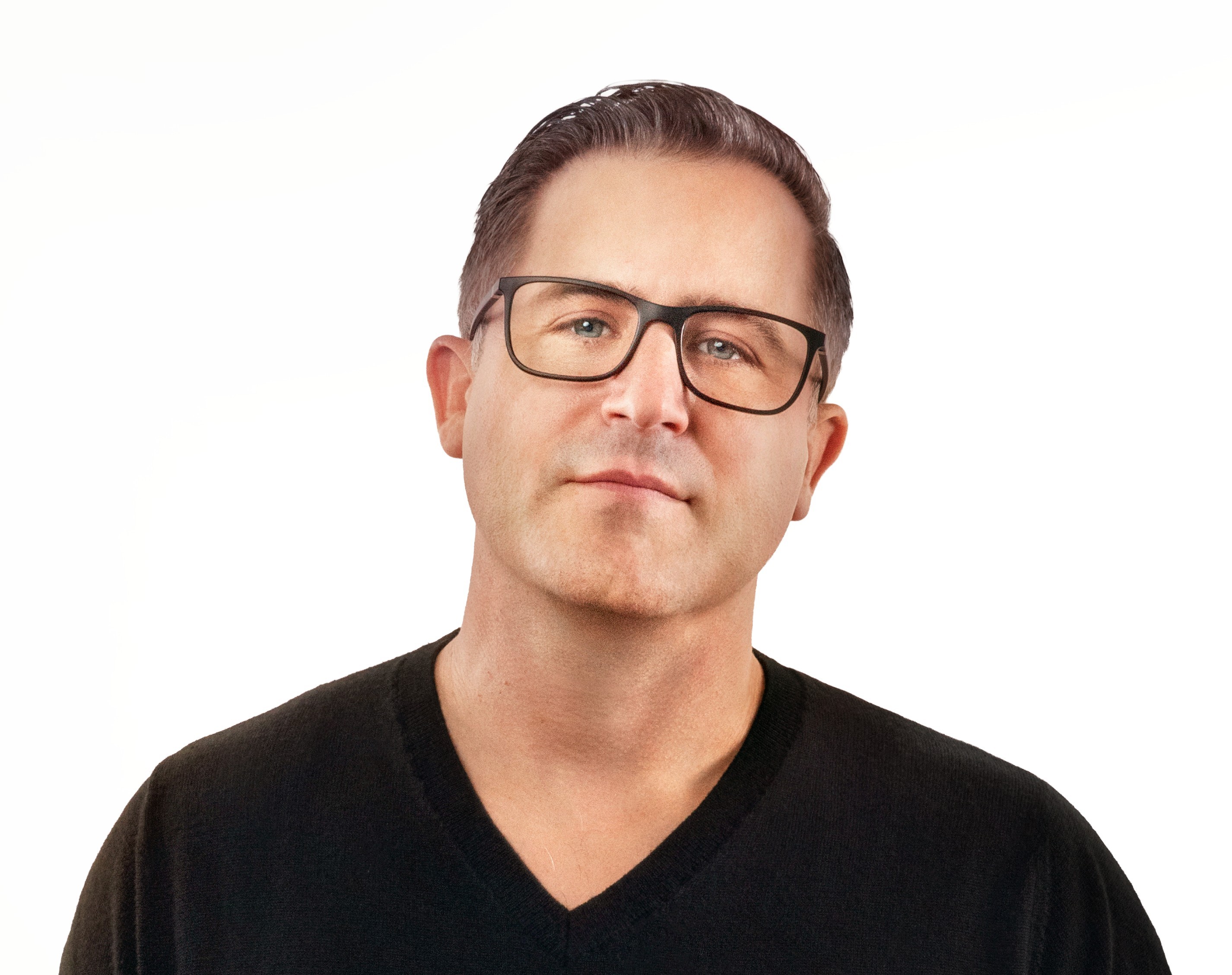
CEO of Climatic
Eric is the co-founder and CEO of Climatic, a consumer health technology company building products around lung health and respiratory wellness. Before Climatic, he served as COO of Seed Health and was part of the foundational team at Chewy. Earlier in his career, Eric held growth and operational leadership roles across consumer, wellness, and e-commerce businesses, including Amazon, BoxyCharm, Target, and Best Buy.
Interview Summary
Eric Kau is the co-founder and CEO of Climatic, a consumer health company building products around proactive lung health. After years of operating across wellness, e-commerce, and consumer health, Eric became increasingly interested in a disconnect: collectively we have been focused on heart, bone, gut, skin, and hair health, yet lung health — despite the roughly 20,000 breaths people take each day — has been largely ignored
Personal experiences with respiratory conditions across the founding team, along with worsening air quality exposure during the Canadian wildfires, further shaped the company’s early direction.
Climatic’s first product, L Max, is an inhaled dry-powder formula designed to support airway clearance and lung function, which Eric describes as a more proactive, “multivitamin”-style approach to lung health.
Development began with in vitro research around lung cells and different compound combinations before progressing into in vivo studies with Mount Sinai, where Climatic’s formulation improved mucus clearance by more than 50% in preclinical testing. The company later expanded into beta studies, toxicology testing, and an ongoing placebo-controlled clinical trial with People Science. Given the historical stigma associated with inhaled consumer products, Climatic invested heavily in safety and efficacy validation as it prepared to bring the category to market.
Prototype versions of the product were intentionally seeded to consumers for more than a year before launch, with the team using ongoing customer conversations and user feedback to refine the product experience, clinical direction, and broader go-to-market approach.
Rather than market broadly at launch, Climatic focused early on endurance athletes, wellness optimizers, and biohackers. The company officially launched L Max in spring 2026 and sold through its initial production batch shortly afterward. Climatic previously raised a $10 million round to support development and commercialization efforts.
Top Takeaways
In a new category, education is part of the product. When consumers don’t yet recognize the category, education becomes a prerequisite for demand. Start with the people already most receptive to the problem and embed into the products, communities, and behaviors they already trust. Climatic focused early on endurance athletes and wellness optimizers, using adjacent communities like Strava run clubs to build a 15,000-person waitlist before launch.
Early users should shape both market strategy and clinical strategy. In emerging categories, get prototypes into real-world use early, then study behavior closely: who adopts fastest, which outcomes matter most, and where usage becomes habitual. Those signals can sharpen positioning, identify the right initial customer cohort, and reveal which claims deserve deeper clinical validation.
In consumer health, behavior design matters as much as product design. Consumers rarely adopt new wellness habits through efficacy alone. Design around the moments, environments, and routines that already exist in a user’s life so adoption feels frictionless rather than additive. Ease of use, portability, sensory experience, and routine integration all play a critical role in turning product use into a consistent habit.
Sponsors
FastWave Medical: Named MD+DI's Company of the Year, FastWave is one of the hottest medtech startups in the cardiovascular space. See how you can invest here.
Medsider Fundraising Cohort: Planning to raise capital for your medtech startup? This live, 4-week workshop, led by Medsider is designed to help founders and CEOs tell a sharper story, get investor meetings that matter, and close real capital. Join the waitlist here.
Key Moments
02:49 Eric’s path through Amazon, Chewy, Seed, and the consumer health experiences that led to Climatic
05:49 Why Climatic is treating lung health like hydration, sleep, or nutrition
11:47 How Climatic rapidly iterated on formulas, delivery systems, and prototypes to launch a product for a new category in under 2 years
14:56 Climatic’s approach to product design, which is built around gym bags, vanities, and existing wellness routines
19:59 How early users shaped both Climatic’s clinical strategy and its go-to-market focus on endurance athletes and biohackers
23:56 Why Climatic spent more time teaching consumers about lung health than selling the product itself
34:07 What investors needed to believe before funding a category that didn’t yet exist
40:27 How Climatic built a 15,000-person waitlist through Strava run clubs instead of paid ads

Chat with Scott
Ask ScottBot questions about this interview, key takeaways, or other medtech topics.
Full Transcript
Since this category doesn't exist, they're not necessarily anywhere today. So you have to start to think about what are the tangential products that they would be using, and start to think about where they're learning about those, and then think about how we inject ourselves into those experiences. The other one I would maybe just say is, in real life, one of the things that we've thought a lot about, both in how we've developed the experience and how we, you know, more so going forward than we have historically, but how do we fit in in real life events.
Narrator:Welcome to Medsider, where you can learn from the brightest founders and CEOs in medical devices and health technology. Join tens of thousands of ambitious doers as we unpack the insights, tactics, and secrets behind the most successful life science startups in the world. Now here's your host, Scott Nelson.
Scott Nelson:Hey, everyone. In this episode of Medsider, we sat down with Eric Kau, co founder and CEO of Climatic. Climatic is commercializing LMAX, a daily inhaled system that proactively supports lung function. Before Climatic, Eric served as COO of Seed Health and was part of the foundational team at Chewy. Earlier in his career, Eric held growth and operational leadership roles across consumer, wellness, and ecommerce businesses, including Amazon, BoxyCharm, Target, and Best Buy. Here are a few topics we explored in this conversation. First, how do you create demand for a category consumers don't yet recognize? Second, what can real world product usage reveal that traditional market research often misses? Third, what does designing for consistent use look like in consumer wellness? And last, how do you convince investors that a new category deserves to exist?
Scott Nelson:Before we dive into the full episode, if you're a Medtech founder or CEO preparing to raise capital, you should check out the Medsider fundraising cohort. This four week live workshop combines small group sessions with real time feedback to help you sharpen your investor story, build a targeted pipeline, and run a focused fundraising sprint instead of a never ending slog. Over the month, you'll walk away with an investor ready narrative and deck, outreach scripts that actually get responses, a refreshed LinkedIn profile, a simple content plan that keeps you on investors' radar, and a repeatable system for running your raise. You can join the wait list at medsider.com/fundraisingcohort. Again, that's medsider.com/fundraisingcohort. Alright. Let's get to the interview.
Scott Nelson:Alright. Eric, welcome to Medsider Radio. Appreciate you coming on.
Eric Kau:Yeah. Hey, Scott. Thanks for having me.
Scott Nelson:Yeah. And thanks again for your flexibility with my schedule. So definitely looking forward to this conversation and learning a lot more about Climatic, but also your background as well and kind of your journey leading up to what you're doing now. So with that said, I recorded a very short bio at the outset of this episode, but I always like to start here and kind of hear it from the horse's mouth, to speak, but give us a very high level overview of kind of your career arc leading up to co founding Climatic.
Eric Kau:Yeah, absolutely. So I spent the early part of my career at the brick and mortar side of things, spent some time at Target and Best Buy, but have spent the last, I would say twelve ish years kind of at early stage or high growth businesses kind of building consumer brands and consumer products and bringing them to market. So started that journey at Amazon, and then did some stints early stage at chewy.com in the pet space, and then at BoxyCharm, which is a personal care cosmetics subscription business.
Eric Kau:But prior to founding Climatic, was the COO of Seed Health. And a lot of similarities as we'll get into it, I'm sure between my experience at Seed Health and scientifically backed highly efficacious consumer products, but in the kind of probiotic or microbiome space. And then, while I was going through that journey, met a lot of people, including my co founders at Climatic, and just really loved the idea and the opportunity of bringing a new category to market in this kind of unmet need for like proactive pulmonary or lung health.
Scott Nelson:Speaking of Seed, which maybe we'll get into it a little bit, a little bit more detail with some of these questions, but I was an early Seed user or consumer, if you will. I recall Seed as like being one of the first, I would say supplement brands, especially kind of in the microbiome space that did lead with like a very heavy, like science first approach. And I think other supplement brands have obviously sort of like fast followed that, but I don't know, do think that's like fairly accurate? I mean, I think it stands out to me as one of the first the first supplement brands to do that.
Eric Kau:Yeah, I think so. And I'm sure we'll get into this a little bit. But I think there's a there's some consumer trends that led to that being the case and led to what we've more recently over the last five to seven years, brands taking that approach. And I think coming out of the early 2010s where there was a lot more quote unquote snake oil products on the market, I think to differentiate yourself and to appease a more discerning consumer, you had to go to that level of detail to justify efficacy and claims.
Scott Nelson:The reason I think it's important is because a lot of traditional medtech people listen to this show. And they kind of scoff at this idea of even if their device is primarily used by physicians, nurses, techs, etcetera, they kind of scoff at this notion of like appealing at all to the patient or the consumer. I fundamentally believe that's not the greatest approach. That's not an ideal approach, right? Because there's a huge trend in really more kind of consumer health space where like patients, consumers, they want more information, right?
Scott Nelson:They want the science, they want to understand sort of the, you know, the mechanism of action. And so, you know, I think those opinions kind of conflict with each other. But yeah, I think it's why I brought it up. I think it's important for other folks to kind of realize that they don't have as much kind of consumer experiences as you do.
Eric Kau:Yeah. Yeah. Agree.
Scott Nelson:Let's get to Climatic. So I'm on the website right now, climatichealth.com. So just as it sounds, climatichealth.com beautiful website, very well done. And I know you guys, you guys just launched, we'll link to it in full write up. For those that have never heard of this product of this device, describe it like I'm a junior in high school, right? Learning about it for the first time.
Eric Kau:So L Max, our first product is a first of its kind, you know, daily lung health system. So it's, you know, it's designed for high performers, health conscious individuals, wellness buffs, biohackers, really anybody that's looking for a proactive, you know, everyday health solution for the lung. It's an inhaled dry powder, so an all natural formulation, again, intended for everyday use. And, you know, part of its efficacy is it delivers the formation directly to the deep lung where it can support the body's natural process for particle removal. So that particle removal process comes under stress for a variety of different reasons. And we like to say we're providing kind of a multivitamin quote unquote to the lung to allow it to support that body's natural clearance process and get the bad particles out of the lung.
Scott Nelson:Okay. Very cool. Yeah. And for those listening, you got to check out the website, like super cool technology and really, really well presented, especially considering this is a new category. Right. And there's a fair amount of education doing what I think is a really good job balancing both those worlds, this information easy to understand, yet also educating at the same time. So give us a sense for where the company's at right now. I mentioned that you, I think you just based on our notes that you just officially launched, but there was like a wait list building up to this launch as well.
Eric Kau:We launched about three weeks ago into a, and we sold out in about the first week for our first batch. That first batch has shipped, and it's in consumers' hands. They've been using it for about ten to twelve days. So it's been great to see the feedback, you know, from that group. And then, yes, we are in a prepaid scenario now.
Eric Kau:So if you go to the website, you can sign up. And, you know, we're working as hard as we can to get inventory up to the level to support the demand. And we'll get the product out to the consumers that have already bought as soon as possible.
Scott Nelson:Yeah, that's awesome. Good problem to have, right? Running out of...
Eric Kau:Yes, but I would love to be able to get it in people's hands as soon as possible.
Scott Nelson:Yeah. Yeah. I guess if you're gonna choose a problem to solve for, I'd rather have that one versus crickets waiting for people pay people's orders to come through. All right. That's a good starting point, think for the rest of the conversation. And I guess I should have level set. We're recording this in Q2 twenty six. If you're listening to this after the fact, three, six months down the road, hopefully Climatic has product in stock. It's not fully sold out and you have access to try it out. So with that said, let's go back in time.
Scott Nelson:Spend the next maybe twenty, thirty minutes kind of going back in time and learning not only about your experiences, but also kind of the lead up to this launch as well. And I want to kind of start with like early prototyping. And maybe before we get into kind of how you iterated through some early versions of this product, like why Climatic? Like what led you even to starting this company coming off of your previous experiences?
Eric Kau:So our founder group, which consists of Nick, Allie and I, all have had or been around family members or individuals that have dealt with some level of pulmonary stress or pulmonary issue, whether that's siblings with asthma, I have an uncle who's been very close to me with COPD, I deal with sleep apnea myself, so does most of my family. Nick's parents deal with chronic cough. So just a variety of different conditions that have had us always thinking about lung health. But the impetus really came around the time that the wildfires were happening in Canada. And it was blanketing most of the Northeast in soot or smog or, or, you know, dust or, you know, things that you didn't want to be inhaling or didn't want into your lungs.
Eric Kau:And that really led us collectively to ask the question, what is there that you could be taking every day that would be supporting your lungs when they're under stress? That led us down a path to ask questions about just broader lung health, broader consumer lung health, which ultimately led to a research process. And that research process started with our Chief Science Officer, Dale Christensen, doing initially academic research, then ultimately some in vitro research around lung cells and different types of compounds. That led to in vivo research and one of our initial clinical trials, which was done in partnership with Mount Sinai, testing the product in sheep models, which are kind of the gold standard to prehuman use. And then that has led into some beta human trials and ultimately into a double blind placebo based clinical trial, which we have out and in process right now.
Eric Kau:So along those iterations, we've obviously made multiple changes to the formula, we've tested different compounds, we've tested different combinations on the actual physical product side of things. And then as I touched it a little bit earlier, also really thinking about deliverability, which is an important part here, gets into the particle size of the product and really where it's landing in the deep lung.
Scott Nelson:It's one of those products that when in doing some research for this interview, I'd never heard of. I never really considered lung health. Then once you start to see it there, you're yeah, okay. This is something that more people should pay attention to. So it's kind of one of those like, wonder why no one has really done this before.
Eric Kau:Yeah, We take 20,000 breaths a day. We take more breaths than steps we do in our life. And when you think about the world we live in today, it's more industrialized, more built. And the result of that industrialized and built world for reasons that I'm sure many of your listeners are aware of, it's putting more stress on our lungs. It's putting more particulates into our lungs. And that lung load doesn't have anything outside of RX or maybe OTC solutions. We wanted something that was more readily available and efficacious for humans.
Scott Nelson:Yeah. Yeah. Makes a ton of sense. And I think most I thought of this, but most people I think would feel similar. You naturally kind of think about air purification and air filters inside the house, but the reality is a lot of us spend a lot of time outside the house. What are we exposed to? And it kind of makes sense to think about how to basically enhance your lung health, right? To deal with some of those conditions. So Yeah,
Eric Kau:It is a bit surprising that nothing like this exists, but I do think coming out of COVID, I think we all collectively are a little bit more aware of respiratory health. You see that in the way breath work has been involved into different wellness routines, whether it's around stress or sleep or anxiety, etcetera. So I think it's a bit surprising, but I think the time is right.
Scott Nelson:Yeah, no doubt. That's kind of a good segue into kind of, I guess, one of the first kind of functional topics I wanted to talk about, which is development. So it seems like, I mean, based on your LinkedIn profile, looks like, I'm not sure if this is accurate, but you maybe could have been doing a lot of prototyping before then, but you guys have moved really quick. Mean, it looks like you started the company kind of late twenty twenty four ish timeframe. We're sitting on maybe not even quite two years later and you've got a product that you're ready to commercialize.
Scott Nelson:So maybe touch on kind of how you were able to kind of move, so apparently so quickly kind of through iterative, even though like the device is I would consider relatively straightforward, there's still a lot going on, right? Especially the fact that you've done a lot of preclinical work kind of leading up to commercializing. So when you think about kind of key learnings and how you approach kind of that early stage iterative development, Are there a few things that kind of stand out to you or words wisdom to other founders that are kind of in a similar stage?
Eric Kau:Yeah. It's funny you say fast. Felt long along the way, but we had some great partners along the way, both internal and external. As I think about the development process, I think first and foremost was finding formula that was both safe and efficacious. That was just a test and learn.
Eric Kau:Try something, test it. Again, mostly in partnership with Mount Sinai, kind of seeing what we were getting in terms of the core bodily function that we're measuring here is mucociliary clearance or MCC for short. And that we were kind of using that as our benchmark for particle removal. And then as we were iterating on different variations of the formula, looking to that KPI to help us understand what type of progress we were making and what type of iterations we needed to implement. Then after that, you have to test for safety and then delivery.
Eric Kau:So I think if you think about that from a company building perspective, once we had the formula in a really good place and kind of understood its characteristics, then you can start to think about the manufacturing of that formula in a way where then it can be delivered through our device. So although the device may look simple from the outside, the process by which we developed the device that did not require any electrical components, any heating components, there's no vaporization, It is all natural breath actualized. It was a pretty strong effort in in both, I would say, industrial design and just like pure creativity. And I think that that process was maybe our second stage that we had to go through.
Eric Kau:And then once we had functioning prototypes, both on the formula side and on the device side, then it's a I would I don't know if traditional is the right word for it, but a more traditional scale up exercise. So once we had raised capital and could start investing in the things that we needed to get this ready for market, that would have been the third stage that we went through.
Scott Nelson:You raised a really interesting point. Hadn't really thought about this, even looking at the device is that nebulizers would be kind of a comparable, right? I think that most people are at least familiar with. And like that's, it requires AC power, and it's very different and your device does not, you don't have plug it in. It doesn't run on power, traditional power, whether it's DC or it's not DC, right? At all. Like, yeah. So that had to be some product come down to some pretty clever engineering.
Scott Nelson:The other thing I wanted to talk to you about too is the fact that this is used by a broad segment of the consumer use in essence, A broad segment of the population. And so designing for that, I think can be quite tricky as well. Because a lot of your expectation is that a wide variety of people are, can easily use this device. So were there a few things that kind of went into that consumer design thinking, you will, for lack of a better description?
Eric Kau:Yeah. It's an interesting question. Think in some ways, thought about consumer behavior associated with any habituation or kind of wellness protocol. So you think about those different groups and kind of when you interact with, I don't know if the right word for it, a supplement or a particular wellness routine. And it's usually in the morning, it's usually before you work out, or it's before you go to bed.
Eric Kau:So really thinking about that and thinking about where does the device, where will the device be? Will it be on your vanity? Will it be in your medicine cabinet? Will it be in your gym bag? And how do we kind of co design the device and then ultimately the cartridge or blister experience associated with that device so that it can be easy to use across those three primary use cases, which I think from our early research we learned is what consumers were looking for.
Eric Kau:And that's what led us to include the travel case that comes with the starter kit. It led to the design of the cap. It led to the design of the interaction of the cartridge with the particular, if you're on the website, you'll see it, way that the cartridge interacts with the door and then the door closes. So just really thinking through both ease of use, simplicity or speed. If you liken this to swallowing a pill in the morning, we want it to be just that easy.
Eric Kau:And, you know, hopefully, and we believe we've done this sensorially more enjoyable than swallowing the pill. So it has a nice flavor associated with it. Know, so really, really just thought through that consumer journey when consumers were interact with it. How do we make that as frictionless and as enjoyable as possible to make it easy for people to incorporate this into their current wellness protocol or wellness habits? Yeah.
Scott Nelson:A lot of good tips there to think through because I think it's easy to gloss over a lot of those a lot of those issues and without kind of proper properly thinking about that that true kind of user journey. I think you get yourself into or make make some design related decisions that that you end up regretting right down the road if that's not properly properly thought through.
Scott Nelson:Let's talk a little bit about clinical evidence. You mentioned Mount Sinai a couple times and based on our research, correct me if I'm wrong. I think you've collaborated with Duke as well. You mentioned an RCT as well. So anyway, you're generating a fair amount of clinical evidence for this device. The counter to that, right? Which some may say is, do you feel like you needed all of that? Right?
Scott Nelson:And so how did you kind of balance the desire to kind of get to market quickly, but also you're building a category, right? So you need some sort of like clinical scientific clinical substantiation. So how did you kind of think through some of those challenges?
Eric Kau:I think there's a couple of different ways to answer that question. Think, one, we recognize that we are asking consumers to take on a behavior that has some historical stigmas associated with it that are not very positive. So we wanted to make sure that when consumers looked closely at this, when anybody looked closely at this pulmonologists, whoever, that there was a pretty clear track record, not only just of efficacy in that it works and it was worth the time to use, but also in safety. So in addition to the efficacy studies that we ran, you mentioned the Mount Sinai study, we did a few beta studies and then ultimately our clinical trial. We also ran a full toxicology study on the product to ensure that it would be safe for human use.
Eric Kau:I think you would also ask the kind of the why. And I think that's twofold. One, I just touched on kind of the proof of efficacy, but also given the diverse number of, I don't necessarily like this word, but like endpoints or use cases that consumers would come to use the product, we wanted to have a diverse set of data on how the product could be efficacious. I think sometimes if you think about the pharmaceutical or drug world, or even some other particular supplements, it's a much more singular use case. We think about breathing and lung health a little bit more like hydration and is like a core pillar in human health.
Eric Kau:And there's a lot of reasons why you may come to the need to hydrate. And there's a lot of reasons why I think you you will come to the need to improve lung performance. So we wanted to have a broad set of data, we wanted to have a broad set of different, I'm trying to think of the right word different. They're not patients because we're not in that world, but different trial participants. Is the right way to say it, you know, experiencing the product and be able to point to that when we had different questions as we got closer to market.
Scott Nelson:Yeah, that makes it that makes a ton of sense. Knowing that you needed clinical evidence for kind of that, that that broader multiple segments, right? A broader degree of patients you weren't like focused on one very specific piece per se. How did that, what did that look like? Did you try to design the trials to account for that?
Scott Nelson:Or did you view it as like, Hey, we need a study for X and then we need to do another study for Y. Like how, what was approach that, or how do you basically try to accomplish or kill multiple birds with, with one stone here?
Eric Kau:Yeah, I think we were a bit opportunistic in that. You know, I don't, I don't want to oversell our initial strategy and intent, but I think we were a bit opportunistic in that part of it. And that as we, as we had people just using the product and we were hearing the feedback, that kind of led us towards, hey, we should test and see if that's something that's happening more widespread or if it was more of N of one type of scenario. If I take a step back, I would say very early on, we felt the need to get this product in the hands of as many people as possible and get their feedback. Because it is a new category.
Eric Kau:There isn't a whole lot of consumer research on how people would interact with this. And we leveraged that consumer research. Our chief of staff, Annabel, has been amazing at just interacting with the users of the product and really synthesizing that data down into mostly qualitative, but somewhat quantitative early on, down into how we felt like these individual cohorts or consumer cohorts would interact with the product, and then developing a thesis that we would wanna test within each of those cohorts. But I say all of that. Our objective has always been to focus on the endurance athlete, the wellness optimizer, the bio hacker.
Eric Kau:As we were going to market, we just felt like, oh, this product can be efficacious to everyone, everybody who breathes. We felt like that group was the most primed. And as we were hearing their feedback, they were the most interested and had identified even without us saying anything in this area. When you just mentioned it, it was you could see the kind of light bulb go off as to say, like, as an individual who thinks so much about my health, how have I not thought to do something for my lungs? And once that light bulb went off, you couldn't turn it off.
Eric Kau:And then they were asking for the product. And we really saw it in that kind of wellness optimizer biohacking community. And that's why we leaned into that group, both with our studies and ultimately how we're thinking about bringing the product to market.
Scott Nelson:Okay. Got it. Just hearing you kind of riff on that topic. My takeaway is with a product like this that could be used by so many different people, it would be easy to kind of spread yourself too thin in terms of studies you want to run that probably ladders up to like how you're even going to market and commercialize this. But kind of starting with that classic kind of innovator and early adopters, right?
Scott Nelson:And focusing on what do they, what kind of data would they want to see? What kind of studies would they want to see in order to like convince that segment of our audience to adopt this? I think that's a smart play for anyone kind of considering dealing with that sort of challenge, right? Kind of going too broad with your studies. On that note, you guys have accomplished a ton when it comes to clinical work.
Scott Nelson:I mean, again, this company's pretty new and you've knocked off like a really unique product and then also studied it both pre clinically and clinically as well. I mean, like any tips for it, like how you've been able to kind of execute so quickly on clinical front?
Eric Kau:The clinical front sometimes tends to move at its own pace. Not necessarily the pace of entrepreneurs, the pace of academia. So we've had to navigate around that. But I think you touched on it a little bit in your question there, which is just being very intentional about what you're trying to learn. I think as much as we have taken maybe a broader view to what we wanted to measure in our clinical work than maybe other consumer health products would have done, we also were very intentional about particular outcomes and we're very focused on achieving those.
Eric Kau:That goes down to what devices are you using to measure biomarkers? What questions are you asking as you think about protocol? What partners are you choosing in terms of how you recruit? So I think we were very thoughtful. We've added a lot of different options and maybe spent a little bit more time in the planning phase. And then when we got to execution, it was pretty simple to be able to kind of put it in simple, simple in air quotes. So relatively simple to execute.
Scott Nelson:Yeah. Did you run most of these studies in house or did you work with clinical research partners? Mean, outside of Sinai, of course, you've mentioned.
Eric Kau:Yeah. The non human, it was Mount Sinai. Then we're working with a great partner called People Science on the double blind clinical.
Scott Nelson:Okay. Okay. Cool. Let's talk about category creation. Mean, you've kind of touched on this a little bit, but any, I guess, first mover has that advantage. Right? But the challenge is how you're actually creating a category at the same time. And so were there a few key things that your team felt like you needed to prove, right? In order to kind of establish this idea of daily lung health sort of as credible category?
Eric Kau:I don't know about prove per se. I think we've, we were leaning heavy into, and hopefully anybody who's seeing kind of how we're showing up in the world right now, we're leaning heavy into education. Right? We're not out there necessarily in the quote unquote old world just like selling the product. We are taking the time to build the category and build to educate the consumer on why lung health is an important pillar to long term human health and wellness.
Eric Kau:And we think that both helps establish us as a credible leader in the space as we develop the category, but also, you know, helps consumers think through why this product is valuable for them. And, again, that's been a very what's the right word? Very multifaceted approach Mhmm. Given given that there's a lot of different reasons why lung health why people could come to lung health, whether it's, you know, allergies, wildfires, occupational hazards, chronic conditions, athletic perform, like athletic induced conditions. So that's disparate way in which we've had to think about education, but really leaning into education.
Eric Kau:And I think this is something that we saw work extremely well in my time at SEED. Aaron, Raja they're the founders of SEED, took this approach very early on to educate people about what the microbiome was and then work your way to the idea that the product is something that can be efficacious to that. But start with education around what the microbiome is. And in our case, start with education around why lung health is important.
Scott Nelson:Hey, everyone. Let's take a quick break to talk about Fastwave Medical, the company I co founded and lead as CEO. We're developing next generation intravascular lithotripsy or IVL systems to tackle complex calcific disease. Over the last few years, we've closed a series of oversubscribed funding rounds, bringing the investment Fastwave over $50,000,000 Corporate interest in the IVL space is growing too. The $900,000,000 acquisition of Bolt Medical by Boston Scientific in 2025 and Johnson and Johnson's $13,000,000,000 acquisition of Shockwave Medical signal a lot of attention on emerging IVL startups like Fastwave, and we're making serious progress. In addition to recently receiving our ninth patent, we've successfully completed peripheral and coronary feasibility studies and are gearing up for pivotal trials. If you're interested in investing in the fast growing IVL market, head over to fastwavemedical.com/invest. Again, that's fastwavemedical.cominvest. Now let's get back to the conversation.
Scott Nelson:So for other founders and CEOs that are listening to this and in a similar boat, right? They're in this kind of, they're not a fast follower, they're creating a newer category and they're thinking about education. Of course, is somewhat dependent on the product and who you're trying to reach, but are there a few kind of like key channels or key initiatives that you think work exceptionally well in terms of educating kind of the market around a new category like lung health?
Eric Kau:Yeah, think I don't want to sound a little bit repetitive, but I think talk to your customers and talk to them as often as you can and for as long as you can and for as many of them as you can. Although we launched the product at the time of this recording, we launched it in April 2026. We've had people using this product since January 2025 in some prototype version and different customer segments, different demographics. But some people have been using it for over fourteen months. Some people were only using it for shorter periods of time throughout that, but constantly getting into your consumers' hands.
Eric Kau:And then even with, you know, fourteen, fifteen, sixteen months of that experience to tailor our messaging, tailor our approach, tailor our packaging, everything that we would do that kind of rolls into the consumer experience, we still got some things wrong that we're learning right now. So once we're in market, you asked about channels, phone, email. We're talking to our earliest customers right now and asking them what they're thinking about the product and what doesn't make sense, what don't you understand, And just having ourselves in a position where we could rapidly adjust to that while we're in market now has been, I think, a big reason why we've been successful as we have in this first few weeks in market.
Scott Nelson:I mean, correct me if I'm wrong or correct me if you disagree, but thinking about launching a product early, you're creating a new category at initial launch. Are you sort of optimizing for learning in essence? So like to be a little bit more pragmatic or I guess where I'm going with this is, let's say you could automate customer service right now, right? For new customers that are ordering, but maybe you don't necessarily want to automate that. Right? You want to make it a little bit more manual because more manual means that you have more engagement and you can learn a lot more. Is that kind of like a little bit of the thinking here?
Eric Kau:It is. Allie and I are answering the customer service requests ourselves right now. And if there are questions we're asking for phone calls with customers, we're not just trying to be responsive to their question. We're trying to learn as much as we can. And I think, if I think back to the probiotic space or really any product you're launching into an existing market, can pull all of the customers.
Eric Kau:When the customer's responding, they have a certain level of awareness or understanding to the questions that you're asking because they know I would use probiotics as an example. They know what a probiotic is. Whereas you're asking somebody questions, you're using those traditional market research in a market that doesn't exist. The consumer doesn't know enough to tell you what they want. Mean, Jobs always says nobody wanted the iPhone until you gave it to them. Right. But not necessarily comparing us to the iPhone, but similar concept. Right? And where the market doesn't exist, you have to be in a position to engage your consumers, listen to your consumers and then react quickly.
Scott Nelson:Yeah. That's such a crucial point because I think it would be easy for anyone that's navigating a similar type of challenge, right? Where they're having to educate a market around a certain category to kind of fall back into that traditional research. And the reality is that's like, yes, there may be some interesting kind of insights that you could pull from that, but largely going to be ineffective, right? Because you're not going to know the ideal questions to ask.
Scott Nelson:And so really, really good point. Circling back around to kind of your early user testing, right? Because you mentioned you've had people using this product since early twenty twenty five. So, you know, and you effectively launched almost a year and a half later or not quite, but a year and a later, let's call it for rounding purposes. Normally I think people would be like, yes, get it into the hands of early users because to learn as much as you can about the product.
Scott Nelson:Were you guys learning also about sort of where those early users are getting their education? Like what information are they, like who are they consuming information from, etcetera? Was that kind of part of the learning experience as well? So you knew out of the gate, channels or maybe how to best educate the market around lung health?
Eric Kau:Yeah, I think less so that. I think, I mean, in the, I think there's a lot of, I would maybe step out one order of magnitude there and talk more about just like general, where the general wellness consumer is. And the kind of understanding where they're getting their cues in terms of both what's new, but also what works and what's efficacious. And I think there are different channels out there, things like the feed, for example, which is kind of set a certain bar around quality. And then thinking about those channels, the different, Fit Insider or different things like that.
Eric Kau:So that's where they're reading about different products. Then ultimately, and this is where it gets a little bit more nuanced or micro segmented for us, the different influencers in the space. So I think that's probably not a complete answer. If I sat around and thought about it, I think there's a lot of other things that we're doing to educate consumers. But it maybe sounds cliche, but a little bit of meet them where they are.
Eric Kau:And since this category doesn't exist, they're not necessarily anywhere today. So you have to start to think about what are the tangential products that they would be using and start to think about where they're learning about those and then think about how we inject ourselves into those experiences. The other one I would maybe just say is in real life. Right? I think one of the things that we've thought a lot about, both in how we've developed the experience and how we, you know, more so going forward than we have historically, but how do we, you know, in real life events, you know, think unlike swallowing a capsule, which is a lot of, you know, kind of wellness supplementation today, this is an experience that you can feel. So getting people to try it, it's a very different sensorial experience than, you know, swallowing something.
Scott Nelson:That's really interesting because because normally you hear, you know, in in real life for IRL, you know, types of activities is, does it scale? Like how scalable is it? You can kind of be expensive, resource constraining, etcetera. But to your point, there's a lot of value as well. Obviously engaging customers too, learning how they engage actually with the product.
Scott Nelson:Of course there's byproducts of this in terms of content production that you can kind of capture in real life events. So yeah, that's interesting that that's been kind of a key, sounds like a kind of a key focus area out of the gate.
Eric Kau:Yeah, definitely going forward. I mean, we've got to get into market, we've got to get enough inventory. So there's just practical problems we have to work through.
Scott Nelson:You can't show up to these events with no product. I mean, is that right? No, show them a picture or a video. This is how it should work. I mean, don't have any to actually use right now, but joke's aside, the other thing that really stands out though here, and you kind of riff on this is how early, right? You've got products in the hands of users. Right? And it sounds like that's really held true of like, this sounds simple, but I think again, one of those things that you can gloss over as things kind of start to get busy and you get closer and closer to launch is like staying as engaged or as close to the customer as possible.
Scott Nelson:The fact that you're still answering support tickets from early users. I just think that's like so critical and highly encourage everyone to, whether you're selling to more of a consumer audience or whether you're selling into physicians and traditional med tech, etcetera, like staying as close to the customer for sustained periods of time, right? Really, really, really critical.
Scott Nelson:Let's segue to fundraising. Cause you mentioned you raised some capital early on kind of through some early stage development. And I don't know if that was kind of the January or then raised another round, I think just earlier this year, at least it was announced earlier this year. So maybe touch on kind of like your fundraising experience with Climatic, but also curious to see kind of what lessons you've learned through these experiences. Maybe the better question is what do you know now about fundraising that maybe you wished you knew five or ten years ago?
Eric Kau:I would by no means classify myself as an expert in this, but I'm happy to share our experiences. Just to clarify the timeline, we raised our round in January 2025. We didn't announce it until more recently. So that's where I think the timeline gets up in the air. But I think when we really set out, I think we leaned on two things in the message that we wanted to communicate.
Eric Kau:One, I think the rigor that went into the scientific, the efficacy of the product. I know we're touching on that topic a lot, but we did feel like that that was quite differentiated for us. I think when you think about VC early stage, they see a lot of supplementation. And I think even thinking about consumer in general at the time, go back sixteen, eighteen months, not that we're not still in it, but most of the capital was really leaning towards GLP-1s and AI. So we were kind of in that ecosystem trying to stand out for capital deployment.
Eric Kau:So we felt like one, the need to kind of really demonstrate that we had real science here, not hokum science, but like real science that have been tested with real protocols. And then two, the importance of the category and the need for the category to exist, and the tailwinds from a consumer perspective towards this category existing. In other words, really overcoming that idea that, and I think we've done this in, especially given what we've seen in the last few weeks, we've done this very well, but that we're solving a real problem. We're not trying to solve a problem that doesn't exist. And I think through the process, we were able to find the right venture partners that understood the science.
Eric Kau:So they've been around enough of the products and could actually interpret the difference in the quality and the work that we had done versus some other things that they may see out there and shared our vision for the category. And it's not to knock the funds that didn't invest, but every fund has a different thesis and every fund has a different perspective. So there's a bit of a get out there, talk to as many people as you can. What you learn early on is you can't be overly selective. Talk to as many people as you can, but you're also trying to run a company and build a company while you're trying to do it.
Eric Kau:So I think you have to quickly identify the groups so it just isn't a fit. Can't hold on to every thread. Right? There has to be some triage along the way to say, you know, these guys really seem to get it. It's worth some diligence and some effort here, where this seems to be just kind of, like, flippant, maybe personal interest, but we don't necessarily align with kind of funder investment strategy. And that's, you know, it's highly iterative. It's, you know, meetings early in the morning and late at night for Allie and I just kind of working through that. But ultimately, found a great set of venture partners that we they've been, you know, along the journey, they've been highly supportive and and great partners to us.
Scott Nelson:Yeah. That's a really I I just wanna, like, double click at one one point you made around ending threads that don't that are just are likely not going to go anywhere. I just think that's so important because to your point, raising capital for an early stage or pre commercial kind of early stage companies is never easy while actually building, doing all the work of building the company is just like you get pulled in a million different directions. If you hang on to those those threads, right, or those perceived opportunities for too long, it can just be a a distraction. Now that's not to say that you don't you know, those could become, you know, future investors down the road and that you don't sort of, like, you know, create some sort of CRM or some some way to track that. But ultimately, you kinda have to say this is a no for now. You know? And let's let's move on. You know? Yeah.
Eric Kau:I would say, you know, in in every initial pitch call and all I'm sure all the entrepreneurs out there know this, but at some point in the first thirty minutes, they tell you what their investment thesis is. You know, listen to that. And if that's not you, you know, actually hear that and interpret that. You know, everything's a judgment call, so there may be options where you kind of break your rules. But I would just say, like, hear that because, you know, you can have a great set of six week conversations and ultimately they'll come back and point to that exact reason as to why they're not investing. And you'll say, Well, we knew that six weeks ago.
Scott Nelson:Yeah. So true. And more often than not, you're not going to convince them to flex on that thesis or to flex on that mandate. So yeah, really good point. Circling back around to that other, I think key point that you made around how do we solve this question that or the skepticism that this isn't a real problem? Were there a few things that were especially helpful to answer that question? Because I think I would imagine this comes up a fair number of times with other CEOs that are founders and CEOs that are raising capital for new categories in essence. It's like, is this even a thing? Know what I mean? It looks like you've got some good science. It looks like the product is cool, but is this really a thing you haven't launched yet in essence?
Eric Kau:Yeah. I'm sure there are categories out there where there's one reason why it has to exist, but I would bet that those categories become so obvious that you don't have to do any convincing. I think for us, it was a multitude of different things. I think you could point to the focus on respiratory health coming out of COVID and all the fears around long COVID. I think you could point to the instances of wildfires as being indicative of that.
Eric Kau:I think there were a lot of, and I'll spare the details here where you could just go cohort by cohort and show that that group was increasing over time, the increase in wearables and the data that was showing that people were measuring things related to pulmonary health, like VO2 max. So I think there's just the search terms. There's a lot of pieces that you put together that collectively in our mind, we had to convince ourselves first in order to go down this journey and then was taking what had convinced us and putting it into a format that was kind of digestible and credible to investors. And again, I think anybody who's raised this knows that this is the case. Like some people will get it and some people won't. And that's just where they're at in their understanding of the market. Then you find the ones that do and then those are the ones you hopefully end up partnering with.
Scott Nelson:Yeah. One of the things that stands out is, and it's of like related to this, right? And I got to think that it serves as a bit of a signal that you're onto something is this list, right? I mean, we touched on it briefly kind of at the outset of this conversation, but you had roughly, I think around a 15,000 person wait list even before you launched, which is incredibly impressive, especially considering this is new category, right? I mean, you're educating people around the importance of Lung Health. So like, were there a couple, like, was there anything creative that you did there to sort of like generate that size of a list ahead of your launch?
Eric Kau:Yeah, I think, like anything, it's a multitude of different factors. But I think the fact that we had been talking to people for fourteen to sixteen months had queued up a population of people that were highly credible to get into that wait list early on. But I also, you know, coming back to like to meet them where we are, I think we didn't take a kind of digital click bait type approach to waitlist building. We took a very engaged community. Strava being one example, which is a big endurance running community with a lot of different segments across the country.
Eric Kau:We engaged the chapter heads individually at each individual one. And then through them, met their individual run clubs in, you know, Austin, New York, Boston, wherever it was. And then through that more, I would say, like, personal touch engagement, we're able you know, it's a little bit more work to build the waitlist, but we felt like the waitlist was a much more credible waitlist in terms of, like, actual intent and kind of willingness to buy. You know? So being kind of intentional about not throwing out to everybody on meta and saying, do you want to join the wait list? But kind of thinking about the traffic to the wait list sign up being our core customer, our ICP.
Scott Nelson:The website now, again, which is climatichealth.com, you've got obviously a science section kind of front and center in the nav that's again, really well done here. Yeah, extremely well done. Even if you're not, if you're listening to this and you're not marketing direct to consumers, I would just highly encourage you to look at the website and see how Climatic is doing it. Cause it's a really good balance of science plus making it fairly digestible. The reason I bring this up is as you're building this waitlist, were you generating content on the site as well? I mean, was that sort of a proactive effort as part of that kind of that broader approach to education?
Eric Kau:You mean like UGC content or more of like the creative content?
Scott Nelson:Like scientific content. I mean, did you like, were you producing articles on the website, right? And kind of using that as a way to kind of slowly educate users even a year ago as an example? Or did you, were you operating kind of more under kind of like a stealth kind of like, not really telling a lot.
Eric Kau:I would say more stealth for a period of time. Think content creation as it relates to the scientific side was more of a net result of the amount of research we did. And then we felt like we had the collateral, for lack of a better word, to create good content alongside it. And then, you know, just some great creative and design partners that could help make, you know, boring words on a page turn into something that looks really nice in real life.
Scott Nelson:Yeah. Yeah. Well, kudos to you and your team and your partners. Right. Really, really well done. I want to get to the rapid fire of this portion of this interview, but again, climatichealth.com is the website. Just as it sounds C L I M A T I C health, climatichealth.com. We'll link to it in the full write up on Medsider. We'll also link to Eric's LinkedIn profile as well as you can check out his background in a little bit more detail.
Scott Nelson:So with that said, first rapid fire question I've got for you. When you think about like the next year ahead and maybe you alluded to LMAX being the first product. So I'm a little bit curious if you can share anything at all about kind of the future roadmap. But when you think about the next twelve to eighteen months, what's most exciting? What are you most excited about?
Eric Kau:The most exciting part of it, I think, I don't know if there'll be a moment in time when this will occur, but I think the establishment of daily lung health as a normal wellness protocol is the objective, right? Where it becomes well known to consumers that doing something proactive for your lungs can be highly beneficial to your long term health and just how you feel every day among a multitude of other use cases. So I think really turning this into something that's interesting to to something that's habitual for consumers through the education and efficacy of the product, not necessarily just convincing them of it, but really educating them on the whys would be, again, I don't know if that will be a moment in time, but that is the objective. To your question around other products, I would be happy to come on and share more when we're willing to talk about what those are. But we're really, Climatic as a brand, the product is LMAX.
Eric Kau:Climatic as a brand is really around climate adaptive wellness. And this idea that we live in this world that despite our best efforts is having a more negative impact on our wellness. And we want to focus on products that allow people to live healthier, happier lives, despite the fact that the world is maybe working against us on that.
Scott Nelson:Okay. So if we do a round two, maybe we'll have a chance to kind of dive into what that second or third product is. Right. Let's say we're in your neck of the woods down in Florida, and we just maybe wrapped up a a dinner with a bunch of Medtech or Healthtech entrepreneurs. What's the single biggest kind of lesson or insight that you think they really need to understand, right? To see any sort of semblance of success in their venture?
Eric Kau:Yeah, I think crossing like Chewy, BoxyCharm, Seed and even now at Climatic, I think ruthless prioritization is where I see, we all live in capital constrained environments. All live in resource constrained environment. So the the idea of ruthless prioritization. And I think I I learned this probably first and foremost in my time at at Chewy where we were just in, like, direct competition with Amazon all the time is just, you know, there there's a lot of really good ideas that you have to say no to. We used to call it the strategic no.
Eric Kau:And I think it it can be really easy for founders to get into, like, shiny penny syndrome or to want to do all the good ideas. And I don't know if it's more irons in the fire or if it's just a passion about what you're doing, but really, really narrow in on the best things that you can be doing and the best ideas and laser focus your resource constrained team on those. Throw the rest of them into a, you know, a bench that you're gonna come back to, you know, when if and when bandwidth opens up. But that that idea of kind of, like, ruthless prioritization has been critical to us, you know, given how much we've tried to do in a short period of time and just what I've seen be successful, you know, working with other founders at previous companies.
Scott Nelson:That's really so much easier said than done, right? Where you're in the moment and the shiny object really looks shiny and really looks compelling. But what's that like buff? Think it's Buffet kind of a classic Buffet line of like, anytime you say yes to something, you're saying no to something else in essence. And even though it may be easier to say yes, there could be a very significant opportunity cost to it.
Eric Kau:Not to belabor the point, but I think there's always a lot of voices around you. If you're blessed enough to have a great set of investors and a great set of advisors, they're gonna have a lot of really good ideas. And they can be very influential on you. And that can be where it becomes very hard, because you feel an obligation to see all of those ideas through given the support that those individuals have given you. And that can be where you have to really kind of like, you're running the business. This is your baby. You know what's going to be successful. Interpret all of that information, bring it in, digest it, but then make your decision and stay focused and then be proactive at communicating it out to those groups so that they know where your time and energy is being spent.
Scott Nelson:Good stuff. All right. Last question I've got for you, Eric. If you have the chance to kind of go back in time and whisper something in the ears of your younger self, maybe take us back to your days at Target or Best Buy, maybe Chewy later on in your career. Anything you'd say to the younger Eric?
Eric Kau:The younger? Oh, geez. A lot of things I'd say. Fail fast. I think earlier in my career, I was a bit risk - I didn't have the quite risk tolerance that I've learned now. And I've there's a lot of cliches associated with, like, two-way versus you know, one way doors. Right? And just, like, understanding when something's a two way door, go through it fast, learn quick, adjust and adapt. And I think, you know, at at every stage, I've tried to apply that principle in a more real and practical way. But early on, I I just didn't have the risk tolerance. And maybe that comes with experience, maybe that comes with all of the mistakes that you make along the way.
Eric Kau:But I, you know, I would encourage people to kind of figure out how you make take all the right risks as early as possible. Because it's really where you learn. And you find out, I think when you're on the other side of something that you think is risky, it that probably wasn't risky as you thought it was. There's more anxiety tied up in the risk than like actual risk. So it's like, take the leap, learn and then, you know, deal with the consequences.
Scott Nelson:Yeah. Good stuff. Eric, I can't thank you enough for coming on the program. This is a this is a fun conversation. I love what you're doing. Thank you. I have a bias towards kind of these sort of arenas. And so yeah, can't thank you enough. Would be really fun to kind of watch what you and your team do at Climatic over the next year and beyond.
Scott Nelson:And for everyone listening again, Climatic, mentioned the website a few times, but climatichealth.com is the website. We'll link to it in the full write up on Medsider. If you're new to Medsider, we produce kind of longer form articles if you will, right? That accompany these audio podcast episodes that try to pull on a lot of the key insights that our guests share, including a lot of the valuable ones that Eric disseminated to us over the past hour or so. So again, for everyone listening, climatichealth.com and you can check out the full write up on Medsider. Eric, I'll have you hold on line, but thanks again for doing this. Appreciate your time and for everyone listening until the next episode of Medsider goes live. Everyone take care.
Eric Kau:Yep. Thanks, Scott.
Scott Nelson:Hey. It's Scott again. One quick thing before you go. You see, I love bringing you insightful conversations with the best founders and CEOs of medical device and health technology startups. But here's the thing. I'd be super grateful if you could help me reach even more ambitious doers who share our passion. So if you found value in this podcast, if you found yourself nodding your head while listening, or if you simply enjoy what we're doing with Medsider, please take a moment to leave us a review. It's super easy. Just open your Apple Podcast app or the podcast app of your choice, search for our show, and scroll down to the ratings and review section. Leave your honest thoughts and hit that five star rating if you think we're worthy.
Scott Nelson:Your feedback is incredibly important, and it's the best way to ensure we keep bringing you awesome discussions with leading founders and CEOs. So take a moment to be a good friend and leave that review today. As always, thanks for being a part of our journey and for helping Medsider continue to grow and evolve. Your support is greatly appreciated. Alright. Enough talk about reviews. Stay tuned for another informative episode coming at you soon.
Read More
Since this category doesn't exist, they're not necessarily anywhere today. So you have to start to think about what are the tangential products that they would be using, and start to think about where they're learning about those, and then think about how we inject ourselves into those experiences. The other one I would maybe just say is, in real life, one of the things that we've thought a lot about, both in how we've developed the experience and how we, you know, more so going forward than we have historically, but how do we fit in in real life events.
Narrator:Welcome to Medsider, where you can learn from the brightest founders and CEOs in medical devices and health technology. Join tens of thousands of ambitious doers as we unpack the insights, tactics, and secrets behind the most successful life science startups in the world. Now here's your host, Scott Nelson.
Scott Nelson:Hey, everyone. In this episode of Medsider, we sat down with Eric Kau, co founder and CEO of Climatic. Climatic is commercializing LMAX, a daily inhaled system that proactively supports lung function. Before Climatic, Eric served as COO of Seed Health and was part of the foundational team at Chewy. Earlier in his career, Eric held growth and operational leadership roles across consumer, wellness, and ecommerce businesses, including Amazon, BoxyCharm, Target, and Best Buy. Here are a few topics we explored in this conversation. First, how do you create demand for a category consumers don't yet recognize? Second, what can real world product usage reveal that traditional market research often misses? Third, what does designing for consistent use look like in consumer wellness? And last, how do you convince investors that a new category deserves to exist?
Scott Nelson:Before we dive into the full episode, if you're a Medtech founder or CEO preparing to raise capital, you should check out the Medsider fundraising cohort. This four week live workshop combines small group sessions with real time feedback to help you sharpen your investor story, build a targeted pipeline, and run a focused fundraising sprint instead of a never ending slog. Over the month, you'll walk away with an investor ready narrative and deck, outreach scripts that actually get responses, a refreshed LinkedIn profile, a simple content plan that keeps you on investors' radar, and a repeatable system for running your raise. You can join the wait list at medsider.com/fundraisingcohort. Again, that's medsider.com/fundraisingcohort. Alright. Let's get to the interview.
Scott Nelson:Alright. Eric, welcome to Medsider Radio. Appreciate you coming on.
Eric Kau:Yeah. Hey, Scott. Thanks for having me.
Scott Nelson:Yeah. And thanks again for your flexibility with my schedule. So definitely looking forward to this conversation and learning a lot more about Climatic, but also your background as well and kind of your journey leading up to what you're doing now. So with that said, I recorded a very short bio at the outset of this episode, but I always like to start here and kind of hear it from the horse's mouth, to speak, but give us a very high level overview of kind of your career arc leading up to co founding Climatic.
Eric Kau:Yeah, absolutely. So I spent the early part of my career at the brick and mortar side of things, spent some time at Target and Best Buy, but have spent the last, I would say twelve ish years kind of at early stage or high growth businesses kind of building consumer brands and consumer products and bringing them to market. So started that journey at Amazon, and then did some stints early stage at chewy.com in the pet space, and then at BoxyCharm, which is a personal care cosmetics subscription business.
Eric Kau:But prior to founding Climatic, was the COO of Seed Health. And a lot of similarities as we'll get into it, I'm sure between my experience at Seed Health and scientifically backed highly efficacious consumer products, but in the kind of probiotic or microbiome space. And then, while I was going through that journey, met a lot of people, including my co founders at Climatic, and just really loved the idea and the opportunity of bringing a new category to market in this kind of unmet need for like proactive pulmonary or lung health.
Scott Nelson:Speaking of Seed, which maybe we'll get into it a little bit, a little bit more detail with some of these questions, but I was an early Seed user or consumer, if you will. I recall Seed as like being one of the first, I would say supplement brands, especially kind of in the microbiome space that did lead with like a very heavy, like science first approach. And I think other supplement brands have obviously sort of like fast followed that, but I don't know, do think that's like fairly accurate? I mean, I think it stands out to me as one of the first the first supplement brands to do that.
Eric Kau:Yeah, I think so. And I'm sure we'll get into this a little bit. But I think there's a there's some consumer trends that led to that being the case and led to what we've more recently over the last five to seven years, brands taking that approach. And I think coming out of the early 2010s where there was a lot more quote unquote snake oil products on the market, I think to differentiate yourself and to appease a more discerning consumer, you had to go to that level of detail to justify efficacy and claims.
Scott Nelson:The reason I think it's important is because a lot of traditional medtech people listen to this show. And they kind of scoff at this idea of even if their device is primarily used by physicians, nurses, techs, etcetera, they kind of scoff at this notion of like appealing at all to the patient or the consumer. I fundamentally believe that's not the greatest approach. That's not an ideal approach, right? Because there's a huge trend in really more kind of consumer health space where like patients, consumers, they want more information, right?
Scott Nelson:They want the science, they want to understand sort of the, you know, the mechanism of action. And so, you know, I think those opinions kind of conflict with each other. But yeah, I think it's why I brought it up. I think it's important for other folks to kind of realize that they don't have as much kind of consumer experiences as you do.
Eric Kau:Yeah. Yeah. Agree.
Scott Nelson:Let's get to Climatic. So I'm on the website right now, climatichealth.com. So just as it sounds, climatichealth.com beautiful website, very well done. And I know you guys, you guys just launched, we'll link to it in full write up. For those that have never heard of this product of this device, describe it like I'm a junior in high school, right? Learning about it for the first time.
Eric Kau:So L Max, our first product is a first of its kind, you know, daily lung health system. So it's, you know, it's designed for high performers, health conscious individuals, wellness buffs, biohackers, really anybody that's looking for a proactive, you know, everyday health solution for the lung. It's an inhaled dry powder, so an all natural formulation, again, intended for everyday use. And, you know, part of its efficacy is it delivers the formation directly to the deep lung where it can support the body's natural process for particle removal. So that particle removal process comes under stress for a variety of different reasons. And we like to say we're providing kind of a multivitamin quote unquote to the lung to allow it to support that body's natural clearance process and get the bad particles out of the lung.
Scott Nelson:Okay. Very cool. Yeah. And for those listening, you got to check out the website, like super cool technology and really, really well presented, especially considering this is a new category. Right. And there's a fair amount of education doing what I think is a really good job balancing both those worlds, this information easy to understand, yet also educating at the same time. So give us a sense for where the company's at right now. I mentioned that you, I think you just based on our notes that you just officially launched, but there was like a wait list building up to this launch as well.
Eric Kau:We launched about three weeks ago into a, and we sold out in about the first week for our first batch. That first batch has shipped, and it's in consumers' hands. They've been using it for about ten to twelve days. So it's been great to see the feedback, you know, from that group. And then, yes, we are in a prepaid scenario now.
Eric Kau:So if you go to the website, you can sign up. And, you know, we're working as hard as we can to get inventory up to the level to support the demand. And we'll get the product out to the consumers that have already bought as soon as possible.
Scott Nelson:Yeah, that's awesome. Good problem to have, right? Running out of...
Eric Kau:Yes, but I would love to be able to get it in people's hands as soon as possible.
Scott Nelson:Yeah. Yeah. I guess if you're gonna choose a problem to solve for, I'd rather have that one versus crickets waiting for people pay people's orders to come through. All right. That's a good starting point, think for the rest of the conversation. And I guess I should have level set. We're recording this in Q2 twenty six. If you're listening to this after the fact, three, six months down the road, hopefully Climatic has product in stock. It's not fully sold out and you have access to try it out. So with that said, let's go back in time.
Scott Nelson:Spend the next maybe twenty, thirty minutes kind of going back in time and learning not only about your experiences, but also kind of the lead up to this launch as well. And I want to kind of start with like early prototyping. And maybe before we get into kind of how you iterated through some early versions of this product, like why Climatic? Like what led you even to starting this company coming off of your previous experiences?
Eric Kau:So our founder group, which consists of Nick, Allie and I, all have had or been around family members or individuals that have dealt with some level of pulmonary stress or pulmonary issue, whether that's siblings with asthma, I have an uncle who's been very close to me with COPD, I deal with sleep apnea myself, so does most of my family. Nick's parents deal with chronic cough. So just a variety of different conditions that have had us always thinking about lung health. But the impetus really came around the time that the wildfires were happening in Canada. And it was blanketing most of the Northeast in soot or smog or, or, you know, dust or, you know, things that you didn't want to be inhaling or didn't want into your lungs.
Eric Kau:And that really led us collectively to ask the question, what is there that you could be taking every day that would be supporting your lungs when they're under stress? That led us down a path to ask questions about just broader lung health, broader consumer lung health, which ultimately led to a research process. And that research process started with our Chief Science Officer, Dale Christensen, doing initially academic research, then ultimately some in vitro research around lung cells and different types of compounds. That led to in vivo research and one of our initial clinical trials, which was done in partnership with Mount Sinai, testing the product in sheep models, which are kind of the gold standard to prehuman use. And then that has led into some beta human trials and ultimately into a double blind placebo based clinical trial, which we have out and in process right now.
Eric Kau:So along those iterations, we've obviously made multiple changes to the formula, we've tested different compounds, we've tested different combinations on the actual physical product side of things. And then as I touched it a little bit earlier, also really thinking about deliverability, which is an important part here, gets into the particle size of the product and really where it's landing in the deep lung.
Scott Nelson:It's one of those products that when in doing some research for this interview, I'd never heard of. I never really considered lung health. Then once you start to see it there, you're yeah, okay. This is something that more people should pay attention to. So it's kind of one of those like, wonder why no one has really done this before.
Eric Kau:Yeah, We take 20,000 breaths a day. We take more breaths than steps we do in our life. And when you think about the world we live in today, it's more industrialized, more built. And the result of that industrialized and built world for reasons that I'm sure many of your listeners are aware of, it's putting more stress on our lungs. It's putting more particulates into our lungs. And that lung load doesn't have anything outside of RX or maybe OTC solutions. We wanted something that was more readily available and efficacious for humans.
Scott Nelson:Yeah. Yeah. Makes a ton of sense. And I think most I thought of this, but most people I think would feel similar. You naturally kind of think about air purification and air filters inside the house, but the reality is a lot of us spend a lot of time outside the house. What are we exposed to? And it kind of makes sense to think about how to basically enhance your lung health, right? To deal with some of those conditions. So Yeah,
Eric Kau:It is a bit surprising that nothing like this exists, but I do think coming out of COVID, I think we all collectively are a little bit more aware of respiratory health. You see that in the way breath work has been involved into different wellness routines, whether it's around stress or sleep or anxiety, etcetera. So I think it's a bit surprising, but I think the time is right.
Scott Nelson:Yeah, no doubt. That's kind of a good segue into kind of, I guess, one of the first kind of functional topics I wanted to talk about, which is development. So it seems like, I mean, based on your LinkedIn profile, looks like, I'm not sure if this is accurate, but you maybe could have been doing a lot of prototyping before then, but you guys have moved really quick. Mean, it looks like you started the company kind of late twenty twenty four ish timeframe. We're sitting on maybe not even quite two years later and you've got a product that you're ready to commercialize.
Scott Nelson:So maybe touch on kind of how you were able to kind of move, so apparently so quickly kind of through iterative, even though like the device is I would consider relatively straightforward, there's still a lot going on, right? Especially the fact that you've done a lot of preclinical work kind of leading up to commercializing. So when you think about kind of key learnings and how you approach kind of that early stage iterative development, Are there a few things that kind of stand out to you or words wisdom to other founders that are kind of in a similar stage?
Eric Kau:Yeah. It's funny you say fast. Felt long along the way, but we had some great partners along the way, both internal and external. As I think about the development process, I think first and foremost was finding formula that was both safe and efficacious. That was just a test and learn.
Eric Kau:Try something, test it. Again, mostly in partnership with Mount Sinai, kind of seeing what we were getting in terms of the core bodily function that we're measuring here is mucociliary clearance or MCC for short. And that we were kind of using that as our benchmark for particle removal. And then as we were iterating on different variations of the formula, looking to that KPI to help us understand what type of progress we were making and what type of iterations we needed to implement. Then after that, you have to test for safety and then delivery.
Eric Kau:So I think if you think about that from a company building perspective, once we had the formula in a really good place and kind of understood its characteristics, then you can start to think about the manufacturing of that formula in a way where then it can be delivered through our device. So although the device may look simple from the outside, the process by which we developed the device that did not require any electrical components, any heating components, there's no vaporization, It is all natural breath actualized. It was a pretty strong effort in in both, I would say, industrial design and just like pure creativity. And I think that that process was maybe our second stage that we had to go through.
Eric Kau:And then once we had functioning prototypes, both on the formula side and on the device side, then it's a I would I don't know if traditional is the right word for it, but a more traditional scale up exercise. So once we had raised capital and could start investing in the things that we needed to get this ready for market, that would have been the third stage that we went through.
Scott Nelson:You raised a really interesting point. Hadn't really thought about this, even looking at the device is that nebulizers would be kind of a comparable, right? I think that most people are at least familiar with. And like that's, it requires AC power, and it's very different and your device does not, you don't have plug it in. It doesn't run on power, traditional power, whether it's DC or it's not DC, right? At all. Like, yeah. So that had to be some product come down to some pretty clever engineering.
Scott Nelson:The other thing I wanted to talk to you about too is the fact that this is used by a broad segment of the consumer use in essence, A broad segment of the population. And so designing for that, I think can be quite tricky as well. Because a lot of your expectation is that a wide variety of people are, can easily use this device. So were there a few things that kind of went into that consumer design thinking, you will, for lack of a better description?
Eric Kau:Yeah. It's an interesting question. Think in some ways, thought about consumer behavior associated with any habituation or kind of wellness protocol. So you think about those different groups and kind of when you interact with, I don't know if the right word for it, a supplement or a particular wellness routine. And it's usually in the morning, it's usually before you work out, or it's before you go to bed.
Eric Kau:So really thinking about that and thinking about where does the device, where will the device be? Will it be on your vanity? Will it be in your medicine cabinet? Will it be in your gym bag? And how do we kind of co design the device and then ultimately the cartridge or blister experience associated with that device so that it can be easy to use across those three primary use cases, which I think from our early research we learned is what consumers were looking for.
Eric Kau:And that's what led us to include the travel case that comes with the starter kit. It led to the design of the cap. It led to the design of the interaction of the cartridge with the particular, if you're on the website, you'll see it, way that the cartridge interacts with the door and then the door closes. So just really thinking through both ease of use, simplicity or speed. If you liken this to swallowing a pill in the morning, we want it to be just that easy.
Eric Kau:And, you know, hopefully, and we believe we've done this sensorially more enjoyable than swallowing the pill. So it has a nice flavor associated with it. Know, so really, really just thought through that consumer journey when consumers were interact with it. How do we make that as frictionless and as enjoyable as possible to make it easy for people to incorporate this into their current wellness protocol or wellness habits? Yeah.
Scott Nelson:A lot of good tips there to think through because I think it's easy to gloss over a lot of those a lot of those issues and without kind of proper properly thinking about that that true kind of user journey. I think you get yourself into or make make some design related decisions that that you end up regretting right down the road if that's not properly properly thought through.
Scott Nelson:Let's talk a little bit about clinical evidence. You mentioned Mount Sinai a couple times and based on our research, correct me if I'm wrong. I think you've collaborated with Duke as well. You mentioned an RCT as well. So anyway, you're generating a fair amount of clinical evidence for this device. The counter to that, right? Which some may say is, do you feel like you needed all of that? Right?
Scott Nelson:And so how did you kind of balance the desire to kind of get to market quickly, but also you're building a category, right? So you need some sort of like clinical scientific clinical substantiation. So how did you kind of think through some of those challenges?
Eric Kau:I think there's a couple of different ways to answer that question. Think, one, we recognize that we are asking consumers to take on a behavior that has some historical stigmas associated with it that are not very positive. So we wanted to make sure that when consumers looked closely at this, when anybody looked closely at this pulmonologists, whoever, that there was a pretty clear track record, not only just of efficacy in that it works and it was worth the time to use, but also in safety. So in addition to the efficacy studies that we ran, you mentioned the Mount Sinai study, we did a few beta studies and then ultimately our clinical trial. We also ran a full toxicology study on the product to ensure that it would be safe for human use.
Eric Kau:I think you would also ask the kind of the why. And I think that's twofold. One, I just touched on kind of the proof of efficacy, but also given the diverse number of, I don't necessarily like this word, but like endpoints or use cases that consumers would come to use the product, we wanted to have a diverse set of data on how the product could be efficacious. I think sometimes if you think about the pharmaceutical or drug world, or even some other particular supplements, it's a much more singular use case. We think about breathing and lung health a little bit more like hydration and is like a core pillar in human health.
Eric Kau:And there's a lot of reasons why you may come to the need to hydrate. And there's a lot of reasons why I think you you will come to the need to improve lung performance. So we wanted to have a broad set of data, we wanted to have a broad set of different, I'm trying to think of the right word different. They're not patients because we're not in that world, but different trial participants. Is the right way to say it, you know, experiencing the product and be able to point to that when we had different questions as we got closer to market.
Scott Nelson:Yeah, that makes it that makes a ton of sense. Knowing that you needed clinical evidence for kind of that, that that broader multiple segments, right? A broader degree of patients you weren't like focused on one very specific piece per se. How did that, what did that look like? Did you try to design the trials to account for that?
Scott Nelson:Or did you view it as like, Hey, we need a study for X and then we need to do another study for Y. Like how, what was approach that, or how do you basically try to accomplish or kill multiple birds with, with one stone here?
Eric Kau:Yeah, I think we were a bit opportunistic in that. You know, I don't, I don't want to oversell our initial strategy and intent, but I think we were a bit opportunistic in that part of it. And that as we, as we had people just using the product and we were hearing the feedback, that kind of led us towards, hey, we should test and see if that's something that's happening more widespread or if it was more of N of one type of scenario. If I take a step back, I would say very early on, we felt the need to get this product in the hands of as many people as possible and get their feedback. Because it is a new category.
Eric Kau:There isn't a whole lot of consumer research on how people would interact with this. And we leveraged that consumer research. Our chief of staff, Annabel, has been amazing at just interacting with the users of the product and really synthesizing that data down into mostly qualitative, but somewhat quantitative early on, down into how we felt like these individual cohorts or consumer cohorts would interact with the product, and then developing a thesis that we would wanna test within each of those cohorts. But I say all of that. Our objective has always been to focus on the endurance athlete, the wellness optimizer, the bio hacker.
Eric Kau:As we were going to market, we just felt like, oh, this product can be efficacious to everyone, everybody who breathes. We felt like that group was the most primed. And as we were hearing their feedback, they were the most interested and had identified even without us saying anything in this area. When you just mentioned it, it was you could see the kind of light bulb go off as to say, like, as an individual who thinks so much about my health, how have I not thought to do something for my lungs? And once that light bulb went off, you couldn't turn it off.
Eric Kau:And then they were asking for the product. And we really saw it in that kind of wellness optimizer biohacking community. And that's why we leaned into that group, both with our studies and ultimately how we're thinking about bringing the product to market.
Scott Nelson:Okay. Got it. Just hearing you kind of riff on that topic. My takeaway is with a product like this that could be used by so many different people, it would be easy to kind of spread yourself too thin in terms of studies you want to run that probably ladders up to like how you're even going to market and commercialize this. But kind of starting with that classic kind of innovator and early adopters, right?
Scott Nelson:And focusing on what do they, what kind of data would they want to see? What kind of studies would they want to see in order to like convince that segment of our audience to adopt this? I think that's a smart play for anyone kind of considering dealing with that sort of challenge, right? Kind of going too broad with your studies. On that note, you guys have accomplished a ton when it comes to clinical work.
Scott Nelson:I mean, again, this company's pretty new and you've knocked off like a really unique product and then also studied it both pre clinically and clinically as well. I mean, like any tips for it, like how you've been able to kind of execute so quickly on clinical front?
Eric Kau:The clinical front sometimes tends to move at its own pace. Not necessarily the pace of entrepreneurs, the pace of academia. So we've had to navigate around that. But I think you touched on it a little bit in your question there, which is just being very intentional about what you're trying to learn. I think as much as we have taken maybe a broader view to what we wanted to measure in our clinical work than maybe other consumer health products would have done, we also were very intentional about particular outcomes and we're very focused on achieving those.
Eric Kau:That goes down to what devices are you using to measure biomarkers? What questions are you asking as you think about protocol? What partners are you choosing in terms of how you recruit? So I think we were very thoughtful. We've added a lot of different options and maybe spent a little bit more time in the planning phase. And then when we got to execution, it was pretty simple to be able to kind of put it in simple, simple in air quotes. So relatively simple to execute.
Scott Nelson:Yeah. Did you run most of these studies in house or did you work with clinical research partners? Mean, outside of Sinai, of course, you've mentioned.
Eric Kau:Yeah. The non human, it was Mount Sinai. Then we're working with a great partner called People Science on the double blind clinical.
Scott Nelson:Okay. Okay. Cool. Let's talk about category creation. Mean, you've kind of touched on this a little bit, but any, I guess, first mover has that advantage. Right? But the challenge is how you're actually creating a category at the same time. And so were there a few key things that your team felt like you needed to prove, right? In order to kind of establish this idea of daily lung health sort of as credible category?
Eric Kau:I don't know about prove per se. I think we've, we were leaning heavy into, and hopefully anybody who's seeing kind of how we're showing up in the world right now, we're leaning heavy into education. Right? We're not out there necessarily in the quote unquote old world just like selling the product. We are taking the time to build the category and build to educate the consumer on why lung health is an important pillar to long term human health and wellness.
Eric Kau:And we think that both helps establish us as a credible leader in the space as we develop the category, but also, you know, helps consumers think through why this product is valuable for them. And, again, that's been a very what's the right word? Very multifaceted approach Mhmm. Given given that there's a lot of different reasons why lung health why people could come to lung health, whether it's, you know, allergies, wildfires, occupational hazards, chronic conditions, athletic perform, like athletic induced conditions. So that's disparate way in which we've had to think about education, but really leaning into education.
Eric Kau:And I think this is something that we saw work extremely well in my time at SEED. Aaron, Raja they're the founders of SEED, took this approach very early on to educate people about what the microbiome was and then work your way to the idea that the product is something that can be efficacious to that. But start with education around what the microbiome is. And in our case, start with education around why lung health is important.
Scott Nelson:Hey, everyone. Let's take a quick break to talk about Fastwave Medical, the company I co founded and lead as CEO. We're developing next generation intravascular lithotripsy or IVL systems to tackle complex calcific disease. Over the last few years, we've closed a series of oversubscribed funding rounds, bringing the investment Fastwave over $50,000,000 Corporate interest in the IVL space is growing too. The $900,000,000 acquisition of Bolt Medical by Boston Scientific in 2025 and Johnson and Johnson's $13,000,000,000 acquisition of Shockwave Medical signal a lot of attention on emerging IVL startups like Fastwave, and we're making serious progress. In addition to recently receiving our ninth patent, we've successfully completed peripheral and coronary feasibility studies and are gearing up for pivotal trials. If you're interested in investing in the fast growing IVL market, head over to fastwavemedical.com/invest. Again, that's fastwavemedical.cominvest. Now let's get back to the conversation.
Scott Nelson:So for other founders and CEOs that are listening to this and in a similar boat, right? They're in this kind of, they're not a fast follower, they're creating a newer category and they're thinking about education. Of course, is somewhat dependent on the product and who you're trying to reach, but are there a few kind of like key channels or key initiatives that you think work exceptionally well in terms of educating kind of the market around a new category like lung health?
Eric Kau:Yeah, think I don't want to sound a little bit repetitive, but I think talk to your customers and talk to them as often as you can and for as long as you can and for as many of them as you can. Although we launched the product at the time of this recording, we launched it in April 2026. We've had people using this product since January 2025 in some prototype version and different customer segments, different demographics. But some people have been using it for over fourteen months. Some people were only using it for shorter periods of time throughout that, but constantly getting into your consumers' hands.
Eric Kau:And then even with, you know, fourteen, fifteen, sixteen months of that experience to tailor our messaging, tailor our approach, tailor our packaging, everything that we would do that kind of rolls into the consumer experience, we still got some things wrong that we're learning right now. So once we're in market, you asked about channels, phone, email. We're talking to our earliest customers right now and asking them what they're thinking about the product and what doesn't make sense, what don't you understand, And just having ourselves in a position where we could rapidly adjust to that while we're in market now has been, I think, a big reason why we've been successful as we have in this first few weeks in market.
Scott Nelson:I mean, correct me if I'm wrong or correct me if you disagree, but thinking about launching a product early, you're creating a new category at initial launch. Are you sort of optimizing for learning in essence? So like to be a little bit more pragmatic or I guess where I'm going with this is, let's say you could automate customer service right now, right? For new customers that are ordering, but maybe you don't necessarily want to automate that. Right? You want to make it a little bit more manual because more manual means that you have more engagement and you can learn a lot more. Is that kind of like a little bit of the thinking here?
Eric Kau:It is. Allie and I are answering the customer service requests ourselves right now. And if there are questions we're asking for phone calls with customers, we're not just trying to be responsive to their question. We're trying to learn as much as we can. And I think, if I think back to the probiotic space or really any product you're launching into an existing market, can pull all of the customers.
Eric Kau:When the customer's responding, they have a certain level of awareness or understanding to the questions that you're asking because they know I would use probiotics as an example. They know what a probiotic is. Whereas you're asking somebody questions, you're using those traditional market research in a market that doesn't exist. The consumer doesn't know enough to tell you what they want. Mean, Jobs always says nobody wanted the iPhone until you gave it to them. Right. But not necessarily comparing us to the iPhone, but similar concept. Right? And where the market doesn't exist, you have to be in a position to engage your consumers, listen to your consumers and then react quickly.
Scott Nelson:Yeah. That's such a crucial point because I think it would be easy for anyone that's navigating a similar type of challenge, right? Where they're having to educate a market around a certain category to kind of fall back into that traditional research. And the reality is that's like, yes, there may be some interesting kind of insights that you could pull from that, but largely going to be ineffective, right? Because you're not going to know the ideal questions to ask.
Scott Nelson:And so really, really good point. Circling back around to kind of your early user testing, right? Because you mentioned you've had people using this product since early twenty twenty five. So, you know, and you effectively launched almost a year and a half later or not quite, but a year and a later, let's call it for rounding purposes. Normally I think people would be like, yes, get it into the hands of early users because to learn as much as you can about the product.
Scott Nelson:Were you guys learning also about sort of where those early users are getting their education? Like what information are they, like who are they consuming information from, etcetera? Was that kind of part of the learning experience as well? So you knew out of the gate, channels or maybe how to best educate the market around lung health?
Eric Kau:Yeah, I think less so that. I think, I mean, in the, I think there's a lot of, I would maybe step out one order of magnitude there and talk more about just like general, where the general wellness consumer is. And the kind of understanding where they're getting their cues in terms of both what's new, but also what works and what's efficacious. And I think there are different channels out there, things like the feed, for example, which is kind of set a certain bar around quality. And then thinking about those channels, the different, Fit Insider or different things like that.
Eric Kau:So that's where they're reading about different products. Then ultimately, and this is where it gets a little bit more nuanced or micro segmented for us, the different influencers in the space. So I think that's probably not a complete answer. If I sat around and thought about it, I think there's a lot of other things that we're doing to educate consumers. But it maybe sounds cliche, but a little bit of meet them where they are.
Eric Kau:And since this category doesn't exist, they're not necessarily anywhere today. So you have to start to think about what are the tangential products that they would be using and start to think about where they're learning about those and then think about how we inject ourselves into those experiences. The other one I would maybe just say is in real life. Right? I think one of the things that we've thought a lot about, both in how we've developed the experience and how we, you know, more so going forward than we have historically, but how do we, you know, in real life events, you know, think unlike swallowing a capsule, which is a lot of, you know, kind of wellness supplementation today, this is an experience that you can feel. So getting people to try it, it's a very different sensorial experience than, you know, swallowing something.
Scott Nelson:That's really interesting because because normally you hear, you know, in in real life for IRL, you know, types of activities is, does it scale? Like how scalable is it? You can kind of be expensive, resource constraining, etcetera. But to your point, there's a lot of value as well. Obviously engaging customers too, learning how they engage actually with the product.
Scott Nelson:Of course there's byproducts of this in terms of content production that you can kind of capture in real life events. So yeah, that's interesting that that's been kind of a key, sounds like a kind of a key focus area out of the gate.
Eric Kau:Yeah, definitely going forward. I mean, we've got to get into market, we've got to get enough inventory. So there's just practical problems we have to work through.
Scott Nelson:You can't show up to these events with no product. I mean, is that right? No, show them a picture or a video. This is how it should work. I mean, don't have any to actually use right now, but joke's aside, the other thing that really stands out though here, and you kind of riff on this is how early, right? You've got products in the hands of users. Right? And it sounds like that's really held true of like, this sounds simple, but I think again, one of those things that you can gloss over as things kind of start to get busy and you get closer and closer to launch is like staying as engaged or as close to the customer as possible.
Scott Nelson:The fact that you're still answering support tickets from early users. I just think that's like so critical and highly encourage everyone to, whether you're selling to more of a consumer audience or whether you're selling into physicians and traditional med tech, etcetera, like staying as close to the customer for sustained periods of time, right? Really, really, really critical.
Scott Nelson:Let's segue to fundraising. Cause you mentioned you raised some capital early on kind of through some early stage development. And I don't know if that was kind of the January or then raised another round, I think just earlier this year, at least it was announced earlier this year. So maybe touch on kind of like your fundraising experience with Climatic, but also curious to see kind of what lessons you've learned through these experiences. Maybe the better question is what do you know now about fundraising that maybe you wished you knew five or ten years ago?
Eric Kau:I would by no means classify myself as an expert in this, but I'm happy to share our experiences. Just to clarify the timeline, we raised our round in January 2025. We didn't announce it until more recently. So that's where I think the timeline gets up in the air. But I think when we really set out, I think we leaned on two things in the message that we wanted to communicate.
Eric Kau:One, I think the rigor that went into the scientific, the efficacy of the product. I know we're touching on that topic a lot, but we did feel like that that was quite differentiated for us. I think when you think about VC early stage, they see a lot of supplementation. And I think even thinking about consumer in general at the time, go back sixteen, eighteen months, not that we're not still in it, but most of the capital was really leaning towards GLP-1s and AI. So we were kind of in that ecosystem trying to stand out for capital deployment.
Eric Kau:So we felt like one, the need to kind of really demonstrate that we had real science here, not hokum science, but like real science that have been tested with real protocols. And then two, the importance of the category and the need for the category to exist, and the tailwinds from a consumer perspective towards this category existing. In other words, really overcoming that idea that, and I think we've done this in, especially given what we've seen in the last few weeks, we've done this very well, but that we're solving a real problem. We're not trying to solve a problem that doesn't exist. And I think through the process, we were able to find the right venture partners that understood the science.
Eric Kau:So they've been around enough of the products and could actually interpret the difference in the quality and the work that we had done versus some other things that they may see out there and shared our vision for the category. And it's not to knock the funds that didn't invest, but every fund has a different thesis and every fund has a different perspective. So there's a bit of a get out there, talk to as many people as you can. What you learn early on is you can't be overly selective. Talk to as many people as you can, but you're also trying to run a company and build a company while you're trying to do it.
Eric Kau:So I think you have to quickly identify the groups so it just isn't a fit. Can't hold on to every thread. Right? There has to be some triage along the way to say, you know, these guys really seem to get it. It's worth some diligence and some effort here, where this seems to be just kind of, like, flippant, maybe personal interest, but we don't necessarily align with kind of funder investment strategy. And that's, you know, it's highly iterative. It's, you know, meetings early in the morning and late at night for Allie and I just kind of working through that. But ultimately, found a great set of venture partners that we they've been, you know, along the journey, they've been highly supportive and and great partners to us.
Scott Nelson:Yeah. That's a really I I just wanna, like, double click at one one point you made around ending threads that don't that are just are likely not going to go anywhere. I just think that's so important because to your point, raising capital for an early stage or pre commercial kind of early stage companies is never easy while actually building, doing all the work of building the company is just like you get pulled in a million different directions. If you hang on to those those threads, right, or those perceived opportunities for too long, it can just be a a distraction. Now that's not to say that you don't you know, those could become, you know, future investors down the road and that you don't sort of, like, you know, create some sort of CRM or some some way to track that. But ultimately, you kinda have to say this is a no for now. You know? And let's let's move on. You know? Yeah.
Eric Kau:I would say, you know, in in every initial pitch call and all I'm sure all the entrepreneurs out there know this, but at some point in the first thirty minutes, they tell you what their investment thesis is. You know, listen to that. And if that's not you, you know, actually hear that and interpret that. You know, everything's a judgment call, so there may be options where you kind of break your rules. But I would just say, like, hear that because, you know, you can have a great set of six week conversations and ultimately they'll come back and point to that exact reason as to why they're not investing. And you'll say, Well, we knew that six weeks ago.
Scott Nelson:Yeah. So true. And more often than not, you're not going to convince them to flex on that thesis or to flex on that mandate. So yeah, really good point. Circling back around to that other, I think key point that you made around how do we solve this question that or the skepticism that this isn't a real problem? Were there a few things that were especially helpful to answer that question? Because I think I would imagine this comes up a fair number of times with other CEOs that are founders and CEOs that are raising capital for new categories in essence. It's like, is this even a thing? Know what I mean? It looks like you've got some good science. It looks like the product is cool, but is this really a thing you haven't launched yet in essence?
Eric Kau:Yeah. I'm sure there are categories out there where there's one reason why it has to exist, but I would bet that those categories become so obvious that you don't have to do any convincing. I think for us, it was a multitude of different things. I think you could point to the focus on respiratory health coming out of COVID and all the fears around long COVID. I think you could point to the instances of wildfires as being indicative of that.
Eric Kau:I think there were a lot of, and I'll spare the details here where you could just go cohort by cohort and show that that group was increasing over time, the increase in wearables and the data that was showing that people were measuring things related to pulmonary health, like VO2 max. So I think there's just the search terms. There's a lot of pieces that you put together that collectively in our mind, we had to convince ourselves first in order to go down this journey and then was taking what had convinced us and putting it into a format that was kind of digestible and credible to investors. And again, I think anybody who's raised this knows that this is the case. Like some people will get it and some people won't. And that's just where they're at in their understanding of the market. Then you find the ones that do and then those are the ones you hopefully end up partnering with.
Scott Nelson:Yeah. One of the things that stands out is, and it's of like related to this, right? And I got to think that it serves as a bit of a signal that you're onto something is this list, right? I mean, we touched on it briefly kind of at the outset of this conversation, but you had roughly, I think around a 15,000 person wait list even before you launched, which is incredibly impressive, especially considering this is new category, right? I mean, you're educating people around the importance of Lung Health. So like, were there a couple, like, was there anything creative that you did there to sort of like generate that size of a list ahead of your launch?
Eric Kau:Yeah, I think, like anything, it's a multitude of different factors. But I think the fact that we had been talking to people for fourteen to sixteen months had queued up a population of people that were highly credible to get into that wait list early on. But I also, you know, coming back to like to meet them where we are, I think we didn't take a kind of digital click bait type approach to waitlist building. We took a very engaged community. Strava being one example, which is a big endurance running community with a lot of different segments across the country.
Eric Kau:We engaged the chapter heads individually at each individual one. And then through them, met their individual run clubs in, you know, Austin, New York, Boston, wherever it was. And then through that more, I would say, like, personal touch engagement, we're able you know, it's a little bit more work to build the waitlist, but we felt like the waitlist was a much more credible waitlist in terms of, like, actual intent and kind of willingness to buy. You know? So being kind of intentional about not throwing out to everybody on meta and saying, do you want to join the wait list? But kind of thinking about the traffic to the wait list sign up being our core customer, our ICP.
Scott Nelson:The website now, again, which is climatichealth.com, you've got obviously a science section kind of front and center in the nav that's again, really well done here. Yeah, extremely well done. Even if you're not, if you're listening to this and you're not marketing direct to consumers, I would just highly encourage you to look at the website and see how Climatic is doing it. Cause it's a really good balance of science plus making it fairly digestible. The reason I bring this up is as you're building this waitlist, were you generating content on the site as well? I mean, was that sort of a proactive effort as part of that kind of that broader approach to education?
Eric Kau:You mean like UGC content or more of like the creative content?
Scott Nelson:Like scientific content. I mean, did you like, were you producing articles on the website, right? And kind of using that as a way to kind of slowly educate users even a year ago as an example? Or did you, were you operating kind of more under kind of like a stealth kind of like, not really telling a lot.
Eric Kau:I would say more stealth for a period of time. Think content creation as it relates to the scientific side was more of a net result of the amount of research we did. And then we felt like we had the collateral, for lack of a better word, to create good content alongside it. And then, you know, just some great creative and design partners that could help make, you know, boring words on a page turn into something that looks really nice in real life.
Scott Nelson:Yeah. Yeah. Well, kudos to you and your team and your partners. Right. Really, really well done. I want to get to the rapid fire of this portion of this interview, but again, climatichealth.com is the website. Just as it sounds C L I M A T I C health, climatichealth.com. We'll link to it in the full write up on Medsider. We'll also link to Eric's LinkedIn profile as well as you can check out his background in a little bit more detail.
Scott Nelson:So with that said, first rapid fire question I've got for you. When you think about like the next year ahead and maybe you alluded to LMAX being the first product. So I'm a little bit curious if you can share anything at all about kind of the future roadmap. But when you think about the next twelve to eighteen months, what's most exciting? What are you most excited about?
Eric Kau:The most exciting part of it, I think, I don't know if there'll be a moment in time when this will occur, but I think the establishment of daily lung health as a normal wellness protocol is the objective, right? Where it becomes well known to consumers that doing something proactive for your lungs can be highly beneficial to your long term health and just how you feel every day among a multitude of other use cases. So I think really turning this into something that's interesting to to something that's habitual for consumers through the education and efficacy of the product, not necessarily just convincing them of it, but really educating them on the whys would be, again, I don't know if that will be a moment in time, but that is the objective. To your question around other products, I would be happy to come on and share more when we're willing to talk about what those are. But we're really, Climatic as a brand, the product is LMAX.
Eric Kau:Climatic as a brand is really around climate adaptive wellness. And this idea that we live in this world that despite our best efforts is having a more negative impact on our wellness. And we want to focus on products that allow people to live healthier, happier lives, despite the fact that the world is maybe working against us on that.
Scott Nelson:Okay. So if we do a round two, maybe we'll have a chance to kind of dive into what that second or third product is. Right. Let's say we're in your neck of the woods down in Florida, and we just maybe wrapped up a a dinner with a bunch of Medtech or Healthtech entrepreneurs. What's the single biggest kind of lesson or insight that you think they really need to understand, right? To see any sort of semblance of success in their venture?
Eric Kau:Yeah, I think crossing like Chewy, BoxyCharm, Seed and even now at Climatic, I think ruthless prioritization is where I see, we all live in capital constrained environments. All live in resource constrained environment. So the the idea of ruthless prioritization. And I think I I learned this probably first and foremost in my time at at Chewy where we were just in, like, direct competition with Amazon all the time is just, you know, there there's a lot of really good ideas that you have to say no to. We used to call it the strategic no.
Eric Kau:And I think it it can be really easy for founders to get into, like, shiny penny syndrome or to want to do all the good ideas. And I don't know if it's more irons in the fire or if it's just a passion about what you're doing, but really, really narrow in on the best things that you can be doing and the best ideas and laser focus your resource constrained team on those. Throw the rest of them into a, you know, a bench that you're gonna come back to, you know, when if and when bandwidth opens up. But that that idea of kind of, like, ruthless prioritization has been critical to us, you know, given how much we've tried to do in a short period of time and just what I've seen be successful, you know, working with other founders at previous companies.
Scott Nelson:That's really so much easier said than done, right? Where you're in the moment and the shiny object really looks shiny and really looks compelling. But what's that like buff? Think it's Buffet kind of a classic Buffet line of like, anytime you say yes to something, you're saying no to something else in essence. And even though it may be easier to say yes, there could be a very significant opportunity cost to it.
Eric Kau:Not to belabor the point, but I think there's always a lot of voices around you. If you're blessed enough to have a great set of investors and a great set of advisors, they're gonna have a lot of really good ideas. And they can be very influential on you. And that can be where it becomes very hard, because you feel an obligation to see all of those ideas through given the support that those individuals have given you. And that can be where you have to really kind of like, you're running the business. This is your baby. You know what's going to be successful. Interpret all of that information, bring it in, digest it, but then make your decision and stay focused and then be proactive at communicating it out to those groups so that they know where your time and energy is being spent.
Scott Nelson:Good stuff. All right. Last question I've got for you, Eric. If you have the chance to kind of go back in time and whisper something in the ears of your younger self, maybe take us back to your days at Target or Best Buy, maybe Chewy later on in your career. Anything you'd say to the younger Eric?
Eric Kau:The younger? Oh, geez. A lot of things I'd say. Fail fast. I think earlier in my career, I was a bit risk - I didn't have the quite risk tolerance that I've learned now. And I've there's a lot of cliches associated with, like, two-way versus you know, one way doors. Right? And just, like, understanding when something's a two way door, go through it fast, learn quick, adjust and adapt. And I think, you know, at at every stage, I've tried to apply that principle in a more real and practical way. But early on, I I just didn't have the risk tolerance. And maybe that comes with experience, maybe that comes with all of the mistakes that you make along the way.
Eric Kau:But I, you know, I would encourage people to kind of figure out how you make take all the right risks as early as possible. Because it's really where you learn. And you find out, I think when you're on the other side of something that you think is risky, it that probably wasn't risky as you thought it was. There's more anxiety tied up in the risk than like actual risk. So it's like, take the leap, learn and then, you know, deal with the consequences.
Scott Nelson:Yeah. Good stuff. Eric, I can't thank you enough for coming on the program. This is a this is a fun conversation. I love what you're doing. Thank you. I have a bias towards kind of these sort of arenas. And so yeah, can't thank you enough. Would be really fun to kind of watch what you and your team do at Climatic over the next year and beyond.
Scott Nelson:And for everyone listening again, Climatic, mentioned the website a few times, but climatichealth.com is the website. We'll link to it in the full write up on Medsider. If you're new to Medsider, we produce kind of longer form articles if you will, right? That accompany these audio podcast episodes that try to pull on a lot of the key insights that our guests share, including a lot of the valuable ones that Eric disseminated to us over the past hour or so. So again, for everyone listening, climatichealth.com and you can check out the full write up on Medsider. Eric, I'll have you hold on line, but thanks again for doing this. Appreciate your time and for everyone listening until the next episode of Medsider goes live. Everyone take care.
Eric Kau:Yep. Thanks, Scott.
Scott Nelson:Hey. It's Scott again. One quick thing before you go. You see, I love bringing you insightful conversations with the best founders and CEOs of medical device and health technology startups. But here's the thing. I'd be super grateful if you could help me reach even more ambitious doers who share our passion. So if you found value in this podcast, if you found yourself nodding your head while listening, or if you simply enjoy what we're doing with Medsider, please take a moment to leave us a review. It's super easy. Just open your Apple Podcast app or the podcast app of your choice, search for our show, and scroll down to the ratings and review section. Leave your honest thoughts and hit that five star rating if you think we're worthy.
Scott Nelson:Your feedback is incredibly important, and it's the best way to ensure we keep bringing you awesome discussions with leading founders and CEOs. So take a moment to be a good friend and leave that review today. As always, thanks for being a part of our journey and for helping Medsider continue to grow and evolve. Your support is greatly appreciated. Alright. Enough talk about reviews. Stay tuned for another informative episode coming at you soon.
Read More
Since this category doesn't exist, they're not necessarily anywhere today. So you have to start to think about what are the tangential products that they would be using, and start to think about where they're learning about those, and then think about how we inject ourselves into those experiences. The other one I would maybe just say is, in real life, one of the things that we've thought a lot about, both in how we've developed the experience and how we, you know, more so going forward than we have historically, but how do we fit in in real life events.
Narrator:Welcome to Medsider, where you can learn from the brightest founders and CEOs in medical devices and health technology. Join tens of thousands of ambitious doers as we unpack the insights, tactics, and secrets behind the most successful life science startups in the world. Now here's your host, Scott Nelson.
Scott Nelson:Hey, everyone. In this episode of Medsider, we sat down with Eric Kau, co founder and CEO of Climatic. Climatic is commercializing LMAX, a daily inhaled system that proactively supports lung function. Before Climatic, Eric served as COO of Seed Health and was part of the foundational team at Chewy. Earlier in his career, Eric held growth and operational leadership roles across consumer, wellness, and ecommerce businesses, including Amazon, BoxyCharm, Target, and Best Buy. Here are a few topics we explored in this conversation. First, how do you create demand for a category consumers don't yet recognize? Second, what can real world product usage reveal that traditional market research often misses? Third, what does designing for consistent use look like in consumer wellness? And last, how do you convince investors that a new category deserves to exist?
Scott Nelson:Before we dive into the full episode, if you're a Medtech founder or CEO preparing to raise capital, you should check out the Medsider fundraising cohort. This four week live workshop combines small group sessions with real time feedback to help you sharpen your investor story, build a targeted pipeline, and run a focused fundraising sprint instead of a never ending slog. Over the month, you'll walk away with an investor ready narrative and deck, outreach scripts that actually get responses, a refreshed LinkedIn profile, a simple content plan that keeps you on investors' radar, and a repeatable system for running your raise. You can join the wait list at medsider.com/fundraisingcohort. Again, that's medsider.com/fundraisingcohort. Alright. Let's get to the interview.
Scott Nelson:Alright. Eric, welcome to Medsider Radio. Appreciate you coming on.
Eric Kau:Yeah. Hey, Scott. Thanks for having me.
Scott Nelson:Yeah. And thanks again for your flexibility with my schedule. So definitely looking forward to this conversation and learning a lot more about Climatic, but also your background as well and kind of your journey leading up to what you're doing now. So with that said, I recorded a very short bio at the outset of this episode, but I always like to start here and kind of hear it from the horse's mouth, to speak, but give us a very high level overview of kind of your career arc leading up to co founding Climatic.
Eric Kau:Yeah, absolutely. So I spent the early part of my career at the brick and mortar side of things, spent some time at Target and Best Buy, but have spent the last, I would say twelve ish years kind of at early stage or high growth businesses kind of building consumer brands and consumer products and bringing them to market. So started that journey at Amazon, and then did some stints early stage at chewy.com in the pet space, and then at BoxyCharm, which is a personal care cosmetics subscription business.
Eric Kau:But prior to founding Climatic, was the COO of Seed Health. And a lot of similarities as we'll get into it, I'm sure between my experience at Seed Health and scientifically backed highly efficacious consumer products, but in the kind of probiotic or microbiome space. And then, while I was going through that journey, met a lot of people, including my co founders at Climatic, and just really loved the idea and the opportunity of bringing a new category to market in this kind of unmet need for like proactive pulmonary or lung health.
Scott Nelson:Speaking of Seed, which maybe we'll get into it a little bit, a little bit more detail with some of these questions, but I was an early Seed user or consumer, if you will. I recall Seed as like being one of the first, I would say supplement brands, especially kind of in the microbiome space that did lead with like a very heavy, like science first approach. And I think other supplement brands have obviously sort of like fast followed that, but I don't know, do think that's like fairly accurate? I mean, I think it stands out to me as one of the first the first supplement brands to do that.
Eric Kau:Yeah, I think so. And I'm sure we'll get into this a little bit. But I think there's a there's some consumer trends that led to that being the case and led to what we've more recently over the last five to seven years, brands taking that approach. And I think coming out of the early 2010s where there was a lot more quote unquote snake oil products on the market, I think to differentiate yourself and to appease a more discerning consumer, you had to go to that level of detail to justify efficacy and claims.
Scott Nelson:The reason I think it's important is because a lot of traditional medtech people listen to this show. And they kind of scoff at this idea of even if their device is primarily used by physicians, nurses, techs, etcetera, they kind of scoff at this notion of like appealing at all to the patient or the consumer. I fundamentally believe that's not the greatest approach. That's not an ideal approach, right? Because there's a huge trend in really more kind of consumer health space where like patients, consumers, they want more information, right?
Scott Nelson:They want the science, they want to understand sort of the, you know, the mechanism of action. And so, you know, I think those opinions kind of conflict with each other. But yeah, I think it's why I brought it up. I think it's important for other folks to kind of realize that they don't have as much kind of consumer experiences as you do.
Eric Kau:Yeah. Yeah. Agree.
Scott Nelson:Let's get to Climatic. So I'm on the website right now, climatichealth.com. So just as it sounds, climatichealth.com beautiful website, very well done. And I know you guys, you guys just launched, we'll link to it in full write up. For those that have never heard of this product of this device, describe it like I'm a junior in high school, right? Learning about it for the first time.
Eric Kau:So L Max, our first product is a first of its kind, you know, daily lung health system. So it's, you know, it's designed for high performers, health conscious individuals, wellness buffs, biohackers, really anybody that's looking for a proactive, you know, everyday health solution for the lung. It's an inhaled dry powder, so an all natural formulation, again, intended for everyday use. And, you know, part of its efficacy is it delivers the formation directly to the deep lung where it can support the body's natural process for particle removal. So that particle removal process comes under stress for a variety of different reasons. And we like to say we're providing kind of a multivitamin quote unquote to the lung to allow it to support that body's natural clearance process and get the bad particles out of the lung.
Scott Nelson:Okay. Very cool. Yeah. And for those listening, you got to check out the website, like super cool technology and really, really well presented, especially considering this is a new category. Right. And there's a fair amount of education doing what I think is a really good job balancing both those worlds, this information easy to understand, yet also educating at the same time. So give us a sense for where the company's at right now. I mentioned that you, I think you just based on our notes that you just officially launched, but there was like a wait list building up to this launch as well.
Eric Kau:We launched about three weeks ago into a, and we sold out in about the first week for our first batch. That first batch has shipped, and it's in consumers' hands. They've been using it for about ten to twelve days. So it's been great to see the feedback, you know, from that group. And then, yes, we are in a prepaid scenario now.
Eric Kau:So if you go to the website, you can sign up. And, you know, we're working as hard as we can to get inventory up to the level to support the demand. And we'll get the product out to the consumers that have already bought as soon as possible.
Scott Nelson:Yeah, that's awesome. Good problem to have, right? Running out of...
Eric Kau:Yes, but I would love to be able to get it in people's hands as soon as possible.
Scott Nelson:Yeah. Yeah. I guess if you're gonna choose a problem to solve for, I'd rather have that one versus crickets waiting for people pay people's orders to come through. All right. That's a good starting point, think for the rest of the conversation. And I guess I should have level set. We're recording this in Q2 twenty six. If you're listening to this after the fact, three, six months down the road, hopefully Climatic has product in stock. It's not fully sold out and you have access to try it out. So with that said, let's go back in time.
Scott Nelson:Spend the next maybe twenty, thirty minutes kind of going back in time and learning not only about your experiences, but also kind of the lead up to this launch as well. And I want to kind of start with like early prototyping. And maybe before we get into kind of how you iterated through some early versions of this product, like why Climatic? Like what led you even to starting this company coming off of your previous experiences?
Eric Kau:So our founder group, which consists of Nick, Allie and I, all have had or been around family members or individuals that have dealt with some level of pulmonary stress or pulmonary issue, whether that's siblings with asthma, I have an uncle who's been very close to me with COPD, I deal with sleep apnea myself, so does most of my family. Nick's parents deal with chronic cough. So just a variety of different conditions that have had us always thinking about lung health. But the impetus really came around the time that the wildfires were happening in Canada. And it was blanketing most of the Northeast in soot or smog or, or, you know, dust or, you know, things that you didn't want to be inhaling or didn't want into your lungs.
Eric Kau:And that really led us collectively to ask the question, what is there that you could be taking every day that would be supporting your lungs when they're under stress? That led us down a path to ask questions about just broader lung health, broader consumer lung health, which ultimately led to a research process. And that research process started with our Chief Science Officer, Dale Christensen, doing initially academic research, then ultimately some in vitro research around lung cells and different types of compounds. That led to in vivo research and one of our initial clinical trials, which was done in partnership with Mount Sinai, testing the product in sheep models, which are kind of the gold standard to prehuman use. And then that has led into some beta human trials and ultimately into a double blind placebo based clinical trial, which we have out and in process right now.
Eric Kau:So along those iterations, we've obviously made multiple changes to the formula, we've tested different compounds, we've tested different combinations on the actual physical product side of things. And then as I touched it a little bit earlier, also really thinking about deliverability, which is an important part here, gets into the particle size of the product and really where it's landing in the deep lung.
Scott Nelson:It's one of those products that when in doing some research for this interview, I'd never heard of. I never really considered lung health. Then once you start to see it there, you're yeah, okay. This is something that more people should pay attention to. So it's kind of one of those like, wonder why no one has really done this before.
Eric Kau:Yeah, We take 20,000 breaths a day. We take more breaths than steps we do in our life. And when you think about the world we live in today, it's more industrialized, more built. And the result of that industrialized and built world for reasons that I'm sure many of your listeners are aware of, it's putting more stress on our lungs. It's putting more particulates into our lungs. And that lung load doesn't have anything outside of RX or maybe OTC solutions. We wanted something that was more readily available and efficacious for humans.
Scott Nelson:Yeah. Yeah. Makes a ton of sense. And I think most I thought of this, but most people I think would feel similar. You naturally kind of think about air purification and air filters inside the house, but the reality is a lot of us spend a lot of time outside the house. What are we exposed to? And it kind of makes sense to think about how to basically enhance your lung health, right? To deal with some of those conditions. So Yeah,
Eric Kau:It is a bit surprising that nothing like this exists, but I do think coming out of COVID, I think we all collectively are a little bit more aware of respiratory health. You see that in the way breath work has been involved into different wellness routines, whether it's around stress or sleep or anxiety, etcetera. So I think it's a bit surprising, but I think the time is right.
Scott Nelson:Yeah, no doubt. That's kind of a good segue into kind of, I guess, one of the first kind of functional topics I wanted to talk about, which is development. So it seems like, I mean, based on your LinkedIn profile, looks like, I'm not sure if this is accurate, but you maybe could have been doing a lot of prototyping before then, but you guys have moved really quick. Mean, it looks like you started the company kind of late twenty twenty four ish timeframe. We're sitting on maybe not even quite two years later and you've got a product that you're ready to commercialize.
Scott Nelson:So maybe touch on kind of how you were able to kind of move, so apparently so quickly kind of through iterative, even though like the device is I would consider relatively straightforward, there's still a lot going on, right? Especially the fact that you've done a lot of preclinical work kind of leading up to commercializing. So when you think about kind of key learnings and how you approach kind of that early stage iterative development, Are there a few things that kind of stand out to you or words wisdom to other founders that are kind of in a similar stage?
Eric Kau:Yeah. It's funny you say fast. Felt long along the way, but we had some great partners along the way, both internal and external. As I think about the development process, I think first and foremost was finding formula that was both safe and efficacious. That was just a test and learn.
Eric Kau:Try something, test it. Again, mostly in partnership with Mount Sinai, kind of seeing what we were getting in terms of the core bodily function that we're measuring here is mucociliary clearance or MCC for short. And that we were kind of using that as our benchmark for particle removal. And then as we were iterating on different variations of the formula, looking to that KPI to help us understand what type of progress we were making and what type of iterations we needed to implement. Then after that, you have to test for safety and then delivery.
Eric Kau:So I think if you think about that from a company building perspective, once we had the formula in a really good place and kind of understood its characteristics, then you can start to think about the manufacturing of that formula in a way where then it can be delivered through our device. So although the device may look simple from the outside, the process by which we developed the device that did not require any electrical components, any heating components, there's no vaporization, It is all natural breath actualized. It was a pretty strong effort in in both, I would say, industrial design and just like pure creativity. And I think that that process was maybe our second stage that we had to go through.
Eric Kau:And then once we had functioning prototypes, both on the formula side and on the device side, then it's a I would I don't know if traditional is the right word for it, but a more traditional scale up exercise. So once we had raised capital and could start investing in the things that we needed to get this ready for market, that would have been the third stage that we went through.
Scott Nelson:You raised a really interesting point. Hadn't really thought about this, even looking at the device is that nebulizers would be kind of a comparable, right? I think that most people are at least familiar with. And like that's, it requires AC power, and it's very different and your device does not, you don't have plug it in. It doesn't run on power, traditional power, whether it's DC or it's not DC, right? At all. Like, yeah. So that had to be some product come down to some pretty clever engineering.
Scott Nelson:The other thing I wanted to talk to you about too is the fact that this is used by a broad segment of the consumer use in essence, A broad segment of the population. And so designing for that, I think can be quite tricky as well. Because a lot of your expectation is that a wide variety of people are, can easily use this device. So were there a few things that kind of went into that consumer design thinking, you will, for lack of a better description?
Eric Kau:Yeah. It's an interesting question. Think in some ways, thought about consumer behavior associated with any habituation or kind of wellness protocol. So you think about those different groups and kind of when you interact with, I don't know if the right word for it, a supplement or a particular wellness routine. And it's usually in the morning, it's usually before you work out, or it's before you go to bed.
Eric Kau:So really thinking about that and thinking about where does the device, where will the device be? Will it be on your vanity? Will it be in your medicine cabinet? Will it be in your gym bag? And how do we kind of co design the device and then ultimately the cartridge or blister experience associated with that device so that it can be easy to use across those three primary use cases, which I think from our early research we learned is what consumers were looking for.
Eric Kau:And that's what led us to include the travel case that comes with the starter kit. It led to the design of the cap. It led to the design of the interaction of the cartridge with the particular, if you're on the website, you'll see it, way that the cartridge interacts with the door and then the door closes. So just really thinking through both ease of use, simplicity or speed. If you liken this to swallowing a pill in the morning, we want it to be just that easy.
Eric Kau:And, you know, hopefully, and we believe we've done this sensorially more enjoyable than swallowing the pill. So it has a nice flavor associated with it. Know, so really, really just thought through that consumer journey when consumers were interact with it. How do we make that as frictionless and as enjoyable as possible to make it easy for people to incorporate this into their current wellness protocol or wellness habits? Yeah.
Scott Nelson:A lot of good tips there to think through because I think it's easy to gloss over a lot of those a lot of those issues and without kind of proper properly thinking about that that true kind of user journey. I think you get yourself into or make make some design related decisions that that you end up regretting right down the road if that's not properly properly thought through.
Scott Nelson:Let's talk a little bit about clinical evidence. You mentioned Mount Sinai a couple times and based on our research, correct me if I'm wrong. I think you've collaborated with Duke as well. You mentioned an RCT as well. So anyway, you're generating a fair amount of clinical evidence for this device. The counter to that, right? Which some may say is, do you feel like you needed all of that? Right?
Scott Nelson:And so how did you kind of balance the desire to kind of get to market quickly, but also you're building a category, right? So you need some sort of like clinical scientific clinical substantiation. So how did you kind of think through some of those challenges?
Eric Kau:I think there's a couple of different ways to answer that question. Think, one, we recognize that we are asking consumers to take on a behavior that has some historical stigmas associated with it that are not very positive. So we wanted to make sure that when consumers looked closely at this, when anybody looked closely at this pulmonologists, whoever, that there was a pretty clear track record, not only just of efficacy in that it works and it was worth the time to use, but also in safety. So in addition to the efficacy studies that we ran, you mentioned the Mount Sinai study, we did a few beta studies and then ultimately our clinical trial. We also ran a full toxicology study on the product to ensure that it would be safe for human use.
Eric Kau:I think you would also ask the kind of the why. And I think that's twofold. One, I just touched on kind of the proof of efficacy, but also given the diverse number of, I don't necessarily like this word, but like endpoints or use cases that consumers would come to use the product, we wanted to have a diverse set of data on how the product could be efficacious. I think sometimes if you think about the pharmaceutical or drug world, or even some other particular supplements, it's a much more singular use case. We think about breathing and lung health a little bit more like hydration and is like a core pillar in human health.
Eric Kau:And there's a lot of reasons why you may come to the need to hydrate. And there's a lot of reasons why I think you you will come to the need to improve lung performance. So we wanted to have a broad set of data, we wanted to have a broad set of different, I'm trying to think of the right word different. They're not patients because we're not in that world, but different trial participants. Is the right way to say it, you know, experiencing the product and be able to point to that when we had different questions as we got closer to market.
Scott Nelson:Yeah, that makes it that makes a ton of sense. Knowing that you needed clinical evidence for kind of that, that that broader multiple segments, right? A broader degree of patients you weren't like focused on one very specific piece per se. How did that, what did that look like? Did you try to design the trials to account for that?
Scott Nelson:Or did you view it as like, Hey, we need a study for X and then we need to do another study for Y. Like how, what was approach that, or how do you basically try to accomplish or kill multiple birds with, with one stone here?
Eric Kau:Yeah, I think we were a bit opportunistic in that. You know, I don't, I don't want to oversell our initial strategy and intent, but I think we were a bit opportunistic in that part of it. And that as we, as we had people just using the product and we were hearing the feedback, that kind of led us towards, hey, we should test and see if that's something that's happening more widespread or if it was more of N of one type of scenario. If I take a step back, I would say very early on, we felt the need to get this product in the hands of as many people as possible and get their feedback. Because it is a new category.
Eric Kau:There isn't a whole lot of consumer research on how people would interact with this. And we leveraged that consumer research. Our chief of staff, Annabel, has been amazing at just interacting with the users of the product and really synthesizing that data down into mostly qualitative, but somewhat quantitative early on, down into how we felt like these individual cohorts or consumer cohorts would interact with the product, and then developing a thesis that we would wanna test within each of those cohorts. But I say all of that. Our objective has always been to focus on the endurance athlete, the wellness optimizer, the bio hacker.
Eric Kau:As we were going to market, we just felt like, oh, this product can be efficacious to everyone, everybody who breathes. We felt like that group was the most primed. And as we were hearing their feedback, they were the most interested and had identified even without us saying anything in this area. When you just mentioned it, it was you could see the kind of light bulb go off as to say, like, as an individual who thinks so much about my health, how have I not thought to do something for my lungs? And once that light bulb went off, you couldn't turn it off.
Eric Kau:And then they were asking for the product. And we really saw it in that kind of wellness optimizer biohacking community. And that's why we leaned into that group, both with our studies and ultimately how we're thinking about bringing the product to market.
Scott Nelson:Okay. Got it. Just hearing you kind of riff on that topic. My takeaway is with a product like this that could be used by so many different people, it would be easy to kind of spread yourself too thin in terms of studies you want to run that probably ladders up to like how you're even going to market and commercialize this. But kind of starting with that classic kind of innovator and early adopters, right?
Scott Nelson:And focusing on what do they, what kind of data would they want to see? What kind of studies would they want to see in order to like convince that segment of our audience to adopt this? I think that's a smart play for anyone kind of considering dealing with that sort of challenge, right? Kind of going too broad with your studies. On that note, you guys have accomplished a ton when it comes to clinical work.
Scott Nelson:I mean, again, this company's pretty new and you've knocked off like a really unique product and then also studied it both pre clinically and clinically as well. I mean, like any tips for it, like how you've been able to kind of execute so quickly on clinical front?
Eric Kau:The clinical front sometimes tends to move at its own pace. Not necessarily the pace of entrepreneurs, the pace of academia. So we've had to navigate around that. But I think you touched on it a little bit in your question there, which is just being very intentional about what you're trying to learn. I think as much as we have taken maybe a broader view to what we wanted to measure in our clinical work than maybe other consumer health products would have done, we also were very intentional about particular outcomes and we're very focused on achieving those.
Eric Kau:That goes down to what devices are you using to measure biomarkers? What questions are you asking as you think about protocol? What partners are you choosing in terms of how you recruit? So I think we were very thoughtful. We've added a lot of different options and maybe spent a little bit more time in the planning phase. And then when we got to execution, it was pretty simple to be able to kind of put it in simple, simple in air quotes. So relatively simple to execute.
Scott Nelson:Yeah. Did you run most of these studies in house or did you work with clinical research partners? Mean, outside of Sinai, of course, you've mentioned.
Eric Kau:Yeah. The non human, it was Mount Sinai. Then we're working with a great partner called People Science on the double blind clinical.
Scott Nelson:Okay. Okay. Cool. Let's talk about category creation. Mean, you've kind of touched on this a little bit, but any, I guess, first mover has that advantage. Right? But the challenge is how you're actually creating a category at the same time. And so were there a few key things that your team felt like you needed to prove, right? In order to kind of establish this idea of daily lung health sort of as credible category?
Eric Kau:I don't know about prove per se. I think we've, we were leaning heavy into, and hopefully anybody who's seeing kind of how we're showing up in the world right now, we're leaning heavy into education. Right? We're not out there necessarily in the quote unquote old world just like selling the product. We are taking the time to build the category and build to educate the consumer on why lung health is an important pillar to long term human health and wellness.
Eric Kau:And we think that both helps establish us as a credible leader in the space as we develop the category, but also, you know, helps consumers think through why this product is valuable for them. And, again, that's been a very what's the right word? Very multifaceted approach Mhmm. Given given that there's a lot of different reasons why lung health why people could come to lung health, whether it's, you know, allergies, wildfires, occupational hazards, chronic conditions, athletic perform, like athletic induced conditions. So that's disparate way in which we've had to think about education, but really leaning into education.
Eric Kau:And I think this is something that we saw work extremely well in my time at SEED. Aaron, Raja they're the founders of SEED, took this approach very early on to educate people about what the microbiome was and then work your way to the idea that the product is something that can be efficacious to that. But start with education around what the microbiome is. And in our case, start with education around why lung health is important.
Scott Nelson:Hey, everyone. Let's take a quick break to talk about Fastwave Medical, the company I co founded and lead as CEO. We're developing next generation intravascular lithotripsy or IVL systems to tackle complex calcific disease. Over the last few years, we've closed a series of oversubscribed funding rounds, bringing the investment Fastwave over $50,000,000 Corporate interest in the IVL space is growing too. The $900,000,000 acquisition of Bolt Medical by Boston Scientific in 2025 and Johnson and Johnson's $13,000,000,000 acquisition of Shockwave Medical signal a lot of attention on emerging IVL startups like Fastwave, and we're making serious progress. In addition to recently receiving our ninth patent, we've successfully completed peripheral and coronary feasibility studies and are gearing up for pivotal trials. If you're interested in investing in the fast growing IVL market, head over to fastwavemedical.com/invest. Again, that's fastwavemedical.cominvest. Now let's get back to the conversation.
Scott Nelson:So for other founders and CEOs that are listening to this and in a similar boat, right? They're in this kind of, they're not a fast follower, they're creating a newer category and they're thinking about education. Of course, is somewhat dependent on the product and who you're trying to reach, but are there a few kind of like key channels or key initiatives that you think work exceptionally well in terms of educating kind of the market around a new category like lung health?
Eric Kau:Yeah, think I don't want to sound a little bit repetitive, but I think talk to your customers and talk to them as often as you can and for as long as you can and for as many of them as you can. Although we launched the product at the time of this recording, we launched it in April 2026. We've had people using this product since January 2025 in some prototype version and different customer segments, different demographics. But some people have been using it for over fourteen months. Some people were only using it for shorter periods of time throughout that, but constantly getting into your consumers' hands.
Eric Kau:And then even with, you know, fourteen, fifteen, sixteen months of that experience to tailor our messaging, tailor our approach, tailor our packaging, everything that we would do that kind of rolls into the consumer experience, we still got some things wrong that we're learning right now. So once we're in market, you asked about channels, phone, email. We're talking to our earliest customers right now and asking them what they're thinking about the product and what doesn't make sense, what don't you understand, And just having ourselves in a position where we could rapidly adjust to that while we're in market now has been, I think, a big reason why we've been successful as we have in this first few weeks in market.
Scott Nelson:I mean, correct me if I'm wrong or correct me if you disagree, but thinking about launching a product early, you're creating a new category at initial launch. Are you sort of optimizing for learning in essence? So like to be a little bit more pragmatic or I guess where I'm going with this is, let's say you could automate customer service right now, right? For new customers that are ordering, but maybe you don't necessarily want to automate that. Right? You want to make it a little bit more manual because more manual means that you have more engagement and you can learn a lot more. Is that kind of like a little bit of the thinking here?
Eric Kau:It is. Allie and I are answering the customer service requests ourselves right now. And if there are questions we're asking for phone calls with customers, we're not just trying to be responsive to their question. We're trying to learn as much as we can. And I think, if I think back to the probiotic space or really any product you're launching into an existing market, can pull all of the customers.
Eric Kau:When the customer's responding, they have a certain level of awareness or understanding to the questions that you're asking because they know I would use probiotics as an example. They know what a probiotic is. Whereas you're asking somebody questions, you're using those traditional market research in a market that doesn't exist. The consumer doesn't know enough to tell you what they want. Mean, Jobs always says nobody wanted the iPhone until you gave it to them. Right. But not necessarily comparing us to the iPhone, but similar concept. Right? And where the market doesn't exist, you have to be in a position to engage your consumers, listen to your consumers and then react quickly.
Scott Nelson:Yeah. That's such a crucial point because I think it would be easy for anyone that's navigating a similar type of challenge, right? Where they're having to educate a market around a certain category to kind of fall back into that traditional research. And the reality is that's like, yes, there may be some interesting kind of insights that you could pull from that, but largely going to be ineffective, right? Because you're not going to know the ideal questions to ask.
Scott Nelson:And so really, really good point. Circling back around to kind of your early user testing, right? Because you mentioned you've had people using this product since early twenty twenty five. So, you know, and you effectively launched almost a year and a half later or not quite, but a year and a later, let's call it for rounding purposes. Normally I think people would be like, yes, get it into the hands of early users because to learn as much as you can about the product.
Scott Nelson:Were you guys learning also about sort of where those early users are getting their education? Like what information are they, like who are they consuming information from, etcetera? Was that kind of part of the learning experience as well? So you knew out of the gate, channels or maybe how to best educate the market around lung health?
Eric Kau:Yeah, I think less so that. I think, I mean, in the, I think there's a lot of, I would maybe step out one order of magnitude there and talk more about just like general, where the general wellness consumer is. And the kind of understanding where they're getting their cues in terms of both what's new, but also what works and what's efficacious. And I think there are different channels out there, things like the feed, for example, which is kind of set a certain bar around quality. And then thinking about those channels, the different, Fit Insider or different things like that.
Eric Kau:So that's where they're reading about different products. Then ultimately, and this is where it gets a little bit more nuanced or micro segmented for us, the different influencers in the space. So I think that's probably not a complete answer. If I sat around and thought about it, I think there's a lot of other things that we're doing to educate consumers. But it maybe sounds cliche, but a little bit of meet them where they are.
Eric Kau:And since this category doesn't exist, they're not necessarily anywhere today. So you have to start to think about what are the tangential products that they would be using and start to think about where they're learning about those and then think about how we inject ourselves into those experiences. The other one I would maybe just say is in real life. Right? I think one of the things that we've thought a lot about, both in how we've developed the experience and how we, you know, more so going forward than we have historically, but how do we, you know, in real life events, you know, think unlike swallowing a capsule, which is a lot of, you know, kind of wellness supplementation today, this is an experience that you can feel. So getting people to try it, it's a very different sensorial experience than, you know, swallowing something.
Scott Nelson:That's really interesting because because normally you hear, you know, in in real life for IRL, you know, types of activities is, does it scale? Like how scalable is it? You can kind of be expensive, resource constraining, etcetera. But to your point, there's a lot of value as well. Obviously engaging customers too, learning how they engage actually with the product.
Scott Nelson:Of course there's byproducts of this in terms of content production that you can kind of capture in real life events. So yeah, that's interesting that that's been kind of a key, sounds like a kind of a key focus area out of the gate.
Eric Kau:Yeah, definitely going forward. I mean, we've got to get into market, we've got to get enough inventory. So there's just practical problems we have to work through.
Scott Nelson:You can't show up to these events with no product. I mean, is that right? No, show them a picture or a video. This is how it should work. I mean, don't have any to actually use right now, but joke's aside, the other thing that really stands out though here, and you kind of riff on this is how early, right? You've got products in the hands of users. Right? And it sounds like that's really held true of like, this sounds simple, but I think again, one of those things that you can gloss over as things kind of start to get busy and you get closer and closer to launch is like staying as engaged or as close to the customer as possible.
Scott Nelson:The fact that you're still answering support tickets from early users. I just think that's like so critical and highly encourage everyone to, whether you're selling to more of a consumer audience or whether you're selling into physicians and traditional med tech, etcetera, like staying as close to the customer for sustained periods of time, right? Really, really, really critical.
Scott Nelson:Let's segue to fundraising. Cause you mentioned you raised some capital early on kind of through some early stage development. And I don't know if that was kind of the January or then raised another round, I think just earlier this year, at least it was announced earlier this year. So maybe touch on kind of like your fundraising experience with Climatic, but also curious to see kind of what lessons you've learned through these experiences. Maybe the better question is what do you know now about fundraising that maybe you wished you knew five or ten years ago?
Eric Kau:I would by no means classify myself as an expert in this, but I'm happy to share our experiences. Just to clarify the timeline, we raised our round in January 2025. We didn't announce it until more recently. So that's where I think the timeline gets up in the air. But I think when we really set out, I think we leaned on two things in the message that we wanted to communicate.
Eric Kau:One, I think the rigor that went into the scientific, the efficacy of the product. I know we're touching on that topic a lot, but we did feel like that that was quite differentiated for us. I think when you think about VC early stage, they see a lot of supplementation. And I think even thinking about consumer in general at the time, go back sixteen, eighteen months, not that we're not still in it, but most of the capital was really leaning towards GLP-1s and AI. So we were kind of in that ecosystem trying to stand out for capital deployment.
Eric Kau:So we felt like one, the need to kind of really demonstrate that we had real science here, not hokum science, but like real science that have been tested with real protocols. And then two, the importance of the category and the need for the category to exist, and the tailwinds from a consumer perspective towards this category existing. In other words, really overcoming that idea that, and I think we've done this in, especially given what we've seen in the last few weeks, we've done this very well, but that we're solving a real problem. We're not trying to solve a problem that doesn't exist. And I think through the process, we were able to find the right venture partners that understood the science.
Eric Kau:So they've been around enough of the products and could actually interpret the difference in the quality and the work that we had done versus some other things that they may see out there and shared our vision for the category. And it's not to knock the funds that didn't invest, but every fund has a different thesis and every fund has a different perspective. So there's a bit of a get out there, talk to as many people as you can. What you learn early on is you can't be overly selective. Talk to as many people as you can, but you're also trying to run a company and build a company while you're trying to do it.
Eric Kau:So I think you have to quickly identify the groups so it just isn't a fit. Can't hold on to every thread. Right? There has to be some triage along the way to say, you know, these guys really seem to get it. It's worth some diligence and some effort here, where this seems to be just kind of, like, flippant, maybe personal interest, but we don't necessarily align with kind of funder investment strategy. And that's, you know, it's highly iterative. It's, you know, meetings early in the morning and late at night for Allie and I just kind of working through that. But ultimately, found a great set of venture partners that we they've been, you know, along the journey, they've been highly supportive and and great partners to us.
Scott Nelson:Yeah. That's a really I I just wanna, like, double click at one one point you made around ending threads that don't that are just are likely not going to go anywhere. I just think that's so important because to your point, raising capital for an early stage or pre commercial kind of early stage companies is never easy while actually building, doing all the work of building the company is just like you get pulled in a million different directions. If you hang on to those those threads, right, or those perceived opportunities for too long, it can just be a a distraction. Now that's not to say that you don't you know, those could become, you know, future investors down the road and that you don't sort of, like, you know, create some sort of CRM or some some way to track that. But ultimately, you kinda have to say this is a no for now. You know? And let's let's move on. You know? Yeah.
Eric Kau:I would say, you know, in in every initial pitch call and all I'm sure all the entrepreneurs out there know this, but at some point in the first thirty minutes, they tell you what their investment thesis is. You know, listen to that. And if that's not you, you know, actually hear that and interpret that. You know, everything's a judgment call, so there may be options where you kind of break your rules. But I would just say, like, hear that because, you know, you can have a great set of six week conversations and ultimately they'll come back and point to that exact reason as to why they're not investing. And you'll say, Well, we knew that six weeks ago.
Scott Nelson:Yeah. So true. And more often than not, you're not going to convince them to flex on that thesis or to flex on that mandate. So yeah, really good point. Circling back around to that other, I think key point that you made around how do we solve this question that or the skepticism that this isn't a real problem? Were there a few things that were especially helpful to answer that question? Because I think I would imagine this comes up a fair number of times with other CEOs that are founders and CEOs that are raising capital for new categories in essence. It's like, is this even a thing? Know what I mean? It looks like you've got some good science. It looks like the product is cool, but is this really a thing you haven't launched yet in essence?
Eric Kau:Yeah. I'm sure there are categories out there where there's one reason why it has to exist, but I would bet that those categories become so obvious that you don't have to do any convincing. I think for us, it was a multitude of different things. I think you could point to the focus on respiratory health coming out of COVID and all the fears around long COVID. I think you could point to the instances of wildfires as being indicative of that.
Eric Kau:I think there were a lot of, and I'll spare the details here where you could just go cohort by cohort and show that that group was increasing over time, the increase in wearables and the data that was showing that people were measuring things related to pulmonary health, like VO2 max. So I think there's just the search terms. There's a lot of pieces that you put together that collectively in our mind, we had to convince ourselves first in order to go down this journey and then was taking what had convinced us and putting it into a format that was kind of digestible and credible to investors. And again, I think anybody who's raised this knows that this is the case. Like some people will get it and some people won't. And that's just where they're at in their understanding of the market. Then you find the ones that do and then those are the ones you hopefully end up partnering with.
Scott Nelson:Yeah. One of the things that stands out is, and it's of like related to this, right? And I got to think that it serves as a bit of a signal that you're onto something is this list, right? I mean, we touched on it briefly kind of at the outset of this conversation, but you had roughly, I think around a 15,000 person wait list even before you launched, which is incredibly impressive, especially considering this is new category, right? I mean, you're educating people around the importance of Lung Health. So like, were there a couple, like, was there anything creative that you did there to sort of like generate that size of a list ahead of your launch?
Eric Kau:Yeah, I think, like anything, it's a multitude of different factors. But I think the fact that we had been talking to people for fourteen to sixteen months had queued up a population of people that were highly credible to get into that wait list early on. But I also, you know, coming back to like to meet them where we are, I think we didn't take a kind of digital click bait type approach to waitlist building. We took a very engaged community. Strava being one example, which is a big endurance running community with a lot of different segments across the country.
Eric Kau:We engaged the chapter heads individually at each individual one. And then through them, met their individual run clubs in, you know, Austin, New York, Boston, wherever it was. And then through that more, I would say, like, personal touch engagement, we're able you know, it's a little bit more work to build the waitlist, but we felt like the waitlist was a much more credible waitlist in terms of, like, actual intent and kind of willingness to buy. You know? So being kind of intentional about not throwing out to everybody on meta and saying, do you want to join the wait list? But kind of thinking about the traffic to the wait list sign up being our core customer, our ICP.
Scott Nelson:The website now, again, which is climatichealth.com, you've got obviously a science section kind of front and center in the nav that's again, really well done here. Yeah, extremely well done. Even if you're not, if you're listening to this and you're not marketing direct to consumers, I would just highly encourage you to look at the website and see how Climatic is doing it. Cause it's a really good balance of science plus making it fairly digestible. The reason I bring this up is as you're building this waitlist, were you generating content on the site as well? I mean, was that sort of a proactive effort as part of that kind of that broader approach to education?
Eric Kau:You mean like UGC content or more of like the creative content?
Scott Nelson:Like scientific content. I mean, did you like, were you producing articles on the website, right? And kind of using that as a way to kind of slowly educate users even a year ago as an example? Or did you, were you operating kind of more under kind of like a stealth kind of like, not really telling a lot.
Eric Kau:I would say more stealth for a period of time. Think content creation as it relates to the scientific side was more of a net result of the amount of research we did. And then we felt like we had the collateral, for lack of a better word, to create good content alongside it. And then, you know, just some great creative and design partners that could help make, you know, boring words on a page turn into something that looks really nice in real life.
Scott Nelson:Yeah. Yeah. Well, kudos to you and your team and your partners. Right. Really, really well done. I want to get to the rapid fire of this portion of this interview, but again, climatichealth.com is the website. Just as it sounds C L I M A T I C health, climatichealth.com. We'll link to it in the full write up on Medsider. We'll also link to Eric's LinkedIn profile as well as you can check out his background in a little bit more detail.
Scott Nelson:So with that said, first rapid fire question I've got for you. When you think about like the next year ahead and maybe you alluded to LMAX being the first product. So I'm a little bit curious if you can share anything at all about kind of the future roadmap. But when you think about the next twelve to eighteen months, what's most exciting? What are you most excited about?
Eric Kau:The most exciting part of it, I think, I don't know if there'll be a moment in time when this will occur, but I think the establishment of daily lung health as a normal wellness protocol is the objective, right? Where it becomes well known to consumers that doing something proactive for your lungs can be highly beneficial to your long term health and just how you feel every day among a multitude of other use cases. So I think really turning this into something that's interesting to to something that's habitual for consumers through the education and efficacy of the product, not necessarily just convincing them of it, but really educating them on the whys would be, again, I don't know if that will be a moment in time, but that is the objective. To your question around other products, I would be happy to come on and share more when we're willing to talk about what those are. But we're really, Climatic as a brand, the product is LMAX.
Eric Kau:Climatic as a brand is really around climate adaptive wellness. And this idea that we live in this world that despite our best efforts is having a more negative impact on our wellness. And we want to focus on products that allow people to live healthier, happier lives, despite the fact that the world is maybe working against us on that.
Scott Nelson:Okay. So if we do a round two, maybe we'll have a chance to kind of dive into what that second or third product is. Right. Let's say we're in your neck of the woods down in Florida, and we just maybe wrapped up a a dinner with a bunch of Medtech or Healthtech entrepreneurs. What's the single biggest kind of lesson or insight that you think they really need to understand, right? To see any sort of semblance of success in their venture?
Eric Kau:Yeah, I think crossing like Chewy, BoxyCharm, Seed and even now at Climatic, I think ruthless prioritization is where I see, we all live in capital constrained environments. All live in resource constrained environment. So the the idea of ruthless prioritization. And I think I I learned this probably first and foremost in my time at at Chewy where we were just in, like, direct competition with Amazon all the time is just, you know, there there's a lot of really good ideas that you have to say no to. We used to call it the strategic no.
Eric Kau:And I think it it can be really easy for founders to get into, like, shiny penny syndrome or to want to do all the good ideas. And I don't know if it's more irons in the fire or if it's just a passion about what you're doing, but really, really narrow in on the best things that you can be doing and the best ideas and laser focus your resource constrained team on those. Throw the rest of them into a, you know, a bench that you're gonna come back to, you know, when if and when bandwidth opens up. But that that idea of kind of, like, ruthless prioritization has been critical to us, you know, given how much we've tried to do in a short period of time and just what I've seen be successful, you know, working with other founders at previous companies.
Scott Nelson:That's really so much easier said than done, right? Where you're in the moment and the shiny object really looks shiny and really looks compelling. But what's that like buff? Think it's Buffet kind of a classic Buffet line of like, anytime you say yes to something, you're saying no to something else in essence. And even though it may be easier to say yes, there could be a very significant opportunity cost to it.
Eric Kau:Not to belabor the point, but I think there's always a lot of voices around you. If you're blessed enough to have a great set of investors and a great set of advisors, they're gonna have a lot of really good ideas. And they can be very influential on you. And that can be where it becomes very hard, because you feel an obligation to see all of those ideas through given the support that those individuals have given you. And that can be where you have to really kind of like, you're running the business. This is your baby. You know what's going to be successful. Interpret all of that information, bring it in, digest it, but then make your decision and stay focused and then be proactive at communicating it out to those groups so that they know where your time and energy is being spent.
Scott Nelson:Good stuff. All right. Last question I've got for you, Eric. If you have the chance to kind of go back in time and whisper something in the ears of your younger self, maybe take us back to your days at Target or Best Buy, maybe Chewy later on in your career. Anything you'd say to the younger Eric?
Eric Kau:The younger? Oh, geez. A lot of things I'd say. Fail fast. I think earlier in my career, I was a bit risk - I didn't have the quite risk tolerance that I've learned now. And I've there's a lot of cliches associated with, like, two-way versus you know, one way doors. Right? And just, like, understanding when something's a two way door, go through it fast, learn quick, adjust and adapt. And I think, you know, at at every stage, I've tried to apply that principle in a more real and practical way. But early on, I I just didn't have the risk tolerance. And maybe that comes with experience, maybe that comes with all of the mistakes that you make along the way.
Eric Kau:But I, you know, I would encourage people to kind of figure out how you make take all the right risks as early as possible. Because it's really where you learn. And you find out, I think when you're on the other side of something that you think is risky, it that probably wasn't risky as you thought it was. There's more anxiety tied up in the risk than like actual risk. So it's like, take the leap, learn and then, you know, deal with the consequences.
Scott Nelson:Yeah. Good stuff. Eric, I can't thank you enough for coming on the program. This is a this is a fun conversation. I love what you're doing. Thank you. I have a bias towards kind of these sort of arenas. And so yeah, can't thank you enough. Would be really fun to kind of watch what you and your team do at Climatic over the next year and beyond.
Scott Nelson:And for everyone listening again, Climatic, mentioned the website a few times, but climatichealth.com is the website. We'll link to it in the full write up on Medsider. If you're new to Medsider, we produce kind of longer form articles if you will, right? That accompany these audio podcast episodes that try to pull on a lot of the key insights that our guests share, including a lot of the valuable ones that Eric disseminated to us over the past hour or so. So again, for everyone listening, climatichealth.com and you can check out the full write up on Medsider. Eric, I'll have you hold on line, but thanks again for doing this. Appreciate your time and for everyone listening until the next episode of Medsider goes live. Everyone take care.
Eric Kau:Yep. Thanks, Scott.
Scott Nelson:Hey. It's Scott again. One quick thing before you go. You see, I love bringing you insightful conversations with the best founders and CEOs of medical device and health technology startups. But here's the thing. I'd be super grateful if you could help me reach even more ambitious doers who share our passion. So if you found value in this podcast, if you found yourself nodding your head while listening, or if you simply enjoy what we're doing with Medsider, please take a moment to leave us a review. It's super easy. Just open your Apple Podcast app or the podcast app of your choice, search for our show, and scroll down to the ratings and review section. Leave your honest thoughts and hit that five star rating if you think we're worthy.
Scott Nelson:Your feedback is incredibly important, and it's the best way to ensure we keep bringing you awesome discussions with leading founders and CEOs. So take a moment to be a good friend and leave that review today. As always, thanks for being a part of our journey and for helping Medsider continue to grow and evolve. Your support is greatly appreciated. Alright. Enough talk about reviews. Stay tuned for another informative episode coming at you soon.
Read More
Level-Up Your Medtech Game
The lowest risk, fastest path to growing your startup — or your career. Powered by our premium content library and expert courses.
Free Subscriber
$0/yr
Limited Access
What's Included:
Entire archive of CEO interviews
Weekly email updates
All-Access Pass
$999/yr
12-Month Access
What's Included:
Everything in the free plan
All volumes of Medsider Mentors
Full database of 700+ investors
Access to all email courses
Medsider Courses
Starts at $99/course
Variable Access

Level-Up Your Medtech Game
The lowest risk, fastest path to growing your startup — or your career. Powered by our premium content library and expert courses.
Free Subscriber
$0/yr
Limited Access
What's Included:
Entire archive of CEO interviews
Weekly email updates
All-Access Pass
$999/yr
12-Month Access
What's Included:
Everything in the free plan
All volumes of Medsider Mentors
Full database of 700+ investors
Access to all email courses
Medsider Courses
Starts at $99/course
Variable Access
Level-Up Your Medtech Game
The lowest risk, fastest path to growing your startup — or your career. Powered by our premium content library and expert courses.
Free Subscriber
$0/yr
Limited Access
What's Included:
Entire archive of CEO interviews
Weekly email updates
All-Access Pass
$999/yr
12-Month Access
What's Included:
Everything in the free plan
All volumes of Medsider Mentors
Full database of 700+ investors
Access to all email courses
Medsider Courses
Starts at $99/course
Variable Access