The Four-Risk Framework for Evaluating Medtech Opportunities
Interview with SonoVascular CEO Daniel Estay

Guest
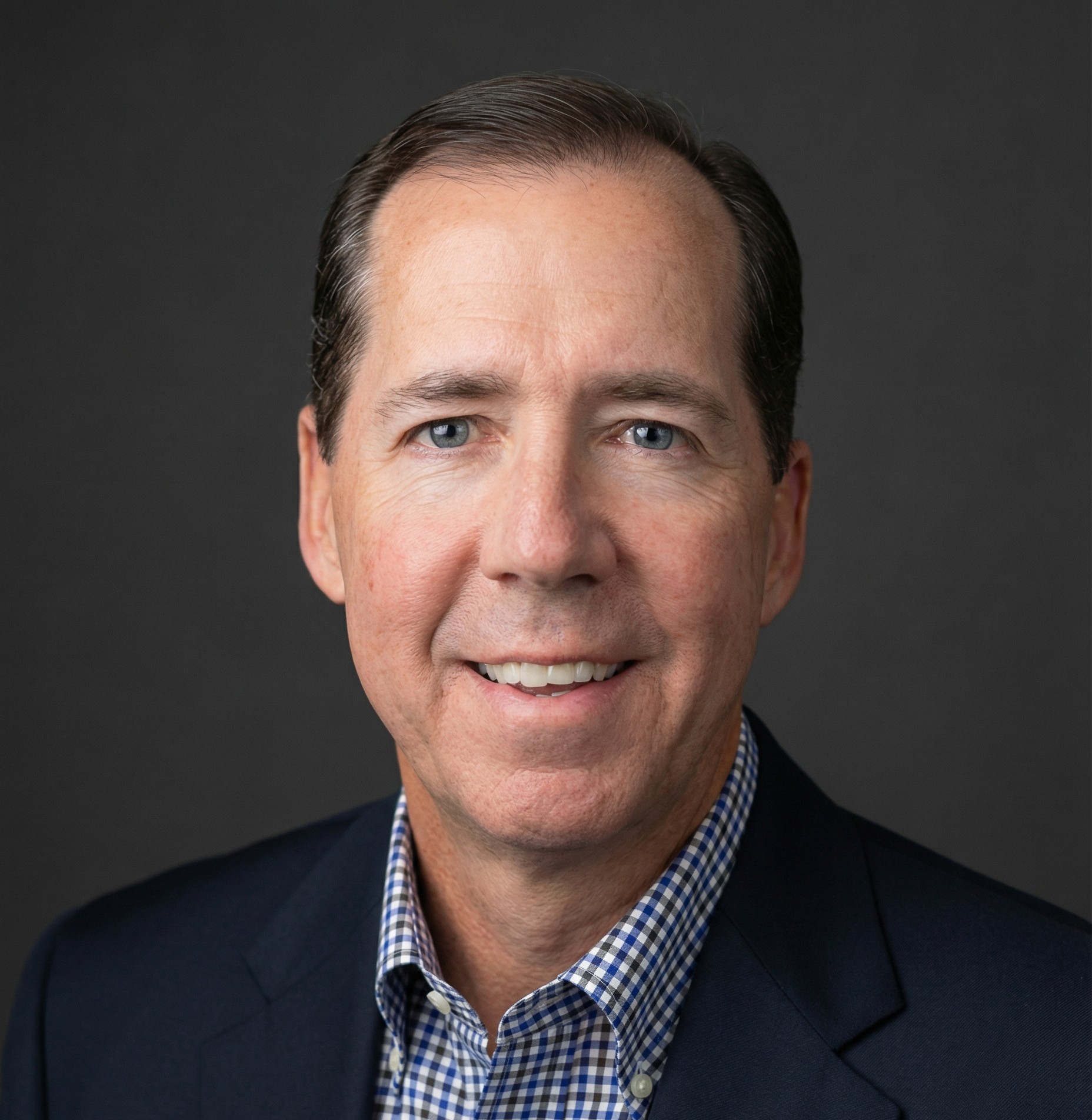
CEO of SonoVascular
Dan is the founder and CEO of SonoVascular, a clinical-stage company developing the SonoThrombectomy System, a combination therapy to treat venous and arterial thrombosis. He has over 35 years of global medtech experience, including business development roles at Johnson & Johnson, where he worked on deals that helped create the first drug-eluting stent, and six years leading Abbott's cardiovascular device business in Asia. In addition to leading SonoVascular, Dan serves as a Mentor-in-Residence at Duke University's New Ventures group.
Interview Summary
Daniel Estay is the founder and CEO of SonoVascular, a clinical-stage medical device company developing a catheter-based platform for the treatment of venous blood clots, including deep vein thrombosis (DVT) and pulmonary embolism (PE). The company’s SonoThrombectomy System combines ultrasound, microbubbles, and thrombolytic drugs in a single procedure — leveraging both mechanical and pharmacological mechanisms to enhance clot breakdown while reducing drug dose requirements.
Dan started his career in his family’s medical device distribution business in Latin America before moving into business development roles at Johnson & Johnson and Abbott. At J&J, Dan worked on deals that led to the creation of Cypher — the first drug-eluting stent. He later spent six years leading Abbott's cardiovascular device business across Asia-Pacific and Japan. After roles at Verathon and as a consultant, Dan relocated to Chapel Hill, North Carolina, where he encountered the academic research that would become SonoVascular.
The technology originated in the Joint Department of Biomechanical Engineering at the University of North Carolina at Chapel Hill and North Carolina State University. What drew him in was its dual-mechanism design — a philosophy shaped by his experience with drug-eluting stents, where pairing mechanical scaffolding with pharmacologic therapy improved both safety and efficacy.
SonoVascular’s approach combines ultrasound energy, microbubbles, and thrombolytic drugs in a single catheter-based approach, designed to combine mechanical and pharmacologic mechanisms in the treatment of venous blood clots while enhancing drug permeation.
The company completed enrollment in a 10-patient first-in-human feasibility study in Chile and has obtained six-month follow-up data on most participants. Following a pre-submission meeting with FDA, SonoVascular is preparing to submit an IDE application for a U.S. pivotal study for deep vein thrombosis. A second feasibility study for pulmonary embolism is planned for later in 2026.
Key Questions
How do you choose the right beachhead indication when your technology has multiple potential applications?
What signals indicate a market is large enough to support a venture-backed medtech company?
How should founders balance speed to first-in-human with maintaining data quality and regulatory rigor?
When should CEOs use convertible notes — and when is it time to move to a priced round?
Sponsor Message
Planning to raise capital for your medtech startup? This live, 4-week workshop, led by Medsider is designed to help founders and CEOs tell a sharper story, get investor meetings that matter, and close real capital. Join the waitlist here.
Top Takeaways
Screen for Differentiation, Then Validate Commercial Viability
When evaluating whether to commit to a new venture, Dan starts by asking a simple but difficult question: Is this truly differentiated? In his view, too many founders fall into herd mentality — chasing large markets simply because capital is flowing there. Instead, he looks for technologies that are meaningfully distinct and address real limitations physicians face today.
For SonoVascular, that differentiation came from combining mechanical and pharmacological mechanisms. But differentiation alone isn't enough. Drawing from his business development background, Dan evaluates opportunities across four dimensions of risk: technical, clinical, regulatory, and market. Founders often focus heavily on the first three while underestimating market risk. As a mentor at Duke, he often challenges faculty with a question: Is this big enough and commercially viable enough to attract investment dollars? He's seen promising clinical ideas that could help patients but were ultimately too niche to support a venture-backed path.
That framework guided how he positioned SonoVascular in its early days. While the underlying technology could evolve into a broader platform spanning both venous and arterial thrombosis, arterial applications would require greater miniaturization. Instead, Dan chose to focus first on venous thromboembolism (VTE) as the beachhead — a large, established market aligned with the device’s current capabilities.
➜ Differentiation is necessary — but market viability determines survival.
Screen opportunities across technical, clinical, regulatory and market risk. Evaluate whether the opportunity is commercially viable, large enough to attract investment, and accessible with your device’s current capabilities. Start where differentiation, engineering readiness, and market size intersect, then expand deliberately.

Trust Matters More Than Geography in Early Clinical Work
Dan selected Chile for SonoVascular's first-in-human feasibility study based on three criteria: speed, quality, and trust.
Speed was essential because, in a challenging fundraising environment, raising meaningful capital on preclinical data alone would be difficult. — especially for a novel approach that didn’t resemble traditional aspiration or basket-based thrombectomy devices. To sustain investor momentum, the company needed human data. But speed without quality wasn’t an option.
Dan partnered with a vascular surgeon he had known for decades and a small, trusted local CRO. That combination enabled rapid execution while maintaining strong clinical standards. The study site operated under GCP, and the team committed to a six-month follow-up on all patients — a critical component often overlooked in early feasibility work.
Patients were referred primarily from Chile's public healthcare system, where many would not otherwise have access to advanced interventional therapies. Referring physicians helped identify and screen candidates, and eligible patients were treated by experienced vascular surgeons at the study center.
Enrollment wasn’t perfectly linear. During the summer months, volumes slowed. But the CRO maintained close coordination — even arranging transportation to ensure patients returned for follow-up visits.
For Dan, the lesson was clear: geography is secondary to trust.
➜ Speed to first-in-human requires trust, not just regulatory access.
Move quickly — but not at the expense of data quality or follow-up integrity. For novel technologies, early human proof is critical to sustain momentum, but the data must be durable and credible. Long-standing relationships with responsive local teams matter more than geography. A well-chosen CRO can bridge distance and ensure execution when you can't be on-site.
Cap Table Strategy Requires Long-Term Thinking
Dan raised $10.3 million through convertible notes before his first priced round. Early on, the structure made sense — notes offered speed in a difficult fundraising market and allowed the company to keep moving.
But over time, those notes accumulated principal and accrued interest. What felt efficient in the moment eventually complicated the balance sheet. When it came time to raise a priced round, the overhang created friction and made some prospective investors uneasy.
As a result, converting all outstanding notes became a central objective of SonoVascular’s first priced financing round. The round was intentionally sized to reach key clinical and regulatory milestones rather than maximize capital upfront — small enough for Harbright Ventures, an existing investor, to lead without relying on external VC money.
The negotiation took longer and cost more than expected. What Dan initially thought would be a 30-day process stretched to 60-75 days as investor rights, voting rights, and liquidation preferences were negotiated in detail. Seeing those provisions translated into binding contract language made clear how consequential they were — and how long they take to resolve. Legal costs ran roughly double what he anticipated, though experienced counsel who understood market terms helped.
Dan encourages founders to pursue non-dilutive funding options — but as a supplement, not the foundation. Lead with private capital for momentum, then layer in grants. Solely relying on non-dilutive funding slows progress and can cost you the commercial window.
➜ Treat cap table strategy as a long-term decision, not a short-term funding tactic.
Convertible notes provide speed, but repeated use creates balance sheet complexity and investor hesitation. Transition to priced rounds strategically — and size it around meaningful milestones, not maximum capital. Expect term negotiations to take 2-3x longer than planned; investor rights and liquidation preferences require experienced counsel. Lead with private capital for momentum, then supplement with grants to avoid missing your commercial window.
Sponsor Message
After raising over $50M from corporate venture and cardiovascular key opinion leaders, FastWave Medical has progressed rapidly in the development of its next-generation intravascular lithotripsy (IVL) systems for complex calcific disease.
The market size for IVL is over $10 billion and the only player in the space was acquired for over $13 billion in 2024. So naturally, there’s a lot of investor interest in FastWave.
Given the continued demand to invest in FastWave, their team has opened up an investor waitlist for anyone interested in potentially owning a piece of the company.
The last time FastWave opened up a private placement, it closed $11 million in two weeks. So if you’re interested in investing in one of the hottest cardiovascular startups, opt into their investor waitlist here.
Chat with Scott
Ask ScottBot questions about this interview, key takeaways, or other medtech topics.