
Meeting Patients Where They Are
Meeting Patients Where They Are
Interview with Clairity CEO Dr. Connie Lehman
Interview with Clairity CEO Dr. Connie Lehman
Guest
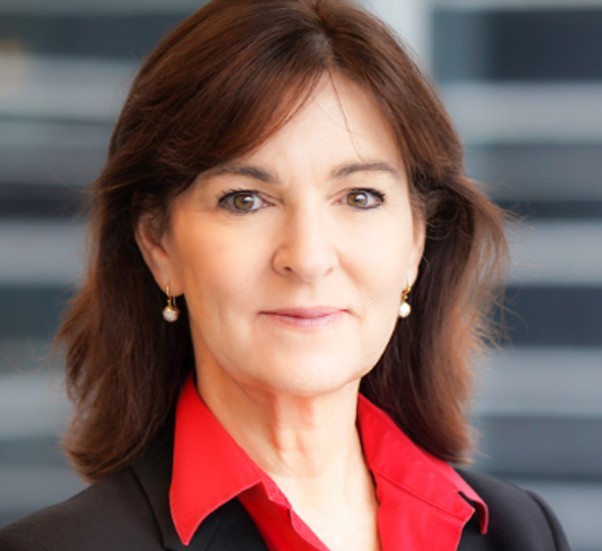
Connie is the founder and CEO of Clairity, the company behind the first FDA-authorized AI platform that predicts a woman's five-year future risk of breast cancer. A physician scientist with over 300 peer-reviewed publications, Connie is a Professor of Radiology at Harvard Medical School and Breast Imaging Specialist at Massachusetts General Brigham (on leave). She holds an MD and PhD from Yale and was named to Forbes' 50 Over 50 Innovators and TIME 100 World’s Most Influential Leaders in Health.
Interview Summary
Dr. Connie Lehman is the founder and CEO of Clairity, the company behind the first FDA-authorized AI platform that predicts a woman's five-year future risk of breast cancer using only a routine screening mammogram. Her training as a physician scientist, decades of research, and career as a radiologist formed the scientific foundation for Clairity, which she founded in December 2020.
The problem Connie kept seeing in her clinic was women falling through the cracks of screening. Existing clinical risk models identify, at best, 20% of women likely to develop breast cancer. Patients get missed because they're younger than the screening guidelines, or have no family history that flags them for elevated risk.
Clairity applies computer vision to the screening mammogram, extracting predictive signals that radiologists cannot see. The shift is conceptual as much as technical: instead of detecting existing disease, the Clairity Breast Risk Score predicts five-year risk in otherwise healthy women, opening the door to earlier screening and prevention.
Designed to fit existing care pathways, the product was validated on 75,000 mammograms across five centers for FDA submission, and has now been further validated in over 250,000 mammograms globally.
Clairity received FDA De Novo authorization in June 2025, was rapidly included in the 2026 NCCN national breast cancer screening guidelines, and closed a $43 million Series B in Q4 2025. The company initially launched at Beth Israel Deaconess Medical Center, with additional sites experimenting with scoring patients at the time of screening or running scores on prior mammograms. Self-pay is available while Clairity pursues a CPT code and payer coverage. A recent partnership with EverlyWell extends a direct-to-patient pathway for convenient access to Clairity’s technology.
Top Takeaways
Approach the physician-to-founder transition like a research grant. Physician-founders understand healthcare’s complexity, but academic training rarely covers FDA submissions, fundraising, or scaling. Start with clarity on the problem you’re solving. Then translate the same discipline that led to your strongest grants by assembling complementary expertise around a shared problem. Identify your gaps early and design your team around them from day one.
Creating a new category requires clinical rigor that can become your biggest moat. With no predicate, you can't borrow credibility; you have to earn it. Don’t be afraid to pursue a more challenging regulatory path, and let data define the product scope. If FDA struggles to understand your technology, bring in consultants who can help translate your science into something that’s easier to digest. Lean into clinical and regulatory rigor, because as it compounds, it turns into a standard that competitors must replicate.
Solve adoption through both clinical fit and patient access. On the clinical side, align with existing care pathways so you’re not asking physicians to change behavior or learn new workflows. For patients, build access creatively across multiple care settings, self-pay, and direct-to-consumer partnerships in order to reduce adoption friction. Patient behavior in healthcare is shifting; commercialization should meet them where they already are.
Sponsors
FastWave Medical: Named MD+DI's Company of the Year, FastWave is one of the hottest medtech startups in the cardiovascular space. See how you can invest here.
Medsider Fundraising Cohort: Planning to raise capital for your medtech startup? This live, 4-week workshop, led by Medsider is designed to help founders and CEOs tell a sharper story, get investor meetings that matter, and close real capital. Join the waitlist here.
Key Moments
03:04 The broken screening paradigm Connie saw in clinic — and the gap that became Clairity
05:09 How Clairity rolls the clock back from detection to predicting risk in healthy women
07:31 Why "more data is better" turned out to be wrong and how that shaped Clairity's product scope
21:57 How physicians can translate grant-generating discipline into building a company
24:56 What 18 months of pre-sub meetings revealed about navigating a de novo pathway
26:49 Why Clairity validated its technology in over 250,000 mammograms when FDA required far less
34:43 How Connie flipped the natural question from "how can doctors offer this?" to "how can women access it?"
43:47 How relationships, not pitches, drove Clairity’s $43M Series B
Chat with Scott
Ask ScottBot questions about this interview, key takeaways, or other medtech topics.
Full Transcript
Now we are working for a CPT code and for payment. This is 2026 as we continue to roll this out. We're now in a domain where there's an option for self pay so patients can pay for this test and have it part of their health care. But we want to move beyond self pay and into actually having this paid for and supported by insurers and other payers. Access and building access in creative ways for women is our theme.
Narrator:Welcome to Medsider, where you can learn from the brightest founders and CEOs in medical devices and health technology. Join tens of thousands of ambitious doers as we unpack the insights, tactics, and secrets behind the most successful life science startups in the world. Now here's your host, Scott Nelson.
Scott Nelson:Hey, everyone. In this episode of Medsider, we sat down with Doctor. Connie Lehman, founder and CEO of Clairity. Clairity is the first FDA authorized AI platform that predicts a woman's five year risk of developing breast cancer using only a routine screening mammogram. A physician scientist with over 300 peer reviewed publications, Connie is a professor of radiology at Harvard Medical School and breast imaging specialist at Massachusetts General Brigham. She holds an MD and PhD from Yale and was named to Forbes' 50 over 50 innovators and time 100 world's most influential leaders in health.
Scott Nelson:Here are a few topics we explored in this conversation. First, how to translate academic research into a viable company. Second, what does it take to build credibility in a completely new category. Third, how do you design a product to fit existing clinical workflows without diluting its differentiation? And last, what patient access model should you pursue before reimbursement exists?
Scott Nelson:Before we dive into the full episode, if you're a Medtech founder or CEO preparing to raise capital, you should check out the Medsider fundraising cohort. This four week live workshop combines small group sessions with real time feedback to help you sharpen your investor story, build a targeted investor pipeline, and run a focused fundraising sprint instead of a never ending slog. Over the month, you'll walk away with an investor ready narrative and deck, outreach scripts that actually get responses, a refreshed LinkedIn profile, a simple content plan that keeps you on investors' radar, and a repeatable system for running your raise. You can join the wait list at medsider.com/fundraisingcohort. Again, that's medsider.com/fundraisingcohort. Alright. Let's get to the interview.
Scott Nelson:Alright, Doctor. Connie Lehman, welcome to Medsider Radio. Appreciate you coming on.
Connie Lehman:I am glad to be here. Thanks so much, Scott.
Scott Nelson:And for the sake of this being a little bit more of an informal interview, I'll refer to you as Connie, if that's okay.
Connie Lehman:It's perfect. Thank you. It's my preference.
Scott Nelson:Yeah. Well, thanks again for coming on the program. Excited to learn more about not only your career, but also your journey, right, over the past handful of years, building Clairity. So with that said, I recorded a very abbreviated bio at the outset of this interview, but let's start with maybe like a one minute elevator style pitch on your background before before founding the company.
Connie Lehman:So I have spent my career as a physician scientist. I was fascinated by radiology, so I'm a breast imaging specialist. The power of imaging the human body really impressed me when I was going through my medical school training, and my PhD was in psychology. So it was sort of that interface of imaging of the brain, the human body, and then thinking about the importance of human behaviors. But when I then started to practice, my clinic was about finding breast cancer early before it could be felt, seeing the impact that that had, but also seeing what was broken about our screening paradigm.
Connie Lehman:And then starting to ask questions as a physician scientist on how we could address that. And eventually, that led to the AI image based breast cancer risk prediction and encouragement by lots of folks around me to found Clairity. So that's what brought me here today, really, with this company and a product that we are building access so more and more women can benefit.
Scott Nelson:Excellent. That's a perfect abbreviated kind of overview, and we'll certainly dig into more here as the as the conversation unfolds. But we're recording this in in Q2 of twenty six. For someone that's listening to this three, six months, maybe even a year down the road, I want to mention that just because that kind of sets the timetable, but it looks like you started the company. I'm looking at your LinkedIn profile, which we'll provide in the full write up on Medsider, but it looks like you maybe started the company kind of late twenty twenty. Do I have that right?
Connie Lehman:Exactly. December 2020.
Scott Nelson:Okay. Got it. So we're about, you know, a little bit over five years in the making here. The website is clairity.com spelled clairity.com. We'll link to that in full write up on Medsider as well, but clairity.com, clairity.com. For someone that's never heard of your company or is maybe loosely familiar with breast imaging, but doesn't know a lot about the technology, give us an overview of kind of like what it is and the major kind of clinical need that you're solving in comparison to the legacy standard of care?
Connie Lehman:Yeah, I think it's so important to start with the problem. And the problem in this space was the experience that I had again and again and again, where a woman would fall through the cracks despite screening. She would fall through the cracks because she was 36 years old and no one was going start screening her until she turned 40 or in some countries 50. She fell through the cracks because no one knew that she was at risk for developing breast cancer. The patient where I would share the biopsy results of cancer who would say, that's impossible. No one in my family has ever had breast cancer.
Connie Lehman:So that was a real problem because we do treat women differently when we know they're at increased risk. We know that screening mammography, which is good for average risk women, does not work in women who are at high risk alone. Women need more. Unfortunately, our existing risk models were only picking up at best twenty percent of women destined to develop breast cancer.
Connie Lehman:So that was the problem that we wanted to fix. And we realized that we could do that with the power of computer vision, the power of AI to extract predictive data from a woman's simple screening mammogram. A lot of work had been done in the past to have computers help a radiologist find an existing cancer, not miss it on the mammogram, so it started to detect and diagnose existing disease. We wanted to back the clock way back. We wanted to go back and say, what if rather than waiting until the disease is present to be diagnosed and treated, what if we went way back and we assessed risk and we prevented the disease from developing or we put those women at high risk into better screening, better cancer prevention paradigm protocols.
Connie Lehman:So that was what we decided to do. We trained our model to separate out the screening mammograms in women who developed breast cancer in five years from those women who did not develop breast cancer in five years. We really stood on the shoulders of the giants in the field of AI computer vision. The Fei Fei Li, godmother of the whole field of computer vision. Jeff, we can think of him as the godfather of everything that we're doing. Bringing that into healthcare to improve the lives of our patients was really exciting.
Scott Nelson:And talk to us a little bit more about the technology. So in addition to sort of computer vision and using some pretty sophisticated models, are you layering in like other clinical data about a patient as well? I mean, are you looking at like their blood panels, as an example? And is sort of an additional input into the model? Or is your, what you've built at Clairity solely specific to kind of the imaging aspect of this?
Connie Lehman:One of the pieces I really wanted to bring in to the heart and soul of the company was my passion and my respect for the power of research and science. So exactly that question, like, shouldn't we be taking more than just the screening mammogram as input into the model? What if we put all the information we have on women into the model? And it turns out both my lab and other labs studied this, and there is very little improvement in the predictive power from the mammogram when you added those other factors in.
Connie Lehman:Now, I think they will be important. I think we will continue to pursue it, but I think there's some reasons why it's not just, oh, more is better, because it's the quality of the data. And, you know, data that's in electronic medical records can be rife with errors. We all know that when we're practicing the field, we'll look and see, you know, one year a patient says she has two family members with breast cancer. Two years later, she said there are no members with breast cancer.
Connie Lehman:Sometimes it's the recording by the healthcare provider or by the patient or just different terms or the complexities of all of this information, all of this data and the accuracy of it. And the quality can vary also across different systems in how they collect that data. So, anyway, at the end of the day, if we had found that adding in age, number of pregnancies, menopausal status, if if those all helped the model be more performative, we would have included them, but it didn't. And we opted for pathway that was going to be very simple. It's gonna be automated, and it didn't require questionnaires, additional testing, etcetera.
Connie Lehman:Now there's gonna be a place where we find we can get, as you said, like biomarkers from a patient's blood that's gonna help us be even better. But right now, I'm really excited about the power of the image to predict a woman's future breast cancer risk. And it's an image that's taken routinely for her average, normal, standard of care breast cancer screening.
Scott Nelson:Got it. That's super interesting. Would have figured that there have been sort of a myriad of different inputs, but it sounds like what you're telling me is like the image is the thing right now at least, right? And that's maybe likely gonna evolve over the course of the next five to ten years and beyond. But the image like the answer, right? At least with your model anyway, that's really interesting.
Connie Lehman:I think it's that, it's that the power of the image. We probably are going to discover that we have two different categories of patients being diagnosed with breast cancer. The one group are those with the very strong family histories. Those are the inherited breast cancers and the genetic mutation patients. That's a very important subgroup of patients who are diagnosed with breast cancer.
Connie Lehman:And the others are those that to date we haven't been able to identify in advance, and we refer to those as sporadic. And likely, those breast cancers are born more out of environmental factors, modifiable lifestyle risk factors. One of the reasons why younger and younger women are being diagnosed with breast cancer, obesity is a risk factor for breast cancer, certain diets, exercise, alcohol, toxins in the environment. So I think what we're going to discover is that those impacts on the body are laid down in a record in the woman's breast tissue, and AI and computer vision can extract it from the mammogram because all of our bodies don't respond to the same stressors in the same way. And I think the image of the body records some of that impact.
Scott Nelson:Very interesting. And from a workflow perspective, how is this incorporated into a radiologist kind of existing environment? Right? So if I'm a radiologist at Brigham right in your neck of the woods, do I sort of go about my normal routine and this is just simply like another layer on top of that that helps me effectively do my job better?
Connie Lehman:Yeah. And, you know, since you mentioned Boston, so we have launched at Beth Israel Deaconess, and they are offering this to patients in their health system or ones outside. And so there's several different ways that one could put this into a workflow. And all of the centers where we're launching are experimenting with the different access points for their patients.
Connie Lehman:So one thing that I do wanna point out is when we were going through the arduous de novo authorization process with the FDA, we made it clear that we aren't having the radiologist accept or reject the validity of the risk score itself. That is what we do in the domains of computer aided detection and diagnosis where a flag is put on the mammogram. The radiologist has to make the call. Is that actionable or not? But we're in a different domain, and I consider myself a very good breast imager. I've done it my entire career. I can't look at a mammogram and produce a percent risk score of breast cancer in the next five years at any level. So this is really autonomous AI. It is supported by humans on either side of it. Talking to the woman of the importance of risk assessment, sharing the score and what she should do next, and guiding her through that decision making, guiding her through that process.
Connie Lehman:So with the workflow, it can either be added into an existing workflow or a breast imaging center already is collecting clinical data to provide women their clinical risk score. For example, it's Tyrer-Cuzick lifetime score, which asks all those questions about prior biopsies and age at menarche and how many pregnancies, did the woman breastfeed. So for those breast imaging centers that are already assessing clinical risk, they add this in and they can provide both data points to the patient, her clinical risk and her AI image based risk. And these risk scores are both included in the NCCN guidelines so they can see how they both, you know, can be used together. Other centers are saying, well, we aren't approaching this so much in our radiology workflow. We're actually trying to identify our high risk patients and bring them into our high risk clinics. And we want to do it in a more proactive, inclusive way than just asking about their clinical history so they can go into their PACS systems, pull out the mammograms, run the risk scores, and then reach out to those patients that are at increased risk and guide them for the more appropriate risk based care. So this score could be obtained on a mammogram that was obtained recently and the patient's gone home, you know, but maybe it was three or four months ago. It could be obtained at the time the woman comes in for a screening mammogram or it could be obtained one or two months later where she's glad that her mammogram is normal and everything's good, but she's curious about her future risk. Or maybe she got her mammogram report and it said, you know, you have dense breast tissue that puts you at increased risk, and she wants more precise information than just you're dense, you're not dense. So maybe she would be interested in having the Clairity Breast Score.
Scott Nelson:Okay, got it. And are you branding it in that sort of fashion, right? The Clairity Breast Score, is that kind of a, is that how you envision sort of patients maybe learning more about this, right? As we were talking about chat GPT right before I hit the record button, right? Is like, is this something that maybe someone, and again, not, obviously there's a lot to learn over that, as you begin to roll this out, but is that sort of like a future vision that you have as patients sort of like gravitate towards this clarity score?
Connie Lehman:Absolutely. I think this information is empowering. Women overall, we know are being missed by our traditional methods of identifying those women destined to develop breast cancer. And so we want women to be better informed. With that information, they can make decisions.
Connie Lehman:They can save their life. So if they are at average risk, it doesn't mean no risk. It means they'll continue to be screened for average risk guidelines. But if they're at high risk, they can consider adding MRI or contrast enhanced mammography to supplement the mammogram. They can also really be thinking more with their health care provider what they can do to reduce their risk and then check it the next year to see if those interventions have impacted their risk. There's so much being discovered of ways to reduce the risk of breast cancer and we see that we can play a really powerful role in that new development going forward. So it's an area of very exciting research and and development that we're excited to be part of.
Scott Nelson:Yeah. No doubt. You mentioned kind of the the the initial rollout at BI or Beth Israel in Boston just a few minutes ago. I think your de novo was about mid twenty five, almost a kind of we're coming up on a year ago now.
Connie Lehman:Yeah, 06/01/2025.
Scott Nelson:'25, okay. Over the next kind of twelve months, give the audience that's listening to this or reading this, I should say a sense of kind of where, you know, where the company's headed over the next year or so.
Connie Lehman:I couldn't be more excited for 2026. So we received the FDA de novo authorization 06/01/2025. That was a fantastic day. This creates a new domain in healthcare. So de novo means that there was no predicate, and now the field is open to take an image of the body, and in an otherwise healthy person, we're going to predict a future risk of disease.
Connie Lehman:So radiology is not only going to be absolutely centered on detection and diagnosis of disease and tracking response to treatment, but we're gonna roll it way back and have radiology at the center of risk assessment and disease prevention. Could not be more excited that this new field, a new domain is now recognized by the FDA. Then we moved forward, we submitted to the NCCN for the national guidelines on how to screen for breast cancer. And those guidelines include how to assess a woman's risk. They're now in the twenty twenty six national guidelines.
Connie Lehman:So AI image based five year risk prediction is part of those those recommendations. Now we are working for a CPT code and for payment. This is 2026. Continuing to roll this out, we're now in a domain where there's an option for self pay so patients can pay for this test and have it part of their health care. But we want to move beyond self pay and into actually having this paid for and supported by insurers and other payers. Building access and building access in creative ways for women is our theme. That's really what this year is about. And then since I took on the role as CEO mid January, it's really resetting our company and resetting our team to be built for scale, which is the theme of 2026.
Scott Nelson:Yeah. I love it. Building access creatively, right, for eventual scale. Like, I I love it. So with that said, let's spend the next twenty, twenty five minutes kind of going through kinda going back in time. Right? And learning a little bit more about your journey building the the company and getting to the stage, which is which is no easy feat, especially but a de novo is no no easy feat, let alone, know, in a completely kind of novel arena. So huge congrats to your team, but I want to learn a little bit more about how you got here.
Scott Nelson:So first topic is kind of your transition from practicing physician in an academic institution to founding a company. Mean, usually doesn't come easy for most people. And so when you think about what you've learned kind of making that transition, are there a few kind of things that come to mind, right? Or, you know, and maybe frame this up for other physicians or academics that have this, what they think is an idea that could eventually become a company. What words of wisdom would you offer up to those folks?
Connie Lehman:It's a great question. I always start because others in the field and actually a lot of incredible women in the field will say it's not as common for a woman in academic medicine to found a company. When we actually look at the research and the data, it's just a much more common pathway for male physicians and physician scientists to to found companies. So I love it when they ask me, you know, how did you decide to do it? And two things.
Connie Lehman:One, start with the problem. Be crystal clear about the problem that you are attempting to address. It's so tempting to start with the product, the idea, this really exciting thing that you know you can develop, but make sure you understand the problem because so much follows after that if you're very clear on the problem. And then the second part is, as a physician, you bring so much into founding a company because you understand the problem. You understand the challenges in the health system.
Connie Lehman:You understand why things can move slowly in health care systems and all of that knowledge sets you up so well for success. And also choose wisely your partners to fill the gaps that you don't have. You haven't submitted to the FDA. You don't know the regulatory processes. You haven't taken a company to scale or really understood the different commercial pathways.
Connie Lehman:It's so different to build something or create something in a lab, in the research environment. When you're building product to scale out in the clinical environment, you really have to start from day one because you can't retrofit it. You know? So you really wanna start from the beginning, choosing your partners wisely, filling in the gaps where you don't have the knowledge, and then going from there.
Scott Nelson:The kind of the latter latter points you mentioned making sure that you have enough humility to know who to bring alongside you, right? It seems like that comes up again and again with physicians that I have on the program that have kind of gone from founder to effectively effective CEO, right? Is this ability to kind of be self reflective and say, look, to your point, I haven't ever submitted to FDA let alone for a de novo as an example, right? Like I need to find and identify the right partners to bring alongside me. I may have a ton of domain expertise which is really, really unique with respect to the problem, how it fits within the existing workflow. But to know like there's other gaps that I need to solve for and I don't have the expertise and I need to bring those folks alongside.
Connie Lehman:Yeah. And also I'll tell people, you know, the physicians, especially if they come from academic medicine, just take all that knowledge that you developed as a physician scientist where you know in the research studies you were doing, for example, in breast cancer, you needed a multidisciplinary team. You're a fantastic radiologist, but you didn't know breast cancer surgery at the level that your colleague did, or epidemiology at the level your colleague did. So you brought them in as co investigators to have the strongest grant that could get the funding to do the work you needed to do. So just translate all that into your company. What's your multidisciplinary team? Who are your co investigators? Put all of that in and build that team that can move your vision forward.
Scott Nelson:Yeah. That's that's a really great way to frame it up. Think for a lot of a lot of physicians or academics that are used to that sort of environment within within as it pertains to like, you know, a grant or, you know, leading a a significant trial. Right? But that's a great way to frame it up.
Scott Nelson:The other thing that you mentioned that I think is worth highlighting it. It's easier I think said than done, but I think it's whether you're a physician or whether you're just an engineer or an entrepreneur with some other background, it's easy to get caught up in the idea. Right? And all of the new features that you want to add to your idea. And if you don't wanna call this idea creep if you will, right? But kind of re centering on the problem and making sure that's front and center in every decision you make, I think is just so, so crucial. And it's, again, a lot, it seems straightforward, a lot easier said than done, but I think it's definitely worth emphasizing. Glad you brought that up.
Scott Nelson:With that said, Connie, let's transition to kind regulatory and clinical. And we talked about the de novo from summer of 'twenty five in a brand new area. That is not an easy thing to accomplish with FDA. I'm sure you got a whole host of questions from reviewers throughout that process. When you think about navigating that, especially as a first time CEO, what are some of the more critical lessons that you learned along that journey?
Scott Nelson:Hey everyone, let's take a quick break to talk about Fastwave Medical, the company I co founded and lead a CEO. We're developing next generation intravascular lithotripsy, or IVL, systems to tackle complex calcific disease. Over the last few years, we've closed a series of oversubscribed funding rounds, bringing the total investment into Fastwave to over 50,000,000. Corporate interest in the IVL space is growing too. The $900,000,000 acquisition of Bolt Medical by Boston Scientific in 2025 and Johnson and Johnson's $13,000,000,000 acquisition of Shockwave Medical signal a lot of attention on emerging IVL startups like Fastwave. And we're making serious progress. In addition to recently receiving our ninth patent, we've successfully completed peripheral and coronary feasibility studies and are gearing up for pivotal trials. If you're interested in investing in the fast growing IVL market, head over to fastwavemedical.com/invest. Again, that's fastwavemedical.com/invest. Now let's get back to the conversation.
Connie Lehman:Well, I think probably eighteen months that we spent in a pre submission phase with the FDA. Once we realized with the FDA, there was no predicate, it absolutely was going to be under FDA regulation, so we did need to have the product evaluated and authorized by the FDA. Once we realized that and we started the meetings to go through what was going to be expected from the FDA, and that that is a long process with a de novo authorization. It's worth it, but it's a long process. And I think you mentioned this before, having some humility.
Connie Lehman:You have to go in respecting the expertise that the members of the FDA committee are bringing into the domain, and they want this to work. I mean, they're excited. They're not putting their time in the de novo authorization if they don't think it's important and necessary and it's gonna help patients. And so that needs to be there. I also think it's remembering that it's a little bit like if you travel and you go to another country, they use words differently. They might drive on the other side of the road. They say one thing, I think it means something, but they mean something else or these nuances. So the FDA world is different than the scientific world. We would use the same words, I would realize later, oh, I think I think they mean something a little bit different.
Connie Lehman:I would think of the Princess Bride. It's like, I do not think that word means what you think it means. It's one of my favorite quotes. So so there was there's a lot of that, but I'll tell you, it was really exciting as we walked through it. Felt like we just we're living in this historical moment where it's like, well, wait. Hold on. Talk to us about autonomous AI. How is this going to be possible that we're going to have the computer say this woman's risk is three percent in the next five years, and a physician can't say, yep, that looks right, or that doesn't look right to me. So how's that gonna happen? Well, it's gonna happen because of the strength of the science.
Connie Lehman:So for the detection, diagnosis, radiologist does have the final call. Those studies, 240 mammograms heavily enriched with cancers, read by a dozen radiologists with and without the marks. For our study, over 75,000 consecutive mammograms from five distinct centers that had not participated in the model training or evaluation, a diversity of patients, no radiologists saying thumbs up comes down to the scores, and five year clinical follow-up with ascertainment of who developed breast cancer and who didn't. So that's a high bar, that's strong science. Besides the clinical validation study with the FDA, we went beyond that. We went to a global, very large database.
Connie Lehman:And so this has been validated in over 250,000 mammograms with five year follow-up. So I think that walking through the questions and both at the FDA and on our side, the strength of the science and the strength of the research was just really critical. One, I think, sort of a funny story was, my friends that were in very large companies like GE and Siemens. And I would see them, and they'd say, oh, how's it going with the FDA? It's so great you're doing that. It's really exciting. We're so happy for you. And then after we got the de novo authorization, they're like, We didn't think you had a chance of getting through on that. Like a de novo authorization, You can't even get it. I was like, oh, okay. I'm gonna remember that. Next time, they're all, no, Connie. You know? They're really going, like, old, small startup, little series a. Yeah. Good luck with that. So, anyways, it's pretty fun.
Scott Nelson:Yeah. They got a retrospective glance at kinda what they were really thinking. Right? When you'd mentioned that you were going on this path early on, that's funny. The idea of kind of going above and beyond, right? You mentioned you kind of, you took sort of this data, clinical data validation and kind of expanded upon that. Is that something that FDA asked for? Is that sort of like what you felt was needed in order to sort of, you know, further reinforce how legitimate or credible the the the data was?
Connie Lehman:Yeah. The FDA did not ask for that. It's what I felt was needed. And also when I started Clairity, I formed a Clairity Data Consortium. And these were friends and colleagues that are thought leaders in the field from Germany and South America, North and South, East and West, US, all over.
Connie Lehman:And when we joined in together, we were all united in the vision, the mission, and our really pursuit of excellence through rigorous science and research and using that discipline. So so this was outside of what was required at the FDA, but we had for example, at our large international meeting in radiology in Chicago, we had seven of our research studies outside the FDA presented with all kinds of questions being asked and answered with very large global databases.
Scott Nelson:Okay. Got it. It's interesting. I had, Kurt Jacobus on recently on the program. He's the, CEO of restor3d and they're doing personalized 3D orthopedic implants.
Scott Nelson:I mean, although he's been, he's founded multiple Medtech companies over the past twenty years, he's a PhD, right? So he initially came out of the academic world. And he mentioned something, especially considering they're operating too in a pretty novel category, right? Personalized 3D printing for orthopedics. But he mentioned the way they kind of approach a submission is thinking about it like a thesis, right? Like a PhD thesis. And even though maybe some would argue that they're kind of going, they're doing almost too much, right? Or they're going above and beyond. He kind of pointed to that as one of the reasons they've been able to garner a lot of trust with FDA is because of their approach. It sounds like you took, you kind of got down that, you had a similar type of thinking around your engagement with the agency as well.
Connie Lehman:Absolutely. And back in the day in 1998, the FDA provided clearance of the first CAD detection tool. So it made flags on the screening mammogram to help the radiologist evaluate the mammogram. And and the the clinical validation study was fairly limited, as I described earlier. And so once it was out in clinical practice, I was working with the Breast Cancer Surveillance Consortium and we wondered, well, now that it's out being used, how is this working?
Connie Lehman:What's the impact? And it was very discouraging, and I published the paper several years after it started being used at community practice that radiologists weren't actually being helped by the CAD tools. And, I didn't make a lot of friends with the groups that were very enthusiastic about those products and the companies that had developed them. So I thought, you know, I've gotta make sure now that I'm on the other side of this, going through an FDA process, really feeling confident of the impact this can have for patients that I don't sort of say one thing and do another. Right? So I wanted to make sure we put a very high bar up, for others that would come along with similar types of products to assess risk in in an individual woman.
Scott Nelson:Yeah, I wanna get to the side, kind of how you're thinking about adoption, right? And overcoming some of the inherent friction that occurs with new technology like you're developing at Clairity. But before we get there, one of the other things that you mentioned too was the framework of how you engaged FDA, right? And you mentioned like the folks on the other side of the table at the agency are generally excited about, especially if it's something new, right? And sometimes I think for us that have been have some scars, right? I'll put it that way. Right? That have been around a bit. It's easy to kind of like, we're going to submit and it's going be sort of a competitive type of engagement, right? Like, Hey, we're to go head to head with FDA.
Scott Nelson:I think it's a mistake, right? I mean, like the people on the other side are humans first and foremost. And they're there typically because they actually do want to see new technology come to market the right way. And so I'm glad you mentioned that because I think some of us it's easy to forget about that and it's maybe a healthy reminder for others that are about to submit something. It doesn't have to be combative, right? You might wanna take a step back and kind of rethink your approach with the reviewers that are gonna embark upon your submission.
Connie Lehman:I totally agree. And it's also sort of creating your own reality. If you're going into it saying, we're gonna partner with the FDA, we're gonna work with them. There was one point where I started to realize we are not speaking the same language, but then I also realized, well, who does speak this language? We had an incredible consultant, expert biostatistician, bringing him in, having him speak directly with the FDA biostatistician changed everything because they spoke the same language.
Connie Lehman:They understood each other, and there there didn't need to be that same sort of translation happening. So I think but going in with a you know, we're all trying to figure this out together and a lot of respect on both sides. I I think it it it makes your life easier too. Not that it's not stressful. Not that I didn't feel like every time they said, oh, this is good. Let's schedule another meeting. I didn't see another pile of cash go shoot up on fire in the front yard. But but, you know, you get through it.
Scott Nelson:Yeah. Yeah. And I yeah. And I don't wanna pretend. Right? That it can be it can be frustrating and challenging, but we're working from like just a kind of having a healthy perspective, right? And going into it with sort of more of a positive mindset versus a negative one and looking for the problem, like being a problem, approaching it from a problem solving perspective. Right? Like you just mentioned that the the biostats example. Right?
Scott Nelson:That's a great that's a great analogy. Right? Clearly, was something there were some challenges there, but it ultimately just it just meant finding finding someone that could speak speak the language of kind of where FDA was getting caught up. I'm paraphrasing obviously without a ton of details, but I think that's just a really important point to mention for other Medtech CEOs that either are new to kind of regulatory submissions or kind of going through for the first time.
Scott Nelson:So with that said, let's jump to adoption Connie. Cause you mentioned, fifteen, twenty minutes ago, earlier on in the conversation that Beth Israel is experimenting with a couple of different options, right? Whether it's adopting Clairity for new screenings, whether it's going back retrospectively and looking at previous mammograms, etcetera. How are you thinking about kind of trying to solve for these various ways in which other physicians and practices and hospitals can adopt this technology and really trying to kind of help them overcome, you know, some of the friction or pushback that you inherently kind of run into with newer technology like this?
Connie Lehman:The first part is I wanted to develop this product that fit into an existing care pathway. I thought to both have a new product, especially when AI is involved, and then say, here's a new way we're going to screen pay. You know? I thought that could be really hard for people to wrap their brains around, but we have existing pathways for if you are assessed at higher risk, this is what you should do. If you're average risk, that is what you should do.
Connie Lehman:So we're gonna fit right into that. I think that's why we were accepted into the national guidelines for screening so rapidly because the pathway existed and then the power of our science to show this is a really good way to find women at increased risk who can now have access to those pathways that have been established. So then that was a big box to check, but then it's like, so now how do women get access to this? And I always like to start with the patient. I think sometimes we're saying, well, how can doctors offer this?
Connie Lehman:But I flip it around a little bit. How can women access it? It's one of the biggest problems most of us is patients face getting access. Know, I needed to reschedule my primary care visit in April, and the next opening was November. And I'm, you know, I'm a physician at Mass General, but that's that's the world. Right?
Connie Lehman:And that's when people are needing health care and the access can be so challenging for all kinds of reasons. So so how can women access this information that can be lifesaving? They can when they if it's available at the breast imaging center, they can request it, and that can be added into the order for their screening mammogram, and that information can be provided to them. I also think there are pathways the women own their mammograms.
Connie Lehman:Patients own their images. I think there are pathways where the woman could say, you know, I want this and there's another pathway. Can't stress enough. There is very clear boundaries that the FDA has set on how this can be provided. An order by a health care provider doesn't need to be an MD, but a health care provider.
Connie Lehman:An order must be submitted for a Clairity Breast Risk Score. The score is run, and a health care provider provides this back. Now that method can be based on the health care provider and the health system's decision making around how they share information with their patients, but that's where the humans are engaged in this AI cycle that we have. But I think there are a lot of ways and a lot of these companies, the Everlywell, for example, with Julia Cheek saying, oh, a lot of people are really having a hard time getting access to diagnostic testing and health information. Maybe there's a different way.
Connie Lehman:So we're really excited about those partnerships, the Clairity Everlywell solution so that patients don't have to wait until this is launched at the health system, the brick and mortar building in Kansas or in North Dakota or in Utah. They could access it through an EverlyWell pathway where they have access to health care providers, and we can build access for how we can get their image and get their score back to them.
Scott Nelson:Got it. I think I missed that in in our research, so I didn't realize that you had it sounds like you have an existing partnership with with Everlywell.
Connie Lehman:Well, you probably missed it because it's hot off the press. Okay. We're just thrilled with that. And by the way, Scott, that's one of the things I'll check-in with later because we've signed the contract. Our launch meeting is tomorrow.
Scott Nelson:But just to touch on that, like for those that aren't familiar with Everlywell, really like I would say more prominent brand in sort of the in home diagnostics kind of arena. And so that's very cool that hopefully maybe we can incorporate this into the interview that you have a partnership, right? Because it's, would be big from a kind of an awareness and access perspective for a lot of patients.
Connie Lehman:I hope we can include it. So I'll actually, I can find out and then shoot you a note. But let's have a little conversation about it assuming that we can and then we'll figure that out later if you wanna to.
Scott Nelson:Yeah. Yeah. Def definitely. And I I think it's it's really interesting because if if someone was hearing about Clairity for the first time, they think it's very sophisticated, you know, technology incorporates, you know, very, you know, very intelligent AI models, etcetera. And then you're partnering with this kind of this, I would say more kind of consumer facing diagnostic company and Everly well. And I think that just speaks to kind of where we're at with healthcare, right? More and more patients, especially with the proliferation of LLMs are going to GPT. They're going to Perplexity. They're going to Claude. They're going to Gemini first. Right? And actually in a lot of cases those LLMs are turning around some pretty good information. And I think it's just really, really important for all of us in the world kind of Medtech and healthcare to keep that in mind, right? Even with sophisticated technology, you know, there's still very much a patient, you know, kind of consumer patient play here, you know?
Connie Lehman:I couldn't agree more. And what I think some really smart people in the field realize is there's a real problem. And the problem is is that patients can't get access to health information. They can't get access to testing that they need. And there's better ways for us to build and provide access than the, you know, brick and mortar hospitals that are scattered across the country.
Connie Lehman:I mean, there are people that live in health deserts in rural communities where they just they just don't have access. And these direct to patient pathways can really be the great equalizer. So many groups are doing this in smart ways, in evidence based ways, in ways that isn't going to degrade the quality of the care that these patients have access to.
Scott Nelson:Yeah. I'm really glad that you're the one saying this because obviously you're you're really respected, prominent physician in your own right. Now CEO of a, you know, of a very, again, a company that's on the verge and developing some pretty novel technology. And you're also saying, no, look, mean, we gotta open up, we gotta figure out different ways for patients to get faster access because there's a real need here. And if we kind of continue not, if we continue to not think creatively or to go down more traditional paths, the problems are only gonna get worse.
Scott Nelson:So, I'm glad you're the one. It's one thing for me to say that, right? But I'm not a physician and I don't have the sort of the pedigree that you have, but an entirely different thing for you to kind of be banging on the same drum to say, hey, look, there's ways to go about this the right way, and it's needed, right? We shouldn't just say, hey, like direct to patient and direct to consumer doesn't work, or we shouldn't approach that. I mean, we should be thinking about that.
Connie Lehman:A 100%. I can't agree more. And it's always so interesting to me. There's something about the prototype of the person that is willing to go through all the delayed gratification, the steps you have to go through to go through med school and residency training and and all that, that that doesn't always, always allow them to keep their innovative, creative spirit, their curious mind open because so much of medical training, unfortunately, still is about memorize and regurgitate. Even those systems are trying so hard to move away from that.
Connie Lehman:And so we have to then shake that off a little bit and go back to our earlier minds that were innovative and creative and curious and say, well, what would it look like to do this faithfully? What might that world look like? I'm always struck by how comfortable and complacent we are with lack of change and how fearful we are of change. I would think everyone's hair was on fire for the health care crisis we have in The US right now. Would just think they're saying, we gotta totally rebuild this because we have by far the most expensive health care in the world, and we do not have the best outcomes, and patients cannot access high value, low cost, affordable health care.
Connie Lehman:There's nothing to feel good about that in US health care, and there's so much we can do. And and I think it's one of the biggest strengths of AI applied to health care. We can solve one of our biggest problems, and do it with precision and do it with science. So really hopeful about that.
Scott Nelson:Yeah. No. I'm glad. I'm again, I'm kinda glad. You're speak you're speaking my language, you know, in essence. Right? No. Sorry. Couldn't I couldn't agree more. Looking I'm at the clock, I don't wanna be sensitive to your your schedule because I know you've got a, yeah, a pretty pretty jammed calendar as the as the CEO of a of a company that just came off a pretty significant fundraise, which is one of the topics I wanted to I wanted to tackle before the the rapid fire portion of this interview.
Scott Nelson:So quickly on fundraising, closed your series B late last year, or at least it was announced late last year. I think my notes show it was a $43,000,000 raise, which is a big, a very significant round. And so when you think about what you know now about fundraising versus, you know, maybe, you know, four or five years ago when you were kind of raising some pre seed and seed seed money for Clairity, anything stand out or, you know, what are the, you know, maybe one or two of the the the biggest lessons you you've learned?
Connie Lehman:You know, I'd say that one, like, know the audience. Know who it is you're pitching to. All of us in, you know, positions, we go and give talks. We wanna know, am I talking to a lay audience? Am I talking to, you know, PhDs, MDs, highly specialized general?
Connie Lehman:And then we develop our pitch, to those audience for that. So the the same thing. Know the VC group that you're talking to or the potential investor. Know them and really develop that that story of the problem you're solving and how you're solving it. And know know your details. It takes hard work. Like, get get the details down and and and know that. So I think all that prep, anyone could read about it. If there's anything I would pull out, my basic superpower is all about relationships. You know, it's really about the relationships.
Connie Lehman:And I think, you know, when I go back in my brain, all of the investments that we've had, both for our series a and series b, it came back to actually a relationship. And that was the thread that was followed for a current investor to tell one of their friends, we're really excited about this. You may wanna hear about it too. So I think that's important as well to really ask, you know, the people that maybe aren't gonna invest this time, but know some other people that might be interested. Just continue to pursue and and leverage the value of relationships.
Scott Nelson:Yeah. That's such an important point because you you you often hear so many noes in the fundraising process, but but I think it's just really important to realize that that no may not be because that VC or that investor is not interested in the technology. Maybe they're just not at a point with their fund where they can write a $1,520,000,000 check. However, they may know a lot of people, Right? And so if you're impressive, even with a no, that's not necessarily a bad thing because you don't know who that investor is going to be talking to a week from now or two weeks from now when they see their close friends at a conference.
Scott Nelson:So I just think that's a really important point to remember. Know we've only got a few minutes left, Connie, but I want to get to the rapid fire portion of this interview. But again, everyone listening, clairity.com is the website, clairity, clairity.com. Highly encourage you to check out this technology. We'll link to it in the full write up on Medsider, and I'll try to be fast with these rapid fire questions.
Scott Nelson:You already mentioned at the outset of this interview, which I'm glad we kind of tackled it there. What you're most excited about at Clairity over the next twelve months. But what's the one lesson that you think every Medtech entrepreneur that's listening to should really should really comprehend or really understand in order to see maybe some semblance of success at their their own venture?
Connie Lehman:You know, it it may sound overly simplistic, but a guiding principle throughout my whole life is just that know thyself. Like, back to the ancient Greeks, you know, You have to be true to yourself. Everyone's gonna try to tell you who you are, and everyone's gonna try to tell you who you should be. But know yourself. Know your strengths.
Connie Lehman:Be true to yourself. You know? Shakespeare said, can't be false to any man when you when you're true to yourself. So I just think it's really important. Also think it's important when someone's going into it and they don't look like the entrepreneur, that they don't seem like your classic CEO. I just think staying true to who you are.
Scott Nelson:That's good. All right. Any lesson or anything that you'd whisper in the ears of the younger version of yourself? Maybe take us back to either your med school days or maybe you're early on in your career as a practicing physician. Any words of advice to the younger Connie?
Connie Lehman:I think I just whisper, you've got this, you know, because we can go through those phases of self doubt, you know, and just be like, oh, come on. You've you've got this. You know who you are. You've got this. It can be hard sometimes to tune out the voices that are saying, you don't have this, you know, and especially when we're trying to do something at a higher level. We're pushing ourselves. I love Jim Collins, his new book, the that really talks about the cliff, the fog, the fire. I think just remembering that when you're going through those phases, just know that, you know, you've got it. You're gonna get through it.
Scott Nelson:That's good stuff. Good way to wrap up the conversation. For everyone listening again, clairity.com is the website. Highly encourage you to check out the technology even if you're not a female, but you likely know some females in your life that would probably appreciate knowing a little bit more about this new diagnostic technology that's now available. So clairity.com, clairity, clairity.com. We'll link to it in the full write up on Medsider. But Connie, thank you enough for covering up some time to do this interview. I really appreciate it.
Connie Lehman:That that was so much fun. Thank you so much. And I appreciate it. We're excited for the coming year.
Scott Nelson:Yeah, absolutely. Lots to be excited about. No doubt. I'll have you hold on the line, but for everyone listening, appreciate your attention as always until the next episode of Medsider goes live. Everyone, take care.
Scott Nelson:Hey. It's Scott again. One quick thing before you go. You see, I love bringing you insightful conversations with the best founders and CEOs of medical device and health technology startups. But here's the thing.
Scott Nelson:I'd be super grateful if you could help me reach even more ambitious doers who share our passion. So if you found value in this podcast, if you found yourself nodding your head while listening, or if you simply enjoy what we're doing with Medsider, please take a moment to leave us a review. It's super easy. Just open your Apple Podcasts app or the podcast app of your choice, search for our show, and scroll down to the ratings and review section. Leave your honest thoughts and hit that five star rating if you think we're worthy.
Scott Nelson:Your feedback is incredibly important, it's the best way to ensure we keep bringing you awesome discussions with leading founders and CEOs. So take a moment to be a good friend and leave that review today. As always, thanks for being a part of our journey and for helping Medsider continue to grow and evolve. Your support is greatly appreciated. Alright. Enough talk about reviews. Stay tuned for another informative episode coming at you soon.
Read More
Now we are working for a CPT code and for payment. This is 2026 as we continue to roll this out. We're now in a domain where there's an option for self pay so patients can pay for this test and have it part of their health care. But we want to move beyond self pay and into actually having this paid for and supported by insurers and other payers. Access and building access in creative ways for women is our theme.
Narrator:Welcome to Medsider, where you can learn from the brightest founders and CEOs in medical devices and health technology. Join tens of thousands of ambitious doers as we unpack the insights, tactics, and secrets behind the most successful life science startups in the world. Now here's your host, Scott Nelson.
Scott Nelson:Hey, everyone. In this episode of Medsider, we sat down with Doctor. Connie Lehman, founder and CEO of Clairity. Clairity is the first FDA authorized AI platform that predicts a woman's five year risk of developing breast cancer using only a routine screening mammogram. A physician scientist with over 300 peer reviewed publications, Connie is a professor of radiology at Harvard Medical School and breast imaging specialist at Massachusetts General Brigham. She holds an MD and PhD from Yale and was named to Forbes' 50 over 50 innovators and time 100 world's most influential leaders in health.
Scott Nelson:Here are a few topics we explored in this conversation. First, how to translate academic research into a viable company. Second, what does it take to build credibility in a completely new category. Third, how do you design a product to fit existing clinical workflows without diluting its differentiation? And last, what patient access model should you pursue before reimbursement exists?
Scott Nelson:Before we dive into the full episode, if you're a Medtech founder or CEO preparing to raise capital, you should check out the Medsider fundraising cohort. This four week live workshop combines small group sessions with real time feedback to help you sharpen your investor story, build a targeted investor pipeline, and run a focused fundraising sprint instead of a never ending slog. Over the month, you'll walk away with an investor ready narrative and deck, outreach scripts that actually get responses, a refreshed LinkedIn profile, a simple content plan that keeps you on investors' radar, and a repeatable system for running your raise. You can join the wait list at medsider.com/fundraisingcohort. Again, that's medsider.com/fundraisingcohort. Alright. Let's get to the interview.
Scott Nelson:Alright, Doctor. Connie Lehman, welcome to Medsider Radio. Appreciate you coming on.
Connie Lehman:I am glad to be here. Thanks so much, Scott.
Scott Nelson:And for the sake of this being a little bit more of an informal interview, I'll refer to you as Connie, if that's okay.
Connie Lehman:It's perfect. Thank you. It's my preference.
Scott Nelson:Yeah. Well, thanks again for coming on the program. Excited to learn more about not only your career, but also your journey, right, over the past handful of years, building Clairity. So with that said, I recorded a very abbreviated bio at the outset of this interview, but let's start with maybe like a one minute elevator style pitch on your background before before founding the company.
Connie Lehman:So I have spent my career as a physician scientist. I was fascinated by radiology, so I'm a breast imaging specialist. The power of imaging the human body really impressed me when I was going through my medical school training, and my PhD was in psychology. So it was sort of that interface of imaging of the brain, the human body, and then thinking about the importance of human behaviors. But when I then started to practice, my clinic was about finding breast cancer early before it could be felt, seeing the impact that that had, but also seeing what was broken about our screening paradigm.
Connie Lehman:And then starting to ask questions as a physician scientist on how we could address that. And eventually, that led to the AI image based breast cancer risk prediction and encouragement by lots of folks around me to found Clairity. So that's what brought me here today, really, with this company and a product that we are building access so more and more women can benefit.
Scott Nelson:Excellent. That's a perfect abbreviated kind of overview, and we'll certainly dig into more here as the as the conversation unfolds. But we're recording this in in Q2 of twenty six. For someone that's listening to this three, six months, maybe even a year down the road, I want to mention that just because that kind of sets the timetable, but it looks like you started the company. I'm looking at your LinkedIn profile, which we'll provide in the full write up on Medsider, but it looks like you maybe started the company kind of late twenty twenty. Do I have that right?
Connie Lehman:Exactly. December 2020.
Scott Nelson:Okay. Got it. So we're about, you know, a little bit over five years in the making here. The website is clairity.com spelled clairity.com. We'll link to that in full write up on Medsider as well, but clairity.com, clairity.com. For someone that's never heard of your company or is maybe loosely familiar with breast imaging, but doesn't know a lot about the technology, give us an overview of kind of like what it is and the major kind of clinical need that you're solving in comparison to the legacy standard of care?
Connie Lehman:Yeah, I think it's so important to start with the problem. And the problem in this space was the experience that I had again and again and again, where a woman would fall through the cracks despite screening. She would fall through the cracks because she was 36 years old and no one was going start screening her until she turned 40 or in some countries 50. She fell through the cracks because no one knew that she was at risk for developing breast cancer. The patient where I would share the biopsy results of cancer who would say, that's impossible. No one in my family has ever had breast cancer.
Connie Lehman:So that was a real problem because we do treat women differently when we know they're at increased risk. We know that screening mammography, which is good for average risk women, does not work in women who are at high risk alone. Women need more. Unfortunately, our existing risk models were only picking up at best twenty percent of women destined to develop breast cancer.
Connie Lehman:So that was the problem that we wanted to fix. And we realized that we could do that with the power of computer vision, the power of AI to extract predictive data from a woman's simple screening mammogram. A lot of work had been done in the past to have computers help a radiologist find an existing cancer, not miss it on the mammogram, so it started to detect and diagnose existing disease. We wanted to back the clock way back. We wanted to go back and say, what if rather than waiting until the disease is present to be diagnosed and treated, what if we went way back and we assessed risk and we prevented the disease from developing or we put those women at high risk into better screening, better cancer prevention paradigm protocols.
Connie Lehman:So that was what we decided to do. We trained our model to separate out the screening mammograms in women who developed breast cancer in five years from those women who did not develop breast cancer in five years. We really stood on the shoulders of the giants in the field of AI computer vision. The Fei Fei Li, godmother of the whole field of computer vision. Jeff, we can think of him as the godfather of everything that we're doing. Bringing that into healthcare to improve the lives of our patients was really exciting.
Scott Nelson:And talk to us a little bit more about the technology. So in addition to sort of computer vision and using some pretty sophisticated models, are you layering in like other clinical data about a patient as well? I mean, are you looking at like their blood panels, as an example? And is sort of an additional input into the model? Or is your, what you've built at Clairity solely specific to kind of the imaging aspect of this?
Connie Lehman:One of the pieces I really wanted to bring in to the heart and soul of the company was my passion and my respect for the power of research and science. So exactly that question, like, shouldn't we be taking more than just the screening mammogram as input into the model? What if we put all the information we have on women into the model? And it turns out both my lab and other labs studied this, and there is very little improvement in the predictive power from the mammogram when you added those other factors in.
Connie Lehman:Now, I think they will be important. I think we will continue to pursue it, but I think there's some reasons why it's not just, oh, more is better, because it's the quality of the data. And, you know, data that's in electronic medical records can be rife with errors. We all know that when we're practicing the field, we'll look and see, you know, one year a patient says she has two family members with breast cancer. Two years later, she said there are no members with breast cancer.
Connie Lehman:Sometimes it's the recording by the healthcare provider or by the patient or just different terms or the complexities of all of this information, all of this data and the accuracy of it. And the quality can vary also across different systems in how they collect that data. So, anyway, at the end of the day, if we had found that adding in age, number of pregnancies, menopausal status, if if those all helped the model be more performative, we would have included them, but it didn't. And we opted for pathway that was going to be very simple. It's gonna be automated, and it didn't require questionnaires, additional testing, etcetera.
Connie Lehman:Now there's gonna be a place where we find we can get, as you said, like biomarkers from a patient's blood that's gonna help us be even better. But right now, I'm really excited about the power of the image to predict a woman's future breast cancer risk. And it's an image that's taken routinely for her average, normal, standard of care breast cancer screening.
Scott Nelson:Got it. That's super interesting. Would have figured that there have been sort of a myriad of different inputs, but it sounds like what you're telling me is like the image is the thing right now at least, right? And that's maybe likely gonna evolve over the course of the next five to ten years and beyond. But the image like the answer, right? At least with your model anyway, that's really interesting.
Connie Lehman:I think it's that, it's that the power of the image. We probably are going to discover that we have two different categories of patients being diagnosed with breast cancer. The one group are those with the very strong family histories. Those are the inherited breast cancers and the genetic mutation patients. That's a very important subgroup of patients who are diagnosed with breast cancer.
Connie Lehman:And the others are those that to date we haven't been able to identify in advance, and we refer to those as sporadic. And likely, those breast cancers are born more out of environmental factors, modifiable lifestyle risk factors. One of the reasons why younger and younger women are being diagnosed with breast cancer, obesity is a risk factor for breast cancer, certain diets, exercise, alcohol, toxins in the environment. So I think what we're going to discover is that those impacts on the body are laid down in a record in the woman's breast tissue, and AI and computer vision can extract it from the mammogram because all of our bodies don't respond to the same stressors in the same way. And I think the image of the body records some of that impact.
Scott Nelson:Very interesting. And from a workflow perspective, how is this incorporated into a radiologist kind of existing environment? Right? So if I'm a radiologist at Brigham right in your neck of the woods, do I sort of go about my normal routine and this is just simply like another layer on top of that that helps me effectively do my job better?
Connie Lehman:Yeah. And, you know, since you mentioned Boston, so we have launched at Beth Israel Deaconess, and they are offering this to patients in their health system or ones outside. And so there's several different ways that one could put this into a workflow. And all of the centers where we're launching are experimenting with the different access points for their patients.
Connie Lehman:So one thing that I do wanna point out is when we were going through the arduous de novo authorization process with the FDA, we made it clear that we aren't having the radiologist accept or reject the validity of the risk score itself. That is what we do in the domains of computer aided detection and diagnosis where a flag is put on the mammogram. The radiologist has to make the call. Is that actionable or not? But we're in a different domain, and I consider myself a very good breast imager. I've done it my entire career. I can't look at a mammogram and produce a percent risk score of breast cancer in the next five years at any level. So this is really autonomous AI. It is supported by humans on either side of it. Talking to the woman of the importance of risk assessment, sharing the score and what she should do next, and guiding her through that decision making, guiding her through that process.
Connie Lehman:So with the workflow, it can either be added into an existing workflow or a breast imaging center already is collecting clinical data to provide women their clinical risk score. For example, it's Tyrer-Cuzick lifetime score, which asks all those questions about prior biopsies and age at menarche and how many pregnancies, did the woman breastfeed. So for those breast imaging centers that are already assessing clinical risk, they add this in and they can provide both data points to the patient, her clinical risk and her AI image based risk. And these risk scores are both included in the NCCN guidelines so they can see how they both, you know, can be used together. Other centers are saying, well, we aren't approaching this so much in our radiology workflow. We're actually trying to identify our high risk patients and bring them into our high risk clinics. And we want to do it in a more proactive, inclusive way than just asking about their clinical history so they can go into their PACS systems, pull out the mammograms, run the risk scores, and then reach out to those patients that are at increased risk and guide them for the more appropriate risk based care. So this score could be obtained on a mammogram that was obtained recently and the patient's gone home, you know, but maybe it was three or four months ago. It could be obtained at the time the woman comes in for a screening mammogram or it could be obtained one or two months later where she's glad that her mammogram is normal and everything's good, but she's curious about her future risk. Or maybe she got her mammogram report and it said, you know, you have dense breast tissue that puts you at increased risk, and she wants more precise information than just you're dense, you're not dense. So maybe she would be interested in having the Clairity Breast Score.
Scott Nelson:Okay, got it. And are you branding it in that sort of fashion, right? The Clairity Breast Score, is that kind of a, is that how you envision sort of patients maybe learning more about this, right? As we were talking about chat GPT right before I hit the record button, right? Is like, is this something that maybe someone, and again, not, obviously there's a lot to learn over that, as you begin to roll this out, but is that sort of like a future vision that you have as patients sort of like gravitate towards this clarity score?
Connie Lehman:Absolutely. I think this information is empowering. Women overall, we know are being missed by our traditional methods of identifying those women destined to develop breast cancer. And so we want women to be better informed. With that information, they can make decisions.
Connie Lehman:They can save their life. So if they are at average risk, it doesn't mean no risk. It means they'll continue to be screened for average risk guidelines. But if they're at high risk, they can consider adding MRI or contrast enhanced mammography to supplement the mammogram. They can also really be thinking more with their health care provider what they can do to reduce their risk and then check it the next year to see if those interventions have impacted their risk. There's so much being discovered of ways to reduce the risk of breast cancer and we see that we can play a really powerful role in that new development going forward. So it's an area of very exciting research and and development that we're excited to be part of.
Scott Nelson:Yeah. No doubt. You mentioned kind of the the the initial rollout at BI or Beth Israel in Boston just a few minutes ago. I think your de novo was about mid twenty five, almost a kind of we're coming up on a year ago now.
Connie Lehman:Yeah, 06/01/2025.
Scott Nelson:'25, okay. Over the next kind of twelve months, give the audience that's listening to this or reading this, I should say a sense of kind of where, you know, where the company's headed over the next year or so.
Connie Lehman:I couldn't be more excited for 2026. So we received the FDA de novo authorization 06/01/2025. That was a fantastic day. This creates a new domain in healthcare. So de novo means that there was no predicate, and now the field is open to take an image of the body, and in an otherwise healthy person, we're going to predict a future risk of disease.
Connie Lehman:So radiology is not only going to be absolutely centered on detection and diagnosis of disease and tracking response to treatment, but we're gonna roll it way back and have radiology at the center of risk assessment and disease prevention. Could not be more excited that this new field, a new domain is now recognized by the FDA. Then we moved forward, we submitted to the NCCN for the national guidelines on how to screen for breast cancer. And those guidelines include how to assess a woman's risk. They're now in the twenty twenty six national guidelines.
Connie Lehman:So AI image based five year risk prediction is part of those those recommendations. Now we are working for a CPT code and for payment. This is 2026. Continuing to roll this out, we're now in a domain where there's an option for self pay so patients can pay for this test and have it part of their health care. But we want to move beyond self pay and into actually having this paid for and supported by insurers and other payers. Building access and building access in creative ways for women is our theme. That's really what this year is about. And then since I took on the role as CEO mid January, it's really resetting our company and resetting our team to be built for scale, which is the theme of 2026.
Scott Nelson:Yeah. I love it. Building access creatively, right, for eventual scale. Like, I I love it. So with that said, let's spend the next twenty, twenty five minutes kind of going through kinda going back in time. Right? And learning a little bit more about your journey building the the company and getting to the stage, which is which is no easy feat, especially but a de novo is no no easy feat, let alone, know, in a completely kind of novel arena. So huge congrats to your team, but I want to learn a little bit more about how you got here.
Scott Nelson:So first topic is kind of your transition from practicing physician in an academic institution to founding a company. Mean, usually doesn't come easy for most people. And so when you think about what you've learned kind of making that transition, are there a few kind of things that come to mind, right? Or, you know, and maybe frame this up for other physicians or academics that have this, what they think is an idea that could eventually become a company. What words of wisdom would you offer up to those folks?
Connie Lehman:It's a great question. I always start because others in the field and actually a lot of incredible women in the field will say it's not as common for a woman in academic medicine to found a company. When we actually look at the research and the data, it's just a much more common pathway for male physicians and physician scientists to to found companies. So I love it when they ask me, you know, how did you decide to do it? And two things.
Connie Lehman:One, start with the problem. Be crystal clear about the problem that you are attempting to address. It's so tempting to start with the product, the idea, this really exciting thing that you know you can develop, but make sure you understand the problem because so much follows after that if you're very clear on the problem. And then the second part is, as a physician, you bring so much into founding a company because you understand the problem. You understand the challenges in the health system.
Connie Lehman:You understand why things can move slowly in health care systems and all of that knowledge sets you up so well for success. And also choose wisely your partners to fill the gaps that you don't have. You haven't submitted to the FDA. You don't know the regulatory processes. You haven't taken a company to scale or really understood the different commercial pathways.
Connie Lehman:It's so different to build something or create something in a lab, in the research environment. When you're building product to scale out in the clinical environment, you really have to start from day one because you can't retrofit it. You know? So you really wanna start from the beginning, choosing your partners wisely, filling in the gaps where you don't have the knowledge, and then going from there.
Scott Nelson:The kind of the latter latter points you mentioned making sure that you have enough humility to know who to bring alongside you, right? It seems like that comes up again and again with physicians that I have on the program that have kind of gone from founder to effectively effective CEO, right? Is this ability to kind of be self reflective and say, look, to your point, I haven't ever submitted to FDA let alone for a de novo as an example, right? Like I need to find and identify the right partners to bring alongside me. I may have a ton of domain expertise which is really, really unique with respect to the problem, how it fits within the existing workflow. But to know like there's other gaps that I need to solve for and I don't have the expertise and I need to bring those folks alongside.
Connie Lehman:Yeah. And also I'll tell people, you know, the physicians, especially if they come from academic medicine, just take all that knowledge that you developed as a physician scientist where you know in the research studies you were doing, for example, in breast cancer, you needed a multidisciplinary team. You're a fantastic radiologist, but you didn't know breast cancer surgery at the level that your colleague did, or epidemiology at the level your colleague did. So you brought them in as co investigators to have the strongest grant that could get the funding to do the work you needed to do. So just translate all that into your company. What's your multidisciplinary team? Who are your co investigators? Put all of that in and build that team that can move your vision forward.
Scott Nelson:Yeah. That's that's a really great way to frame it up. Think for a lot of a lot of physicians or academics that are used to that sort of environment within within as it pertains to like, you know, a grant or, you know, leading a a significant trial. Right? But that's a great way to frame it up.
Scott Nelson:The other thing that you mentioned that I think is worth highlighting it. It's easier I think said than done, but I think it's whether you're a physician or whether you're just an engineer or an entrepreneur with some other background, it's easy to get caught up in the idea. Right? And all of the new features that you want to add to your idea. And if you don't wanna call this idea creep if you will, right? But kind of re centering on the problem and making sure that's front and center in every decision you make, I think is just so, so crucial. And it's, again, a lot, it seems straightforward, a lot easier said than done, but I think it's definitely worth emphasizing. Glad you brought that up.
Scott Nelson:With that said, Connie, let's transition to kind regulatory and clinical. And we talked about the de novo from summer of 'twenty five in a brand new area. That is not an easy thing to accomplish with FDA. I'm sure you got a whole host of questions from reviewers throughout that process. When you think about navigating that, especially as a first time CEO, what are some of the more critical lessons that you learned along that journey?
Scott Nelson:Hey everyone, let's take a quick break to talk about Fastwave Medical, the company I co founded and lead a CEO. We're developing next generation intravascular lithotripsy, or IVL, systems to tackle complex calcific disease. Over the last few years, we've closed a series of oversubscribed funding rounds, bringing the total investment into Fastwave to over 50,000,000. Corporate interest in the IVL space is growing too. The $900,000,000 acquisition of Bolt Medical by Boston Scientific in 2025 and Johnson and Johnson's $13,000,000,000 acquisition of Shockwave Medical signal a lot of attention on emerging IVL startups like Fastwave. And we're making serious progress. In addition to recently receiving our ninth patent, we've successfully completed peripheral and coronary feasibility studies and are gearing up for pivotal trials. If you're interested in investing in the fast growing IVL market, head over to fastwavemedical.com/invest. Again, that's fastwavemedical.com/invest. Now let's get back to the conversation.
Connie Lehman:Well, I think probably eighteen months that we spent in a pre submission phase with the FDA. Once we realized with the FDA, there was no predicate, it absolutely was going to be under FDA regulation, so we did need to have the product evaluated and authorized by the FDA. Once we realized that and we started the meetings to go through what was going to be expected from the FDA, and that that is a long process with a de novo authorization. It's worth it, but it's a long process. And I think you mentioned this before, having some humility.
Connie Lehman:You have to go in respecting the expertise that the members of the FDA committee are bringing into the domain, and they want this to work. I mean, they're excited. They're not putting their time in the de novo authorization if they don't think it's important and necessary and it's gonna help patients. And so that needs to be there. I also think it's remembering that it's a little bit like if you travel and you go to another country, they use words differently. They might drive on the other side of the road. They say one thing, I think it means something, but they mean something else or these nuances. So the FDA world is different than the scientific world. We would use the same words, I would realize later, oh, I think I think they mean something a little bit different.
Connie Lehman:I would think of the Princess Bride. It's like, I do not think that word means what you think it means. It's one of my favorite quotes. So so there was there's a lot of that, but I'll tell you, it was really exciting as we walked through it. Felt like we just we're living in this historical moment where it's like, well, wait. Hold on. Talk to us about autonomous AI. How is this going to be possible that we're going to have the computer say this woman's risk is three percent in the next five years, and a physician can't say, yep, that looks right, or that doesn't look right to me. So how's that gonna happen? Well, it's gonna happen because of the strength of the science.
Connie Lehman:So for the detection, diagnosis, radiologist does have the final call. Those studies, 240 mammograms heavily enriched with cancers, read by a dozen radiologists with and without the marks. For our study, over 75,000 consecutive mammograms from five distinct centers that had not participated in the model training or evaluation, a diversity of patients, no radiologists saying thumbs up comes down to the scores, and five year clinical follow-up with ascertainment of who developed breast cancer and who didn't. So that's a high bar, that's strong science. Besides the clinical validation study with the FDA, we went beyond that. We went to a global, very large database.
Connie Lehman:And so this has been validated in over 250,000 mammograms with five year follow-up. So I think that walking through the questions and both at the FDA and on our side, the strength of the science and the strength of the research was just really critical. One, I think, sort of a funny story was, my friends that were in very large companies like GE and Siemens. And I would see them, and they'd say, oh, how's it going with the FDA? It's so great you're doing that. It's really exciting. We're so happy for you. And then after we got the de novo authorization, they're like, We didn't think you had a chance of getting through on that. Like a de novo authorization, You can't even get it. I was like, oh, okay. I'm gonna remember that. Next time, they're all, no, Connie. You know? They're really going, like, old, small startup, little series a. Yeah. Good luck with that. So, anyways, it's pretty fun.
Scott Nelson:Yeah. They got a retrospective glance at kinda what they were really thinking. Right? When you'd mentioned that you were going on this path early on, that's funny. The idea of kind of going above and beyond, right? You mentioned you kind of, you took sort of this data, clinical data validation and kind of expanded upon that. Is that something that FDA asked for? Is that sort of like what you felt was needed in order to sort of, you know, further reinforce how legitimate or credible the the the data was?
Connie Lehman:Yeah. The FDA did not ask for that. It's what I felt was needed. And also when I started Clairity, I formed a Clairity Data Consortium. And these were friends and colleagues that are thought leaders in the field from Germany and South America, North and South, East and West, US, all over.
Connie Lehman:And when we joined in together, we were all united in the vision, the mission, and our really pursuit of excellence through rigorous science and research and using that discipline. So so this was outside of what was required at the FDA, but we had for example, at our large international meeting in radiology in Chicago, we had seven of our research studies outside the FDA presented with all kinds of questions being asked and answered with very large global databases.
Scott Nelson:Okay. Got it. It's interesting. I had, Kurt Jacobus on recently on the program. He's the, CEO of restor3d and they're doing personalized 3D orthopedic implants.
Scott Nelson:I mean, although he's been, he's founded multiple Medtech companies over the past twenty years, he's a PhD, right? So he initially came out of the academic world. And he mentioned something, especially considering they're operating too in a pretty novel category, right? Personalized 3D printing for orthopedics. But he mentioned the way they kind of approach a submission is thinking about it like a thesis, right? Like a PhD thesis. And even though maybe some would argue that they're kind of going, they're doing almost too much, right? Or they're going above and beyond. He kind of pointed to that as one of the reasons they've been able to garner a lot of trust with FDA is because of their approach. It sounds like you took, you kind of got down that, you had a similar type of thinking around your engagement with the agency as well.
Connie Lehman:Absolutely. And back in the day in 1998, the FDA provided clearance of the first CAD detection tool. So it made flags on the screening mammogram to help the radiologist evaluate the mammogram. And and the the clinical validation study was fairly limited, as I described earlier. And so once it was out in clinical practice, I was working with the Breast Cancer Surveillance Consortium and we wondered, well, now that it's out being used, how is this working?
Connie Lehman:What's the impact? And it was very discouraging, and I published the paper several years after it started being used at community practice that radiologists weren't actually being helped by the CAD tools. And, I didn't make a lot of friends with the groups that were very enthusiastic about those products and the companies that had developed them. So I thought, you know, I've gotta make sure now that I'm on the other side of this, going through an FDA process, really feeling confident of the impact this can have for patients that I don't sort of say one thing and do another. Right? So I wanted to make sure we put a very high bar up, for others that would come along with similar types of products to assess risk in in an individual woman.
Scott Nelson:Yeah, I wanna get to the side, kind of how you're thinking about adoption, right? And overcoming some of the inherent friction that occurs with new technology like you're developing at Clairity. But before we get there, one of the other things that you mentioned too was the framework of how you engaged FDA, right? And you mentioned like the folks on the other side of the table at the agency are generally excited about, especially if it's something new, right? And sometimes I think for us that have been have some scars, right? I'll put it that way. Right? That have been around a bit. It's easy to kind of like, we're going to submit and it's going be sort of a competitive type of engagement, right? Like, Hey, we're to go head to head with FDA.
Scott Nelson:I think it's a mistake, right? I mean, like the people on the other side are humans first and foremost. And they're there typically because they actually do want to see new technology come to market the right way. And so I'm glad you mentioned that because I think some of us it's easy to forget about that and it's maybe a healthy reminder for others that are about to submit something. It doesn't have to be combative, right? You might wanna take a step back and kind of rethink your approach with the reviewers that are gonna embark upon your submission.
Connie Lehman:I totally agree. And it's also sort of creating your own reality. If you're going into it saying, we're gonna partner with the FDA, we're gonna work with them. There was one point where I started to realize we are not speaking the same language, but then I also realized, well, who does speak this language? We had an incredible consultant, expert biostatistician, bringing him in, having him speak directly with the FDA biostatistician changed everything because they spoke the same language.
Connie Lehman:They understood each other, and there there didn't need to be that same sort of translation happening. So I think but going in with a you know, we're all trying to figure this out together and a lot of respect on both sides. I I think it it it makes your life easier too. Not that it's not stressful. Not that I didn't feel like every time they said, oh, this is good. Let's schedule another meeting. I didn't see another pile of cash go shoot up on fire in the front yard. But but, you know, you get through it.
Scott Nelson:Yeah. Yeah. And I yeah. And I don't wanna pretend. Right? That it can be it can be frustrating and challenging, but we're working from like just a kind of having a healthy perspective, right? And going into it with sort of more of a positive mindset versus a negative one and looking for the problem, like being a problem, approaching it from a problem solving perspective. Right? Like you just mentioned that the the biostats example. Right?
Scott Nelson:That's a great that's a great analogy. Right? Clearly, was something there were some challenges there, but it ultimately just it just meant finding finding someone that could speak speak the language of kind of where FDA was getting caught up. I'm paraphrasing obviously without a ton of details, but I think that's just a really important point to mention for other Medtech CEOs that either are new to kind of regulatory submissions or kind of going through for the first time.
Scott Nelson:So with that said, let's jump to adoption Connie. Cause you mentioned, fifteen, twenty minutes ago, earlier on in the conversation that Beth Israel is experimenting with a couple of different options, right? Whether it's adopting Clairity for new screenings, whether it's going back retrospectively and looking at previous mammograms, etcetera. How are you thinking about kind of trying to solve for these various ways in which other physicians and practices and hospitals can adopt this technology and really trying to kind of help them overcome, you know, some of the friction or pushback that you inherently kind of run into with newer technology like this?
Connie Lehman:The first part is I wanted to develop this product that fit into an existing care pathway. I thought to both have a new product, especially when AI is involved, and then say, here's a new way we're going to screen pay. You know? I thought that could be really hard for people to wrap their brains around, but we have existing pathways for if you are assessed at higher risk, this is what you should do. If you're average risk, that is what you should do.
Connie Lehman:So we're gonna fit right into that. I think that's why we were accepted into the national guidelines for screening so rapidly because the pathway existed and then the power of our science to show this is a really good way to find women at increased risk who can now have access to those pathways that have been established. So then that was a big box to check, but then it's like, so now how do women get access to this? And I always like to start with the patient. I think sometimes we're saying, well, how can doctors offer this?
Connie Lehman:But I flip it around a little bit. How can women access it? It's one of the biggest problems most of us is patients face getting access. Know, I needed to reschedule my primary care visit in April, and the next opening was November. And I'm, you know, I'm a physician at Mass General, but that's that's the world. Right?
Connie Lehman:And that's when people are needing health care and the access can be so challenging for all kinds of reasons. So so how can women access this information that can be lifesaving? They can when they if it's available at the breast imaging center, they can request it, and that can be added into the order for their screening mammogram, and that information can be provided to them. I also think there are pathways the women own their mammograms.
Connie Lehman:Patients own their images. I think there are pathways where the woman could say, you know, I want this and there's another pathway. Can't stress enough. There is very clear boundaries that the FDA has set on how this can be provided. An order by a health care provider doesn't need to be an MD, but a health care provider.
Connie Lehman:An order must be submitted for a Clairity Breast Risk Score. The score is run, and a health care provider provides this back. Now that method can be based on the health care provider and the health system's decision making around how they share information with their patients, but that's where the humans are engaged in this AI cycle that we have. But I think there are a lot of ways and a lot of these companies, the Everlywell, for example, with Julia Cheek saying, oh, a lot of people are really having a hard time getting access to diagnostic testing and health information. Maybe there's a different way.
Connie Lehman:So we're really excited about those partnerships, the Clairity Everlywell solution so that patients don't have to wait until this is launched at the health system, the brick and mortar building in Kansas or in North Dakota or in Utah. They could access it through an EverlyWell pathway where they have access to health care providers, and we can build access for how we can get their image and get their score back to them.
Scott Nelson:Got it. I think I missed that in in our research, so I didn't realize that you had it sounds like you have an existing partnership with with Everlywell.
Connie Lehman:Well, you probably missed it because it's hot off the press. Okay. We're just thrilled with that. And by the way, Scott, that's one of the things I'll check-in with later because we've signed the contract. Our launch meeting is tomorrow.
Scott Nelson:But just to touch on that, like for those that aren't familiar with Everlywell, really like I would say more prominent brand in sort of the in home diagnostics kind of arena. And so that's very cool that hopefully maybe we can incorporate this into the interview that you have a partnership, right? Because it's, would be big from a kind of an awareness and access perspective for a lot of patients.
Connie Lehman:I hope we can include it. So I'll actually, I can find out and then shoot you a note. But let's have a little conversation about it assuming that we can and then we'll figure that out later if you wanna to.
Scott Nelson:Yeah. Yeah. Def definitely. And I I think it's it's really interesting because if if someone was hearing about Clairity for the first time, they think it's very sophisticated, you know, technology incorporates, you know, very, you know, very intelligent AI models, etcetera. And then you're partnering with this kind of this, I would say more kind of consumer facing diagnostic company and Everly well. And I think that just speaks to kind of where we're at with healthcare, right? More and more patients, especially with the proliferation of LLMs are going to GPT. They're going to Perplexity. They're going to Claude. They're going to Gemini first. Right? And actually in a lot of cases those LLMs are turning around some pretty good information. And I think it's just really, really important for all of us in the world kind of Medtech and healthcare to keep that in mind, right? Even with sophisticated technology, you know, there's still very much a patient, you know, kind of consumer patient play here, you know?
Connie Lehman:I couldn't agree more. And what I think some really smart people in the field realize is there's a real problem. And the problem is is that patients can't get access to health information. They can't get access to testing that they need. And there's better ways for us to build and provide access than the, you know, brick and mortar hospitals that are scattered across the country.
Connie Lehman:I mean, there are people that live in health deserts in rural communities where they just they just don't have access. And these direct to patient pathways can really be the great equalizer. So many groups are doing this in smart ways, in evidence based ways, in ways that isn't going to degrade the quality of the care that these patients have access to.
Scott Nelson:Yeah. I'm really glad that you're the one saying this because obviously you're you're really respected, prominent physician in your own right. Now CEO of a, you know, of a very, again, a company that's on the verge and developing some pretty novel technology. And you're also saying, no, look, mean, we gotta open up, we gotta figure out different ways for patients to get faster access because there's a real need here. And if we kind of continue not, if we continue to not think creatively or to go down more traditional paths, the problems are only gonna get worse.
Scott Nelson:So, I'm glad you're the one. It's one thing for me to say that, right? But I'm not a physician and I don't have the sort of the pedigree that you have, but an entirely different thing for you to kind of be banging on the same drum to say, hey, look, there's ways to go about this the right way, and it's needed, right? We shouldn't just say, hey, like direct to patient and direct to consumer doesn't work, or we shouldn't approach that. I mean, we should be thinking about that.
Connie Lehman:A 100%. I can't agree more. And it's always so interesting to me. There's something about the prototype of the person that is willing to go through all the delayed gratification, the steps you have to go through to go through med school and residency training and and all that, that that doesn't always, always allow them to keep their innovative, creative spirit, their curious mind open because so much of medical training, unfortunately, still is about memorize and regurgitate. Even those systems are trying so hard to move away from that.
Connie Lehman:And so we have to then shake that off a little bit and go back to our earlier minds that were innovative and creative and curious and say, well, what would it look like to do this faithfully? What might that world look like? I'm always struck by how comfortable and complacent we are with lack of change and how fearful we are of change. I would think everyone's hair was on fire for the health care crisis we have in The US right now. Would just think they're saying, we gotta totally rebuild this because we have by far the most expensive health care in the world, and we do not have the best outcomes, and patients cannot access high value, low cost, affordable health care.
Connie Lehman:There's nothing to feel good about that in US health care, and there's so much we can do. And and I think it's one of the biggest strengths of AI applied to health care. We can solve one of our biggest problems, and do it with precision and do it with science. So really hopeful about that.
Scott Nelson:Yeah. No. I'm glad. I'm again, I'm kinda glad. You're speak you're speaking my language, you know, in essence. Right? No. Sorry. Couldn't I couldn't agree more. Looking I'm at the clock, I don't wanna be sensitive to your your schedule because I know you've got a, yeah, a pretty pretty jammed calendar as the as the CEO of a of a company that just came off a pretty significant fundraise, which is one of the topics I wanted to I wanted to tackle before the the rapid fire portion of this interview.
Scott Nelson:So quickly on fundraising, closed your series B late last year, or at least it was announced late last year. I think my notes show it was a $43,000,000 raise, which is a big, a very significant round. And so when you think about what you know now about fundraising versus, you know, maybe, you know, four or five years ago when you were kind of raising some pre seed and seed seed money for Clairity, anything stand out or, you know, what are the, you know, maybe one or two of the the the biggest lessons you you've learned?
Connie Lehman:You know, I'd say that one, like, know the audience. Know who it is you're pitching to. All of us in, you know, positions, we go and give talks. We wanna know, am I talking to a lay audience? Am I talking to, you know, PhDs, MDs, highly specialized general?
Connie Lehman:And then we develop our pitch, to those audience for that. So the the same thing. Know the VC group that you're talking to or the potential investor. Know them and really develop that that story of the problem you're solving and how you're solving it. And know know your details. It takes hard work. Like, get get the details down and and and know that. So I think all that prep, anyone could read about it. If there's anything I would pull out, my basic superpower is all about relationships. You know, it's really about the relationships.
Connie Lehman:And I think, you know, when I go back in my brain, all of the investments that we've had, both for our series a and series b, it came back to actually a relationship. And that was the thread that was followed for a current investor to tell one of their friends, we're really excited about this. You may wanna hear about it too. So I think that's important as well to really ask, you know, the people that maybe aren't gonna invest this time, but know some other people that might be interested. Just continue to pursue and and leverage the value of relationships.
Scott Nelson:Yeah. That's such an important point because you you you often hear so many noes in the fundraising process, but but I think it's just really important to realize that that no may not be because that VC or that investor is not interested in the technology. Maybe they're just not at a point with their fund where they can write a $1,520,000,000 check. However, they may know a lot of people, Right? And so if you're impressive, even with a no, that's not necessarily a bad thing because you don't know who that investor is going to be talking to a week from now or two weeks from now when they see their close friends at a conference.
Scott Nelson:So I just think that's a really important point to remember. Know we've only got a few minutes left, Connie, but I want to get to the rapid fire portion of this interview. But again, everyone listening, clairity.com is the website, clairity, clairity.com. Highly encourage you to check out this technology. We'll link to it in the full write up on Medsider, and I'll try to be fast with these rapid fire questions.
Scott Nelson:You already mentioned at the outset of this interview, which I'm glad we kind of tackled it there. What you're most excited about at Clairity over the next twelve months. But what's the one lesson that you think every Medtech entrepreneur that's listening to should really should really comprehend or really understand in order to see maybe some semblance of success at their their own venture?
Connie Lehman:You know, it it may sound overly simplistic, but a guiding principle throughout my whole life is just that know thyself. Like, back to the ancient Greeks, you know, You have to be true to yourself. Everyone's gonna try to tell you who you are, and everyone's gonna try to tell you who you should be. But know yourself. Know your strengths.
Connie Lehman:Be true to yourself. You know? Shakespeare said, can't be false to any man when you when you're true to yourself. So I just think it's really important. Also think it's important when someone's going into it and they don't look like the entrepreneur, that they don't seem like your classic CEO. I just think staying true to who you are.
Scott Nelson:That's good. All right. Any lesson or anything that you'd whisper in the ears of the younger version of yourself? Maybe take us back to either your med school days or maybe you're early on in your career as a practicing physician. Any words of advice to the younger Connie?
Connie Lehman:I think I just whisper, you've got this, you know, because we can go through those phases of self doubt, you know, and just be like, oh, come on. You've you've got this. You know who you are. You've got this. It can be hard sometimes to tune out the voices that are saying, you don't have this, you know, and especially when we're trying to do something at a higher level. We're pushing ourselves. I love Jim Collins, his new book, the that really talks about the cliff, the fog, the fire. I think just remembering that when you're going through those phases, just know that, you know, you've got it. You're gonna get through it.
Scott Nelson:That's good stuff. Good way to wrap up the conversation. For everyone listening again, clairity.com is the website. Highly encourage you to check out the technology even if you're not a female, but you likely know some females in your life that would probably appreciate knowing a little bit more about this new diagnostic technology that's now available. So clairity.com, clairity, clairity.com. We'll link to it in the full write up on Medsider. But Connie, thank you enough for covering up some time to do this interview. I really appreciate it.
Connie Lehman:That that was so much fun. Thank you so much. And I appreciate it. We're excited for the coming year.
Scott Nelson:Yeah, absolutely. Lots to be excited about. No doubt. I'll have you hold on the line, but for everyone listening, appreciate your attention as always until the next episode of Medsider goes live. Everyone, take care.
Scott Nelson:Hey. It's Scott again. One quick thing before you go. You see, I love bringing you insightful conversations with the best founders and CEOs of medical device and health technology startups. But here's the thing.
Scott Nelson:I'd be super grateful if you could help me reach even more ambitious doers who share our passion. So if you found value in this podcast, if you found yourself nodding your head while listening, or if you simply enjoy what we're doing with Medsider, please take a moment to leave us a review. It's super easy. Just open your Apple Podcasts app or the podcast app of your choice, search for our show, and scroll down to the ratings and review section. Leave your honest thoughts and hit that five star rating if you think we're worthy.
Scott Nelson:Your feedback is incredibly important, it's the best way to ensure we keep bringing you awesome discussions with leading founders and CEOs. So take a moment to be a good friend and leave that review today. As always, thanks for being a part of our journey and for helping Medsider continue to grow and evolve. Your support is greatly appreciated. Alright. Enough talk about reviews. Stay tuned for another informative episode coming at you soon.
Read More
Now we are working for a CPT code and for payment. This is 2026 as we continue to roll this out. We're now in a domain where there's an option for self pay so patients can pay for this test and have it part of their health care. But we want to move beyond self pay and into actually having this paid for and supported by insurers and other payers. Access and building access in creative ways for women is our theme.
Narrator:Welcome to Medsider, where you can learn from the brightest founders and CEOs in medical devices and health technology. Join tens of thousands of ambitious doers as we unpack the insights, tactics, and secrets behind the most successful life science startups in the world. Now here's your host, Scott Nelson.
Scott Nelson:Hey, everyone. In this episode of Medsider, we sat down with Doctor. Connie Lehman, founder and CEO of Clairity. Clairity is the first FDA authorized AI platform that predicts a woman's five year risk of developing breast cancer using only a routine screening mammogram. A physician scientist with over 300 peer reviewed publications, Connie is a professor of radiology at Harvard Medical School and breast imaging specialist at Massachusetts General Brigham. She holds an MD and PhD from Yale and was named to Forbes' 50 over 50 innovators and time 100 world's most influential leaders in health.
Scott Nelson:Here are a few topics we explored in this conversation. First, how to translate academic research into a viable company. Second, what does it take to build credibility in a completely new category. Third, how do you design a product to fit existing clinical workflows without diluting its differentiation? And last, what patient access model should you pursue before reimbursement exists?
Scott Nelson:Before we dive into the full episode, if you're a Medtech founder or CEO preparing to raise capital, you should check out the Medsider fundraising cohort. This four week live workshop combines small group sessions with real time feedback to help you sharpen your investor story, build a targeted investor pipeline, and run a focused fundraising sprint instead of a never ending slog. Over the month, you'll walk away with an investor ready narrative and deck, outreach scripts that actually get responses, a refreshed LinkedIn profile, a simple content plan that keeps you on investors' radar, and a repeatable system for running your raise. You can join the wait list at medsider.com/fundraisingcohort. Again, that's medsider.com/fundraisingcohort. Alright. Let's get to the interview.
Scott Nelson:Alright, Doctor. Connie Lehman, welcome to Medsider Radio. Appreciate you coming on.
Connie Lehman:I am glad to be here. Thanks so much, Scott.
Scott Nelson:And for the sake of this being a little bit more of an informal interview, I'll refer to you as Connie, if that's okay.
Connie Lehman:It's perfect. Thank you. It's my preference.
Scott Nelson:Yeah. Well, thanks again for coming on the program. Excited to learn more about not only your career, but also your journey, right, over the past handful of years, building Clairity. So with that said, I recorded a very abbreviated bio at the outset of this interview, but let's start with maybe like a one minute elevator style pitch on your background before before founding the company.
Connie Lehman:So I have spent my career as a physician scientist. I was fascinated by radiology, so I'm a breast imaging specialist. The power of imaging the human body really impressed me when I was going through my medical school training, and my PhD was in psychology. So it was sort of that interface of imaging of the brain, the human body, and then thinking about the importance of human behaviors. But when I then started to practice, my clinic was about finding breast cancer early before it could be felt, seeing the impact that that had, but also seeing what was broken about our screening paradigm.
Connie Lehman:And then starting to ask questions as a physician scientist on how we could address that. And eventually, that led to the AI image based breast cancer risk prediction and encouragement by lots of folks around me to found Clairity. So that's what brought me here today, really, with this company and a product that we are building access so more and more women can benefit.
Scott Nelson:Excellent. That's a perfect abbreviated kind of overview, and we'll certainly dig into more here as the as the conversation unfolds. But we're recording this in in Q2 of twenty six. For someone that's listening to this three, six months, maybe even a year down the road, I want to mention that just because that kind of sets the timetable, but it looks like you started the company. I'm looking at your LinkedIn profile, which we'll provide in the full write up on Medsider, but it looks like you maybe started the company kind of late twenty twenty. Do I have that right?
Connie Lehman:Exactly. December 2020.
Scott Nelson:Okay. Got it. So we're about, you know, a little bit over five years in the making here. The website is clairity.com spelled clairity.com. We'll link to that in full write up on Medsider as well, but clairity.com, clairity.com. For someone that's never heard of your company or is maybe loosely familiar with breast imaging, but doesn't know a lot about the technology, give us an overview of kind of like what it is and the major kind of clinical need that you're solving in comparison to the legacy standard of care?
Connie Lehman:Yeah, I think it's so important to start with the problem. And the problem in this space was the experience that I had again and again and again, where a woman would fall through the cracks despite screening. She would fall through the cracks because she was 36 years old and no one was going start screening her until she turned 40 or in some countries 50. She fell through the cracks because no one knew that she was at risk for developing breast cancer. The patient where I would share the biopsy results of cancer who would say, that's impossible. No one in my family has ever had breast cancer.
Connie Lehman:So that was a real problem because we do treat women differently when we know they're at increased risk. We know that screening mammography, which is good for average risk women, does not work in women who are at high risk alone. Women need more. Unfortunately, our existing risk models were only picking up at best twenty percent of women destined to develop breast cancer.
Connie Lehman:So that was the problem that we wanted to fix. And we realized that we could do that with the power of computer vision, the power of AI to extract predictive data from a woman's simple screening mammogram. A lot of work had been done in the past to have computers help a radiologist find an existing cancer, not miss it on the mammogram, so it started to detect and diagnose existing disease. We wanted to back the clock way back. We wanted to go back and say, what if rather than waiting until the disease is present to be diagnosed and treated, what if we went way back and we assessed risk and we prevented the disease from developing or we put those women at high risk into better screening, better cancer prevention paradigm protocols.
Connie Lehman:So that was what we decided to do. We trained our model to separate out the screening mammograms in women who developed breast cancer in five years from those women who did not develop breast cancer in five years. We really stood on the shoulders of the giants in the field of AI computer vision. The Fei Fei Li, godmother of the whole field of computer vision. Jeff, we can think of him as the godfather of everything that we're doing. Bringing that into healthcare to improve the lives of our patients was really exciting.
Scott Nelson:And talk to us a little bit more about the technology. So in addition to sort of computer vision and using some pretty sophisticated models, are you layering in like other clinical data about a patient as well? I mean, are you looking at like their blood panels, as an example? And is sort of an additional input into the model? Or is your, what you've built at Clairity solely specific to kind of the imaging aspect of this?
Connie Lehman:One of the pieces I really wanted to bring in to the heart and soul of the company was my passion and my respect for the power of research and science. So exactly that question, like, shouldn't we be taking more than just the screening mammogram as input into the model? What if we put all the information we have on women into the model? And it turns out both my lab and other labs studied this, and there is very little improvement in the predictive power from the mammogram when you added those other factors in.
Connie Lehman:Now, I think they will be important. I think we will continue to pursue it, but I think there's some reasons why it's not just, oh, more is better, because it's the quality of the data. And, you know, data that's in electronic medical records can be rife with errors. We all know that when we're practicing the field, we'll look and see, you know, one year a patient says she has two family members with breast cancer. Two years later, she said there are no members with breast cancer.
Connie Lehman:Sometimes it's the recording by the healthcare provider or by the patient or just different terms or the complexities of all of this information, all of this data and the accuracy of it. And the quality can vary also across different systems in how they collect that data. So, anyway, at the end of the day, if we had found that adding in age, number of pregnancies, menopausal status, if if those all helped the model be more performative, we would have included them, but it didn't. And we opted for pathway that was going to be very simple. It's gonna be automated, and it didn't require questionnaires, additional testing, etcetera.
Connie Lehman:Now there's gonna be a place where we find we can get, as you said, like biomarkers from a patient's blood that's gonna help us be even better. But right now, I'm really excited about the power of the image to predict a woman's future breast cancer risk. And it's an image that's taken routinely for her average, normal, standard of care breast cancer screening.
Scott Nelson:Got it. That's super interesting. Would have figured that there have been sort of a myriad of different inputs, but it sounds like what you're telling me is like the image is the thing right now at least, right? And that's maybe likely gonna evolve over the course of the next five to ten years and beyond. But the image like the answer, right? At least with your model anyway, that's really interesting.
Connie Lehman:I think it's that, it's that the power of the image. We probably are going to discover that we have two different categories of patients being diagnosed with breast cancer. The one group are those with the very strong family histories. Those are the inherited breast cancers and the genetic mutation patients. That's a very important subgroup of patients who are diagnosed with breast cancer.
Connie Lehman:And the others are those that to date we haven't been able to identify in advance, and we refer to those as sporadic. And likely, those breast cancers are born more out of environmental factors, modifiable lifestyle risk factors. One of the reasons why younger and younger women are being diagnosed with breast cancer, obesity is a risk factor for breast cancer, certain diets, exercise, alcohol, toxins in the environment. So I think what we're going to discover is that those impacts on the body are laid down in a record in the woman's breast tissue, and AI and computer vision can extract it from the mammogram because all of our bodies don't respond to the same stressors in the same way. And I think the image of the body records some of that impact.
Scott Nelson:Very interesting. And from a workflow perspective, how is this incorporated into a radiologist kind of existing environment? Right? So if I'm a radiologist at Brigham right in your neck of the woods, do I sort of go about my normal routine and this is just simply like another layer on top of that that helps me effectively do my job better?
Connie Lehman:Yeah. And, you know, since you mentioned Boston, so we have launched at Beth Israel Deaconess, and they are offering this to patients in their health system or ones outside. And so there's several different ways that one could put this into a workflow. And all of the centers where we're launching are experimenting with the different access points for their patients.
Connie Lehman:So one thing that I do wanna point out is when we were going through the arduous de novo authorization process with the FDA, we made it clear that we aren't having the radiologist accept or reject the validity of the risk score itself. That is what we do in the domains of computer aided detection and diagnosis where a flag is put on the mammogram. The radiologist has to make the call. Is that actionable or not? But we're in a different domain, and I consider myself a very good breast imager. I've done it my entire career. I can't look at a mammogram and produce a percent risk score of breast cancer in the next five years at any level. So this is really autonomous AI. It is supported by humans on either side of it. Talking to the woman of the importance of risk assessment, sharing the score and what she should do next, and guiding her through that decision making, guiding her through that process.
Connie Lehman:So with the workflow, it can either be added into an existing workflow or a breast imaging center already is collecting clinical data to provide women their clinical risk score. For example, it's Tyrer-Cuzick lifetime score, which asks all those questions about prior biopsies and age at menarche and how many pregnancies, did the woman breastfeed. So for those breast imaging centers that are already assessing clinical risk, they add this in and they can provide both data points to the patient, her clinical risk and her AI image based risk. And these risk scores are both included in the NCCN guidelines so they can see how they both, you know, can be used together. Other centers are saying, well, we aren't approaching this so much in our radiology workflow. We're actually trying to identify our high risk patients and bring them into our high risk clinics. And we want to do it in a more proactive, inclusive way than just asking about their clinical history so they can go into their PACS systems, pull out the mammograms, run the risk scores, and then reach out to those patients that are at increased risk and guide them for the more appropriate risk based care. So this score could be obtained on a mammogram that was obtained recently and the patient's gone home, you know, but maybe it was three or four months ago. It could be obtained at the time the woman comes in for a screening mammogram or it could be obtained one or two months later where she's glad that her mammogram is normal and everything's good, but she's curious about her future risk. Or maybe she got her mammogram report and it said, you know, you have dense breast tissue that puts you at increased risk, and she wants more precise information than just you're dense, you're not dense. So maybe she would be interested in having the Clairity Breast Score.
Scott Nelson:Okay, got it. And are you branding it in that sort of fashion, right? The Clairity Breast Score, is that kind of a, is that how you envision sort of patients maybe learning more about this, right? As we were talking about chat GPT right before I hit the record button, right? Is like, is this something that maybe someone, and again, not, obviously there's a lot to learn over that, as you begin to roll this out, but is that sort of like a future vision that you have as patients sort of like gravitate towards this clarity score?
Connie Lehman:Absolutely. I think this information is empowering. Women overall, we know are being missed by our traditional methods of identifying those women destined to develop breast cancer. And so we want women to be better informed. With that information, they can make decisions.
Connie Lehman:They can save their life. So if they are at average risk, it doesn't mean no risk. It means they'll continue to be screened for average risk guidelines. But if they're at high risk, they can consider adding MRI or contrast enhanced mammography to supplement the mammogram. They can also really be thinking more with their health care provider what they can do to reduce their risk and then check it the next year to see if those interventions have impacted their risk. There's so much being discovered of ways to reduce the risk of breast cancer and we see that we can play a really powerful role in that new development going forward. So it's an area of very exciting research and and development that we're excited to be part of.
Scott Nelson:Yeah. No doubt. You mentioned kind of the the the initial rollout at BI or Beth Israel in Boston just a few minutes ago. I think your de novo was about mid twenty five, almost a kind of we're coming up on a year ago now.
Connie Lehman:Yeah, 06/01/2025.
Scott Nelson:'25, okay. Over the next kind of twelve months, give the audience that's listening to this or reading this, I should say a sense of kind of where, you know, where the company's headed over the next year or so.
Connie Lehman:I couldn't be more excited for 2026. So we received the FDA de novo authorization 06/01/2025. That was a fantastic day. This creates a new domain in healthcare. So de novo means that there was no predicate, and now the field is open to take an image of the body, and in an otherwise healthy person, we're going to predict a future risk of disease.
Connie Lehman:So radiology is not only going to be absolutely centered on detection and diagnosis of disease and tracking response to treatment, but we're gonna roll it way back and have radiology at the center of risk assessment and disease prevention. Could not be more excited that this new field, a new domain is now recognized by the FDA. Then we moved forward, we submitted to the NCCN for the national guidelines on how to screen for breast cancer. And those guidelines include how to assess a woman's risk. They're now in the twenty twenty six national guidelines.
Connie Lehman:So AI image based five year risk prediction is part of those those recommendations. Now we are working for a CPT code and for payment. This is 2026. Continuing to roll this out, we're now in a domain where there's an option for self pay so patients can pay for this test and have it part of their health care. But we want to move beyond self pay and into actually having this paid for and supported by insurers and other payers. Building access and building access in creative ways for women is our theme. That's really what this year is about. And then since I took on the role as CEO mid January, it's really resetting our company and resetting our team to be built for scale, which is the theme of 2026.
Scott Nelson:Yeah. I love it. Building access creatively, right, for eventual scale. Like, I I love it. So with that said, let's spend the next twenty, twenty five minutes kind of going through kinda going back in time. Right? And learning a little bit more about your journey building the the company and getting to the stage, which is which is no easy feat, especially but a de novo is no no easy feat, let alone, know, in a completely kind of novel arena. So huge congrats to your team, but I want to learn a little bit more about how you got here.
Scott Nelson:So first topic is kind of your transition from practicing physician in an academic institution to founding a company. Mean, usually doesn't come easy for most people. And so when you think about what you've learned kind of making that transition, are there a few kind of things that come to mind, right? Or, you know, and maybe frame this up for other physicians or academics that have this, what they think is an idea that could eventually become a company. What words of wisdom would you offer up to those folks?
Connie Lehman:It's a great question. I always start because others in the field and actually a lot of incredible women in the field will say it's not as common for a woman in academic medicine to found a company. When we actually look at the research and the data, it's just a much more common pathway for male physicians and physician scientists to to found companies. So I love it when they ask me, you know, how did you decide to do it? And two things.
Connie Lehman:One, start with the problem. Be crystal clear about the problem that you are attempting to address. It's so tempting to start with the product, the idea, this really exciting thing that you know you can develop, but make sure you understand the problem because so much follows after that if you're very clear on the problem. And then the second part is, as a physician, you bring so much into founding a company because you understand the problem. You understand the challenges in the health system.
Connie Lehman:You understand why things can move slowly in health care systems and all of that knowledge sets you up so well for success. And also choose wisely your partners to fill the gaps that you don't have. You haven't submitted to the FDA. You don't know the regulatory processes. You haven't taken a company to scale or really understood the different commercial pathways.
Connie Lehman:It's so different to build something or create something in a lab, in the research environment. When you're building product to scale out in the clinical environment, you really have to start from day one because you can't retrofit it. You know? So you really wanna start from the beginning, choosing your partners wisely, filling in the gaps where you don't have the knowledge, and then going from there.
Scott Nelson:The kind of the latter latter points you mentioned making sure that you have enough humility to know who to bring alongside you, right? It seems like that comes up again and again with physicians that I have on the program that have kind of gone from founder to effectively effective CEO, right? Is this ability to kind of be self reflective and say, look, to your point, I haven't ever submitted to FDA let alone for a de novo as an example, right? Like I need to find and identify the right partners to bring alongside me. I may have a ton of domain expertise which is really, really unique with respect to the problem, how it fits within the existing workflow. But to know like there's other gaps that I need to solve for and I don't have the expertise and I need to bring those folks alongside.
Connie Lehman:Yeah. And also I'll tell people, you know, the physicians, especially if they come from academic medicine, just take all that knowledge that you developed as a physician scientist where you know in the research studies you were doing, for example, in breast cancer, you needed a multidisciplinary team. You're a fantastic radiologist, but you didn't know breast cancer surgery at the level that your colleague did, or epidemiology at the level your colleague did. So you brought them in as co investigators to have the strongest grant that could get the funding to do the work you needed to do. So just translate all that into your company. What's your multidisciplinary team? Who are your co investigators? Put all of that in and build that team that can move your vision forward.
Scott Nelson:Yeah. That's that's a really great way to frame it up. Think for a lot of a lot of physicians or academics that are used to that sort of environment within within as it pertains to like, you know, a grant or, you know, leading a a significant trial. Right? But that's a great way to frame it up.
Scott Nelson:The other thing that you mentioned that I think is worth highlighting it. It's easier I think said than done, but I think it's whether you're a physician or whether you're just an engineer or an entrepreneur with some other background, it's easy to get caught up in the idea. Right? And all of the new features that you want to add to your idea. And if you don't wanna call this idea creep if you will, right? But kind of re centering on the problem and making sure that's front and center in every decision you make, I think is just so, so crucial. And it's, again, a lot, it seems straightforward, a lot easier said than done, but I think it's definitely worth emphasizing. Glad you brought that up.
Scott Nelson:With that said, Connie, let's transition to kind regulatory and clinical. And we talked about the de novo from summer of 'twenty five in a brand new area. That is not an easy thing to accomplish with FDA. I'm sure you got a whole host of questions from reviewers throughout that process. When you think about navigating that, especially as a first time CEO, what are some of the more critical lessons that you learned along that journey?
Scott Nelson:Hey everyone, let's take a quick break to talk about Fastwave Medical, the company I co founded and lead a CEO. We're developing next generation intravascular lithotripsy, or IVL, systems to tackle complex calcific disease. Over the last few years, we've closed a series of oversubscribed funding rounds, bringing the total investment into Fastwave to over 50,000,000. Corporate interest in the IVL space is growing too. The $900,000,000 acquisition of Bolt Medical by Boston Scientific in 2025 and Johnson and Johnson's $13,000,000,000 acquisition of Shockwave Medical signal a lot of attention on emerging IVL startups like Fastwave. And we're making serious progress. In addition to recently receiving our ninth patent, we've successfully completed peripheral and coronary feasibility studies and are gearing up for pivotal trials. If you're interested in investing in the fast growing IVL market, head over to fastwavemedical.com/invest. Again, that's fastwavemedical.com/invest. Now let's get back to the conversation.
Connie Lehman:Well, I think probably eighteen months that we spent in a pre submission phase with the FDA. Once we realized with the FDA, there was no predicate, it absolutely was going to be under FDA regulation, so we did need to have the product evaluated and authorized by the FDA. Once we realized that and we started the meetings to go through what was going to be expected from the FDA, and that that is a long process with a de novo authorization. It's worth it, but it's a long process. And I think you mentioned this before, having some humility.
Connie Lehman:You have to go in respecting the expertise that the members of the FDA committee are bringing into the domain, and they want this to work. I mean, they're excited. They're not putting their time in the de novo authorization if they don't think it's important and necessary and it's gonna help patients. And so that needs to be there. I also think it's remembering that it's a little bit like if you travel and you go to another country, they use words differently. They might drive on the other side of the road. They say one thing, I think it means something, but they mean something else or these nuances. So the FDA world is different than the scientific world. We would use the same words, I would realize later, oh, I think I think they mean something a little bit different.
Connie Lehman:I would think of the Princess Bride. It's like, I do not think that word means what you think it means. It's one of my favorite quotes. So so there was there's a lot of that, but I'll tell you, it was really exciting as we walked through it. Felt like we just we're living in this historical moment where it's like, well, wait. Hold on. Talk to us about autonomous AI. How is this going to be possible that we're going to have the computer say this woman's risk is three percent in the next five years, and a physician can't say, yep, that looks right, or that doesn't look right to me. So how's that gonna happen? Well, it's gonna happen because of the strength of the science.
Connie Lehman:So for the detection, diagnosis, radiologist does have the final call. Those studies, 240 mammograms heavily enriched with cancers, read by a dozen radiologists with and without the marks. For our study, over 75,000 consecutive mammograms from five distinct centers that had not participated in the model training or evaluation, a diversity of patients, no radiologists saying thumbs up comes down to the scores, and five year clinical follow-up with ascertainment of who developed breast cancer and who didn't. So that's a high bar, that's strong science. Besides the clinical validation study with the FDA, we went beyond that. We went to a global, very large database.
Connie Lehman:And so this has been validated in over 250,000 mammograms with five year follow-up. So I think that walking through the questions and both at the FDA and on our side, the strength of the science and the strength of the research was just really critical. One, I think, sort of a funny story was, my friends that were in very large companies like GE and Siemens. And I would see them, and they'd say, oh, how's it going with the FDA? It's so great you're doing that. It's really exciting. We're so happy for you. And then after we got the de novo authorization, they're like, We didn't think you had a chance of getting through on that. Like a de novo authorization, You can't even get it. I was like, oh, okay. I'm gonna remember that. Next time, they're all, no, Connie. You know? They're really going, like, old, small startup, little series a. Yeah. Good luck with that. So, anyways, it's pretty fun.
Scott Nelson:Yeah. They got a retrospective glance at kinda what they were really thinking. Right? When you'd mentioned that you were going on this path early on, that's funny. The idea of kind of going above and beyond, right? You mentioned you kind of, you took sort of this data, clinical data validation and kind of expanded upon that. Is that something that FDA asked for? Is that sort of like what you felt was needed in order to sort of, you know, further reinforce how legitimate or credible the the the data was?
Connie Lehman:Yeah. The FDA did not ask for that. It's what I felt was needed. And also when I started Clairity, I formed a Clairity Data Consortium. And these were friends and colleagues that are thought leaders in the field from Germany and South America, North and South, East and West, US, all over.
Connie Lehman:And when we joined in together, we were all united in the vision, the mission, and our really pursuit of excellence through rigorous science and research and using that discipline. So so this was outside of what was required at the FDA, but we had for example, at our large international meeting in radiology in Chicago, we had seven of our research studies outside the FDA presented with all kinds of questions being asked and answered with very large global databases.
Scott Nelson:Okay. Got it. It's interesting. I had, Kurt Jacobus on recently on the program. He's the, CEO of restor3d and they're doing personalized 3D orthopedic implants.
Scott Nelson:I mean, although he's been, he's founded multiple Medtech companies over the past twenty years, he's a PhD, right? So he initially came out of the academic world. And he mentioned something, especially considering they're operating too in a pretty novel category, right? Personalized 3D printing for orthopedics. But he mentioned the way they kind of approach a submission is thinking about it like a thesis, right? Like a PhD thesis. And even though maybe some would argue that they're kind of going, they're doing almost too much, right? Or they're going above and beyond. He kind of pointed to that as one of the reasons they've been able to garner a lot of trust with FDA is because of their approach. It sounds like you took, you kind of got down that, you had a similar type of thinking around your engagement with the agency as well.
Connie Lehman:Absolutely. And back in the day in 1998, the FDA provided clearance of the first CAD detection tool. So it made flags on the screening mammogram to help the radiologist evaluate the mammogram. And and the the clinical validation study was fairly limited, as I described earlier. And so once it was out in clinical practice, I was working with the Breast Cancer Surveillance Consortium and we wondered, well, now that it's out being used, how is this working?
Connie Lehman:What's the impact? And it was very discouraging, and I published the paper several years after it started being used at community practice that radiologists weren't actually being helped by the CAD tools. And, I didn't make a lot of friends with the groups that were very enthusiastic about those products and the companies that had developed them. So I thought, you know, I've gotta make sure now that I'm on the other side of this, going through an FDA process, really feeling confident of the impact this can have for patients that I don't sort of say one thing and do another. Right? So I wanted to make sure we put a very high bar up, for others that would come along with similar types of products to assess risk in in an individual woman.
Scott Nelson:Yeah, I wanna get to the side, kind of how you're thinking about adoption, right? And overcoming some of the inherent friction that occurs with new technology like you're developing at Clairity. But before we get there, one of the other things that you mentioned too was the framework of how you engaged FDA, right? And you mentioned like the folks on the other side of the table at the agency are generally excited about, especially if it's something new, right? And sometimes I think for us that have been have some scars, right? I'll put it that way. Right? That have been around a bit. It's easy to kind of like, we're going to submit and it's going be sort of a competitive type of engagement, right? Like, Hey, we're to go head to head with FDA.
Scott Nelson:I think it's a mistake, right? I mean, like the people on the other side are humans first and foremost. And they're there typically because they actually do want to see new technology come to market the right way. And so I'm glad you mentioned that because I think some of us it's easy to forget about that and it's maybe a healthy reminder for others that are about to submit something. It doesn't have to be combative, right? You might wanna take a step back and kind of rethink your approach with the reviewers that are gonna embark upon your submission.
Connie Lehman:I totally agree. And it's also sort of creating your own reality. If you're going into it saying, we're gonna partner with the FDA, we're gonna work with them. There was one point where I started to realize we are not speaking the same language, but then I also realized, well, who does speak this language? We had an incredible consultant, expert biostatistician, bringing him in, having him speak directly with the FDA biostatistician changed everything because they spoke the same language.
Connie Lehman:They understood each other, and there there didn't need to be that same sort of translation happening. So I think but going in with a you know, we're all trying to figure this out together and a lot of respect on both sides. I I think it it it makes your life easier too. Not that it's not stressful. Not that I didn't feel like every time they said, oh, this is good. Let's schedule another meeting. I didn't see another pile of cash go shoot up on fire in the front yard. But but, you know, you get through it.
Scott Nelson:Yeah. Yeah. And I yeah. And I don't wanna pretend. Right? That it can be it can be frustrating and challenging, but we're working from like just a kind of having a healthy perspective, right? And going into it with sort of more of a positive mindset versus a negative one and looking for the problem, like being a problem, approaching it from a problem solving perspective. Right? Like you just mentioned that the the biostats example. Right?
Scott Nelson:That's a great that's a great analogy. Right? Clearly, was something there were some challenges there, but it ultimately just it just meant finding finding someone that could speak speak the language of kind of where FDA was getting caught up. I'm paraphrasing obviously without a ton of details, but I think that's just a really important point to mention for other Medtech CEOs that either are new to kind of regulatory submissions or kind of going through for the first time.
Scott Nelson:So with that said, let's jump to adoption Connie. Cause you mentioned, fifteen, twenty minutes ago, earlier on in the conversation that Beth Israel is experimenting with a couple of different options, right? Whether it's adopting Clairity for new screenings, whether it's going back retrospectively and looking at previous mammograms, etcetera. How are you thinking about kind of trying to solve for these various ways in which other physicians and practices and hospitals can adopt this technology and really trying to kind of help them overcome, you know, some of the friction or pushback that you inherently kind of run into with newer technology like this?
Connie Lehman:The first part is I wanted to develop this product that fit into an existing care pathway. I thought to both have a new product, especially when AI is involved, and then say, here's a new way we're going to screen pay. You know? I thought that could be really hard for people to wrap their brains around, but we have existing pathways for if you are assessed at higher risk, this is what you should do. If you're average risk, that is what you should do.
Connie Lehman:So we're gonna fit right into that. I think that's why we were accepted into the national guidelines for screening so rapidly because the pathway existed and then the power of our science to show this is a really good way to find women at increased risk who can now have access to those pathways that have been established. So then that was a big box to check, but then it's like, so now how do women get access to this? And I always like to start with the patient. I think sometimes we're saying, well, how can doctors offer this?
Connie Lehman:But I flip it around a little bit. How can women access it? It's one of the biggest problems most of us is patients face getting access. Know, I needed to reschedule my primary care visit in April, and the next opening was November. And I'm, you know, I'm a physician at Mass General, but that's that's the world. Right?
Connie Lehman:And that's when people are needing health care and the access can be so challenging for all kinds of reasons. So so how can women access this information that can be lifesaving? They can when they if it's available at the breast imaging center, they can request it, and that can be added into the order for their screening mammogram, and that information can be provided to them. I also think there are pathways the women own their mammograms.
Connie Lehman:Patients own their images. I think there are pathways where the woman could say, you know, I want this and there's another pathway. Can't stress enough. There is very clear boundaries that the FDA has set on how this can be provided. An order by a health care provider doesn't need to be an MD, but a health care provider.
Connie Lehman:An order must be submitted for a Clairity Breast Risk Score. The score is run, and a health care provider provides this back. Now that method can be based on the health care provider and the health system's decision making around how they share information with their patients, but that's where the humans are engaged in this AI cycle that we have. But I think there are a lot of ways and a lot of these companies, the Everlywell, for example, with Julia Cheek saying, oh, a lot of people are really having a hard time getting access to diagnostic testing and health information. Maybe there's a different way.
Connie Lehman:So we're really excited about those partnerships, the Clairity Everlywell solution so that patients don't have to wait until this is launched at the health system, the brick and mortar building in Kansas or in North Dakota or in Utah. They could access it through an EverlyWell pathway where they have access to health care providers, and we can build access for how we can get their image and get their score back to them.
Scott Nelson:Got it. I think I missed that in in our research, so I didn't realize that you had it sounds like you have an existing partnership with with Everlywell.
Connie Lehman:Well, you probably missed it because it's hot off the press. Okay. We're just thrilled with that. And by the way, Scott, that's one of the things I'll check-in with later because we've signed the contract. Our launch meeting is tomorrow.
Scott Nelson:But just to touch on that, like for those that aren't familiar with Everlywell, really like I would say more prominent brand in sort of the in home diagnostics kind of arena. And so that's very cool that hopefully maybe we can incorporate this into the interview that you have a partnership, right? Because it's, would be big from a kind of an awareness and access perspective for a lot of patients.
Connie Lehman:I hope we can include it. So I'll actually, I can find out and then shoot you a note. But let's have a little conversation about it assuming that we can and then we'll figure that out later if you wanna to.
Scott Nelson:Yeah. Yeah. Def definitely. And I I think it's it's really interesting because if if someone was hearing about Clairity for the first time, they think it's very sophisticated, you know, technology incorporates, you know, very, you know, very intelligent AI models, etcetera. And then you're partnering with this kind of this, I would say more kind of consumer facing diagnostic company and Everly well. And I think that just speaks to kind of where we're at with healthcare, right? More and more patients, especially with the proliferation of LLMs are going to GPT. They're going to Perplexity. They're going to Claude. They're going to Gemini first. Right? And actually in a lot of cases those LLMs are turning around some pretty good information. And I think it's just really, really important for all of us in the world kind of Medtech and healthcare to keep that in mind, right? Even with sophisticated technology, you know, there's still very much a patient, you know, kind of consumer patient play here, you know?
Connie Lehman:I couldn't agree more. And what I think some really smart people in the field realize is there's a real problem. And the problem is is that patients can't get access to health information. They can't get access to testing that they need. And there's better ways for us to build and provide access than the, you know, brick and mortar hospitals that are scattered across the country.
Connie Lehman:I mean, there are people that live in health deserts in rural communities where they just they just don't have access. And these direct to patient pathways can really be the great equalizer. So many groups are doing this in smart ways, in evidence based ways, in ways that isn't going to degrade the quality of the care that these patients have access to.
Scott Nelson:Yeah. I'm really glad that you're the one saying this because obviously you're you're really respected, prominent physician in your own right. Now CEO of a, you know, of a very, again, a company that's on the verge and developing some pretty novel technology. And you're also saying, no, look, mean, we gotta open up, we gotta figure out different ways for patients to get faster access because there's a real need here. And if we kind of continue not, if we continue to not think creatively or to go down more traditional paths, the problems are only gonna get worse.
Scott Nelson:So, I'm glad you're the one. It's one thing for me to say that, right? But I'm not a physician and I don't have the sort of the pedigree that you have, but an entirely different thing for you to kind of be banging on the same drum to say, hey, look, there's ways to go about this the right way, and it's needed, right? We shouldn't just say, hey, like direct to patient and direct to consumer doesn't work, or we shouldn't approach that. I mean, we should be thinking about that.
Connie Lehman:A 100%. I can't agree more. And it's always so interesting to me. There's something about the prototype of the person that is willing to go through all the delayed gratification, the steps you have to go through to go through med school and residency training and and all that, that that doesn't always, always allow them to keep their innovative, creative spirit, their curious mind open because so much of medical training, unfortunately, still is about memorize and regurgitate. Even those systems are trying so hard to move away from that.
Connie Lehman:And so we have to then shake that off a little bit and go back to our earlier minds that were innovative and creative and curious and say, well, what would it look like to do this faithfully? What might that world look like? I'm always struck by how comfortable and complacent we are with lack of change and how fearful we are of change. I would think everyone's hair was on fire for the health care crisis we have in The US right now. Would just think they're saying, we gotta totally rebuild this because we have by far the most expensive health care in the world, and we do not have the best outcomes, and patients cannot access high value, low cost, affordable health care.
Connie Lehman:There's nothing to feel good about that in US health care, and there's so much we can do. And and I think it's one of the biggest strengths of AI applied to health care. We can solve one of our biggest problems, and do it with precision and do it with science. So really hopeful about that.
Scott Nelson:Yeah. No. I'm glad. I'm again, I'm kinda glad. You're speak you're speaking my language, you know, in essence. Right? No. Sorry. Couldn't I couldn't agree more. Looking I'm at the clock, I don't wanna be sensitive to your your schedule because I know you've got a, yeah, a pretty pretty jammed calendar as the as the CEO of a of a company that just came off a pretty significant fundraise, which is one of the topics I wanted to I wanted to tackle before the the rapid fire portion of this interview.
Scott Nelson:So quickly on fundraising, closed your series B late last year, or at least it was announced late last year. I think my notes show it was a $43,000,000 raise, which is a big, a very significant round. And so when you think about what you know now about fundraising versus, you know, maybe, you know, four or five years ago when you were kind of raising some pre seed and seed seed money for Clairity, anything stand out or, you know, what are the, you know, maybe one or two of the the the biggest lessons you you've learned?
Connie Lehman:You know, I'd say that one, like, know the audience. Know who it is you're pitching to. All of us in, you know, positions, we go and give talks. We wanna know, am I talking to a lay audience? Am I talking to, you know, PhDs, MDs, highly specialized general?
Connie Lehman:And then we develop our pitch, to those audience for that. So the the same thing. Know the VC group that you're talking to or the potential investor. Know them and really develop that that story of the problem you're solving and how you're solving it. And know know your details. It takes hard work. Like, get get the details down and and and know that. So I think all that prep, anyone could read about it. If there's anything I would pull out, my basic superpower is all about relationships. You know, it's really about the relationships.
Connie Lehman:And I think, you know, when I go back in my brain, all of the investments that we've had, both for our series a and series b, it came back to actually a relationship. And that was the thread that was followed for a current investor to tell one of their friends, we're really excited about this. You may wanna hear about it too. So I think that's important as well to really ask, you know, the people that maybe aren't gonna invest this time, but know some other people that might be interested. Just continue to pursue and and leverage the value of relationships.
Scott Nelson:Yeah. That's such an important point because you you you often hear so many noes in the fundraising process, but but I think it's just really important to realize that that no may not be because that VC or that investor is not interested in the technology. Maybe they're just not at a point with their fund where they can write a $1,520,000,000 check. However, they may know a lot of people, Right? And so if you're impressive, even with a no, that's not necessarily a bad thing because you don't know who that investor is going to be talking to a week from now or two weeks from now when they see their close friends at a conference.
Scott Nelson:So I just think that's a really important point to remember. Know we've only got a few minutes left, Connie, but I want to get to the rapid fire portion of this interview. But again, everyone listening, clairity.com is the website, clairity, clairity.com. Highly encourage you to check out this technology. We'll link to it in the full write up on Medsider, and I'll try to be fast with these rapid fire questions.
Scott Nelson:You already mentioned at the outset of this interview, which I'm glad we kind of tackled it there. What you're most excited about at Clairity over the next twelve months. But what's the one lesson that you think every Medtech entrepreneur that's listening to should really should really comprehend or really understand in order to see maybe some semblance of success at their their own venture?
Connie Lehman:You know, it it may sound overly simplistic, but a guiding principle throughout my whole life is just that know thyself. Like, back to the ancient Greeks, you know, You have to be true to yourself. Everyone's gonna try to tell you who you are, and everyone's gonna try to tell you who you should be. But know yourself. Know your strengths.
Connie Lehman:Be true to yourself. You know? Shakespeare said, can't be false to any man when you when you're true to yourself. So I just think it's really important. Also think it's important when someone's going into it and they don't look like the entrepreneur, that they don't seem like your classic CEO. I just think staying true to who you are.
Scott Nelson:That's good. All right. Any lesson or anything that you'd whisper in the ears of the younger version of yourself? Maybe take us back to either your med school days or maybe you're early on in your career as a practicing physician. Any words of advice to the younger Connie?
Connie Lehman:I think I just whisper, you've got this, you know, because we can go through those phases of self doubt, you know, and just be like, oh, come on. You've you've got this. You know who you are. You've got this. It can be hard sometimes to tune out the voices that are saying, you don't have this, you know, and especially when we're trying to do something at a higher level. We're pushing ourselves. I love Jim Collins, his new book, the that really talks about the cliff, the fog, the fire. I think just remembering that when you're going through those phases, just know that, you know, you've got it. You're gonna get through it.
Scott Nelson:That's good stuff. Good way to wrap up the conversation. For everyone listening again, clairity.com is the website. Highly encourage you to check out the technology even if you're not a female, but you likely know some females in your life that would probably appreciate knowing a little bit more about this new diagnostic technology that's now available. So clairity.com, clairity, clairity.com. We'll link to it in the full write up on Medsider. But Connie, thank you enough for covering up some time to do this interview. I really appreciate it.
Connie Lehman:That that was so much fun. Thank you so much. And I appreciate it. We're excited for the coming year.
Scott Nelson:Yeah, absolutely. Lots to be excited about. No doubt. I'll have you hold on the line, but for everyone listening, appreciate your attention as always until the next episode of Medsider goes live. Everyone, take care.
Scott Nelson:Hey. It's Scott again. One quick thing before you go. You see, I love bringing you insightful conversations with the best founders and CEOs of medical device and health technology startups. But here's the thing.
Scott Nelson:I'd be super grateful if you could help me reach even more ambitious doers who share our passion. So if you found value in this podcast, if you found yourself nodding your head while listening, or if you simply enjoy what we're doing with Medsider, please take a moment to leave us a review. It's super easy. Just open your Apple Podcasts app or the podcast app of your choice, search for our show, and scroll down to the ratings and review section. Leave your honest thoughts and hit that five star rating if you think we're worthy.
Scott Nelson:Your feedback is incredibly important, it's the best way to ensure we keep bringing you awesome discussions with leading founders and CEOs. So take a moment to be a good friend and leave that review today. As always, thanks for being a part of our journey and for helping Medsider continue to grow and evolve. Your support is greatly appreciated. Alright. Enough talk about reviews. Stay tuned for another informative episode coming at you soon.
Read More
Level-Up Your Medtech Game
The lowest risk, fastest path to growing your startup — or your career. Powered by our premium content library and expert courses.
Free Subscriber
$0/yr
Limited Access
What's Included:
Entire archive of CEO interviews
Weekly email updates
All-Access Pass
$999/yr
12-Month Access
What's Included:
Everything in the free plan
All volumes of Medsider Mentors
Full database of 700+ investors
Access to all email courses
Medsider Courses
Starts at $99/course
Variable Access
Level-Up Your Medtech Game
The lowest risk, fastest path to growing your startup — or your career. Powered by our premium content library and expert courses.
Free Subscriber
$0/yr
Limited Access
What's Included:
Entire archive of CEO interviews
Weekly email updates
All-Access Pass
$999/yr
12-Month Access
What's Included:
Everything in the free plan
All volumes of Medsider Mentors
Full database of 700+ investors
Access to all email courses
Medsider Courses
Starts at $99/course
Variable Access
Level-Up Your Medtech Game
The lowest risk, fastest path to growing your startup — or your career. Powered by our premium content library and expert courses.
Free Subscriber
$0/yr
Limited Access
What's Included:
Entire archive of CEO interviews
Weekly email updates
All-Access Pass
$999/yr
12-Month Access
What's Included:
Everything in the free plan
All volumes of Medsider Mentors
Full database of 700+ investors
Access to all email courses
Medsider Courses
Starts at $99/course
Variable Access