
Translating Academic IP into a Medtech Startup
Translating Academic IP into a Medtech Startup
Interview with Echopoint Medical CEO Antony Odell
Interview with Echopoint Medical CEO Antony Odell

Guest
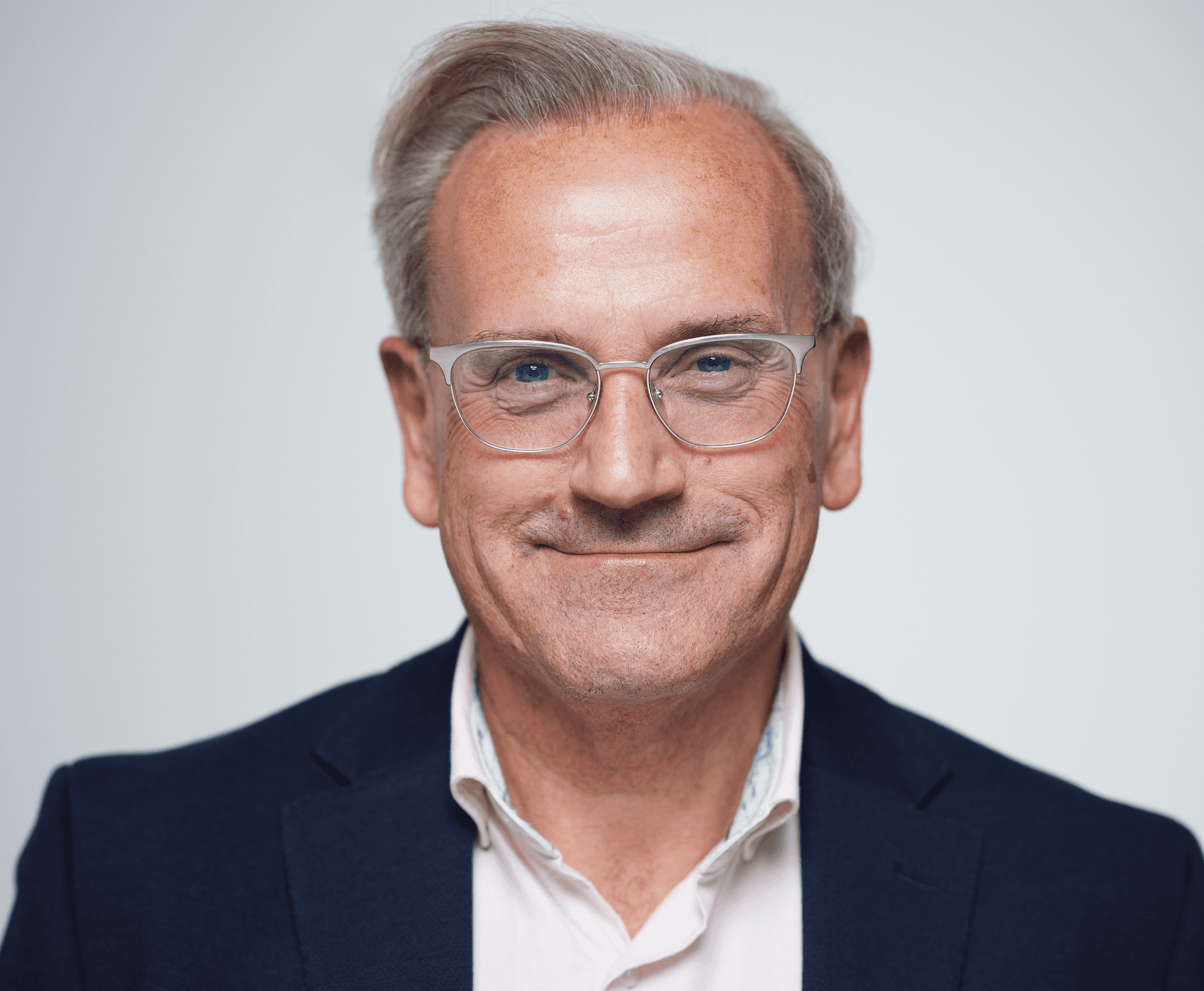
Co-founder and CEO of Echopoint
Antony is the co-founder and CEO of Echopoint Medical, a London-based UCL spinout developing the iKOr microcatheter for coronary diagnostics. He brings over 30 years of medtech experience across Johnson & Johnson, Fresenius, and Stryker, before transitioning into startups as CEO of Tayside Flow Technologies and Tissue Regenix. Antony holds a BSc in Physiology and Biochemistry.
Interview Summary
Antony Odell is the co-founder and CEO of Echopoint Medical, a London-based medtech spinout developing the iKOr microcatheter, which incorporates optics for coronary diagnostics. With over 30 years in medtech, Antony has built and scaled medical device companies across multiple therapeutic areas.
Around 40% of patients who undergo a standard angiogram show no blockages in their major vessels, yet continue experiencing symptoms. Many of these patients have a coronary microvascular disease known as ANOCA (Angina with Non-Obstructive Coronary Arteries). Women are five times more likely to be affected, and most leave the cath lab without a diagnosis or a clear next step.
The iKOr system gives cardiologists a simple, intuitive way to measure coronary microvascular metrics. The original UCL prototype was, in Antony's words, "a box with wires coming out of it — something from Frankenstein's lab." Translating that into a reproducible, clinically meaningful device took years of deliberate work.
Echopoint raised approximately £5.9 million in equity alongside non-dilutive grants that funded a 10-patient first-in-human study at Barts Health in London. The company is preparing its FDA 510(k) submission with clearance targeted for 2027. Echopoint has also secured a place on the HeartX Accelerator, and is collaborating with its first U.S. clinical site at Baptist Health in Little Rock, Arkansas.
Top Takeaways
Assessing an academic idea means testing it against clinical reality. Academics are optimized for papers, not commercial timelines. The clearest signal that an idea is ready to spin out is when inventors have already tested it with practicing clinicians. From there, the CEO’s job is to extract that knowledge from the institution and translate it into technology that can reliably produce clinical data.
Choose early clinical sites for learning, not speed. Certain geographies can accelerate timelines, but that may come with tradeoffs that are underappreciated. An established academic center will often cost more and move more slowly, but will likely deliver high-quality clinical insights that enhance fundraising credibility. Either way, your goal should be to avoid groupthink — stay close enough to learn, but independent enough to challenge assumptions.
Non-dilutive funding is a permanent discipline, not an early-stage hack. Keep a grant tracker as a standing board agenda item and pursue non-dilutive capital at every stage. But screen opportunities against two questions: does the reporting burden justify the award, and does it detract from your commercial objectives? When using consultants, insist on success-based fees — no skin in the game, no real motivation.
An early-stage CEO should actively manage information, boundaries, and team evolution. Investors have one core question: is capital being deployed as intended? Report against that, in terms they understand, and don’t shy away from surfacing bad news early. Protect the boundary between board strategy and execution. And expect your operational team to evolve over time. Generalists are essential early on, but as the company scales, specialists may be better fits.
Sponsors
FastWave Medical: Named MD+DI's Company of the Year, FastWave is one of the hottest medtech startups in the cardiovascular space. See how you can invest here.
Medsider Fundraising Cohort: Planning to raise capital for your medtech startup? This live, 4-week workshop, led by Medsider is designed to help founders and CEOs tell a sharper story, get investor meetings that matter, and close real capital. Join the waitlist here.
Key Moments
03:06 How Antony’s career centered on translating clinical insights into commercial reality
05:54 What Echopoint's iKOr does, and why 40% of cath lab patients leave without a diagnosis
12:13 How Echopoint landed its first U.S. clinical site, and what that means for the company
13:48 What to assess before spinning out an academic idea, and why clinician input is the first real test
20:14 Why Echopoint chose Barts over typical sites for its first-in-human study
22:58 How getting too close to one clinical site can lead to dangerous groupthink
30:54 Why non-dilutive funding belongs on the board agenda permanently
39:54 How CEOs should manage boards, control information flow, and avoid becoming a “glorified note-taker”
Chat with Scott
Ask ScottBot questions about this interview, key takeaways, or other medtech topics.
Full Transcript
We had a wonderful box with wires coming out of it, which was our first console in UCL, which looked like something from the Frankenstein's lab. You know, when you move that into an environment where you're testing it rigorously, you're providing, you're looking for ground truth, things change. You know, you find things out that weren't important to the academic. The IP that we got from the university was this good basic ground IP and we've got grants and patents in that space. But, you know, we've had to really translate that into something that is reproducible, and you can make it a reasonable price, and produces clinically meaningful data.
Narrator:Welcome to Medsider, where you can learn from the brightest founders and CEOs in medical devices and health technology. Join tens of thousands of ambitious doers as we unpack the insights, tactics, and secrets behind the most successful life science startups in the world. Now here's your host, Scott Nelson.
Scott Nelson:Hey, everyone. In this episode of Medsider, sat down with Antony Odell, cofounder and CEO of Echopoint Medical. Echopoint is a London based UCL spinout developing the iKOr an optical microcatheter for coronary diagnostics. Antony brings over thirty years of medtech experience across Johnson and Johnson, Fresenius, and Stryker before transitioning into startups as CEO of Tayside Flow Technologies and Tissue Regenix. He holds a BSc in physiology and biochemistry.
Scott Nelson:Here are a few topics we explored in this conversation. First, what does it take to translate academic IP into a fundable company? Second, how should you choose clinical sites when speed comes with the trade off of learning? Third, when does a grant become a liability instead of an asset? And last, what are the CEO's responsibilities that determine early stage outcomes?
Scott Nelson:Before we dive into the full episode, if you're a Medtech founder or CEO preparing to raise capital, you should check out the Medsider fundraising cohort. This four week live workshop combines small group sessions with real time feedback to help you sharpen your investor story, build a targeted investor pipeline, and run a focused fundraising sprint instead of a never ending slog. Over the month, you'll walk away with an investor ready narrative and deck, outreach scripts that actually get responses, a refreshed LinkedIn profile, a simple content plan that keeps you on investors' radar, and a repeatable system for running your raise. You can join the wait list at medsider.com/fundraisingcohort. Again, that's medsider.com/fundraisingcohort. Alright. Let's get to the interview.
Scott Nelson:Anthony, welcome to Medsider Radio. Appreciate you coming on.
Antony Odell:Thanks very much for the invitation, Scott. It's gonna be fun, I hope.
Scott Nelson:I think it's gonna be fun. Hopefully a little hopefully mostly fun, right? But but also we'll mix in some hopefully some educational stuff for the folks listening that they can take away to their own startups, maybe if they're at the at a strategic, maybe their own business inside the multinational. But with that said, I recorded a very short bio at the outset of this interview, but I always like to kind of start here. Give us like a one minute overview of your career leading up to taking on the CEO role at Echopoint.
Antony Odell:Yeah, I mean without giving you the CV, I think I've always been interested in clinical insight and how that translates into commercial reality. And I had what you might call a fairly standard career out of corporates. So usual suspects, J&J, Fresenius, Stryker, blah blah blah. But I've always been in that kind of space where I'm looking at, how do you take a really compelling clinical story and translate it into something that makes a business, but also ultimately helps patients? And without sounding like Mother Teresa, that's always been an important factor to me.
Antony Odell:And it kind of is a natural transition when that is the things that are important in your career that you move into startups and startups give you that unique self expression piece that allow you to really shape your own business story and your own business models and really learn from your mistakes because there ain't anyone in the office next to you to blame them on, so.
Scott Nelson:Isn't that the truth? We're recording this in 2016, but it looks like based on your LinkedIn profile, which I'm looking at right here, you took on the CEO role at Echopoint back in 2018. So you've been at it for almost coming up on eight years here, right?
Antony Odell:Yeah, absolutely. Well, I mean, the company didn't get funded till '19. So it was I was brought in by the university to pull the business plan together. Like I said earlier, thing that really always when you're looking at a new venture or something new, it's the clinical behind it and what really impressed me about the group at University College London was you had, you know Professor Malcolm Finley and Professor Adrian Desjardins you know very different backgrounds biomedical engineer, cardiologist but they'd come together and form this idea and this set of concepts and worked bloody hard about showing what they could do within the constraints of the academic system and that really intrigued me and I also like them as individuals that's very important as well. Mean I've said no to some very compelling technologies on the basis that I couldn't spend five minutes in the room with the people concerned.
Antony Odell:So I think there's an important thing when you're looking at these as a whatever role you're coming in for, you know, it's gonna be tough. It's always hard. We always need money. There's always deadlines, but you gotta be able to interact and work well with the people you're gonna be doing that with.
Scott Nelson:Let's talk a little bit about Echopoint before we kind of go back in time and learn a little bit more about your journey, right? leading up to today, but also kind of your background and some key lessons that you've picked up on throughout your career. But I'm looking at the website right now, which is echopointmedical.com. Just as it sounds, if you're listening to echo, E C H O, and then pointmedical.com. We'll link to it in the full write up on Medsider.
Scott Nelson:Let's pretend that I know nothing about the technology. I haven't researched it at all. Give me a sense for kind of what this is and how an interventional cardiologist would use this in the cath lab.
Antony Odell:The core technology is based around sensor platform, much broader, but essentially we address something called complete physiology. There's a huge issue with people who go into cath labs, have the standard angiogram, and then basically they can't find any blockages of the the epicardial or major vessels. That affects around forty percent of patients and there's a huge issue around undiagnosed coronary microvascular disease. It's encapsulated as a syndrome called ANOCA, which is, you know, just a way of encapsulating all the potential issues here. But women typically are five times more likely also to have ANOCA.
Antony Odell:So there's a vast number of women who just cycle through the cath lab and get told, okay, we can't find anything wrong with you, they'll give you some medication and send that lady home. So, Echopoint is based around the sensor platform that is a very, very simple way to use that sensor to detect coronary microvascular metrics, which are very well established and very well researched, but in a very simple intuitive way that fits into cath lab workflow and is very easy to use. Where I came in the story, if you like, in 2018-2019, is this had been done on the bench and been shown to work in a number of preclinical models, but they needed that translation to make it into a business proposition. So we set about, we built a plan, we were really lucky with our investors, Partwalk Advisors and UCLTF managed by Albion Capital, and we actually got the funding to basically work towards our first in human in The UK. It's a class three device here, it's a class two device in The US, so we had to deal with the regulatory issues in The UK, but essentially we got a good chunk of non dilutive funding which again very important subject when you're looking at money whatever stage of development you're at, but that enabled us to basically do this 10-patient first in human at Bart's, it's a major centre in London, which has got the kind of gravitas you need at this stage.
Antony Odell:And that was a pivotal moment for us as a company. There was one thing that really stands out for me there there was a woman who wrote to us and we'd had some publicity in the Financial Times and she wrote and she's convinced she's got ANOCA and she said 'can I be in the trial?' Cause she'd been through this whole roundabout through the hospital thing, being told there's nothing wrong with her. That really brought home to me that there are a lot of human beings who aren't getting the best deal out of this process right now. That really made it real for me.
Scott Nelson:Yeah, no doubt. It's those types of stories that like are the kind of the push that you often need, right? When things get hard at a startup, right? Hearing from real patients that are suffering from the disease or the issue that you're trying to solve for. So a real quick follow-up question before we get kind some more media questions.
Scott Nelson:So this microvascular disease, it sounds like it's much more frequent or prevalent than maybe most people would expect. And if I'm a patient and I'm kind of being sort of filtered around or bounced around maybe from certain departments to department inside a hospital, right? No one can really figure out what I have. And the angiogram actually doesn't look like there's any issues, right? Maybe the echo doesn't look like there's any issues, but there is some of this underlying kind of micro vascular problem, right? And this, your catheter, it's meant to do it's like diagnosis?
Antony Odell:So it's looking at flow. Flow is the important thing here so basically if you've got a microvascular issue your flow is compromised and it's those tiny vessels that feed the heart. When you have heart pain angina, a large chunk of patients who are you know don't have major offices will have this coronary ANOCA angina with non obstructive coronary arteries type syndrome and it could be many subsets of disease and I think the other important part is when I've started this with the company this whole area of coronary microvascularities felt what I call as a Sunday afternoon project it was a lot like something that was of academic interest and maybe to a few key clinical academic centers, but it's really gone mainstream in the last two years. That's changed the way people perceive us from a funding perspective. It's changed the way strategics look at us.
Antony Odell:It's changed the way just your ordinary conversations with people in the street, people are much more aware of this now. So, think the FT story was my kind of light bulb moment in terms of that whole piece, But really the interest and focus on this space, you know when I first went to TCT, which is our big US conference Translational Therapeutics, it was getting like sort of sessions, but now it gets whole afternoons on it. It's a very important subject. So that to me just underpins how key this area is, and what we're doing as a company is basically easy access to the information for people to make the right decisions. We're therapy, we're a diagnostic.
Antony Odell:I remember when I first started out trying to raise money for this company, was, I would say, well you're a diagnostic, know, you diagnose it, what's the big deal, what do you do next? And I didn't always have a good answer to that, but it was, know, okay, well, you know, you might change your medication or something, but now you've got things like sinus reducers that are going working through FDA approval in The US and approved in Europe. You've got different medications, you've got different subsets of patients, but I think the key thing is you now have a greater awareness, you have people who understand this is an important issue to be solved, and I always come back to you know people who are dismissive of diagnostics. Cancer is a, until cancer had better diagnostics, didn't get better therapies. It's just a very simple equation. You've got to understand the problem before you solve it.
Scott Nelson:No doubt. And it's always a good sign, right? When a certain area of medtech starts out with small little abstracts in the back corner at TCT. And then two, three, four years later, maybe five years later, maybe it takes a little bit more time than that, whole afternoons are dedicated to this certain area. That's usually means you're onto something.
Scott Nelson:So with that said, you touched on this just a little bit, but just to level set and make sure people kind of understand where the company's at. Recording this in early Q2 2026 for someone that's listening to this three, six months down the road, Sounds like you completed your 10 patient first in human and you're gearing up for some studies here in the US, correct?
Antony Odell:Well yeah, we're intending to make our FDA submission this year in '26, approval probably '27, and we are also we're fortunate enough to win a place on the HeartX Accelerator, again not dilutive funding, very important, and for that we actually get to work with a centre we're working with the Baptist Hospital in Little Rock, Arkansas and they will be our US first in human site for our first 100 patients in the state. So two very exciting strands in this point in '26 where I'm off to Arkansas next week to meet them in person, But it's always really exciting to talk to clinicians, and these are the first US clinicians who are actually gonna use it, which is huge.
Scott Nelson:Yeah, pretty fun time after spending five, six years in kind of early stage development, to kind of finally get to this point. Definitely some exciting kind of inflection point. So with that said, let's spend maybe the next twenty to thirty minutes kind of covering some key functional areas that most startups have to navigate at some point in their trajectory. And maybe start out kind of taking us back to that kind of twenty eighteen, 'nineteen timeframe when you're spinning it out of UCL. What do you think, there's a lot of physicians and a lot of, I would say academics, if you will, right? That are maybe working on an idea and they think it should become a company. What do you think are some of the key things that they should understand about what that looks like taking a concept inside an academic institution and actually turning that into real thing that clinicians can actually use in a first in human study?
Antony Odell:Well, mean, I think the one thing I always like to see, and I've done this four or five times now, is academics who actually talk to clinicians. Like I said, they've had some kind of conversation with clinician about, well I've got this idea, do you think it has some kind of merit and how would you use it?' You know that to me says the academics kind of thought well okay I may have a great idea but it's got to have some kind of utility. The challenge is always with academia is their priorities are different. They're under pressure to write papers, produce results, some of them are still teaching, and all the rest of it. I have huge sympathy for them in the sense that their agenda is different but if they're serious about something they think is going to be clinically game changing you need to talk to a clinician and that's what attracted me to Echopoint.
Antony Odell:The other challenge when you're translating something scientific into a clinical device, and I've seen this happen to me several times, is you you can take you know we had a wonderful box of wires coming out of it which was our first console in UCL which looked like something from the Frankenstein's lab. You know when you move that into an environment where you're testing it rigorously, you're providing you know you're looking for ground truth, things change you know you find things out that weren't important to the academic and you know the IP that we got from the university was good basic ground IP and we've got various patents in that space, but you know we've had to really translate that into something that is reproducible and you can make it a reasonable price and produces clinically meaningful data. So that's always the challenge is just that academics priorities aren't the same. You sometimes come you know I was very lucky I had a top class academic in Adrian and I had a clinician in Malcolm they're both very clever guys but you know they thought about this beforehand but I've been in lots of conversations where you realise this guy is very passionate about what he does, the academic, but he's not really thought through the practicalities of either making it or how it might be used in clinical practice.
Antony Odell:So I think that translation piece is not about technology, it's about that understanding of hospital environment and how it works, and you know all the usual things. Know I used to work with Imperial and do a guest lecture spot there for entrepreneurs, in one of their units you know they would say well what's the biggest unknown? It's always Regulatory is just the biggest unknown. So all those things are things academics have to realise, and it's just a, you know, there's no single answer. And the other point about academics is, you know, they have to be able to admit their baby's ugly sometimes, you know. It's not good. It's not going to be perfect.
Scott Nelson:Easier said than done, right? Because a lot of these academics have been thinking about this idea for a long time and it's not to under appreciate kind of the work there, but they think maybe it doesn't have a lot of flaws. In reality, it has some flaws. There's some gaps there. Absolutely.
Scott Nelson:But you battered off like several things that I just wanna emphasize. Like if you're coming into a project and it's largely still stuck, I wanna don't say stuck, it's probably a poor way to describe it but it's largely still kind of in the hands of an academic and there's been no clinician involvement. Like that's probably something that should be addressed like sooner rather than later because there's gonna be a lot of things that probably surface as this idea, even if it's a great idea, like after getting it in the hands of someone who sees patients on a regular basis, right? That idea might evolve a bit, right? So like that, I think that's something that really important that you mentioned.
Scott Nelson:For those that have never taken an idea out of an academic center, what's a good timeline, you know, in terms of actually spinning or like taking that IP, getting the licensing deal done and whatever kind of like structure that looks like, you know, what do you typically kind of bake into that process?
Antony Odell:I got involved in the Echopoint. I'll just take that as my latest example. So I got involved in back end of 'eighteen. And it took us about, at that point, nine months, really. It wasn't like I was approaching it totally cold.
Antony Odell:There have been some discussions before so if you add another three months for that it's probably a year. You know it'll really depend on your tech transfer people you're dealing with and things of that kind and how you know nifty and professional they are as well. And I think if you really want to get it done, you'll get it done. And think when everyone's pointed in the right direction and you can of tick off all things you need, the licence and the diligence and all the rest of it, you should be able to do that in less than a year, I would thought. Yeah.
Antony Odell:It just depends. If there are complications about the IP, that can lengthen things hugely. But generally at that stage, you've got one very discreet block of IP you hope, and there's nothing weird about it.
Scott Nelson:Yeah. So nine to twelve months, maybe a little bit faster depending on the center, but maybe a little bit longer, right? Depending on kind of Yeah, absolutely. Yeah, if you're dealing with a tech transfer office that maybe doesn't do this a lot or doesn't have a refined process. The other thing that I think is worth kind of emphasizing again that you mentioned is like those early alpha prototypes, right?
Scott Nelson:They're often like really ugly. Kind of going back to this idea of this concept that's been sort of like iterated upon in someone's head in an academic center and then actually building it are two vastly different things. It reminds me, I posted this on LinkedIn just it was last week, think it was a quote from Dr. Steven Mickelsen which, he's the founder of FaraPulse Now he's working on Field Medical. And he mentioned like the very first like console that he built for that device. Like, I he almost thought he was gonna electrocute himself, right? When he first turned it on, that's how early it was. And most people think of like FaraPulse as this phenomenal success story, which it is, and don't get me wrong, but like in the very early days, it is like wires coming out of everything. It's like, I mean, it's like these are like the bare bones sort of, I call it device, but prototype just to answer a few basic questions, right? In those earliest versions.
Antony Odell:We preserved ours for the Echopoint Museum, if that works.
Scott Nelson:We laugh. Always encourage other entrepreneurs to make sure you take lots of pictures of that stuff because it's always hard to point back to, especially if you run into some challenging times to think about like what you already overcame along the journey.
Scott Nelson:So with that said, let's talk a little bit about Clin/Reg. And you mentioned the first in human study at Bart's, is obviously a very highly respected academic center. That's interesting because I think most people especially with a novel technology like this would maybe go to some other whether it's Eastern Europe, right? Or maybe somewhere in Central Or South America or kind of name your kind of classic first in human geography, but you chose Bart's. Like what was the kind of the rationale for that?
Antony Odell:Yeah, I mean, I think, I've done that route. I've taken a sort of less rigorous maybe initial route for those types of things. I think you know we had an into Bart's because Bart's has been very supportive that's where Malcolm worked, he's a cardiologist there. I've met with Professor Anthony Mather several times as part of the process of spinning out the company and post spin out, and he's always been very supportive. And I think they were very helpful in connecting us with the major issue with any clinical trial is the administration, and the NHS is absolutely no exception to that.
Antony Odell:But you know, I think they gave us the support we needed and the help we needed and it always takes longer than you'd like. Know, don't think I've ever met a CEO in my life who said oh yeah, that went perfectly and on schedule' schedule. And so that piece worked. We also had a really good regs team in place who was working with us at Echopoint and from the MHRA point of view. So that piece was kind of covered off.
Antony Odell:So it made sense from a logistical point of view as much as any you know it's great going to these far flung places and there are a lot of great clinicians there but just setting up a trial in a foreign country is no small thing. You lose a lot, so we could get on the tube and go to see POTS and we could work out and we could go and talk to clinicians and we could understand and we were there at every procedure. So I think that closeness to that first human experience in the clinic is really important. You find out so much and I'm very precious with clinical feedback. To me all the things you learn even when you're not doing a trial from clinicians are really, really important.
Antony Odell:And we store those things at Echopoint and we bank them up and we try and remember them at the right times by bringing them into our conversations with what we're going to do design wise, blah blah blah. But I think that first inhuman is so important. Seeing it in clinical hands being used in an actual patient is so important. I wouldn't want to have a three hour flight to get to where that was done. To me, we wanted to be close to it and understand it.
Antony Odell:Now the other side of that coin is, and I've also done this, I made this mistake in my life, I've got too close to a clinical centre. You end up with groupthink with your clinicians and that is also dangerous. So you have to maintain the appropriate distance because they've got a job to do, you've got a job to do, but if you start believing in each other's propaganda then that doesn't work either because you're there to learn you know, that's also an important point is that distance has to be there as well. So you know Bart's was a great choice, know we'd love to have done it quicker, it didn't happen that way, but you know we got it done, we got the result we wanted, we got the information we wanted, and I think that to me justified picking a heavier weight center and it also helped with fundraising.
Scott Nelson:Yeah, especially to have such a premier institution kind of be involved in that first human study. Your point about not believing sort of your own propaganda, right? Like that's such a crucial point. I don't talk about it on this program, but like it's so crucial in those early days. Obviously you want physicians that are supportive of what you're doing, but if you get like, if there's no disagreement, right? If there's no pushback, that's usually not a good sign. I mean, want some, I don't wanna say haters, but you want some, a little bit of, cynics, right, that are gonna challenge some assumptions, challenge the way you're thinking about that. I think that's like just very, very healthy, especially in those early phases.
Antony Odell:I worked in marketing in my early career and I was a product manager at J and J. You know the first thing they do when there was a product complaint is drop the product manager in there. So you're like you've been in front of some clinician and he's saying your product is the worst thing I ever used in my life. So you begin to understand that the world isn't full of people who love love your company and what you do. And it's the same in a startup.
Antony Odell:It's, know, you've got to listen, as you say, to the other side of the story and and, you know, be aware that's something, you know, whoever you're gonna end up working with is gonna have to deal with as well.
Scott Nelson:Yep, yep. You know, in those early days when you're just looking for any sort of momentum, right? Sometimes it could be challenging because if you do have those physicians that are pressing into some certain things, it can kind of feel like, yay, they're not on your side, but it's usually, it's a good thing, especially if you're working with physicians that have been around startups and they know not to push too hard, but they know to challenge certain things. And so I think that's such a crucial point. The other thing that you just mentioned about balancing, you know, going to a site in Eastern Europe as an example, right?
Scott Nelson:Versus, you know, a site like Bart's or maybe it's a, you know, a larger institution in The US as an example, there's always trade offs. Your point about, like, the lift required to just get any study up and running, it it's never easy. You know what I mean? It's it sounds easy to say, oh, ethics review is thirty days or sixty days, and it'll fly through. But it's like, well, there's a lot of work to build out that investigational brochure, etcetera.
Scott Nelson:So like don't under appreciate just the sheer amount of work regardless of where you go. And it sounds like you had sort of some inroads into Bart's already and then you sort of leaned into that and it was worth kind of like some of the some of the downsides in terms of maybe length of your time or costs etcetera of doing a study there.
Antony Odell:Yeah, absolutely.
Scott Nelson:Really good points. One other quick question before we get to fundraising and really just kind of like capital allocation in general that topic. You're now transitioning to the U. S, right? You've got this FDA submission that you're planning on and you're going to, it sounds like you're going to do this study, starting out with your first site in Arkansas. What were maybe some of the meaningful things you felt like needed to be nailed down before you sort of made that transition to The US?
Scott Nelson:Hey everyone, let's take a quick break to talk about Fastwave Medical, the company I co founded and lead as CEO. We're developing next generation intravascular lithotripsy, or IVL, systems to tackle complex calcific disease. Over the last few years, we've closed a series of oversubscribed funding rounds, bringing the total investment into Fastwave to over $50,000,000 Corporate interest in the IVL space is growing too. The $900,000,000 acquisition of Bolt Medical by Boston Scientific in 2025 and Johnson and Johnson's $13,000,000,000 acquisition of Shockwave Medical signal a lot of attention on emerging IVL startups like Fastwave. And we're making serious progress. In addition to recently receiving our ninth patent, we've successfully completed peripheral and coronary feasibility studies and are gearing up for pivotal trials. If you're interested in investing in the fast growing IVL market, head over to fastwavemedical.com/invest. Again, that's fastwavemedical.com/invest. Now let's get back to the conversation.
Antony Odell:Oh, I mean, think the Q-Subs of the FDA were critical. And I think, you know, my last company, that company spanned the change over to MDR in Europe, so we saw CE Mark being the first choice of both US and European companies to being the last choice of US in European companies, particularly startups. So I think the FDA, for me, it's kind of a no brainer because it's a class II device in The United States, it's a class III device here in Europe, and I think the other thing that the FDA, for all the fact it's a big organisation and it can be kind of scary, particularly for a small company, you do have this ability to interact with it. And I think that's so critical. You learn so much by interacting early with the FDA.
Antony Odell:And generally they'll give you pretty straight answers to the questions you want. So, I think everyone kind of sees, particularly when you're sitting this side of the Atlantic, it's a kind of a big step and a big leap to do that. But actually you don't have that capacity really with notified bodies or any of the you know the MHRA has a scientific advisory group and you know I've not used it personally, but it exists, but it isn't as a you know clear and unambiguous as the FDA is, and I think you know for all its you know ups and downs and political pressures and all the rest of it, the FDA is a great institution that's really kind of it thinks about small companies as well as big companies, and I think that that's really critical. Sometimes when you're dealing with monolithic organisations, the NHS is a good example, have a one size fits all, and it's great if you're AbbVie or Gilead, but you know, if you're not, you know, then you've got a gap to bridge there. But no system's perfect, but I think our regulatory pathway at 510(k)s, we did a Q sub, we confirmed what they wanted to see, we've done subsequent QSub to actually refine that, and it's about just reducing risk, and that's what investors want to see as well.
Antony Odell:So it's about managing the risk in your organisation and understanding, you know, going to The US, it's a big market, but there's also many more competitors over there, it's more challenging. You've got reimbursement. But at the end of the day, it's still a huge market and a huge opportunity, and the FDA is the gate to that.
Scott Nelson:Yeah, you mentioned de risking, and I think that's such a crucial point, because if you're, let's say you're pitching an investor, right? And you get questions around sort of the regulatory process or how a certain regulatory body, FDA as an example is thinking about your technology, especially if it's novel, if it's a pretty new category and you've not done a Q sub, that's usually, I don't wanna say it's always a red flag, but it can be a red flag, right? Because it represents a little bit of risk, right? You be even working with like great regulatory advisors or consultants, if there's been no engagement or interaction with FDA, it signal a little bit of risk to a particular investor. So I think even if I guess my point in kind of rambling here is that even if you feel like a Q sub is overkill, it may be worth just doing because one, it could de risk the technology and kind of the risk, the potential risks associated with the regulatory pathway. Also there still may be some things that you learn, right? Some unexpected things you learn through that, through that, that Q-Sub kind of process. So really, really good points.
Scott Nelson:Let's jump to fundraising. I wanna ask you two questions. One, one about non diluted funding and then the other one about diluted funding, right? On the opposite side of the coin here, but let's talk about non diluted funding because you've had some success here, not just with Echopoint, but in previous companies that you've been involved with. What's your general take on the use of non diluted funding? I mean, obviously it really important in the early days, but is your goal to kind of continue to try to to raise non dilutive funding throughout sort of the journey of your startups?
Antony Odell:Absolutely. I absolutely think it's critical wherever you are. I think it's been a board agenda item. It's a permanent item on our board agenda because we have a grant tracker, we track grants, and as you evolve as a company, so we've moved out of preclinical to where we've got clinical data, the grant environment changes, but it doesn't go away. It's just the requirements to do it, and it may be a bit more work to get larger sums of money to do bigger things in the later stages of your company, but it never goes away.
Antony Odell:The grant agenda, the grant thing is really important. The other important thing about non dilutive funding is there are lots of consultants who will come to you like we've got a million things you can apply for and all the rest of it, but yeah the most important thing just look at the grant requirements compared to what you want to do. So I was involved in a previous existence in one of the old framework things, which would be the EU funds, and the reporting was just mind boggling you know and we spent more time talking about reporting than we did about the results of the project. So you know to me, love it when people get great big grants and you know it's great news and everything, but you know if you're small and you don't have a lot of people you really got to look at the effect of the reporting burden but just also you know if that grant is skewing in a way that moves you away from your commercial objectives that's a red flag to me because then you're going to spend time and effort and focus on something that isn't going to get you that extra couple of million dollars or whatever it is to do whatever you need to do.
Antony Odell:So I think the grants are great, and I'm a huge believer in them. But I think you really, really have to look carefully that you do this. And consultants are really good as well. I've worked with some great people in The UK, but a lot of people I've spent a lot of time talking to are just clearly, they're trying to get you to sign some kind of retainer and, ba boom, they're off. It's never, you know, the other red flag for me is if always never success based, you know?
Antony Odell:Whoever you're working with should have the skin in the game in terms of whether this is gonna work or not. Yeah, no doubt. So I think, you know, we were very lucky. We raised £1,700,000 in equity, and we raised approximately a similar amount in non diluted funding at the beginning, and that got us to a lot of goals, including the first in human. So it was great, and as we've gone on, we've kept applying and made some small scores with that one but you know it's just one of those things that I think it should be there all the time. Don't ever underestimate how much you know if it's going to divert you from what your investors want you to do that that's you got to think carefully about that one.
Scott Nelson:Yeah, so critical because if you ever make a significant pivot and you're left with going down this, the old legacy path, right? Because of this grant funding that you took years ago, could be pretty detrimental to the company. But your point about like just the requirements I think is so critical, right? Because you could end up getting a million dollar grant, right? But now you're stuck reporting almost as if you're a publicly listed company.
Scott Nelson:It's like you've got these ankle weights just tied to you now moving forward. So those are just really, really, really good points to kind of be aware of. Let's talk a little bit about diluted funding, right? Like traditional kind of fundraising from whether it's from a family office or angels or venture funding. You've done a lot of this throughout your career.
Scott Nelson:How you go about fundraising now? I guess what are some of the key things that you kind of fully understand that you maybe didn't appreciate ten years ago when you were first trying to pitch investors?
Antony Odell:I think one of the things is, can you work with that investor? I think is a really important thing, and that's not in some utopian world where there are people thrusting checks on you, you've gotta say, I like you, but I don't like you. I think you pretty much find out when you're in that first pitch whether they're asking questions, they're intelligent, and they can be challenging and difficult, and you may not be able to answer them all, but you get a pretty feel that this is somebody I feel I can work with. So that, I think, is an important piece I've learned over the years. I think also, if you're in an early stage medtech, a lot of the time you're pitching in in smaller funds, they may not have specialists in your space.
Antony Odell:And this, I've seen it because I've been on the receiving end of it, know been on panels and stuff where you know people have great ideas, they're a great CEO, they clearly have a good team, but they make assumptions about what you know and about the space that are totally inappropriate. And just remember, you may be pitching to generalists, you may be pitching people who don't understand the Medtech space. That doesn't mean say you have to get all silly about it and take them back to the ABCs, but just maintain it at a pace that's appropriate. So what I've really learned is the other point about rejection, and I've plenty of those, is try and learn something from it. Also don't beat your head against the wall saying, What did I do wrong?
Antony Odell:And keep going back and saying if I change that, would that make a difference? Because generally once they've said no, that's the end of the conversation. But it's also true, you know, never close a door. Know, somebody said no at one point, funds change, people change in terms of funds and funds priorities change. I won't go through the obvious stuff that you see on every panel on fundraising, is check they've got cash and all the rest of it.
Antony Odell:I'll take it as a given, but I think the key thing is really don't be in a position where you storm out of the room and slam the door behind you. If somebody says no, it's not a good way to end it. I think it's, in my younger days, I got very angry when they said this. They seemed to say, yeah, we love this, we love this, we love this, and you get this two line email saying, sorry, we decided not to pursue this any further, that's all the feedback you get. And that's never gonna change.
Antony Odell:You get some funds which are great at feedback, but when somebody won't give you a real reason, that's annoying. But hey ho, take it on the chin, live with it, learn from it if you can, if they've given you any feedback to learn from. But I think the one piece of advice I'd give is just, it is a tough environment. It's toughest I've ever known it right now, but I think if you've got a good idea and you keep knocking on the doors, it's just keeping it up, and it is wearing. I've gone from CEO jobs where you raise some money and you get the chance to put your effort into the program, but I feel like I'm on a permanent fundraising treadmill now. And that's just the nature of the job. The job's changed.
Scott Nelson:Yeah, there's no doubt. The concept of like always be capitalizing or always be raising. It's very true. Sometimes those stretches are, you're actively like closing around, but others you're just, you're simply meeting new investors, right? And kind of trying to grease the skids for a future round.
Scott Nelson:Your point around like investor feedback that can be, I mean, it's easy to say a lot harder to take when you're in the throes of facing all of those rejections, all of those nos over and over and over again. I think it's such a, I just wanna like really emphasize that point. And I'm nodding in agreement of like, it can feel really challenging to hear no after no, but it's usually a no now, right? It a could maybe or a yes down the road. And I so think that's just healthy to keep in mind if you get a no and maybe the no doesn't even come with any helpful feedback, just consider that a potential prospect down the road. Put them into some sort of like, you know, potential investor update, right? That you check-in with on a quarterly basis, something like that. I mean, there's always something that you can kind of glean from it. At least it's a conversation. They at least know you, they know kind of what you're building and maybe it's just consistent follow-up over the course of three, six, nine, twelve months where boom, things change with that fund, whatever. And the door's back open again, right? So I think that's a lot of times the only thing that you can kind of take with you after getting a no and not really getting a lot of helpful feedback along the way. But yeah, that's yeah, really good advice. If you're listening to this or reading this interview and you're raising capital, just know it's never easy. Like it's, even if you've done it a lot before, it is challenging to say the least.
Scott Nelson:So with that said, let's maybe end the discussion talking about kind of just CEO perspectives and learnings. And I'm gonna start maybe at the board level, right? Because you've been around, you've been on boards, you've been around a lot of startups, especially over the past ten to fifteen years. What do you think are things that any CEO needs to really get right to try to establish some sort of like healthy function at the board level?
Antony Odell:Well, I think when you really start out from the get go, you're gonna have a heavy proponent of investors on your board. There's no way you're gonna escape that because they wanna see how their money's being deployed. So you just have to accept that as a given. Now, investors are investors. They're generally finance people.
Antony Odell:They won't understand your space in any technical depth. So from a CEO point of view, it's making sure that you're reporting in a way that they understand. But also, I think one of the other things is just understand that they're looking at it from, is my money being deployed in the way I originally intended it to? And if they're getting uncomfortable with something that's happening, you deal with it. I remember one piece of advice I was given very early on is if there's something horrible happened, don't bury it at the back of the board agenda, deal with it on its run.
Antony Odell:And if I could give one piece of advice to CEOs in a position, if you've got some bad news, don't try and hide it, because they'll find it. They've got this lots of times and it'll just come back and bite you in the leg at some point. So I think the point is just be upfront with them and they'll be upfront with you and be clear with them about what you're doing. I think the other thing about information flow is you control that as CEO. So like I say, it's a power and responsibility.
Antony Odell:You've got to make sure it's worked. Board members are there about strategy. That's the other thing I've seen too many times is you're the executive, you're executing what the strategy is, and their role is to work with that. Anything that when they start trying to run the company with you, that is a huge red flag for me. I remember seeing a startup once at a university in The UK and the board meetings ran for two days.
Antony Odell:I thought, what on earth have they got to talk about for two days? I mean, they run major corporates in less time. It was because they were going through the operational planning line by line, and you're not CEO at that point, you become a kind of glorified, you know, note taker. So, you know, I think understanding your roles in the board is important, and also you know very early on who your chair is and anytime who your chair is is very important but very early on it's very important. Know my last couple of roles I've been an exec chair very early on whereas I've done both roles you know because they didn't have separate person to do it.
Antony Odell:One of the things I do insist on is those roles are split as soon as it's practical to do so because that gives you somebody in the board who you can sound off and you can kind of learn from, hopefully, if they're the right type of individual. And I've been very lucky with my current board because we've got Nancy Briefs, who's a US based person. But as CEO, when we said we're going to recruit a chair, I had a huge amount to say about what kind of individual I wanted, and we ran a process, and everybody interviewed them, so it wasn't like I pick them. But I think that kind of awareness from your board as to how important that relationship is, is key. And has someone parachuted on you is sometimes very challenging. I've had that happen before, and it's never, touch wood, gone wrong, but that's more challenging when the investors say, We want X. Yeah. You get no sense in the matter. Because I think a lot of folks maybe look at, when they look at a board and they see that executive chairman or the chairman role that, know, the natural question is like, is that really needed? Right? What is that person really doing? To your point, especially if you walk into a scenario where maybe there's an existing board or there's already some red flags that could maybe be the best move is to really like propose, let's get a chairman, right? That can kind of serves as ring leader of sorts. And that may be worth the cost, right? Whether it's in the form of equity or whatever compensation that executive or that chairman role person they can play, that might be the smartest move if you're dealing with some interesting board dynamics, right? It does serve as a bit of a third party, right? An experienced third party that other folks can vent to, you know to try to help solve some difficult Yeah.
Scott Nelson:Really good stuff. One other quick follow-up question, just thinking about your experiences and what you're bringing into Echopoint, right? Like maybe come back to like 2018, '19 timeframe. You've been around a lot of startups led startups before. Is there like one or two things that like, you realize now like, oh, like I'm glad I doubled down on that one or those one or two things that really mattered, right? That you learned from other experiences at other startups.
Antony Odell:Yeah, mean, I think particularly at early stage where you're setting the company up is getting your relationship with the academic institution right. Essentially, you're in the position when you're spinning a company out of a university where they have all the knowledge, they have all the expertise, everything is sitting inside their building. And one of the pieces of advice, again, is one of your roles as CEO is to make sure you can work with that academic institution, because not everyone's gonna work for you. You're gonna be dealing with departments or people who have no interest in you succeeding whatsoever, but what your role as CEO is to take all the bits of knowledge you need out of that institution and put it in your company for your Series A round. Know, God bless it, COVID happened immediately after we formed the company, and we had to learn to- we literally just moved out of the building, the university building nearby, and we had to learn to stand on our own two feet very, very rapidly by default.
Antony Odell:So, you know, I think that early stage, that relationship with that academic institution, because it's so critical as to whether you're going to lose. Now as time evolves, you're independent, you make your own blah blah blah and all the rest of it, but I think from that early stage. The other is the investors understanding about your recruitment strategy and who you're going to bring into your team. The team you build in that early stage is not going to be the same team you're going to have three years later. They all change, all those people who've got that kind of 'I can do five different jobs and you know I'm good at loads of different things', you're going to get to much more people who are kind of focused on specific areas of the operation.
Antony Odell:So as an early stage CEO, you've gotta be aware that everyone in your team, at the start, has a kind of shelf life. You have a shelf life as a CEO. And you've just gotta, it's hard, but sometimes you've gotta say, that person doesn't fit with what I need to do now. So those early decisions you make based on the information you have at the time, but just be aware that changes over time. Trying to keep things in stasis with exactly the same team you spun out with generally doesn't work.
Scott Nelson:Such a great point, right? Like there's always phases of startups and typically those phases may a lot of times come with different folks, different people, right? So which is I think healthy. So with that said, Antony, let's shift to the rapid fire portion of this interview. But again, everyone listening, echopointmedical.com is the website.
Scott Nelson:Highly encourage you to check out the company and the technology, new kind of newer or newish field in the world of interventional cardiology. We'll link to it in the full write up on Medsider and we'll also include Antony's LinkedIn profile as well. So with that said, first question, first rapid fire question is what's the most exciting milestone over the next twelve months for EchoPoint?
Antony Odell:So I think FDA submission is critical and obviously clearance, but that first US clinical data is gonna be so great. Know, that iKOr data holds up in The US system is the moment we change gear as a company.
Scott Nelson:Yeah. That's a big, big, big year. Yeah. 2026 for Echopoint. So, all right, next question. Let's maybe say we're sitting down for a drink in your neck of the woods over The UK with a group of ten, fifteen other Medtech entrepreneurs. What's the one thing that you would like really drive home with that group, right? That they really need to get right in order to see any sort of semblance of success at their venture?
Antony Odell:I think, you you've got to appreciate - so we managed to go a whole interview without saying AI. It's a major milestone in this really, but I think over the period that this company's been in existence, we've seen AI grow to be a massive importance in this space, and it's actually affected the way the clinical space works as well, because we've seen non invasive approaches to doing what we've done invasively, what we do invasively. And I think better AI is really about understanding where patients correctly identify who need treatment. And I think see AI as an opportunity.
Antony Odell:Don't see it as a threat if you're a device company. Don't tack AI into everything. I am detecting AI fatigue in the investment community because it's mentioned all the time. But I think there's a clear opportunity there for people both beyond sorting out data sets and AI making better treatment decisions. It's going to help anyone who's involved in the physical end, cause the last mile of this is always physical. You have to do something to a patient. That's where devices live. We're in the physical end of things. And AI is an asset to us in different ways, depending on where we are in that continuum.
Scott Nelson:Last question I've got for you. If we could rewind the clock maybe twenty years ago, maybe earlier in your career, it's starting to take off, but you still don't maybe know enough, right, or you know enough to be dangerous maybe at that point. Anything you'd whisper in the ears of the younger version of yourself?
Antony Odell:Yeah, I'd say trust clinician signal earlier. Trust the clinical signals earlier. You know, when clinicians get really excited and make polite noises at you, that's really important. That should be what you use as your guide. Everything else is just noise.
Scott Nelson:Yeah, good feedback. Antony Odell, thanks for carving out some time and really fun to learn about not only your journey, right? But also more about the technology you're building at Echopoint. This has been fun.
Antony Odell:Great. Thanks very much for your time, Scott.
Scott Nelson:I'll have you hold on the line here, Antony. But for everyone listening, you made it this far. Appreciate your listening attention as always again, check out echopointmedical.com. We'll link to it in the full write up on Medsider. Those full write ups if you're new to this program include a lot of the key takeaways and kind of like action items, if you will, Lessons learned that you can take away from our guests.
Scott Nelson:Antony shared a lot of those this this time around, for sure. So I highly encourage you to check out those those write ups. But thanks again for for your listening attention as always. Until the next episode of Medsider goes live. Everyone, take care.
Scott Nelson:Hey. It's Scott again. One quick thing before you go. You see, I love bringing you insightful conversations with the best founders and CEOs of medical device and health technology startups. But here's the thing, I'd be super grateful if you could help me reach even more ambitious doers who share our passion.
Scott Nelson:So if you found value in this podcast, if you found yourself nodding your head while listening, or if you simply enjoy what we're doing with Medsider, please take a moment to leave us a review. It's super easy. Just open your Apple Podcast app or the podcast app of your choice, search for our show, and scroll down to the ratings and review section. Leave your honest thoughts and hit that five star rating if you think we're worthy. Your feedback is incredibly important and it's the best way to ensure we keep bringing you awesome discussions with leading founders and CEOs.
Scott Nelson:So take a moment to be a good friend and leave that review today. As always, thanks for being a part of our journey and for helping Medsider continue to grow and evolve. Your support is greatly appreciated. Alright. Enough talk about reviews. Stay tuned for another informative episode coming at you soon.
Read More
We had a wonderful box with wires coming out of it, which was our first console in UCL, which looked like something from the Frankenstein's lab. You know, when you move that into an environment where you're testing it rigorously, you're providing, you're looking for ground truth, things change. You know, you find things out that weren't important to the academic. The IP that we got from the university was this good basic ground IP and we've got grants and patents in that space. But, you know, we've had to really translate that into something that is reproducible, and you can make it a reasonable price, and produces clinically meaningful data.
Narrator:Welcome to Medsider, where you can learn from the brightest founders and CEOs in medical devices and health technology. Join tens of thousands of ambitious doers as we unpack the insights, tactics, and secrets behind the most successful life science startups in the world. Now here's your host, Scott Nelson.
Scott Nelson:Hey, everyone. In this episode of Medsider, sat down with Antony Odell, cofounder and CEO of Echopoint Medical. Echopoint is a London based UCL spinout developing the iKOr an optical microcatheter for coronary diagnostics. Antony brings over thirty years of medtech experience across Johnson and Johnson, Fresenius, and Stryker before transitioning into startups as CEO of Tayside Flow Technologies and Tissue Regenix. He holds a BSc in physiology and biochemistry.
Scott Nelson:Here are a few topics we explored in this conversation. First, what does it take to translate academic IP into a fundable company? Second, how should you choose clinical sites when speed comes with the trade off of learning? Third, when does a grant become a liability instead of an asset? And last, what are the CEO's responsibilities that determine early stage outcomes?
Scott Nelson:Before we dive into the full episode, if you're a Medtech founder or CEO preparing to raise capital, you should check out the Medsider fundraising cohort. This four week live workshop combines small group sessions with real time feedback to help you sharpen your investor story, build a targeted investor pipeline, and run a focused fundraising sprint instead of a never ending slog. Over the month, you'll walk away with an investor ready narrative and deck, outreach scripts that actually get responses, a refreshed LinkedIn profile, a simple content plan that keeps you on investors' radar, and a repeatable system for running your raise. You can join the wait list at medsider.com/fundraisingcohort. Again, that's medsider.com/fundraisingcohort. Alright. Let's get to the interview.
Scott Nelson:Anthony, welcome to Medsider Radio. Appreciate you coming on.
Antony Odell:Thanks very much for the invitation, Scott. It's gonna be fun, I hope.
Scott Nelson:I think it's gonna be fun. Hopefully a little hopefully mostly fun, right? But but also we'll mix in some hopefully some educational stuff for the folks listening that they can take away to their own startups, maybe if they're at the at a strategic, maybe their own business inside the multinational. But with that said, I recorded a very short bio at the outset of this interview, but I always like to kind of start here. Give us like a one minute overview of your career leading up to taking on the CEO role at Echopoint.
Antony Odell:Yeah, I mean without giving you the CV, I think I've always been interested in clinical insight and how that translates into commercial reality. And I had what you might call a fairly standard career out of corporates. So usual suspects, J&J, Fresenius, Stryker, blah blah blah. But I've always been in that kind of space where I'm looking at, how do you take a really compelling clinical story and translate it into something that makes a business, but also ultimately helps patients? And without sounding like Mother Teresa, that's always been an important factor to me.
Antony Odell:And it kind of is a natural transition when that is the things that are important in your career that you move into startups and startups give you that unique self expression piece that allow you to really shape your own business story and your own business models and really learn from your mistakes because there ain't anyone in the office next to you to blame them on, so.
Scott Nelson:Isn't that the truth? We're recording this in 2016, but it looks like based on your LinkedIn profile, which I'm looking at right here, you took on the CEO role at Echopoint back in 2018. So you've been at it for almost coming up on eight years here, right?
Antony Odell:Yeah, absolutely. Well, I mean, the company didn't get funded till '19. So it was I was brought in by the university to pull the business plan together. Like I said earlier, thing that really always when you're looking at a new venture or something new, it's the clinical behind it and what really impressed me about the group at University College London was you had, you know Professor Malcolm Finley and Professor Adrian Desjardins you know very different backgrounds biomedical engineer, cardiologist but they'd come together and form this idea and this set of concepts and worked bloody hard about showing what they could do within the constraints of the academic system and that really intrigued me and I also like them as individuals that's very important as well. Mean I've said no to some very compelling technologies on the basis that I couldn't spend five minutes in the room with the people concerned.
Antony Odell:So I think there's an important thing when you're looking at these as a whatever role you're coming in for, you know, it's gonna be tough. It's always hard. We always need money. There's always deadlines, but you gotta be able to interact and work well with the people you're gonna be doing that with.
Scott Nelson:Let's talk a little bit about Echopoint before we kind of go back in time and learn a little bit more about your journey, right? leading up to today, but also kind of your background and some key lessons that you've picked up on throughout your career. But I'm looking at the website right now, which is echopointmedical.com. Just as it sounds, if you're listening to echo, E C H O, and then pointmedical.com. We'll link to it in the full write up on Medsider.
Scott Nelson:Let's pretend that I know nothing about the technology. I haven't researched it at all. Give me a sense for kind of what this is and how an interventional cardiologist would use this in the cath lab.
Antony Odell:The core technology is based around sensor platform, much broader, but essentially we address something called complete physiology. There's a huge issue with people who go into cath labs, have the standard angiogram, and then basically they can't find any blockages of the the epicardial or major vessels. That affects around forty percent of patients and there's a huge issue around undiagnosed coronary microvascular disease. It's encapsulated as a syndrome called ANOCA, which is, you know, just a way of encapsulating all the potential issues here. But women typically are five times more likely also to have ANOCA.
Antony Odell:So there's a vast number of women who just cycle through the cath lab and get told, okay, we can't find anything wrong with you, they'll give you some medication and send that lady home. So, Echopoint is based around the sensor platform that is a very, very simple way to use that sensor to detect coronary microvascular metrics, which are very well established and very well researched, but in a very simple intuitive way that fits into cath lab workflow and is very easy to use. Where I came in the story, if you like, in 2018-2019, is this had been done on the bench and been shown to work in a number of preclinical models, but they needed that translation to make it into a business proposition. So we set about, we built a plan, we were really lucky with our investors, Partwalk Advisors and UCLTF managed by Albion Capital, and we actually got the funding to basically work towards our first in human in The UK. It's a class three device here, it's a class two device in The US, so we had to deal with the regulatory issues in The UK, but essentially we got a good chunk of non dilutive funding which again very important subject when you're looking at money whatever stage of development you're at, but that enabled us to basically do this 10-patient first in human at Bart's, it's a major centre in London, which has got the kind of gravitas you need at this stage.
Antony Odell:And that was a pivotal moment for us as a company. There was one thing that really stands out for me there there was a woman who wrote to us and we'd had some publicity in the Financial Times and she wrote and she's convinced she's got ANOCA and she said 'can I be in the trial?' Cause she'd been through this whole roundabout through the hospital thing, being told there's nothing wrong with her. That really brought home to me that there are a lot of human beings who aren't getting the best deal out of this process right now. That really made it real for me.
Scott Nelson:Yeah, no doubt. It's those types of stories that like are the kind of the push that you often need, right? When things get hard at a startup, right? Hearing from real patients that are suffering from the disease or the issue that you're trying to solve for. So a real quick follow-up question before we get kind some more media questions.
Scott Nelson:So this microvascular disease, it sounds like it's much more frequent or prevalent than maybe most people would expect. And if I'm a patient and I'm kind of being sort of filtered around or bounced around maybe from certain departments to department inside a hospital, right? No one can really figure out what I have. And the angiogram actually doesn't look like there's any issues, right? Maybe the echo doesn't look like there's any issues, but there is some of this underlying kind of micro vascular problem, right? And this, your catheter, it's meant to do it's like diagnosis?
Antony Odell:So it's looking at flow. Flow is the important thing here so basically if you've got a microvascular issue your flow is compromised and it's those tiny vessels that feed the heart. When you have heart pain angina, a large chunk of patients who are you know don't have major offices will have this coronary ANOCA angina with non obstructive coronary arteries type syndrome and it could be many subsets of disease and I think the other important part is when I've started this with the company this whole area of coronary microvascularities felt what I call as a Sunday afternoon project it was a lot like something that was of academic interest and maybe to a few key clinical academic centers, but it's really gone mainstream in the last two years. That's changed the way people perceive us from a funding perspective. It's changed the way strategics look at us.
Antony Odell:It's changed the way just your ordinary conversations with people in the street, people are much more aware of this now. So, think the FT story was my kind of light bulb moment in terms of that whole piece, But really the interest and focus on this space, you know when I first went to TCT, which is our big US conference Translational Therapeutics, it was getting like sort of sessions, but now it gets whole afternoons on it. It's a very important subject. So that to me just underpins how key this area is, and what we're doing as a company is basically easy access to the information for people to make the right decisions. We're therapy, we're a diagnostic.
Antony Odell:I remember when I first started out trying to raise money for this company, was, I would say, well you're a diagnostic, know, you diagnose it, what's the big deal, what do you do next? And I didn't always have a good answer to that, but it was, know, okay, well, you know, you might change your medication or something, but now you've got things like sinus reducers that are going working through FDA approval in The US and approved in Europe. You've got different medications, you've got different subsets of patients, but I think the key thing is you now have a greater awareness, you have people who understand this is an important issue to be solved, and I always come back to you know people who are dismissive of diagnostics. Cancer is a, until cancer had better diagnostics, didn't get better therapies. It's just a very simple equation. You've got to understand the problem before you solve it.
Scott Nelson:No doubt. And it's always a good sign, right? When a certain area of medtech starts out with small little abstracts in the back corner at TCT. And then two, three, four years later, maybe five years later, maybe it takes a little bit more time than that, whole afternoons are dedicated to this certain area. That's usually means you're onto something.
Scott Nelson:So with that said, you touched on this just a little bit, but just to level set and make sure people kind of understand where the company's at. Recording this in early Q2 2026 for someone that's listening to this three, six months down the road, Sounds like you completed your 10 patient first in human and you're gearing up for some studies here in the US, correct?
Antony Odell:Well yeah, we're intending to make our FDA submission this year in '26, approval probably '27, and we are also we're fortunate enough to win a place on the HeartX Accelerator, again not dilutive funding, very important, and for that we actually get to work with a centre we're working with the Baptist Hospital in Little Rock, Arkansas and they will be our US first in human site for our first 100 patients in the state. So two very exciting strands in this point in '26 where I'm off to Arkansas next week to meet them in person, But it's always really exciting to talk to clinicians, and these are the first US clinicians who are actually gonna use it, which is huge.
Scott Nelson:Yeah, pretty fun time after spending five, six years in kind of early stage development, to kind of finally get to this point. Definitely some exciting kind of inflection point. So with that said, let's spend maybe the next twenty to thirty minutes kind of covering some key functional areas that most startups have to navigate at some point in their trajectory. And maybe start out kind of taking us back to that kind of twenty eighteen, 'nineteen timeframe when you're spinning it out of UCL. What do you think, there's a lot of physicians and a lot of, I would say academics, if you will, right? That are maybe working on an idea and they think it should become a company. What do you think are some of the key things that they should understand about what that looks like taking a concept inside an academic institution and actually turning that into real thing that clinicians can actually use in a first in human study?
Antony Odell:Well, mean, I think the one thing I always like to see, and I've done this four or five times now, is academics who actually talk to clinicians. Like I said, they've had some kind of conversation with clinician about, well I've got this idea, do you think it has some kind of merit and how would you use it?' You know that to me says the academics kind of thought well okay I may have a great idea but it's got to have some kind of utility. The challenge is always with academia is their priorities are different. They're under pressure to write papers, produce results, some of them are still teaching, and all the rest of it. I have huge sympathy for them in the sense that their agenda is different but if they're serious about something they think is going to be clinically game changing you need to talk to a clinician and that's what attracted me to Echopoint.
Antony Odell:The other challenge when you're translating something scientific into a clinical device, and I've seen this happen to me several times, is you you can take you know we had a wonderful box of wires coming out of it which was our first console in UCL which looked like something from the Frankenstein's lab. You know when you move that into an environment where you're testing it rigorously, you're providing you know you're looking for ground truth, things change you know you find things out that weren't important to the academic and you know the IP that we got from the university was good basic ground IP and we've got various patents in that space, but you know we've had to really translate that into something that is reproducible and you can make it a reasonable price and produces clinically meaningful data. So that's always the challenge is just that academics priorities aren't the same. You sometimes come you know I was very lucky I had a top class academic in Adrian and I had a clinician in Malcolm they're both very clever guys but you know they thought about this beforehand but I've been in lots of conversations where you realise this guy is very passionate about what he does, the academic, but he's not really thought through the practicalities of either making it or how it might be used in clinical practice.
Antony Odell:So I think that translation piece is not about technology, it's about that understanding of hospital environment and how it works, and you know all the usual things. Know I used to work with Imperial and do a guest lecture spot there for entrepreneurs, in one of their units you know they would say well what's the biggest unknown? It's always Regulatory is just the biggest unknown. So all those things are things academics have to realise, and it's just a, you know, there's no single answer. And the other point about academics is, you know, they have to be able to admit their baby's ugly sometimes, you know. It's not good. It's not going to be perfect.
Scott Nelson:Easier said than done, right? Because a lot of these academics have been thinking about this idea for a long time and it's not to under appreciate kind of the work there, but they think maybe it doesn't have a lot of flaws. In reality, it has some flaws. There's some gaps there. Absolutely.
Scott Nelson:But you battered off like several things that I just wanna emphasize. Like if you're coming into a project and it's largely still stuck, I wanna don't say stuck, it's probably a poor way to describe it but it's largely still kind of in the hands of an academic and there's been no clinician involvement. Like that's probably something that should be addressed like sooner rather than later because there's gonna be a lot of things that probably surface as this idea, even if it's a great idea, like after getting it in the hands of someone who sees patients on a regular basis, right? That idea might evolve a bit, right? So like that, I think that's something that really important that you mentioned.
Scott Nelson:For those that have never taken an idea out of an academic center, what's a good timeline, you know, in terms of actually spinning or like taking that IP, getting the licensing deal done and whatever kind of like structure that looks like, you know, what do you typically kind of bake into that process?
Antony Odell:I got involved in the Echopoint. I'll just take that as my latest example. So I got involved in back end of 'eighteen. And it took us about, at that point, nine months, really. It wasn't like I was approaching it totally cold.
Antony Odell:There have been some discussions before so if you add another three months for that it's probably a year. You know it'll really depend on your tech transfer people you're dealing with and things of that kind and how you know nifty and professional they are as well. And I think if you really want to get it done, you'll get it done. And think when everyone's pointed in the right direction and you can of tick off all things you need, the licence and the diligence and all the rest of it, you should be able to do that in less than a year, I would thought. Yeah.
Antony Odell:It just depends. If there are complications about the IP, that can lengthen things hugely. But generally at that stage, you've got one very discreet block of IP you hope, and there's nothing weird about it.
Scott Nelson:Yeah. So nine to twelve months, maybe a little bit faster depending on the center, but maybe a little bit longer, right? Depending on kind of Yeah, absolutely. Yeah, if you're dealing with a tech transfer office that maybe doesn't do this a lot or doesn't have a refined process. The other thing that I think is worth kind of emphasizing again that you mentioned is like those early alpha prototypes, right?
Scott Nelson:They're often like really ugly. Kind of going back to this idea of this concept that's been sort of like iterated upon in someone's head in an academic center and then actually building it are two vastly different things. It reminds me, I posted this on LinkedIn just it was last week, think it was a quote from Dr. Steven Mickelsen which, he's the founder of FaraPulse Now he's working on Field Medical. And he mentioned like the very first like console that he built for that device. Like, I he almost thought he was gonna electrocute himself, right? When he first turned it on, that's how early it was. And most people think of like FaraPulse as this phenomenal success story, which it is, and don't get me wrong, but like in the very early days, it is like wires coming out of everything. It's like, I mean, it's like these are like the bare bones sort of, I call it device, but prototype just to answer a few basic questions, right? In those earliest versions.
Antony Odell:We preserved ours for the Echopoint Museum, if that works.
Scott Nelson:We laugh. Always encourage other entrepreneurs to make sure you take lots of pictures of that stuff because it's always hard to point back to, especially if you run into some challenging times to think about like what you already overcame along the journey.
Scott Nelson:So with that said, let's talk a little bit about Clin/Reg. And you mentioned the first in human study at Bart's, is obviously a very highly respected academic center. That's interesting because I think most people especially with a novel technology like this would maybe go to some other whether it's Eastern Europe, right? Or maybe somewhere in Central Or South America or kind of name your kind of classic first in human geography, but you chose Bart's. Like what was the kind of the rationale for that?
Antony Odell:Yeah, I mean, I think, I've done that route. I've taken a sort of less rigorous maybe initial route for those types of things. I think you know we had an into Bart's because Bart's has been very supportive that's where Malcolm worked, he's a cardiologist there. I've met with Professor Anthony Mather several times as part of the process of spinning out the company and post spin out, and he's always been very supportive. And I think they were very helpful in connecting us with the major issue with any clinical trial is the administration, and the NHS is absolutely no exception to that.
Antony Odell:But you know, I think they gave us the support we needed and the help we needed and it always takes longer than you'd like. Know, don't think I've ever met a CEO in my life who said oh yeah, that went perfectly and on schedule' schedule. And so that piece worked. We also had a really good regs team in place who was working with us at Echopoint and from the MHRA point of view. So that piece was kind of covered off.
Antony Odell:So it made sense from a logistical point of view as much as any you know it's great going to these far flung places and there are a lot of great clinicians there but just setting up a trial in a foreign country is no small thing. You lose a lot, so we could get on the tube and go to see POTS and we could work out and we could go and talk to clinicians and we could understand and we were there at every procedure. So I think that closeness to that first human experience in the clinic is really important. You find out so much and I'm very precious with clinical feedback. To me all the things you learn even when you're not doing a trial from clinicians are really, really important.
Antony Odell:And we store those things at Echopoint and we bank them up and we try and remember them at the right times by bringing them into our conversations with what we're going to do design wise, blah blah blah. But I think that first inhuman is so important. Seeing it in clinical hands being used in an actual patient is so important. I wouldn't want to have a three hour flight to get to where that was done. To me, we wanted to be close to it and understand it.
Antony Odell:Now the other side of that coin is, and I've also done this, I made this mistake in my life, I've got too close to a clinical centre. You end up with groupthink with your clinicians and that is also dangerous. So you have to maintain the appropriate distance because they've got a job to do, you've got a job to do, but if you start believing in each other's propaganda then that doesn't work either because you're there to learn you know, that's also an important point is that distance has to be there as well. So you know Bart's was a great choice, know we'd love to have done it quicker, it didn't happen that way, but you know we got it done, we got the result we wanted, we got the information we wanted, and I think that to me justified picking a heavier weight center and it also helped with fundraising.
Scott Nelson:Yeah, especially to have such a premier institution kind of be involved in that first human study. Your point about not believing sort of your own propaganda, right? Like that's such a crucial point. I don't talk about it on this program, but like it's so crucial in those early days. Obviously you want physicians that are supportive of what you're doing, but if you get like, if there's no disagreement, right? If there's no pushback, that's usually not a good sign. I mean, want some, I don't wanna say haters, but you want some, a little bit of, cynics, right, that are gonna challenge some assumptions, challenge the way you're thinking about that. I think that's like just very, very healthy, especially in those early phases.
Antony Odell:I worked in marketing in my early career and I was a product manager at J and J. You know the first thing they do when there was a product complaint is drop the product manager in there. So you're like you've been in front of some clinician and he's saying your product is the worst thing I ever used in my life. So you begin to understand that the world isn't full of people who love love your company and what you do. And it's the same in a startup.
Antony Odell:It's, know, you've got to listen, as you say, to the other side of the story and and, you know, be aware that's something, you know, whoever you're gonna end up working with is gonna have to deal with as well.
Scott Nelson:Yep, yep. You know, in those early days when you're just looking for any sort of momentum, right? Sometimes it could be challenging because if you do have those physicians that are pressing into some certain things, it can kind of feel like, yay, they're not on your side, but it's usually, it's a good thing, especially if you're working with physicians that have been around startups and they know not to push too hard, but they know to challenge certain things. And so I think that's such a crucial point. The other thing that you just mentioned about balancing, you know, going to a site in Eastern Europe as an example, right?
Scott Nelson:Versus, you know, a site like Bart's or maybe it's a, you know, a larger institution in The US as an example, there's always trade offs. Your point about, like, the lift required to just get any study up and running, it it's never easy. You know what I mean? It's it sounds easy to say, oh, ethics review is thirty days or sixty days, and it'll fly through. But it's like, well, there's a lot of work to build out that investigational brochure, etcetera.
Scott Nelson:So like don't under appreciate just the sheer amount of work regardless of where you go. And it sounds like you had sort of some inroads into Bart's already and then you sort of leaned into that and it was worth kind of like some of the some of the downsides in terms of maybe length of your time or costs etcetera of doing a study there.
Antony Odell:Yeah, absolutely.
Scott Nelson:Really good points. One other quick question before we get to fundraising and really just kind of like capital allocation in general that topic. You're now transitioning to the U. S, right? You've got this FDA submission that you're planning on and you're going to, it sounds like you're going to do this study, starting out with your first site in Arkansas. What were maybe some of the meaningful things you felt like needed to be nailed down before you sort of made that transition to The US?
Scott Nelson:Hey everyone, let's take a quick break to talk about Fastwave Medical, the company I co founded and lead as CEO. We're developing next generation intravascular lithotripsy, or IVL, systems to tackle complex calcific disease. Over the last few years, we've closed a series of oversubscribed funding rounds, bringing the total investment into Fastwave to over $50,000,000 Corporate interest in the IVL space is growing too. The $900,000,000 acquisition of Bolt Medical by Boston Scientific in 2025 and Johnson and Johnson's $13,000,000,000 acquisition of Shockwave Medical signal a lot of attention on emerging IVL startups like Fastwave. And we're making serious progress. In addition to recently receiving our ninth patent, we've successfully completed peripheral and coronary feasibility studies and are gearing up for pivotal trials. If you're interested in investing in the fast growing IVL market, head over to fastwavemedical.com/invest. Again, that's fastwavemedical.com/invest. Now let's get back to the conversation.
Antony Odell:Oh, I mean, think the Q-Subs of the FDA were critical. And I think, you know, my last company, that company spanned the change over to MDR in Europe, so we saw CE Mark being the first choice of both US and European companies to being the last choice of US in European companies, particularly startups. So I think the FDA, for me, it's kind of a no brainer because it's a class II device in The United States, it's a class III device here in Europe, and I think the other thing that the FDA, for all the fact it's a big organisation and it can be kind of scary, particularly for a small company, you do have this ability to interact with it. And I think that's so critical. You learn so much by interacting early with the FDA.
Antony Odell:And generally they'll give you pretty straight answers to the questions you want. So, I think everyone kind of sees, particularly when you're sitting this side of the Atlantic, it's a kind of a big step and a big leap to do that. But actually you don't have that capacity really with notified bodies or any of the you know the MHRA has a scientific advisory group and you know I've not used it personally, but it exists, but it isn't as a you know clear and unambiguous as the FDA is, and I think you know for all its you know ups and downs and political pressures and all the rest of it, the FDA is a great institution that's really kind of it thinks about small companies as well as big companies, and I think that that's really critical. Sometimes when you're dealing with monolithic organisations, the NHS is a good example, have a one size fits all, and it's great if you're AbbVie or Gilead, but you know, if you're not, you know, then you've got a gap to bridge there. But no system's perfect, but I think our regulatory pathway at 510(k)s, we did a Q sub, we confirmed what they wanted to see, we've done subsequent QSub to actually refine that, and it's about just reducing risk, and that's what investors want to see as well.
Antony Odell:So it's about managing the risk in your organisation and understanding, you know, going to The US, it's a big market, but there's also many more competitors over there, it's more challenging. You've got reimbursement. But at the end of the day, it's still a huge market and a huge opportunity, and the FDA is the gate to that.
Scott Nelson:Yeah, you mentioned de risking, and I think that's such a crucial point, because if you're, let's say you're pitching an investor, right? And you get questions around sort of the regulatory process or how a certain regulatory body, FDA as an example is thinking about your technology, especially if it's novel, if it's a pretty new category and you've not done a Q sub, that's usually, I don't wanna say it's always a red flag, but it can be a red flag, right? Because it represents a little bit of risk, right? You be even working with like great regulatory advisors or consultants, if there's been no engagement or interaction with FDA, it signal a little bit of risk to a particular investor. So I think even if I guess my point in kind of rambling here is that even if you feel like a Q sub is overkill, it may be worth just doing because one, it could de risk the technology and kind of the risk, the potential risks associated with the regulatory pathway. Also there still may be some things that you learn, right? Some unexpected things you learn through that, through that, that Q-Sub kind of process. So really, really good points.
Scott Nelson:Let's jump to fundraising. I wanna ask you two questions. One, one about non diluted funding and then the other one about diluted funding, right? On the opposite side of the coin here, but let's talk about non diluted funding because you've had some success here, not just with Echopoint, but in previous companies that you've been involved with. What's your general take on the use of non diluted funding? I mean, obviously it really important in the early days, but is your goal to kind of continue to try to to raise non dilutive funding throughout sort of the journey of your startups?
Antony Odell:Absolutely. I absolutely think it's critical wherever you are. I think it's been a board agenda item. It's a permanent item on our board agenda because we have a grant tracker, we track grants, and as you evolve as a company, so we've moved out of preclinical to where we've got clinical data, the grant environment changes, but it doesn't go away. It's just the requirements to do it, and it may be a bit more work to get larger sums of money to do bigger things in the later stages of your company, but it never goes away.
Antony Odell:The grant agenda, the grant thing is really important. The other important thing about non dilutive funding is there are lots of consultants who will come to you like we've got a million things you can apply for and all the rest of it, but yeah the most important thing just look at the grant requirements compared to what you want to do. So I was involved in a previous existence in one of the old framework things, which would be the EU funds, and the reporting was just mind boggling you know and we spent more time talking about reporting than we did about the results of the project. So you know to me, love it when people get great big grants and you know it's great news and everything, but you know if you're small and you don't have a lot of people you really got to look at the effect of the reporting burden but just also you know if that grant is skewing in a way that moves you away from your commercial objectives that's a red flag to me because then you're going to spend time and effort and focus on something that isn't going to get you that extra couple of million dollars or whatever it is to do whatever you need to do.
Antony Odell:So I think the grants are great, and I'm a huge believer in them. But I think you really, really have to look carefully that you do this. And consultants are really good as well. I've worked with some great people in The UK, but a lot of people I've spent a lot of time talking to are just clearly, they're trying to get you to sign some kind of retainer and, ba boom, they're off. It's never, you know, the other red flag for me is if always never success based, you know?
Antony Odell:Whoever you're working with should have the skin in the game in terms of whether this is gonna work or not. Yeah, no doubt. So I think, you know, we were very lucky. We raised £1,700,000 in equity, and we raised approximately a similar amount in non diluted funding at the beginning, and that got us to a lot of goals, including the first in human. So it was great, and as we've gone on, we've kept applying and made some small scores with that one but you know it's just one of those things that I think it should be there all the time. Don't ever underestimate how much you know if it's going to divert you from what your investors want you to do that that's you got to think carefully about that one.
Scott Nelson:Yeah, so critical because if you ever make a significant pivot and you're left with going down this, the old legacy path, right? Because of this grant funding that you took years ago, could be pretty detrimental to the company. But your point about like just the requirements I think is so critical, right? Because you could end up getting a million dollar grant, right? But now you're stuck reporting almost as if you're a publicly listed company.
Scott Nelson:It's like you've got these ankle weights just tied to you now moving forward. So those are just really, really, really good points to kind of be aware of. Let's talk a little bit about diluted funding, right? Like traditional kind of fundraising from whether it's from a family office or angels or venture funding. You've done a lot of this throughout your career.
Scott Nelson:How you go about fundraising now? I guess what are some of the key things that you kind of fully understand that you maybe didn't appreciate ten years ago when you were first trying to pitch investors?
Antony Odell:I think one of the things is, can you work with that investor? I think is a really important thing, and that's not in some utopian world where there are people thrusting checks on you, you've gotta say, I like you, but I don't like you. I think you pretty much find out when you're in that first pitch whether they're asking questions, they're intelligent, and they can be challenging and difficult, and you may not be able to answer them all, but you get a pretty feel that this is somebody I feel I can work with. So that, I think, is an important piece I've learned over the years. I think also, if you're in an early stage medtech, a lot of the time you're pitching in in smaller funds, they may not have specialists in your space.
Antony Odell:And this, I've seen it because I've been on the receiving end of it, know been on panels and stuff where you know people have great ideas, they're a great CEO, they clearly have a good team, but they make assumptions about what you know and about the space that are totally inappropriate. And just remember, you may be pitching to generalists, you may be pitching people who don't understand the Medtech space. That doesn't mean say you have to get all silly about it and take them back to the ABCs, but just maintain it at a pace that's appropriate. So what I've really learned is the other point about rejection, and I've plenty of those, is try and learn something from it. Also don't beat your head against the wall saying, What did I do wrong?
Antony Odell:And keep going back and saying if I change that, would that make a difference? Because generally once they've said no, that's the end of the conversation. But it's also true, you know, never close a door. Know, somebody said no at one point, funds change, people change in terms of funds and funds priorities change. I won't go through the obvious stuff that you see on every panel on fundraising, is check they've got cash and all the rest of it.
Antony Odell:I'll take it as a given, but I think the key thing is really don't be in a position where you storm out of the room and slam the door behind you. If somebody says no, it's not a good way to end it. I think it's, in my younger days, I got very angry when they said this. They seemed to say, yeah, we love this, we love this, we love this, and you get this two line email saying, sorry, we decided not to pursue this any further, that's all the feedback you get. And that's never gonna change.
Antony Odell:You get some funds which are great at feedback, but when somebody won't give you a real reason, that's annoying. But hey ho, take it on the chin, live with it, learn from it if you can, if they've given you any feedback to learn from. But I think the one piece of advice I'd give is just, it is a tough environment. It's toughest I've ever known it right now, but I think if you've got a good idea and you keep knocking on the doors, it's just keeping it up, and it is wearing. I've gone from CEO jobs where you raise some money and you get the chance to put your effort into the program, but I feel like I'm on a permanent fundraising treadmill now. And that's just the nature of the job. The job's changed.
Scott Nelson:Yeah, there's no doubt. The concept of like always be capitalizing or always be raising. It's very true. Sometimes those stretches are, you're actively like closing around, but others you're just, you're simply meeting new investors, right? And kind of trying to grease the skids for a future round.
Scott Nelson:Your point around like investor feedback that can be, I mean, it's easy to say a lot harder to take when you're in the throes of facing all of those rejections, all of those nos over and over and over again. I think it's such a, I just wanna like really emphasize that point. And I'm nodding in agreement of like, it can feel really challenging to hear no after no, but it's usually a no now, right? It a could maybe or a yes down the road. And I so think that's just healthy to keep in mind if you get a no and maybe the no doesn't even come with any helpful feedback, just consider that a potential prospect down the road. Put them into some sort of like, you know, potential investor update, right? That you check-in with on a quarterly basis, something like that. I mean, there's always something that you can kind of glean from it. At least it's a conversation. They at least know you, they know kind of what you're building and maybe it's just consistent follow-up over the course of three, six, nine, twelve months where boom, things change with that fund, whatever. And the door's back open again, right? So I think that's a lot of times the only thing that you can kind of take with you after getting a no and not really getting a lot of helpful feedback along the way. But yeah, that's yeah, really good advice. If you're listening to this or reading this interview and you're raising capital, just know it's never easy. Like it's, even if you've done it a lot before, it is challenging to say the least.
Scott Nelson:So with that said, let's maybe end the discussion talking about kind of just CEO perspectives and learnings. And I'm gonna start maybe at the board level, right? Because you've been around, you've been on boards, you've been around a lot of startups, especially over the past ten to fifteen years. What do you think are things that any CEO needs to really get right to try to establish some sort of like healthy function at the board level?
Antony Odell:Well, I think when you really start out from the get go, you're gonna have a heavy proponent of investors on your board. There's no way you're gonna escape that because they wanna see how their money's being deployed. So you just have to accept that as a given. Now, investors are investors. They're generally finance people.
Antony Odell:They won't understand your space in any technical depth. So from a CEO point of view, it's making sure that you're reporting in a way that they understand. But also, I think one of the other things is just understand that they're looking at it from, is my money being deployed in the way I originally intended it to? And if they're getting uncomfortable with something that's happening, you deal with it. I remember one piece of advice I was given very early on is if there's something horrible happened, don't bury it at the back of the board agenda, deal with it on its run.
Antony Odell:And if I could give one piece of advice to CEOs in a position, if you've got some bad news, don't try and hide it, because they'll find it. They've got this lots of times and it'll just come back and bite you in the leg at some point. So I think the point is just be upfront with them and they'll be upfront with you and be clear with them about what you're doing. I think the other thing about information flow is you control that as CEO. So like I say, it's a power and responsibility.
Antony Odell:You've got to make sure it's worked. Board members are there about strategy. That's the other thing I've seen too many times is you're the executive, you're executing what the strategy is, and their role is to work with that. Anything that when they start trying to run the company with you, that is a huge red flag for me. I remember seeing a startup once at a university in The UK and the board meetings ran for two days.
Antony Odell:I thought, what on earth have they got to talk about for two days? I mean, they run major corporates in less time. It was because they were going through the operational planning line by line, and you're not CEO at that point, you become a kind of glorified, you know, note taker. So, you know, I think understanding your roles in the board is important, and also you know very early on who your chair is and anytime who your chair is is very important but very early on it's very important. Know my last couple of roles I've been an exec chair very early on whereas I've done both roles you know because they didn't have separate person to do it.
Antony Odell:One of the things I do insist on is those roles are split as soon as it's practical to do so because that gives you somebody in the board who you can sound off and you can kind of learn from, hopefully, if they're the right type of individual. And I've been very lucky with my current board because we've got Nancy Briefs, who's a US based person. But as CEO, when we said we're going to recruit a chair, I had a huge amount to say about what kind of individual I wanted, and we ran a process, and everybody interviewed them, so it wasn't like I pick them. But I think that kind of awareness from your board as to how important that relationship is, is key. And has someone parachuted on you is sometimes very challenging. I've had that happen before, and it's never, touch wood, gone wrong, but that's more challenging when the investors say, We want X. Yeah. You get no sense in the matter. Because I think a lot of folks maybe look at, when they look at a board and they see that executive chairman or the chairman role that, know, the natural question is like, is that really needed? Right? What is that person really doing? To your point, especially if you walk into a scenario where maybe there's an existing board or there's already some red flags that could maybe be the best move is to really like propose, let's get a chairman, right? That can kind of serves as ring leader of sorts. And that may be worth the cost, right? Whether it's in the form of equity or whatever compensation that executive or that chairman role person they can play, that might be the smartest move if you're dealing with some interesting board dynamics, right? It does serve as a bit of a third party, right? An experienced third party that other folks can vent to, you know to try to help solve some difficult Yeah.
Scott Nelson:Really good stuff. One other quick follow-up question, just thinking about your experiences and what you're bringing into Echopoint, right? Like maybe come back to like 2018, '19 timeframe. You've been around a lot of startups led startups before. Is there like one or two things that like, you realize now like, oh, like I'm glad I doubled down on that one or those one or two things that really mattered, right? That you learned from other experiences at other startups.
Antony Odell:Yeah, mean, I think particularly at early stage where you're setting the company up is getting your relationship with the academic institution right. Essentially, you're in the position when you're spinning a company out of a university where they have all the knowledge, they have all the expertise, everything is sitting inside their building. And one of the pieces of advice, again, is one of your roles as CEO is to make sure you can work with that academic institution, because not everyone's gonna work for you. You're gonna be dealing with departments or people who have no interest in you succeeding whatsoever, but what your role as CEO is to take all the bits of knowledge you need out of that institution and put it in your company for your Series A round. Know, God bless it, COVID happened immediately after we formed the company, and we had to learn to- we literally just moved out of the building, the university building nearby, and we had to learn to stand on our own two feet very, very rapidly by default.
Antony Odell:So, you know, I think that early stage, that relationship with that academic institution, because it's so critical as to whether you're going to lose. Now as time evolves, you're independent, you make your own blah blah blah and all the rest of it, but I think from that early stage. The other is the investors understanding about your recruitment strategy and who you're going to bring into your team. The team you build in that early stage is not going to be the same team you're going to have three years later. They all change, all those people who've got that kind of 'I can do five different jobs and you know I'm good at loads of different things', you're going to get to much more people who are kind of focused on specific areas of the operation.
Antony Odell:So as an early stage CEO, you've gotta be aware that everyone in your team, at the start, has a kind of shelf life. You have a shelf life as a CEO. And you've just gotta, it's hard, but sometimes you've gotta say, that person doesn't fit with what I need to do now. So those early decisions you make based on the information you have at the time, but just be aware that changes over time. Trying to keep things in stasis with exactly the same team you spun out with generally doesn't work.
Scott Nelson:Such a great point, right? Like there's always phases of startups and typically those phases may a lot of times come with different folks, different people, right? So which is I think healthy. So with that said, Antony, let's shift to the rapid fire portion of this interview. But again, everyone listening, echopointmedical.com is the website.
Scott Nelson:Highly encourage you to check out the company and the technology, new kind of newer or newish field in the world of interventional cardiology. We'll link to it in the full write up on Medsider and we'll also include Antony's LinkedIn profile as well. So with that said, first question, first rapid fire question is what's the most exciting milestone over the next twelve months for EchoPoint?
Antony Odell:So I think FDA submission is critical and obviously clearance, but that first US clinical data is gonna be so great. Know, that iKOr data holds up in The US system is the moment we change gear as a company.
Scott Nelson:Yeah. That's a big, big, big year. Yeah. 2026 for Echopoint. So, all right, next question. Let's maybe say we're sitting down for a drink in your neck of the woods over The UK with a group of ten, fifteen other Medtech entrepreneurs. What's the one thing that you would like really drive home with that group, right? That they really need to get right in order to see any sort of semblance of success at their venture?
Antony Odell:I think, you you've got to appreciate - so we managed to go a whole interview without saying AI. It's a major milestone in this really, but I think over the period that this company's been in existence, we've seen AI grow to be a massive importance in this space, and it's actually affected the way the clinical space works as well, because we've seen non invasive approaches to doing what we've done invasively, what we do invasively. And I think better AI is really about understanding where patients correctly identify who need treatment. And I think see AI as an opportunity.
Antony Odell:Don't see it as a threat if you're a device company. Don't tack AI into everything. I am detecting AI fatigue in the investment community because it's mentioned all the time. But I think there's a clear opportunity there for people both beyond sorting out data sets and AI making better treatment decisions. It's going to help anyone who's involved in the physical end, cause the last mile of this is always physical. You have to do something to a patient. That's where devices live. We're in the physical end of things. And AI is an asset to us in different ways, depending on where we are in that continuum.
Scott Nelson:Last question I've got for you. If we could rewind the clock maybe twenty years ago, maybe earlier in your career, it's starting to take off, but you still don't maybe know enough, right, or you know enough to be dangerous maybe at that point. Anything you'd whisper in the ears of the younger version of yourself?
Antony Odell:Yeah, I'd say trust clinician signal earlier. Trust the clinical signals earlier. You know, when clinicians get really excited and make polite noises at you, that's really important. That should be what you use as your guide. Everything else is just noise.
Scott Nelson:Yeah, good feedback. Antony Odell, thanks for carving out some time and really fun to learn about not only your journey, right? But also more about the technology you're building at Echopoint. This has been fun.
Antony Odell:Great. Thanks very much for your time, Scott.
Scott Nelson:I'll have you hold on the line here, Antony. But for everyone listening, you made it this far. Appreciate your listening attention as always again, check out echopointmedical.com. We'll link to it in the full write up on Medsider. Those full write ups if you're new to this program include a lot of the key takeaways and kind of like action items, if you will, Lessons learned that you can take away from our guests.
Scott Nelson:Antony shared a lot of those this this time around, for sure. So I highly encourage you to check out those those write ups. But thanks again for for your listening attention as always. Until the next episode of Medsider goes live. Everyone, take care.
Scott Nelson:Hey. It's Scott again. One quick thing before you go. You see, I love bringing you insightful conversations with the best founders and CEOs of medical device and health technology startups. But here's the thing, I'd be super grateful if you could help me reach even more ambitious doers who share our passion.
Scott Nelson:So if you found value in this podcast, if you found yourself nodding your head while listening, or if you simply enjoy what we're doing with Medsider, please take a moment to leave us a review. It's super easy. Just open your Apple Podcast app or the podcast app of your choice, search for our show, and scroll down to the ratings and review section. Leave your honest thoughts and hit that five star rating if you think we're worthy. Your feedback is incredibly important and it's the best way to ensure we keep bringing you awesome discussions with leading founders and CEOs.
Scott Nelson:So take a moment to be a good friend and leave that review today. As always, thanks for being a part of our journey and for helping Medsider continue to grow and evolve. Your support is greatly appreciated. Alright. Enough talk about reviews. Stay tuned for another informative episode coming at you soon.
Read More
We had a wonderful box with wires coming out of it, which was our first console in UCL, which looked like something from the Frankenstein's lab. You know, when you move that into an environment where you're testing it rigorously, you're providing, you're looking for ground truth, things change. You know, you find things out that weren't important to the academic. The IP that we got from the university was this good basic ground IP and we've got grants and patents in that space. But, you know, we've had to really translate that into something that is reproducible, and you can make it a reasonable price, and produces clinically meaningful data.
Narrator:Welcome to Medsider, where you can learn from the brightest founders and CEOs in medical devices and health technology. Join tens of thousands of ambitious doers as we unpack the insights, tactics, and secrets behind the most successful life science startups in the world. Now here's your host, Scott Nelson.
Scott Nelson:Hey, everyone. In this episode of Medsider, sat down with Antony Odell, cofounder and CEO of Echopoint Medical. Echopoint is a London based UCL spinout developing the iKOr an optical microcatheter for coronary diagnostics. Antony brings over thirty years of medtech experience across Johnson and Johnson, Fresenius, and Stryker before transitioning into startups as CEO of Tayside Flow Technologies and Tissue Regenix. He holds a BSc in physiology and biochemistry.
Scott Nelson:Here are a few topics we explored in this conversation. First, what does it take to translate academic IP into a fundable company? Second, how should you choose clinical sites when speed comes with the trade off of learning? Third, when does a grant become a liability instead of an asset? And last, what are the CEO's responsibilities that determine early stage outcomes?
Scott Nelson:Before we dive into the full episode, if you're a Medtech founder or CEO preparing to raise capital, you should check out the Medsider fundraising cohort. This four week live workshop combines small group sessions with real time feedback to help you sharpen your investor story, build a targeted investor pipeline, and run a focused fundraising sprint instead of a never ending slog. Over the month, you'll walk away with an investor ready narrative and deck, outreach scripts that actually get responses, a refreshed LinkedIn profile, a simple content plan that keeps you on investors' radar, and a repeatable system for running your raise. You can join the wait list at medsider.com/fundraisingcohort. Again, that's medsider.com/fundraisingcohort. Alright. Let's get to the interview.
Scott Nelson:Anthony, welcome to Medsider Radio. Appreciate you coming on.
Antony Odell:Thanks very much for the invitation, Scott. It's gonna be fun, I hope.
Scott Nelson:I think it's gonna be fun. Hopefully a little hopefully mostly fun, right? But but also we'll mix in some hopefully some educational stuff for the folks listening that they can take away to their own startups, maybe if they're at the at a strategic, maybe their own business inside the multinational. But with that said, I recorded a very short bio at the outset of this interview, but I always like to kind of start here. Give us like a one minute overview of your career leading up to taking on the CEO role at Echopoint.
Antony Odell:Yeah, I mean without giving you the CV, I think I've always been interested in clinical insight and how that translates into commercial reality. And I had what you might call a fairly standard career out of corporates. So usual suspects, J&J, Fresenius, Stryker, blah blah blah. But I've always been in that kind of space where I'm looking at, how do you take a really compelling clinical story and translate it into something that makes a business, but also ultimately helps patients? And without sounding like Mother Teresa, that's always been an important factor to me.
Antony Odell:And it kind of is a natural transition when that is the things that are important in your career that you move into startups and startups give you that unique self expression piece that allow you to really shape your own business story and your own business models and really learn from your mistakes because there ain't anyone in the office next to you to blame them on, so.
Scott Nelson:Isn't that the truth? We're recording this in 2016, but it looks like based on your LinkedIn profile, which I'm looking at right here, you took on the CEO role at Echopoint back in 2018. So you've been at it for almost coming up on eight years here, right?
Antony Odell:Yeah, absolutely. Well, I mean, the company didn't get funded till '19. So it was I was brought in by the university to pull the business plan together. Like I said earlier, thing that really always when you're looking at a new venture or something new, it's the clinical behind it and what really impressed me about the group at University College London was you had, you know Professor Malcolm Finley and Professor Adrian Desjardins you know very different backgrounds biomedical engineer, cardiologist but they'd come together and form this idea and this set of concepts and worked bloody hard about showing what they could do within the constraints of the academic system and that really intrigued me and I also like them as individuals that's very important as well. Mean I've said no to some very compelling technologies on the basis that I couldn't spend five minutes in the room with the people concerned.
Antony Odell:So I think there's an important thing when you're looking at these as a whatever role you're coming in for, you know, it's gonna be tough. It's always hard. We always need money. There's always deadlines, but you gotta be able to interact and work well with the people you're gonna be doing that with.
Scott Nelson:Let's talk a little bit about Echopoint before we kind of go back in time and learn a little bit more about your journey, right? leading up to today, but also kind of your background and some key lessons that you've picked up on throughout your career. But I'm looking at the website right now, which is echopointmedical.com. Just as it sounds, if you're listening to echo, E C H O, and then pointmedical.com. We'll link to it in the full write up on Medsider.
Scott Nelson:Let's pretend that I know nothing about the technology. I haven't researched it at all. Give me a sense for kind of what this is and how an interventional cardiologist would use this in the cath lab.
Antony Odell:The core technology is based around sensor platform, much broader, but essentially we address something called complete physiology. There's a huge issue with people who go into cath labs, have the standard angiogram, and then basically they can't find any blockages of the the epicardial or major vessels. That affects around forty percent of patients and there's a huge issue around undiagnosed coronary microvascular disease. It's encapsulated as a syndrome called ANOCA, which is, you know, just a way of encapsulating all the potential issues here. But women typically are five times more likely also to have ANOCA.
Antony Odell:So there's a vast number of women who just cycle through the cath lab and get told, okay, we can't find anything wrong with you, they'll give you some medication and send that lady home. So, Echopoint is based around the sensor platform that is a very, very simple way to use that sensor to detect coronary microvascular metrics, which are very well established and very well researched, but in a very simple intuitive way that fits into cath lab workflow and is very easy to use. Where I came in the story, if you like, in 2018-2019, is this had been done on the bench and been shown to work in a number of preclinical models, but they needed that translation to make it into a business proposition. So we set about, we built a plan, we were really lucky with our investors, Partwalk Advisors and UCLTF managed by Albion Capital, and we actually got the funding to basically work towards our first in human in The UK. It's a class three device here, it's a class two device in The US, so we had to deal with the regulatory issues in The UK, but essentially we got a good chunk of non dilutive funding which again very important subject when you're looking at money whatever stage of development you're at, but that enabled us to basically do this 10-patient first in human at Bart's, it's a major centre in London, which has got the kind of gravitas you need at this stage.
Antony Odell:And that was a pivotal moment for us as a company. There was one thing that really stands out for me there there was a woman who wrote to us and we'd had some publicity in the Financial Times and she wrote and she's convinced she's got ANOCA and she said 'can I be in the trial?' Cause she'd been through this whole roundabout through the hospital thing, being told there's nothing wrong with her. That really brought home to me that there are a lot of human beings who aren't getting the best deal out of this process right now. That really made it real for me.
Scott Nelson:Yeah, no doubt. It's those types of stories that like are the kind of the push that you often need, right? When things get hard at a startup, right? Hearing from real patients that are suffering from the disease or the issue that you're trying to solve for. So a real quick follow-up question before we get kind some more media questions.
Scott Nelson:So this microvascular disease, it sounds like it's much more frequent or prevalent than maybe most people would expect. And if I'm a patient and I'm kind of being sort of filtered around or bounced around maybe from certain departments to department inside a hospital, right? No one can really figure out what I have. And the angiogram actually doesn't look like there's any issues, right? Maybe the echo doesn't look like there's any issues, but there is some of this underlying kind of micro vascular problem, right? And this, your catheter, it's meant to do it's like diagnosis?
Antony Odell:So it's looking at flow. Flow is the important thing here so basically if you've got a microvascular issue your flow is compromised and it's those tiny vessels that feed the heart. When you have heart pain angina, a large chunk of patients who are you know don't have major offices will have this coronary ANOCA angina with non obstructive coronary arteries type syndrome and it could be many subsets of disease and I think the other important part is when I've started this with the company this whole area of coronary microvascularities felt what I call as a Sunday afternoon project it was a lot like something that was of academic interest and maybe to a few key clinical academic centers, but it's really gone mainstream in the last two years. That's changed the way people perceive us from a funding perspective. It's changed the way strategics look at us.
Antony Odell:It's changed the way just your ordinary conversations with people in the street, people are much more aware of this now. So, think the FT story was my kind of light bulb moment in terms of that whole piece, But really the interest and focus on this space, you know when I first went to TCT, which is our big US conference Translational Therapeutics, it was getting like sort of sessions, but now it gets whole afternoons on it. It's a very important subject. So that to me just underpins how key this area is, and what we're doing as a company is basically easy access to the information for people to make the right decisions. We're therapy, we're a diagnostic.
Antony Odell:I remember when I first started out trying to raise money for this company, was, I would say, well you're a diagnostic, know, you diagnose it, what's the big deal, what do you do next? And I didn't always have a good answer to that, but it was, know, okay, well, you know, you might change your medication or something, but now you've got things like sinus reducers that are going working through FDA approval in The US and approved in Europe. You've got different medications, you've got different subsets of patients, but I think the key thing is you now have a greater awareness, you have people who understand this is an important issue to be solved, and I always come back to you know people who are dismissive of diagnostics. Cancer is a, until cancer had better diagnostics, didn't get better therapies. It's just a very simple equation. You've got to understand the problem before you solve it.
Scott Nelson:No doubt. And it's always a good sign, right? When a certain area of medtech starts out with small little abstracts in the back corner at TCT. And then two, three, four years later, maybe five years later, maybe it takes a little bit more time than that, whole afternoons are dedicated to this certain area. That's usually means you're onto something.
Scott Nelson:So with that said, you touched on this just a little bit, but just to level set and make sure people kind of understand where the company's at. Recording this in early Q2 2026 for someone that's listening to this three, six months down the road, Sounds like you completed your 10 patient first in human and you're gearing up for some studies here in the US, correct?
Antony Odell:Well yeah, we're intending to make our FDA submission this year in '26, approval probably '27, and we are also we're fortunate enough to win a place on the HeartX Accelerator, again not dilutive funding, very important, and for that we actually get to work with a centre we're working with the Baptist Hospital in Little Rock, Arkansas and they will be our US first in human site for our first 100 patients in the state. So two very exciting strands in this point in '26 where I'm off to Arkansas next week to meet them in person, But it's always really exciting to talk to clinicians, and these are the first US clinicians who are actually gonna use it, which is huge.
Scott Nelson:Yeah, pretty fun time after spending five, six years in kind of early stage development, to kind of finally get to this point. Definitely some exciting kind of inflection point. So with that said, let's spend maybe the next twenty to thirty minutes kind of covering some key functional areas that most startups have to navigate at some point in their trajectory. And maybe start out kind of taking us back to that kind of twenty eighteen, 'nineteen timeframe when you're spinning it out of UCL. What do you think, there's a lot of physicians and a lot of, I would say academics, if you will, right? That are maybe working on an idea and they think it should become a company. What do you think are some of the key things that they should understand about what that looks like taking a concept inside an academic institution and actually turning that into real thing that clinicians can actually use in a first in human study?
Antony Odell:Well, mean, I think the one thing I always like to see, and I've done this four or five times now, is academics who actually talk to clinicians. Like I said, they've had some kind of conversation with clinician about, well I've got this idea, do you think it has some kind of merit and how would you use it?' You know that to me says the academics kind of thought well okay I may have a great idea but it's got to have some kind of utility. The challenge is always with academia is their priorities are different. They're under pressure to write papers, produce results, some of them are still teaching, and all the rest of it. I have huge sympathy for them in the sense that their agenda is different but if they're serious about something they think is going to be clinically game changing you need to talk to a clinician and that's what attracted me to Echopoint.
Antony Odell:The other challenge when you're translating something scientific into a clinical device, and I've seen this happen to me several times, is you you can take you know we had a wonderful box of wires coming out of it which was our first console in UCL which looked like something from the Frankenstein's lab. You know when you move that into an environment where you're testing it rigorously, you're providing you know you're looking for ground truth, things change you know you find things out that weren't important to the academic and you know the IP that we got from the university was good basic ground IP and we've got various patents in that space, but you know we've had to really translate that into something that is reproducible and you can make it a reasonable price and produces clinically meaningful data. So that's always the challenge is just that academics priorities aren't the same. You sometimes come you know I was very lucky I had a top class academic in Adrian and I had a clinician in Malcolm they're both very clever guys but you know they thought about this beforehand but I've been in lots of conversations where you realise this guy is very passionate about what he does, the academic, but he's not really thought through the practicalities of either making it or how it might be used in clinical practice.
Antony Odell:So I think that translation piece is not about technology, it's about that understanding of hospital environment and how it works, and you know all the usual things. Know I used to work with Imperial and do a guest lecture spot there for entrepreneurs, in one of their units you know they would say well what's the biggest unknown? It's always Regulatory is just the biggest unknown. So all those things are things academics have to realise, and it's just a, you know, there's no single answer. And the other point about academics is, you know, they have to be able to admit their baby's ugly sometimes, you know. It's not good. It's not going to be perfect.
Scott Nelson:Easier said than done, right? Because a lot of these academics have been thinking about this idea for a long time and it's not to under appreciate kind of the work there, but they think maybe it doesn't have a lot of flaws. In reality, it has some flaws. There's some gaps there. Absolutely.
Scott Nelson:But you battered off like several things that I just wanna emphasize. Like if you're coming into a project and it's largely still stuck, I wanna don't say stuck, it's probably a poor way to describe it but it's largely still kind of in the hands of an academic and there's been no clinician involvement. Like that's probably something that should be addressed like sooner rather than later because there's gonna be a lot of things that probably surface as this idea, even if it's a great idea, like after getting it in the hands of someone who sees patients on a regular basis, right? That idea might evolve a bit, right? So like that, I think that's something that really important that you mentioned.
Scott Nelson:For those that have never taken an idea out of an academic center, what's a good timeline, you know, in terms of actually spinning or like taking that IP, getting the licensing deal done and whatever kind of like structure that looks like, you know, what do you typically kind of bake into that process?
Antony Odell:I got involved in the Echopoint. I'll just take that as my latest example. So I got involved in back end of 'eighteen. And it took us about, at that point, nine months, really. It wasn't like I was approaching it totally cold.
Antony Odell:There have been some discussions before so if you add another three months for that it's probably a year. You know it'll really depend on your tech transfer people you're dealing with and things of that kind and how you know nifty and professional they are as well. And I think if you really want to get it done, you'll get it done. And think when everyone's pointed in the right direction and you can of tick off all things you need, the licence and the diligence and all the rest of it, you should be able to do that in less than a year, I would thought. Yeah.
Antony Odell:It just depends. If there are complications about the IP, that can lengthen things hugely. But generally at that stage, you've got one very discreet block of IP you hope, and there's nothing weird about it.
Scott Nelson:Yeah. So nine to twelve months, maybe a little bit faster depending on the center, but maybe a little bit longer, right? Depending on kind of Yeah, absolutely. Yeah, if you're dealing with a tech transfer office that maybe doesn't do this a lot or doesn't have a refined process. The other thing that I think is worth kind of emphasizing again that you mentioned is like those early alpha prototypes, right?
Scott Nelson:They're often like really ugly. Kind of going back to this idea of this concept that's been sort of like iterated upon in someone's head in an academic center and then actually building it are two vastly different things. It reminds me, I posted this on LinkedIn just it was last week, think it was a quote from Dr. Steven Mickelsen which, he's the founder of FaraPulse Now he's working on Field Medical. And he mentioned like the very first like console that he built for that device. Like, I he almost thought he was gonna electrocute himself, right? When he first turned it on, that's how early it was. And most people think of like FaraPulse as this phenomenal success story, which it is, and don't get me wrong, but like in the very early days, it is like wires coming out of everything. It's like, I mean, it's like these are like the bare bones sort of, I call it device, but prototype just to answer a few basic questions, right? In those earliest versions.
Antony Odell:We preserved ours for the Echopoint Museum, if that works.
Scott Nelson:We laugh. Always encourage other entrepreneurs to make sure you take lots of pictures of that stuff because it's always hard to point back to, especially if you run into some challenging times to think about like what you already overcame along the journey.
Scott Nelson:So with that said, let's talk a little bit about Clin/Reg. And you mentioned the first in human study at Bart's, is obviously a very highly respected academic center. That's interesting because I think most people especially with a novel technology like this would maybe go to some other whether it's Eastern Europe, right? Or maybe somewhere in Central Or South America or kind of name your kind of classic first in human geography, but you chose Bart's. Like what was the kind of the rationale for that?
Antony Odell:Yeah, I mean, I think, I've done that route. I've taken a sort of less rigorous maybe initial route for those types of things. I think you know we had an into Bart's because Bart's has been very supportive that's where Malcolm worked, he's a cardiologist there. I've met with Professor Anthony Mather several times as part of the process of spinning out the company and post spin out, and he's always been very supportive. And I think they were very helpful in connecting us with the major issue with any clinical trial is the administration, and the NHS is absolutely no exception to that.
Antony Odell:But you know, I think they gave us the support we needed and the help we needed and it always takes longer than you'd like. Know, don't think I've ever met a CEO in my life who said oh yeah, that went perfectly and on schedule' schedule. And so that piece worked. We also had a really good regs team in place who was working with us at Echopoint and from the MHRA point of view. So that piece was kind of covered off.
Antony Odell:So it made sense from a logistical point of view as much as any you know it's great going to these far flung places and there are a lot of great clinicians there but just setting up a trial in a foreign country is no small thing. You lose a lot, so we could get on the tube and go to see POTS and we could work out and we could go and talk to clinicians and we could understand and we were there at every procedure. So I think that closeness to that first human experience in the clinic is really important. You find out so much and I'm very precious with clinical feedback. To me all the things you learn even when you're not doing a trial from clinicians are really, really important.
Antony Odell:And we store those things at Echopoint and we bank them up and we try and remember them at the right times by bringing them into our conversations with what we're going to do design wise, blah blah blah. But I think that first inhuman is so important. Seeing it in clinical hands being used in an actual patient is so important. I wouldn't want to have a three hour flight to get to where that was done. To me, we wanted to be close to it and understand it.
Antony Odell:Now the other side of that coin is, and I've also done this, I made this mistake in my life, I've got too close to a clinical centre. You end up with groupthink with your clinicians and that is also dangerous. So you have to maintain the appropriate distance because they've got a job to do, you've got a job to do, but if you start believing in each other's propaganda then that doesn't work either because you're there to learn you know, that's also an important point is that distance has to be there as well. So you know Bart's was a great choice, know we'd love to have done it quicker, it didn't happen that way, but you know we got it done, we got the result we wanted, we got the information we wanted, and I think that to me justified picking a heavier weight center and it also helped with fundraising.
Scott Nelson:Yeah, especially to have such a premier institution kind of be involved in that first human study. Your point about not believing sort of your own propaganda, right? Like that's such a crucial point. I don't talk about it on this program, but like it's so crucial in those early days. Obviously you want physicians that are supportive of what you're doing, but if you get like, if there's no disagreement, right? If there's no pushback, that's usually not a good sign. I mean, want some, I don't wanna say haters, but you want some, a little bit of, cynics, right, that are gonna challenge some assumptions, challenge the way you're thinking about that. I think that's like just very, very healthy, especially in those early phases.
Antony Odell:I worked in marketing in my early career and I was a product manager at J and J. You know the first thing they do when there was a product complaint is drop the product manager in there. So you're like you've been in front of some clinician and he's saying your product is the worst thing I ever used in my life. So you begin to understand that the world isn't full of people who love love your company and what you do. And it's the same in a startup.
Antony Odell:It's, know, you've got to listen, as you say, to the other side of the story and and, you know, be aware that's something, you know, whoever you're gonna end up working with is gonna have to deal with as well.
Scott Nelson:Yep, yep. You know, in those early days when you're just looking for any sort of momentum, right? Sometimes it could be challenging because if you do have those physicians that are pressing into some certain things, it can kind of feel like, yay, they're not on your side, but it's usually, it's a good thing, especially if you're working with physicians that have been around startups and they know not to push too hard, but they know to challenge certain things. And so I think that's such a crucial point. The other thing that you just mentioned about balancing, you know, going to a site in Eastern Europe as an example, right?
Scott Nelson:Versus, you know, a site like Bart's or maybe it's a, you know, a larger institution in The US as an example, there's always trade offs. Your point about, like, the lift required to just get any study up and running, it it's never easy. You know what I mean? It's it sounds easy to say, oh, ethics review is thirty days or sixty days, and it'll fly through. But it's like, well, there's a lot of work to build out that investigational brochure, etcetera.
Scott Nelson:So like don't under appreciate just the sheer amount of work regardless of where you go. And it sounds like you had sort of some inroads into Bart's already and then you sort of leaned into that and it was worth kind of like some of the some of the downsides in terms of maybe length of your time or costs etcetera of doing a study there.
Antony Odell:Yeah, absolutely.
Scott Nelson:Really good points. One other quick question before we get to fundraising and really just kind of like capital allocation in general that topic. You're now transitioning to the U. S, right? You've got this FDA submission that you're planning on and you're going to, it sounds like you're going to do this study, starting out with your first site in Arkansas. What were maybe some of the meaningful things you felt like needed to be nailed down before you sort of made that transition to The US?
Scott Nelson:Hey everyone, let's take a quick break to talk about Fastwave Medical, the company I co founded and lead as CEO. We're developing next generation intravascular lithotripsy, or IVL, systems to tackle complex calcific disease. Over the last few years, we've closed a series of oversubscribed funding rounds, bringing the total investment into Fastwave to over $50,000,000 Corporate interest in the IVL space is growing too. The $900,000,000 acquisition of Bolt Medical by Boston Scientific in 2025 and Johnson and Johnson's $13,000,000,000 acquisition of Shockwave Medical signal a lot of attention on emerging IVL startups like Fastwave. And we're making serious progress. In addition to recently receiving our ninth patent, we've successfully completed peripheral and coronary feasibility studies and are gearing up for pivotal trials. If you're interested in investing in the fast growing IVL market, head over to fastwavemedical.com/invest. Again, that's fastwavemedical.com/invest. Now let's get back to the conversation.
Antony Odell:Oh, I mean, think the Q-Subs of the FDA were critical. And I think, you know, my last company, that company spanned the change over to MDR in Europe, so we saw CE Mark being the first choice of both US and European companies to being the last choice of US in European companies, particularly startups. So I think the FDA, for me, it's kind of a no brainer because it's a class II device in The United States, it's a class III device here in Europe, and I think the other thing that the FDA, for all the fact it's a big organisation and it can be kind of scary, particularly for a small company, you do have this ability to interact with it. And I think that's so critical. You learn so much by interacting early with the FDA.
Antony Odell:And generally they'll give you pretty straight answers to the questions you want. So, I think everyone kind of sees, particularly when you're sitting this side of the Atlantic, it's a kind of a big step and a big leap to do that. But actually you don't have that capacity really with notified bodies or any of the you know the MHRA has a scientific advisory group and you know I've not used it personally, but it exists, but it isn't as a you know clear and unambiguous as the FDA is, and I think you know for all its you know ups and downs and political pressures and all the rest of it, the FDA is a great institution that's really kind of it thinks about small companies as well as big companies, and I think that that's really critical. Sometimes when you're dealing with monolithic organisations, the NHS is a good example, have a one size fits all, and it's great if you're AbbVie or Gilead, but you know, if you're not, you know, then you've got a gap to bridge there. But no system's perfect, but I think our regulatory pathway at 510(k)s, we did a Q sub, we confirmed what they wanted to see, we've done subsequent QSub to actually refine that, and it's about just reducing risk, and that's what investors want to see as well.
Antony Odell:So it's about managing the risk in your organisation and understanding, you know, going to The US, it's a big market, but there's also many more competitors over there, it's more challenging. You've got reimbursement. But at the end of the day, it's still a huge market and a huge opportunity, and the FDA is the gate to that.
Scott Nelson:Yeah, you mentioned de risking, and I think that's such a crucial point, because if you're, let's say you're pitching an investor, right? And you get questions around sort of the regulatory process or how a certain regulatory body, FDA as an example is thinking about your technology, especially if it's novel, if it's a pretty new category and you've not done a Q sub, that's usually, I don't wanna say it's always a red flag, but it can be a red flag, right? Because it represents a little bit of risk, right? You be even working with like great regulatory advisors or consultants, if there's been no engagement or interaction with FDA, it signal a little bit of risk to a particular investor. So I think even if I guess my point in kind of rambling here is that even if you feel like a Q sub is overkill, it may be worth just doing because one, it could de risk the technology and kind of the risk, the potential risks associated with the regulatory pathway. Also there still may be some things that you learn, right? Some unexpected things you learn through that, through that, that Q-Sub kind of process. So really, really good points.
Scott Nelson:Let's jump to fundraising. I wanna ask you two questions. One, one about non diluted funding and then the other one about diluted funding, right? On the opposite side of the coin here, but let's talk about non diluted funding because you've had some success here, not just with Echopoint, but in previous companies that you've been involved with. What's your general take on the use of non diluted funding? I mean, obviously it really important in the early days, but is your goal to kind of continue to try to to raise non dilutive funding throughout sort of the journey of your startups?
Antony Odell:Absolutely. I absolutely think it's critical wherever you are. I think it's been a board agenda item. It's a permanent item on our board agenda because we have a grant tracker, we track grants, and as you evolve as a company, so we've moved out of preclinical to where we've got clinical data, the grant environment changes, but it doesn't go away. It's just the requirements to do it, and it may be a bit more work to get larger sums of money to do bigger things in the later stages of your company, but it never goes away.
Antony Odell:The grant agenda, the grant thing is really important. The other important thing about non dilutive funding is there are lots of consultants who will come to you like we've got a million things you can apply for and all the rest of it, but yeah the most important thing just look at the grant requirements compared to what you want to do. So I was involved in a previous existence in one of the old framework things, which would be the EU funds, and the reporting was just mind boggling you know and we spent more time talking about reporting than we did about the results of the project. So you know to me, love it when people get great big grants and you know it's great news and everything, but you know if you're small and you don't have a lot of people you really got to look at the effect of the reporting burden but just also you know if that grant is skewing in a way that moves you away from your commercial objectives that's a red flag to me because then you're going to spend time and effort and focus on something that isn't going to get you that extra couple of million dollars or whatever it is to do whatever you need to do.
Antony Odell:So I think the grants are great, and I'm a huge believer in them. But I think you really, really have to look carefully that you do this. And consultants are really good as well. I've worked with some great people in The UK, but a lot of people I've spent a lot of time talking to are just clearly, they're trying to get you to sign some kind of retainer and, ba boom, they're off. It's never, you know, the other red flag for me is if always never success based, you know?
Antony Odell:Whoever you're working with should have the skin in the game in terms of whether this is gonna work or not. Yeah, no doubt. So I think, you know, we were very lucky. We raised £1,700,000 in equity, and we raised approximately a similar amount in non diluted funding at the beginning, and that got us to a lot of goals, including the first in human. So it was great, and as we've gone on, we've kept applying and made some small scores with that one but you know it's just one of those things that I think it should be there all the time. Don't ever underestimate how much you know if it's going to divert you from what your investors want you to do that that's you got to think carefully about that one.
Scott Nelson:Yeah, so critical because if you ever make a significant pivot and you're left with going down this, the old legacy path, right? Because of this grant funding that you took years ago, could be pretty detrimental to the company. But your point about like just the requirements I think is so critical, right? Because you could end up getting a million dollar grant, right? But now you're stuck reporting almost as if you're a publicly listed company.
Scott Nelson:It's like you've got these ankle weights just tied to you now moving forward. So those are just really, really, really good points to kind of be aware of. Let's talk a little bit about diluted funding, right? Like traditional kind of fundraising from whether it's from a family office or angels or venture funding. You've done a lot of this throughout your career.
Scott Nelson:How you go about fundraising now? I guess what are some of the key things that you kind of fully understand that you maybe didn't appreciate ten years ago when you were first trying to pitch investors?
Antony Odell:I think one of the things is, can you work with that investor? I think is a really important thing, and that's not in some utopian world where there are people thrusting checks on you, you've gotta say, I like you, but I don't like you. I think you pretty much find out when you're in that first pitch whether they're asking questions, they're intelligent, and they can be challenging and difficult, and you may not be able to answer them all, but you get a pretty feel that this is somebody I feel I can work with. So that, I think, is an important piece I've learned over the years. I think also, if you're in an early stage medtech, a lot of the time you're pitching in in smaller funds, they may not have specialists in your space.
Antony Odell:And this, I've seen it because I've been on the receiving end of it, know been on panels and stuff where you know people have great ideas, they're a great CEO, they clearly have a good team, but they make assumptions about what you know and about the space that are totally inappropriate. And just remember, you may be pitching to generalists, you may be pitching people who don't understand the Medtech space. That doesn't mean say you have to get all silly about it and take them back to the ABCs, but just maintain it at a pace that's appropriate. So what I've really learned is the other point about rejection, and I've plenty of those, is try and learn something from it. Also don't beat your head against the wall saying, What did I do wrong?
Antony Odell:And keep going back and saying if I change that, would that make a difference? Because generally once they've said no, that's the end of the conversation. But it's also true, you know, never close a door. Know, somebody said no at one point, funds change, people change in terms of funds and funds priorities change. I won't go through the obvious stuff that you see on every panel on fundraising, is check they've got cash and all the rest of it.
Antony Odell:I'll take it as a given, but I think the key thing is really don't be in a position where you storm out of the room and slam the door behind you. If somebody says no, it's not a good way to end it. I think it's, in my younger days, I got very angry when they said this. They seemed to say, yeah, we love this, we love this, we love this, and you get this two line email saying, sorry, we decided not to pursue this any further, that's all the feedback you get. And that's never gonna change.
Antony Odell:You get some funds which are great at feedback, but when somebody won't give you a real reason, that's annoying. But hey ho, take it on the chin, live with it, learn from it if you can, if they've given you any feedback to learn from. But I think the one piece of advice I'd give is just, it is a tough environment. It's toughest I've ever known it right now, but I think if you've got a good idea and you keep knocking on the doors, it's just keeping it up, and it is wearing. I've gone from CEO jobs where you raise some money and you get the chance to put your effort into the program, but I feel like I'm on a permanent fundraising treadmill now. And that's just the nature of the job. The job's changed.
Scott Nelson:Yeah, there's no doubt. The concept of like always be capitalizing or always be raising. It's very true. Sometimes those stretches are, you're actively like closing around, but others you're just, you're simply meeting new investors, right? And kind of trying to grease the skids for a future round.
Scott Nelson:Your point around like investor feedback that can be, I mean, it's easy to say a lot harder to take when you're in the throes of facing all of those rejections, all of those nos over and over and over again. I think it's such a, I just wanna like really emphasize that point. And I'm nodding in agreement of like, it can feel really challenging to hear no after no, but it's usually a no now, right? It a could maybe or a yes down the road. And I so think that's just healthy to keep in mind if you get a no and maybe the no doesn't even come with any helpful feedback, just consider that a potential prospect down the road. Put them into some sort of like, you know, potential investor update, right? That you check-in with on a quarterly basis, something like that. I mean, there's always something that you can kind of glean from it. At least it's a conversation. They at least know you, they know kind of what you're building and maybe it's just consistent follow-up over the course of three, six, nine, twelve months where boom, things change with that fund, whatever. And the door's back open again, right? So I think that's a lot of times the only thing that you can kind of take with you after getting a no and not really getting a lot of helpful feedback along the way. But yeah, that's yeah, really good advice. If you're listening to this or reading this interview and you're raising capital, just know it's never easy. Like it's, even if you've done it a lot before, it is challenging to say the least.
Scott Nelson:So with that said, let's maybe end the discussion talking about kind of just CEO perspectives and learnings. And I'm gonna start maybe at the board level, right? Because you've been around, you've been on boards, you've been around a lot of startups, especially over the past ten to fifteen years. What do you think are things that any CEO needs to really get right to try to establish some sort of like healthy function at the board level?
Antony Odell:Well, I think when you really start out from the get go, you're gonna have a heavy proponent of investors on your board. There's no way you're gonna escape that because they wanna see how their money's being deployed. So you just have to accept that as a given. Now, investors are investors. They're generally finance people.
Antony Odell:They won't understand your space in any technical depth. So from a CEO point of view, it's making sure that you're reporting in a way that they understand. But also, I think one of the other things is just understand that they're looking at it from, is my money being deployed in the way I originally intended it to? And if they're getting uncomfortable with something that's happening, you deal with it. I remember one piece of advice I was given very early on is if there's something horrible happened, don't bury it at the back of the board agenda, deal with it on its run.
Antony Odell:And if I could give one piece of advice to CEOs in a position, if you've got some bad news, don't try and hide it, because they'll find it. They've got this lots of times and it'll just come back and bite you in the leg at some point. So I think the point is just be upfront with them and they'll be upfront with you and be clear with them about what you're doing. I think the other thing about information flow is you control that as CEO. So like I say, it's a power and responsibility.
Antony Odell:You've got to make sure it's worked. Board members are there about strategy. That's the other thing I've seen too many times is you're the executive, you're executing what the strategy is, and their role is to work with that. Anything that when they start trying to run the company with you, that is a huge red flag for me. I remember seeing a startup once at a university in The UK and the board meetings ran for two days.
Antony Odell:I thought, what on earth have they got to talk about for two days? I mean, they run major corporates in less time. It was because they were going through the operational planning line by line, and you're not CEO at that point, you become a kind of glorified, you know, note taker. So, you know, I think understanding your roles in the board is important, and also you know very early on who your chair is and anytime who your chair is is very important but very early on it's very important. Know my last couple of roles I've been an exec chair very early on whereas I've done both roles you know because they didn't have separate person to do it.
Antony Odell:One of the things I do insist on is those roles are split as soon as it's practical to do so because that gives you somebody in the board who you can sound off and you can kind of learn from, hopefully, if they're the right type of individual. And I've been very lucky with my current board because we've got Nancy Briefs, who's a US based person. But as CEO, when we said we're going to recruit a chair, I had a huge amount to say about what kind of individual I wanted, and we ran a process, and everybody interviewed them, so it wasn't like I pick them. But I think that kind of awareness from your board as to how important that relationship is, is key. And has someone parachuted on you is sometimes very challenging. I've had that happen before, and it's never, touch wood, gone wrong, but that's more challenging when the investors say, We want X. Yeah. You get no sense in the matter. Because I think a lot of folks maybe look at, when they look at a board and they see that executive chairman or the chairman role that, know, the natural question is like, is that really needed? Right? What is that person really doing? To your point, especially if you walk into a scenario where maybe there's an existing board or there's already some red flags that could maybe be the best move is to really like propose, let's get a chairman, right? That can kind of serves as ring leader of sorts. And that may be worth the cost, right? Whether it's in the form of equity or whatever compensation that executive or that chairman role person they can play, that might be the smartest move if you're dealing with some interesting board dynamics, right? It does serve as a bit of a third party, right? An experienced third party that other folks can vent to, you know to try to help solve some difficult Yeah.
Scott Nelson:Really good stuff. One other quick follow-up question, just thinking about your experiences and what you're bringing into Echopoint, right? Like maybe come back to like 2018, '19 timeframe. You've been around a lot of startups led startups before. Is there like one or two things that like, you realize now like, oh, like I'm glad I doubled down on that one or those one or two things that really mattered, right? That you learned from other experiences at other startups.
Antony Odell:Yeah, mean, I think particularly at early stage where you're setting the company up is getting your relationship with the academic institution right. Essentially, you're in the position when you're spinning a company out of a university where they have all the knowledge, they have all the expertise, everything is sitting inside their building. And one of the pieces of advice, again, is one of your roles as CEO is to make sure you can work with that academic institution, because not everyone's gonna work for you. You're gonna be dealing with departments or people who have no interest in you succeeding whatsoever, but what your role as CEO is to take all the bits of knowledge you need out of that institution and put it in your company for your Series A round. Know, God bless it, COVID happened immediately after we formed the company, and we had to learn to- we literally just moved out of the building, the university building nearby, and we had to learn to stand on our own two feet very, very rapidly by default.
Antony Odell:So, you know, I think that early stage, that relationship with that academic institution, because it's so critical as to whether you're going to lose. Now as time evolves, you're independent, you make your own blah blah blah and all the rest of it, but I think from that early stage. The other is the investors understanding about your recruitment strategy and who you're going to bring into your team. The team you build in that early stage is not going to be the same team you're going to have three years later. They all change, all those people who've got that kind of 'I can do five different jobs and you know I'm good at loads of different things', you're going to get to much more people who are kind of focused on specific areas of the operation.
Antony Odell:So as an early stage CEO, you've gotta be aware that everyone in your team, at the start, has a kind of shelf life. You have a shelf life as a CEO. And you've just gotta, it's hard, but sometimes you've gotta say, that person doesn't fit with what I need to do now. So those early decisions you make based on the information you have at the time, but just be aware that changes over time. Trying to keep things in stasis with exactly the same team you spun out with generally doesn't work.
Scott Nelson:Such a great point, right? Like there's always phases of startups and typically those phases may a lot of times come with different folks, different people, right? So which is I think healthy. So with that said, Antony, let's shift to the rapid fire portion of this interview. But again, everyone listening, echopointmedical.com is the website.
Scott Nelson:Highly encourage you to check out the company and the technology, new kind of newer or newish field in the world of interventional cardiology. We'll link to it in the full write up on Medsider and we'll also include Antony's LinkedIn profile as well. So with that said, first question, first rapid fire question is what's the most exciting milestone over the next twelve months for EchoPoint?
Antony Odell:So I think FDA submission is critical and obviously clearance, but that first US clinical data is gonna be so great. Know, that iKOr data holds up in The US system is the moment we change gear as a company.
Scott Nelson:Yeah. That's a big, big, big year. Yeah. 2026 for Echopoint. So, all right, next question. Let's maybe say we're sitting down for a drink in your neck of the woods over The UK with a group of ten, fifteen other Medtech entrepreneurs. What's the one thing that you would like really drive home with that group, right? That they really need to get right in order to see any sort of semblance of success at their venture?
Antony Odell:I think, you you've got to appreciate - so we managed to go a whole interview without saying AI. It's a major milestone in this really, but I think over the period that this company's been in existence, we've seen AI grow to be a massive importance in this space, and it's actually affected the way the clinical space works as well, because we've seen non invasive approaches to doing what we've done invasively, what we do invasively. And I think better AI is really about understanding where patients correctly identify who need treatment. And I think see AI as an opportunity.
Antony Odell:Don't see it as a threat if you're a device company. Don't tack AI into everything. I am detecting AI fatigue in the investment community because it's mentioned all the time. But I think there's a clear opportunity there for people both beyond sorting out data sets and AI making better treatment decisions. It's going to help anyone who's involved in the physical end, cause the last mile of this is always physical. You have to do something to a patient. That's where devices live. We're in the physical end of things. And AI is an asset to us in different ways, depending on where we are in that continuum.
Scott Nelson:Last question I've got for you. If we could rewind the clock maybe twenty years ago, maybe earlier in your career, it's starting to take off, but you still don't maybe know enough, right, or you know enough to be dangerous maybe at that point. Anything you'd whisper in the ears of the younger version of yourself?
Antony Odell:Yeah, I'd say trust clinician signal earlier. Trust the clinical signals earlier. You know, when clinicians get really excited and make polite noises at you, that's really important. That should be what you use as your guide. Everything else is just noise.
Scott Nelson:Yeah, good feedback. Antony Odell, thanks for carving out some time and really fun to learn about not only your journey, right? But also more about the technology you're building at Echopoint. This has been fun.
Antony Odell:Great. Thanks very much for your time, Scott.
Scott Nelson:I'll have you hold on the line here, Antony. But for everyone listening, you made it this far. Appreciate your listening attention as always again, check out echopointmedical.com. We'll link to it in the full write up on Medsider. Those full write ups if you're new to this program include a lot of the key takeaways and kind of like action items, if you will, Lessons learned that you can take away from our guests.
Scott Nelson:Antony shared a lot of those this this time around, for sure. So I highly encourage you to check out those those write ups. But thanks again for for your listening attention as always. Until the next episode of Medsider goes live. Everyone, take care.
Scott Nelson:Hey. It's Scott again. One quick thing before you go. You see, I love bringing you insightful conversations with the best founders and CEOs of medical device and health technology startups. But here's the thing, I'd be super grateful if you could help me reach even more ambitious doers who share our passion.
Scott Nelson:So if you found value in this podcast, if you found yourself nodding your head while listening, or if you simply enjoy what we're doing with Medsider, please take a moment to leave us a review. It's super easy. Just open your Apple Podcast app or the podcast app of your choice, search for our show, and scroll down to the ratings and review section. Leave your honest thoughts and hit that five star rating if you think we're worthy. Your feedback is incredibly important and it's the best way to ensure we keep bringing you awesome discussions with leading founders and CEOs.
Scott Nelson:So take a moment to be a good friend and leave that review today. As always, thanks for being a part of our journey and for helping Medsider continue to grow and evolve. Your support is greatly appreciated. Alright. Enough talk about reviews. Stay tuned for another informative episode coming at you soon.
Read More
Level-Up Your Medtech Game
The lowest risk, fastest path to growing your startup — or your career. Powered by our premium content library and expert courses.
Free Subscriber
$0/yr
Limited Access
What's Included:
Entire archive of CEO interviews
Weekly email updates
All-Access Pass
$999/yr
12-Month Access
What's Included:
Everything in the free plan
All volumes of Medsider Mentors
Full database of 700+ investors
Access to all email courses
Medsider Courses
Starts at $99/course
Variable Access

Level-Up Your Medtech Game
The lowest risk, fastest path to growing your startup — or your career. Powered by our premium content library and expert courses.
Free Subscriber
$0/yr
Limited Access
What's Included:
Entire archive of CEO interviews
Weekly email updates
All-Access Pass
$999/yr
12-Month Access
What's Included:
Everything in the free plan
All volumes of Medsider Mentors
Full database of 700+ investors
Access to all email courses
Medsider Courses
Starts at $99/course
Variable Access
Level-Up Your Medtech Game
The lowest risk, fastest path to growing your startup — or your career. Powered by our premium content library and expert courses.
Free Subscriber
$0/yr
Limited Access
What's Included:
Entire archive of CEO interviews
Weekly email updates
All-Access Pass
$999/yr
12-Month Access
What's Included:
Everything in the free plan
All volumes of Medsider Mentors
Full database of 700+ investors
Access to all email courses
Medsider Courses
Starts at $99/course
Variable Access