
Finding the Clinical Need Hiding in Plain Sight
Finding the Clinical Need Hiding in Plain Sight
Interview with LightForce CEO Alfred Griffin
Interview with LightForce CEO Alfred Griffin

Guest
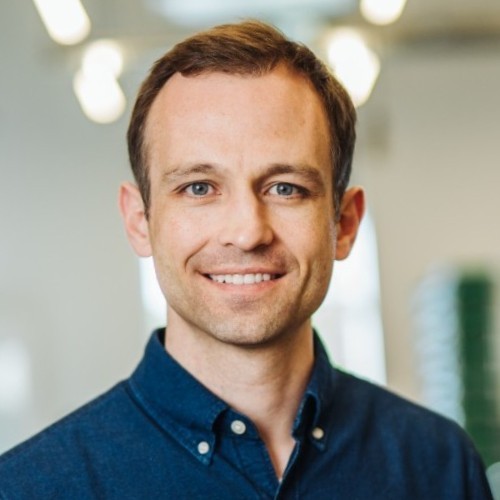
CEO of LightForce
Alfred is the co-founder and CEO of LightForce, the developer of the world's first fully customized, 3D-printed bracket system for orthodontics. He holds a DMD and PhD in Craniofacial Biology from the Medical University of South Carolina and completed his orthodontic residency at Harvard School of Dental Medicine, where he currently serves as faculty and the Board of Fellows. Alfred remains an ABO-certified practicing orthodontist.
Interview Summary
Alfred Griffin is the co-founder and CEO of LightForce, where he’s rethinking one of the most established categories in medical technology: braces. Trained as an orthodontist while still seeing patients today, Alfred approached the problem from inside the system, not as a technology gap, but as a design flaw hiding in plain sight.
Orthodontics had already seen major innovation with clear aligners, unlocking a new adult market. But that progress left behind the largest segment: teens who make up roughly 75% of the patient population still rely on traditional brace brackets that haven’t changed in multiple generations.
With LightForce, each bracket is customized to the patient’s anatomy and treatment plan, eliminating inefficiencies that come with off-the-shelf braces. In fact, a clinical study published in early 2026 showed 43% shorter treatment times and 60% fewer office visits.
Adoption of LightForce’s novel technology required change across clinical, operational, and economic workflows. And scaling the company proved equally difficult. Each patient case requires approximately 86 unique, high-precision parts, manufactured on demand, with full traceability. LightForce consolidated engineering, software, and manufacturing under one roof in a “digital factory” in Wilmington, Massachusetts, turning operations into a key moat.
Founded in 2015, LightForce received FDA clearance and treated its first patients in 2018. Since then, LightForce has been used by nearly 200,000 patients, and 51 of 66 North American orthodontic residency programs are trained and actively teach this technology in their clinics.
Top Takeaways
Look for treatment gaps hiding inside the established patient solutions. When the failure point of an existing solution is the user, redesigning the tool to remove that variable can unlock a far larger market. Applying modern technology to a better-designed solution can drive adoption by delivering what clinicians and patients actually want: shorter treatment, fewer visits, and better outcomes.
A clinician-founder's edge isn't just domain knowledge — it's proximity to decisions that data alone can't inform. Know what your strengths are, be honest about the gaps, and build your team around those specific needs. Stay close to the customer even as the company scales and choose investors not just for capital, but for the expertise they bring.
Treat adoption friction as a design problem, not a sales problem. Every disruptive technology removes a problem users once accepted as permanent — your job is to help them see it. Map the full scope of behavioral change you're asking of end users: clinical, operational, and economic. The rate of adoption is limited by the new things people need to learn. Become an active facilitator of that change, and evaluate every product decision by whether it reduces the learning burden or adds to it.
When creating new markets, design the company to scale the category, not just the product. Treat scaling operations as a core product problem — not a logistics afterthought. The operational infrastructure required to scale could be your defining moat. Bringing engineering and manufacturing under one roof can accelerate iteration and compound quality gains.
Sponsors
FastWave Medical: Named MD+DI's Company of the Year, FastWave is one of the hottest medtech startups in the cardiovascular space. See how you can invest here.
Medsider Fundraising Cohort: Planning to raise capital for your medtech startup? This live, 4-week workshop, led by Medsider is designed to help founders and CEOs tell a sharper story, get investor meetings that matter, and close real capital. Join the waitlist here.
Key Moments
02:43 How growing up in a family of dentists shaped Alfred’s path into orthodontics
07:41 How LightForce uses digital planning and 3D printing to create fully customized braces
08:48 Why LightForce isn’t a brilliant idea, but an obvious fix for the teen braces market that aligners missed
12:19 How LightForce is like Google Maps for teeth, eliminating detours and removing inefficiencies
17:30 How Alfred built LightForce around his clinical strengths and hired for experience to round out the gaps
30:56 The 3-part secret to LightForce adoption by physicians
36:42 How Alfred approaches fundraising, matching investors to the company’s stage and needs
41:51 About LightForce’s digital factories and why they’re the company’s core moat
Chat with Scott
Ask ScottBot questions about this interview, key takeaways, or other medtech topics.
Full Transcript
It's also part of the product strategy when you think about it. It's like any new feature, any new thing we add on, and this might be helpful for other folks, is, think about the new stuff. Does it remove things someone needs to learn, or does it add things that people need to learn to use the product? Because anything you add that needs to be learned will create more friction.
Narrator:Welcome to Medsider, where you can learn from the brightest founders and CEOs in medical devices and health technology. Join tens of thousands of ambitious doers as we unpack the insights, tactics and secrets behind the most successful life science startups in the world. Now here's your host, Scott Nelson.
Scott Nelson:Hey, everyone. In this episode of Medsider, I sat down with Alfred Griffin, co founder and CEO of LightForce. LightForce is the developer of the first fully customized 3D printed bracket system directly personalized for each patient's digital treatment plan. Alfred holds a DMD and PhD in craniofacial biology from the Medical University of South Carolina and completed his orthodontic residency at Harvard School of Dental Medicine, where he currently serves as faculty and the Board of Fellows. An ABO certified practicing orthodontist, he continues to see patients every month while running the company.
Scott Nelson:Here are a few topics we explored in this conversation. First, how do you identify treatment gaps hiding inside markets that already look fully served? Second, what does it take to build a new category beyond just building a better product? Third, what drives adoption when your product requires change across clinical, operational, and economic domains simultaneously? And last, how do you treat scaling as a product problem rather than a logistics one?
Scott Nelson:Before we dive into the full episode, if you're a Medtech founder or CEO preparing to raise capital, you should check out the Medsider fundraising cohort. This four week live workshop combines small group sessions with real time feedback to help you sharpen your investor story, build a targeted investor pipeline, and run a focused fundraising sprint instead of a never ending slog. Over the month, you'll walk away with an investor ready narrative and deck, outreach scripts that actually get responses, a refreshed LinkedIn profile, a simple content plan that keeps you on investors' radar, and a repeatable system for running your raise. You can join the waitlist at medsider.com/fundraisingcohort. Again, that's medsider.com/fundraisingcohort. Alright. Let's get to the interview.
Scott Nelson:Alright, Alfred, welcome to Medsider Radio. Appreciate you carving out a little bit of time on this Monday. I'm sure your schedule's jam packed running LightForce, but yeah, appreciate you coming on.
Alfred Griffin:I'm excited to be here, Scott.
Scott Nelson:Yeah, likewise. So with that said, I recorded a very short bio at the outset this interview, but let's start kind of hearing it from you first. Give us a kind of a one to two minute elevator style pitch on your journey before founding the company.
Alfred Griffin:Man, well, the simplest way to describe my background is the way one of the analysts at Stifel referred to me at a meeting. Called me an inbred dentite, which I think stems from the fact that both my mom and my dad are dentists. As you can imagine, I grew up going to dental conferences for family vacations because of their tax write offs. We talked about teeth at the dinner table and it's just a world I grew up in and had a lot of passion for. We grew up in a small town.
Alfred Griffin:We had cows and a farm and horses and things like that but it was a small town so you go to the grocery store and I hated going to the grocery store because like everyone wanted to talk to my parents I could never get out and then they'd show them their teeth in public and outside that being a little bit weird it also helped me appreciate man you can have a huge impact in the community as a dentist. So it was always something I wanted to pursue given that both my parents were dentists in addition to my grandfather, uncles, cousins, things like that. I wanted to have an impact in the field that my family cared so much about. I did a DMD PhD instead of just doing a DMD which just turned into a seven year program instead of four which makes me a bit of a glutton for academic punishment. I went to the twenty seventh grade which I don't recommend but it taught me a lot.
Alfred Griffin:I originally wanted to have an impact in orthodontics by altering biology which is why I went up to Boston to Harvard for my residency as a scientist and kind of pivoted once I realized what a phase one, two, three clinical trial costs and what the market would be for a biological intervention to move teeth faster. So then we looked at, alright, can we move teeth more efficiently biologically or would it be better to control the physics? And ultimately hey let's control the physics. There's a massive opportunity here looking at the teen market which is served by braces. One thing your listeners may not know is that generation Alpha is going to get the same braces that their grandparents got, which is pretty surprising given the advancements in technology and innovation in Medtech and all the incredible founders and CEOs in your podcast.
Alfred Griffin:And we saw what digital orthodontics did to the aligner world. We created a market for adult orthodontics that previously didn't exist. I mean you used to have forty-fifty year old men and women come into your practice and they just wouldn't get treatment because they didn't want braces. Aligners came in and they unlocked this huge market which is phenomenal for everybody. If you think about an abundance mentality it turned into a very good thing for the profession and for the world.
Alfred Griffin:It had great impact and they did that by applying modern technologies such as CAD software, such as 3D printing. Aligners were not invented by the aligner companies. They were invented like back in 1946. What changed was that those technologies enabled aligners to scale. And so I thought that was a really interesting take.
Alfred Griffin:When I was going through residency, I remember I used to upload every one of my cases, whether it was an aligner case or a bracket case into an aligner software just to see how does that puzzle come together. Are the teeth the right width? Are the jaws the right relationships? How do those teeth and those jaws come together the right way to create the best aesthetic and functional result for a patient? Because the goal of treatment is not straight teeth, it's far more than that than people realize.
Alfred Griffin:If you're thinking about your son or daughter, would want to know these things. And the problem was the only output of that software was a clear aligner, which is not a great fit for the biggest market in orthodontics. Roughly seventy five percent of orthodontic patients are teens and adolescents that have never been treated before, they've got erupting teeth aesthetically. It's a sensitive stage in life and aligners have two main problems with that population. One is biomechanics.
Alfred Griffin:Aligners are really good at pushing teeth, they're not good at pulling teeth. And so if you can imagine like pulling upper incisors down or rotating premolars, uprighting molars, I'll save some of the clinical details but they're not good at that. They can push, they can't really pull well. And the second main thing is compliance which simply means aligners only work if they're on your teeth. And as an orthodontist I know that and I love aligners but the number of times I've heard a teenager say my dog ate my aligners or I put my aligners in a napkin at school and it got thrown away.
Alfred Griffin:That results in the aligners not being on the patient's teeth and so you're year two into treatment and mom and dad are not blaming the aligner company. They're definitely not blaming their precious son or daughter, they're blaming you. And then you got to put braces on the kid. It's just not a great experience. So we said, all right, there's got to be a better way.
Alfred Griffin:What if we can apply some of those amazing technologies that enabled clear aligner production to the bigger market of braces? And that's really where it came back to. If we're going to have an impact in orthodontics, the best way is to control physics by applying those technologies to create a scalable braces solution that is meant for the patient.
Scott Nelson:Got it. So tell us a little bit more about the technology because I think that's a great backdrop. And I, you we're certainly gonna get into the kind of the deeper journey, right, starting the company and kind of what you've been through and where it's at today, then lessons are along the way. But for those that aren't as familiar with your technology, I'm on the website right now, which is lf.co. So LightForce, it's LF, like the letters, lf.co.
Scott Nelson:We'll link to it in the full write up on Medsider. But give us a sense for like how this is distinctly different. Because I think for most people that are listening, they're like, I mean, less than 5% chance that they're not familiar with braces and probably probably similar percentile that's unfamiliar with aligners as well. But give us a sense for kind of how this is different and whether it's related to like the mechanics itself or even just kind of the workflow of a typical kind of patient.
Alfred Griffin:Yeah, mean as I mentioned earlier, the brace that Gen Alpha is getting today are the same ones that their grandparents got. What I mean by that is that braces that are used are made for nobody. They're made for the average and they're kept in a box in a closet in an orthodontist's office and when a patient walks in you take the same bracket out and you stick it by line of sight on the patient's tooth where they think they go. And again it's a bracket made for nobody so then we have to see the patient back for tightenings every four to six weeks because we're not really sure where the teeth are going. We've got to monitor this stuff.
Alfred Griffin:We're reactive. Compare that to clear aligner treatment where a patient comes in and you take a scan and you design the outcome so you're starting with the end in mind versus being reactive. And so what we're doing at LightForce is we're applying that same concept, that same clinical concept where a patient comes in, you take a scan of their teeth, collect all the data, all the records, and then the orthodontist plans where should those teeth end up for that patient, for their smile, their soft tissue, their jaw relationships. What's the best outcome for them? Their tooth sizes.
Alfred Griffin:And then we plan braces that will only get them to that position. So it's the same kind of approach as aligners. We're starting with the end in mind. Now what that results in Scott is that we don't need to see the patient every four to six weeks because we're not being reactive, we're being proactive. We can see the patient every ten to twelve weeks or sometimes longer depending on what the orthodontist wants to do and what that results in is you get 43% shorter treatment time and 60% fewer visits, which as you can imagine has a huge impact on the experience for the patient.
Alfred Griffin:But it's not just that. Oftentimes you can only get cost, quality, speed. In this case you kind of get everything because you also get a quantifiably better outcome for your patient.
Scott Nelson:Got it. What were those two stats again in terms of reduction in time? So like the time that someone has to wear the braces. What were those two stats again?
Alfred Griffin:43% shorter treatment time.
Scott Nelson:Wow, okay.
Alfred Griffin:And that can be anywhere between eight and ten months and then 60% fewer visits which turns into about a year less treatment and six to eight fewer visits. And this is actually data coming from a clinical trial that was just published last month in a peer review journal.
Scott Nelson:Say for example I'm walking into your clinic, you're still practicing full time as an example and you're pitching me on this new alternative LightForce. It's instead of maybe a a two year window of wearing these wearing, you know, traditional braces, it's now, let's call it, I don't know, fourteen months, fourteen, fifteen months, something like that. And then I have to come in less for these tightenings. Right? So instead of coming in every four to six weeks, it's like I come in every ten, twelve, fourteen weeks roughly, something like that.
Alfred Griffin:That's exactly right.
Scott Nelson:And then, oh, by the way, as if this was an infomercial. Right? And there's one more thing. You're actually gonna you're actually gonna get a better result. That seems that seems pretty pretty compelling. That's a pretty compelling pitch. You have me leaning in with six kids myself, right? Yeah. Seriously.
Alfred Griffin:If you add up the trips to the orthodontist that you have in front of you my friend.
Scott Nelson:I know. We've got three that have already been through it. But that's why it's like, I think most people listening, they've got kids that have been through the typical kind of braces. You know what I mean? And so, yeah, it's like, this is interesting. Yeah. I mean, certainly you have me leaning in.
Alfred Griffin:It's interesting Scott, it's not a brilliant idea. I mean like if you're an orthodontist it's pretty obvious. We're used to at the end of treatment repositioning braces by hand, we're used to bending wire. Those are the painful appointments for patients that they commonly refer to as the tightening. You can still do that with LightForce if you need to, but you really shouldn't need to once you master the technology because it's like every tooth in your mouth is taking a direct flight versus a round trip flight.
Alfred Griffin:It's kind of funny. It's like you might remember when Google Maps replaced the paper map, your parents glove box, like your parents didn't drive faster. They stopped getting lost. They stopped meeting co pilots. They stopped asking for directions.
Alfred Griffin:They stopped driving late. Taking the Scenic Route was a choice, not a wrong turn they would take. The drive was actually always that short they just couldn't see it. The same concept is true when we think about LightForce. When LightForce replaces the stock braces at your orthodontist's office, tooth movement is not going to speed up biologically.
Alfred Griffin:The waste just disappears. The tightenings, the bracket repositioning, extra appointments, the wire bending, that was never part of treatment. That was just the cost of using a tool that was not designed for your son or daughter.
Scott Nelson:Right. I just like taking a step back, the traditional like I'm gonna call them braces market, right, it's an unsophisticated way to describe it, the braces market such a huge market, right? And everyone is familiar with kind like the innovation that's happened with aligners, right? And the success story, I would say the large success story, but multiple success stories there. But you almost kind of, you forget about like what happens in the big part of the middle, right?
Scott Nelson:The messy middle, if you will, right? There's lots of room for improvement and different ways to do this. And obviously you're solving for it. So very, very, very interested to kind of learn a little bit more about the journey getting to where we're at now, you know, recording this in early Q2, 2026, but give us a sense for kind of where the company's at right now for those that may listen to this three, four months down the road.
Alfred Griffin:We started this company as a we got funded back in 2017 and obviously the first goal was proof of concept, getting regulatory approval. We bonded our first patients in 2018 about the same time we got regulatory approval. We started a beta in 2019 and these were with braces that were very white. They were not translucent. We had the decision we could either make braces in ceramic, metal or plastic.
Alfred Griffin:Metal we couldn't 3D print at a resolution, you need to 3D print this to be able to scale it. The way braces are traditionally made is via injection molding where you stamp out the same thing as many times as you can and then you get that economy of scale where if your mold costs a million bucks your first brackets are a million, your billionth is a dollar, but you can't change the shape, you can't customize it for the patient whereas 3D printing change and part complexity come free. So we knew we needed to 3D print, so we're really looking at, alright, what are the limits of 3D printing at the time? For metal, it was not there. Metal 3D printing applications were more focused on aerospace automotive, which meant bigger parts where they had different application requirements that didn't need to be as high resolution but had maybe thermodynamic requirements that we didn't have.
Alfred Griffin:So metal was not there. Plastic for biocomp reasons, aesthetic reasons wasn't a good fit either, it also wasn't strong enough. And then enter ceramic. So we started with ceramic. Ceramic was there, you could make ceramic tiny parts, there's technologies used for casting cores and we said all this could make sense for our application.
Alfred Griffin:So we investigated, doubled down, it wasn't aesthetic at first. Like I said, we called them the AirPods for your teeth because they were totally white and there had never been white braces in the history of orthodontics. But we leaned into it and then in 2021 our material science team found a way to make them clear and then we started making them for the molar teeth as well. We had a complete product in 2022 and updated a lot of software, figured out how to scale it, which is a whole story. Then fast forward to today, we've treated nearly 200,000 patients. And we're in 51 one out of the 66 orthodontic programs in North America require their residents to use LightForce today. So as I said, this is something that makes a lot of sense. It's like asking an orthodontist, Is the sky blue? Is this going to be the future of the profession? It absolutely will be.
Scott Nelson:And you're in what you said 51 of the how many total residents? 66. Wow. Wow. So almost near like almost all of them. Okay. What the last 10 doing? Like come on. Like what's what's going on with the last 10?
Alfred Griffin:It's the last 10. It's not necessarily the chairman or chairman. It's it's the legal departments. Things just move a little bit slower. They're academic institutions, which
Scott Nelson:Yeah. Got it. Got it.
Alfred Griffin:Can't fault them for it.
Scott Nelson:That's that's super helpful. But again, everyone listening, lf.co is the website, lf.co. I'm sure you're probably, this is probably compelling technology. I don't think I'm the only one that's like, this is super interesting. I haven't heard of this quite yet.
Scott Nelson:So even if you're largely listening to this interview from a business perspective, you probably got kids or friends that have kids that should know more about this tech.
Scott Nelson:So with that said, let's spend the next maybe twenty, thirty minutes kind of going through your journey building LightForce Alfred. And I wanna start out with kind of this clinician to founder story, because that's, although that's not maybe atypical per se, what is maybe nontraditional is the fact that you're still running the company as CEO, right? Like almost ten years later now that is unique. So you just started to kind of like stay in the pocket, right?
Scott Nelson:And stay in the saddle, driving the ship forward, which I think is probably credit to your ability to kind of adapt and evolve with like the changing needs of the business. So, you know, when you think back about your journey, there like maybe one or two things that really stand out and maybe frame this for other clinicians or physicians, whoever they are right in their capacity that have an idea, wanna Like take a what are a couple of things that really stand out like that's been impactful for your journey so far?
Alfred Griffin:Well first of all there are a lot of people to thank who enable this. Mean I think one thing that's really important is having a very strong sense of self awareness knowing what you're great at knowing what you're not great at and being very intellectually honest about that. Then building your company around those strengths. So one of our HR tenants from day one has always been focusing on building a collection of strengths versus an absence of weaknesses. And as a clinician, and I am still an orthodontist, I saw patients last Friday, so two days a month I'm in clinic. That's a real strength for the company.
Alfred Griffin:When when you're making very important high level strategic decisions as a CEO, having the context of what your customers go through every day using your product. And not every piece of data is going to come through your business data center. You're not going to get every metric that's relevant to your business. Some of the things are going be qualitative and some of the decisions will not be made just through data but also through instinct or a combination thereof. And as a clinician having that close tie to both the product but also the user in the market I think really helps inform some good decisions and enables you to go deep into a certain topic if you need to.
Alfred Griffin:But then looking around the company, that's not the only thing that matters. So that's one strength. But I'd say one of the voids I have is this is my first job. So I haven't run a large company or scale complex operations before or led large engineer teams, things like that. So it's really important to find the best people you can to run those and give them the autonomy to make those decisions within the strategic framework of the company's initiatives.
Alfred Griffin:So that and seeking expertise like surround yourself with great people, people that have been there. And one of the ways we got connected was obviously through Erica Rogers who's on our board, someone I have immense admiration for. She was the CEO of Silk Road for many years, did incredible things over there, built an incredible culture. Other board members, other investors as well. I got lucky with very early on.
Alfred Griffin:It's important, obviously who you take money from matters a lot. You're just not taking capital, you're also taking advice and guidance. So I was very lucky to work with some incredible early stage investors who helped point me in the right direction and believed in me in the vision. The people that took leap of faith to join me on this mission as well, massive kudos to them. I think we all learned a lot in the process and all brought those strengths and that combination is really what enabled us.
Scott Nelson:Yeah. No doubt. I love the fact that you're still practicing even to this day. You said two days a month. It reminds me of a this was I think it maybe last week I saw it.
Scott Nelson:It was just a clip of the interview. Haven't listed the full thing, but I believe it was Mark Andreessen. I think that was, it might've been in the founders podcast, but he was talking about he was comparing what happened in the early days of like some big tech companies like Oracle, as an example, where the CEO as the company scaled and grew, there was so much distance between the CEO and the and the and the c suite and and the customer. It was ultimately hard to get to the truth of what was actually going on inside the company because you've got all these different layers and he compared it to like how Elon, I think is running runs most of his companies where it's like, there's very, very little distance between the c suite and the customer. It's it's it's quite flat, actually.
Scott Nelson:And individual contributors are actually very highly valued in terms of, like, you know, there's not this this classic scenario where ICs want to get into management and then they, it's so easy for any of us to lose sight of like, what's actually, what's the customer going through. And I don't know, like that really stands out the fact that you're still in practice, you're still seeing patients just like, you're that much closer to not only the end user but also like what is a typical orthodontist clinic still going through what challenges they have and that's like that's so so critical.
Alfred Griffin:I think maybe it's more critical when you're building something that's not a commodity but a differentiated new technology that's what this is. This is not like another clear aligner. It's a totally new technology in orthodontics and when you're doing that I think have to, another thing we say is you have to hire athletes, people that are good at learning new things quickly because there's no playbook, there's no blueprint for what you're building so you kind of have to really be super connected. The cycle time has to be really quick as well and so another one of the benefits of seeing patients is it's also executive onboarding. So very commonly we'll bring new executives with me to clinic and they can kind of experience that in person use of the product as well. But I agree with you. It's a huge help. Offsets the other challenges of being a first time CEO.
Scott Nelson:Yeah, definitely. Kudos to your investors, your board for, letting you continue to kind of I mean, that's that's huge. And so because so many so many others would like it's just so easy to say, well, we need we need this other person. Right? They come in. They've they've they've scaled this startup before, but they you lose sight of the fact that, the immense domain expertise that you have, you know, you still are very, very close to the product, the end user, etcetera.
Scott Nelson:But one of the other things that stood out to me though too, in thinking about kind of your journey going from clinician to entrepreneur and like running this company as it scales the fact that you said just be intellectually like honest about kind of where you're at. Because like I think so many just like in life in general like ego gets in the way of a lot of things, right? And you know we think we can do everything and don't have honesty or the humility to say, no, I mean, no, I can't actually. And I do need this other function, I'm less familiar with that.
Scott Nelson:I'm not as good as that. Like let's solve for that. It sounds like that's credit to you, that's been something that's kind of led to getting the company to this stage is having that sort of humility to get there.
Alfred Griffin:Well, appreciate it. It's a lot of talented people and a lot of support along the way.
Scott Nelson:Yeah, cool. Let's get to the next topic on the docket, which is kind of development, right? Early stage development. And it sounds like there's just like any startup, you went through iterations of the product, but as a first time CEO, like this is one of the hardest, I mean, I think this is one of the hardest things for any CEO, but especially as a first time CEO kind of going through the minutiae of this, it's like how to allocate resources, what are oftentimes very limited resources at those early stages, right? Trying to make the necessary improvements to kind of get to that next inflection point.
Scott Nelson:But when you think about those first kind of call it two, three, four years of product development, anything stand out that was particularly helpful or maybe you know now that you wished you knew back then?
Alfred Griffin:Yeah, absolutely. Mass customizing braces is hard. Mass customizing anything while maintaining quality and traceability is very difficult. That was one thing that I absolutely did not appreciate absolutely do now. So for reference today LightForce is one of the world's largest manufacturers of directly 3D printed medical devices.
Alfred Griffin:If you consider the roughly 200,000 cases that we've shipped, multiply that by something like 86 parts, individual parts, that are all very tiny and have very high application requirements for their precision. So scaling that while maintaining quality control is a challenge. It's hard to do that by just humans alone. The other challenge is traceability. Part goes forget which to which patient but to which tooth on which patient.
Alfred Griffin:So traceability is another challenge as well. This is not something that you just injection mold a bunch of times and then keep on a shelf for when you need it. It's really complex manufacturing and then oh by the way to make that harder you've got to get it to the doctor in a very short period of time. So these are on demand manufacturing. So this is why we've had to bring in and this is actually one of the things I'm so excited about Scott is the raw intellectual talent we're bringing from the tech industry into the orthodontics space.
Alfred Griffin:A lot of it's coming from the robotics space ex Amazon robotics, Walmart robotics. And that's absolutely required because the robotics space you have hardware, software, complex operations where we have to think very critically about logistics. That is a similar skill set to what enables mass customization. And that is a bigger problem than what I initially thought it would be. One of the benefits of being in Boston is it's the global home for 3D printing, for CAD software.
Alfred Griffin:There's a lot of strong med device, material science folks here in Boston, deep tech. And so a lot of talent is here, but then putting it all together under one roof, I think, a nontrivial problem.
Scott Nelson:Hey, everyone. Let's take a quick break to talk about Fastwave Medical, the company I co founded and lead as CEO. We're developing next generation intravascular lithotripsy, or IVL, systems to tackle complex calcific disease. Over the last few years, we've closed a series of oversubscribed funding rounds, bringing the total investment into Fastwave to over $50,000,000 Corporate interest in the IVL space is growing too. The $900,000,000 acquisition of Bolt Medical by Boston Scientific in 2025 and Johnson and Johnson's $13,000,000,000 acquisition of Shockwave Medical signal a lot of attention on emerging IVL startups like Fastwave. And we're making serious progress.
Scott Nelson:In addition to recently receiving our ninth patent, we've successfully completed peripheral and coronary feasibility studies and are gearing up for pivotal trials. If you're interested in investing in the fast growing IVL market, head over to fastwavemedical.com/invest. Again, that's fastwavemedical.com/invest. Now let's get back to the conversation.
Alfred Griffin:Where it went wrong in the past is where we would outgrow one factory and then have another and then have product people and engineering people in one factory and the people building it in another. Whereas the real strength and opportunity is unifying that under the same roof where you have the people building it looking over the shoulders of the people that are making it. It's not just a great way to improve the quality, traceability and improve product performance, but it's also a great way to look at technology solutions to bring down your COGS, to improve your margin profile. So there's a lot of benefit to having all those smart people under one roof.
Scott Nelson:Is that how largely how you solve some of those some of those critical kind of challenges is is by simply not setting up sort of individual kind of like buildings or factories. Right? Is is is everything like right now kind of under under one umbrella?
Alfred Griffin:Everything is under under one roof in Wilmington, Massachusetts.
Scott Nelson:Oh, wow.
Alfred Griffin:Yeah. Yeah. I'd say that's that's going really well. The teams are are working incredibly well together. It's it's a beautiful thing to watch where you see people who are so talented in their respective areas work together to solve a common problem that's never been solved before.
Alfred Griffin:I mean even the innovations on the factory floor recently that involved computer vision that solved for traceability, one of the engineers was generous enough to let me sort my own case. I submitted a case and I said do you mind if I sort this in the factory and they let me do that. I probably brought down their average handle time but just doing it myself like created such an appreciation for what they've built and what they can accomplish going forward. It's just an incredible thing to watch. So separate of the tooth story, which is obviously the thing that I'm incredibly passionate about. There's a real industry 4.0 story that is being told at LightForce right now.
Scott Nelson:Oh, yeah. That's that's awesome.
Alfred Griffin:By such talented people.
Scott Nelson:Yeah. No. That's I had I had no idea that, like, everything was, like, literally under under one under one roof. I mean, this is a different side topic altogether, but, like, it kind of gives me a little bit of hope for maybe, like, you know, the the possibility of sort of re industrializing and seeing a lot more of that type of manufacturing again here in in The US. Right? Because we've lost I mean, we've lost so much of that over the past, you know, twenty, thirty years.
Alfred Griffin:Yeah it's such an opportunity for The U. S. Scott. Mean you know obviously you know B2B SaaS has taken a bit of a hit but you know why do people look at med device invest in med device? It's because there's such a real competitive moat with a non volatile market.
Alfred Griffin:Yeah. And when you can build a company that is a new technology that can grow in the same way as a SaaS company, but has that major competitive moat around it where it's a really hard thing to scale. It's a really great position to be in.
Scott Nelson:Yeah, maybe you did realize you'd be in this position five, six, seven years ago, but I got to think like, yeah, you're sitting pretty good, right? Because that's not as to your point earlier, that's not easy to do. Let alone nail the product, but also to like build out this sort of infrastructure at scale, right? Where you're doing this hundreds of thousands, for hundreds of thousands, you know, maybe millions at some point of patients. That's pretty cool. That's awesome, actually. I'd say better than cool. It's awesome.
Scott Nelson:Let's switch to adoption. I think it was just especially interesting topic given the fact that you still practice a times a month.
Scott Nelson:When you first started introducing kind of the let's take just the current version and feel free to maybe address this earlier in the company's journey. But what do you think was one of the most challenging things for orthodontists to kind of get over the hump so to speak, right, when adopting something like this versus traditional kind of metal off the shelf brackets?
Alfred Griffin:It's tough because every great disruption has a few things in common. First, it removes a problem that you accepted as permanent. No one really called them problems, they just called them the process. And so when you think about like putting braces on as an orthodontist, bending wires, repositioning brackets, all those extra appointments, that was just kind of accepted because we've been doing it for now three generations. Secondly is once you experience the new way, the old way kind of becomes unthinkable.
Alfred Griffin:So as I mentioned earlier, you're never going to refold a paper map and stick it in your glove box again, you're going use Google Maps. Same thing with braces. God help me if I ever have to direct bond a stock set of braces on a patient's teeth. It just does not feel right for me to do as an orthodontist, as a clinician. And then lastly, you get back something you stopped noticing was gone.
Alfred Griffin:So I guess to use the Google Maps reference, for drivers it's kind of peace of mind on the road. You know where you're going, you can see it on your dashboard. For orthodontists it's the gift of time and knowing that you're going to be done and have an awesome outcome without the extra seven to eight visits. So for a lot of orthodontists it's getting the product to a point where it is easy to adopt as well. The other challenge I would say for any new disruptive technology, and this is a quote from Erica, which really stuck with me, that the rate of diffusion for new technology in an industry is rate limited by the new stuff people need to learn.
Alfred Griffin:And in orthodontics, it's not like adopting clear aligners. It was a solution for the adult population initially, which is like maybe 20% of your practice. For braces, it's like 80% of your practice. So the amount of change is 4x for this versus clear aligners. So you've really got to do new things.
Alfred Griffin:You've to learn new things clinically, operationally and economically. Clinically, you to train your staff to put these on. You work at the top of your license. It's like in modern medicine, have nurse practitioners, PAs that are now doing more. They're writing scripts and doing small procedures.
Alfred Griffin:I think the same thing's going to happen in orthodontics where you have staff doing more. They're putting on the hardware, they're putting on the aligner attachments, they're putting on LightForce or whatever future competitor we may have. And then operationally, every patient that comes in now is a scan and a down payment, see you back in four weeks for a delegated bonding visit. With stock braces, you can put them on that day if you have the time in your schedule, but not everybody does and it's just a change in workflow. And then you don't have to see them as often.
Alfred Griffin:So there are operational changes there you have to get comfortable with. And then economically your lab bill is higher initially. It's less than a clear aligner lab bill but it's still higher than what you pay for stock braces by two to three x depending on what stock braces you use. So you've got to get comfortable and understand the cash flow implications initially getting started. Ultimately, make way more money as measured by profit per visit, but you've got to get over those initial cash flow challenges for a SMB.
Alfred Griffin:And not every orthodontist has an accountant that's helping them, guide them through the change. So there are some real new things to learn as an orthodontist and that's part of our job is to help be facilitators of that change. Help guide them, help show them how other practices did it, help show them how good it can be versus continuing to live with those problems that they'd before accepted as permanent.
Scott Nelson:Got it. Yeah. That framework is actually really, really helpful. It kind of the analogy I think of is like, you know, if you're running sprints on track and and field, right? And you're training with a parachute, right?
Scott Nelson:As a startup, you're the sprinter trying to get out of the blocks as fast as possible. But if there's a whole host of things that need to change, right? Like that's a big parachute. That's going to be, it's going to, it's going to take more effort. It's going to take more time to implement.
Scott Nelson:Whereas, you know, there's, if you're only asking kind of your end user to change maybe 20% of their practice as an example, whether it's clinical, economical, etcetera, workflow, etcetera. Maybe that's a smaller parachute and you can get out faster, but like that's just really healthy to keep in mind, right? Whatever your idea is or whatever you're working on, bake that into your initial commercialization efforts, right? Of like how much are we asking the end user to change because that's directly related to how fast we're going to be able to like launch and what kind of challenges we're going to expect to see.
Alfred Griffin:Totally. And it's also part of the product strategy when you think about it. It's like, you know, any new feature, any new thing we add on, this might be helpful for other folks, is think about the new stuff. Does it remove things someone needs to learn or does it add things that people need to learn to use the product? Because anything you add that needs to be learned will create more friction.
Scott Nelson:Yeah, yeah, no doubt. And it's not just the physician or the clinician. It's also, as you pointed out, the staff as well, whether it's nurse practitioners, nurses, techs, office folks as well, If there's a billing, there's a billing kind of component. Yeah, all of that really matters for sure. I'm looking at the clock and I wanna be mindful of the time.
Scott Nelson:If we have a few minutes, I'd love to circle back around to kind of the digital factories, right? As kind of your team is coined, right? At least we've seen that pop up in various, as we were kind of doing research for this interview, various kind of other pieces.
Scott Nelson:But let's first talk about fundraising because you're coming off a pretty significant round of capital that you raised. I believe, let's see here, was in 2024, notes say it was a $50,000,000 round for largely growth related. But let's talk about getting this far, right?
Scott Nelson:Raising this of capital as a first time CEO. For other folks that haven't done this, right? Maybe they've raised some friends and family that haven't raised for institutional capital. Like what would be like the one or two pieces of advice that they really need to get right in order to raise their series A, to raise their series B and hopefully follow on investments as they continue to execute?
Alfred Griffin:I think the number one thing is sure you know who you're taking money from. I think that matters a lot. Investors should be more than capital, they should be sources of guidance to get the company to the next stage. And that has implications in team building, in their network of investors, analysts, things like that. Second thing is they have jobs as well, their job is to generate return.
Alfred Griffin:So like making it extremely clear how that's going to happen. How are you going to create value in the company? And that can, you know, it varies industry to industry. Like in pharma, it's not as much about revenue, but approvals and trials. And in our world, a lot of it is about revenue.
Alfred Griffin:So hitting your targets, I think, has a lot to do with it, especially as you get to be the later stage. In the earlier stages, there's some things that are out of your control, such as demonstrating there is a real market that exists that is big. And I think that wasn't something I considered, but got lucky that actually orthodontics is pretty massive. It's one of the biggest sectors in dentistry. And then showing that you can build something that people will value.
Alfred Griffin:I don't think it needs to be perfect, but having an MVP that demonstrates the core thesis of the product is really critical. Yeah and then I think take money when it's there is an important thing as well. I think a lot of times a lot of the founders I've met over optimize for things like price and things like that. What's just most important, ultimately what matters is, is it going to be successful? And maybe a little bit of dilution here or there, whatever.
Alfred Griffin:Ultimately when the outcome is huge, no one really cares. You you won't care. The last thing on that same topic is just making sure investors are really important, but I think maybe even more important is having a really talented team. So making sure that you share the equity in a way, like give meaningful grants to the people that are gonna move the business the most. No one gets there alone. It always takes a team. So I think those are the things I'd say.
Scott Nelson:Yeah, those are like four or five like really good points. But just to kind of double click into the importance of having the right investors around the table. A lot of those things you mentioned kind of coincide with that. Like huge market, you're operating in a massive market, obviously being able to demonstrate progress as you raise kind of each additional follow-up round. Like sometimes it sounds cliche or maybe sounds easy.
Scott Nelson:It's easy to say harder to do, right? Is find the right investors that are truly partners. And I couldn't stress that, like all the more. Mean, and if you feel like, and maybe I'm just kind of, I'm gonna riffing a little bit, but if you feel like you're desperate and you have to kind of, you know, fall into like a second or third option, right, to raise capital, I would maybe say pause, extend your runway, try to extend your runway a little bit longer so you can get to the next inflection point to find the right investors because you could very well end up at being, you know, being a scenario where you take capital from the wrong partner. You actually do execute for two, three, four years and end up in a very, very bad spot, you know? And so, yeah, so crucial to take the right money from the right people.
Alfred Griffin:Yeah. As a CEO, I think you have three jobs. One is culture, two is the team, and three is don't run out of money. So making sure you take the money from the right partner is really important. Think in our case we recognized very early on software was a key part of building not just the customer facing product but the back end manufacturing is very software heavy as well.
Alfred Griffin:So we took a lot of money from tech investors such as Matrix Partners, Tyche, Kleiner Perkins. These are not medtech specific people, these are people that typically do a lot of software. So they were immensely helpful in building out the team and the technology in the early stages to build a product. And now as we get later, think about, all right, we're going to be a Medtech branded company. So let's bring on some awesome people such as Ally Bridge. So that's kind of how we think about that.
Scott Nelson:That's a that's a really good point too because not obviously software was already an important part of your business. But but if you're in those if you're in a company that's kind of straddling, I would say I'm not even sure the best way to describe this, kind of different different areas, right? Whether it's software, whether it's tech, whether it's manufacturing, what have you, like take advantage of that, right? Because there's gonna be different segments of investors that specialize in each of those areas and like all the more to go, all the more reason to go broad, right? With your, you know, yeah.
Scott Nelson:Totally. So definitely something that if you use that, if you're in that, that could be strength in essence. So I guess this what I'm trying to emphasize.
Scott Nelson:I wanna get to this rapid fire portion of this interview, real quick, kind of going back to like this idea of digital factories, like, maybe it just surfaced based on our research, but tell me a little bit more about that. What you're operating in, current infrastructure, how did that term come to be, this idea of a digital factory? It's kind of unique.
Alfred Griffin:So the category we're building out, Scott, is called generative braces. So what that means is that every bracket is generated from two sources of data. One is the data from the patient. That's all their dental scan, their radiographs, their cone beam CT so we can see the bone. That's one source of data. The other source of data is the orthodontist treatment plan and from those two sources of data, the patient data and the orthodontist plan, we generate patient specific braces. So these are generative braces n of one.
Alfred Griffin:So every part that comes out of the factory is a snowflake, unique as a snowflake or a fingerprint. And that makes sense, right? Because teeth are as unique as fingerprints. That's why they're used in dental forensics. So the challenge from a factory perspective is that you have to use a technology that will scale that mass customization.
Alfred Griffin:That is a new thing in our industry. Braces have never been mass customized before. Even aligners are not directly 3D printed. They're vacuum formed on something else. It's with a much lower, like 12 x lower resolution.
Alfred Griffin:So it's a new challenge with no blueprint on how to do it, and it has to be made on demand. So there's a lot of bespoke technology that never existed before that was created solely to scale this application. That means you've gotta get a lot of people that are very talented, that are extremely comfortable with ambiguity. You know, building something that only they design without clear parameters. So so that's why, like, a a lot of our product is not as much the first thing we built, it's been the scaling part of it.
Alfred Griffin:And quite frankly, that's been where the majority of our challenges have stemmed from is scaling it. You've heard other people say building it once is easy, building it a million times is way more challenging. So I can't underline that enough, at least for our application. You're not injection molding, you're not using a contract manufacturer because we have to control the process. Building an app, operationalizing that machine, that digital factory is a major moat and one that I'm not sure everyone fully appreciates.
Alfred Griffin:But as I started this, this is not a brilliant idea that we're building. And if that were the case you think that other people would have done it. The reason people haven't done it is because it takes a lot of brain damage to scale. It's hard to do.
Scott Nelson:Yeah, you're like literally doing the hard things to get to this point. No, that's super impressive. I know we don't have a lot of time. I'd love to spend even more time kind of discussing this, but it's incredible to kind of see what you've built.
Scott Nelson:And like I said earlier, I think it's, I don't know, gives me optimism for like what re industrialization could look like this time around, I guess. So with that said, rapid fire questions Alfred, and feel free to expand a little bit if you want to. But first one on the docket, fast forward a year from now, what are you most excited about at LightForce over the next twelve months?
Alfred Griffin:What I'm really excited about today, I'll start today and then say what this looks like a year from now, but we're launching metal braces. Remember when I first talked about the limitations of 3D printing in metal? What's really interesting is that roughly ninety five percent of teenagers get all metal braces, all metal braces. And when they get ceramic, they only get ceramic on the front six or the front eight teeth. So the world had never used all ceramic braces prior to LightForce, which means that Orthodontists really value the customization to use it.
Alfred Griffin:And so why I'm so excited about our metal launch, which is just starting in beta now with select Orthodontists, is that it really unlocks the market. Metal is a bit more it can be lower profile. You can chew on it with eat Jolly Ranchers and it's not going to crack, which is what a lot of teens do. And it has lower friction. So you can close spaces a lot faster clinically, which is pretty cool if you're an orthodontist.
Alfred Griffin:So the data that I shared with you is forty three percent shorter treatment time, sixty percent fewer visits. I think we're just getting started. That's a study that was done with all ceramics, which we and ceramic is amazing for the aesthetics. But then I'll tell you one other thing that's interesting is for the teen market, a lot of teens actually want metal for the aesthetics, which was a surprise to me. I guess it shouldn't have been though, knowing adolescent psychology.
Alfred Griffin:You have some teenagers. You appreciate this. But at that sense of at that time in life, your sense of self is informed by your peers, not as much by yourself. So if your friends on your travel soccer team or AU baseball team have metal braces, typically you want what your friends have.
Alfred Griffin:You don't want stand out. So aesthetically, a lot of teenagers want medal as well. And that's been a limitation for us in a lot of our practices, maybe less in Beverly Hills and Manhattan, but in in other areas, you know, they say, you know, we we can't use all LightForce because you guys don't offer metal yet. And we want to. And so my hope, and I guess what I'm excited for a year from now, is to see the practices that don't have LightForce stock metal braces in their aligner du jour, but they have LightForce in their aligner du jour. And what that means is less complexity. They're only using two systems and they have a single system for braces.
Scott Nelson:That's great. I think by the time this is released, maybe the metal option will be officially available, I guess, at a beta. So yeah, pretty exciting. Last question, because I know we're short on time here, but let's say we're in Boston. Right?
Scott Nelson:It's a group of, you know, I'm gonna combine these last two questions I typically ask, but it's a group of, know, other kind of life science medtech entrepreneurs. And you wanna leave them with like one thing. The one thing that maybe someone would, you wish someone would have whispered in your ear ten years ago, you know, before you started the company. What's that one critical thing that you think every medtech life science entrepreneur needs to get right?
Alfred Griffin:Gain a deep understanding of your customer and the patient they serve. It sounds, and I wish I had something a bit more brilliant sounding. I think that simple. I think if you create something valuable and you have a deep understanding for your customers willing to pay for something or their willingness to sell something, meaning are they something they can't give up, then I think you'll know what to build and you'll be successful. Without that clarity on the roadmap, it's easy to spend a lot of money.
Scott Nelson:Yeah, that's good piece of advice to kind of end the discussion with. But I know we're a little bit over, but I can't thank you enough for coming on the program. It's lf.co, company is LightForce, but lf.co, we'll link to it in the full write up on Medsider. But Alfred, you're a brilliant guy. Yeah, that's kind of obvious, but like you tell great stories. You're a great communicator. It's been fun fun fun discussion.
Alfred Griffin:You're very kind, Scott. Thank you.
Scott Nelson:No. I genuinely mean that. For sure, you're. This has been fun. So I'll have you hold on the line. But for everyone listening, thanks again for your attention as always. Until the next episode of Medsider goes live. Everyone take care.
Scott Nelson:Hey. It's Scott again. One quick thing before you go. You see, I love bringing you insightful conversations with the best founders and CEOs of medical device and health technology startups. But here's the thing.
Scott Nelson:I'd be super grateful if you could help me reach even more ambitious doers who share our passion. So if you found value in this podcast, if you found yourself nodding your head while listening, or if you simply enjoy what we're doing with Medsider, please take a moment to leave us a review. It's super easy. Just open your Apple Podcasts app or the podcast app of your choice, search for our show, and scroll down to the ratings and review section. Leave your honest thoughts and hit that five star rating if you think we're worthy. Your feedback is incredibly important, and it's the best way to ensure we keep bringing you awesome discussions with leading founders and CEOs.
Scott Nelson:So take a moment to be a good friend and leave that review today. As always, thanks for being a part of our journey and for helping Medsider continue to grow and evolve. Your support is greatly appreciated. Alright. Enough talk about reviews. Stay tuned for another informative episode coming at you soon.
Read More
It's also part of the product strategy when you think about it. It's like any new feature, any new thing we add on, and this might be helpful for other folks, is, think about the new stuff. Does it remove things someone needs to learn, or does it add things that people need to learn to use the product? Because anything you add that needs to be learned will create more friction.
Narrator:Welcome to Medsider, where you can learn from the brightest founders and CEOs in medical devices and health technology. Join tens of thousands of ambitious doers as we unpack the insights, tactics and secrets behind the most successful life science startups in the world. Now here's your host, Scott Nelson.
Scott Nelson:Hey, everyone. In this episode of Medsider, I sat down with Alfred Griffin, co founder and CEO of LightForce. LightForce is the developer of the first fully customized 3D printed bracket system directly personalized for each patient's digital treatment plan. Alfred holds a DMD and PhD in craniofacial biology from the Medical University of South Carolina and completed his orthodontic residency at Harvard School of Dental Medicine, where he currently serves as faculty and the Board of Fellows. An ABO certified practicing orthodontist, he continues to see patients every month while running the company.
Scott Nelson:Here are a few topics we explored in this conversation. First, how do you identify treatment gaps hiding inside markets that already look fully served? Second, what does it take to build a new category beyond just building a better product? Third, what drives adoption when your product requires change across clinical, operational, and economic domains simultaneously? And last, how do you treat scaling as a product problem rather than a logistics one?
Scott Nelson:Before we dive into the full episode, if you're a Medtech founder or CEO preparing to raise capital, you should check out the Medsider fundraising cohort. This four week live workshop combines small group sessions with real time feedback to help you sharpen your investor story, build a targeted investor pipeline, and run a focused fundraising sprint instead of a never ending slog. Over the month, you'll walk away with an investor ready narrative and deck, outreach scripts that actually get responses, a refreshed LinkedIn profile, a simple content plan that keeps you on investors' radar, and a repeatable system for running your raise. You can join the waitlist at medsider.com/fundraisingcohort. Again, that's medsider.com/fundraisingcohort. Alright. Let's get to the interview.
Scott Nelson:Alright, Alfred, welcome to Medsider Radio. Appreciate you carving out a little bit of time on this Monday. I'm sure your schedule's jam packed running LightForce, but yeah, appreciate you coming on.
Alfred Griffin:I'm excited to be here, Scott.
Scott Nelson:Yeah, likewise. So with that said, I recorded a very short bio at the outset this interview, but let's start kind of hearing it from you first. Give us a kind of a one to two minute elevator style pitch on your journey before founding the company.
Alfred Griffin:Man, well, the simplest way to describe my background is the way one of the analysts at Stifel referred to me at a meeting. Called me an inbred dentite, which I think stems from the fact that both my mom and my dad are dentists. As you can imagine, I grew up going to dental conferences for family vacations because of their tax write offs. We talked about teeth at the dinner table and it's just a world I grew up in and had a lot of passion for. We grew up in a small town.
Alfred Griffin:We had cows and a farm and horses and things like that but it was a small town so you go to the grocery store and I hated going to the grocery store because like everyone wanted to talk to my parents I could never get out and then they'd show them their teeth in public and outside that being a little bit weird it also helped me appreciate man you can have a huge impact in the community as a dentist. So it was always something I wanted to pursue given that both my parents were dentists in addition to my grandfather, uncles, cousins, things like that. I wanted to have an impact in the field that my family cared so much about. I did a DMD PhD instead of just doing a DMD which just turned into a seven year program instead of four which makes me a bit of a glutton for academic punishment. I went to the twenty seventh grade which I don't recommend but it taught me a lot.
Alfred Griffin:I originally wanted to have an impact in orthodontics by altering biology which is why I went up to Boston to Harvard for my residency as a scientist and kind of pivoted once I realized what a phase one, two, three clinical trial costs and what the market would be for a biological intervention to move teeth faster. So then we looked at, alright, can we move teeth more efficiently biologically or would it be better to control the physics? And ultimately hey let's control the physics. There's a massive opportunity here looking at the teen market which is served by braces. One thing your listeners may not know is that generation Alpha is going to get the same braces that their grandparents got, which is pretty surprising given the advancements in technology and innovation in Medtech and all the incredible founders and CEOs in your podcast.
Alfred Griffin:And we saw what digital orthodontics did to the aligner world. We created a market for adult orthodontics that previously didn't exist. I mean you used to have forty-fifty year old men and women come into your practice and they just wouldn't get treatment because they didn't want braces. Aligners came in and they unlocked this huge market which is phenomenal for everybody. If you think about an abundance mentality it turned into a very good thing for the profession and for the world.
Alfred Griffin:It had great impact and they did that by applying modern technologies such as CAD software, such as 3D printing. Aligners were not invented by the aligner companies. They were invented like back in 1946. What changed was that those technologies enabled aligners to scale. And so I thought that was a really interesting take.
Alfred Griffin:When I was going through residency, I remember I used to upload every one of my cases, whether it was an aligner case or a bracket case into an aligner software just to see how does that puzzle come together. Are the teeth the right width? Are the jaws the right relationships? How do those teeth and those jaws come together the right way to create the best aesthetic and functional result for a patient? Because the goal of treatment is not straight teeth, it's far more than that than people realize.
Alfred Griffin:If you're thinking about your son or daughter, would want to know these things. And the problem was the only output of that software was a clear aligner, which is not a great fit for the biggest market in orthodontics. Roughly seventy five percent of orthodontic patients are teens and adolescents that have never been treated before, they've got erupting teeth aesthetically. It's a sensitive stage in life and aligners have two main problems with that population. One is biomechanics.
Alfred Griffin:Aligners are really good at pushing teeth, they're not good at pulling teeth. And so if you can imagine like pulling upper incisors down or rotating premolars, uprighting molars, I'll save some of the clinical details but they're not good at that. They can push, they can't really pull well. And the second main thing is compliance which simply means aligners only work if they're on your teeth. And as an orthodontist I know that and I love aligners but the number of times I've heard a teenager say my dog ate my aligners or I put my aligners in a napkin at school and it got thrown away.
Alfred Griffin:That results in the aligners not being on the patient's teeth and so you're year two into treatment and mom and dad are not blaming the aligner company. They're definitely not blaming their precious son or daughter, they're blaming you. And then you got to put braces on the kid. It's just not a great experience. So we said, all right, there's got to be a better way.
Alfred Griffin:What if we can apply some of those amazing technologies that enabled clear aligner production to the bigger market of braces? And that's really where it came back to. If we're going to have an impact in orthodontics, the best way is to control physics by applying those technologies to create a scalable braces solution that is meant for the patient.
Scott Nelson:Got it. So tell us a little bit more about the technology because I think that's a great backdrop. And I, you we're certainly gonna get into the kind of the deeper journey, right, starting the company and kind of what you've been through and where it's at today, then lessons are along the way. But for those that aren't as familiar with your technology, I'm on the website right now, which is lf.co. So LightForce, it's LF, like the letters, lf.co.
Scott Nelson:We'll link to it in the full write up on Medsider. But give us a sense for like how this is distinctly different. Because I think for most people that are listening, they're like, I mean, less than 5% chance that they're not familiar with braces and probably probably similar percentile that's unfamiliar with aligners as well. But give us a sense for kind of how this is different and whether it's related to like the mechanics itself or even just kind of the workflow of a typical kind of patient.
Alfred Griffin:Yeah, mean as I mentioned earlier, the brace that Gen Alpha is getting today are the same ones that their grandparents got. What I mean by that is that braces that are used are made for nobody. They're made for the average and they're kept in a box in a closet in an orthodontist's office and when a patient walks in you take the same bracket out and you stick it by line of sight on the patient's tooth where they think they go. And again it's a bracket made for nobody so then we have to see the patient back for tightenings every four to six weeks because we're not really sure where the teeth are going. We've got to monitor this stuff.
Alfred Griffin:We're reactive. Compare that to clear aligner treatment where a patient comes in and you take a scan and you design the outcome so you're starting with the end in mind versus being reactive. And so what we're doing at LightForce is we're applying that same concept, that same clinical concept where a patient comes in, you take a scan of their teeth, collect all the data, all the records, and then the orthodontist plans where should those teeth end up for that patient, for their smile, their soft tissue, their jaw relationships. What's the best outcome for them? Their tooth sizes.
Alfred Griffin:And then we plan braces that will only get them to that position. So it's the same kind of approach as aligners. We're starting with the end in mind. Now what that results in Scott is that we don't need to see the patient every four to six weeks because we're not being reactive, we're being proactive. We can see the patient every ten to twelve weeks or sometimes longer depending on what the orthodontist wants to do and what that results in is you get 43% shorter treatment time and 60% fewer visits, which as you can imagine has a huge impact on the experience for the patient.
Alfred Griffin:But it's not just that. Oftentimes you can only get cost, quality, speed. In this case you kind of get everything because you also get a quantifiably better outcome for your patient.
Scott Nelson:Got it. What were those two stats again in terms of reduction in time? So like the time that someone has to wear the braces. What were those two stats again?
Alfred Griffin:43% shorter treatment time.
Scott Nelson:Wow, okay.
Alfred Griffin:And that can be anywhere between eight and ten months and then 60% fewer visits which turns into about a year less treatment and six to eight fewer visits. And this is actually data coming from a clinical trial that was just published last month in a peer review journal.
Scott Nelson:Say for example I'm walking into your clinic, you're still practicing full time as an example and you're pitching me on this new alternative LightForce. It's instead of maybe a a two year window of wearing these wearing, you know, traditional braces, it's now, let's call it, I don't know, fourteen months, fourteen, fifteen months, something like that. And then I have to come in less for these tightenings. Right? So instead of coming in every four to six weeks, it's like I come in every ten, twelve, fourteen weeks roughly, something like that.
Alfred Griffin:That's exactly right.
Scott Nelson:And then, oh, by the way, as if this was an infomercial. Right? And there's one more thing. You're actually gonna you're actually gonna get a better result. That seems that seems pretty pretty compelling. That's a pretty compelling pitch. You have me leaning in with six kids myself, right? Yeah. Seriously.
Alfred Griffin:If you add up the trips to the orthodontist that you have in front of you my friend.
Scott Nelson:I know. We've got three that have already been through it. But that's why it's like, I think most people listening, they've got kids that have been through the typical kind of braces. You know what I mean? And so, yeah, it's like, this is interesting. Yeah. I mean, certainly you have me leaning in.
Alfred Griffin:It's interesting Scott, it's not a brilliant idea. I mean like if you're an orthodontist it's pretty obvious. We're used to at the end of treatment repositioning braces by hand, we're used to bending wire. Those are the painful appointments for patients that they commonly refer to as the tightening. You can still do that with LightForce if you need to, but you really shouldn't need to once you master the technology because it's like every tooth in your mouth is taking a direct flight versus a round trip flight.
Alfred Griffin:It's kind of funny. It's like you might remember when Google Maps replaced the paper map, your parents glove box, like your parents didn't drive faster. They stopped getting lost. They stopped meeting co pilots. They stopped asking for directions.
Alfred Griffin:They stopped driving late. Taking the Scenic Route was a choice, not a wrong turn they would take. The drive was actually always that short they just couldn't see it. The same concept is true when we think about LightForce. When LightForce replaces the stock braces at your orthodontist's office, tooth movement is not going to speed up biologically.
Alfred Griffin:The waste just disappears. The tightenings, the bracket repositioning, extra appointments, the wire bending, that was never part of treatment. That was just the cost of using a tool that was not designed for your son or daughter.
Scott Nelson:Right. I just like taking a step back, the traditional like I'm gonna call them braces market, right, it's an unsophisticated way to describe it, the braces market such a huge market, right? And everyone is familiar with kind like the innovation that's happened with aligners, right? And the success story, I would say the large success story, but multiple success stories there. But you almost kind of, you forget about like what happens in the big part of the middle, right?
Scott Nelson:The messy middle, if you will, right? There's lots of room for improvement and different ways to do this. And obviously you're solving for it. So very, very, very interested to kind of learn a little bit more about the journey getting to where we're at now, you know, recording this in early Q2, 2026, but give us a sense for kind of where the company's at right now for those that may listen to this three, four months down the road.
Alfred Griffin:We started this company as a we got funded back in 2017 and obviously the first goal was proof of concept, getting regulatory approval. We bonded our first patients in 2018 about the same time we got regulatory approval. We started a beta in 2019 and these were with braces that were very white. They were not translucent. We had the decision we could either make braces in ceramic, metal or plastic.
Alfred Griffin:Metal we couldn't 3D print at a resolution, you need to 3D print this to be able to scale it. The way braces are traditionally made is via injection molding where you stamp out the same thing as many times as you can and then you get that economy of scale where if your mold costs a million bucks your first brackets are a million, your billionth is a dollar, but you can't change the shape, you can't customize it for the patient whereas 3D printing change and part complexity come free. So we knew we needed to 3D print, so we're really looking at, alright, what are the limits of 3D printing at the time? For metal, it was not there. Metal 3D printing applications were more focused on aerospace automotive, which meant bigger parts where they had different application requirements that didn't need to be as high resolution but had maybe thermodynamic requirements that we didn't have.
Alfred Griffin:So metal was not there. Plastic for biocomp reasons, aesthetic reasons wasn't a good fit either, it also wasn't strong enough. And then enter ceramic. So we started with ceramic. Ceramic was there, you could make ceramic tiny parts, there's technologies used for casting cores and we said all this could make sense for our application.
Alfred Griffin:So we investigated, doubled down, it wasn't aesthetic at first. Like I said, we called them the AirPods for your teeth because they were totally white and there had never been white braces in the history of orthodontics. But we leaned into it and then in 2021 our material science team found a way to make them clear and then we started making them for the molar teeth as well. We had a complete product in 2022 and updated a lot of software, figured out how to scale it, which is a whole story. Then fast forward to today, we've treated nearly 200,000 patients. And we're in 51 one out of the 66 orthodontic programs in North America require their residents to use LightForce today. So as I said, this is something that makes a lot of sense. It's like asking an orthodontist, Is the sky blue? Is this going to be the future of the profession? It absolutely will be.
Scott Nelson:And you're in what you said 51 of the how many total residents? 66. Wow. Wow. So almost near like almost all of them. Okay. What the last 10 doing? Like come on. Like what's what's going on with the last 10?
Alfred Griffin:It's the last 10. It's not necessarily the chairman or chairman. It's it's the legal departments. Things just move a little bit slower. They're academic institutions, which
Scott Nelson:Yeah. Got it. Got it.
Alfred Griffin:Can't fault them for it.
Scott Nelson:That's that's super helpful. But again, everyone listening, lf.co is the website, lf.co. I'm sure you're probably, this is probably compelling technology. I don't think I'm the only one that's like, this is super interesting. I haven't heard of this quite yet.
Scott Nelson:So even if you're largely listening to this interview from a business perspective, you probably got kids or friends that have kids that should know more about this tech.
Scott Nelson:So with that said, let's spend the next maybe twenty, thirty minutes kind of going through your journey building LightForce Alfred. And I wanna start out with kind of this clinician to founder story, because that's, although that's not maybe atypical per se, what is maybe nontraditional is the fact that you're still running the company as CEO, right? Like almost ten years later now that is unique. So you just started to kind of like stay in the pocket, right?
Scott Nelson:And stay in the saddle, driving the ship forward, which I think is probably credit to your ability to kind of adapt and evolve with like the changing needs of the business. So, you know, when you think back about your journey, there like maybe one or two things that really stand out and maybe frame this for other clinicians or physicians, whoever they are right in their capacity that have an idea, wanna Like take a what are a couple of things that really stand out like that's been impactful for your journey so far?
Alfred Griffin:Well first of all there are a lot of people to thank who enable this. Mean I think one thing that's really important is having a very strong sense of self awareness knowing what you're great at knowing what you're not great at and being very intellectually honest about that. Then building your company around those strengths. So one of our HR tenants from day one has always been focusing on building a collection of strengths versus an absence of weaknesses. And as a clinician, and I am still an orthodontist, I saw patients last Friday, so two days a month I'm in clinic. That's a real strength for the company.
Alfred Griffin:When when you're making very important high level strategic decisions as a CEO, having the context of what your customers go through every day using your product. And not every piece of data is going to come through your business data center. You're not going to get every metric that's relevant to your business. Some of the things are going be qualitative and some of the decisions will not be made just through data but also through instinct or a combination thereof. And as a clinician having that close tie to both the product but also the user in the market I think really helps inform some good decisions and enables you to go deep into a certain topic if you need to.
Alfred Griffin:But then looking around the company, that's not the only thing that matters. So that's one strength. But I'd say one of the voids I have is this is my first job. So I haven't run a large company or scale complex operations before or led large engineer teams, things like that. So it's really important to find the best people you can to run those and give them the autonomy to make those decisions within the strategic framework of the company's initiatives.
Alfred Griffin:So that and seeking expertise like surround yourself with great people, people that have been there. And one of the ways we got connected was obviously through Erica Rogers who's on our board, someone I have immense admiration for. She was the CEO of Silk Road for many years, did incredible things over there, built an incredible culture. Other board members, other investors as well. I got lucky with very early on.
Alfred Griffin:It's important, obviously who you take money from matters a lot. You're just not taking capital, you're also taking advice and guidance. So I was very lucky to work with some incredible early stage investors who helped point me in the right direction and believed in me in the vision. The people that took leap of faith to join me on this mission as well, massive kudos to them. I think we all learned a lot in the process and all brought those strengths and that combination is really what enabled us.
Scott Nelson:Yeah. No doubt. I love the fact that you're still practicing even to this day. You said two days a month. It reminds me of a this was I think it maybe last week I saw it.
Scott Nelson:It was just a clip of the interview. Haven't listed the full thing, but I believe it was Mark Andreessen. I think that was, it might've been in the founders podcast, but he was talking about he was comparing what happened in the early days of like some big tech companies like Oracle, as an example, where the CEO as the company scaled and grew, there was so much distance between the CEO and the and the and the c suite and and the customer. It was ultimately hard to get to the truth of what was actually going on inside the company because you've got all these different layers and he compared it to like how Elon, I think is running runs most of his companies where it's like, there's very, very little distance between the c suite and the customer. It's it's it's quite flat, actually.
Scott Nelson:And individual contributors are actually very highly valued in terms of, like, you know, there's not this this classic scenario where ICs want to get into management and then they, it's so easy for any of us to lose sight of like, what's actually, what's the customer going through. And I don't know, like that really stands out the fact that you're still in practice, you're still seeing patients just like, you're that much closer to not only the end user but also like what is a typical orthodontist clinic still going through what challenges they have and that's like that's so so critical.
Alfred Griffin:I think maybe it's more critical when you're building something that's not a commodity but a differentiated new technology that's what this is. This is not like another clear aligner. It's a totally new technology in orthodontics and when you're doing that I think have to, another thing we say is you have to hire athletes, people that are good at learning new things quickly because there's no playbook, there's no blueprint for what you're building so you kind of have to really be super connected. The cycle time has to be really quick as well and so another one of the benefits of seeing patients is it's also executive onboarding. So very commonly we'll bring new executives with me to clinic and they can kind of experience that in person use of the product as well. But I agree with you. It's a huge help. Offsets the other challenges of being a first time CEO.
Scott Nelson:Yeah, definitely. Kudos to your investors, your board for, letting you continue to kind of I mean, that's that's huge. And so because so many so many others would like it's just so easy to say, well, we need we need this other person. Right? They come in. They've they've they've scaled this startup before, but they you lose sight of the fact that, the immense domain expertise that you have, you know, you still are very, very close to the product, the end user, etcetera.
Scott Nelson:But one of the other things that stood out to me though too, in thinking about kind of your journey going from clinician to entrepreneur and like running this company as it scales the fact that you said just be intellectually like honest about kind of where you're at. Because like I think so many just like in life in general like ego gets in the way of a lot of things, right? And you know we think we can do everything and don't have honesty or the humility to say, no, I mean, no, I can't actually. And I do need this other function, I'm less familiar with that.
Scott Nelson:I'm not as good as that. Like let's solve for that. It sounds like that's credit to you, that's been something that's kind of led to getting the company to this stage is having that sort of humility to get there.
Alfred Griffin:Well, appreciate it. It's a lot of talented people and a lot of support along the way.
Scott Nelson:Yeah, cool. Let's get to the next topic on the docket, which is kind of development, right? Early stage development. And it sounds like there's just like any startup, you went through iterations of the product, but as a first time CEO, like this is one of the hardest, I mean, I think this is one of the hardest things for any CEO, but especially as a first time CEO kind of going through the minutiae of this, it's like how to allocate resources, what are oftentimes very limited resources at those early stages, right? Trying to make the necessary improvements to kind of get to that next inflection point.
Scott Nelson:But when you think about those first kind of call it two, three, four years of product development, anything stand out that was particularly helpful or maybe you know now that you wished you knew back then?
Alfred Griffin:Yeah, absolutely. Mass customizing braces is hard. Mass customizing anything while maintaining quality and traceability is very difficult. That was one thing that I absolutely did not appreciate absolutely do now. So for reference today LightForce is one of the world's largest manufacturers of directly 3D printed medical devices.
Alfred Griffin:If you consider the roughly 200,000 cases that we've shipped, multiply that by something like 86 parts, individual parts, that are all very tiny and have very high application requirements for their precision. So scaling that while maintaining quality control is a challenge. It's hard to do that by just humans alone. The other challenge is traceability. Part goes forget which to which patient but to which tooth on which patient.
Alfred Griffin:So traceability is another challenge as well. This is not something that you just injection mold a bunch of times and then keep on a shelf for when you need it. It's really complex manufacturing and then oh by the way to make that harder you've got to get it to the doctor in a very short period of time. So these are on demand manufacturing. So this is why we've had to bring in and this is actually one of the things I'm so excited about Scott is the raw intellectual talent we're bringing from the tech industry into the orthodontics space.
Alfred Griffin:A lot of it's coming from the robotics space ex Amazon robotics, Walmart robotics. And that's absolutely required because the robotics space you have hardware, software, complex operations where we have to think very critically about logistics. That is a similar skill set to what enables mass customization. And that is a bigger problem than what I initially thought it would be. One of the benefits of being in Boston is it's the global home for 3D printing, for CAD software.
Alfred Griffin:There's a lot of strong med device, material science folks here in Boston, deep tech. And so a lot of talent is here, but then putting it all together under one roof, I think, a nontrivial problem.
Scott Nelson:Hey, everyone. Let's take a quick break to talk about Fastwave Medical, the company I co founded and lead as CEO. We're developing next generation intravascular lithotripsy, or IVL, systems to tackle complex calcific disease. Over the last few years, we've closed a series of oversubscribed funding rounds, bringing the total investment into Fastwave to over $50,000,000 Corporate interest in the IVL space is growing too. The $900,000,000 acquisition of Bolt Medical by Boston Scientific in 2025 and Johnson and Johnson's $13,000,000,000 acquisition of Shockwave Medical signal a lot of attention on emerging IVL startups like Fastwave. And we're making serious progress.
Scott Nelson:In addition to recently receiving our ninth patent, we've successfully completed peripheral and coronary feasibility studies and are gearing up for pivotal trials. If you're interested in investing in the fast growing IVL market, head over to fastwavemedical.com/invest. Again, that's fastwavemedical.com/invest. Now let's get back to the conversation.
Alfred Griffin:Where it went wrong in the past is where we would outgrow one factory and then have another and then have product people and engineering people in one factory and the people building it in another. Whereas the real strength and opportunity is unifying that under the same roof where you have the people building it looking over the shoulders of the people that are making it. It's not just a great way to improve the quality, traceability and improve product performance, but it's also a great way to look at technology solutions to bring down your COGS, to improve your margin profile. So there's a lot of benefit to having all those smart people under one roof.
Scott Nelson:Is that how largely how you solve some of those some of those critical kind of challenges is is by simply not setting up sort of individual kind of like buildings or factories. Right? Is is is everything like right now kind of under under one umbrella?
Alfred Griffin:Everything is under under one roof in Wilmington, Massachusetts.
Scott Nelson:Oh, wow.
Alfred Griffin:Yeah. Yeah. I'd say that's that's going really well. The teams are are working incredibly well together. It's it's a beautiful thing to watch where you see people who are so talented in their respective areas work together to solve a common problem that's never been solved before.
Alfred Griffin:I mean even the innovations on the factory floor recently that involved computer vision that solved for traceability, one of the engineers was generous enough to let me sort my own case. I submitted a case and I said do you mind if I sort this in the factory and they let me do that. I probably brought down their average handle time but just doing it myself like created such an appreciation for what they've built and what they can accomplish going forward. It's just an incredible thing to watch. So separate of the tooth story, which is obviously the thing that I'm incredibly passionate about. There's a real industry 4.0 story that is being told at LightForce right now.
Scott Nelson:Oh, yeah. That's that's awesome.
Alfred Griffin:By such talented people.
Scott Nelson:Yeah. No. That's I had I had no idea that, like, everything was, like, literally under under one under one roof. I mean, this is a different side topic altogether, but, like, it kind of gives me a little bit of hope for maybe, like, you know, the the possibility of sort of re industrializing and seeing a lot more of that type of manufacturing again here in in The US. Right? Because we've lost I mean, we've lost so much of that over the past, you know, twenty, thirty years.
Alfred Griffin:Yeah it's such an opportunity for The U. S. Scott. Mean you know obviously you know B2B SaaS has taken a bit of a hit but you know why do people look at med device invest in med device? It's because there's such a real competitive moat with a non volatile market.
Alfred Griffin:Yeah. And when you can build a company that is a new technology that can grow in the same way as a SaaS company, but has that major competitive moat around it where it's a really hard thing to scale. It's a really great position to be in.
Scott Nelson:Yeah, maybe you did realize you'd be in this position five, six, seven years ago, but I got to think like, yeah, you're sitting pretty good, right? Because that's not as to your point earlier, that's not easy to do. Let alone nail the product, but also to like build out this sort of infrastructure at scale, right? Where you're doing this hundreds of thousands, for hundreds of thousands, you know, maybe millions at some point of patients. That's pretty cool. That's awesome, actually. I'd say better than cool. It's awesome.
Scott Nelson:Let's switch to adoption. I think it was just especially interesting topic given the fact that you still practice a times a month.
Scott Nelson:When you first started introducing kind of the let's take just the current version and feel free to maybe address this earlier in the company's journey. But what do you think was one of the most challenging things for orthodontists to kind of get over the hump so to speak, right, when adopting something like this versus traditional kind of metal off the shelf brackets?
Alfred Griffin:It's tough because every great disruption has a few things in common. First, it removes a problem that you accepted as permanent. No one really called them problems, they just called them the process. And so when you think about like putting braces on as an orthodontist, bending wires, repositioning brackets, all those extra appointments, that was just kind of accepted because we've been doing it for now three generations. Secondly is once you experience the new way, the old way kind of becomes unthinkable.
Alfred Griffin:So as I mentioned earlier, you're never going to refold a paper map and stick it in your glove box again, you're going use Google Maps. Same thing with braces. God help me if I ever have to direct bond a stock set of braces on a patient's teeth. It just does not feel right for me to do as an orthodontist, as a clinician. And then lastly, you get back something you stopped noticing was gone.
Alfred Griffin:So I guess to use the Google Maps reference, for drivers it's kind of peace of mind on the road. You know where you're going, you can see it on your dashboard. For orthodontists it's the gift of time and knowing that you're going to be done and have an awesome outcome without the extra seven to eight visits. So for a lot of orthodontists it's getting the product to a point where it is easy to adopt as well. The other challenge I would say for any new disruptive technology, and this is a quote from Erica, which really stuck with me, that the rate of diffusion for new technology in an industry is rate limited by the new stuff people need to learn.
Alfred Griffin:And in orthodontics, it's not like adopting clear aligners. It was a solution for the adult population initially, which is like maybe 20% of your practice. For braces, it's like 80% of your practice. So the amount of change is 4x for this versus clear aligners. So you've really got to do new things.
Alfred Griffin:You've to learn new things clinically, operationally and economically. Clinically, you to train your staff to put these on. You work at the top of your license. It's like in modern medicine, have nurse practitioners, PAs that are now doing more. They're writing scripts and doing small procedures.
Alfred Griffin:I think the same thing's going to happen in orthodontics where you have staff doing more. They're putting on the hardware, they're putting on the aligner attachments, they're putting on LightForce or whatever future competitor we may have. And then operationally, every patient that comes in now is a scan and a down payment, see you back in four weeks for a delegated bonding visit. With stock braces, you can put them on that day if you have the time in your schedule, but not everybody does and it's just a change in workflow. And then you don't have to see them as often.
Alfred Griffin:So there are operational changes there you have to get comfortable with. And then economically your lab bill is higher initially. It's less than a clear aligner lab bill but it's still higher than what you pay for stock braces by two to three x depending on what stock braces you use. So you've got to get comfortable and understand the cash flow implications initially getting started. Ultimately, make way more money as measured by profit per visit, but you've got to get over those initial cash flow challenges for a SMB.
Alfred Griffin:And not every orthodontist has an accountant that's helping them, guide them through the change. So there are some real new things to learn as an orthodontist and that's part of our job is to help be facilitators of that change. Help guide them, help show them how other practices did it, help show them how good it can be versus continuing to live with those problems that they'd before accepted as permanent.
Scott Nelson:Got it. Yeah. That framework is actually really, really helpful. It kind of the analogy I think of is like, you know, if you're running sprints on track and and field, right? And you're training with a parachute, right?
Scott Nelson:As a startup, you're the sprinter trying to get out of the blocks as fast as possible. But if there's a whole host of things that need to change, right? Like that's a big parachute. That's going to be, it's going to, it's going to take more effort. It's going to take more time to implement.
Scott Nelson:Whereas, you know, there's, if you're only asking kind of your end user to change maybe 20% of their practice as an example, whether it's clinical, economical, etcetera, workflow, etcetera. Maybe that's a smaller parachute and you can get out faster, but like that's just really healthy to keep in mind, right? Whatever your idea is or whatever you're working on, bake that into your initial commercialization efforts, right? Of like how much are we asking the end user to change because that's directly related to how fast we're going to be able to like launch and what kind of challenges we're going to expect to see.
Alfred Griffin:Totally. And it's also part of the product strategy when you think about it. It's like, you know, any new feature, any new thing we add on, this might be helpful for other folks, is think about the new stuff. Does it remove things someone needs to learn or does it add things that people need to learn to use the product? Because anything you add that needs to be learned will create more friction.
Scott Nelson:Yeah, yeah, no doubt. And it's not just the physician or the clinician. It's also, as you pointed out, the staff as well, whether it's nurse practitioners, nurses, techs, office folks as well, If there's a billing, there's a billing kind of component. Yeah, all of that really matters for sure. I'm looking at the clock and I wanna be mindful of the time.
Scott Nelson:If we have a few minutes, I'd love to circle back around to kind of the digital factories, right? As kind of your team is coined, right? At least we've seen that pop up in various, as we were kind of doing research for this interview, various kind of other pieces.
Scott Nelson:But let's first talk about fundraising because you're coming off a pretty significant round of capital that you raised. I believe, let's see here, was in 2024, notes say it was a $50,000,000 round for largely growth related. But let's talk about getting this far, right?
Scott Nelson:Raising this of capital as a first time CEO. For other folks that haven't done this, right? Maybe they've raised some friends and family that haven't raised for institutional capital. Like what would be like the one or two pieces of advice that they really need to get right in order to raise their series A, to raise their series B and hopefully follow on investments as they continue to execute?
Alfred Griffin:I think the number one thing is sure you know who you're taking money from. I think that matters a lot. Investors should be more than capital, they should be sources of guidance to get the company to the next stage. And that has implications in team building, in their network of investors, analysts, things like that. Second thing is they have jobs as well, their job is to generate return.
Alfred Griffin:So like making it extremely clear how that's going to happen. How are you going to create value in the company? And that can, you know, it varies industry to industry. Like in pharma, it's not as much about revenue, but approvals and trials. And in our world, a lot of it is about revenue.
Alfred Griffin:So hitting your targets, I think, has a lot to do with it, especially as you get to be the later stage. In the earlier stages, there's some things that are out of your control, such as demonstrating there is a real market that exists that is big. And I think that wasn't something I considered, but got lucky that actually orthodontics is pretty massive. It's one of the biggest sectors in dentistry. And then showing that you can build something that people will value.
Alfred Griffin:I don't think it needs to be perfect, but having an MVP that demonstrates the core thesis of the product is really critical. Yeah and then I think take money when it's there is an important thing as well. I think a lot of times a lot of the founders I've met over optimize for things like price and things like that. What's just most important, ultimately what matters is, is it going to be successful? And maybe a little bit of dilution here or there, whatever.
Alfred Griffin:Ultimately when the outcome is huge, no one really cares. You you won't care. The last thing on that same topic is just making sure investors are really important, but I think maybe even more important is having a really talented team. So making sure that you share the equity in a way, like give meaningful grants to the people that are gonna move the business the most. No one gets there alone. It always takes a team. So I think those are the things I'd say.
Scott Nelson:Yeah, those are like four or five like really good points. But just to kind of double click into the importance of having the right investors around the table. A lot of those things you mentioned kind of coincide with that. Like huge market, you're operating in a massive market, obviously being able to demonstrate progress as you raise kind of each additional follow-up round. Like sometimes it sounds cliche or maybe sounds easy.
Scott Nelson:It's easy to say harder to do, right? Is find the right investors that are truly partners. And I couldn't stress that, like all the more. Mean, and if you feel like, and maybe I'm just kind of, I'm gonna riffing a little bit, but if you feel like you're desperate and you have to kind of, you know, fall into like a second or third option, right, to raise capital, I would maybe say pause, extend your runway, try to extend your runway a little bit longer so you can get to the next inflection point to find the right investors because you could very well end up at being, you know, being a scenario where you take capital from the wrong partner. You actually do execute for two, three, four years and end up in a very, very bad spot, you know? And so, yeah, so crucial to take the right money from the right people.
Alfred Griffin:Yeah. As a CEO, I think you have three jobs. One is culture, two is the team, and three is don't run out of money. So making sure you take the money from the right partner is really important. Think in our case we recognized very early on software was a key part of building not just the customer facing product but the back end manufacturing is very software heavy as well.
Alfred Griffin:So we took a lot of money from tech investors such as Matrix Partners, Tyche, Kleiner Perkins. These are not medtech specific people, these are people that typically do a lot of software. So they were immensely helpful in building out the team and the technology in the early stages to build a product. And now as we get later, think about, all right, we're going to be a Medtech branded company. So let's bring on some awesome people such as Ally Bridge. So that's kind of how we think about that.
Scott Nelson:That's a that's a really good point too because not obviously software was already an important part of your business. But but if you're in those if you're in a company that's kind of straddling, I would say I'm not even sure the best way to describe this, kind of different different areas, right? Whether it's software, whether it's tech, whether it's manufacturing, what have you, like take advantage of that, right? Because there's gonna be different segments of investors that specialize in each of those areas and like all the more to go, all the more reason to go broad, right? With your, you know, yeah.
Scott Nelson:Totally. So definitely something that if you use that, if you're in that, that could be strength in essence. So I guess this what I'm trying to emphasize.
Scott Nelson:I wanna get to this rapid fire portion of this interview, real quick, kind of going back to like this idea of digital factories, like, maybe it just surfaced based on our research, but tell me a little bit more about that. What you're operating in, current infrastructure, how did that term come to be, this idea of a digital factory? It's kind of unique.
Alfred Griffin:So the category we're building out, Scott, is called generative braces. So what that means is that every bracket is generated from two sources of data. One is the data from the patient. That's all their dental scan, their radiographs, their cone beam CT so we can see the bone. That's one source of data. The other source of data is the orthodontist treatment plan and from those two sources of data, the patient data and the orthodontist plan, we generate patient specific braces. So these are generative braces n of one.
Alfred Griffin:So every part that comes out of the factory is a snowflake, unique as a snowflake or a fingerprint. And that makes sense, right? Because teeth are as unique as fingerprints. That's why they're used in dental forensics. So the challenge from a factory perspective is that you have to use a technology that will scale that mass customization.
Alfred Griffin:That is a new thing in our industry. Braces have never been mass customized before. Even aligners are not directly 3D printed. They're vacuum formed on something else. It's with a much lower, like 12 x lower resolution.
Alfred Griffin:So it's a new challenge with no blueprint on how to do it, and it has to be made on demand. So there's a lot of bespoke technology that never existed before that was created solely to scale this application. That means you've gotta get a lot of people that are very talented, that are extremely comfortable with ambiguity. You know, building something that only they design without clear parameters. So so that's why, like, a a lot of our product is not as much the first thing we built, it's been the scaling part of it.
Alfred Griffin:And quite frankly, that's been where the majority of our challenges have stemmed from is scaling it. You've heard other people say building it once is easy, building it a million times is way more challenging. So I can't underline that enough, at least for our application. You're not injection molding, you're not using a contract manufacturer because we have to control the process. Building an app, operationalizing that machine, that digital factory is a major moat and one that I'm not sure everyone fully appreciates.
Alfred Griffin:But as I started this, this is not a brilliant idea that we're building. And if that were the case you think that other people would have done it. The reason people haven't done it is because it takes a lot of brain damage to scale. It's hard to do.
Scott Nelson:Yeah, you're like literally doing the hard things to get to this point. No, that's super impressive. I know we don't have a lot of time. I'd love to spend even more time kind of discussing this, but it's incredible to kind of see what you've built.
Scott Nelson:And like I said earlier, I think it's, I don't know, gives me optimism for like what re industrialization could look like this time around, I guess. So with that said, rapid fire questions Alfred, and feel free to expand a little bit if you want to. But first one on the docket, fast forward a year from now, what are you most excited about at LightForce over the next twelve months?
Alfred Griffin:What I'm really excited about today, I'll start today and then say what this looks like a year from now, but we're launching metal braces. Remember when I first talked about the limitations of 3D printing in metal? What's really interesting is that roughly ninety five percent of teenagers get all metal braces, all metal braces. And when they get ceramic, they only get ceramic on the front six or the front eight teeth. So the world had never used all ceramic braces prior to LightForce, which means that Orthodontists really value the customization to use it.
Alfred Griffin:And so why I'm so excited about our metal launch, which is just starting in beta now with select Orthodontists, is that it really unlocks the market. Metal is a bit more it can be lower profile. You can chew on it with eat Jolly Ranchers and it's not going to crack, which is what a lot of teens do. And it has lower friction. So you can close spaces a lot faster clinically, which is pretty cool if you're an orthodontist.
Alfred Griffin:So the data that I shared with you is forty three percent shorter treatment time, sixty percent fewer visits. I think we're just getting started. That's a study that was done with all ceramics, which we and ceramic is amazing for the aesthetics. But then I'll tell you one other thing that's interesting is for the teen market, a lot of teens actually want metal for the aesthetics, which was a surprise to me. I guess it shouldn't have been though, knowing adolescent psychology.
Alfred Griffin:You have some teenagers. You appreciate this. But at that sense of at that time in life, your sense of self is informed by your peers, not as much by yourself. So if your friends on your travel soccer team or AU baseball team have metal braces, typically you want what your friends have.
Alfred Griffin:You don't want stand out. So aesthetically, a lot of teenagers want medal as well. And that's been a limitation for us in a lot of our practices, maybe less in Beverly Hills and Manhattan, but in in other areas, you know, they say, you know, we we can't use all LightForce because you guys don't offer metal yet. And we want to. And so my hope, and I guess what I'm excited for a year from now, is to see the practices that don't have LightForce stock metal braces in their aligner du jour, but they have LightForce in their aligner du jour. And what that means is less complexity. They're only using two systems and they have a single system for braces.
Scott Nelson:That's great. I think by the time this is released, maybe the metal option will be officially available, I guess, at a beta. So yeah, pretty exciting. Last question, because I know we're short on time here, but let's say we're in Boston. Right?
Scott Nelson:It's a group of, you know, I'm gonna combine these last two questions I typically ask, but it's a group of, know, other kind of life science medtech entrepreneurs. And you wanna leave them with like one thing. The one thing that maybe someone would, you wish someone would have whispered in your ear ten years ago, you know, before you started the company. What's that one critical thing that you think every medtech life science entrepreneur needs to get right?
Alfred Griffin:Gain a deep understanding of your customer and the patient they serve. It sounds, and I wish I had something a bit more brilliant sounding. I think that simple. I think if you create something valuable and you have a deep understanding for your customers willing to pay for something or their willingness to sell something, meaning are they something they can't give up, then I think you'll know what to build and you'll be successful. Without that clarity on the roadmap, it's easy to spend a lot of money.
Scott Nelson:Yeah, that's good piece of advice to kind of end the discussion with. But I know we're a little bit over, but I can't thank you enough for coming on the program. It's lf.co, company is LightForce, but lf.co, we'll link to it in the full write up on Medsider. But Alfred, you're a brilliant guy. Yeah, that's kind of obvious, but like you tell great stories. You're a great communicator. It's been fun fun fun discussion.
Alfred Griffin:You're very kind, Scott. Thank you.
Scott Nelson:No. I genuinely mean that. For sure, you're. This has been fun. So I'll have you hold on the line. But for everyone listening, thanks again for your attention as always. Until the next episode of Medsider goes live. Everyone take care.
Scott Nelson:Hey. It's Scott again. One quick thing before you go. You see, I love bringing you insightful conversations with the best founders and CEOs of medical device and health technology startups. But here's the thing.
Scott Nelson:I'd be super grateful if you could help me reach even more ambitious doers who share our passion. So if you found value in this podcast, if you found yourself nodding your head while listening, or if you simply enjoy what we're doing with Medsider, please take a moment to leave us a review. It's super easy. Just open your Apple Podcasts app or the podcast app of your choice, search for our show, and scroll down to the ratings and review section. Leave your honest thoughts and hit that five star rating if you think we're worthy. Your feedback is incredibly important, and it's the best way to ensure we keep bringing you awesome discussions with leading founders and CEOs.
Scott Nelson:So take a moment to be a good friend and leave that review today. As always, thanks for being a part of our journey and for helping Medsider continue to grow and evolve. Your support is greatly appreciated. Alright. Enough talk about reviews. Stay tuned for another informative episode coming at you soon.
Read More
It's also part of the product strategy when you think about it. It's like any new feature, any new thing we add on, and this might be helpful for other folks, is, think about the new stuff. Does it remove things someone needs to learn, or does it add things that people need to learn to use the product? Because anything you add that needs to be learned will create more friction.
Narrator:Welcome to Medsider, where you can learn from the brightest founders and CEOs in medical devices and health technology. Join tens of thousands of ambitious doers as we unpack the insights, tactics and secrets behind the most successful life science startups in the world. Now here's your host, Scott Nelson.
Scott Nelson:Hey, everyone. In this episode of Medsider, I sat down with Alfred Griffin, co founder and CEO of LightForce. LightForce is the developer of the first fully customized 3D printed bracket system directly personalized for each patient's digital treatment plan. Alfred holds a DMD and PhD in craniofacial biology from the Medical University of South Carolina and completed his orthodontic residency at Harvard School of Dental Medicine, where he currently serves as faculty and the Board of Fellows. An ABO certified practicing orthodontist, he continues to see patients every month while running the company.
Scott Nelson:Here are a few topics we explored in this conversation. First, how do you identify treatment gaps hiding inside markets that already look fully served? Second, what does it take to build a new category beyond just building a better product? Third, what drives adoption when your product requires change across clinical, operational, and economic domains simultaneously? And last, how do you treat scaling as a product problem rather than a logistics one?
Scott Nelson:Before we dive into the full episode, if you're a Medtech founder or CEO preparing to raise capital, you should check out the Medsider fundraising cohort. This four week live workshop combines small group sessions with real time feedback to help you sharpen your investor story, build a targeted investor pipeline, and run a focused fundraising sprint instead of a never ending slog. Over the month, you'll walk away with an investor ready narrative and deck, outreach scripts that actually get responses, a refreshed LinkedIn profile, a simple content plan that keeps you on investors' radar, and a repeatable system for running your raise. You can join the waitlist at medsider.com/fundraisingcohort. Again, that's medsider.com/fundraisingcohort. Alright. Let's get to the interview.
Scott Nelson:Alright, Alfred, welcome to Medsider Radio. Appreciate you carving out a little bit of time on this Monday. I'm sure your schedule's jam packed running LightForce, but yeah, appreciate you coming on.
Alfred Griffin:I'm excited to be here, Scott.
Scott Nelson:Yeah, likewise. So with that said, I recorded a very short bio at the outset this interview, but let's start kind of hearing it from you first. Give us a kind of a one to two minute elevator style pitch on your journey before founding the company.
Alfred Griffin:Man, well, the simplest way to describe my background is the way one of the analysts at Stifel referred to me at a meeting. Called me an inbred dentite, which I think stems from the fact that both my mom and my dad are dentists. As you can imagine, I grew up going to dental conferences for family vacations because of their tax write offs. We talked about teeth at the dinner table and it's just a world I grew up in and had a lot of passion for. We grew up in a small town.
Alfred Griffin:We had cows and a farm and horses and things like that but it was a small town so you go to the grocery store and I hated going to the grocery store because like everyone wanted to talk to my parents I could never get out and then they'd show them their teeth in public and outside that being a little bit weird it also helped me appreciate man you can have a huge impact in the community as a dentist. So it was always something I wanted to pursue given that both my parents were dentists in addition to my grandfather, uncles, cousins, things like that. I wanted to have an impact in the field that my family cared so much about. I did a DMD PhD instead of just doing a DMD which just turned into a seven year program instead of four which makes me a bit of a glutton for academic punishment. I went to the twenty seventh grade which I don't recommend but it taught me a lot.
Alfred Griffin:I originally wanted to have an impact in orthodontics by altering biology which is why I went up to Boston to Harvard for my residency as a scientist and kind of pivoted once I realized what a phase one, two, three clinical trial costs and what the market would be for a biological intervention to move teeth faster. So then we looked at, alright, can we move teeth more efficiently biologically or would it be better to control the physics? And ultimately hey let's control the physics. There's a massive opportunity here looking at the teen market which is served by braces. One thing your listeners may not know is that generation Alpha is going to get the same braces that their grandparents got, which is pretty surprising given the advancements in technology and innovation in Medtech and all the incredible founders and CEOs in your podcast.
Alfred Griffin:And we saw what digital orthodontics did to the aligner world. We created a market for adult orthodontics that previously didn't exist. I mean you used to have forty-fifty year old men and women come into your practice and they just wouldn't get treatment because they didn't want braces. Aligners came in and they unlocked this huge market which is phenomenal for everybody. If you think about an abundance mentality it turned into a very good thing for the profession and for the world.
Alfred Griffin:It had great impact and they did that by applying modern technologies such as CAD software, such as 3D printing. Aligners were not invented by the aligner companies. They were invented like back in 1946. What changed was that those technologies enabled aligners to scale. And so I thought that was a really interesting take.
Alfred Griffin:When I was going through residency, I remember I used to upload every one of my cases, whether it was an aligner case or a bracket case into an aligner software just to see how does that puzzle come together. Are the teeth the right width? Are the jaws the right relationships? How do those teeth and those jaws come together the right way to create the best aesthetic and functional result for a patient? Because the goal of treatment is not straight teeth, it's far more than that than people realize.
Alfred Griffin:If you're thinking about your son or daughter, would want to know these things. And the problem was the only output of that software was a clear aligner, which is not a great fit for the biggest market in orthodontics. Roughly seventy five percent of orthodontic patients are teens and adolescents that have never been treated before, they've got erupting teeth aesthetically. It's a sensitive stage in life and aligners have two main problems with that population. One is biomechanics.
Alfred Griffin:Aligners are really good at pushing teeth, they're not good at pulling teeth. And so if you can imagine like pulling upper incisors down or rotating premolars, uprighting molars, I'll save some of the clinical details but they're not good at that. They can push, they can't really pull well. And the second main thing is compliance which simply means aligners only work if they're on your teeth. And as an orthodontist I know that and I love aligners but the number of times I've heard a teenager say my dog ate my aligners or I put my aligners in a napkin at school and it got thrown away.
Alfred Griffin:That results in the aligners not being on the patient's teeth and so you're year two into treatment and mom and dad are not blaming the aligner company. They're definitely not blaming their precious son or daughter, they're blaming you. And then you got to put braces on the kid. It's just not a great experience. So we said, all right, there's got to be a better way.
Alfred Griffin:What if we can apply some of those amazing technologies that enabled clear aligner production to the bigger market of braces? And that's really where it came back to. If we're going to have an impact in orthodontics, the best way is to control physics by applying those technologies to create a scalable braces solution that is meant for the patient.
Scott Nelson:Got it. So tell us a little bit more about the technology because I think that's a great backdrop. And I, you we're certainly gonna get into the kind of the deeper journey, right, starting the company and kind of what you've been through and where it's at today, then lessons are along the way. But for those that aren't as familiar with your technology, I'm on the website right now, which is lf.co. So LightForce, it's LF, like the letters, lf.co.
Scott Nelson:We'll link to it in the full write up on Medsider. But give us a sense for like how this is distinctly different. Because I think for most people that are listening, they're like, I mean, less than 5% chance that they're not familiar with braces and probably probably similar percentile that's unfamiliar with aligners as well. But give us a sense for kind of how this is different and whether it's related to like the mechanics itself or even just kind of the workflow of a typical kind of patient.
Alfred Griffin:Yeah, mean as I mentioned earlier, the brace that Gen Alpha is getting today are the same ones that their grandparents got. What I mean by that is that braces that are used are made for nobody. They're made for the average and they're kept in a box in a closet in an orthodontist's office and when a patient walks in you take the same bracket out and you stick it by line of sight on the patient's tooth where they think they go. And again it's a bracket made for nobody so then we have to see the patient back for tightenings every four to six weeks because we're not really sure where the teeth are going. We've got to monitor this stuff.
Alfred Griffin:We're reactive. Compare that to clear aligner treatment where a patient comes in and you take a scan and you design the outcome so you're starting with the end in mind versus being reactive. And so what we're doing at LightForce is we're applying that same concept, that same clinical concept where a patient comes in, you take a scan of their teeth, collect all the data, all the records, and then the orthodontist plans where should those teeth end up for that patient, for their smile, their soft tissue, their jaw relationships. What's the best outcome for them? Their tooth sizes.
Alfred Griffin:And then we plan braces that will only get them to that position. So it's the same kind of approach as aligners. We're starting with the end in mind. Now what that results in Scott is that we don't need to see the patient every four to six weeks because we're not being reactive, we're being proactive. We can see the patient every ten to twelve weeks or sometimes longer depending on what the orthodontist wants to do and what that results in is you get 43% shorter treatment time and 60% fewer visits, which as you can imagine has a huge impact on the experience for the patient.
Alfred Griffin:But it's not just that. Oftentimes you can only get cost, quality, speed. In this case you kind of get everything because you also get a quantifiably better outcome for your patient.
Scott Nelson:Got it. What were those two stats again in terms of reduction in time? So like the time that someone has to wear the braces. What were those two stats again?
Alfred Griffin:43% shorter treatment time.
Scott Nelson:Wow, okay.
Alfred Griffin:And that can be anywhere between eight and ten months and then 60% fewer visits which turns into about a year less treatment and six to eight fewer visits. And this is actually data coming from a clinical trial that was just published last month in a peer review journal.
Scott Nelson:Say for example I'm walking into your clinic, you're still practicing full time as an example and you're pitching me on this new alternative LightForce. It's instead of maybe a a two year window of wearing these wearing, you know, traditional braces, it's now, let's call it, I don't know, fourteen months, fourteen, fifteen months, something like that. And then I have to come in less for these tightenings. Right? So instead of coming in every four to six weeks, it's like I come in every ten, twelve, fourteen weeks roughly, something like that.
Alfred Griffin:That's exactly right.
Scott Nelson:And then, oh, by the way, as if this was an infomercial. Right? And there's one more thing. You're actually gonna you're actually gonna get a better result. That seems that seems pretty pretty compelling. That's a pretty compelling pitch. You have me leaning in with six kids myself, right? Yeah. Seriously.
Alfred Griffin:If you add up the trips to the orthodontist that you have in front of you my friend.
Scott Nelson:I know. We've got three that have already been through it. But that's why it's like, I think most people listening, they've got kids that have been through the typical kind of braces. You know what I mean? And so, yeah, it's like, this is interesting. Yeah. I mean, certainly you have me leaning in.
Alfred Griffin:It's interesting Scott, it's not a brilliant idea. I mean like if you're an orthodontist it's pretty obvious. We're used to at the end of treatment repositioning braces by hand, we're used to bending wire. Those are the painful appointments for patients that they commonly refer to as the tightening. You can still do that with LightForce if you need to, but you really shouldn't need to once you master the technology because it's like every tooth in your mouth is taking a direct flight versus a round trip flight.
Alfred Griffin:It's kind of funny. It's like you might remember when Google Maps replaced the paper map, your parents glove box, like your parents didn't drive faster. They stopped getting lost. They stopped meeting co pilots. They stopped asking for directions.
Alfred Griffin:They stopped driving late. Taking the Scenic Route was a choice, not a wrong turn they would take. The drive was actually always that short they just couldn't see it. The same concept is true when we think about LightForce. When LightForce replaces the stock braces at your orthodontist's office, tooth movement is not going to speed up biologically.
Alfred Griffin:The waste just disappears. The tightenings, the bracket repositioning, extra appointments, the wire bending, that was never part of treatment. That was just the cost of using a tool that was not designed for your son or daughter.
Scott Nelson:Right. I just like taking a step back, the traditional like I'm gonna call them braces market, right, it's an unsophisticated way to describe it, the braces market such a huge market, right? And everyone is familiar with kind like the innovation that's happened with aligners, right? And the success story, I would say the large success story, but multiple success stories there. But you almost kind of, you forget about like what happens in the big part of the middle, right?
Scott Nelson:The messy middle, if you will, right? There's lots of room for improvement and different ways to do this. And obviously you're solving for it. So very, very, very interested to kind of learn a little bit more about the journey getting to where we're at now, you know, recording this in early Q2, 2026, but give us a sense for kind of where the company's at right now for those that may listen to this three, four months down the road.
Alfred Griffin:We started this company as a we got funded back in 2017 and obviously the first goal was proof of concept, getting regulatory approval. We bonded our first patients in 2018 about the same time we got regulatory approval. We started a beta in 2019 and these were with braces that were very white. They were not translucent. We had the decision we could either make braces in ceramic, metal or plastic.
Alfred Griffin:Metal we couldn't 3D print at a resolution, you need to 3D print this to be able to scale it. The way braces are traditionally made is via injection molding where you stamp out the same thing as many times as you can and then you get that economy of scale where if your mold costs a million bucks your first brackets are a million, your billionth is a dollar, but you can't change the shape, you can't customize it for the patient whereas 3D printing change and part complexity come free. So we knew we needed to 3D print, so we're really looking at, alright, what are the limits of 3D printing at the time? For metal, it was not there. Metal 3D printing applications were more focused on aerospace automotive, which meant bigger parts where they had different application requirements that didn't need to be as high resolution but had maybe thermodynamic requirements that we didn't have.
Alfred Griffin:So metal was not there. Plastic for biocomp reasons, aesthetic reasons wasn't a good fit either, it also wasn't strong enough. And then enter ceramic. So we started with ceramic. Ceramic was there, you could make ceramic tiny parts, there's technologies used for casting cores and we said all this could make sense for our application.
Alfred Griffin:So we investigated, doubled down, it wasn't aesthetic at first. Like I said, we called them the AirPods for your teeth because they were totally white and there had never been white braces in the history of orthodontics. But we leaned into it and then in 2021 our material science team found a way to make them clear and then we started making them for the molar teeth as well. We had a complete product in 2022 and updated a lot of software, figured out how to scale it, which is a whole story. Then fast forward to today, we've treated nearly 200,000 patients. And we're in 51 one out of the 66 orthodontic programs in North America require their residents to use LightForce today. So as I said, this is something that makes a lot of sense. It's like asking an orthodontist, Is the sky blue? Is this going to be the future of the profession? It absolutely will be.
Scott Nelson:And you're in what you said 51 of the how many total residents? 66. Wow. Wow. So almost near like almost all of them. Okay. What the last 10 doing? Like come on. Like what's what's going on with the last 10?
Alfred Griffin:It's the last 10. It's not necessarily the chairman or chairman. It's it's the legal departments. Things just move a little bit slower. They're academic institutions, which
Scott Nelson:Yeah. Got it. Got it.
Alfred Griffin:Can't fault them for it.
Scott Nelson:That's that's super helpful. But again, everyone listening, lf.co is the website, lf.co. I'm sure you're probably, this is probably compelling technology. I don't think I'm the only one that's like, this is super interesting. I haven't heard of this quite yet.
Scott Nelson:So even if you're largely listening to this interview from a business perspective, you probably got kids or friends that have kids that should know more about this tech.
Scott Nelson:So with that said, let's spend the next maybe twenty, thirty minutes kind of going through your journey building LightForce Alfred. And I wanna start out with kind of this clinician to founder story, because that's, although that's not maybe atypical per se, what is maybe nontraditional is the fact that you're still running the company as CEO, right? Like almost ten years later now that is unique. So you just started to kind of like stay in the pocket, right?
Scott Nelson:And stay in the saddle, driving the ship forward, which I think is probably credit to your ability to kind of adapt and evolve with like the changing needs of the business. So, you know, when you think back about your journey, there like maybe one or two things that really stand out and maybe frame this for other clinicians or physicians, whoever they are right in their capacity that have an idea, wanna Like take a what are a couple of things that really stand out like that's been impactful for your journey so far?
Alfred Griffin:Well first of all there are a lot of people to thank who enable this. Mean I think one thing that's really important is having a very strong sense of self awareness knowing what you're great at knowing what you're not great at and being very intellectually honest about that. Then building your company around those strengths. So one of our HR tenants from day one has always been focusing on building a collection of strengths versus an absence of weaknesses. And as a clinician, and I am still an orthodontist, I saw patients last Friday, so two days a month I'm in clinic. That's a real strength for the company.
Alfred Griffin:When when you're making very important high level strategic decisions as a CEO, having the context of what your customers go through every day using your product. And not every piece of data is going to come through your business data center. You're not going to get every metric that's relevant to your business. Some of the things are going be qualitative and some of the decisions will not be made just through data but also through instinct or a combination thereof. And as a clinician having that close tie to both the product but also the user in the market I think really helps inform some good decisions and enables you to go deep into a certain topic if you need to.
Alfred Griffin:But then looking around the company, that's not the only thing that matters. So that's one strength. But I'd say one of the voids I have is this is my first job. So I haven't run a large company or scale complex operations before or led large engineer teams, things like that. So it's really important to find the best people you can to run those and give them the autonomy to make those decisions within the strategic framework of the company's initiatives.
Alfred Griffin:So that and seeking expertise like surround yourself with great people, people that have been there. And one of the ways we got connected was obviously through Erica Rogers who's on our board, someone I have immense admiration for. She was the CEO of Silk Road for many years, did incredible things over there, built an incredible culture. Other board members, other investors as well. I got lucky with very early on.
Alfred Griffin:It's important, obviously who you take money from matters a lot. You're just not taking capital, you're also taking advice and guidance. So I was very lucky to work with some incredible early stage investors who helped point me in the right direction and believed in me in the vision. The people that took leap of faith to join me on this mission as well, massive kudos to them. I think we all learned a lot in the process and all brought those strengths and that combination is really what enabled us.
Scott Nelson:Yeah. No doubt. I love the fact that you're still practicing even to this day. You said two days a month. It reminds me of a this was I think it maybe last week I saw it.
Scott Nelson:It was just a clip of the interview. Haven't listed the full thing, but I believe it was Mark Andreessen. I think that was, it might've been in the founders podcast, but he was talking about he was comparing what happened in the early days of like some big tech companies like Oracle, as an example, where the CEO as the company scaled and grew, there was so much distance between the CEO and the and the and the c suite and and the customer. It was ultimately hard to get to the truth of what was actually going on inside the company because you've got all these different layers and he compared it to like how Elon, I think is running runs most of his companies where it's like, there's very, very little distance between the c suite and the customer. It's it's it's quite flat, actually.
Scott Nelson:And individual contributors are actually very highly valued in terms of, like, you know, there's not this this classic scenario where ICs want to get into management and then they, it's so easy for any of us to lose sight of like, what's actually, what's the customer going through. And I don't know, like that really stands out the fact that you're still in practice, you're still seeing patients just like, you're that much closer to not only the end user but also like what is a typical orthodontist clinic still going through what challenges they have and that's like that's so so critical.
Alfred Griffin:I think maybe it's more critical when you're building something that's not a commodity but a differentiated new technology that's what this is. This is not like another clear aligner. It's a totally new technology in orthodontics and when you're doing that I think have to, another thing we say is you have to hire athletes, people that are good at learning new things quickly because there's no playbook, there's no blueprint for what you're building so you kind of have to really be super connected. The cycle time has to be really quick as well and so another one of the benefits of seeing patients is it's also executive onboarding. So very commonly we'll bring new executives with me to clinic and they can kind of experience that in person use of the product as well. But I agree with you. It's a huge help. Offsets the other challenges of being a first time CEO.
Scott Nelson:Yeah, definitely. Kudos to your investors, your board for, letting you continue to kind of I mean, that's that's huge. And so because so many so many others would like it's just so easy to say, well, we need we need this other person. Right? They come in. They've they've they've scaled this startup before, but they you lose sight of the fact that, the immense domain expertise that you have, you know, you still are very, very close to the product, the end user, etcetera.
Scott Nelson:But one of the other things that stood out to me though too, in thinking about kind of your journey going from clinician to entrepreneur and like running this company as it scales the fact that you said just be intellectually like honest about kind of where you're at. Because like I think so many just like in life in general like ego gets in the way of a lot of things, right? And you know we think we can do everything and don't have honesty or the humility to say, no, I mean, no, I can't actually. And I do need this other function, I'm less familiar with that.
Scott Nelson:I'm not as good as that. Like let's solve for that. It sounds like that's credit to you, that's been something that's kind of led to getting the company to this stage is having that sort of humility to get there.
Alfred Griffin:Well, appreciate it. It's a lot of talented people and a lot of support along the way.
Scott Nelson:Yeah, cool. Let's get to the next topic on the docket, which is kind of development, right? Early stage development. And it sounds like there's just like any startup, you went through iterations of the product, but as a first time CEO, like this is one of the hardest, I mean, I think this is one of the hardest things for any CEO, but especially as a first time CEO kind of going through the minutiae of this, it's like how to allocate resources, what are oftentimes very limited resources at those early stages, right? Trying to make the necessary improvements to kind of get to that next inflection point.
Scott Nelson:But when you think about those first kind of call it two, three, four years of product development, anything stand out that was particularly helpful or maybe you know now that you wished you knew back then?
Alfred Griffin:Yeah, absolutely. Mass customizing braces is hard. Mass customizing anything while maintaining quality and traceability is very difficult. That was one thing that I absolutely did not appreciate absolutely do now. So for reference today LightForce is one of the world's largest manufacturers of directly 3D printed medical devices.
Alfred Griffin:If you consider the roughly 200,000 cases that we've shipped, multiply that by something like 86 parts, individual parts, that are all very tiny and have very high application requirements for their precision. So scaling that while maintaining quality control is a challenge. It's hard to do that by just humans alone. The other challenge is traceability. Part goes forget which to which patient but to which tooth on which patient.
Alfred Griffin:So traceability is another challenge as well. This is not something that you just injection mold a bunch of times and then keep on a shelf for when you need it. It's really complex manufacturing and then oh by the way to make that harder you've got to get it to the doctor in a very short period of time. So these are on demand manufacturing. So this is why we've had to bring in and this is actually one of the things I'm so excited about Scott is the raw intellectual talent we're bringing from the tech industry into the orthodontics space.
Alfred Griffin:A lot of it's coming from the robotics space ex Amazon robotics, Walmart robotics. And that's absolutely required because the robotics space you have hardware, software, complex operations where we have to think very critically about logistics. That is a similar skill set to what enables mass customization. And that is a bigger problem than what I initially thought it would be. One of the benefits of being in Boston is it's the global home for 3D printing, for CAD software.
Alfred Griffin:There's a lot of strong med device, material science folks here in Boston, deep tech. And so a lot of talent is here, but then putting it all together under one roof, I think, a nontrivial problem.
Scott Nelson:Hey, everyone. Let's take a quick break to talk about Fastwave Medical, the company I co founded and lead as CEO. We're developing next generation intravascular lithotripsy, or IVL, systems to tackle complex calcific disease. Over the last few years, we've closed a series of oversubscribed funding rounds, bringing the total investment into Fastwave to over $50,000,000 Corporate interest in the IVL space is growing too. The $900,000,000 acquisition of Bolt Medical by Boston Scientific in 2025 and Johnson and Johnson's $13,000,000,000 acquisition of Shockwave Medical signal a lot of attention on emerging IVL startups like Fastwave. And we're making serious progress.
Scott Nelson:In addition to recently receiving our ninth patent, we've successfully completed peripheral and coronary feasibility studies and are gearing up for pivotal trials. If you're interested in investing in the fast growing IVL market, head over to fastwavemedical.com/invest. Again, that's fastwavemedical.com/invest. Now let's get back to the conversation.
Alfred Griffin:Where it went wrong in the past is where we would outgrow one factory and then have another and then have product people and engineering people in one factory and the people building it in another. Whereas the real strength and opportunity is unifying that under the same roof where you have the people building it looking over the shoulders of the people that are making it. It's not just a great way to improve the quality, traceability and improve product performance, but it's also a great way to look at technology solutions to bring down your COGS, to improve your margin profile. So there's a lot of benefit to having all those smart people under one roof.
Scott Nelson:Is that how largely how you solve some of those some of those critical kind of challenges is is by simply not setting up sort of individual kind of like buildings or factories. Right? Is is is everything like right now kind of under under one umbrella?
Alfred Griffin:Everything is under under one roof in Wilmington, Massachusetts.
Scott Nelson:Oh, wow.
Alfred Griffin:Yeah. Yeah. I'd say that's that's going really well. The teams are are working incredibly well together. It's it's a beautiful thing to watch where you see people who are so talented in their respective areas work together to solve a common problem that's never been solved before.
Alfred Griffin:I mean even the innovations on the factory floor recently that involved computer vision that solved for traceability, one of the engineers was generous enough to let me sort my own case. I submitted a case and I said do you mind if I sort this in the factory and they let me do that. I probably brought down their average handle time but just doing it myself like created such an appreciation for what they've built and what they can accomplish going forward. It's just an incredible thing to watch. So separate of the tooth story, which is obviously the thing that I'm incredibly passionate about. There's a real industry 4.0 story that is being told at LightForce right now.
Scott Nelson:Oh, yeah. That's that's awesome.
Alfred Griffin:By such talented people.
Scott Nelson:Yeah. No. That's I had I had no idea that, like, everything was, like, literally under under one under one roof. I mean, this is a different side topic altogether, but, like, it kind of gives me a little bit of hope for maybe, like, you know, the the possibility of sort of re industrializing and seeing a lot more of that type of manufacturing again here in in The US. Right? Because we've lost I mean, we've lost so much of that over the past, you know, twenty, thirty years.
Alfred Griffin:Yeah it's such an opportunity for The U. S. Scott. Mean you know obviously you know B2B SaaS has taken a bit of a hit but you know why do people look at med device invest in med device? It's because there's such a real competitive moat with a non volatile market.
Alfred Griffin:Yeah. And when you can build a company that is a new technology that can grow in the same way as a SaaS company, but has that major competitive moat around it where it's a really hard thing to scale. It's a really great position to be in.
Scott Nelson:Yeah, maybe you did realize you'd be in this position five, six, seven years ago, but I got to think like, yeah, you're sitting pretty good, right? Because that's not as to your point earlier, that's not easy to do. Let alone nail the product, but also to like build out this sort of infrastructure at scale, right? Where you're doing this hundreds of thousands, for hundreds of thousands, you know, maybe millions at some point of patients. That's pretty cool. That's awesome, actually. I'd say better than cool. It's awesome.
Scott Nelson:Let's switch to adoption. I think it was just especially interesting topic given the fact that you still practice a times a month.
Scott Nelson:When you first started introducing kind of the let's take just the current version and feel free to maybe address this earlier in the company's journey. But what do you think was one of the most challenging things for orthodontists to kind of get over the hump so to speak, right, when adopting something like this versus traditional kind of metal off the shelf brackets?
Alfred Griffin:It's tough because every great disruption has a few things in common. First, it removes a problem that you accepted as permanent. No one really called them problems, they just called them the process. And so when you think about like putting braces on as an orthodontist, bending wires, repositioning brackets, all those extra appointments, that was just kind of accepted because we've been doing it for now three generations. Secondly is once you experience the new way, the old way kind of becomes unthinkable.
Alfred Griffin:So as I mentioned earlier, you're never going to refold a paper map and stick it in your glove box again, you're going use Google Maps. Same thing with braces. God help me if I ever have to direct bond a stock set of braces on a patient's teeth. It just does not feel right for me to do as an orthodontist, as a clinician. And then lastly, you get back something you stopped noticing was gone.
Alfred Griffin:So I guess to use the Google Maps reference, for drivers it's kind of peace of mind on the road. You know where you're going, you can see it on your dashboard. For orthodontists it's the gift of time and knowing that you're going to be done and have an awesome outcome without the extra seven to eight visits. So for a lot of orthodontists it's getting the product to a point where it is easy to adopt as well. The other challenge I would say for any new disruptive technology, and this is a quote from Erica, which really stuck with me, that the rate of diffusion for new technology in an industry is rate limited by the new stuff people need to learn.
Alfred Griffin:And in orthodontics, it's not like adopting clear aligners. It was a solution for the adult population initially, which is like maybe 20% of your practice. For braces, it's like 80% of your practice. So the amount of change is 4x for this versus clear aligners. So you've really got to do new things.
Alfred Griffin:You've to learn new things clinically, operationally and economically. Clinically, you to train your staff to put these on. You work at the top of your license. It's like in modern medicine, have nurse practitioners, PAs that are now doing more. They're writing scripts and doing small procedures.
Alfred Griffin:I think the same thing's going to happen in orthodontics where you have staff doing more. They're putting on the hardware, they're putting on the aligner attachments, they're putting on LightForce or whatever future competitor we may have. And then operationally, every patient that comes in now is a scan and a down payment, see you back in four weeks for a delegated bonding visit. With stock braces, you can put them on that day if you have the time in your schedule, but not everybody does and it's just a change in workflow. And then you don't have to see them as often.
Alfred Griffin:So there are operational changes there you have to get comfortable with. And then economically your lab bill is higher initially. It's less than a clear aligner lab bill but it's still higher than what you pay for stock braces by two to three x depending on what stock braces you use. So you've got to get comfortable and understand the cash flow implications initially getting started. Ultimately, make way more money as measured by profit per visit, but you've got to get over those initial cash flow challenges for a SMB.
Alfred Griffin:And not every orthodontist has an accountant that's helping them, guide them through the change. So there are some real new things to learn as an orthodontist and that's part of our job is to help be facilitators of that change. Help guide them, help show them how other practices did it, help show them how good it can be versus continuing to live with those problems that they'd before accepted as permanent.
Scott Nelson:Got it. Yeah. That framework is actually really, really helpful. It kind of the analogy I think of is like, you know, if you're running sprints on track and and field, right? And you're training with a parachute, right?
Scott Nelson:As a startup, you're the sprinter trying to get out of the blocks as fast as possible. But if there's a whole host of things that need to change, right? Like that's a big parachute. That's going to be, it's going to, it's going to take more effort. It's going to take more time to implement.
Scott Nelson:Whereas, you know, there's, if you're only asking kind of your end user to change maybe 20% of their practice as an example, whether it's clinical, economical, etcetera, workflow, etcetera. Maybe that's a smaller parachute and you can get out faster, but like that's just really healthy to keep in mind, right? Whatever your idea is or whatever you're working on, bake that into your initial commercialization efforts, right? Of like how much are we asking the end user to change because that's directly related to how fast we're going to be able to like launch and what kind of challenges we're going to expect to see.
Alfred Griffin:Totally. And it's also part of the product strategy when you think about it. It's like, you know, any new feature, any new thing we add on, this might be helpful for other folks, is think about the new stuff. Does it remove things someone needs to learn or does it add things that people need to learn to use the product? Because anything you add that needs to be learned will create more friction.
Scott Nelson:Yeah, yeah, no doubt. And it's not just the physician or the clinician. It's also, as you pointed out, the staff as well, whether it's nurse practitioners, nurses, techs, office folks as well, If there's a billing, there's a billing kind of component. Yeah, all of that really matters for sure. I'm looking at the clock and I wanna be mindful of the time.
Scott Nelson:If we have a few minutes, I'd love to circle back around to kind of the digital factories, right? As kind of your team is coined, right? At least we've seen that pop up in various, as we were kind of doing research for this interview, various kind of other pieces.
Scott Nelson:But let's first talk about fundraising because you're coming off a pretty significant round of capital that you raised. I believe, let's see here, was in 2024, notes say it was a $50,000,000 round for largely growth related. But let's talk about getting this far, right?
Scott Nelson:Raising this of capital as a first time CEO. For other folks that haven't done this, right? Maybe they've raised some friends and family that haven't raised for institutional capital. Like what would be like the one or two pieces of advice that they really need to get right in order to raise their series A, to raise their series B and hopefully follow on investments as they continue to execute?
Alfred Griffin:I think the number one thing is sure you know who you're taking money from. I think that matters a lot. Investors should be more than capital, they should be sources of guidance to get the company to the next stage. And that has implications in team building, in their network of investors, analysts, things like that. Second thing is they have jobs as well, their job is to generate return.
Alfred Griffin:So like making it extremely clear how that's going to happen. How are you going to create value in the company? And that can, you know, it varies industry to industry. Like in pharma, it's not as much about revenue, but approvals and trials. And in our world, a lot of it is about revenue.
Alfred Griffin:So hitting your targets, I think, has a lot to do with it, especially as you get to be the later stage. In the earlier stages, there's some things that are out of your control, such as demonstrating there is a real market that exists that is big. And I think that wasn't something I considered, but got lucky that actually orthodontics is pretty massive. It's one of the biggest sectors in dentistry. And then showing that you can build something that people will value.
Alfred Griffin:I don't think it needs to be perfect, but having an MVP that demonstrates the core thesis of the product is really critical. Yeah and then I think take money when it's there is an important thing as well. I think a lot of times a lot of the founders I've met over optimize for things like price and things like that. What's just most important, ultimately what matters is, is it going to be successful? And maybe a little bit of dilution here or there, whatever.
Alfred Griffin:Ultimately when the outcome is huge, no one really cares. You you won't care. The last thing on that same topic is just making sure investors are really important, but I think maybe even more important is having a really talented team. So making sure that you share the equity in a way, like give meaningful grants to the people that are gonna move the business the most. No one gets there alone. It always takes a team. So I think those are the things I'd say.
Scott Nelson:Yeah, those are like four or five like really good points. But just to kind of double click into the importance of having the right investors around the table. A lot of those things you mentioned kind of coincide with that. Like huge market, you're operating in a massive market, obviously being able to demonstrate progress as you raise kind of each additional follow-up round. Like sometimes it sounds cliche or maybe sounds easy.
Scott Nelson:It's easy to say harder to do, right? Is find the right investors that are truly partners. And I couldn't stress that, like all the more. Mean, and if you feel like, and maybe I'm just kind of, I'm gonna riffing a little bit, but if you feel like you're desperate and you have to kind of, you know, fall into like a second or third option, right, to raise capital, I would maybe say pause, extend your runway, try to extend your runway a little bit longer so you can get to the next inflection point to find the right investors because you could very well end up at being, you know, being a scenario where you take capital from the wrong partner. You actually do execute for two, three, four years and end up in a very, very bad spot, you know? And so, yeah, so crucial to take the right money from the right people.
Alfred Griffin:Yeah. As a CEO, I think you have three jobs. One is culture, two is the team, and three is don't run out of money. So making sure you take the money from the right partner is really important. Think in our case we recognized very early on software was a key part of building not just the customer facing product but the back end manufacturing is very software heavy as well.
Alfred Griffin:So we took a lot of money from tech investors such as Matrix Partners, Tyche, Kleiner Perkins. These are not medtech specific people, these are people that typically do a lot of software. So they were immensely helpful in building out the team and the technology in the early stages to build a product. And now as we get later, think about, all right, we're going to be a Medtech branded company. So let's bring on some awesome people such as Ally Bridge. So that's kind of how we think about that.
Scott Nelson:That's a that's a really good point too because not obviously software was already an important part of your business. But but if you're in those if you're in a company that's kind of straddling, I would say I'm not even sure the best way to describe this, kind of different different areas, right? Whether it's software, whether it's tech, whether it's manufacturing, what have you, like take advantage of that, right? Because there's gonna be different segments of investors that specialize in each of those areas and like all the more to go, all the more reason to go broad, right? With your, you know, yeah.
Scott Nelson:Totally. So definitely something that if you use that, if you're in that, that could be strength in essence. So I guess this what I'm trying to emphasize.
Scott Nelson:I wanna get to this rapid fire portion of this interview, real quick, kind of going back to like this idea of digital factories, like, maybe it just surfaced based on our research, but tell me a little bit more about that. What you're operating in, current infrastructure, how did that term come to be, this idea of a digital factory? It's kind of unique.
Alfred Griffin:So the category we're building out, Scott, is called generative braces. So what that means is that every bracket is generated from two sources of data. One is the data from the patient. That's all their dental scan, their radiographs, their cone beam CT so we can see the bone. That's one source of data. The other source of data is the orthodontist treatment plan and from those two sources of data, the patient data and the orthodontist plan, we generate patient specific braces. So these are generative braces n of one.
Alfred Griffin:So every part that comes out of the factory is a snowflake, unique as a snowflake or a fingerprint. And that makes sense, right? Because teeth are as unique as fingerprints. That's why they're used in dental forensics. So the challenge from a factory perspective is that you have to use a technology that will scale that mass customization.
Alfred Griffin:That is a new thing in our industry. Braces have never been mass customized before. Even aligners are not directly 3D printed. They're vacuum formed on something else. It's with a much lower, like 12 x lower resolution.
Alfred Griffin:So it's a new challenge with no blueprint on how to do it, and it has to be made on demand. So there's a lot of bespoke technology that never existed before that was created solely to scale this application. That means you've gotta get a lot of people that are very talented, that are extremely comfortable with ambiguity. You know, building something that only they design without clear parameters. So so that's why, like, a a lot of our product is not as much the first thing we built, it's been the scaling part of it.
Alfred Griffin:And quite frankly, that's been where the majority of our challenges have stemmed from is scaling it. You've heard other people say building it once is easy, building it a million times is way more challenging. So I can't underline that enough, at least for our application. You're not injection molding, you're not using a contract manufacturer because we have to control the process. Building an app, operationalizing that machine, that digital factory is a major moat and one that I'm not sure everyone fully appreciates.
Alfred Griffin:But as I started this, this is not a brilliant idea that we're building. And if that were the case you think that other people would have done it. The reason people haven't done it is because it takes a lot of brain damage to scale. It's hard to do.
Scott Nelson:Yeah, you're like literally doing the hard things to get to this point. No, that's super impressive. I know we don't have a lot of time. I'd love to spend even more time kind of discussing this, but it's incredible to kind of see what you've built.
Scott Nelson:And like I said earlier, I think it's, I don't know, gives me optimism for like what re industrialization could look like this time around, I guess. So with that said, rapid fire questions Alfred, and feel free to expand a little bit if you want to. But first one on the docket, fast forward a year from now, what are you most excited about at LightForce over the next twelve months?
Alfred Griffin:What I'm really excited about today, I'll start today and then say what this looks like a year from now, but we're launching metal braces. Remember when I first talked about the limitations of 3D printing in metal? What's really interesting is that roughly ninety five percent of teenagers get all metal braces, all metal braces. And when they get ceramic, they only get ceramic on the front six or the front eight teeth. So the world had never used all ceramic braces prior to LightForce, which means that Orthodontists really value the customization to use it.
Alfred Griffin:And so why I'm so excited about our metal launch, which is just starting in beta now with select Orthodontists, is that it really unlocks the market. Metal is a bit more it can be lower profile. You can chew on it with eat Jolly Ranchers and it's not going to crack, which is what a lot of teens do. And it has lower friction. So you can close spaces a lot faster clinically, which is pretty cool if you're an orthodontist.
Alfred Griffin:So the data that I shared with you is forty three percent shorter treatment time, sixty percent fewer visits. I think we're just getting started. That's a study that was done with all ceramics, which we and ceramic is amazing for the aesthetics. But then I'll tell you one other thing that's interesting is for the teen market, a lot of teens actually want metal for the aesthetics, which was a surprise to me. I guess it shouldn't have been though, knowing adolescent psychology.
Alfred Griffin:You have some teenagers. You appreciate this. But at that sense of at that time in life, your sense of self is informed by your peers, not as much by yourself. So if your friends on your travel soccer team or AU baseball team have metal braces, typically you want what your friends have.
Alfred Griffin:You don't want stand out. So aesthetically, a lot of teenagers want medal as well. And that's been a limitation for us in a lot of our practices, maybe less in Beverly Hills and Manhattan, but in in other areas, you know, they say, you know, we we can't use all LightForce because you guys don't offer metal yet. And we want to. And so my hope, and I guess what I'm excited for a year from now, is to see the practices that don't have LightForce stock metal braces in their aligner du jour, but they have LightForce in their aligner du jour. And what that means is less complexity. They're only using two systems and they have a single system for braces.
Scott Nelson:That's great. I think by the time this is released, maybe the metal option will be officially available, I guess, at a beta. So yeah, pretty exciting. Last question, because I know we're short on time here, but let's say we're in Boston. Right?
Scott Nelson:It's a group of, you know, I'm gonna combine these last two questions I typically ask, but it's a group of, know, other kind of life science medtech entrepreneurs. And you wanna leave them with like one thing. The one thing that maybe someone would, you wish someone would have whispered in your ear ten years ago, you know, before you started the company. What's that one critical thing that you think every medtech life science entrepreneur needs to get right?
Alfred Griffin:Gain a deep understanding of your customer and the patient they serve. It sounds, and I wish I had something a bit more brilliant sounding. I think that simple. I think if you create something valuable and you have a deep understanding for your customers willing to pay for something or their willingness to sell something, meaning are they something they can't give up, then I think you'll know what to build and you'll be successful. Without that clarity on the roadmap, it's easy to spend a lot of money.
Scott Nelson:Yeah, that's good piece of advice to kind of end the discussion with. But I know we're a little bit over, but I can't thank you enough for coming on the program. It's lf.co, company is LightForce, but lf.co, we'll link to it in the full write up on Medsider. But Alfred, you're a brilliant guy. Yeah, that's kind of obvious, but like you tell great stories. You're a great communicator. It's been fun fun fun discussion.
Alfred Griffin:You're very kind, Scott. Thank you.
Scott Nelson:No. I genuinely mean that. For sure, you're. This has been fun. So I'll have you hold on the line. But for everyone listening, thanks again for your attention as always. Until the next episode of Medsider goes live. Everyone take care.
Scott Nelson:Hey. It's Scott again. One quick thing before you go. You see, I love bringing you insightful conversations with the best founders and CEOs of medical device and health technology startups. But here's the thing.
Scott Nelson:I'd be super grateful if you could help me reach even more ambitious doers who share our passion. So if you found value in this podcast, if you found yourself nodding your head while listening, or if you simply enjoy what we're doing with Medsider, please take a moment to leave us a review. It's super easy. Just open your Apple Podcasts app or the podcast app of your choice, search for our show, and scroll down to the ratings and review section. Leave your honest thoughts and hit that five star rating if you think we're worthy. Your feedback is incredibly important, and it's the best way to ensure we keep bringing you awesome discussions with leading founders and CEOs.
Scott Nelson:So take a moment to be a good friend and leave that review today. As always, thanks for being a part of our journey and for helping Medsider continue to grow and evolve. Your support is greatly appreciated. Alright. Enough talk about reviews. Stay tuned for another informative episode coming at you soon.
Read More
Level-Up Your Medtech Game
The lowest risk, fastest path to growing your startup — or your career. Powered by our premium content library and expert courses.
Free Subscriber
$0/yr
Limited Access
What's Included:
Entire archive of CEO interviews
Weekly email updates
All-Access Pass
$999/yr
12-Month Access
What's Included:
Everything in the free plan
All volumes of Medsider Mentors
Full database of 700+ investors
Access to all email courses
Medsider Courses
Starts at $99/course
Variable Access

Level-Up Your Medtech Game
The lowest risk, fastest path to growing your startup — or your career. Powered by our premium content library and expert courses.
Free Subscriber
$0/yr
Limited Access
What's Included:
Entire archive of CEO interviews
Weekly email updates
All-Access Pass
$999/yr
12-Month Access
What's Included:
Everything in the free plan
All volumes of Medsider Mentors
Full database of 700+ investors
Access to all email courses
Medsider Courses
Starts at $99/course
Variable Access
Level-Up Your Medtech Game
The lowest risk, fastest path to growing your startup — or your career. Powered by our premium content library and expert courses.
Free Subscriber
$0/yr
Limited Access
What's Included:
Entire archive of CEO interviews
Weekly email updates
All-Access Pass
$999/yr
12-Month Access
What's Included:
Everything in the free plan
All volumes of Medsider Mentors
Full database of 700+ investors
Access to all email courses
Medsider Courses
Starts at $99/course
Variable Access